A roof is rated for a certain number of years, but the rating is a ceiling, not a promise. The manufacturer's 30-year shingle assumes proper installation, adequate ventilation, and routine care across three decades. In metro Atlanta, plenty of roofs never come close to that number — not because the shingles were poor, but because the conditions underneath them and the habits of the homeowner above them worked against the material every day.
The good news is that the factors that determine whether a roof reaches 20 years or 30 are largely within your control. Georgia's climate is demanding — relentless summer UV, attic temperatures that push past 150 degrees, 50 inches of annual rain, sustained humidity, and a storm season that delivers hail and straight-line winds most springs. But the homeowner who understands how those forces age a roof, and who adopts a handful of straightforward habits, can add years of service and postpone a major replacement well into the future.
This guide walks through the specific practices that extend roof life in the Atlanta climate, in order of impact. Ventilation comes first because it does the most invisible damage when it is wrong. Then maintenance, gutter care, debris control, algae and moss management, and the discipline of fixing small problems before they become large ones. None of it is complicated. All of it pays for itself many times over in deferred replacement and protected home value.
Why Atlanta Roofs Fail Before Their Time
Before getting into what extends a roof, it helps to understand what shortens one. A shingle does not simply wear out the way a tire does. It fails because specific stresses degrade specific components, and in Georgia those stresses are concentrated.
Asphalt shingles are an engineered composite: a fiberglass mat saturated in asphalt, surfaced with ceramic-coated mineral granules. The asphalt contains volatile oils that keep it flexible. The granules reflect UV and shield the asphalt from sunlight. Heat drives the oils out of the asphalt over time, and once enough has escaped, the shingle becomes brittle — it curls at the edges, cracks under thermal movement, and sheds granules. Once granules are gone, the exposed asphalt degrades far faster, and the failure accelerates.
In Atlanta, three forces drive this process harder than in most of the country. The first is heat, especially attic heat radiating up into the shingles from below, which is why ventilation matters so much. The second is moisture — sustained humidity and frequent heavy rain that find every weak point in the waterproofing layer and feed algae and moss growth on the surface. The third is storm impact: hail bruises the mat and dislodges granules, and wind lifts and creases shingles, breaking the self-seal bond. Understanding these three forces is the foundation for everything that follows, because every longevity habit is really a way of countering one of them.
Ventilation: The Foundation of a Long-Lived Roof
If you do only one thing to extend your roof's life, make sure your attic ventilation is balanced and working. Nothing else has a comparable effect, and nothing else is so commonly wrong on Atlanta homes.
A roof ventilation system works on a simple principle: cool air enters low, at the eaves through soffit vents, and hot air exits high, at the ridge through a ridge vent. As the attic heats up, hot air rises and escapes the ridge, drawing fresh air in through the soffits. This continuous flow keeps the attic close to outdoor temperature and carries away the moisture that accumulates from daily living and from humidity infiltration. When the system is balanced — roughly equal intake and exhaust area, distributed correctly — it runs entirely on physics, with no power and no maintenance.
When it is unbalanced or blocked, the consequences compound. A common Atlanta scenario: a home has a ridge vent installed during a previous reroof, but the soffit vents are painted shut, stuffed with insulation, or were never adequate to begin with. With no intake, the ridge vent cannot draw air, and the attic stagnates. Summer attic temperatures climb past 150 degrees. That heat radiates into the underside of the roof deck and into the shingles, accelerating the loss of asphalt oils and driving premature curling and granule loss across the entire roof — not at one spot, but everywhere at once.
The moisture side is just as damaging. Without airflow, humidity collects in the attic, condenses on the underside of the deck during cooler nights, and feeds rot in the plywood and the framing. It also saturates insulation, which loses its R-value and drives up cooling costs. We have opened attics in Gwinnett and Cobb where the deck was visibly water-stained and soft along the ridge, with the homeowner having no idea, because the failure was happening entirely from the inside.
There is a warranty dimension as well. Most shingle manufacturers, including GAF and CertainTeed, specify minimum ventilation as a condition of their material warranties. A premium shingle installed over an inadequate ventilation system is not just aging faster — it has likely voided the coverage that would have protected the homeowner against early failure. For a deeper look at how intake and exhaust work together, our guide to balanced ridge and soffit ventilation covers the system design in detail, and treating the attic and roof as one system explains how insulation factors in.
Ventilation is the highest-return investment in roof longevity. Correcting an unbalanced attic system costs a fraction of a replacement and can add years to the shingles you already have. If you do not know whether your intake and exhaust are balanced, that is the first thing a qualified inspector should evaluate — and it is included in our free assessment.
Annual Inspection: Catching Small Problems First
The second most powerful habit is the simplest: have the roof professionally inspected once a year, and again after any significant storm. The entire economics of roof longevity rest on catching failures while they are small.
Consider how a typical leak develops. A pipe boot — the rubber collar that seals around a plumbing vent — cracks from UV exposure after eight or ten years. For a season or two, the crack is hairline and sheds most water. Then it opens enough that wind-driven rain runs down the pipe and into the deck. The decking around the penetration darkens and softens. Water tracks along the framing and saturates insulation. Eventually it reaches a ceiling, and the homeowner discovers the problem as a brown stain in a bedroom. By then the repair is not a forty-dollar pipe boot — it is deck replacement, insulation removal, drywall, and paint.
An annual inspection intercepts that chain at the beginning. A trained eye spots the cracking boot, the lifted shingle that lost its seal in a windstorm, the granules accumulating in the gutter that signal accelerated wear, the sealant pulling away from a flashing joint. Each of these is a minor repair when caught early and a major one when ignored. Lifetime pipe boots are a good example of a small upgrade caught during inspection that ends one of the most common leak sources for good.
Timing matters in Georgia. The ideal inspection window is fall, before the heavy winter rains, so any issues found can be corrected while the roof is still dry and the weather is mild. Add a second look after spring and summer storms, since hail and wind damage is frequently invisible from the ground and can compromise the roof without producing an immediate leak. If you want to do an informal check yourself between professional visits, our guide to safely inspecting your roof from the ground shows what to look for without climbing up, and the seasonal maintenance checklist lays out a year-round rhythm.
Gutter and Drainage Care
Gutters are part of the roof system, even though most homeowners think of them separately. When they fail, the roof pays the price, and the connection is direct enough that gutter neglect is one of the more common accelerants of roof decay we see on Atlanta homes.
Metro Atlanta's heavy tree canopy is the complicating factor. Pine needles, oak leaves, and seed pods fill gutters quickly, and once a gutter clogs, water has nowhere to go but back up under the roof edge. That standing water saturates the fascia, wicks into the decking at the eaves, and rots the lower edge of the roof — the exact area that drip edge and ice-and-water shield are meant to protect. Overflowing gutters also dump water against the foundation, but the damage to the roof itself is the more expensive problem.
Keeping gutters clear is straightforward maintenance — clean them at least twice a year in tree-heavy neighborhoods, more often near mature oaks and pines. For homeowners who would rather not be on a ladder twice a year, quality gutter guard systems reduce the burden considerably, though they do not eliminate the need for occasional checks. Our overview of gutter maintenance as roof protection goes deeper on the connection between drainage and roof life, and a detail like kickout flashing shows how a single small component directs water away from walls where gutters meet rooflines.
Debris, Overhanging Limbs, and the Tree Canopy
The same trees that make Atlanta neighborhoods beautiful are hard on roofs. Beyond filling gutters, the canopy works against a roof in three distinct ways, and each is manageable with a little attention.
First, overhanging limbs. A branch that scrapes the roof in every windstorm abrades the granule surface along its arc, wearing a path of bare asphalt that fails early. In a strong storm, a limb that would otherwise be harmless becomes a projectile that punctures shingles or breaks the deck. Trimming branches back so they clear the roof by several feet removes both risks and is among the cheapest longevity measures available.
Second, accumulated debris. Leaves and pine straw that settle in roof valleys and against chimneys and dormers hold moisture against the shingles long after the rain stops. That sustained dampness feeds algae and moss and keeps the asphalt wet, both of which shorten material life. Valleys in particular need to stay clear, since they carry the highest water volume on the roof; our look at open, closed, and woven valley methods explains why these channels are so critical.
Third, shade and the growth it encourages. The north-facing and tree-shaded sections of a roof dry slowly and stay damp, which is exactly where algae streaking and moss take hold first — the subject of the next section.
Managing Algae and Moss in Georgia's Humidity
The black streaks running down so many Atlanta roofs are not dirt and not normal aging. They are colonies of Gloeocapsa magma, a blue-green algae that thrives in the warm, humid Southeast and feeds on the limestone filler used in asphalt shingles. Beyond the appearance, the algae holds moisture against the shingle surface and gradually erodes the granule coating, shortening the roof's life.
Moss is the more aggressive problem. Where algae stains the surface, moss establishes root-like structures between and under the shingle edges. Those structures lift the shingles, trapping water beneath them and creating a direct path for infiltration into the deck. Left alone, a moss colony can pry shingle tabs loose and turn an otherwise sound roof into a leaking one within a few seasons.
The critical rule for removal is what not to do: never pressure wash an asphalt roof. The force of a pressure washer strips the protective granules and drives water under the shingles, doing more damage in an afternoon than the growth would have done in years. Safe removal uses a low-pressure application of an approved cleaning solution that kills the growth, followed by a gentle rinse and time for the rain to wash the residue away. Our guide to removing moss and algae safely walks through the correct method in detail.
Prevention is better than removal. Strips of zinc or copper installed near the ridge release trace metal ions every time it rains, and those ions wash down the roof and inhibit algae regrowth across the whole surface. When it is time to replace, choosing algae-resistant shingles with copper or zinc granules builds that protection into the product from day one, which is well worth it on shaded Atlanta lots.
Find Out How Much Life Your Roof Has Left
Free on-site assessment. No obligation. Our inspectors evaluate ventilation, condition, and the small problems that shorten roof life — and tell you exactly where you stand.
Call (404) 277-1377Flashing and Sealant: The First Things to Fail
Most roof leaks do not start in the open field of shingles. They start at the transitions — where the roof plane meets a chimney, a wall, a skylight, or a plumbing vent. Flashing seals those transitions, and because it lives at the most exposed joints, it is usually the first part of the system to fail. Watching it closely is one of the higher-leverage longevity habits.
Step flashing along a wall, counter-flashing at a chimney, and the metal in valleys all expand and contract with daily temperature swings, and the sealant that backs them up degrades under UV. Over years, a sealant bead at a chimney shrinks and pulls away, opening a gap that admits water in the next driving rain. Caught early, this is a few minutes of re-sealing. Caught late, after water has been tracking down the chimney into the wall, it becomes a far larger repair involving framing and interior finishes.
Certain flashing details are worth understanding because they are commonly done wrong or omitted entirely. Step flashing versus reglet flashing covers how roof-to-wall transitions should be sealed, drip edge is a code-required edge detail many older roofs skip, and on homes with wide chimneys a chimney cricket or saddle diverts water around the masonry instead of letting it pool behind it. When any of these details is failing, prompt correction protects the entire roof.
Timely Repairs Versus Deferred Damage
Every longevity habit in this guide ultimately serves one principle: fix small problems before they become large ones. The financial logic is consistent and unforgiving — deferred roof damage does not stay the same size while you wait. It grows.
The comparison below shows how a single small failure escalates when ignored, using the kind of progression we document on Atlanta homes routinely.
| Issue Caught Early | What It Becomes If Deferred | Why the Damage Multiplies |
|---|---|---|
| Cracked pipe boot | Deck rot, insulation damage, ceiling stain | Water tracks down the pipe into the assembly and spreads laterally |
| Lifted, unsealed shingle | Wind tears the section off; exposed deck | A broken self-seal bond gives wind a starting edge to peel from |
| Failing chimney flashing sealant | Wall framing rot, interior drywall damage | Water enters at the joint and travels behind the wall undetected |
| Clogged gutter | Fascia and eave deck rot along the roof edge | Standing water wicks back under the shingles at the eaves |
| Early granule loss from poor ventilation | Roof-wide premature failure, full replacement | Trapped attic heat ages every shingle simultaneously |
The pattern is the same in every row: a contained, inexpensive problem becomes a structural one once water gets past the roofing layer. This is why a prompt professional repair is the most cost-effective tool a homeowner has for protecting the larger investment. The repair that feels easy to postpone is precisely the one that compounds fastest.
There is also a point where repair stops being the right answer. A roof in the first two-thirds of its rated life with isolated damage should almost always be repaired. A roof near the end of its service life with widespread granule loss, multiple leaks, or deck deterioration has crossed into replacement territory, where continued repairs become a recurring expense that only delays the inevitable. Knowing which situation you are in requires an honest condition assessment, not a guess based on age — our guide to roof repair versus replacement lays out exactly how to make that call.
Smart Storm Response in Atlanta
Atlanta's storm season is the single largest threat to roof longevity, and how a homeowner responds in the days after a storm often determines whether a roof reaches its rated life or fails early. The damage that shortens roof life most is frequently the damage that is hardest to see.
Hail is the prime example. A hailstorm can bruise the shingle mat and knock granules loose without producing any leak the homeowner would notice. The roof looks fine from the ground, so nothing is done — and the bruised areas, now missing their protective granules, age years faster than the rest of the roof. Two or three seasons later they fail, long before they should have. Learning to spot hail damage on a shingle roof helps, but a post-storm professional inspection is what reliably catches it, often using drone inspection to document the entire surface safely.
Wind damage works similarly. A gust strong enough to lift and crease a shingle breaks the self-seal bond even if the shingle settles back into place looking normal. That broken seal is a starting edge for the next storm to peel from. After any significant wind event, the seal integrity should be checked. When a storm does cause clear damage, acting quickly to restore the roof — and, if there is active water intrusion, arranging emergency tarping to stop further damage — prevents a single storm from triggering the escalation cascade described above. Much of this work may be covered; our insurance claims assistance helps Atlanta homeowners document and pursue legitimate storm claims.
Why Installation Quality Sets the Ceiling
Maintenance can help a roof reach its potential, but it cannot exceed what the original installation made possible. The longest-lasting roofs in metro Atlanta share a common trait: they were installed correctly, with the full system specified and every detail executed to manufacturer standards. No amount of upkeep compensates for shortcuts buried under the shingles.
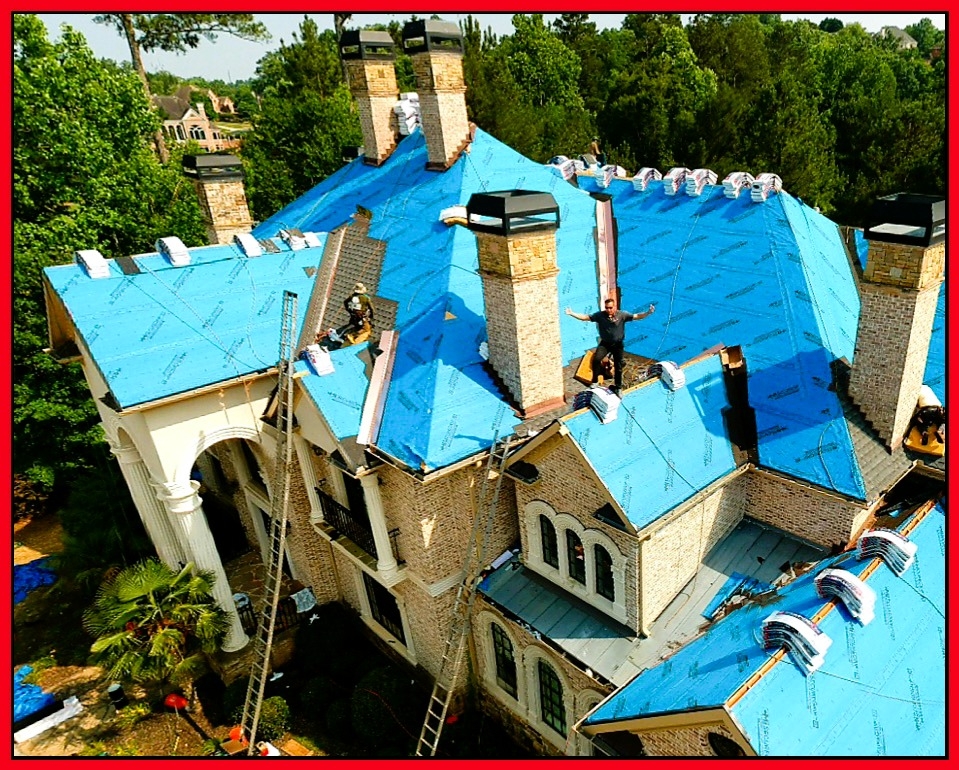
The components that never see daylight are the ones that decide longevity. The underlayment is the secondary water barrier beneath the shingles; modern synthetic underlayment outperforms old felt by a wide margin and is now the professional standard. Self-adhering ice and water shield at the eaves, valleys, and penetrations adds waterproofing redundancy exactly where water is most likely to get in. Proper fastening matters too — six-nail fastening dramatically improves wind resistance over the four-nail minimum, and a correctly installed starter strip locks down the first course against wind uplift. These are the details that separate a roof that reaches 30 years from one that fails at 18.
This is why the contractor matters as much as the material. A roof replacement performed by a manufacturer-certified crew, with the full system specified and a workmanship-backed warranty, establishes the highest possible ceiling for service life. When that ceiling is set correctly, the maintenance habits in this guide can carry the roof all the way to it. Homeowners weighing a future replacement can review our broader range of roofing services to understand what a complete, longevity-focused installation includes.
The Payoff: Years of Service and Protected Value
Put these habits together and the effect is cumulative. Balanced ventilation keeps the shingles from baking. Annual inspection intercepts small failures. Clean gutters and trimmed limbs keep water and abrasion off the roof. Managed algae and moss preserve the granule surface. Maintained flashing seals the vulnerable joints. Prompt repairs stop damage from compounding. And smart storm response prevents a single weather event from cutting years off the roof's life.
None of these is expensive on its own. Compared with the cost of replacing a roof years before it should have failed, they are trivial. A homeowner in Alpharetta, Buckhead, or anywhere across metro Atlanta who adopts this routine is not just protecting shingles — they are protecting the deck, the framing, the attic, the interior finishes, and the resale value of the home, all of which depend on the roof doing its job. Our Johns Creek, Roswell, and Marietta clients see the same result: a roof that quietly delivers its full rated life because it was cared for.
The first step is knowing where your roof stands today. A professional assessment establishes its current condition, identifies the ventilation and maintenance issues working against it, and gives you a clear plan to extend its service life. We provide that assessment at no cost and no obligation — because a homeowner who understands their roof is a homeowner who keeps it longer.
Schedule Your Free Roof Health Assessment
Ventilation evaluation, condition report, and a clear plan to extend your roof's service life — before any commitment. Serving Atlanta, Buckhead, Sandy Springs, and all of metro Atlanta.
(404) 277-1377 — No ObligationCertified by Industry-Leading Manufacturers