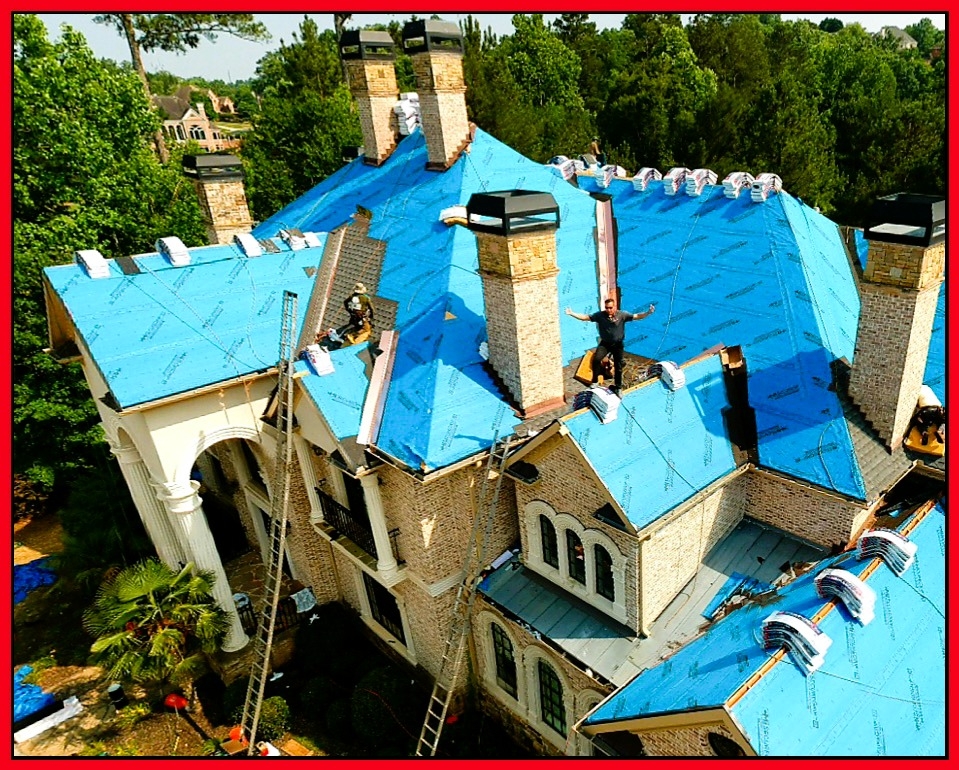
Ask most homeowners what keeps a roof watertight and they point to the shingles. The shingles are the visible armor, but they are not the part of the assembly that fails first. Water finds a roof through its details — the valleys where two planes meet, the eave edge where runoff collects, and the dozens of holes cut for pipes, vents, and chimneys. The component that defends those details is a thin, self-adhering membrane most people never see: ice and water shield.
The name is a holdover from the cold-climate roofing world, where the membrane was first developed to stop melting snow from backing up under shingles and driving water into the deck. In Georgia we rarely fight ice dams. We fight something the membrane handles just as well — wind-driven rain, capillary intrusion, and the relentless volume of water that a metro Atlanta thunderstorm dumps onto a roof in twenty minutes. Understanding where this membrane belongs, what it does that ordinary underlayment cannot, and where it earns its cost is one of the most useful things an Atlanta homeowner can learn before approving a roof system.
This guide explains the material in plain terms: how the self-sealing chemistry works, the specific roof locations where it prevents the leaks we see most often, how it differs from synthetic underlayment, what Georgia code and manufacturer warranties actually require, and how 1Source specifies it on the homes we re-roof across metro Atlanta.
1. What Ice and Water Shield Actually Is
Ice and water shield is a self-adhering, rubberized waterproofing membrane that bonds directly to the roof deck. It arrives in rolls, usually 36 inches wide, with a release film on the back. When the installer peels the film and presses the membrane down, an aggressive asphaltic or butyl adhesive locks it to the plywood or OSB. There are no nails holding it in place across the field, which matters more than it sounds — every fastener is a potential entry point, and this membrane is designed to eliminate them.
The defining property is in that adhesive layer. It is engineered to be self-sealing around fasteners. When a roofer drives a nail through the membrane to attach shingles, starter strip, or metal flashing, the rubberized compound grips the shank of the nail and closes around it. Water that reaches the membrane finds no path through the puncture. Ordinary felt or mechanically fastened synthetic underlayment cannot do this; a nail through felt leaves a hole that depends entirely on the shingle above to stay dry.
Most membranes have a polyethylene or polyester top surface that gives the installer traction and protects the adhesive until shingles are applied. Premium products add a granular or fabric-faced top layer for better grip on steep pitches. Whatever the surface, the principle is constant: a continuous, fully bonded, self-healing waterproof layer at the locations where the roof is most likely to leak.
2. A Northern Name, a Southern Job
The product earned its name in the snow belt. In Minnesota or upstate New York, snow accumulates on a roof, the warm attic melts the underside, meltwater runs down to the cold eave overhang, refreezes, and builds a dam of ice. Water pools behind that dam and is forced uphill, under the shingles, against gravity. A continuous self-adhering membrane along the eaves is the only thing that reliably stops it. That is why northern building codes mandate eave membrane two feet past the interior wall line.
Metro Atlanta sits in a different climate entirely. We see hard freezes a handful of nights each winter, and significant ice dams are rare on a properly ventilated roof. If ice were the only threat, you could make an argument for skipping the membrane here. But ice is not the threat. Wind-driven rain is.
A severe Georgia thunderstorm delivers rain at a rate and angle that no shingle field is asked to handle in a calm climate. Sixty-mile-per-hour gusts push water sideways and uphill, into the same overlaps and seams that an ice dam attacks in the north. Hurricane remnants tracking up from the Gulf produce hours of sustained sideways rain. The membrane that was invented to stop ice-driven water is exactly the right tool for storm-driven water, which is why every quality Atlanta roof system specifies it at the vulnerable details. The cold-weather marketing name simply undersells how relevant it is to Georgia.
3. Valleys: The Single Most Important Placement
If a roof has one place that must be waterproof, it is the valley. A valley is the trough formed where two roof planes meet, and it collects the runoff from both. During a heavy storm, a valley can carry several times the water volume of any equal strip of open field. On Atlanta's traditional two-story and craftsman homes, multiple intersecting gables produce four, six, or eight valleys, each one a concentrated river during a downpour.
Self-adhering membrane is run the full length of every valley before any metal or shingle work begins, typically in a 36-inch width centered in the trough. Whether the roof uses an open, closed, or woven valley, the membrane underneath is the true waterproof layer. Open valleys add a metal liner on top of the membrane for durability and a clean look; closed valleys weave the shingles across, relying even more heavily on the membrane below because the shingle laps in the trough are not themselves watertight.
This is where the self-sealing property becomes decisive. Valley metal and the first courses of shingles are nailed near the trough, and each of those fasteners passes through the waterproof layer. Only a self-adhering membrane closes around them. We see valley leaks on older Atlanta roofs constantly, and the cause is almost always the same — felt underlayment that was nailed in the valley with no self-sealing layer, so every fastener became a slow leak that rotted the decking beneath. Replacing that valley correctly is a routine part of a roof repair, and getting it right the first time is a core part of a full roof replacement.
Valleys carry the concentrated runoff of two roof planes. A self-adhering membrane run the full length of every valley, sealing around the fasteners that hold the valley metal and shingles, is the single highest-value waterproofing detail on a pitched Atlanta roof. It is also the detail most often skipped on a value-engineered installation.
4. Eaves and the Gutter Line
The eave is the lowest edge of the roof, where all the runoff finally leaves the surface and enters the gutter. It is a high-traffic zone for water and a vulnerable transition. The shingles overhang the drip edge, the gutter sits below, and wind can drive rain back up under the first courses. On low-slope sections the problem compounds because water moves slowly and lingers near the edge.
A strip of self-adhering membrane along the eaves seals this edge against backflow and capillary intrusion. It also protects the most failure-prone part of the deck. When gutters clog with Georgia's heavy pine and oak debris and overflow back onto the roof edge, the membrane keeps that overflow from soaking into the plywood. The relationship between a clean gutter line and a dry eave is direct, which is why gutter maintenance and gutter guard technology are part of the same conversation as eave protection.
The eave membrane works alongside two other code-relevant details. Drip edge directs water off the deck edge and into the gutter, and the membrane is lapped over the drip edge at the eave so water cannot wick behind it. Kickout flashing at the bottom of a roof-to-wall transition diverts the stream away from the wall cladding. Each is a small detail, and each prevents a category of damage that is expensive to repair once water reaches the structure.
5. Penetrations: Where Roofs Leak Most Often
Every hole cut through a roof is a leak waiting to happen if it is not detailed correctly. The average Atlanta home has more penetrations than the homeowner realizes — plumbing vent stacks, bathroom and kitchen exhaust vents, the furnace flue, HVAC stacks, the electrical mast, and often a chimney and one or more skylights. Each one interrupts the continuous waterproof plane and has to be re-sealed by hand.
Self-adhering membrane is the foundation of every penetration detail. Around a plumbing vent, a square of membrane is bonded to the deck before the pipe boot goes on, so even if the boot's rubber gasket degrades a decade from now, the membrane beneath provides a second line of defense. Around a chimney, membrane is run up the deck and lapped under the step flashing and counterflashing. Behind a wide chimney, it is the waterproof base under the cricket or saddle that diverts water around the masonry.
Skylights are a particular Atlanta trouble spot because they were often installed by the original builder with minimal flashing and no membrane. When we re-roof a home with skylights, the membrane is integrated into the skylight's flashing kit so the entire perimeter is sealed. The pattern across all of these is the same: the visible flashing or boot is the first defense, and the self-adhering membrane is the backup that buys years of protection when the first defense ages.
6. Self-Adhering Membrane vs. Synthetic Underlayment
Homeowners reading a roofing proposal often see two layers listed under the shingles and assume they are interchangeable. They are not. Synthetic underlayment and self-adhering membrane do different jobs, and a quality roof uses both. The distinction is worth understanding because it tells you whether a proposal protects the details or only the field.
Synthetic underlayment is a lightweight woven sheet that is mechanically fastened across the open field of the roof with cap nails or staples. It is the modern replacement for asphalt felt, and it is a real upgrade — stronger, lighter, more tear-resistant, and far more stable in the sun than the old #15 and #30 felts. Our deeper comparison of synthetic underlayment versus felt covers why the industry switched. But synthetic underlayment is fastened with thousands of nails, and it does not seal around them. It is a water-resistant field barrier, not a waterproof one.
Self-adhering membrane is fully bonded and self-sealing. It is not used across the entire field on a typical pitched roof because it costs several times more than synthetic and is unnecessary where water sheds quickly. It is concentrated where water concentrates and where fasteners would otherwise leak. The table below summarizes the practical difference.
| Property | Self-Adhering Membrane | Synthetic Underlayment |
|---|---|---|
| Attachment | Fully bonded adhesive — no field fasteners | Mechanically fastened with cap nails |
| Seals around nails | Yes — self-sealing polymer grips fasteners | No — fastener holes rely on the shingle above |
| Water rating | Waterproof (resists standing water) | Water-resistant (sheds running water) |
| Where it belongs | Valleys, eaves, penetrations, low-slope, transitions | Open field of the roof |
| Relative cost | Higher — used selectively | Lower — covers the whole deck |
| Primary job | Last line of defense at vulnerable details | Secondary barrier across the field |
The takeaway for a homeowner reviewing proposals: a complete system specifies synthetic underlayment across the field and self-adhering membrane at valleys, eaves, and penetrations. A proposal that lists only one is either over-promising or under-detailing, and the written scope should make clear exactly where the membrane is going.
7. What Georgia Code and Manufacturer Warranties Require
Georgia adopts its own amendments to the International Residential Code, and the membrane requirement here is different from the northern model code. The IRC mandates a continuous eave ice barrier in regions where ice damming is a recorded problem. Most metro Atlanta jurisdictions are not designated ice-dam regions, so a continuous eave membrane is not universally mandated the way it is in Buffalo or Boston. This is the source of the common misconception that Georgia roofs do not need the membrane at all.
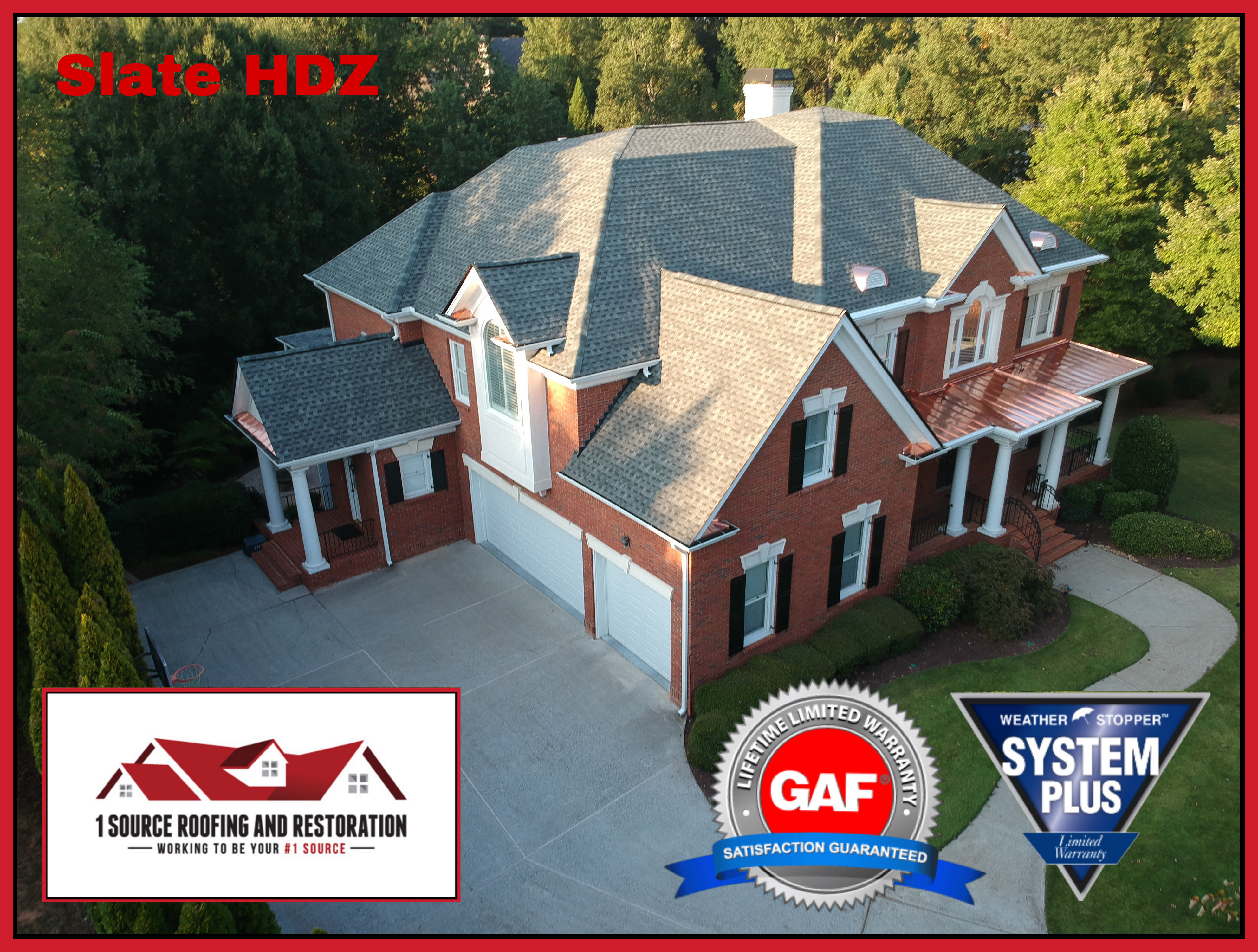
The reality is that valley and penetration protection is the professional standard and is effectively required by the warranty programs that protect your shingles. GAF's Golden Pledge and CertainTeed's SureStart and SureStart PLUS programs specify a complete system that includes self-adhering membrane at the vulnerable details. Installing premium shingles without the specified leak barriers can void the very warranty the homeowner is paying a premium to obtain. Our pages on GAF certification and the broader Georgia building codes go deeper on these requirements.
Skipping membrane at valleys and penetrations can void your shingle warranty. GAF and CertainTeed enhanced warranties require a complete system. A proposal that omits the leak barriers to lower the number is quietly trading away the manufacturer coverage you are paying a premium to secure.
Local amendments and individual jurisdictions across Fulton, Cobb, Gwinnett, DeKalb, Cherokee, and Forsyth counties vary in their specifics, and a permit inspector will check that the installation matches the approved scope. The practical answer for any Atlanta homeowner is that a code-compliant, warranty-eligible installation includes self-adhering membrane at valleys and penetrations, and the written scope should name the exact product.
Is Your Roof Detailed Correctly?
Free on-site assessment. Our inspectors examine valleys, eaves, and every penetration — the places roofs actually leak — and document what they find.
Call (404) 277-13778. Low-Slope Sections and Transitions
Pitch changes everything about how water behaves on a roof. On a steep 9/12 plane, water sheets off in seconds and never pools. On a low 2/12 or 3/12 section — common over Atlanta porches, additions, and dormers — water moves slowly, lingers, and is far more likely to be driven backward under the shingles by wind. The lower the slope, the more the roof depends on the waterproof layer beneath rather than the shingles above.
On these low-slope areas, self-adhering membrane is often run across the entire section rather than just the edges, because the whole plane behaves like one big vulnerable detail. Where a low-slope porch roof meets a vertical wall, the membrane is lapped up the wall behind the step or reglet flashing so the transition is sealed from behind. These wall-to-roof intersections are among the most common leak sources we find during a structural assessment, and they are nearly always traceable to a missing or poorly lapped membrane.
Truly flat commercial and large-residential roofs are a different system entirely — they use fully adhered or mechanically attached single-ply membranes rather than shingles and shield. If your project includes a flat section, our guides to TPO, EPDM, and PVC membranes and modified bitumen cover those assemblies, and our commercial roofing team handles them directly.
9. How It Is Installed Correctly
The membrane only performs if it is installed in the right sequence and pressed into full contact with the deck. The deck must be dry and clean before the release film comes off — dust, sawdust, or moisture between the adhesive and the plywood prevents a proper bond. On a humid Georgia morning, that means timing the membrane work after the dew has burned off, not at first light.
Sequence matters at every transition. At the eave, drip edge goes on the deck first along the bottom edge, then the membrane laps over it; at the rake, the order reverses. In a valley, the membrane is centered and rolled in before any synthetic underlayment, then the field underlayment laps over the membrane edges so water always runs onto the lower layer, never under it. Around penetrations, the membrane is cut and dressed tight to the pipe or curb so there are no fishmouths or bridged corners where water can sit.
The most common installation error we correct is leaving the membrane exposed too long. Self-adhering membranes are protected from UV by the shingles above; left bare in the Georgia sun for weeks, the adhesive can degrade. A properly run project covers each membrane section with shingles promptly rather than sheeting the whole roof and leaving it open. This is one of the quiet differences between a crew working to manufacturer specification and a crew working to a stopwatch. It is also why a site supervisor present throughout the job — not a salesperson who appears at the start and finish — matters to the finished result.
10. What Happens When It Is Skipped
The cost of omitting membrane at the details is almost never visible at installation. The roof looks finished and sheds water fine for the first few dry seasons. The failure shows up years later, after the fasteners and flashing have aged and the first hard storm drives water into an unsealed valley or penetration. By then the water has been finding the deck for some time, and the repair is no longer a roofing job — it is a structural one.
The progression is predictable. Water entering an unsealed valley wicks into the plywood, which delaminates and rots. Decking replacement during the eventual re-roof adds real scope, and a soft deck under foot is one of the first things we document during a tear-off. If the intrusion reaches the framing, you are into rafter or truss repair. If it reaches the attic, you are replacing insulation and risking the mold problems that water damage restoration exists to address. A ceiling stain in a bedroom is the last and most expensive stage of a leak that a few dollars of membrane would have prevented at the source.
There is an insurance dimension as well. When storm damage triggers a claim, an adjuster and a qualified contractor both document the roof's construction. A system missing its specified leak barriers can complicate a claim, and proper documentation of the existing assembly is part of how the insurance claims process protects the homeowner. Our insurance claims hub walks through how scope and documentation interact after a Georgia storm.
11. When a Full-Deck Membrane Makes Sense
For most pitched Atlanta roofs, targeted membrane at valleys, eaves, and penetrations delivers the most protection per dollar, with synthetic underlayment across the field. There are homes where covering the entire deck with self-adhering membrane is worth the added investment, and it is useful to know which ones.
The strongest candidates are homes in the most storm-exposed positions — hilltop estates and properties with long, unobstructed wind exposure where driving rain hits the roof from every angle. Complex rooflines with so many valleys, dormers, and penetrations that the "details" cover most of the roof anyway are another. Homeowners pursuing the highest tier of FORTIFIED roof certification often specify a sealed-deck approach because the standard rewards a continuous secondary water barrier. And luxury homes in Buckhead, Alpharetta, and Sandy Springs, where the structure and finishes below the roof represent significant value, frequently justify the upgrade as inexpensive insurance against a single catastrophic intrusion.
A sealed deck also interacts with attic ventilation, because a fully membrane-covered deck is essentially airtight from above. That makes balanced ridge and soffit ventilation non-negotiable rather than merely advisable. The decision is one we walk through during the assessment, weighing exposure, roofline complexity, and how long you plan to own the home.
12. How 1Source Specifies Membrane on Atlanta Roofs
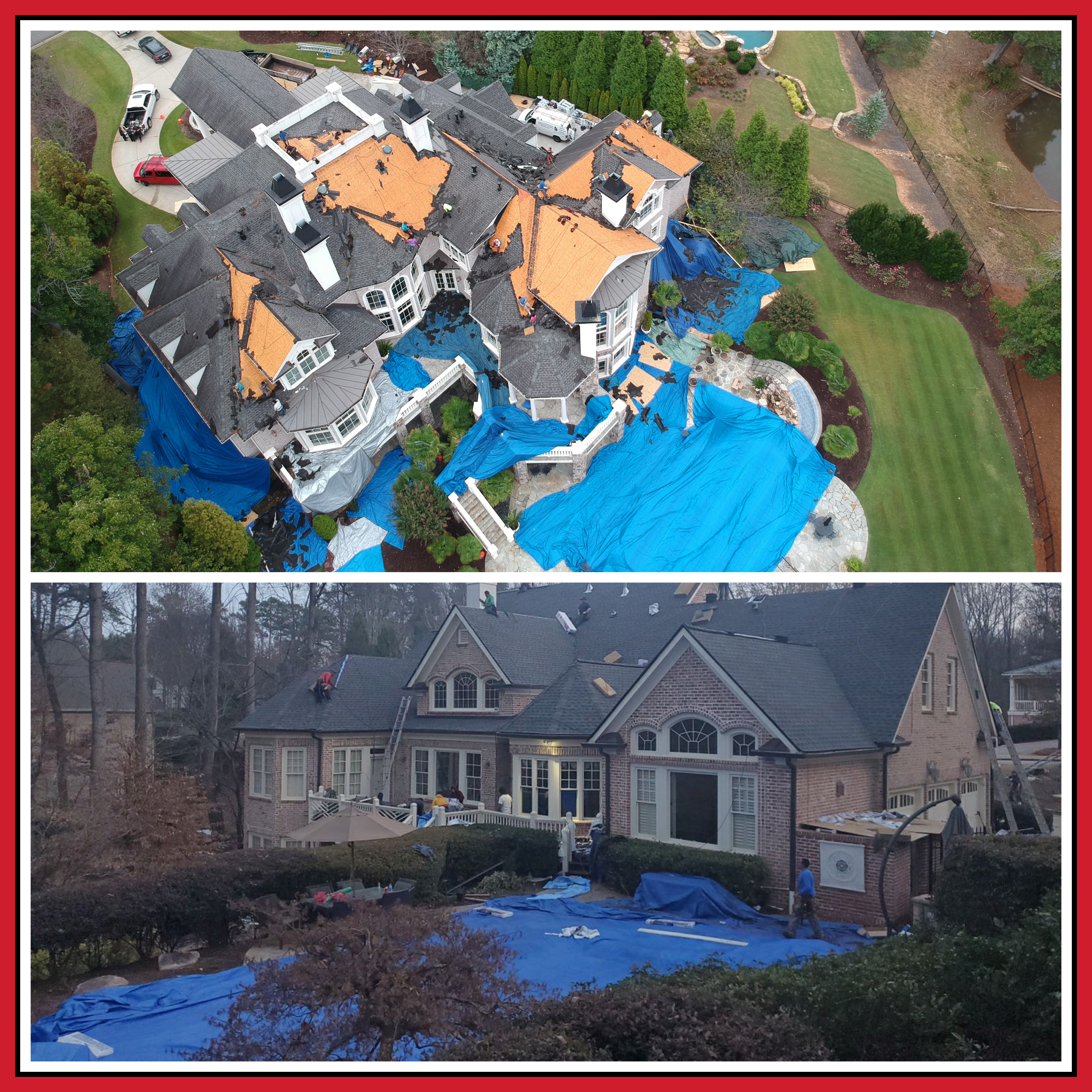
Every roof system we install includes self-adhering membrane at the locations that determine whether a roof stays dry. As standard, that means the full length of every valley, the eave edges, and around every penetration on the roof — pipe boots, vents, the flue, skylights, and chimneys. Low-slope sections below 4/12 receive full-coverage membrane, and roof-to-wall transitions are sealed with membrane lapped behind the flashing.
The written scope we present names the exact membrane product and shows where it is being installed, alongside the synthetic underlayment, drip edge, flashing, and ventilation details. You are evaluating an itemized assembly, not a verbal promise of "a new roof." During installation, a site supervisor verifies that each membrane section is bonded to a clean dry deck and covered promptly, so the material performs the way the manufacturer intends.
This level of detailing is the standard for every home we touch, from a straightforward gable in Marietta to a multi-valley estate in Johns Creek or Roswell. You can see the finished work in our photo gallery, read more about our approach on why homeowners choose 1Source, and browse the full library of technical guides in the blog hub and technical standards hub. The free assessment starts the process before any commitment — because you should know exactly what is going under your shingles before you sign anything.
Schedule Your Free Roof Assessment
We inspect the details that actually leak — valleys, eaves, and penetrations — and document what we find in writing. Serving Atlanta, Buckhead, Alpharetta, and all of metro Atlanta.
(404) 277-1377 — No ObligationCertified by Industry-Leading Manufacturers