The first severe thunderstorm of an Atlanta spring can take a roof apart in twenty minutes. Straight-line winds peel back shingle courses, a falling limb punches through the decking, hail bruises the entire field of the roof at once. By the time the sky clears, the urgent question is no longer "what happened" — it's "how do I keep water out of my house tonight." That gap between the moment damage occurs and the moment a permanent repair is scheduled is exactly what emergency roof tarping exists to bridge.
A roof tarp is not a repair. It is a stabilization measure: a temporary, water-shedding barrier installed over a breach to stop further intrusion while the insurance claim, material ordering, and crew scheduling play out. Done correctly, it protects the single most expensive structure on your property and the contents beneath it for the weeks it takes to do the permanent work right. Done poorly — or skipped entirely — it allows a contained roofing problem to spread into framing, insulation, drywall, flooring, and the mold conditions that follow standing moisture in Georgia's humidity.
This guide explains what a professional tarp installation actually involves, how it differs from the dangerous and often counterproductive DIY versions, why insurers expect you to do it, and how the decision you make in the first hours after a storm shapes both your repair scope and your claim outcome.
1. What Emergency Roof Tarping Actually Is
Emergency tarping is the controlled installation of a heavy-duty waterproof membrane over a damaged section of roof, anchored to sound structure so it sheds water the way the roof itself normally would. The point is direction, not just coverage. Water that lands on a correctly installed tarp runs downhill, off the eave, and into the gutter system — never under the tarp and never into the opening it protects.
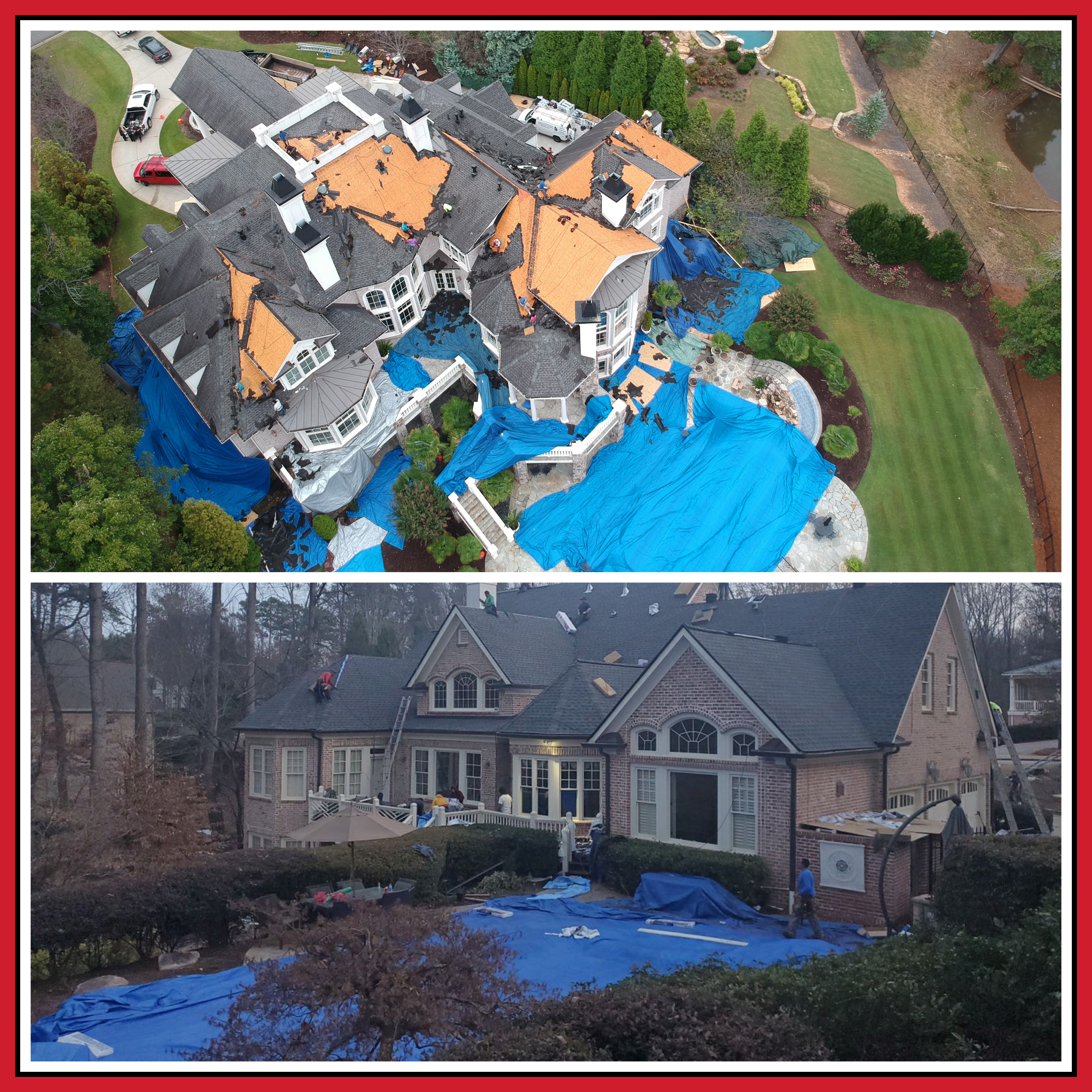
That distinction separates a real tarp installation from the blue plastic draped over a ridge and weighted with cinder blocks that you see after every major storm. A sheet of plastic held down by weight does not control water. It billows in wind, traps pools that find the low point and drain straight into the breach, and abrades the shingles it rests on. Within one Atlanta thunderstorm cycle it has usually failed, and frequently it has caused damage in areas the original storm never touched.
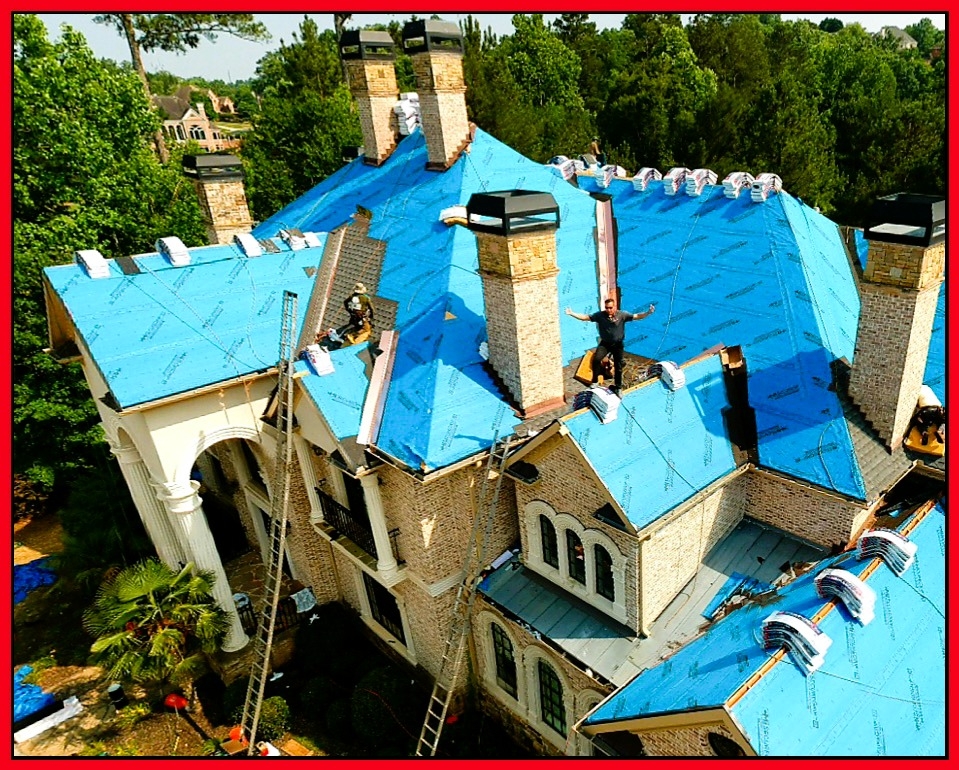
A professional installation uses a contractor-grade poly or reinforced tarp, sized so it extends well past the damaged area and runs over the ridge or up-slope edge so the seam faces away from the water flow. It is anchored along its top edge into sound decking or rafters, the leading edges are sealed against wind uplift, and any fasteners penetrate only structure that will be addressed during the permanent repair. The result holds through repeated storms for the weeks a claim and material order require.
2. Why Speed Matters More Than Almost Anything Else
The cost of a roof breach is not fixed at the moment of the storm. It compounds with every hour the opening stays exposed, and in metro Atlanta the rate of compounding is unusually fast because the climate works against you. Average annual rainfall here exceeds 50 inches, much of it delivered in intense afternoon downpours, and summer attic temperatures combined with sustained humidity create near-ideal conditions for mold within a day or two of moisture intrusion.
Consider the escalation path. An eight-inch hole from a tree limb, covered within hours, results in localized decking repair and a few shingle courses replaced — a contained event. The same hole left open through one rainy week saturates the surrounding decking, runs down the rafters into the attic insulation, soaks the ceiling drywall below, and stains the finished surfaces of the room beneath. What began as a roofing repair becomes a roofing, insulation, drywall, paint, and remediation project. The roof portion barely changed; everything else multiplied.
This is the core argument for treating a breach as an emergency rather than something to deal with after the weekend. Tarping freezes the damage at its current scope. It converts an active, expanding problem into a stable one you can address on a planned timeline — selecting materials thoughtfully, scheduling around your family, and letting the storm damage restoration process proceed in order rather than in crisis.
A tarp buys time, not a cure. Its job is to hold the damage exactly where it is until a permanent repair can be done correctly. Every hour an active breach stays uncovered in Georgia's climate widens the gap between a roofing repair and a full interior restoration.
3. When You Need a Tarp — and When You Don't
Not every storm leaves a breach that demands immediate covering, and not every breach is visible from the ground. Knowing what warrants an emergency call helps you act decisively without overreacting to cosmetic damage. The clearest signal is water entering the home: a ceiling stain spreading during rain, a drip in the attic, water tracking down an interior wall. Any of these means the roof envelope is open and intrusion is active.
Visible structural openings warrant a tarp even without an interior leak yet. A tree limb resting on or through the roof, a section of shingles and underlayment peeled back to bare decking, a hole where decking has been punctured, or a skylight or vent torn loose all expose the substrate directly to the next rainfall. The absence of an interior leak in these cases usually means it simply hasn't rained hard enough yet — not that the roof is sound.
The cases where tarping is not the right first move are also worth naming. Scattered lifted or creased shingles, granule loss from hail, or a few missing tabs on an otherwise intact field are damage that a prompt roof repair addresses, but they rarely require emergency stabilization unless the underlayment beneath is also compromised. The reliable way to know which category you're in is a documented inspection — and the wrong way is to climb up and find out yourself.
4. The Real Dangers of Tarping a Roof Yourself
Falls from roofs are a leading cause of homeowner injury after severe weather, and a storm-damaged roof is the most hazardous version of an already hazardous surface. The conditions that make a tarp necessary are the same ones that make climbing up to install it dangerous: wet, slick shingles, decking that may have lost structural integrity, hidden soft spots where water has already weakened the substrate, and debris that obscures where the safe footing actually is.
Beyond the fall risk, the work itself is deceptively difficult to do correctly. Anchoring a tarp so it survives the next storm requires understanding where the sound structure is, how to orient the membrane against the prevailing water flow, and how to seal the leading edges against wind uplift without creating channels that funnel water inward. Homeowners working without fall protection and without that experience typically produce a tarp that holds for a day and then fails — often after wind has worked it loose and driven rain under it into areas the storm never reached.
If you need to act before a crew arrives, the safe and genuinely useful steps all happen at ground level or inside the home. Move furniture and valuables out from under an active drip. Place buckets and lay towels to contain water. If you can reach the attic safely, look for the entry point and photograph it. Document everything with timestamped photos and video. Then call for professional response. For a fuller walkthrough of assessing damage without putting yourself at risk, our guide to inspecting your roof safely from the ground covers what you can and cannot see from below.
Do not climb a storm-damaged roof. Wet shingles, weakened decking, and hidden soft spots make the surface unpredictable, and a fall causes far more harm than the leak ever would. Contain water from the ground, document the damage, and call (404) 277-1377 for crews equipped with fall protection.
5. How a Professional Tarp Installation Works
When a 1 Source crew responds to an emergency tarping call, the work follows a sequence built to protect both the structure and your eventual insurance claim. The first step is a safety and damage assessment: the crew confirms the roof is safe to access, identifies the full extent of the breach — which is frequently larger than what's visible from below — and documents the damage with photographs before anything is covered. That pre-tarp documentation is critical, because once the tarp is on, the underlying damage is no longer visible to an adjuster.
Next comes sizing and placement. The tarp is selected to extend well beyond the damaged zone in every direction, with enough material to run over the ridge or the up-slope edge so the top seam sits above the breach and faces away from water flow. The crew clears loose debris from the area so the tarp lies flat against the deck rather than over voids that would collect water.
Anchoring is where experience shows. The top edge is fastened into sound structure, edges are wrapped or battened to resist wind uplift, and fastener placement is chosen so the small penetrations land in areas the permanent repair will address. The finished installation sheds water like a roof, holds through repeated storm cycles, and leaves a clear, documented record of what was done and why.
6. Professional Tarping vs. the Quick Fixes That Fail
The difference between a tarp that protects your home and one that compounds the damage comes down to a handful of decisions. The comparison below lays out where the common DIY and "storm chaser" approaches diverge from a correct installation.
| Factor | Professional Tarp Installation | Weighted / DIY Quick Fix |
|---|---|---|
| Anchoring method | Fastened into sound structure, edges sealed against uplift | Loose bricks, lumber, or sandbags that shift in wind |
| Water control | Sheds water downslope, seam faces away from breach | Traps pools that drain into the opening |
| Material | Contractor-grade UV-resistant reinforced tarp | Lightweight hardware-store plastic that degrades fast |
| Storm survival | Holds through repeated cycles for 60–90 days | Often fails within a single storm cycle |
| Documentation | Pre-tarp photos and itemized invoice for the claim | No record; adjuster cannot verify original damage |
| Safety | Crew with fall protection and training | Homeowner on a wet, damaged roof |
The pattern is consistent: the improper approaches save nothing because they fail, and when they fail they usually leave the home worse off than no tarp at all. A correct installation is the only version that actually accomplishes the goal of holding damage in place until permanent work can proceed.
Active Leak Right Now?
Stabilizing an open roof is a priority dispatch. The sooner the breach is covered, the less damage accumulates and the cleaner your claim documentation will be.
Call (404) 277-13777. Tarping and Your Insurance Claim
Emergency tarping sits directly inside a clause every homeowners policy contains: the insured's duty to take reasonable steps to prevent further damage after a covered loss. Insurers do not treat tarping as optional. They expect it, and the cost of a reasonable emergency measure is generally reimbursable — frequently handled separately from the deductible structure that applies to the permanent roof claim.
The dynamic also runs in the other direction. If a homeowner knows the roof is open and does nothing, an adjuster can deny the portion of interior damage that resulted from that neglect, arguing it was preventable. The drywall, flooring, and contents ruined by water that entered after the homeowner became aware of the breach may fall outside coverage. Prompt tarping protects the claim itself, not just the structure.
Documentation is what ties it together. Dated photographs of the damage before the tarp goes on, photographs of the installed tarp, and an itemized invoice give the adjuster a clear record of the original loss and the mitigation performed. A contractor experienced with Georgia claims builds this record as part of the response. To understand how to assemble a complete claim file, see our guides on documenting storm damage for a successful claim and the full roof insurance claim process step by step. Whether your policy pays replacement cost or depreciated value, covered in our breakdown of RCV versus ACV, the mitigation expectation applies the same way.
8. Why Atlanta Roofs See So Much Storm Damage
Metro Atlanta sits in a part of the Southeast where the storm profile is varied and persistent. Spring brings the most active severe weather, when warm Gulf moisture collides with cooler air and produces the supercells that drop hail and generate damaging straight-line winds. Summer adds near-daily afternoon thunderstorms, brief but intense, that test any compromised section of a roof repeatedly. Late summer and fall carry the remnants of tropical systems that track inland from the Gulf, delivering sustained rain and wind over many hours.
Hail is the signature threat. A single hailstorm can bruise the entire field of a roof at once, fracturing the asphalt mat and dislodging the protective granule layer across thousands of square feet. The damage is often invisible from the ground and only becomes leaks months later as the bruised areas fail. Homeowners weighing how to protect against this recurring exposure should review our guides on Class 4 impact-resistant shingles and spotting hail damage before it's too late.
Wind is the other major driver, and it works on the roof's weakest details first — the perimeter, the ridge, and any section where fastening was marginal. The way shingles are nailed and how the starter and ridge courses are detailed determine whether a roof loses a few tabs or peels in sheets. Our pieces on six-nail wind fastening and the FORTIFIED roof standard explain how a properly built roof resists the events that send less-resilient roofs into emergency tarping.
9. From Tarp to Permanent Repair
A tarp marks the beginning of a restoration sequence, not the end of one. Once the breach is stabilized, attention turns to scoping the permanent work — and the right scope depends on what the storm actually did. A localized puncture from a single limb may call for nothing more than decking replacement and a few shingle courses re-laid into the existing field, a straightforward roof repair. Widespread hail bruising or wind damage across multiple slopes usually points toward full roof replacement, because patching a field that's failing everywhere only defers the inevitable.
The deciding factors are the extent of the damage, the age and remaining service life of the existing roof, and what the insurance claim supports. Our guide to repair versus replacement walks through how to make that call deliberately rather than under pressure. When the roof comes off, the permanent system that replaces the tarp includes the components a temporary cover can't provide — a full synthetic underlayment layer, self-adhering ice and water shield at the vulnerable details, new flashing, and a properly fastened shingle field.
If water reached the interior before the tarp went on — into insulation, drywall, or flooring — that damage is addressed alongside the roof work through water damage restoration, before any moisture is sealed inside the assembly. Drying the structure properly is what prevents the mold problems that otherwise surface weeks later in Georgia's humidity.
10. Emergency Tarping for Commercial and Estate Properties
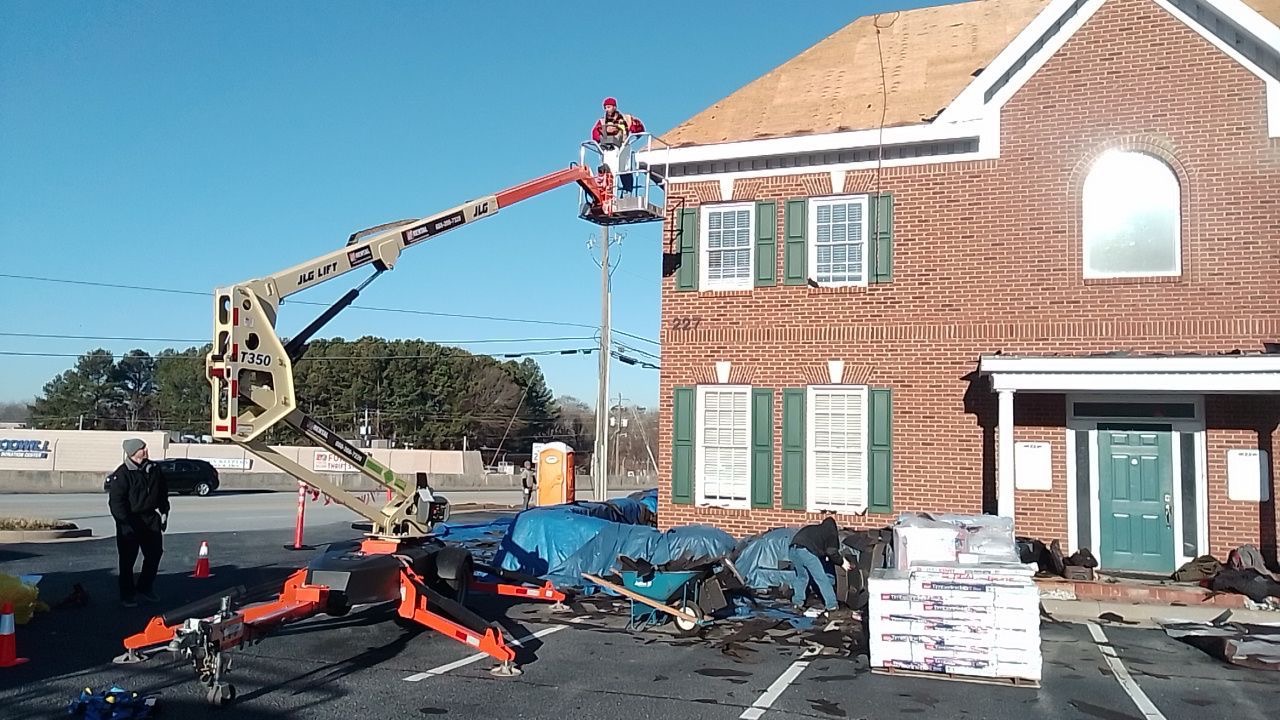
Large estate homes and commercial buildings raise the stakes of an open roof considerably, and they often raise the difficulty of stabilizing it. A multi-thousand-square-foot footprint, steep or complex residential rooflines, or low-slope commercial membranes each demand a different tarping approach, and the value of what sits beneath — finished interiors, inventory, equipment, tenants' property — makes prompt, correct mitigation even more important.
On low-slope commercial roofs, water doesn't run off the way it does on a pitched residential roof; it ponds. A breach in a flat membrane requires a tarping method that accounts for standing water and the larger areas typically involved, and access frequently calls for lift equipment rather than ladders. The mitigation goal is the same — stop intrusion, document the loss, hold the scope until permanent work — but the execution is more involved.
For premium properties throughout Buckhead, Alpharetta, Sandy Springs, and the rest of the metro, the response standard matches the value at stake: thorough documentation, correct anchoring, and a clear handoff into the permanent repair. The same crew that stabilizes the breach can carry the project through restoration, which keeps the documentation consistent and the accountability in one place.
11. Reducing the Odds You'll Ever Need It
The best emergency tarp is the one you never have to call for. While no roof is immune to a direct hit from a falling tree or a severe hailstorm, the difference between a roof that loses a few shingles and one that opens up in a windstorm is almost always built in before the storm ever arrives — in the quality of the installation and the condition the roof is kept in.
Fastening and edge detailing carry most of the wind-resistance load. A roof installed with proper nailing patterns, quality starter strip shingles along the eaves, and reinforced hip and ridge caps resists the uplift that peels lesser roofs apart. The decking matters too; re-nailing the deck for uplift resistance, covered in our piece on roof deck re-nailing, strengthens the foundation the whole system relies on.
Maintenance closes the rest of the gap. A roof inspected on a regular schedule catches the lifted shingle, the cracked pipe boot, and the worn flashing before a storm turns them into an opening. Our seasonal maintenance checklist and the habits in extending your roof's lifespan lay out a practical routine. A well-maintained roof entering storm season is far less likely to become the one with a tarp on it by June.
12. What to Do in the First Hour After a Breach
When you discover an active leak or a visible opening, the first hour sets the trajectory of everything that follows. The priorities, in order, are personal safety, protecting interior contents, documenting the loss, and getting professional response moving — all of it from the ground or inside the home, never on the roof.
Start by managing water inside the house. Move furniture, electronics, and valuables out from under the drip. Place buckets to catch active water and lay down towels to limit spread. If water is pooling against a ceiling and bulging, a small relief hole at the lowest point drains it in a controlled way rather than letting the whole section collapse — but only do this if you can do it safely from below.
Then document thoroughly. Photograph and video the interior damage, the entry points you can see, and any exterior damage visible from the ground. Note the date and time. Keep this record together with your policy information. Finally, call for emergency tarping. The faster the breach is covered, the smaller your eventual repair scope and the stronger your insurance position. You can reach the team directly, or start with our contact page if the situation isn't immediately urgent. To see the quality of work that follows the tarp, the project gallery documents completed restorations across metro Atlanta.
Storm Damage? Get the Breach Covered First.
Emergency tarping response across Atlanta, Roswell, Johns Creek, Marietta, and the full 30-mile metro radius. Documented, properly anchored, claim-ready.
(404) 277-1377 — Priority DispatchCertified by Industry-Leading Manufacturers