Fast response to roof leaks and storm damage across metro Atlanta. GAF Certified. Call (404) 277-1377.
Certified & Trusted by Leading Manufacturers
Diagnosis & Problem-Solving
Atlanta homeowners encounter a predictable set of roofing problems — and most of them are recognizable before they reach a crisis point. Understanding what to look for is the first step toward addressing damage before it escalates from a contained repair into a structural failure. If any of the following descriptions sound familiar, a professional inspection is warranted.
Active leaks and ceiling stains. Water stains on ceilings or walls are the most common signal a homeowner notices first. What appears as a small discoloration may represent sustained water intrusion that has been traveling through insulation, sheathing, and framing for weeks before becoming visible. By the time a stain is apparent, the underlying damage is already underway.
Missing or displaced shingles. Wind events — and Atlanta sees regular gusts well above 50 mph during summer thunderstorms — can lift or strip shingles from exposed sections of the roof. A missing shingle is not a cosmetic problem. It is an open entry point for water, and the underlayment beneath was not designed to serve as a long-term weather barrier on its own.
Cracked or lifted flashing. Flashing — the metal strips that seal joints around chimneys, skylights, dormers, and roof-to-wall transitions — is one of the most failure-prone components on any roof. Temperature cycling causes flashing to contract and expand repeatedly over years until sealants crack and the metal itself lifts away from the substrate. Flashing failures account for a disproportionate share of the leak calls we receive.
Granule loss exposing underlayment. When you find coarse granules accumulating in your gutters after every rain, your shingles are past their service window. Granules protect the asphalt core of the shingle from UV degradation. Significant granule loss leaves the underlying material exposed to accelerated weathering and substantially reduces the time before a full replacement becomes necessary.
Soffit and fascia damage. Damaged soffit panels and rotted fascia boards are visible from the ground and are often the result of water running behind the gutter line. Left unaddressed, soffit and fascia failures invite pest intrusion and allow moisture to penetrate the roof deck and attic framing.
When repair is the right decision. Roofs under 15 years old with isolated damage in one section — and with shingles in otherwise sound condition across the field — are strong candidates for repair rather than replacement. If you can see daylight through your attic or find granules collecting in your gutters after every rain, those are signs that demand professional attention, not a wait-and-see approach. Our inspectors assess the entire roof, not just the visible damage, to give you an honest picture of where you stand.
The Cost of Waiting
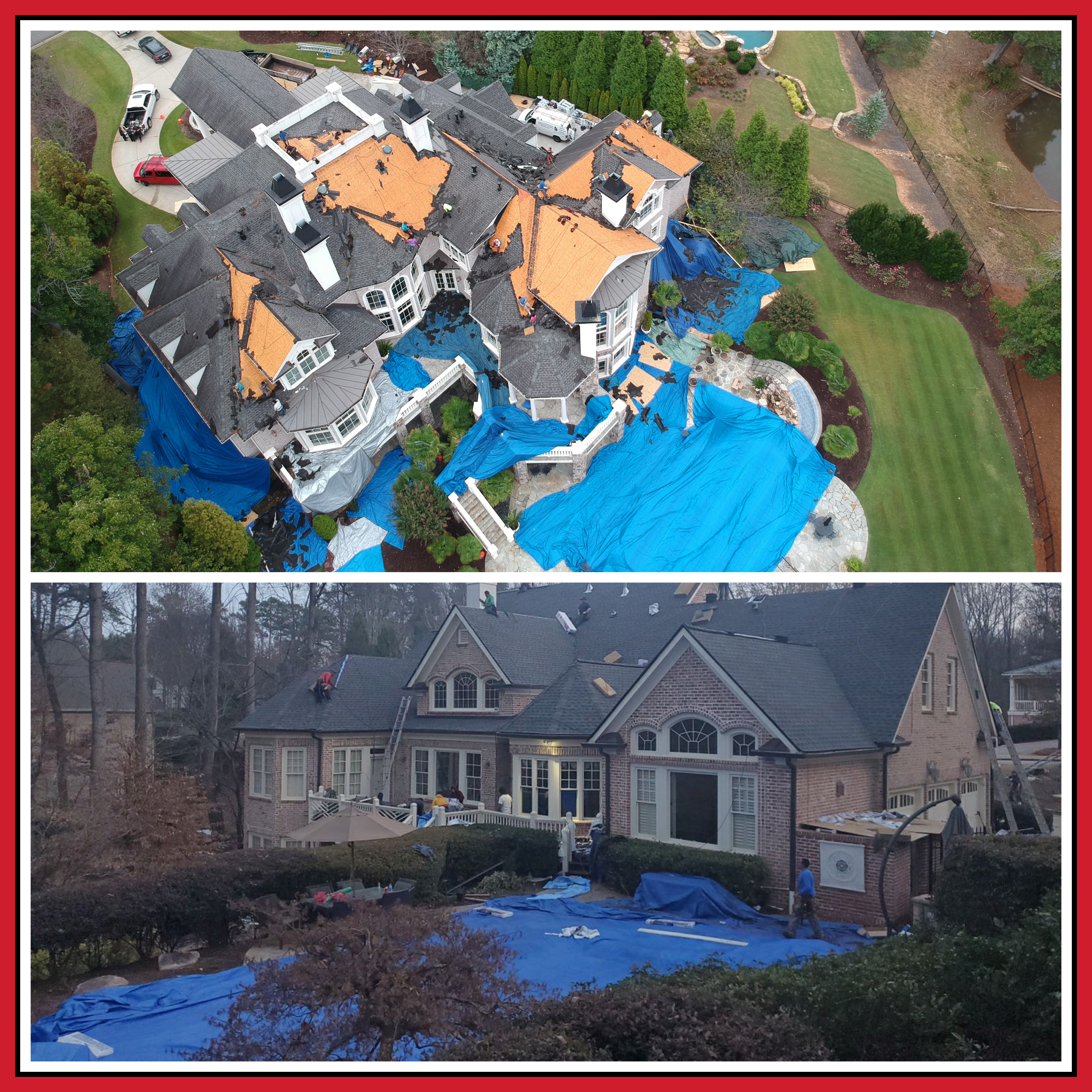
The financial case for addressing roof damage immediately is straightforward, and the numbers are not subtle. A shingle repair or flashing replacement addressed when first identified is a contained, manageable cost. The same damage ignored for six months — through one Atlanta summer with its combination of intense heat, humidity, and afternoon thunderstorms — becomes a different problem entirely.
Decking saturated by months of slow water intrusion cannot simply be dried out. It must be removed and replaced. Insulation that has absorbed moisture becomes a permanent mold substrate and loses its thermal value. Interior drywall with water damage requires remediation — not just cosmetic repair — to prevent recurrence and pass inspection. A repair that might have been resolved in a single day's work becomes a week-long restoration project involving multiple contractors and a far larger invoice.
Mold risk begins within 24 to 48 hours of sustained water intrusion. The combination of moisture, organic material (wood framing, drywall paper), and Atlanta's warm temperatures creates ideal mold growth conditions faster than most homeowners realize. Once mold is established in attic framing or wall cavities, the remediation scope and cost expand significantly beyond the original roof repair.
Insurance implications of delay. Homeowner's insurance policies universally include language about the insured's responsibility to mitigate further damage after a loss event occurs. An adjuster reviewing a claim where documented storm damage was left unaddressed for months may classify the additional deterioration as maintenance neglect rather than covered storm damage. Prompt reporting and documented immediate response — including emergency tarping where warranted — protects the full scope of your claim. If your roof has sustained storm damage, see our Storm Damage Restoration page. Water intrusion that reaches the interior may require Water Damage Restoration as well.
The homeowners who protect their investment most effectively are those who treat roof damage with the same urgency they would bring to a structural concern. A premium Atlanta home represents a significant financial asset. Maintaining the integrity of its weather envelope is not optional maintenance — it is a prerequisite for everything else holding its value.
Our Qualifications
The contractor you choose for a roof repair matters more than it appears at first glance. A repair performed by an uncertified installer using mismatched materials can void the manufacturer warranty on the shingles surrounding the repair zone — potentially converting a minor repair into a full replacement liability when the roof is re-evaluated at claim time.
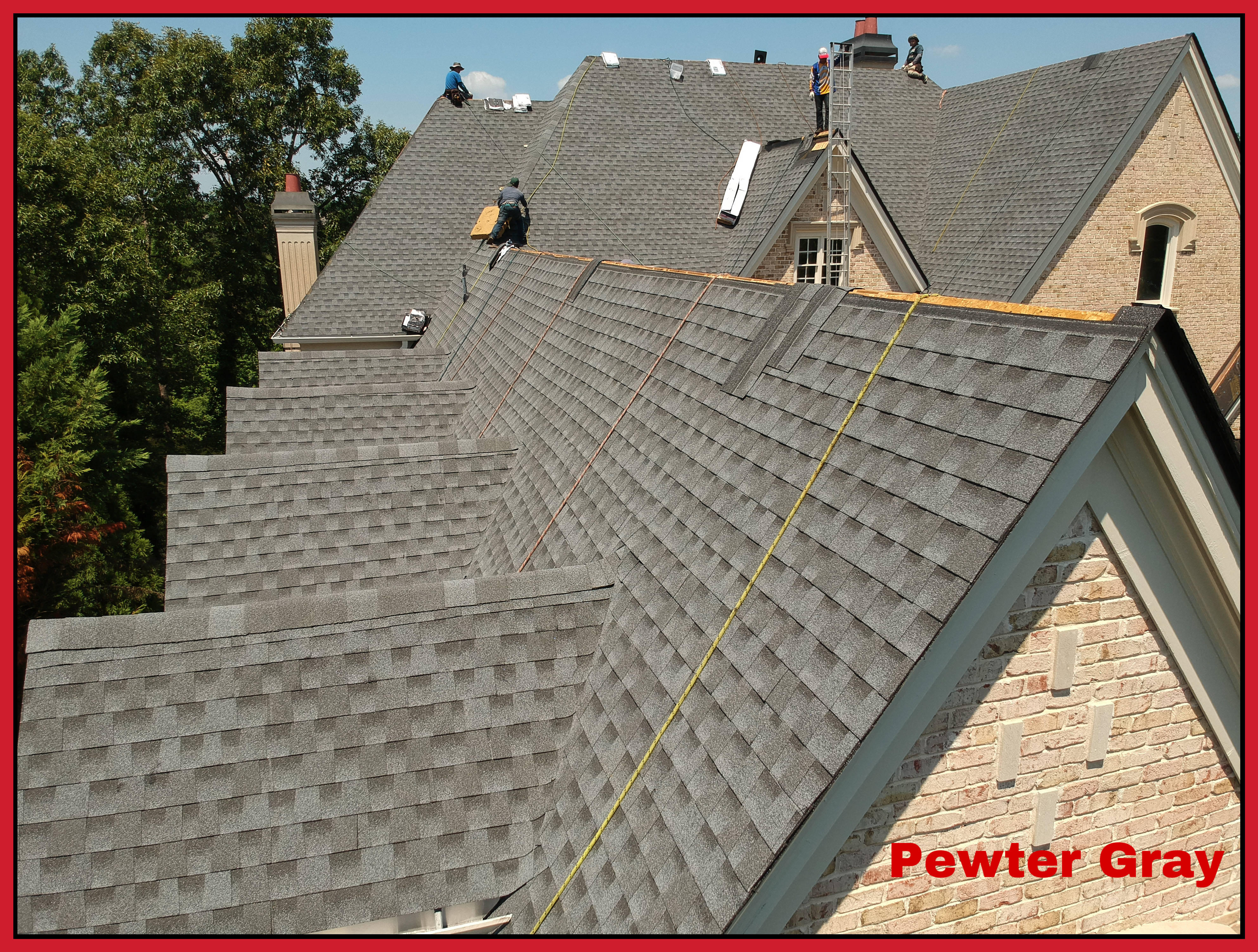
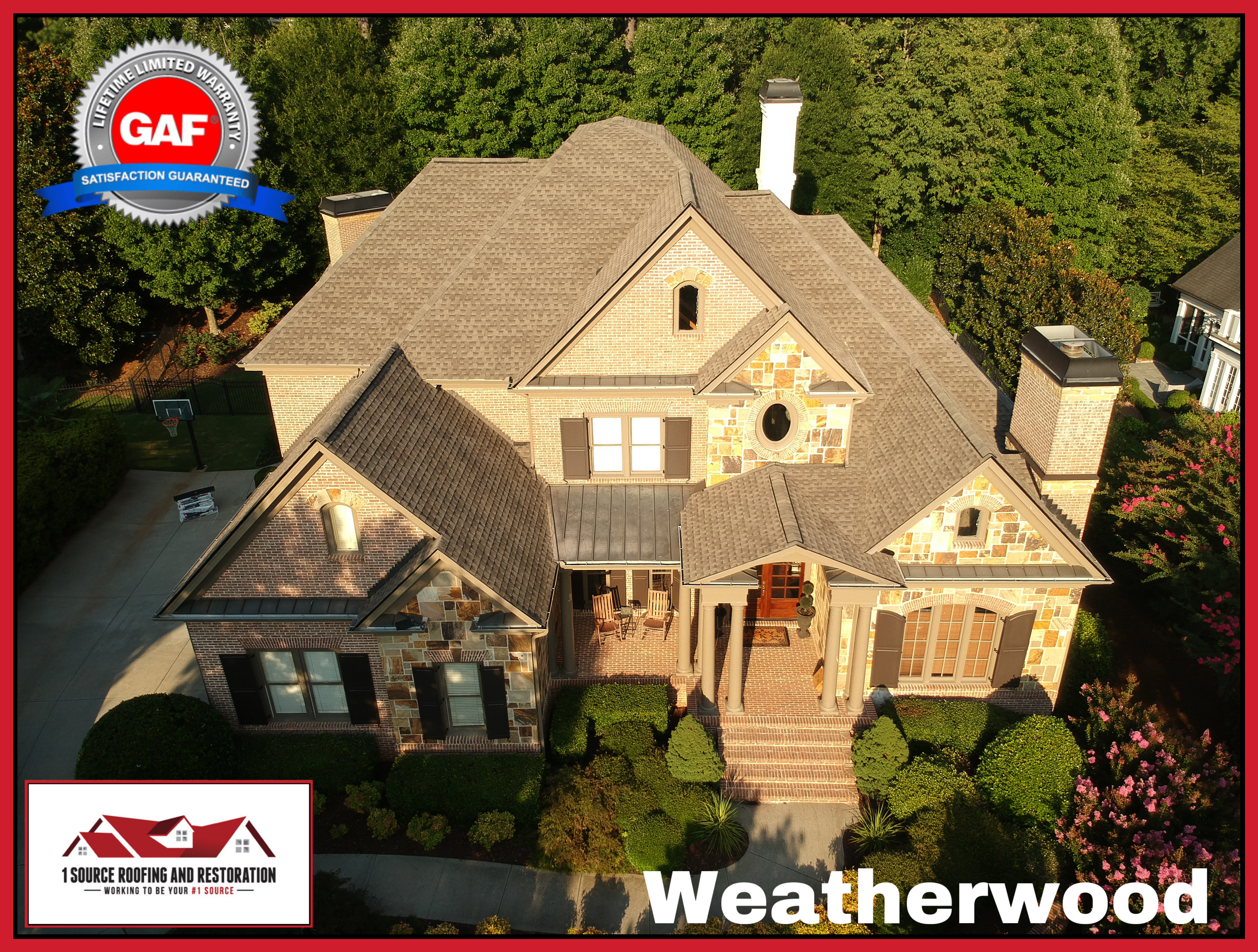
Manufacturer certification means your warranty stays intact. As a certified contractor for GAF, CertainTeed, 1 Source performs repairs using manufacturer-spec materials and installation procedures. When we repair a section of GAF Timberline shingles, we source matching material from certified supply channels and install it per GAF's specifications. The same principle applies to CertainTeed products. This matters because any repair or modification performed by a non-certified contractor can provide grounds for a manufacturer to contest a warranty claim — even on sections of the roof that were not touched in the repair.
Ten-plus years of Atlanta housing stock experience. Metro Atlanta's architectural diversity — from Buckhead's steep-pitch estate roofs to Alpharetta's complex multi-plane designs to Gwinnett County's brick exterior construction — requires a repair team that understands how each roof type fails and how to address it correctly. A chimney flashing repair on a stucco exterior is not the same operation as the same repair on a brick chimney. We have performed both hundreds of times across Atlanta's most demanding residential neighborhoods.
We meet your insurance adjuster on the roof. For storm-damage repairs, homeowners who walk the roof with their adjuster without their contractor present often see significant scope items left undocumented. Adjusters work efficiently and systematically — they document what they see and move on. An experienced roofing contractor knows where damage hides and how to document it clearly. We attend the adjuster meeting to show the documented damage and provide supplemental documentation for your insurer to review, so the full scope of repair is captured. See our Insurance Claims Assistance page for a full explanation of how that process works.
See our GAF certification, CertainTeed certification pages for a full explanation of what each designation means and the warranty benefits it provides.
What to Expect
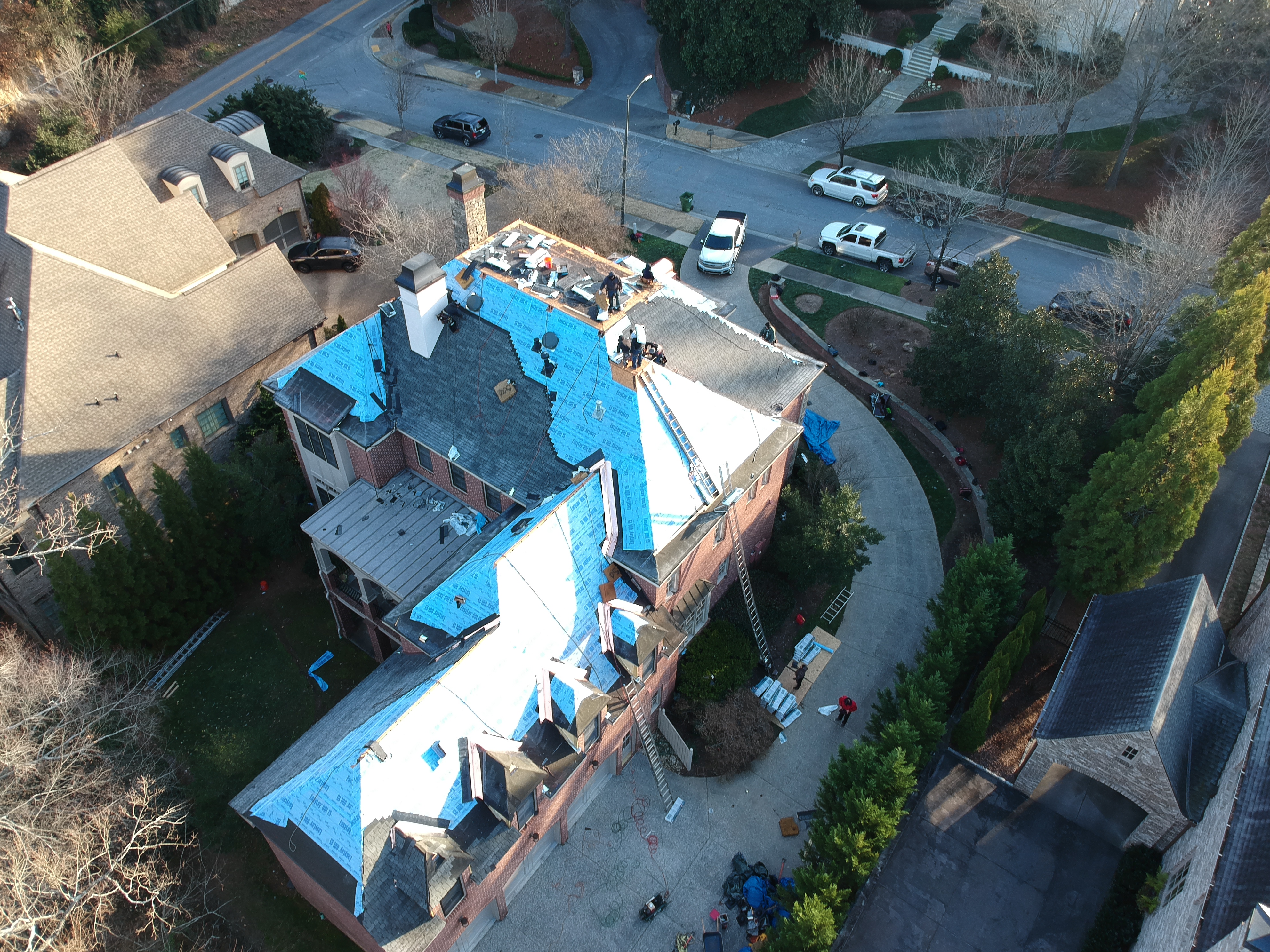
We approach every repair with a complete scope evaluation — not a patch-and-leave mentality. The steps below reflect how we handle both emergency and scheduled repairs from first contact through final walkthrough.
Making the Right Decision
The decision between repair and replacement is one of the most consequential financial questions a homeowner faces regarding their property. We approach it honestly — because our long-term relationship with homeowners in this market depends on giving them accurate guidance, not on maximizing the scope of any individual job.
When repair is the right choice: A roof under 15 to 20 years old with isolated damage confined to one section of the surface is typically a strong repair candidate. If the existing shingles across the majority of the field are in sound condition — no widespread granule loss, no soft or sagging decking, no evidence of systemic ventilation failure — a targeted repair will extend the roof's service life meaningfully. As a general benchmark, if the cost of repair represents less than 30 percent of the cost of a full replacement, and the overall roof condition supports it, repair is usually the more economical path.
When replacement becomes the better investment: Multiple repair zones across different sections of the roof are a signal that the entire system is reaching the end of its service life. Once a roof requires repair in more than one area within a short period, the pattern almost always continues. Roofs that are 20 years or older — particularly those with three-tab shingles rather than dimensional shingles — are approaching or past the point where repair extends life meaningfully. Storm events that have damaged more than 25 percent of the roof surface typically cross the threshold where a full replacement makes more structural and financial sense than a large-scale partial repair. See our Residential Roof Replacement page for the full replacement process.
Our commitment to honest assessment. Our inspectors give you a straightforward evaluation of where your roof stands. We will never recommend replacement when a repair will genuinely serve your home's needs through its remaining service life. And we will never minimize damage that makes repair a false economy. That assessment comes in writing, with photographs, so you can make an informed decision with full documentation in hand.
For older roofs where the repair-versus-replacement question is genuinely close, we can provide a comparison document showing the projected cost and timeline for each scenario. Some homeowners want to extend the current roof for three to five years for financial planning reasons — we can tell you whether that is a realistic objective given the current condition, and what it will require to make that interval defensible.
Emergency Response Available
We serve Alpharetta, Buckhead, Sandy Springs, and all metro Atlanta communities. Emergency response available for active leaks and storm damage.
(404) 277-1377Call Now — Free Inspection, No Obligation
Schedule Your Free Roof InspectionWhere We Work
1 Source Roofing provides emergency and scheduled roof repair throughout the Atlanta metro area. Our crews serve homeowners across a wide range of communities — from the estate neighborhoods of north Atlanta to the established residential areas of Gwinnett and Cobb counties.
We handle emergency and scheduled roof repair in Alpharetta, Buckhead, Sandy Springs, Marietta, Roswell, and Johns Creek, plus Duluth, Lawrenceville, Kennesaw, Suwanee, Decatur, Smyrna, and surrounding communities throughout the greater Atlanta metro area.
Our Lawrenceville base — located at 283 Swanson Drive — gives us efficient access to eastern Gwinnett County while maintaining reasonable drive times to Fulton and Cobb County properties. When you call with an emergency repair need, we dispatch from the nearest available crew to minimize response time.
For homeowners in Gwinnett County communities including Duluth, Suwanee, Buford, Dacula, and Grayson, we are a local contractor — not a national franchise routing your call through a regional dispatch center. The crew that arrives at your home is the same crew that has been performing certified repairs in your community for over a decade.
If you are outside the areas listed above, call us at (404) 277-1377 to confirm coverage for your location. Our service radius accommodates most communities within 30 miles of downtown Atlanta, and we evaluate requests outside that range on a case-by-case basis for high-complexity or large-scope projects.
Client Experiences
"1 Source found the source of a persistent leak that two other contractors missed. Fixed the flashing and the problem was solved for good."
"Responsive, honest, and thorough. They patched storm damage on my slate-look shingles and matched the color perfectly. The repair was invisible from the street."
Frequently Asked Questions
The questions below reflect what Atlanta homeowners ask most consistently when they first contact us about a repair. If your specific question is not covered here, call (404) 277-1377 — our team provides direct answers without a sales pitch.
For active leaks and storm damage, we prioritize same-day or next-day response across metro Atlanta. We understand that a leaking roof is not a situation where "we'll schedule you in two weeks" is an acceptable answer. Water intrusion compounds by the hour — every additional rain event that enters through an open breach extends the damage footprint.
Our first response to an emergency is often emergency tarping: deploying a professional-grade protective cover over the affected section to stop interior damage immediately while we prepare a complete inspection and written repair scope. Tarping protects your ceilings, insulation, and framing against further intrusion in the hours and days before a permanent repair is completed.
Call (404) 277-1377 and tell us it's urgent. We will confirm our response timeline on that call and make every effort to dispatch to your property the same day.
Coverage depends on the cause of the damage. Standard homeowner's policies cover sudden, accidental damage events — wind, hail, falling trees, fire, and similar perils. They do not cover gradual deterioration from normal wear, maintenance neglect, or defects in original installation. The distinction matters because adjusters are trained to identify and document the cause of loss, and how your damage is categorized determines what is covered.
The key factors in a successful claim are prompt reporting and professional documentation. Delays in reporting can provide grounds for an insurer to argue that subsequent deterioration was preventable — shifting a portion of the loss from covered storm damage to maintenance neglect. Thorough photographic documentation, a written damage assessment, and a repair scope formatted for insurance review are essential for capturing the full scope of what is legitimately covered.
1 Source provides complete documentation packages for insurance claims and meets your adjuster on the roof to show the documented damage. You file and control the claim, and your insurer determines coverage. See our Insurance Claims Assistance page for the full process and what to expect at each stage of a claim.
Most residential roof repairs — flashing replacement, shingle patches, valley repairs, pipe boot replacements — are completed in a single day. Emergency tarping is same-day, and in most cases the tarp installation takes two to three hours from dispatch.
Larger repairs involving decking replacement, extensive flashing work around multiple penetrations, or repairs that require working through wet weather windows may extend to two days. Repairs tied to insurance claims sometimes require an adjuster visit before the repair work begins, which can add scheduling time between the initial inspection and the start of the physical repair.
We confirm the timeline in writing in the scope of work document before any work begins. If the repair scope changes during the job — because we discover additional damage during teardown that was not visible from the surface — we contact you immediately, explain what we found, and get written authorization before proceeding with any added scope.
The most common causes of roof leaks in Atlanta homes, in approximate order of frequency:
Failed pipe boot seals. The rubber boots that seal around plumbing vent pipes through the roof are among the most common failure points we see. Rubber degrades under UV exposure and Atlanta's temperature extremes, typically failing within 10 to 15 years. A failed pipe boot is a straightforward repair when caught early — but the water it allows into the framing and insulation can cause damage well out of proportion to the repair cost when left unaddressed.
Cracked or lifted flashing. Flashing at chimney bases, skylights, dormers, and roof-to-wall transitions fails through a combination of sealant degradation and metal fatigue. Once the sealant cracks and the metal lifts, water channels directly into the roof deck during every rain event.
Wind-damaged shingles. Atlanta's summer and fall thunderstorm season regularly produces wind events capable of lifting shingles — particularly on older roofs where the sealant strip has lost adhesion. Missing shingles create immediate open exposure of the underlayment.
Valley erosion. The valleys where two roof planes intersect concentrate water flow during rain events. Over time, the shingles in valley sections wear faster than field shingles and eventually allow water to penetrate. Annual inspections of valley sections are worthwhile on roofs over 12 years old.
Atlanta's summer thunderstorms and the combination of intense heat and humidity accelerate granule loss across the entire shingle field, which shortens overall roof service life compared to drier climates. A free annual inspection is the most effective way to identify these issues before they reach the emergency stage.