
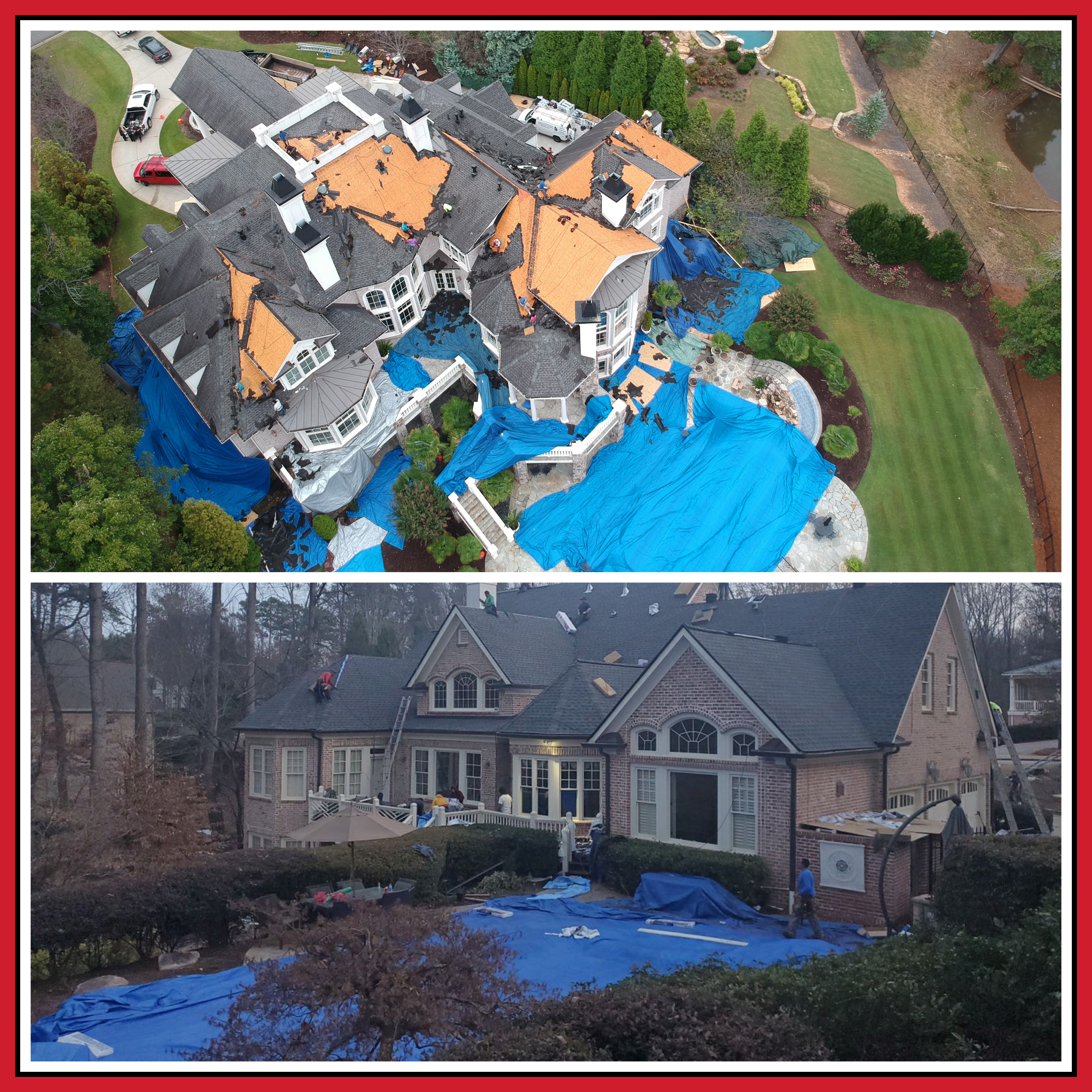
Storm Damage Roof Repair in Atlanta, GA
24-Hour Emergency Response. GAF Certified. Hail, wind, and fallen tree damage specialists. Call (404) 277-1377.
Certified by Industry-Leading Manufacturers
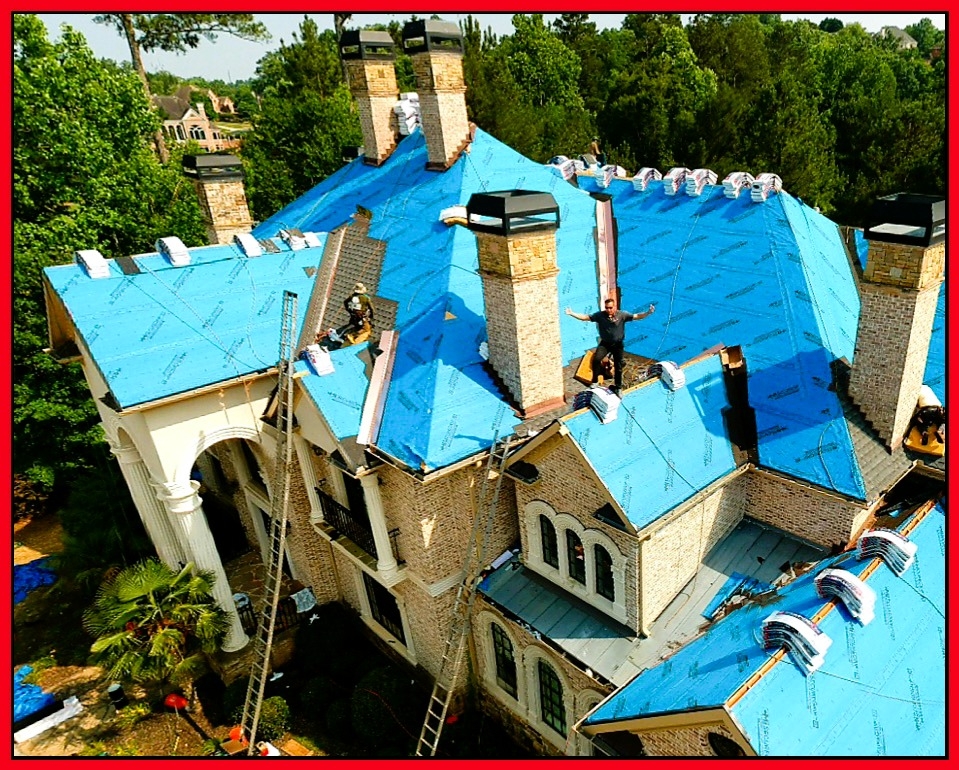
When Storm Damage Demands Immediate Action
Atlanta's summer storm season produces some of the highest hail frequencies in the Southeast. A 15-minute hailstorm can punch through the granule protection on thousands of homes simultaneously — and the problem that follows is largely invisible. Cracked shingles, dented metal, bruised underlayment: these do not show as active leaks until the next heavy rain, which may come weeks later. By then, interior water intrusion has already begun, and insurance claim windows may have narrowed considerably.
The standard homeowner instinct is to wait and see. That instinct costs money. The correct move is to call a professional storm inspector within 24-48 hours of a significant weather event — before your insurer's clock starts working against you, and before secondary damage compounds the original loss.
You don't need to see a leak to file a claim. Storm damage is documented by physical evidence — and 1 Source inspectors know exactly what to look for and how to document it for your insurer. We have documented and restored hundreds of storm-damaged roofs across metro Atlanta, and we understand the difference between documentation that gives your insurer a complete picture of the loss and documentation that leaves damage unaccounted for. If you experienced a storm event in the last week, call us today. The inspection is free.
Types of Storm Damage We Handle
Storm events in the Atlanta metro produce a range of damage patterns — each requiring a distinct inspection protocol and repair approach. Our teams are trained to identify and document all of the following:
Hail Damage
Hail impacts bruise asphalt shingles, crack ridge caps, and dent metal flashing and gutters. The bruising accelerates granule loss and UV exposure, shortening roof life by years. We document every impact point in the format insurance adjusters require.
Wind Damage
High winds lift shingle tabs, expose nail strips, and create pressure differentials that can peel entire sections from the decking. Even partial lifts create pathways for water infiltration that aren't visible until a driving rain event.
Fallen Tree Damage
Tree impacts range from minor branch strikes on flashing to full structural decking collapses. Every tree strike requires assessment of the decking below — surface shingle replacement without a structural inspection misses the most consequential damage. See our Tree Removal services for fallen tree extraction and debris management.
Ice Dam Damage
Winter storms and freeze-thaw cycles can create ice dams along eave lines that force water back beneath the shingle course. The resulting water intrusion typically appears as interior ceiling staining weeks after the ice is gone — a pattern that insurers may dispute if not properly documented.
Lightning and Fire Damage
Lightning strikes can ignite roofing materials directly or cause structural damage through the discharge path. Even strikes that don't start visible fires can compromise decking integrity. We assess the full strike zone and document all structural impacts for your insurance file.
.jpg)
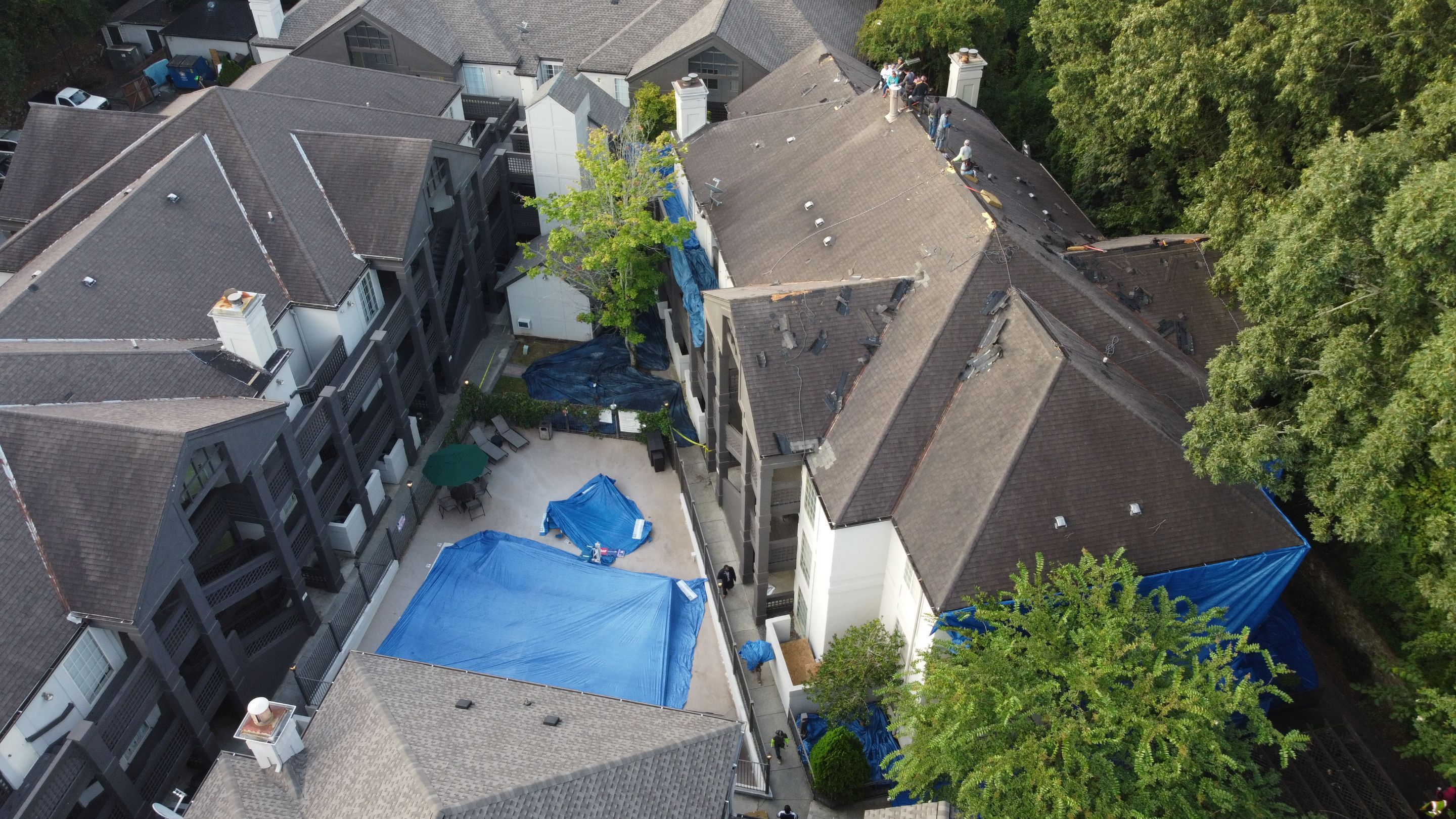
Our 24-Hour Emergency Storm Response Process
When you call after a storm, we follow a systematic process designed to protect your home immediately and build the strongest possible documentation for your insurance claim. Every step is deliberate. Here is exactly what happens:
- Emergency Call — (404) 277-1377 We prioritize storm response calls. When you call, tell us your address and describe any visible damage. Our team will assess urgency over the phone — active water exposure, structural compromise, or fallen trees receive immediate priority scheduling. We will give you an honest estimated response window based on current conditions across the metro.
- Same-Day Emergency Tarping If there is active exposure — a hole through the decking, a collapsed section, or shingles completely absent over a field area — we deploy emergency tarping immediately. Tarping prevents additional water intrusion while the full assessment is prepared and submitted to your insurance company. Temporary protective measures are typically covered by your policy and do not compromise your claim.
- Comprehensive Storm Damage Inspection We inspect the full roof — not just the slopes visible from the driveway. Hail impacts may be concentrated on north or rear slopes. Flashing, ridge cap, pipe boots, skylights, and all roof penetrations are checked on every surface. Our inspectors use the same methodology insurance companies train their adjusters to use — which means our documentation holds up during the adjuster meeting.
- Photographic Documentation Before any work begins, we capture high-resolution damage photos in the specific format required for insurance submission. This includes close-up impact documentation, measurement references for hail size, and full-slope context shots. We also pull NOAA storm records for your area to corroborate event timing — a detail that matters when insurers question the cause of damage.
- Insurance Adjuster Meeting 1 Source can be present at your adjuster appointment. We bring our full damage report and walk the adjuster through every documented damage point, slope by slope, to show what we found. Having your roofing contractor present to show the documented damage helps the adjuster write a complete scope — a knowledgeable contractor on site means nothing gets overlooked. This is one of the highest-value forms of support we provide.
- Scope Agreement and Repair or Replacement Once the adjuster approves the scope of loss, we schedule the repair or replacement promptly. If the initial scope appears to miss documented items, we prepare a formal Supplement Request with additional documentation and submit it for your insurer to review. Most initial scopes are revised at least once with a supplement — that is normal, expected, and part of the documentation we prepare for you.
- Post-Repair Documentation We provide a completion report and invoice for your insurance file at the conclusion of the project. This documentation supports the release of your final insurance payment and serves as a permanent record of the work performed for your home's history.
Hail Damage — The Hidden Threat to Atlanta Roofs
Of all storm damage types, hail is the most misunderstood — and the most frequently undervalued by insurance companies. Understanding how hail damage actually works is essential to protecting your claim.
When hail strikes an asphalt shingle, the impact bruises the asphalt mat beneath the surface granules. The granules themselves may still appear mostly intact immediately after the storm. But the structural integrity of the mat has been compromised at the impact point. Over the months that follow, those damaged granules shed at an accelerated rate, exposing the bare asphalt mat to direct UV radiation. A roof that would have lasted 15-20 more years may now have 5-8 years of functional life remaining. That is not cosmetic damage — it is functional damage with direct insurance significance.
Insurance companies send adjusters trained to characterize some hail impacts as "cosmetic" — a determination that reduces the claim to zero in many policy structures. That characterization is often incorrect, and contesting it requires the same documentation methodology the adjuster uses. 1 Source's inspectors are trained to demonstrate functional damage using the industry-standard testing approach: identifying the bruise pattern, confirming granule loss beyond normal weathering thresholds, and documenting the distribution and size of impacts across each slope.
If a claim is wrongly denied or significantly reduced on cosmetic grounds, the situation is not necessarily resolved — additional documentation can be prepared and submitted for your insurer to review, and a licensed public adjuster can be engaged for complex disputes. We frame this work as making sure the full extent of your roof damage is documented for your insurer, not as a confrontation. Most insurance companies want to pay valid claims correctly. The goal is accurate documentation, not conflict.
Insurance Claims for Storm Damage
Filing a storm damage insurance claim is a process — and knowing how that process works is the difference between a full replacement approval and a partial settlement. The documentation step, the adjuster meeting, the Scope of Loss review, the supplement process: each stage is an opportunity to make sure the full extent of your roof damage is on the record for your insurer to review.
1 Source Roofing supports Atlanta homeowners through every step of the claim process: from initial damage documentation through the adjuster meeting through final settlement. You file and control your claim, and your insurer determines coverage — our role is to document the damage thoroughly and provide a detailed estimate. We have documented and restored hundreds of storm-damaged roofs across metro Atlanta, and we understand exactly what insurers look for, what adjusters need to see, and how to make sure your damage is fully and accurately documented.
Storm Damage Response Across Metro Atlanta
We respond to storm damage calls across the metro Atlanta area. Our response teams are staged to serve the entire region — from the northern suburbs through the city proper and into the southeastern communities. When a significant storm event strikes, we mobilize quickly and triage by urgency: active water exposure first, then inspection and documentation.
We serve homeowners in Alpharetta, Buckhead, Sandy Springs, Marietta, Roswell, and Johns Creek, as well as Lawrenceville, Duluth, Cumming, Kennesaw, Smyrna, and surrounding communities within the Atlanta metro area.
After a widespread storm event affecting multiple zip codes simultaneously, we will be transparent about our scheduling timeline. Homes with active exposure are prioritized. Call (404) 277-1377 and describe your situation so we can triage appropriately and give you an honest response window.
What Our Customers Say
"After the June hailstorm, 1 Source was out the next morning. They documented every piece of damage and my adjuster approved the full replacement scope without argument. I would not have known what to look for on my own."
"I didn't even know I had hail damage until 1 Source found it during a free inspection. Insurance covered the full replacement. The whole process took about six weeks from the first call to the completed roof."
Storm Damage? Don't Wait.
24-hour emergency response across metro Atlanta. Call now — the sooner you document, the stronger your insurance claim. Free inspections, no obligation.
Call (404) 277-1377Frequently Asked Questions About Storm Damage Roof Repair
Answers to the questions Atlanta homeowners ask most after storm events
What should I do immediately after storm damage to my roof?
First, stay safe — do not walk on a damaged roof or enter spaces beneath a compromised structure. Call 1 Source at (404) 277-1377. We'll arrange emergency tarping if there is open exposure. Document what you can see from the ground with your phone camera, noting the date and time. Then call your insurance company to open a claim and record the claim number. Do not sign anything, agree to any settlement, or allow any permanent work to begin until a full professional inspection has been completed. You file and control your claim; we provide the documentation and estimate that support it. We can be present at the adjuster meeting to show the documented damage — having your contractor there helps make sure the damage to your roof is fully accounted for.
How do I know if my roof has hail damage?
Hail damage is often not visible from the ground. Signs that are visible: dented metal flashings or gutters, cracked or bruised ridge cap shingles, and granules collecting in gutters or downspout discharge areas after a storm. But the most reliable way to assess hail damage is a professional inspection by someone trained in impact pattern analysis. 1 Source inspectors know how to distinguish hail impact from normal wear — and how to document it in the specific format insurance adjusters require. If your neighbors are getting their roofs inspected after a storm, yours likely needs one too — storm events don't respect property lines.
Will my insurance cover storm damage roof repair?
Most standard homeowner's policies in Georgia cover sudden, accidental damage from wind, hail, and fallen trees. The key is proper documentation and prompt reporting. Policies have claim filing windows — often one year from the event, sometimes less — and adjusters are trained to identify pre-existing damage. Policies also distinguish between cosmetic and functional damage, and that distinction can significantly affect the payout. Your insurer determines coverage. Thorough professional documentation, and having your contractor present at the adjuster meeting to show that documented damage, give your insurer a complete picture of the loss.
How quickly can 1 Source Roofing respond after a storm?
We prioritize storm calls above all other scheduling. For emergency tarping and initial assessment, we aim for same-day or next-day response across metro Atlanta. After a major storm event affecting multiple zip codes simultaneously, response times may extend to 48 hours — we will be honest about our current schedule and prioritize homes with active water exposure. Call (404) 277-1377 and describe your situation clearly so we can triage appropriately and give you a realistic response window.
What is the difference between storm damage repair and full replacement?
Storm damage repair addresses specific damaged sections — a hail-damaged slope, lifted shingles over a field area, or failed flashing — while leaving intact sections of the existing roof in place. Full replacement removes and replaces the entire roof system. Whether repair or replacement is appropriate depends on the extent of damage, the age of the existing roof, and what your insurance adjuster approves as the correct scope. Hail damage that affects more than 25-30% of the total roof surface often justifies a full replacement claim — especially when the existing roof is 10 or more years old and granule loss is widespread across multiple slopes.