
There is a piece of metal on a properly built roof that is smaller than your hand, costs a few dollars, and prevents tens of thousands of dollars in structural damage. It is called kickout flashing, and the majority of homeowners have never heard of it. Roofers know it. Building inspectors know it. The insurance adjusters who write checks for rotted walls know it. But because it lives in a spot you can barely see from the ground, it is one of the most commonly omitted details on metro Atlanta homes.
When a kickout is missing or installed incorrectly, the damage does not announce itself. There is no dramatic leak, no water dripping from a ceiling. Instead, concentrated roof runoff quietly pours into a wall cavity, year after year, soaking the sheathing and framing behind the siding until the structure underneath is compromised. By the time a homeowner notices the soft trim or the stained siding, the repair is no longer a roofing job. It is a structural restoration.
This guide explains exactly what kickout flashing is, where it belongs, why Georgia's climate makes its absence so destructive, what the code actually requires, and how to tell whether your home is protected. If you take one technical roofing detail seriously, make it this one.
1. What Kickout Flashing Is and Where It Lives
Kickout flashing — sometimes called a diverter flashing — is a short piece of metal installed at the lowest point where a sloped roof edge meets a wall that continues past the roof line. Picture a roof that runs alongside a two-story wall: above a garage, beside a bay window, where a porch roof ties into the main house, or where a lower roof section abuts a taller gable end. Along that intersection, the roofer installs a series of overlapping step flashings that channel water down toward the gutter. The kickout sits at the very bottom of that run.
Its job is simple and specific. The kickout is bent outward at an angle, like a tiny ski jump, so that water reaching the end of the wall-to-roof valley gets "kicked out" away from the wall and into the gutter. Without it, the water sheeting down that intersection has nowhere to go but straight down the face of the wall — and behind it. The kickout is the final piece in a continuous water-management path, and the path is only as good as its weakest link.

The detail matters most on homes with offset rooflines and sidewalls, which describes a large share of metro Atlanta's traditional, craftsman, and estate-style architecture. The more dormers, attached garages, and stepped elevations a home has, the more roof-to-wall transitions it contains — and the more kickouts it needs. Each one is a small, individual installation that a careful roofer addresses and a careless one skips.
2. How a Missing Kickout Turns Rain Into Rot
To understand why this small omission is so destructive, you have to follow the water. Rain that lands anywhere on a roof slope above a wall intersection eventually channels into the valley formed by the roof plane and the vertical wall. As it travels downhill, it collects volume from a widening area of the roof. By the time it reaches the bottom of the intersection — right where the kickout should be — it is moving as a concentrated, fast stream rather than a gentle sheet.
With a kickout in place, that stream is launched outward into the gutter and carried away. With no kickout, the stream hits the bottom of the wall intersection and dives straight behind the gutter, running down the face of the siding and, critically, into the gap between the cladding and the wall sheathing. Siding and brick veneer are designed to shed water, not to be saturated by a focused jet of it day after day.
Behind the cladding sits the building's water-resistive barrier (house wrap or felt), the oriented strand board or plywood sheathing, and the wood framing — studs, the rim joist, and sometimes a critical band of structural support. Concentrated water finds the inevitable small gaps in the barrier, wets the sheathing, and keeps it wet. Wood that stays wet rots. OSB that stays wet swells, delaminates, and loses its structural strength. The damage spreads behind a surface that looks fine from the street.
The danger of a missing kickout is that it fails invisibly. Unlike a roof leak that stains a ceiling and demands attention, wall intrusion behind siding can progress for years with no interior symptom. The first visible sign is often soft trim, blistering paint, or moss on the wall — and by then the sheathing behind it is usually already compromised.
3. Why Georgia's Climate Makes This Worse Than Most
Metro Atlanta receives roughly 50 inches of rain a year — more than Seattle. That rainfall arrives in heavy, fast-moving thunderstorms through spring and summer, exactly the kind of high-volume events that overwhelm a wall intersection lacking a kickout. A drizzle might trickle harmlessly; an afternoon Georgia downpour drives a pressurized stream into the wall.
Humidity compounds the problem. After the rain stops, our sustained summer humidity slows the drying of any moisture that has worked its way behind the cladding. In a dry climate, wood that gets wet has a chance to dry out between storms. In Georgia, wall cavities stay damp, and damp wood is what rot and mold require. The combination of high rainfall, intense storm bursts, and slow drying means a missing kickout that might cause slow trouble in Arizona causes accelerated structural decay here.
We see this pattern constantly during storm damage restoration work across Fulton, Cobb, Gwinnett, and Forsyth counties. A wind event tears off a section of siding, and the crew opens up a wall expecting routine repair — only to find years of accumulated rot traced directly back to a roof-to-wall transition that never had a kickout. The storm did not cause the rot; it simply exposed it.
4. Warning Signs Your Home May Be Missing a Kickout
Homeowners can spot the most common warning signs from the ground, and an annual look at every roof-to-wall transition is worth the few minutes it takes. Walk the perimeter of the house and study each point where a roof edge dies into a wall above a gutter. Look for the following indicators.
- Staining or streaking on the siding directly below the bottom of a roof-to-wall intersection, often in a vertical band.
- Peeling, blistering, or perpetually damp paint on trim or cladding at that specific spot, while the rest of the wall looks fine.
- Soft, spongy, or discolored trim boards where the roof meets the wall — press gently and feel for give.
- Moss, algae, or organic growth on the wall below the transition, a clear sign of chronic moisture.
- Erosion, splashing, or a worn channel in mulch or soil at grade directly below the intersection, indicating water has been pouring down the wall.
- Visibly no metal diverter at the base of the intersection — the step flashing simply ends at the gutter with no outward bend.
Any one of these signs warrants a closer look. A professional roof repair assessment can confirm whether the kickout is absent and, more importantly, whether moisture has already reached the sheathing behind the wall. The visible symptom is rarely the full story.
5. With a Kickout vs. Without: A Side-by-Side Look
The contrast between a transition built correctly and one built without a kickout is stark. The table below lays out what changes when this single component is present versus omitted.
| Factor | With Kickout Flashing | Without Kickout Flashing |
|---|---|---|
| Water path | Diverted into the gutter and carried away | Dumped down the face of the wall and behind cladding |
| Wall sheathing | Stays dry, retains full structural strength | Saturated repeatedly; rots and delaminates over time |
| Framing | Protected; no moisture exposure | Studs and rim joist at risk of decay |
| Visible symptom | None — system performs silently | Often none until structural damage is advanced |
| Code compliance | Meets IRC roof-to-wall drainage requirement | Non-compliant installation |
| Cost to address | A few dollars in material, minutes of labor | Hundreds to many thousands once rot is involved |
The economics are not close. The cost of doing it right is trivial. The cost of skipping it is open-ended, because it depends entirely on how long the water runs before someone notices. That asymmetry is exactly why the detail is non-negotiable on any quality installation.
6. What Georgia and the IRC Actually Require
Kickout flashing is not optional, and it is not a premium upgrade. The International Residential Code — adopted in Georgia with state amendments — requires that where the lower portion of a sloped roof terminates against a sidewall, flashing be installed to divert water away from the wall and into the gutter or other approved drainage. In plain terms: the code says you must put a kickout there.
Despite being a clear requirement, the detail is among the most frequently violated. The reason is practical, not technical. A kickout takes an extra few minutes per transition, requires the installer to integrate it cleanly with the step flashing and the siding, and is essentially invisible to a homeowner inspecting from the ground. A crew under time pressure, or one that simply was never trained to value the detail, leaves it off. The roof looks finished. The inspection — if one even checks that specific point — may miss it. The homeowner has no idea.

This is one reason the choice of contractor matters far more than most homeowners assume. The components that protect a home are often the ones that cannot be seen after the job is done. A code-compliant installation that includes every required flashing detail looks identical, from the curb, to one that cut corners. The difference shows up years later, inside the walls. You can read more about how these requirements connect on our building codes hub and the broader technical standards hub.
Not Sure If Your Roof-to-Wall Transitions Are Protected?
Our inspectors check every kickout, step flashing, and wall intersection during a free on-site assessment — and tell you exactly what they find, in writing.
Call (404) 277-13777. The Kickout Is Part of a Larger Flashing System
A kickout does not work in isolation. It is the terminal piece of a continuous chain of flashings that manage water at every roof-to-wall and roof-to-roof transition. If any link in that chain is wrong, the kickout cannot save the wall on its own — and a perfect kickout at the bottom of failed step flashing is little comfort.
Step flashing runs up the length of the wall intersection, with one piece woven into each course of shingles, lapping over the one below it like shingles themselves. Counter-flashing or the siding's own water-resistive barrier laps over the top of the step flashing so water cannot get behind it. The kickout terminates the run at the bottom. Above and around this, the underlayment and any self-adhering membrane add a redundant waterproof layer. The whole system is designed so that even if surface water finds a path past the shingles, it is shed harmlessly outward at every level.
Understanding the wider system helps explain why we treat roof-to-wall transitions as a single engineered detail rather than a collection of parts. If you want to go deeper on the related components, our guide on step flashing versus reglet flashing covers how the vertical run is sealed, and our drip edge installation guide explains the code-required perimeter detail that many roofs skip for the same reasons kickouts get skipped. For chimneys, the related diverter detail is the chimney cricket or saddle, which serves a similar water-redirection purpose on the uphill side of a wide chimney.
A kickout is only as good as the step flashing it terminates. When we retrofit or replace a kickout, we inspect the entire wall intersection — because a diverter installed over failing step flashing simply moves the leak a few inches. The transition is one system, and it has to be addressed as one.
8. The Cost of Neglect: What Wall Rot Actually Takes to Fix
When a kickout is missing and water has been running into a wall for years, the repair scope grows in layers — and each layer adds cost. Understanding the progression makes the value of the original five-dollar part painfully clear.
At the earliest stage, before significant moisture has accumulated, retrofitting a kickout and resealing the transition is a modest roof repair — measured in hundreds of dollars, not thousands. Once the water has reached and damaged the sheathing, the scope expands to include removing the affected siding, replacing rotted OSB or plywood, repairing or replacing the water-resistive barrier, and re-cladding the wall. That work moves the project into the low thousands.
If the rot has reached the framing — the studs, the rim joist, or the band that carries load above a garage door opening — the project becomes structural. Now a carpenter is sistering or replacing framing members, and the repair may require coordination with water damage restoration if mold has colonized the cavity. Interior finishes — drywall, insulation, trim, and paint — frequently need replacement as well. Advanced cases routinely run well into five figures, and that is before accounting for the disruption of opening up a wall on a finished home.
None of this is hypothetical. It is the standard escalation pattern we document on Atlanta homes where a single missing diverter ran water into a wall for a decade. The original part cost less than a cup of coffee. The remediation costs more than the entire flashing package for the roof.
9. Can a Kickout Be Added to an Existing Roof?
In many situations, yes — and doing so promptly costs a fraction of what waiting does. Retrofitting a kickout onto an existing roof involves carefully lifting the lower shingle courses and the bottom run of step flashing at the transition, integrating a properly sized and bent kickout, and re-weaving the shingles and flashing so the water path is continuous and shed outward. Done correctly, the retrofit is invisible and permanent.
The complexity depends on the wall cladding. With lap siding, the existing step flashing and house wrap are usually accessible enough to integrate a new kickout cleanly. With brick or stucco veneer, the detail is more involved because the cladding was built over the original flashing, and the integration point is harder to reach without disturbing the masonry. An experienced roofer evaluates the specific construction before committing to an approach, which is exactly the kind of judgment a free on-site assessment is meant to provide.
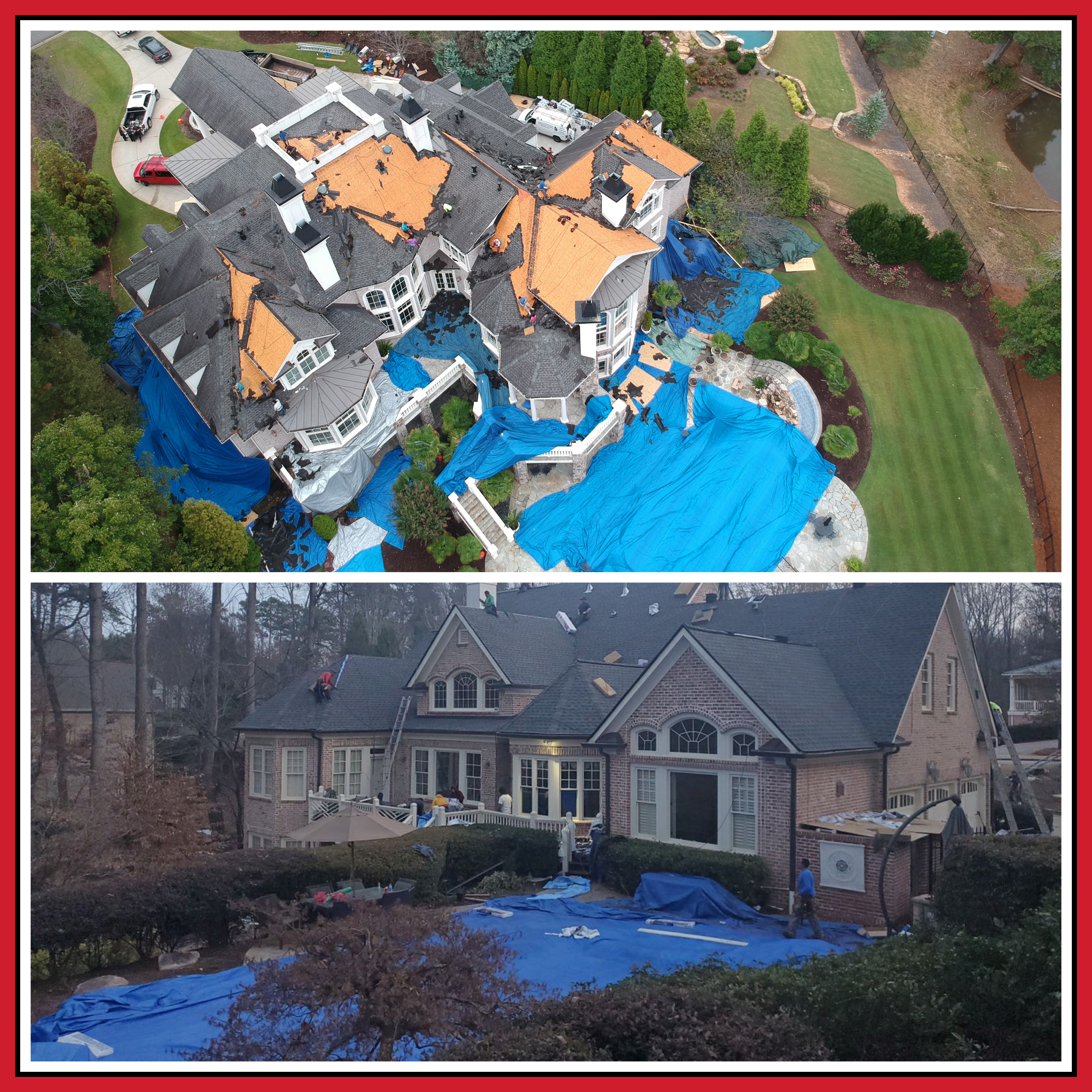
When a full roof replacement is already on the horizon, the kickout question resolves itself: a quality replacement reinstalls every flashing detail to current code as a matter of course. That is the cleanest time to correct a long-missing diverter, because the entire transition is already open and the new system can be built right from the deck up.
10. Why Your Choice of Roofer Decides Whether You Get One
Because a kickout is invisible from the ground and adds a step to the job, whether your home gets one comes down almost entirely to the standards of the crew installing the roof. There is no way for a homeowner to verify, mid-installation, that every transition was handled correctly. You are trusting that the contractor's process includes the details that protect you long after the final invoice.
This is the practical case for choosing a certified, manufacturer-trained roofing company over the lowest bidder. GAF and CertainTeed certification programs train installers specifically on the flashing details that manufacturer warranties depend on — and a kickout at every qualifying transition is part of that standard. A contractor whose proposal is dramatically lower than others is, almost without exception, achieving that figure by omitting components and steps you cannot see, and the flashing details are the first to go.
At 1 Source Roofing and Restoration, every roof-to-wall transition is treated as an engineered detail, documented during the assessment and inspected during installation by a site supervisor rather than left to chance. You can learn more about that standard on our why choose us page and see the results across our project gallery. Homeowners in Alpharetta, Buckhead, Sandy Springs, and Johns Creek choose us precisely because we treat the parts no one sees with the same care as the shingles everyone does.
11. Kickouts on Commercial and Multi-Family Buildings
The roof-to-wall transition is not a residential-only concern. Commercial buildings, townhome rows, and mixed-use structures often have extensive sloped-roof-to-wall intersections — parapet returns, stepped facades, and sections where lower roofs meet taller walls. On these buildings the consequences of a missing diverter scale with the structure: a single chronic intrusion point can damage multiple units or compromise a structural wall serving a large interior.
For property managers and owners overseeing portfolios, water management at wall transitions belongs in any roof condition assessment. Our commercial roofing team evaluates these details as part of a building's overall water-management strategy, and they connect directly to the broader discipline of roof asset management. Catching a missing or failed kickout during a routine assessment is dramatically less expensive than discovering it through a tenant's water-damage complaint.
12. Kickouts, Water Damage, and Insurance Claims
The insurance dimension of kickout failures is where many Atlanta homeowners get an unwelcome surprise. Damage from a missing or improperly installed kickout is typically classified as long-term water intrusion resulting from a construction or maintenance defect — not a sudden, accidental event. Most homeowners policies exclude gradual water damage and defects in workmanship, which means the rot traced to an absent kickout often falls outside coverage.
That said, the picture is not always simple. When a storm event damages the cladding and exposes pre-existing intrusion, or when the water pathway involves a covered peril, a properly documented claim can recover at least part of the scope. The key is documentation — photographs, moisture readings, and a clear professional narrative connecting the damage to its cause. Our team's experience with insurance claims assistance helps homeowners present these cases accurately, and our insurance claims hub and water damage hub walk through the documentation process in detail.
The broader lesson is preventive. Because gradual intrusion is so often excluded, the financial protection against kickout-related rot is not your insurance policy — it is correct installation in the first place. A few dollars of flashing, installed right, is the only coverage that reliably pays out.
13. The Bottom Line on a Five-Dollar Part
Kickout flashing is the clearest example in residential roofing of how a small, inexpensive, easily overlooked detail carries outsized consequences. It costs almost nothing. It takes minutes to install. It is required by code. And when it is missing, it can quietly destroy the wall, sheathing, and framing of a home over a span of years, with no warning until the damage is severe and expensive.
If your home has roof-to-wall transitions — above a garage, beside a dormer, where a porch ties in — it has places where a kickout either is or should be protecting the wall. The only way to know for certain is to have a qualified roofer look. Whether you are planning a replacement, addressing visible repair needs, or simply want peace of mind, a free on-site assessment will tell you exactly where you stand. The detail is small. The protection it provides is not.
Get Every Roof-to-Wall Transition Checked
Free on-site assessment with a written report on your flashing, kickouts, and wall transitions. Serving Roswell, Marietta, and all of metro Atlanta.
(404) 277-1377 — No ObligationCertified by Industry-Leading Manufacturers