Hail is the quietest threat to a roof in metro Atlanta. A storm passes in fifteen minutes, the sun comes back out, and the roof looks exactly as it did that morning. Months later, a brown ring appears on a bedroom ceiling, and the homeowner discovers that the damage was done back in spring — when the insurance window was still open and the claim would have been straightforward. By the time water reaches the living space, the conversation with the insurer has become far more difficult.
This guide is written to keep you out of that situation. It explains what hail actually does to an asphalt shingle, the specific signs that distinguish true impact damage from ordinary weathering, what you can safely check from the ground, and why the most consequential damage almost never shows itself to an untrained eye. Atlanta sits in a corridor that sees damaging hail nearly every year, and the homeowners who fare best are the ones who know what to look for and act before the evidence fades.
By the end, you will understand how hail damages a roof, the timeline on which that damage worsens, what an experienced inspector looks for, and how the assessment connects to a successful insurance claim. The goal is simple: catch the damage while it is still provable and still repairable on your terms.
1. What Hail Actually Does to an Asphalt Shingle
To recognize hail damage, it helps to understand the structure of what is being damaged. A modern architectural asphalt shingle is built in layers: a fiberglass mat at the core, asphalt coating bonded to that mat, and a surface of ceramic-coated mineral granules embedded into the asphalt while it is still hot. Those granules are not decorative. They are the shingle's sunscreen — they shield the asphalt beneath from ultraviolet radiation, which is the single largest cause of asphalt aging in Georgia's climate.
When a hailstone strikes, it delivers a concentrated burst of kinetic energy to a small area. Two things can happen, and often both occur together. First, the impact dislodges granules, exposing the dark asphalt underneath. Second, and more seriously, the impact fractures the fiberglass mat itself — a phenomenon called bruising. A bruise is not a hole and is frequently invisible from above; it presents as a soft, spongy spot that gives slightly under finger pressure, like a bruise on a piece of fruit. The mat has cracked, but the granule surface above it may still look largely intact.
This is what makes hail so deceptive. The damage that matters most — the fracture in the mat — is the damage you can least easily see. A bruised shingle has lost its structural integrity at the impact point. Water will eventually find that fracture, and the exposed asphalt will degrade under the sun far faster than the surrounding shingle. A roof can sustain dozens of bruises across its slopes and read as perfectly normal to a homeowner standing in the driveway.
2. Bruising: The Damage That Matters Most
Among the indicators an inspector evaluates, bruising carries the most weight, both for the health of the roof and for an insurance claim. A genuine hail bruise has a recognizable signature: a roughly circular impact mark, random in placement across the slope, with a soft center where the mat has fractured. Press on it and the spot yields slightly. The granules at the center are often knocked loose, leaving a small dark depression, and a fresh bruise frequently shows a shiny or "fresh" asphalt appearance where the surface coating has been disturbed.
The randomness is a key authentication signal. Hail falls indiscriminately, so true hail damage appears in a scattered, non-patterned distribution across the affected slopes — heavier on the slopes facing the direction the storm came from, lighter or absent on the protected slopes. Damage that follows a regular pattern, lines up with foot-traffic paths, or concentrates only around penetrations is something other than hail, and an experienced inspector will say so. This distinction matters because misidentified damage produces denied claims and erodes credibility with the adjuster on the items that are legitimate.
Bruising is the form of damage most likely to be missed by a homeowner and most likely to be the basis for a justified replacement. A roof with widespread bruising has been functionally compromised even though it has not yet leaked. The fractures are present, the granule protection is breached at each impact, and the clock is now running on accelerated deterioration. Catching bruising early is the entire point of a post-storm inspection, and it is why storm damage restoration begins with a careful surface assessment rather than a glance from the ground.
3. Granule Loss and What It Reveals
Granule loss is the most visible consequence of hail and the easiest sign for a homeowner to detect indirectly. When granules are knocked loose by impact, they wash off the roof with the next rain and collect at the bottom of downspouts. A handful of coarse, sandy black or colored granules at a downspout outlet after a hailstorm is a meaningful early indicator — particularly if your roof is not old enough to be shedding granules through normal wear.
It is worth distinguishing storm-driven granule loss from the gradual shedding every asphalt roof experiences as it ages. A roof in the back half of its service life sheds granules slowly and steadily; you might find a light dusting in the gutters during routine cleaning. Hail-driven loss is sudden and concentrated, appearing all at once after a specific storm. The volume and timing tell the story. If you cleaned your gutters a month ago and now find a measurable accumulation of granules after a hailstorm, that material came off during the event.
On the roof surface itself, fresh granule loss shows as scattered dark spots where the asphalt is exposed. Inspectors evaluate whether these spots coincide with soft bruise centers — the combination of exposed asphalt and a fractured mat is the clearest evidence of functional hail damage. Granule loss alone, without underlying bruising, may be cosmetic; granule loss over a bruise is structural. Reading that difference correctly is what separates a documented, defensible claim from a guess. Our team often pairs the surface review with a drone roof inspection so the granule pattern can be photographed across the entire roof without disturbing the shingles.
4. Collateral Signs: Reading the Rest of Your Property
Hail does not stop at the roof. The same storm that bruised your shingles left a record across the rest of your property, and these collateral indicators are both easier to inspect and valuable as corroborating evidence for a claim. An adjuster who sees consistent hail signatures on soft metals around the home is far more likely to accept that the roof was struck by the same stones.
The most reliable collateral surfaces are soft metals: aluminum gutters and downspouts, metal fascia and gutter aprons, and especially any aluminum or vinyl-clad window wraps. Hail leaves visible dents in these surfaces, and the size and density of the dents help establish the size of the stones. Look also at painted metal — air conditioning condenser fins on the outdoor HVAC unit dent and bend distinctively under hail, and a damaged condenser is one of the strongest pieces of corroborating evidence available because it is unambiguous and easy for an adjuster to verify.
- Gutters and downspouts — dents and dimples in aluminum, with granule accumulation at outlets
- HVAC condenser fins — bent or flattened aluminum fins on the outdoor unit, a clear hail signature
- Window screens and wraps — torn screens, dented aluminum window cladding and sills
- Roof vents and metal flashing — dimpled turbine vents, dented pipe boot caps and counter-flashing
- Decking, fences, and outdoor furniture — fresh impact marks on wood and painted surfaces around the property
- Mailbox and grill — dents on any exposed soft metal at ground level confirm hail reached the property
Documenting these collateral signs the same week as the storm builds a coherent record. When the roof inspection, the dented gutters, the damaged HVAC unit, and the local weather data all point to the same hail event, the claim moves forward cleanly. For homeowners ready to file, our guide to documenting storm damage for a successful claim walks through exactly how to capture this evidence.
5. What You Can Safely Check From the Ground
You do not need to climb on the roof to gather useful information, and you should not. A careful ground-level survey conducted the day after a storm catches most of the early warning signs and carries none of the fall risk that comes with walking a wet or hail-damaged slope. Our companion article on safely inspecting your roof from the ground covers the full method; the essentials follow here.
Start at the downspout outlets and check for granule accumulation. Walk the perimeter of the house and examine the gutters and downspouts for fresh dents, working in good light where shadows reveal the dimpling. Inspect the outdoor HVAC unit for bent fins. Look at window screens, sills, and any aluminum cladding. Then step back across the street and study the roof slopes through binoculars — you may spot obvious displaced or torn shingles, exposed underlayment, or missing ridge caps even if bruising remains invisible at that distance.
The most consequential hail damage is the damage you cannot see from the ground. Bruising fractures the shingle mat without leaving an obvious mark. Ground signs tell you a storm hit your property; only a close surface inspection confirms whether your roof was functionally damaged. After any hail event of an inch or more, a professional look is worth the call.
Note the date and time of the storm and save any local weather alerts. This record matters later, because an insurer will want the date of loss tied to a documented hail event at your address. If your ground survey turns up any of the indicators above, the next step is a professional inspection of the roof surface itself — not a personal climb, which risks both your safety and the integrity of the very evidence you are trying to preserve.
6. Telling Hail Damage From Ordinary Wear
One reason hail claims get denied is that homeowners and even some contractors confuse normal aging with storm damage. Insurers train their adjusters to make this distinction sharply, and a claim built on misidentified wear undermines the entire submission. Understanding the difference protects your credibility and helps you decide whether a claim is worth pursuing.
The table below contrasts the signatures of genuine hail impact with the conditions that mimic it but stem from age, manufacturing, or installation rather than a storm.
| Indicator | Genuine Hail Damage | Ordinary Wear or Other Cause |
|---|---|---|
| Distribution | Random, scattered; heavier on storm-facing slopes | Uniform across roof, or patterned along seams and edges |
| Soft spot underneath | Present — mat is fractured, spot yields to pressure | Absent — granule loss is surface-only |
| Granule loss | Sudden, concentrated, tied to a storm date | Gradual, even, increasing with roof age |
| Asphalt appearance | Fresh, sometimes shiny, recently exposed | Weathered, oxidized, dull gray-brown |
| Blistering | Not present from hail | Raised bubbles from trapped moisture or poor ventilation |
| Collateral metal damage | Matching dents on gutters, HVAC, vents | No corresponding soft-metal damage |
Blistering deserves a specific mention because it is the condition most often mistaken for hail. Blisters are raised bumps caused by moisture or gases trapped within the asphalt, frequently tied to inadequate attic ventilation. When a blister pops, it leaves a small crater that can resemble a hail strike — but it has no fractured mat beneath it, no random storm-driven distribution, and no matching collateral damage. A roof with poor ventilation blisters on its own schedule. Resolving the underlying cause is a matter for balanced roof ventilation, not a hail claim.
7. The Timeline: Why Hail Damage Worsens Fast
Hail damage is not static. From the moment the mat fractures and the granules are stripped, a degradation process begins that turns a provable, repairable problem into a chronic, contested one. Understanding this timeline is what converts "I'll get to it eventually" into action.
In the days after the storm, the damage is at its most identifiable. Bruises are soft and fresh, exposed asphalt is bright, and granule accumulation sits clearly in the downspouts. This is the ideal moment to document and inspect, because every indicator is sharp and the date of loss is recent. An inspection performed now produces photographs an adjuster can trust without question.
Over the following weeks and months, Georgia's climate goes to work on the exposed asphalt. Summer roof-surface temperatures in the metro routinely exceed 150°F, and ultraviolet exposure is intense from spring through fall. The asphalt at each impact point — no longer protected by granules — oxidizes, dries, and cracks. The fractured mat, flexing through daily thermal cycling, opens further. What was a discrete, documentable bruise begins to blend into the general appearance of an aging roof. An adjuster inspecting a year later may reasonably attribute the condition to age rather than to a storm, and the claim weakens accordingly.
The final stage is water intrusion. Once a fracture opens enough to admit water, the next significant rain begins saturating the decking beneath. From there the progression mirrors any deferred roof problem: rotted decking, soaked insulation, and eventually a stained ceiling. At that point the homeowner is no longer dealing with a clean hail claim but with a water-damage situation that may require water damage restoration in addition to roofing work — and the original storm is months in the past.
Suspect Hail Hit Your Roof?
Free post-storm inspection. We document every slope, identify bruising and granule loss, and give you a written assessment before any claim or commitment.
Call (404) 277-13778. Why Atlanta Roofs Are Especially Vulnerable
Metro Atlanta sits within the broader Southeast hail corridor, and the region's storm pattern creates conditions that compound hail risk. Spring brings the most active severe-weather season, when warm Gulf moisture collides with cooler upper-level air to produce the strong updrafts that grow hailstones. Gwinnett, Cobb, Fulton, DeKalb, Cherokee, and Forsyth counties all see damaging hail in most years, and a single supercell can lay a damage swath across multiple neighborhoods in minutes.
Georgia's heat magnifies the consequences. A shingle that has baked through several Atlanta summers is more brittle than a fresh one, and brittle shingles bruise at lower impact energy — meaning a roof in the second half of its service life can sustain functional damage from hail that a newer roof would shrug off. The same intense sun that ages the shingle also accelerates the post-impact deterioration described above, shortening the window between "damaged but provable" and "weathered and contested."
Wind is the third factor. Atlanta hailstorms frequently arrive with strong straight-line winds, and wind-driven hail strikes shingles at an angle rather than straight down. Angled impact concentrates energy on the exposed lower edge of each shingle course and on the slopes facing the storm, producing the directional damage pattern inspectors look for. Wind also lifts and creases shingles independently, so a single storm often leaves both hail and wind signatures — a combination worth understanding alongside the practices in six-nail wind fastening that help roofs resist the wind component.
9. Impact-Resistant Shingles and Prevention
For homeowners replacing a hail-damaged roof, or building proactively against the next storm, impact-resistant shingles change the equation. Class 4 impact-rated shingles — the highest rating under the UL 2218 steel-ball impact standard — are engineered with reinforced mats and modified asphalt that absorb hail energy without fracturing. They are the most effective roofing-level defense Atlanta homeowners have against hail.
The case for Class 4 shingles in metro Atlanta rests on two pillars. The first is performance: in a hail-prone corridor, a roof that resists bruising from the stones that would damage a standard shingle simply lasts longer and stays watertight through events that would generate claims on a conventional roof. The second is financial. Many Georgia insurers offer premium discounts for verified Class 4 roofs, and over the service life of the roof those reductions can be meaningful. The full analysis lives in our guide to Class 4 impact-resistant shingles and insurance savings.
Prevention is not only about the shingle. A complete defense includes sound ventilation that keeps shingles from baking and embrittling prematurely, quality underlayment as a secondary water barrier, and proper flashing at every transition. When the existing roof has reached the point of replacement, choosing an impact-rated system and pairing it with these supporting details is the difference between rebuilding the same vulnerability and building something that holds through the next decade of Atlanta springs. A roof replacement is the natural moment to make that upgrade.
10. Connecting Hail Damage to an Insurance Claim
Identifying hail damage is the first step; turning that identification into a paid claim is a separate process with its own rules. The strongest hail claims share a common structure: prompt documentation, a clear date of loss tied to a verified storm, a thorough inspection report, and a contractor scope that aligns with the adjuster's findings rather than fighting them.
The most important variable in what your policy actually pays is the coverage structure — Replacement Cost Value versus Actual Cash Value. An RCV policy pays to replace the damaged roof with equivalent new materials after your deductible; an ACV policy depreciates the payout by the age of the roof, which on an older hail-damaged roof can dramatically reduce the settlement. Many Georgia policies have shifted toward ACV for roof claims as hail losses have mounted. The distinction is significant enough that we devoted a full guide to how RCV versus ACV decides what your roof claim pays.
An experienced roofing contractor familiar with Georgia insurance processes adds value at every stage of the claim: a documented inspection with dated photographs of bruising and collateral damage, a written scope that matches standard adjuster line items, and the technical fluency to explain why a bruised roof requires replacement rather than spot repair. Mismatched documentation — where the contractor's scope and the adjuster's report describe different damage — is a leading cause of underpaid and stalled claims. Our insurance claims assistance exists precisely to keep that documentation aligned, and the broader step-by-step claim guide maps the full sequence for Georgia homeowners.
11. Repair, Replace, or Monitor: Making the Call
Not every hail-struck roof needs replacement, and a credible inspector will tell you when it does not. The decision turns on the extent and severity of the damage, the age and remaining service life of the roof, and whether the bruising is widespread enough to compromise the system as a whole rather than at a few isolated points.
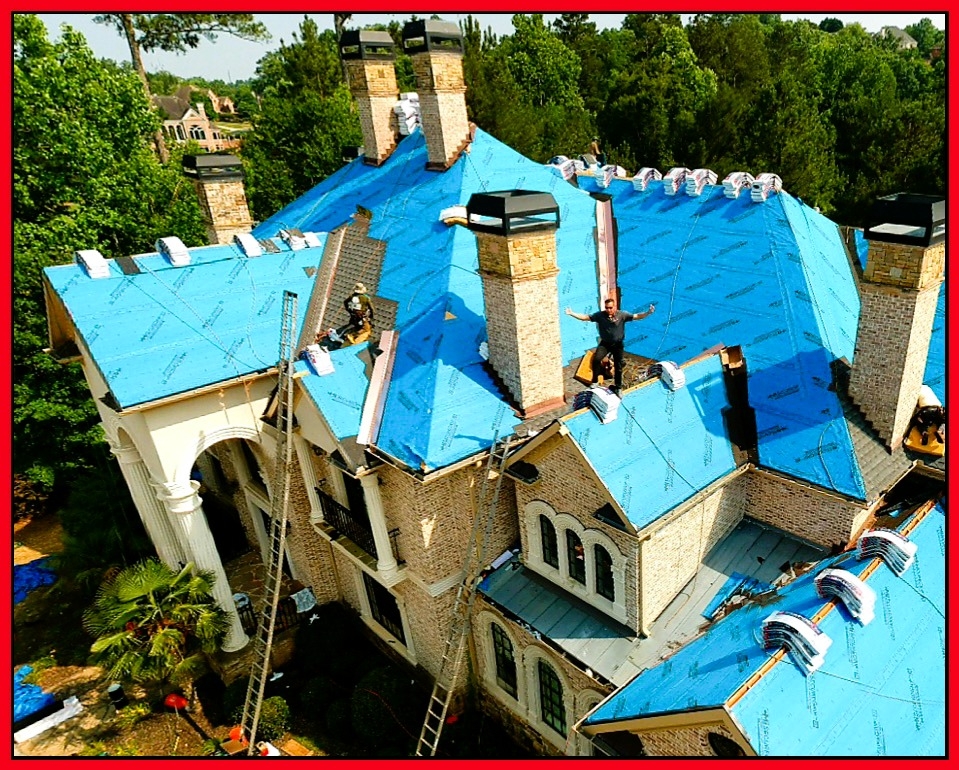
Isolated damage on a relatively new roof — a few bruises confined to one slope, with the rest of the system sound — can sometimes be addressed through targeted roof repair, replacing the affected shingles and confirming the underlying decking is dry. Widespread bruising across multiple slopes, however, means the protective integrity of the entire field has been breached, and patching individual impacts leaves dozens of other compromised points to fail on their own schedule. In that case replacement is the sound decision, and an insurer who accepts the damage will typically scope it that way.
Roof age weighs heavily on the call. A ten-year-old roof with moderate hail damage and a decade of service left is a strong candidate for repair or replacement under a claim. A roof already near the end of its life, with hail damage layered on top of advanced weathering, presents a harder insurance picture and a clearer practical answer: replace it and, given Atlanta's hail exposure, replace it with an impact-rated system. The framework for weighing this decision in general appears in our guide to roof repair versus replacement, and the principles apply directly to hail.
12. What to Expect From a 1Source Hail Inspection
A professional hail inspection is not a sales call with a clipboard. The 1Source process is built to produce documentation an insurer will accept and a homeowner can trust, beginning before anyone sets foot on the property and continuing through a written assessment you can act on.
We start by confirming the storm. Before the inspection, we verify that hail was reported at or near your address on the date you noted, using local weather data — because a documented date of loss anchors everything that follows. The on-site assessment then evaluates the roof surface methodically: each slope is examined for bruising and granule loss, soft spots are confirmed by touch where access allows, and the distribution pattern is mapped to authenticate the damage as hail rather than wear. On larger estate roofs and steep slopes, we frequently use drone imagery to document every plane in high resolution without walking the shingles — preserving both safety and the evidence itself.
Alongside the roof, we inspect the collateral surfaces — gutters, downspouts, HVAC fins, vents, and metal flashing — so the full hail signature is captured and corroborated. The result is a written assessment with dated photographs: what was found, where, how severe, and whether it rises to a claim. If it does, we provide a scope built to align with standard adjuster line items, and our insurance claims team stays involved through the process. Throughout metro Atlanta — from Alpharetta and Johns Creek to Marietta and Buckhead — the standard is the same: document thoroughly, advise honestly, and act before the evidence fades. The inspection is free and carries no obligation, because knowing the true condition of your roof after a storm should never be a gamble.
Schedule Your Free Post-Storm Roof Inspection
Slope-by-slope hail assessment, collateral damage documentation, and a written report with dated photos — before any claim or commitment. Serving Atlanta, Sandy Springs, Roswell, and all of metro Atlanta.
(404) 277-1377 — No ObligationCertified by Industry-Leading Manufacturers