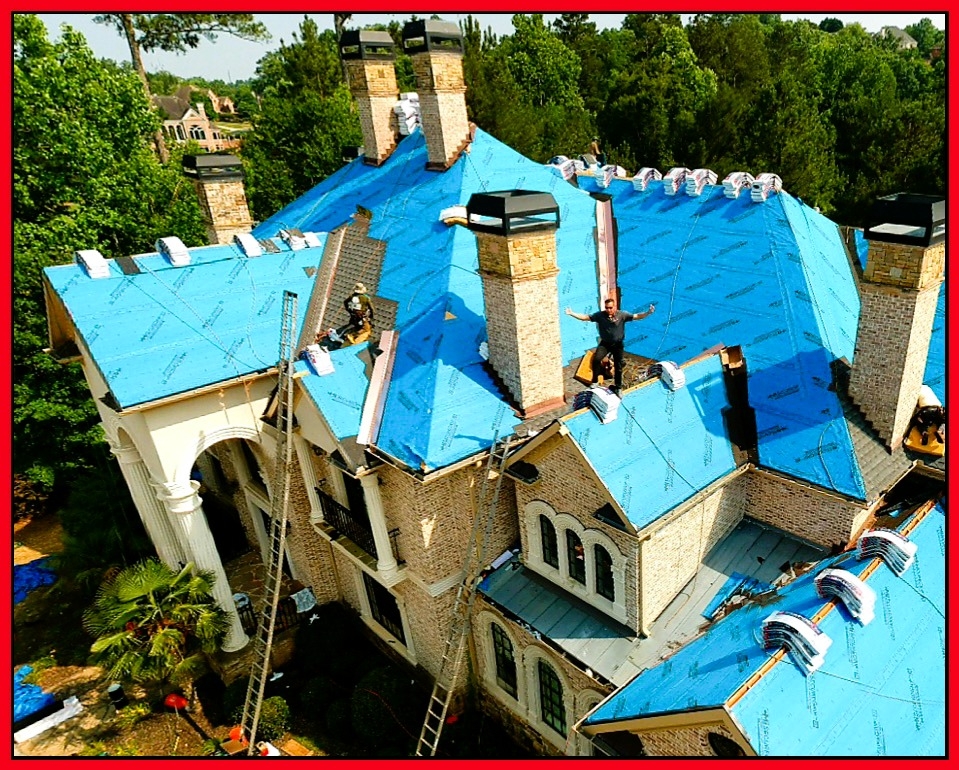
Stand in your attic on a rainy afternoon and look up. The shingles you paid for are doing most of the work overhead, but they are not the only thing keeping water out of your home. Between the shingles and the wood deck sits a layer almost no homeowner ever sees: the underlayment. It is the roof's second line of defense, the barrier that catches wind-driven rain that slips past a shingle, the surface that protects your deck during the days a roof sits exposed mid-installation. For most of the last century, that layer was asphalt-saturated felt — the black tar paper roofers rolled out by the millions of square feet. Over the past fifteen years, the industry has quietly walked away from it.
The replacement is synthetic underlayment: an engineered, woven polymer sheet that outperforms felt on nearly every measure that matters in Georgia's climate. This was not a marketing fad. It was a response to real, repeated failures that roofing crews and manufacturers watched felt produce on job sites — torn sheets after a windy afternoon, buckled rolls after a summer downpour, slick decks that made steep Atlanta rooflines genuinely dangerous to work on.
This guide explains what underlayment actually does, where felt falls short, and why a reputable Atlanta contractor will specify synthetic on your roof replacement without you having to ask. By the end, you will understand the one roofing component that is easy to overlook on a proposal — and easy to cut corners on — and why it deserves your attention.
1. What Roofing Underlayment Actually Does
Underlayment is the membrane installed directly over the roof deck, beneath the shingles. Its job is straightforward to describe and critical in practice: it is a secondary water barrier. Asphalt shingles are the primary defense, but no shingle system is perfectly watertight under every condition. During a sustained Georgia thunderstorm with sideways wind, water can be driven up and under the shingle courses. When that happens, the underlayment is what stops the water from reaching the wood deck and finding its way into your attic.
It serves a second purpose that is just as important during construction. When a crew tears off an old roof, the deck is exposed. Underlayment is the first thing installed — roofers call this stage "drying in" the roof — and it protects the bare deck if a storm rolls through before the shingles are on. In Atlanta, where afternoon storms can develop in under an hour during summer, the ability of that temporary barrier to hold water out is not theoretical. It determines whether your decking survives the install or arrives at the shingle stage already compromised.
Underlayment also provides a smoother, more uniform surface for shingle installation, helps the finished roof shed water more efficiently at penetrations, and contributes to certain fire-resistance ratings. None of this is visible once the shingles are on. That invisibility is exactly why the material choice matters: it is the component a homeowner can never inspect later, so it has to be right the first time.
2. Traditional Felt: A Century of Service, and Its Limits
Asphalt-saturated felt — "tar paper" or "roofing felt" — is an organic or fiberglass mat soaked in asphalt to make it water-resistant. It comes in two common weights: 15-pound and the heavier, more durable 30-pound. For roughly a hundred years it was the default underlayment on virtually every shingled roof in America, and millions of those roofs performed perfectly well. Felt is not a defective product. It is a product that was the best available option for a long time and has since been outperformed.
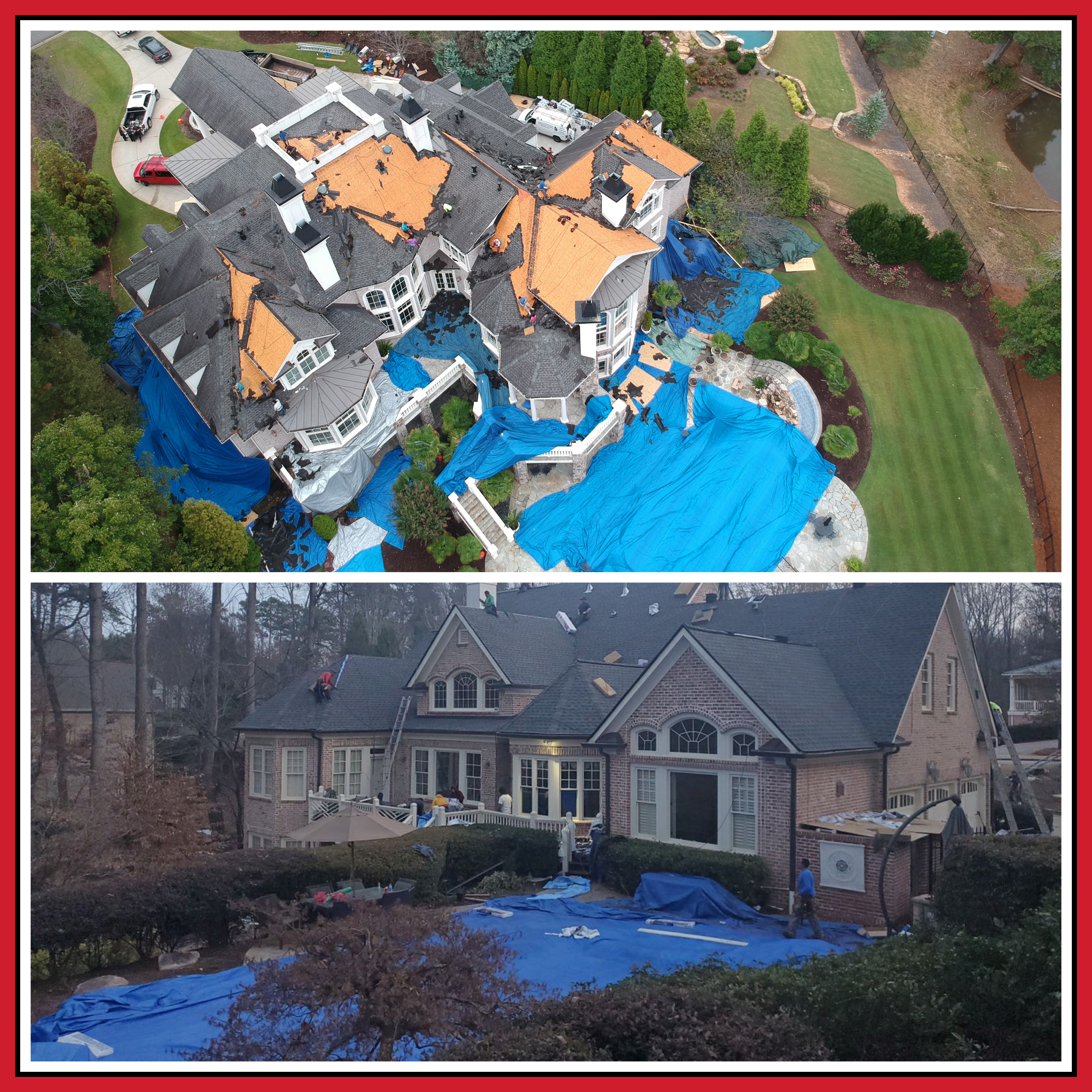
The limits of felt show up under stress, and Georgia delivers stress reliably. The first weakness is tear strength. Felt is brittle, especially in heat, and tears easily at the fastener heads that hold it down. A windy afternoon during a multi-day install can shred sections of felt loose from a deck, leaving the wood exposed and forcing a crew to re-cover ground already covered. The second weakness is moisture behavior. Because felt is asphalt-saturated paper, it absorbs water. When it gets wet it expands and wrinkles — roofers call this "buckling" — and those wrinkles telegraph through the finished shingle surface, creating visible ridges and uneven planes. Wet felt that dries unevenly never fully recovers its flat profile.
The third weakness is exposure tolerance. Felt should not be left uncovered for more than a couple of days. Under Georgia's UV load it dries out, cracks, and loses water resistance quickly. If a project stalls — material delays, a stretch of storms, a crew pulled to an emergency — felt that has sat exposed often has to be torn off and replaced before shingling can proceed. The fourth weakness is safety: wet felt becomes slick, and on Atlanta's steep two-story and traditional rooflines, that is a genuine hazard to the crew. None of these issues made felt unusable. Together, they made it the weak link in a roofing system that had otherwise advanced considerably.
3. Synthetic Underlayment: Engineered for the Failure Points
Synthetic underlayment is manufactured from woven or spun polypropylene or polyethylene — the same family of durable polymers used in industrial fabrics. Instead of being saturated paper, it is an engineered textile designed specifically to address the points where felt fails. The result is a product that is lighter, stronger, more water-resistant, and far more tolerant of the conditions a Georgia roof faces during and after installation.
The tear strength difference is dramatic. Where felt rips at a fastener under modest wind, synthetic resists tearing through and around fasteners. Crews can walk on it, drag bundles across it, and leave it staked down through a windy afternoon without watching it disintegrate. Because synthetic does not absorb water, it does not buckle or wrinkle when it gets wet — it sheds water and stays flat, which means the finished shingle surface lays flat too. The polymer construction does not rot or grow mold, and it does not break down under UV nearly as fast as felt, which is what enables the long exposure ratings that give a project breathing room.
Synthetic rolls are also wider and longer than felt rolls while weighing less, so a single roll covers far more deck. That translates to fewer seams, faster installation, and a lighter load for the crew to carry up a ladder all day. Many synthetic products are printed with a grid and a slip-resistant surface texture, giving installers a straight reference line and better footing — a real safety improvement on the steep pitches common throughout Buckhead and Atlanta's older traditional neighborhoods. Every one of these advantages maps directly onto a felt weakness. That is not coincidence; synthetic was developed by watching what felt did wrong.
4. Head to Head: Synthetic vs Felt on Every Measure That Matters
The clearest way to understand why the industry switched is to put the two materials side by side on the performance criteria that actually determine roof longevity and installation quality in Georgia. The comparison below reflects what crews experience on real Atlanta job sites, not laboratory ideals.
| Performance Factor | Traditional Felt (15# / 30#) | Synthetic Underlayment |
|---|---|---|
| Tear strength | Low; rips at fasteners, brittle in heat | High; resists tearing under wind and foot traffic |
| Water behavior | Absorbs water, buckles and wrinkles | Sheds water, stays flat |
| UV / exposure rating | A few days before degrading | 90–180 days, some products up to a year |
| Weight & coverage | Heavy; less coverage per roll | Lightweight; up to ~4x more coverage per roll |
| Walkability / safety | Slick when wet | Slip-resistant textured surface on most products |
| Wrinkle telegraphing | Common; shows through shingles | Minimal; lays flat for a clean finish |
| Longevity in service | Degrades over decades, can become brittle | Stable polymer, matches modern shingle lifespans |
| Material price | Lower per roll | Higher per roll, offset by faster install |
Felt wins exactly one row: raw material price per roll. Every other measure favors synthetic, and even the price advantage narrows once you account for synthetic's faster installation, lighter handling, and resistance to the tear-and-replace cycles that wind and rain force on felt. When a single category of advantage is "it is slightly less expensive to buy" and the opposing column is "it performs better at everything else," the direction the industry moved is not surprising.
The underlayment is the one roofing component you can never inspect again. Once the shingles go on, you will never see this layer until the next tear-off — likely 25 years away. That is precisely why it has to be specified correctly the first time, and why a written scope should name the underlayment product, not just say "felt or equivalent."
5. Why Georgia's Climate Makes the Difference Decisive
The synthetic-versus-felt question would matter less in a dry, mild climate. In metro Atlanta it matters a great deal, because the specific stresses our weather imposes are precisely the stresses felt handles poorly. Georgia averages around 50 inches of rain a year, much of it arriving in intense, wind-driven summer thunderstorms that develop fast and hit hard. That is exactly the kind of event that drives water up under shingle courses and tests the underlayment's water resistance — and exactly the kind of event that can roll in mid-install and soak an exposed deck.
Heat compounds the problem. Atlanta summers push attic and roof-surface temperatures well above ambient air, and felt becomes more brittle as it heats, accelerating the cracking and tearing that shorten its useful life. Synthetic polymers tolerate that thermal cycling far better. Then there is the wind: the same storms that bring the rain bring gusts that lift and tear felt off a partially completed roof. A crew that has dried in a deck with synthetic can leave a site ahead of an incoming storm with confidence the deck is protected. A crew that used felt is often racing to tack down or re-cover sections before the rain hits.
The exposure-tolerance gap is the one that protects homeowners most directly during the unexpected. Storm seasons in metro Atlanta routinely create regional material shortages and crew shortages at the same time — a hail event hits, and suddenly every contractor in the area is booked and every supplier is back-ordered. A roof dried in with synthetic can sit safely through that kind of delay. The same situation with felt can force a full re-cover before the shingles ever go on. Understanding how these weather patterns drive damage is also why we recommend reviewing our guidance on spotting hail damage and the value of storm damage restoration done correctly.
6. Underlayment Is Part of a System, Not a Standalone Layer
Synthetic field underlayment does not work alone. It is one component of a layered weatherproofing system, and a quality roof integrates several specialized membranes that each handle a different vulnerability. Treating underlayment as a single line item to maximize or minimize misses the point — the value is in how the components work together.
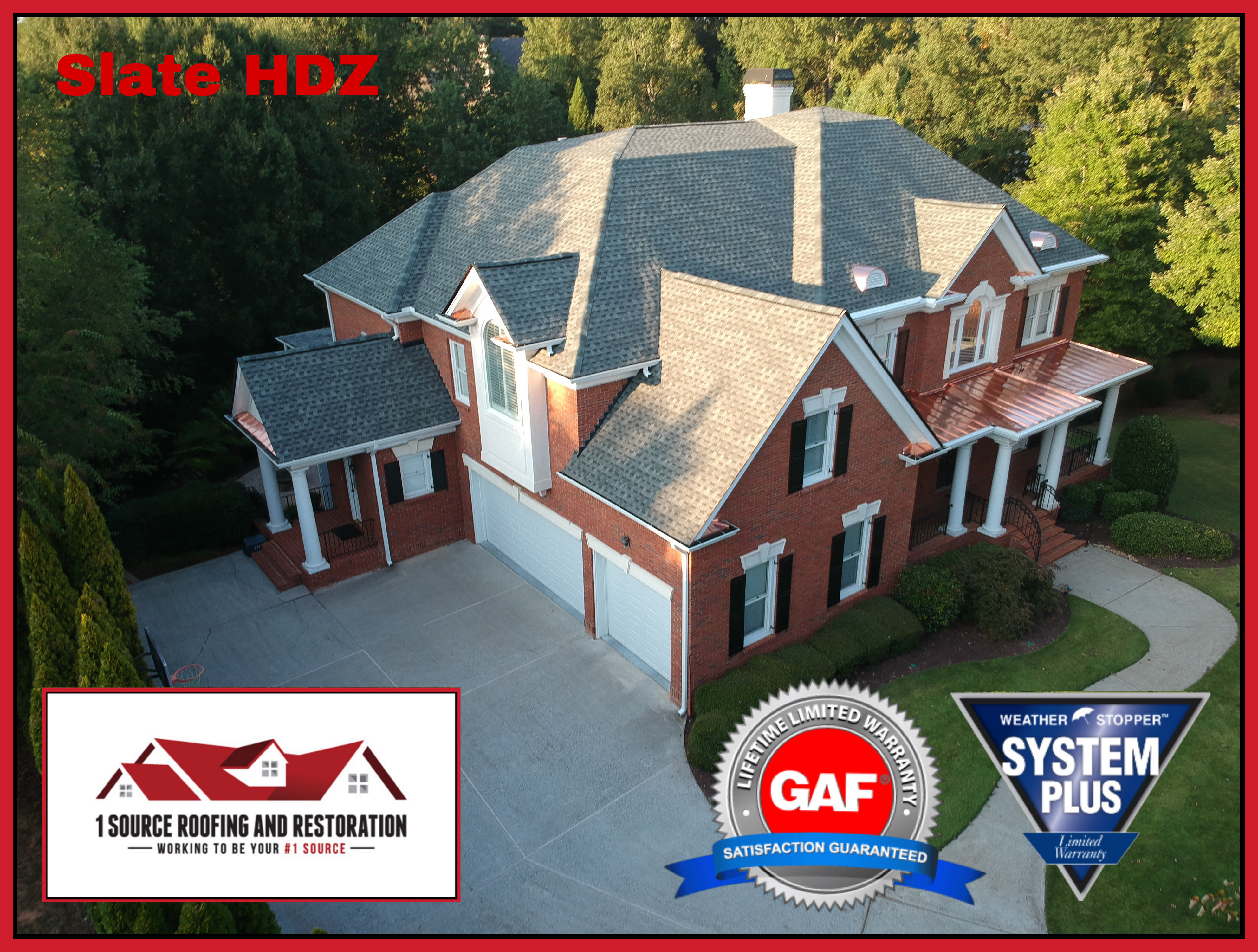
The most important companion to field underlayment is self-adhering ice-and-water shield. This is a peel-and-stick membrane installed at the points most likely to leak: eaves, valleys, around penetrations like plumbing stacks and chimneys, and at roof-to-wall transitions. Its defining feature is that it self-seals around nails — when a fastener punches through it, the membrane closes back around the shank, so the penetration does not become a leak path. Synthetic covers the broad field of the roof; ice-and-water shield reinforces the details. They are complementary, and our deeper look at self-adhering ice-and-water shield explains exactly where it earns its keep on Georgia roofs.
Other members of the system include proper drip edge at the perimeter, well-detailed flashing at roof-to-wall transitions, and kickout flashing where a roof edge meets a wall above a gutter. Underlayment sequencing relative to drip edge and flashing matters too — the order in which these layers overlap determines whether water is directed out and away or trapped against the deck. A crew that understands the full assembly installs synthetic underlayment as part of a deliberate, watertight sequence. A crew focused only on getting shingles down treats it as a formality. The difference does not show until water finds the gap.
See What Is Under Your Shingles
Our free on-site assessment documents your deck, underlayment, and flashing condition with photographs — and lays out exactly what a quality roofing system should include.
Call (404) 277-13777. When Felt Still Has a Legitimate Place
A balanced answer acknowledges that felt has not vanished, and a few narrow situations still call for it. The honest professional position is that synthetic is the right default for the overwhelming majority of Georgia residential roofs — but "default" is not "always."
Felt remains common on small repairs and patch work, where a contractor is integrating a section into an existing felt-underlaid roof and material consistency simplifies the tie-in. It is sometimes specified on outbuildings, sheds, and detached structures where the long service life of synthetic is not a priority and the lower material price is the deciding factor. Certain historic-preservation projects specify felt to match original construction methods. And in a handful of specialized assemblies, a manufacturer's warranty system or a specific roofing material may call for a particular felt product as part of the rated system.
What these cases share is that they are exceptions defined by specific circumstances, not a general preference. None of them describe a standard residential roof replacement on a metro Atlanta home, where the roof is expected to perform for decades through repeated storm seasons. For that application — the application most homeowners reading this are facing — synthetic is the answer, and a contractor who reaches for 15-pound felt on a full residential re-roof is making a choice worth questioning. If you are weighing a repair against a full replacement, our guide on roof repair vs replacement can help you frame that decision.
A lower proposal that specifies felt is not a bargain — it is a different product. When you compare roofing bids, confirm what underlayment each one includes. A scope that quietly substitutes felt for synthetic is cutting a corner you will never see until the next tear-off, and it is one of the most common ways a too-good-to-be-true number gets to that number.
8. How to Spot Underlayment Quality in a Roofing Proposal
Because underlayment is invisible after installation, the proposal is the only place you can verify what you are getting. Learning to read this one line item separates homeowners who can evaluate a roofing bid on substance from those comparing only the final number. A few specific things to look for will tell you a great deal about the contractor's standards.
First, the scope should name the underlayment product, not use a vague phrase. "Synthetic underlayment" is acceptable; a named manufacturer product is better; "felt or equivalent" or silence on the subject is a flag. Second, the scope should separately specify ice-and-water shield and identify where it will be installed — eaves, valleys, and penetrations at minimum. A scope that mentions underlayment but is silent on ice-and-water shield is describing an incomplete system. Third, the proposal should address drip edge and flashing, because the underlayment's effectiveness depends on how it integrates with those perimeter and transition details.
When you compare two proposals and one is meaningfully lower, the underlayment specification is one of the first places to look for the difference. A contractor hitting a target number will often economize on the components a homeowner cannot inspect, and underlayment is the prime candidate. This is the same principle that runs through every roofing decision: you are comparing scopes, not just prices. Our approach to written scopes is built around making every component explicit so the comparison is honest. For estate homes in Alpharetta and Sandy Springs, that documentation standard is exactly what the property investment warrants.
9. Installation Quality: Even the Best Underlayment Can Be Installed Wrong
Specifying synthetic underlayment is necessary but not sufficient. The performance advantages described throughout this guide assume the material is installed correctly, and a premium product installed poorly can underperform inexpensive felt installed well. The details matter.
Proper installation starts with fastening. Synthetic underlayment should be secured with the cap nails or cap staples the manufacturer specifies, at the spacing the manufacturer specifies — typically tighter in the field and tighter still at overlaps and edges where wind uplift is greatest. Using the wrong fastener, or spacing them too far apart, undermines the wind resistance that is one of synthetic's main advantages. Overlaps matter just as much: horizontal and vertical laps must meet minimum dimensions so water running down the roof is always directed over a seam, never into one. A crew that shortcuts the overlap creates a leak path no shingle can fully compensate for.
Sequencing with the rest of the system is where experience shows. The underlayment must integrate correctly with drip edge at the eaves and rakes, with ice-and-water shield at the valleys and penetrations, and with the flashing at every wall transition. The correct overlap order at each of these intersections is what makes the assembly watertight. This is also where proper roof ventilation ties in — a well-built roof manages moisture from the deck up and from the attic down. Diagnosing whether an existing roof was assembled correctly is part of why we use drone inspections to document conditions before recommending any work.
10. The Underlayment Upgrade as an Investment
Reframing underlayment from a cost line to a value decision clarifies why the upgrade to synthetic is among the easiest calls in the entire roofing system. The material price difference between synthetic and felt is a small fraction of a total roof project on a metro Atlanta home — and that difference is partially or fully offset by the labor savings of a lighter, faster, more tear-resistant product that does not force re-cover cycles during weather.
Now weigh that modest difference against what it protects. The underlayment is the secondary barrier guarding a roof deck that, if it fails, leads to decking replacement, attic insulation damage, and eventually interior water damage — the same escalation path that turns a manageable project into a major one. Spread across the 25-to-30-year service life of a quality shingle roof, the synthetic upgrade costs a few dollars per year of protection. There are very few components in a home where the protection-to-cost ratio is that favorable.
There is also a longevity-matching argument. Modern architectural shingles are engineered to last 25 to 30 years in Georgia's climate. Pairing those shingles with felt that may grow brittle well before the shingles wear out creates a mismatch — the weakest layer in the system ages out first. Synthetic's stable polymer construction is designed to remain intact across the full service life of the shingles above it, so the system ages as a whole rather than failing from the bottom up. When you invest in a long-life roof, matching the underlayment to that lifespan protects the investment. If you want the broader context on how all these decisions fit together, our roofing knowledge center covers the full system.
11. The 1Source Standard on Underlayment
Understanding what a quality contractor does as a matter of standard practice — rather than as an upsell — helps Atlanta homeowners recognize the difference between a thorough roofing system and a price-first installation. On a 1Source roof replacement, synthetic underlayment is the default specification, not an extra you have to request and pay to add on.
Our written scope names the underlayment and the ice-and-water shield placement explicitly, so you know exactly what is going on your deck before you sign. During installation, our crews fasten and lap synthetic to manufacturer specification, integrate it correctly with drip edge and flashing, and reinforce the leak-prone details with self-adhering membrane. A site supervisor is present to confirm the dry-in is done right before the first shingle goes down — because the underlayment stage is the one a homeowner can never check afterward, and it is exactly where supervision earns its value.
This is the same principle behind everything we do, from the free assessment that documents your existing roof with photographs to the manufacturer-compliant installation that protects your warranty. The components you cannot see are the ones that demand the most discipline. For homeowners across Johns Creek, Roswell, Marietta, and the rest of metro Atlanta, that discipline is what turns a roof that merely meets code into a roof that performs for decades. Have questions about your specific roof? Reach out and we will document exactly what you have and what a quality system should include.
Schedule Your Free Roof Assessment
Deck condition, underlayment and flashing review, material recommendation, and a written scope that names every component — before any commitment. Serving Atlanta, Buckhead, Alpharetta, and all of metro Atlanta.
(404) 277-1377 — No ObligationCertified by Industry-Leading Manufacturers