Two roofs on the same street can use the same shingle, the same underlayment, and the same crew, and still perform completely differently in a windstorm. The difference often comes down to a detail no homeowner ever sees once the job is finished: how many nails hold each shingle down, and exactly where those nails were driven. In metro Atlanta, where severe-thunderstorm outflow winds and the remnants of Gulf systems regularly push gusts past 60 miles per hour, that detail is not a technicality. It is the line between a roof that stays intact and a roof that starts shedding shingles by the dozen.
The roofing industry has a name for the higher standard: six-nail fastening. Instead of the four nails per shingle that satisfies the bare code minimum across most of Georgia, six-nail installation places two additional fasteners in the shingle's designated nailing strip. The result is a meaningfully stronger attachment, a higher manufacturer wind warranty, and a roof system engineered to resist uplift rather than merely meet the lowest legal threshold.
This guide explains how shingle fastening actually works, why two extra nails change the math on wind resistance, what manufacturers require to validate enhanced warranty coverage, and how to make sure the roof going on your home is fastened to a standard that matches Georgia's storm climate — not the cheapest pattern a crew can get away with.
1. How Shingle Fastening Actually Works
An asphalt shingle is not glued flat to the deck. It hangs from its fasteners and bonds to the course below through a strip of factory-applied sealant. Wind does not lift a shingle by sliding under the bottom edge the way most homeowners imagine. It creates negative pressure — suction — across the surface of the roof, strongest at the eaves, rakes, ridges, and corners. That suction tries to peel the exposed lower portion of each shingle upward, pivoting it against the fasteners that hold the upper portion down.
The nails do two jobs at once. They anchor the shingle to the decking, and they hold the course above in place because each row of nails is concealed by the shingle laid over it. When wind peels at a shingle's leading edge, the fasteners in the strip above resist that pull. The more fasteners there are in the load path, and the more accurately they are placed, the more force the shingle can take before the sealant breaks, the shingle folds back, and the wind gets underneath the next course. A roof failure almost never starts with the whole field of shingles. It starts at one compromised fastener line and unzips from there.
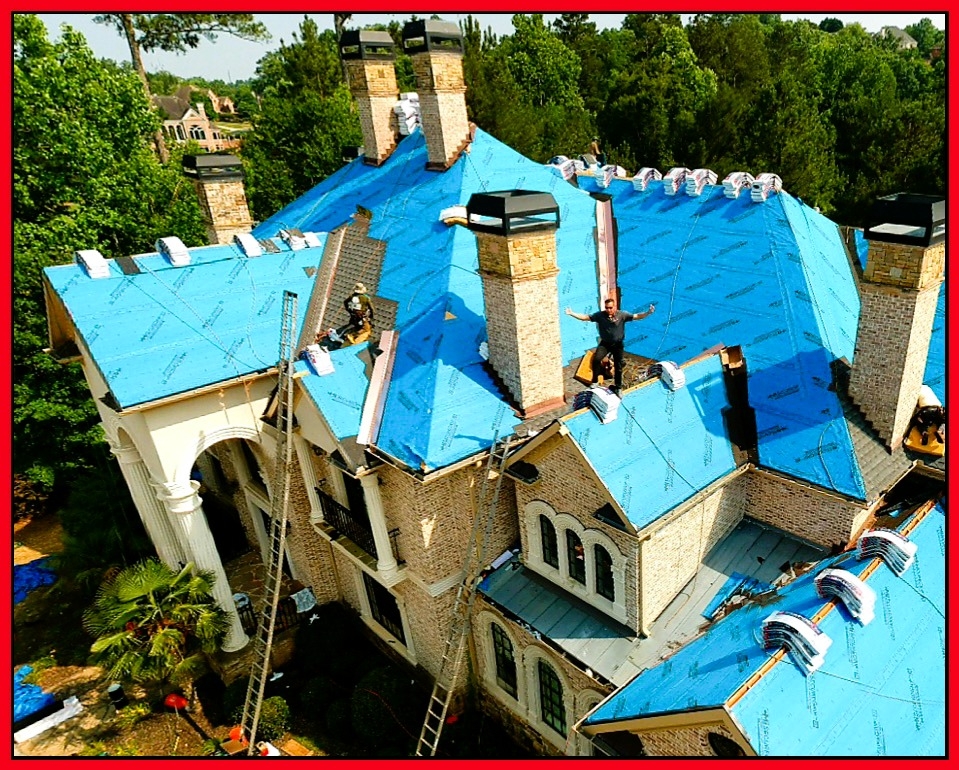
This is why fastening is a system question, not a hardware question. The deck has to hold the nail, the underlayment has to be intact beneath it, the nail has to seat flush without crushing the shingle or sitting proud, and the placement has to land in the engineered strip. Our installers treat the fastening pattern as the backbone of the entire roof replacement, because every other detail above it depends on the shingles staying attached.
2. Four Nails vs Six Nails: What Changes
The four-nail pattern places one fastener near each end of the shingle and two distributed across the middle, all within the common bond area. The six-nail pattern keeps those four positions and adds two more, tightening the spacing across the strip. On a standard three-tab or architectural shingle, that closer spacing matters most over the cutouts and joints where adjacent shingles meet — the natural weak points where wind finds purchase.
The practical effect is load distribution. With four nails, each fastener carries roughly a quarter of the uplift force pulling on that shingle. With six, each carries about a sixth. Lower force per fastener means the sealant bond and the shingle material itself reach their failure point at a higher wind speed. It also means that if one nail backs out, tears through, or sits in soft decking, the remaining fasteners have more margin to carry the load rather than triggering a cascade.
| Factor | Four-Nail Pattern | Six-Nail Pattern |
|---|---|---|
| Fasteners per shingle | 4 | 6 |
| Typical wind warranty | 110–130 mph | 130 mph and higher |
| Uplift load per fastener | ~25% of shingle load | ~17% of shingle load |
| Code status in metro Atlanta | Meets minimum | Exceeds minimum |
| Best suited for | Sheltered, low-slope, low-exposure roofs | Storm-exposed homes, steep slopes, premium warranties |
| Cost impact | Baseline | Modest increase in fasteners and labor |
The table simplifies a relationship that real wind-tunnel testing confirms: enhanced fastening raises the threshold at which shingles begin to lift, and it does so most decisively at the roof edges and corners where Atlanta storms do their worst damage. For homeowners weighing material upgrades, fastening pattern is often a higher-leverage decision than the shingle line itself.
3. Why Georgia's Wind Climate Demands Attention
Atlanta does not sit in a coastal hurricane zone, and that fact lulls many homeowners into treating wind resistance as a Florida problem. It is not. The metro area sits in one of the most active severe-thunderstorm corridors in the country. Spring and summer bring squall lines, microbursts, and straight-line wind events that routinely produce gusts of 60 to 80 miles per hour, and occasionally well beyond. Damaging straight-line winds account for a large share of the property claims filed across north Georgia every year.
Microbursts are particularly punishing for roofs. A microburst slams a concentrated column of air straight down onto a neighborhood and fans out at ground level, hitting roof edges with sudden, high-velocity gusts from a single direction. A roof fastened to the bare minimum can lose its first course of shingles in seconds under that load, and once the wind is under the deck plane, the damage spreads fast. The decaying remnants of Gulf and Atlantic tropical systems add another layer of wind exposure several times a season, often paired with the saturated conditions that make shingle loss especially costly.
Six-nail fastening is the direct, engineered answer to this climate. It is also why we coordinate fastening decisions with the rest of the wind-resistance package — self-sealing shingle technology, reinforced starter strip shingles at the eaves and rakes, and hip and ridge cap upgrades — so the whole perimeter is built to resist uplift, not just the field of the roof.
4. The Nail Zone: Why Placement Beats Quantity
Here is the detail that separates a roof that earns its warranty from one that quietly does not: six nails only help if they land in the right place. Every shingle is engineered with a designated nailing strip, often marked on the shingle face, that sits over the reinforced common bond area. Fasteners driven inside that strip transfer load through the strongest part of the shingle and hold the course above correctly. Fasteners driven high — above the strip — miss the bond area entirely, fail to secure the course above, and create a shingle that is effectively hanging by its sealant alone.
Six nails in the wrong place are worse than four nails in the right place. Fasteners driven above the nailing strip miss the reinforced bond area, fail to lock the course above, and can void the manufacturer warranty outright. Placement is not a finishing detail — it is the entire point of the upgrade.
High-nailing is one of the most common installation defects we find on roofs that fail prematurely. It happens when a crew works too fast, when shingles are misaligned course to course, or when an installer relies on muscle memory instead of the printed nail line. The shingle looks identical from the ground. It passes a casual glance from the attic. Then the first real storm peels it back because the nails were never holding the course above the way they were designed to.
This is why fastening verification belongs in the scope of work, not in good faith. A crew that knows the work will be documented nails to the line. Improper placement is also a frequent finding during drone roof inspections and post-storm assessments, where the pattern of failures traces straight back to where the fasteners were driven. When a homeowner files a wind claim and the adjuster discovers high-nailing, the conversation about whether a defect or the storm caused the loss gets complicated fast.
5. What Manufacturers Actually Require
Shingle manufacturers publish two things that govern fastening: the application instructions printed on every bundle wrapper, and the warranty terms tied to specific installation choices. Both are legally meaningful. When a manufacturer's instructions specify six nails for a given product or wind rating, that instruction becomes the installation requirement, and the local code minimum no longer governs. The stricter standard wins.
Most major manufacturers structure their wind coverage in tiers. The baseline architectural shingle might carry a 110 or 130 mph wind warranty with four nails under standard conditions. To reach the higher wind-speed coverage, the instructions require six nails placed in the nailing zone, and frequently require the manufacturer's matching starter strip and accessory components. The enhanced wind warranty is not automatic — it is earned by following the full specification, and it is forfeited the moment any element is skipped.
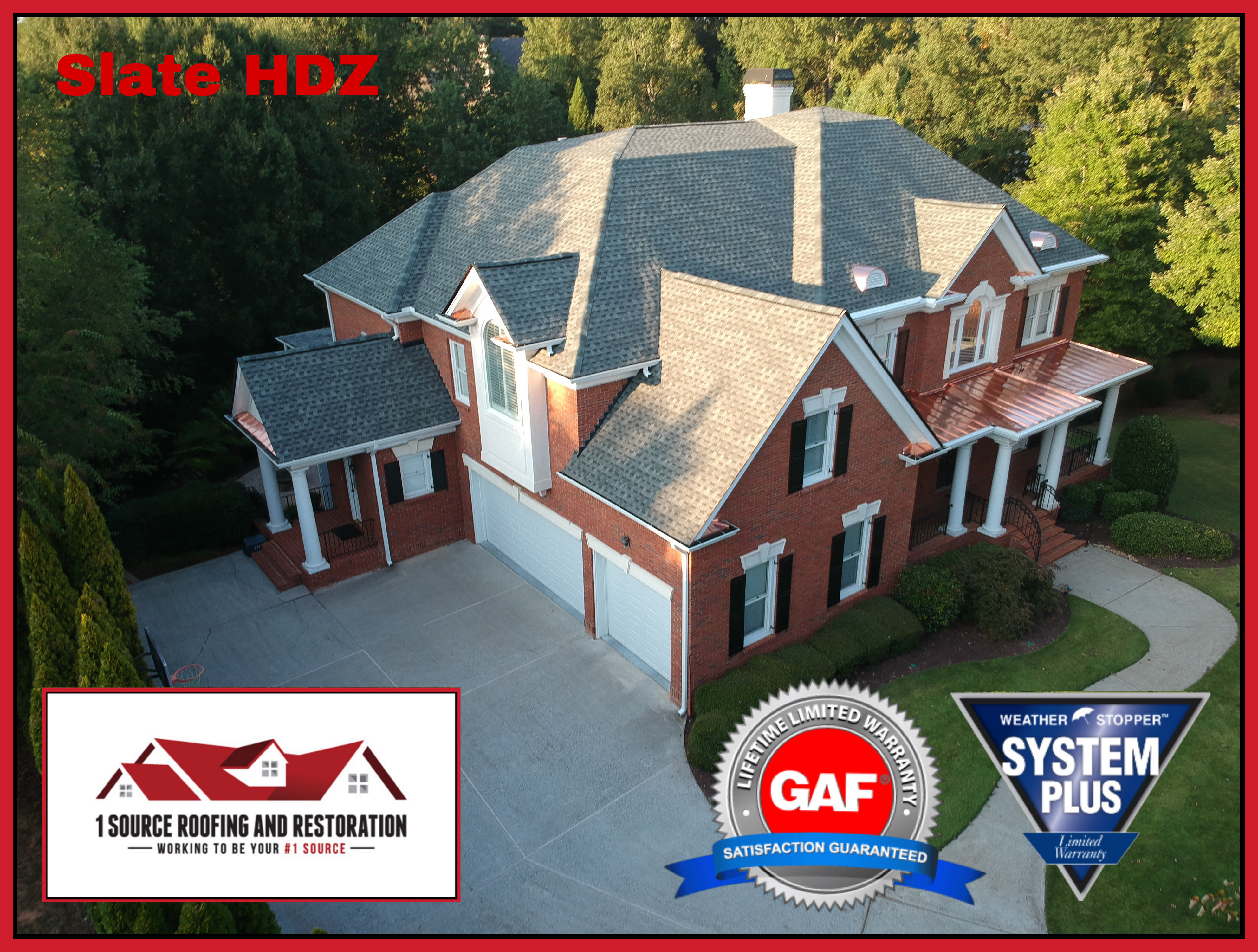
Manufacturer-certified contractor programs raise this standard further. As a GAF and CertainTeed certified contractor, 1Source installs to the published instructions on every project, which is what allows our clients to qualify for the enhanced manufacturer warranties in the first place. A certification is only as good as the installation behind it, and fastening is where that promise is kept or broken. For homeowners choosing between premium shingle lines, the warranty math should always be read alongside the fastening requirement — as covered in our guides to Class 4 impact-resistant shingles and synthetic slate roofing.
6. Georgia Code Minimum vs Best Practice
Georgia builds on the International Residential Code, which sets the legal fastening floor. In standard wind regions, that floor is four fasteners per shingle. The code escalates to six fasteners in designated high-wind areas, on steep slopes generally above a 21-inch rise per foot, and where the manufacturer's instructions demand it. Across most of metro Atlanta, four nails technically satisfies the inspector.
Satisfying the inspector and protecting the home are not the same goal. Code is written as a minimum acceptable standard for the broad average case. It does not account for your specific roof's exposure, the microburst that tracks across your subdivision, or the difference between a 25-year roof that holds and a roof that loses its eaves in year three. A roof built strictly to minimum is a roof built to the cheapest legal specification — which is rarely what a homeowner investing in a premium roof actually wants.
Make Sure Your Roof Is Fastened to the Right Standard
Free on-site assessment. No obligation. We document the fastening pattern in writing as part of every scope of work.
Call (404) 277-1377This gap between minimum and best practice runs through every detail of a quality roof. It is the same reason we install synthetic underlayment instead of felt, install code-compliant drip edge that some crews skip, and treat balanced ridge-and-soffit ventilation as a warranty requirement rather than an afterthought. Building above code is not about doing more for its own sake. It is about matching the roof to the real conditions it has to survive.
7. The Fastening System Beyond the Nail Count
Nail count is the headline, but fastening quality depends on several factors that work together. Nail length has to be sufficient to penetrate fully through the decking — short nails that barely catch the plywood pull out under load. Nail type matters: corrosion-resistant roofing nails with broad heads are required, while staples and undersized fasteners are prohibited for shingle attachment under modern code. The fastener also has to seat correctly. An overdriven nail crushes the shingle mat and cuts into it; an underdriven nail leaves the head proud and creates a point that can puncture the shingle above.
Pneumatic nail guns make all of this faster and, in skilled hands, more consistent — but they also make it easier to drive nails at the wrong depth or pressure if the gun is not calibrated and the operator is not paying attention. This is one of the most common sources of hidden fastening defects. A properly run crew checks gun pressure against the deck and the shingle, and adjusts as the day's temperature changes, because asphalt shingle behavior shifts with heat.
The decking itself is part of the equation. Fasteners can only hold as well as the substrate they bite into. Delaminated, thin, or water-damaged decking will not hold a nail under uplift no matter how many you drive, which is why re-nailing the roof deck and replacing compromised sheathing is part of any serious wind-hardening approach. For the most demanding storm resilience, the FORTIFIED roof standard ties enhanced fastening together with deck attachment, sealed roof decks, and edge details into a single verified system.
8. Wind Warranty and Long-Term Value
The enhanced wind warranty that six-nail fastening unlocks is worth understanding clearly, because it changes the financial picture of the roof. A standard wind warranty typically covers shingle replacement if shingles blow off below the rated speed within a limited window after installation. The enhanced warranty raises both the covered wind speed and, in many programs, extends the coverage period. For a homeowner in a storm-active climate, that is meaningful protection on a major investment.
The greater value, though, is the claim that never happens. A roof that holds through an 80 mph squall line costs nothing in deductibles, nothing in temporary repairs, and nothing in the cascade of interior damage that follows when wind gets under the deck. Every shingle that stays attached is a leak that never forms, a ceiling that never stains, and an insurance claim that never lands on your loss history. Fastening pattern is one of the few roof decisions that pays for itself by preventing events rather than recovering from them.
A wind warranty you cannot prove is a warranty you do not have. If shingles blow off, the manufacturer will examine how the roof was fastened before honoring enhanced coverage. Documented six-nail placement is the evidence that protects your claim. Keep your written scope and installation photos.
There is an insurance dimension as well. Wind-mitigation upgrades, documented properly, can support premium credits with some Georgia carriers, and they strengthen the position of any future storm damage claim. Our guides to wind mitigation upgrades and RCV versus ACV coverage walk through how documented resilience features factor into both premiums and payouts. The common thread is documentation — which is why fastening belongs in writing.
9. How to Verify Your Roof's Fastening
The hard truth for homeowners is that once shingles are installed, the fasteners disappear beneath the course above. You cannot count them from the ground, from a ladder, or from the attic. This is precisely why the time to control fastening quality is before the first bundle is opened — not after the roof is on.
The reliable controls are simple. First, require the fastening pattern in the written scope of work. A scope that names the manufacturer's product, the wind warranty being pursued, and the six-nail pattern in the nailing zone is a scope you can hold the contractor to. Second, ask for installation photographs documenting the nailing as the work progresses. A crew that intends to do the work right has no objection to photographing it. Third, for an existing roof, a qualified inspector can lift a small, controlled number of shingles to verify nail count and placement directly, and reseal them properly afterward.
If you are evaluating proposals from multiple contractors, the fastening detail is one of the fastest ways to separate a thorough scope from a price-first one. A proposal that is silent on fastening, or that simply says "to code," is telling you it is built to the minimum. A homeowner who has read this far now knows the right question to ask, and a contractor's answer reveals a great deal about how the rest of the roof will be built.
10. The 1Source Fastening Standard
On every roof we install across metro Atlanta, 1Source fastens to the stricter of the code minimum and the manufacturer's published instructions — which on premium architectural systems means six-nail placement in the designated nailing zone. We specify the pattern in the written scope of work, photograph the installation as it progresses, and install the matching starter and accessory components required to validate the enhanced wind warranty. That combination is what allows our clients to qualify for manufacturer wind coverage that a minimum-spec roof can never reach.
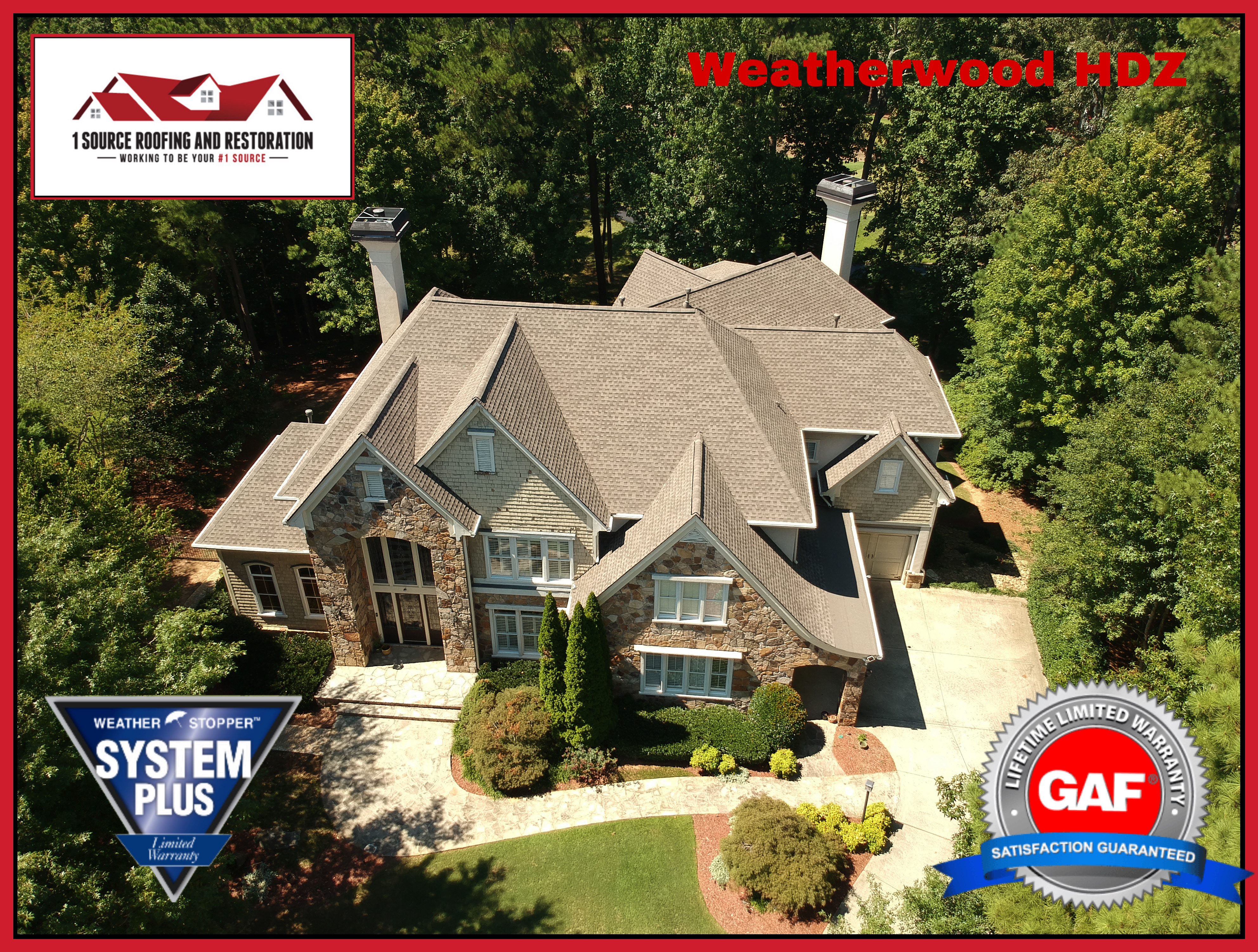
The process begins with a free on-site assessment of your specific roof — its exposure, slope, decking condition, and existing fastening if a tear-off is planned. From there we build a written scope that names the material, the warranty, the fastening pattern, and every component in the wind-resistance package. For estate homes in Alpharetta, Buckhead, and the premium neighborhoods across Johns Creek and Sandy Springs, the standard is the same: build the roof to survive the storms Georgia actually delivers, document the work, and stand behind it.
Whether you are planning a full roof replacement, addressing wind damage through a targeted repair, or comparing contractor proposals and want a knowledgeable second opinion, we are glad to walk you through how your roof should be fastened. You can explore more installation and storm-resilience topics in our blog library and technical standards hub.
Build a Roof That Holds Its Shingles
Free on-site assessment, written scope with the fastening pattern specified, and documented installation — before any commitment. Serving Atlanta, Buckhead, Alpharetta, and all of metro Atlanta.
(404) 277-1377 — No ObligationCertified by Industry-Leading Manufacturers