
Commercial Roofing Contractor in Atlanta, GA
Flat roofing, TPO systems, and commercial re-roofing across metro Atlanta. Licensed, insured, and certified. Call (404) 277-1377.
Certified by Industry-Leading Manufacturers
Commercial Roofing Systems We Install and Service
Commercial properties across metro Atlanta present roofing challenges that residential shingle work does not prepare a contractor to handle. Flat and low-slope roofing requires membrane systems, precise drainage engineering, and installation techniques entirely distinct from pitched residential applications. 1 Source Roofing has the certifications, equipment, and field experience to specify and install the right system for each property we serve.
TPO (Thermoplastic Polyolefin) is the dominant commercial flat roofing membrane in the current market, and with good reason. TPO's heat-welded seams create a monolithic, watertight bond that mechanical fasteners and adhesives cannot replicate. In Atlanta's climate — where summer heat loads regularly exceed 90°F — TPO's reflective white surface reduces rooftop surface temperatures significantly, lowering HVAC demand and extending membrane life. TPO systems typically carry a 20-year service life when installed by a certified contractor, and manufacturer warranties from GAF and other leading brands are available exclusively through certified installers. We are one of them.
EPDM (Ethylene Propylene Diene Monomer) is a synthetic rubber membrane with a 40-year performance track record on commercial and industrial buildings. EPDM is particularly well-suited for low-slope applications where thermal movement is significant — the membrane's elasticity accommodates structural expansion and contraction without seam failure. For facilities with minimal rooftop foot traffic and straightforward drainage configurations, EPDM remains one of the most durable and cost-effective long-term membrane options available.
Modified Bitumen is an asphalt-based multi-ply system that delivers outstanding resistance to rooftop foot traffic — essential for facilities where HVAC technicians, equipment vendors, and maintenance personnel regularly access the roof. Modified bitumen systems are typically installed in two or three plies, with the top surface providing UV protection and the underlying layers providing waterproofing redundancy. This layered approach makes modified bitumen particularly resilient on roofs with heavy mechanical equipment penetrations.
Standing Seam Metal for sloped commercial structures — retail buildings, light industrial facilities, and mixed-use properties with defined pitch — offers 40+ year service life, zero penetration maintenance requirements, and a premium visual profile that reinforces professional property positioning.
Built-Up Roofing (BUR) for existing systems requiring overlay or repair. BUR systems are still present on many older commercial properties across metro Atlanta, and our crews are experienced with both repair and full replacement of existing BUR assemblies.
"Each commercial property has different requirements — slope, drainage, HVAC load, foot traffic patterns, and investment cycle all factor into which system is the right specification. We do not have a preferred system. We have a process for determining the correct one."
Why Business Continuity Matters in Commercial Roofing
Residential roof replacement is largely invisible to the occupants inside — the work happens overhead, the crew works through the day, and the property is undisturbed. Commercial roofing is fundamentally different. Occupied facilities — office buildings, retail centers, warehouses with active inventory, light industrial operations — cannot simply pause operations for a roofing project. The contractor who does not plan around occupancy creates liability, disruption, and operational cost that lands on the property manager's desk.
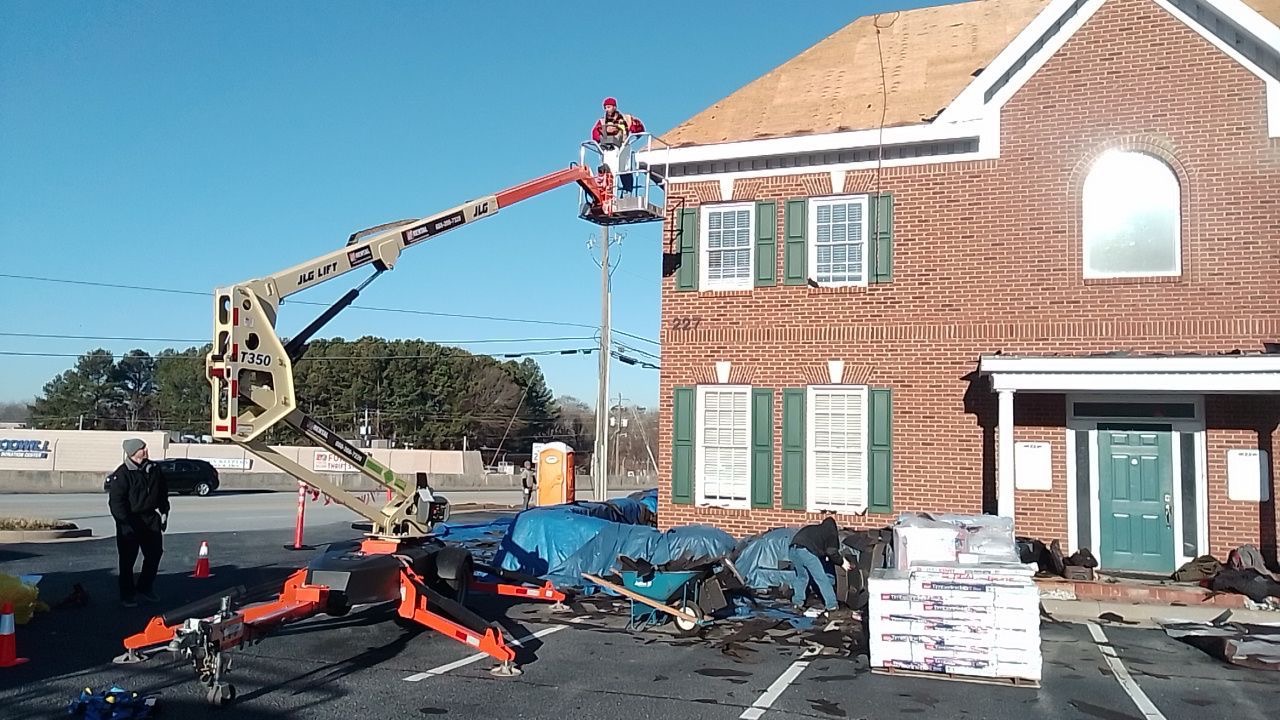
1 Source Roofing plans commercial projects from the outset with business continuity as a core project requirement, not an afterthought. For large commercial re-roofing projects, we section the roof and work in phases — completing and waterproofing one section before opening the next. Work hours are coordinated with property managers to avoid conflict with high-traffic operational periods. For facilities with noise-sensitive occupants, we provide advance scheduling so building staff can communicate expectations internally.
Emergency repair response is a separate discipline. When a commercial property experiences an active leak — whether from storm damage, membrane failure, or compromised flashing — operational disruption is already underway. Our emergency response protocol prioritizes stopping the leak and protecting interior assets first, with documentation and permanent repair planning following immediately behind. A leaking commercial roof is not a maintenance inconvenience. It is a liability issue, an inventory risk, and an insurance event. We treat it accordingly.
Across more than a decade of commercial roofing work in the Atlanta metro area, 1 Source has built a track record on large-project management: completed on schedule, within the agreed scope, and with the documentation that property managers and building owners require for their records. Our certifications — GAF Certified Contractor, CertainTeed Certified Preferred Contractor — apply to commercial applications exactly as they do to residential work. The manufacturer-backed warranties we can offer on commercial installations are not available from uncertified contractors, and they carry real value on commercial property insurance and resale documentation.
For a deeper look at our certification credentials, see our GAF Certified Contractor page, our CertainTeed Certified credential. Each of these certifications requires ongoing training, installation volume standards, and customer satisfaction metrics — they are not purchased credentials.
Commercial Roofing Inspections and Preventive Maintenance
The commercial properties that avoid emergency roof failures are not lucky — they are managed. Annual professional inspection is the single highest-return maintenance investment available to a property manager overseeing a flat or low-slope roof. Atlanta's climate creates specific failure patterns that accelerate without attention: summer heat cycling causes membrane expansion and contraction that gradually opens seams; heavy summer rainfall (Atlanta averages 50+ inches annually) saturates any drainage deficiency; occasional winter freeze-thaw cycles create pressure at penetrations and flashings that conventional visual inspection misses.
1 Source's commercial inspection program covers the following elements in documented detail:
- Roof deck condition — probing for soft spots and moisture infiltration in the structural deck beneath the membrane
- Membrane integrity — seam inspection, blister identification, puncture survey, and UV degradation assessment
- Drain and scupper function — flow rate testing, debris accumulation, and positive drainage verification (standing water is the primary accelerant of commercial roof failure)
- Flashing and penetration seals — every HVAC unit base, pipe penetration, parapet cap, and wall transition is individually inspected for seal integrity
- Rooftop equipment assessment — mechanical equipment vibration, pipe chase integrity, conduit entry seals, and equipment pad condition
- Documentation — written report with photographs, condition ratings, and prioritized repair recommendations with cost estimates
Preventive maintenance following inspection typically involves sealant repair at vulnerable penetrations, drain clearing and flow confirmation, minor membrane repairs at identified seam separations, and flashing re-securing where fasteners have worked loose. These are not glamorous line items on a property maintenance investment. They are, however, the expenditures that keep a $50,000 emergency replacement off the capital expense schedule.
"A $500 annual inspection and $300 in preventive sealant work is the investment that prevents a $50,000 emergency replacement when a drain backs up in a July storm. We have seen this calculation play out on commercial properties across Atlanta. The properties with inspection programs win."
1 Source provides written inspection reports suitable for property management records, bank reporting, and insurance documentation. For multi-property portfolios, we offer annual maintenance programs with scheduled visits, priority emergency response, and consolidated reporting. Contact our commercial team at (404) 277-1377 to discuss a program appropriate for your portfolio.
Schedule Your Free Commercial Roof Assessment
We serve commercial properties across metro Atlanta. No disruption to your operations. Our certified team delivers a written assessment with system recommendations and cost estimates.
Call (404) 277-1377Commercial Storm Damage and Insurance Claims
Storm events affect commercial properties differently from residential structures in nearly every dimension that matters for damage assessment. Larger roof surface areas mean more hail impact points — and hail damage on a 20,000 square foot membrane is not simply 10 times the damage of a 2,000 square foot residential roof. Drainage systems on commercial properties are critical infrastructure: a single clogged drain during a heavy Atlanta thunderstorm can create enough hydrostatic pressure to compromise membrane integrity, force water under flashings, and saturate the deck before anyone inside the building recognizes a problem.
HVAC units, rooftop mechanical equipment, pipe penetrations, and conduit runs all complicate the damage scope assessment in ways that a residential-focused inspector is not equipped to handle. A hailstorm that damages a TPO membrane also damages HVAC unit fins, condenser coils, and exhaust caps — and each of these elements belongs in the insurance claim scope if they were damaged in the same event.
1 Source's commercial inspectors document every penetration, every mechanical unit, and every rooftop asset in the damage assessment — not just the membrane field. We photograph each element individually, record pre-existing versus storm-caused damage where distinguishable, and produce a scope document in the format commercial insurance adjusters require. This thoroughness is not incidental to the claim process — it is the difference between a claim that covers full replacement and a claim that covers partial membrane repair while leaving damaged HVAC equipment unaddressed.
For commercial properties navigating storm damage claims, see our Insurance Claims Assistance page. Commercial insurance policies often have different deductible structures, depreciation schedules, and claim timelines than residential policies — our team is experienced with commercial claim documentation and adjuster coordination across Georgia.
Our Commercial Roofing Process
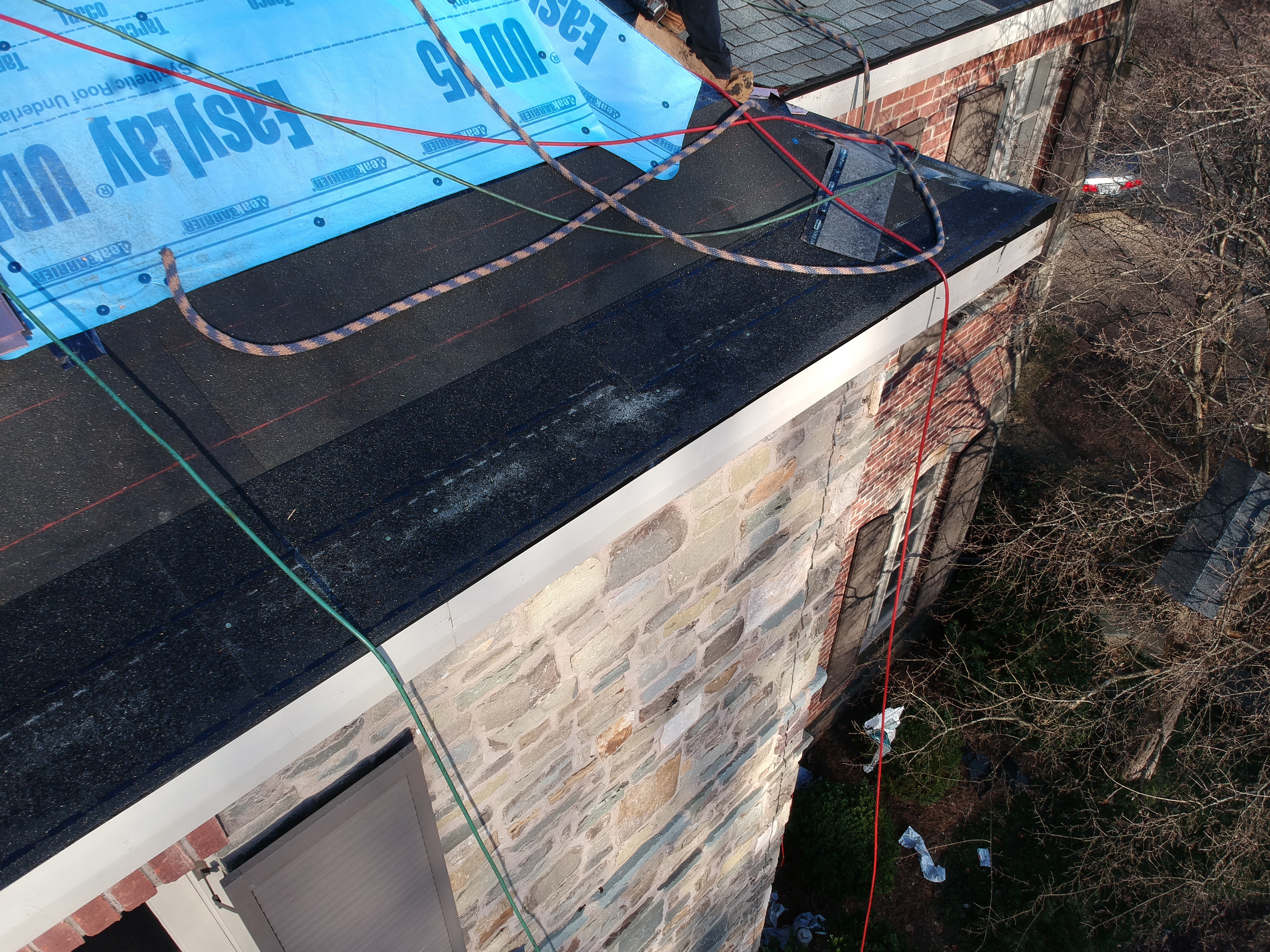
Commercial roofing projects require more structured project management than residential work — more stakeholders, more coordination requirements, and more documentation at each stage. The following is the standard 1 Source commercial project sequence:
- Initial Consultation and Property Assessment — We walk the property with the decision-maker (property manager, building owner, or facilities director), discuss operational requirements and scheduling constraints, and conduct a preliminary roof inspection to establish existing conditions.
- Material Specification and System Recommendation — Based on the assessment, we produce a written system recommendation with rationale: why we are specifying TPO vs. EPDM vs. modified bitumen for this specific property, and what alternatives were considered. You receive our reasoning in writing before any proposal is submitted.
- Detailed Proposal with Scope, Timeline, and Reference Specifications — Our proposals include material specifications by product line and manufacturer, installation method, warranty coverage, phasing plan, and a defined project timeline. There are no ambiguous line items.
- Permit Coordination — We manage all permit applications and inspections with the relevant municipal jurisdiction. Commercial roofing permits in Georgia require licensed contractor documentation that we maintain current.
- Phased Installation Schedule Minimizing Occupancy Disruption — Work is sequenced to maintain building occupancy throughout the project. Each section is waterproofed before the crew moves to the next, ensuring the building is never left exposed overnight.
- Quality Inspection at Each Phase Milestone — Our project manager conducts documented quality checks at each phase completion — seam integrity, drain function, penetration seals — before the crew advances to the next section.
- Final Inspection and Warranty Documentation — At project completion, we conduct a final inspection, provide manufacturer warranty registration documentation, and deliver a complete project file including all inspection photos, material specifications, and warranty certificates.
Service Area — Commercial Roofing Across Metro Atlanta
1 Source Roofing serves commercial properties throughout the Atlanta metro area. Our commercial team handles projects across Gwinnett, Fulton, DeKalb, Cobb, Cherokee, Forsyth, and Fayette counties, with particular depth in the northern and eastern suburban corridors where commercial and light industrial development is concentrated.
Communities we regularly serve for commercial roofing include Alpharetta, Marietta, Kennesaw, Duluth, Lawrenceville, Decatur, Sandy Springs, Roswell, Johns Creek, Suwanee, Buford, Cumming, and the intown Atlanta commercial districts. For large commercial projects, we serve properties up to 50 miles from our Lawrenceville base of operations.
We serve retail centers, office buildings, warehouses, light industrial facilities, flex-space developments, mixed-use properties, and institutional buildings. If your commercial property is in the greater Atlanta metro and needs flat roofing, membrane replacement, or commercial storm damage repair, call our commercial team at (404) 277-1377.
Related Services
- Commercial properties with storm damage face complex insurance documentation requirements — see Insurance Claims Assistance for our commercial claim process.
- Our GAF certification covers commercial applications and provides access to manufacturer-backed commercial warranties — see the GAF Certified Contractor page for details on what certification means for your project.
- CertainTeed commercial product lines are available through 1 Source — CertainTeed Certified
- For residential properties within the same ownership portfolio, see our Roof Replacement and Roof Repair pages.
What Our Clients Say
"1 Source re-roofed our 15,000 sq ft warehouse with zero disruption to our operations. On schedule, on investment, and the inspection documentation was exactly what our insurer required."
"Responsive, professional, and technically knowledgeable. They identified drainage issues our previous contractor missed entirely — issues that would have caused a major leak within another season."
Frequently Asked Questions About Commercial Roofing
Answers to the questions property managers and building owners ask most often
What commercial roofing systems does 1 Source install?
1 Source installs TPO, EPDM, modified bitumen, built-up roofing (BUR), and standing seam metal for commercial structures. The right system depends on your building's slope, drainage configuration, HVAC load, foot traffic requirements, and investment cycle. We specify systems based on what is right for each property — not what is easiest to install. Our commercial assessments include drainage analysis, existing membrane condition evaluation, and a written specification before any proposal is submitted.
How does commercial roofing differ from residential roofing?
The core differences are system type and project complexity. Residential roofing is almost entirely sloped asphalt shingle work. Commercial buildings typically have flat or low-slope roofs that require membrane systems (TPO, EPDM) rather than shingles. Commercial projects also involve more complex drainage design, HVAC penetrations, rooftop equipment coordination, and phased scheduling to maintain building occupancy during installation.
Can you perform commercial roof repairs while the building is occupied?
Yes — and we plan for it. Most commercial repairs can be completed without evacuating the building. For larger projects involving solvent odors (modified bitumen) or significant mechanical noise, we schedule work in phases and communicate with property managers about timing. Emergency tarping and temporary repairs are always same-day when called in during business hours.
What certifications does 1 Source hold for commercial roofing work?
1 Source is a GAF Certified Contractor, CertainTeed Certified Preferred Contractor. These certifications apply to commercial as well as residential applications and allow us to provide manufacturer-backed warranties on commercial installations — warranties that uncertified contractors cannot offer. We are also licensed and insured in Georgia for commercial roofing work.