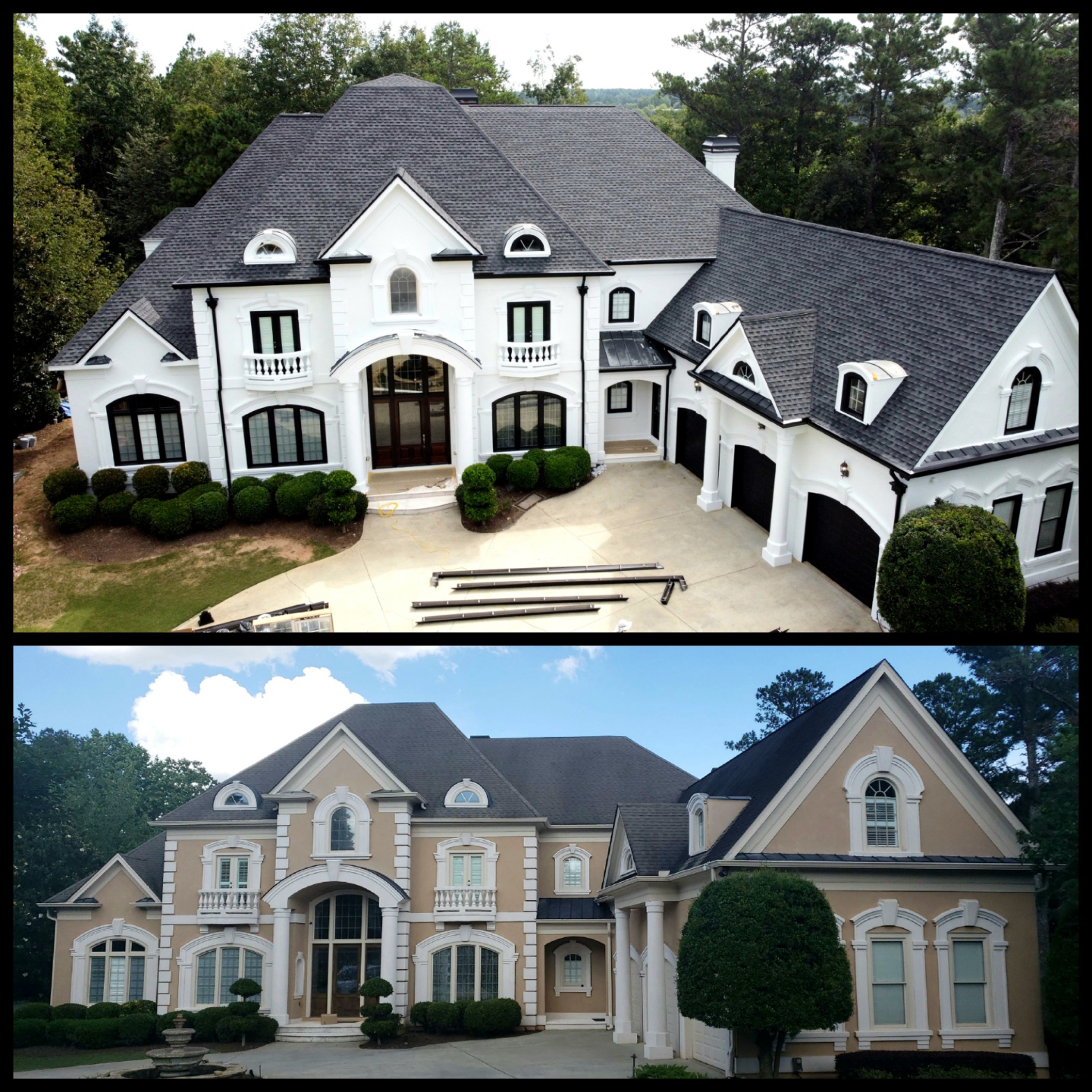
Walk past a freshly shingled house in Marietta on a hot July afternoon and you are looking at a roof that is, in a literal sense, gluing itself together. The shingles went on loose, fastened only with nails along a single horizontal line. Within hours, the Georgia sun heats the asphalt to the point that a strip of factory-applied adhesive on each shingle softens, grips the shingle above it, and cures into a bond. That quiet chemical event is what separates a modern roof from the brittle, tab-by-tab roofs of fifty years ago. It is also the single feature most homeowners never think about until the day a storm tears part of it off.
Self-sealing technology is the reason an asphalt roof behaves as a continuous membrane rather than a stack of independent pieces. When every shingle is bonded to its neighbors, wind that gets under one edge cannot find purchase. When the bond fails or never forms, that same wind peels the roof apart course by course. The difference between those two outcomes is rarely the shingle itself. It is the installation, the weather on installation day, and whether the crew understood the chemistry well enough to compensate for Georgia's conditions.
This guide explains how the self-sealing strip actually works, what activates it and what defeats it, how it ties into the broader wind-resistance system of a roof, and what a homeowner should look for to know their roof is bonding the way it should. The technology is elegant. The way it gets installed is where roofs are won or lost.
1. What "Self-Sealing" Actually Means
Every asphalt shingle made for residential use carries a band of thermally activated adhesive on its face, positioned so that when the next course is laid above it, the strip sits beneath the lower edge of that upper shingle. The adhesive is a polymer-modified asphalt compound engineered to stay solid and tack-free in the bundle, then soften and grip once it absorbs enough heat. Manufacturers call it a sealant strip, a sealing strip, or simply the adhesive line. The marketing term "self-sealing" describes the outcome: the roof seals itself without anyone applying glue by hand, provided the conditions are right.
Before this technology became standard, three-tab shingles relied almost entirely on their fasteners and their own weight to resist wind. Tabs lifted easily, and roofs in wind-exposed areas were notorious for shedding pieces. The introduction of the factory sealant strip in the mid-twentieth century, and its refinement through modern architectural (laminated) shingles, changed the performance category entirely. A bonded laminated shingle resists uplift not as an individual tab but as part of a fused field of material.
The strip is not continuous adhesive across the whole shingle. It is a deliberate pattern, often a dotted or dashed line, engineered to bond strongly while still allowing controlled water drainage and vapor movement beneath the course. That balance matters. A shingle glued solid edge to edge would trap moisture; the engineered pattern bonds against uplift while letting the assembly breathe.
2. The Chemistry: How Heat Activates the Bond
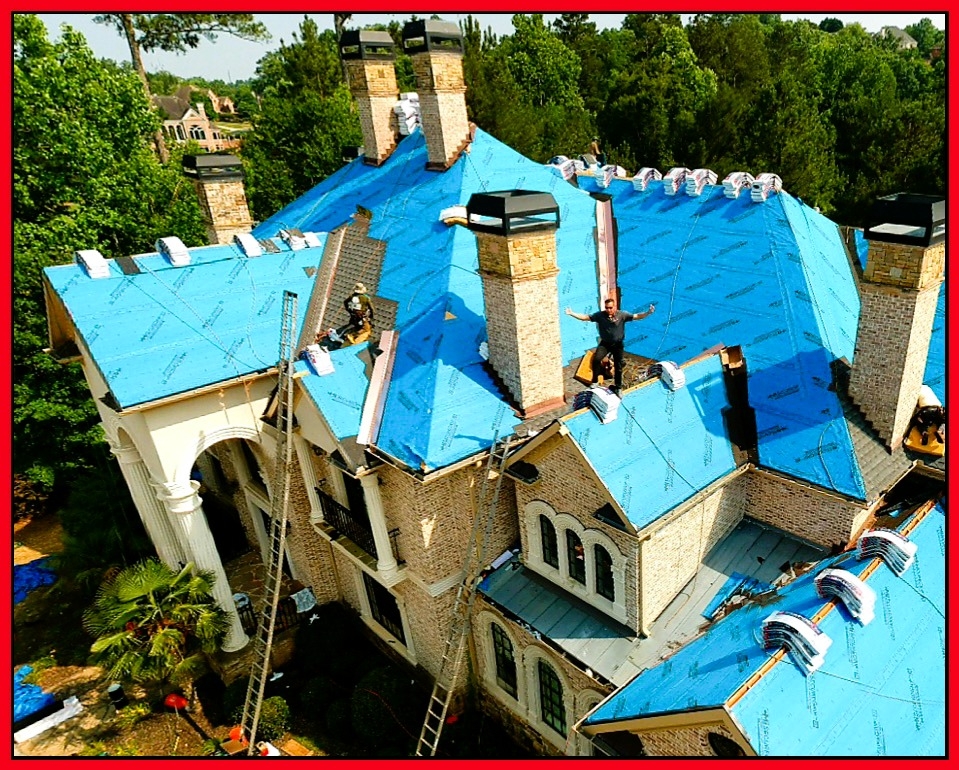
The sealant strip is a thermoplastic. Below its activation temperature it behaves like a solid; above it, the asphalt-polymer blend softens to a tacky state, flows microscopically into the texture of the shingle pressing down on it, and then re-solidifies as the roof cools, locking the two surfaces together. This is a physical bond formed by heat and pressure, not a chemical cure in the way epoxy cures. The pressure comes from the weight of the upper shingle and from foot traffic during installation.
Most strips begin to activate when the shingle surface reaches roughly 70 degrees Fahrenheit, though the exact threshold varies by manufacturer and product line. Surface temperature is the operative number, not air temperature. A dark Charcoal shingle in direct Atlanta sun can run 40 to 60 degrees hotter than the surrounding air, which is why roofs installed on a 55-degree sunny spring day often seal within hours on their south-facing planes while the north-facing planes lag. Once a strip has fully bonded, the connection is durable across normal temperature cycles for the life of the shingle.
Three conditions have to coincide for a clean bond. The strip must reach activation temperature. The upper shingle must press down on it with enough weight or traffic to make contact. And the surfaces must be clean, because dust, pollen, or the release film that keeps shingles from sticking together in the bundle will contaminate the adhesive and prevent it from grabbing. In Georgia's heavy spring pollen season, a roof that sat partially installed for days before the strips activated can pick up enough pollen on the exposed adhesive to compromise the bond.
3. Why Georgia's Climate Is Both Friend and Test
Metro Atlanta's climate is, for most of the year, ideal for self-sealing. Long warm seasons, intense direct sun, and roof surface temperatures that routinely exceed 140 degrees in summer mean that shingles installed from late spring through early fall usually bond quickly and completely. A roof replaced in June will typically have its strips fully activated before the crew has loaded the last bundle of debris.
The same heat that helps the seal also stresses it over decades. Georgia's relentless thermal cycling, where a roof swings from cool dawn temperatures to scorching afternoons day after day, slowly works on every adhesive bond and fastener. This is one reason the choice of a quality shingle and a correct installation matters so much here. A bond that was never fully formed will not survive years of that cycling; a properly formed one will.
Winter is the genuine test. While Georgia winters are mild, cold snaps drop roof surface temperatures well below the activation threshold for days at a time. Shingles installed in January on a north-facing slope may not seal until a string of sunny days arrives weeks later. In the interim, those tabs are held by nails alone, and a February wind event can lift them. This timing gap is precisely why cold-weather installation demands hand-sealing, a step covered in detail below.
Surface temperature, not the forecast, governs sealing. A dark shingle in direct sun can be 50 degrees hotter than the air. That is why a competent crew judges sealing readiness by the roof itself and by exposure, not by glancing at the day's high temperature.
4. The Seal Is One Part of a Wind-Resistance System
It is tempting to credit the sealant strip alone for a roof's wind resistance, but the strip only performs within a system of components that have to be installed together correctly. The bonded field of shingles resists uplift across the broad center of the roof. The vulnerable zones are the edges, where wind pressure concentrates, and those edges depend on other parts.
The starter strip along eaves and rakes is the first and most important partner to the field sealant. A purpose-made starter course places an adhesive bead near the roof edge that bonds the first row of field shingles down at the most wind-exposed line on the roof. Using cut field shingles instead of true starter, or omitting starter at the rakes, leaves the edge unbonded and is one of the most common causes of edge peel-back. The hip and ridge cap seals the other exposed lines, and dedicated cap shingles seal far better than field shingles bent over a ridge.
Fastening ties the whole thing together. The seal cannot hold a shingle that is not nailed correctly, which is why the choice between six-nail and four-nail fastening matters so much in a wind zone. Nails placed in the manufacturer's specified line, driven flush and not overdriven, hold the shingle tight enough for the seal to do its work; the seal and the fasteners reinforce one another. The condition of the deck the nails bite into matters too, because a seal anchored to a fastener anchored to rotted decking has no real holding power.
5. The Installation Errors That Defeat the Seal
When a sealed roof fails in wind, the shingle is almost never the culprit. The failure traces back to installation, and the same handful of mistakes appear again and again on the roofs we inspect after storms across Alpharetta, Roswell, and Johns Creek.
Improper nailing is the leader. Nails driven too high miss the sealant-strip line of the shingle below and leave the tab free to flap. Overdriven nails cut into the mat and lose holding power; underdriven nails leave the shingle proud and unable to seat against the seal. Both defeat the bond indirectly by preventing the contact pressure the strip needs.
Contaminated or never-activated strips are the second cause. Shingles installed in cold weather and never hand-sealed, strips fouled by pollen or dust during a stalled install, or shingles where the release film transferred onto the adhesive during improper bundle storage will simply never bond. The roof looks finished, but the strips are inert. The first strong wind reveals the truth.
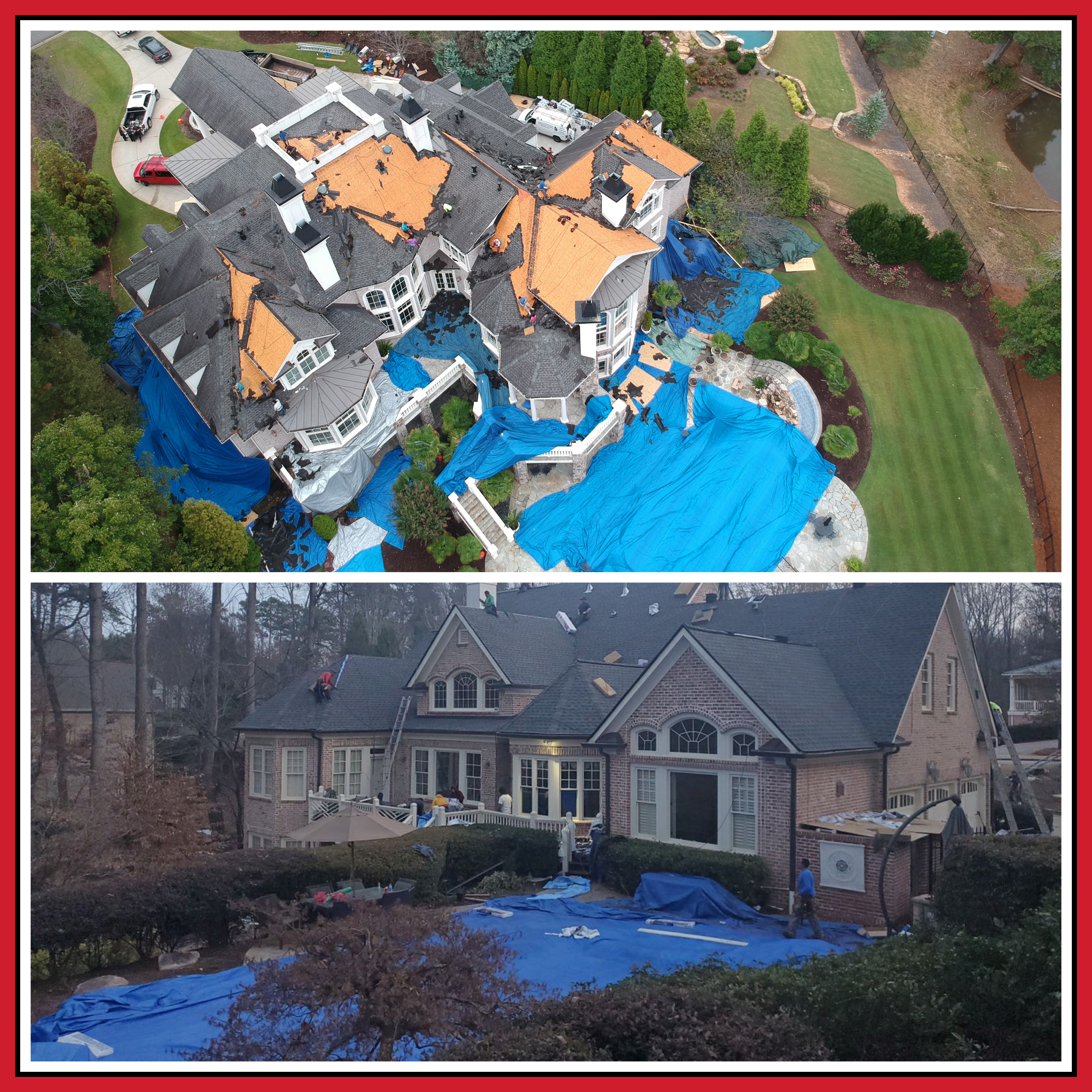
Racking the shingles up the roof in a vertical pattern instead of following the manufacturer's offset, mishandling shingles in cold weather so they crack, and skipping starter at the rakes round out the list. None of these are visible from the ground. All of them are catastrophic for wind performance. This is why an honest roof repair or replacement is worth far more than its lowest competing bid: the value is in the details no homeowner can see.
6. When Hand-Sealing Is Required, Not Optional
Manufacturers write hand-sealing into their installation instructions for specific conditions, and treating it as optional is a warranty violation, not a judgment call. The instruction is straightforward: apply a dab of asphalt roofing cement, typically about the size of a quarter, under each shingle tab in the situations the manufacturer defines.
The triggers are well established. Cold-weather installation below the sealing threshold requires hand-sealing because the factory strip will not activate in time. Steep slopes, where gravity and wind both pull harder on the tabs, require it. High-wind exposure zones require it. So do rake edges, eave edges, and any course that sits in permanent shade and will never receive enough direct sun to activate the strip. Roofs with heavy tree cover in Buckhead and shaded north slopes are common candidates.
Hand-sealing is precise work. Too much cement can cause blistering and actually telegraph through the shingle; too little does not bond. The dab goes in the correct location so it does not block the engineered drainage path of the strip. A crew that hand-seals as a routine part of cold or exposed installation is following the specification. A crew that never carries roofing cement onto the roof is gambling with your wind warranty.
Worried Your Shingles Never Sealed?
We inspect for unsealed strips, high nailing, and missing starter — the hidden defects that cause wind failures. Free, on-site, no obligation.
Call (404) 277-13777. How the Seal Differs Across Shingle Types
Not all sealant strips are equal, and the shingle category drives the difference. The table below compares how the sealing system behaves across the asphalt shingle types we install most often on metro Atlanta homes.
| Shingle Type | Sealant Configuration | Typical Wind Warranty | Notes for Georgia Roofs |
|---|---|---|---|
| Three-Tab Asphalt | Single adhesive line, light tab weight | 60–70 mph | Older standard; tabs lift more easily, less seal redundancy |
| Architectural / Laminated | Wider engineered strip, heavier dual-layer tab | 110–130 mph | The metro Atlanta standard; strong bond, broad wind margin |
| High-Performance Architectural | Enhanced adhesive plus reinforced nailing zone | 130 mph+ | Estate and high-exposure homes; pairs with six-nail pattern |
| Class 4 Impact-Resistant | Engineered strip on a polymer-modified mat | 110–130 mph | Hail resistance plus strong sealing; possible insurance savings |
| Cool / Reflective | Standard strip with reflective granule surface | 110–130 mph | Lighter surface runs cooler, may seal slightly slower in shade |
The pattern across the table is consistent: heavier, laminated shingles with engineered strips and reinforced nailing zones deliver the strongest, most durable bonds. For most metro Atlanta homes, a quality architectural shingle correctly installed is the sound choice, and for exposed sites a high-performance line with six-nail fastening adds real margin. Reflective and impact-resistant products carry the same sealing strength while adding their respective benefits, which is worth weighing against your home's exposure and your insurance situation.
8. How to Tell Whether Your Roof Has Sealed
A homeowner does not need to climb the roof to gather useful signals about sealing. The clearest sign is appearance from the ground: a fully bonded roof lies flat and uniform, with no lifted tab edges, no fluttering in moderate wind, and no shingles that sit visibly higher than their neighbors. Tabs that flap in a breeze, or a roof with a wavy, unsettled look weeks after installation, are warning signs.
A close inspection, which is part of our process, confirms it directly. We check whether tabs resist a gentle lift, which a bonded tab will, and whether the strip has made full contact along its length. We look at the most diagnostic zones first: north-facing and shaded planes, rake edges, and the courses just above the eave starter. Those are where unsealed strips hide. We also read nailing position, because a tab that lifts easily often reveals high nails behind it.
Timing context matters when judging a roof. A roof installed last week in March may legitimately not be sealed yet, and that is expected. A roof installed last summer that still has lifting tabs has a real defect. After any significant wind event, a roof that has lost tabs deserves a documented inspection to determine whether the cause was a sealing or fastening defect or genuine storm damage that belongs in an insurance claim.
9. Sealing, Storms, and Insurance Claims
When wind lifts shingles off a metro Atlanta roof, the question that decides the insurance outcome is whether the loss was caused by a storm or by a defect. A roof whose strips bonded properly and that then loses shingles in a documented high-wind or hail event has a strong covered claim. A roof whose strips never sealed because of cold installation or poor workmanship has a defect that most policies exclude as faulty installation rather than a covered peril.
This distinction is why post-storm documentation is so important, and why an experienced contractor's report carries weight. We document the failure pattern, the fastening, the condition of the sealant strips, and the storm context, then align that with the adjuster's findings. Mismatched documentation is a leading cause of underpaid claims. Our insurance claims assistance exists precisely to get the scope and the cause documented correctly the first time. The broader process is laid out in our step-by-step claim guide and our overview of documenting storm damage.
Homeowners pursuing premium relief should also know that wind-mitigation features tied to the sealed system, including six-nail fastening, sealed starter and ridge, and impact-resistant shingles, can support the savings discussed in our guide to wind mitigation upgrades. A roof built to bond and hold is not only safer; it can be a documentable asset on your policy.
10. Repairing a Roof After the Seal Has Set
One practical consequence of self-sealing is that repairs on an established roof require care. Once a strip has bonded, the shingle above it is genuinely stuck down. Lifting it to slide a replacement underneath, the routine motion of a repair, can crack the bonded tab, especially in cool weather when the asphalt is rigid and unforgiving. A careless repair often creates two damaged shingles where there was one.
The right method is to warm the bonded tabs gently so the asphalt becomes pliable, release them without tearing, replace the damaged shingles, and then hand-seal the repaired area so the new pieces bond into the field. Done properly, a localized repair restores the wind resistance of that section. Done by lifting cold tabs and snapping them, it leaves a patchwork of cracked shingles that fail at the next storm.
There is a point where repair stops being the right answer. A roof near the end of its service life, with widespread sealing failure, brittle aged shingles, and granule loss, will not hold a repair for long, and chasing leaks across an aging roof costs more over time than addressing the system. The repair-versus-replace decision deserves an honest assessment, and our free evaluation is built to give you that clarity rather than a default toward the larger job.
Tabs that flutter in the wind are not cosmetic. An unsealed or lifting tab is an open edge that the next storm will exploit. Addressing it before wind season turns a small correction into avoided structural and water damage.
11. Where Sealing Technology Is Heading
Sealant chemistry has advanced steadily, and the direction is toward broader, more forgiving bonds. Modern high-performance shingles use wider adhesive zones and reinforced nailing strips engineered to grip across a larger area and to tolerate a wider range of installation conditions. Some lines incorporate strips designed to begin tacking at slightly lower temperatures, narrowing the cold-weather gap that has long challenged winter installation.
The sealing principle also extends well beyond field shingles into the rest of the modern roof system. Synthetic underlayments and self-adhering ice and water shield apply the same self-bonding logic to the layers beneath the shingles, sealing around fasteners and at vulnerable transitions. The combination of a bonded shingle field over a sealed underlayment layer is what makes a contemporary roof so much more weather-tight than its predecessors.
For homeowners exploring the full landscape of modern roofing materials, the sealed asphalt shingle sits alongside other advancing technologies. Our guides to standing seam metal, synthetic slate and composite, and algae-resistant shingles round out the picture, and the broader collection lives in our resource library. Whatever material you choose, the lesson of self-sealing holds: the technology is only as good as the installation that activates it.
12. Why the Installer Decides Whether the Seal Holds
The recurring theme of this entire guide is that self-sealing technology delivers its promise only when a crew understands and respects the conditions it needs. The shingle manufacturers have done their part; the chemistry works. What varies from roof to roof is whether the people on the roof nailed in the right line, hand-sealed where the specification required it, used true starter and cap, and judged sealing readiness by surface temperature and exposure rather than convenience.
At 1 Source Roofing and Restoration, that judgment is the work. Our crews are trained to manufacturer specifications for the GAF and CertainTeed systems we install, which means the nailing pattern, the starter and ridge detailing, and the hand-sealing protocol are not improvised on site. A site supervisor is present throughout the project to confirm the details that determine whether your roof bonds into a wind-resistant membrane or merely looks finished. For estate homes in Alpharetta, Buckhead, and Sandy Springs, that standard is non-negotiable.
Whether you are planning a roof replacement, evaluating a roof after a storm, or simply uncertain whether last year's installation ever sealed, the right next step is a documented inspection by people who understand the chemistry and the code. Learn more about our approach on why homeowners choose us, review our work in the photo gallery, or reach us directly through our contact page.
Schedule Your Free Roof Assessment
We verify sealing, fastening, starter, and ridge detailing — the workmanship that decides wind resistance. Serving Atlanta, Johns Creek, Roswell, and all of metro Atlanta.
(404) 277-1377 — No ObligationCertified by Industry-Leading Manufacturers