When a spring storm rolls through metro Atlanta and a homeowner finds shingles in the yard the next morning, the question is rarely whether the roof met code. Almost every roof in Gwinnett, Fulton, and Cobb counties was built to code. The roofs that survive a severe straight-line wind event with the interior dry are the ones built to a higher standard — and the most rigorous, independently tested version of that higher standard is FORTIFIED Roof.
FORTIFIED is not a marketing label or a brand of shingle. It is a construction and re-roofing standard developed by the Insurance Institute for Business and Home Safety, an organization funded by property insurers that runs full-scale destructive testing on real houses inside a wind chamber capable of generating 130-plus mile-per-hour gusts. The standard exists because the insurance industry was paying for the same failures over and over and decided to find out, empirically, which construction details stop them.
This guide explains exactly what the FORTIFIED Roof standard requires, why each requirement exists, how it differs from Georgia's building code, and what it takes to specify a FORTIFIED-quality re-roof on an Atlanta home. If you are already planning a roof replacement, the marginal upgrade to FORTIFIED-grade construction is one of the highest-value decisions available to you — and the only window in which it is practical to do it.
1. What the FORTIFIED Roof Standard Actually Is
FORTIFIED Roof is the entry tier of a three-level program — FORTIFIED Roof, FORTIFIED Silver, and FORTIFIED Gold — created by IBHS to make homes measurably more resistant to severe weather. The Roof tier focuses on the single component that, when it fails, causes the most damage and the most expensive claims: the roof itself. Silver and Gold layer on additional whole-house protections such as opening protection and continuous load paths, but the Roof level alone delivers the largest share of the resilience benefit per dollar.
The standard is prescriptive and specific. Rather than asking a builder to "use good materials," it dictates the deck fastener type and spacing, requires the seams between roof deck panels to be sealed, specifies the edge metal and how it is attached, and sets the fastening pattern for the roof cover, starter course, and ridge caps. Every requirement traces back to a documented failure mode observed in real storms and reproduced in the IBHS wind chamber.
What makes FORTIFIED credible is independence. The homeowner's contractor builds the roof, but a separate, IBHS-credentialed FORTIFIED Evaluator verifies the work and submits the documentation to IBHS for the official designation. That separation is the same principle that makes a building inspection meaningful — the party verifying the work is not the party that did it.
2. Why the Standard Exists: Where Roofs Actually Fail
Decades of post-storm field investigation point to a consistent sequence of roof failure. It almost never begins in the middle of the roof field. It begins at an edge or a corner, where wind pressure is highest, and it propagates inward.
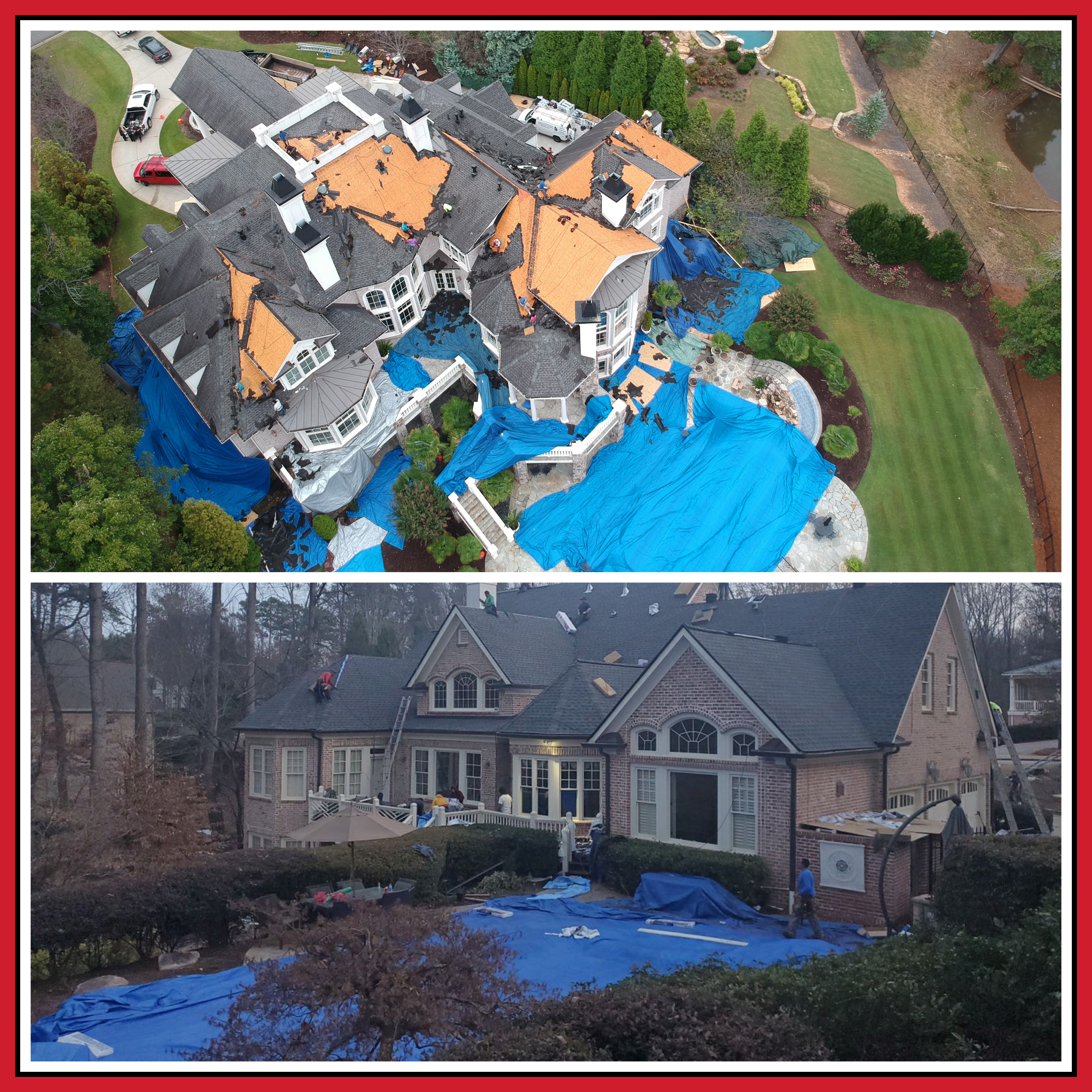
A typical progression runs like this. Wind catches an improperly fastened drip edge or a starter strip that was not sealed, lifts it, and creates a leverage point. The first course of shingles peels back. Once the field shingles lose their windward edge, uplift accelerates and the cover unzips across the slope. With the shingles gone, the only thing standing between the storm and the home's interior is a layer of asphalt-saturated felt or a sheet of synthetic underlayment that was never designed or fastened to be a standalone water barrier. Wind-driven rain pushes through the underlayment's staple holes and laps, soaks the decking, and runs down the framing into the living space.
FORTIFIED interrupts this chain at every link. It strengthens the deck attachment so the structural plywood does not separate from the rafters. It seals the deck so that even with the cover gone, water stays out. It fastens the edges and starter courses so the cover has no leverage point to lift from. The genius of the standard is that it does not try to make shingles indestructible — it accepts that in an extreme event the cover may be lost and ensures the home stays dry anyway.
3. The Sealed Roof Deck: The Heart of FORTIFIED
If you remember one thing about FORTIFIED Roof, remember the sealed roof deck. It is the requirement that most distinguishes a FORTIFIED roof from a standard code roof, and it is the one that most directly prevents the catastrophic interior water damage that turns a roof claim into a whole-home restoration.
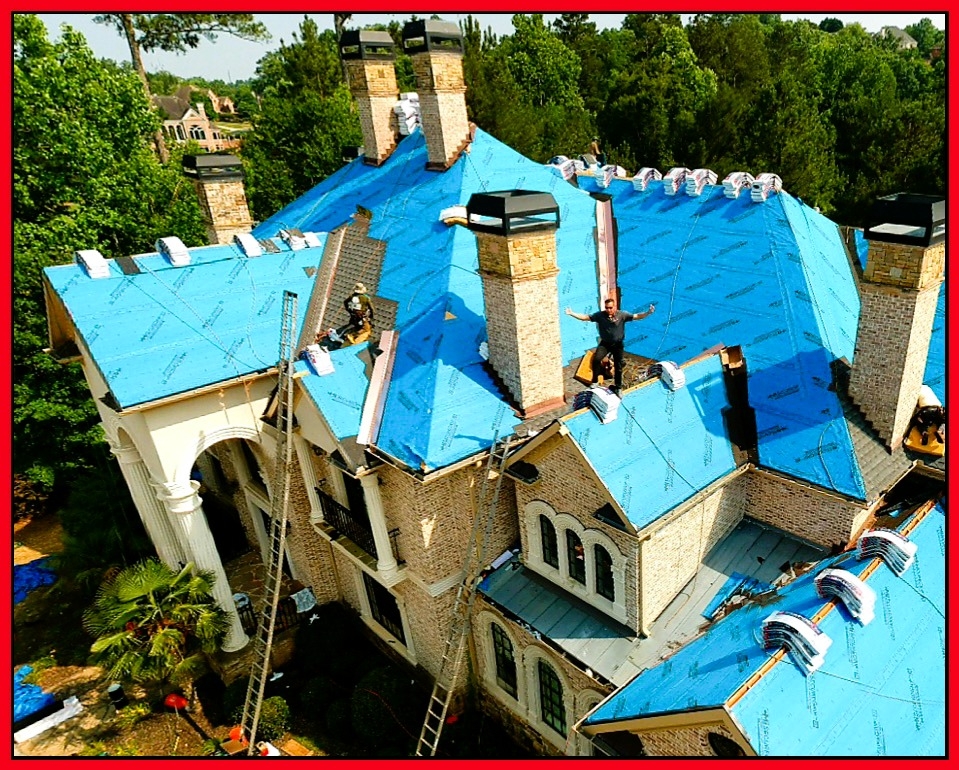
A sealed roof deck means the seams between the wood deck panels are taped or otherwise sealed so the deck functions as a continuous secondary water barrier. FORTIFIED accepts several approved methods: taping the panel joints with a flashing tape rated for the application and then covering with underlayment, or installing a fully-adhered self-sealing membrane, or using a closed-cell foam adhesive at the seams in some assemblies. The objective is identical across methods — if every shingle on the roof were removed, the deck below would still shed water and keep the attic and ceilings dry.
This is a fundamentally different philosophy from conventional roofing, where the underlayment is treated as a temporary cover during installation and a minor backup afterward. Under FORTIFIED, the deck is engineered to be the last line of defense and is expected to perform that role. The upgrade pairs naturally with a quality synthetic underlayment; if you want the technical comparison, our guide on synthetic underlayment versus felt explains why the industry moved away from organic felt for exactly these performance reasons. For the most vulnerable zones, FORTIFIED dovetails with the use of self-adhering ice and water shield at eaves and valleys.
The sealed roof deck is what separates a costly inconvenience from a financial catastrophe. When shingles blow off a conventional roof, the next rain enters the home. When shingles blow off a FORTIFIED roof, the sealed deck holds the water out until the cover is repaired — protecting drywall, insulation, flooring, and everything below.
4. Enhanced Deck Attachment and Re-Nailing
Before the deck can be sealed, it has to stay attached to the house. A large share of older metro Atlanta homes — particularly those built in the 1980s and 1990s — have roof decking fastened with smooth-shank nails or even staples, installed at a spacing that satisfied the code of the day but leaves real uplift capacity on the table.
FORTIFIED requires deck attachment using ring-shank nails, which have annular ridges along the shank that grip the wood fibers and resist withdrawal far better than a smooth nail. The standard specifies a tighter nailing schedule than baseline code — commonly 6 inches on center along panel edges and in the field, with closer spacing in the high-pressure perimeter and corner zones. During a re-roof, the existing deck can be re-nailed to the FORTIFIED pattern once the old cover is off and the panels are exposed.
This re-nailing step is one of the most cost-effective uplift upgrades in all of residential construction, and it is only practical when the roof is already torn off. That timing is precisely why FORTIFIED upgrades are decided before the project starts, not after. Our companion article on roof deck re-nailing for wind uplift covers the engineering of why ring-shank pull-out values matter so much in a windstorm.
5. Roof Cover Fastening: Nailing, Starter, and Ridge
With a strong, sealed deck in place, FORTIFIED turns to the roof cover. The requirements here are not exotic — they are the manufacturer's own high-wind specifications, enforced rigorously rather than treated as optional.
Asphalt shingles carry a wind rating that is only valid when they are installed with the correct nail count and placement. FORTIFIED requires the high-wind nailing pattern, which for most architectural shingles means six nails per shingle rather than four, driven flush in the manufacturer's designated nailing zone — not over-driven through the mat and not high above the line where they miss the course below. The distinction between four-nail and six-nail fastening is consequential enough that we devoted a full guide to six-nail versus four-nail shingle fastening.
The starter course gets special attention because it anchors the entire field. FORTIFIED requires a manufactured starter strip with a factory adhesive bead placed correctly along eaves and rakes, so the first course is sealed down and the field has no exposed edge for wind to grab. The ridge and hips, the last areas installed and often the first to lift, must use properly fastened hip and ridge cap shingles rather than cut-up field shingles. Modern self-sealing shingle technology contributes to the bond, but FORTIFIED does not rely on adhesive alone — mechanical fastening carries the load.
6. Edge Metal and Drip Edge: The Storm's First Target
The perimeter of the roof experiences the highest wind pressures, and the edge metal is what the storm attacks first. FORTIFIED treats drip edge and edge flashing as a structural element, not a trim detail.
The standard requires drip edge of a minimum thickness and width, mechanically fastened at a close spacing — typically every 4 inches — and lapped correctly so wind cannot pry a free end loose. This is a meaningful upgrade over the way edge metal is often installed on a conventional job, where lighter-gauge metal at wider fastener spacing is common. Once an edge lifts, it becomes the leverage point that peels the rest of the roof, so locking the perimeter down is foundational. Georgia code already requires drip edge, a point we cover in our drip edge installation guide, but FORTIFIED tightens both the material and the fastening well beyond the code floor.
The same rigor extends to roof-to-wall and penetration flashings. Properly executed step and reglet flashing, kickout flashing at the bottom of wall intersections, and durable lifetime pipe boots all support the FORTIFIED objective of a continuously water-tight assembly that does not depend on the shingles alone.
7. FORTIFIED Roof vs. Georgia Building Code
Georgia's residential building code, derived from the International Residential Code with state amendments, defines the legal minimum. A roof that satisfies it is a safe, permitted, lawful roof. FORTIFIED is a voluntary standard that sits on top of code and upgrades the specific details that field investigation and wind testing have identified as decisive. The two are complementary, not competing.
The table below summarizes the most important differences a homeowner should understand when comparing a code-minimum re-roof to a FORTIFIED-grade re-roof.
| Roof Element | Georgia Code Minimum | FORTIFIED Roof Standard |
|---|---|---|
| Deck Fasteners | Smooth-shank nails or staples permitted at code spacing | Ring-shank nails required at a tighter, defined schedule |
| Deck Seams | Not required to be sealed | Sealed deck mandatory — taped seams or fully-adhered membrane |
| Shingle Nailing | Manufacturer minimum (often four nails) | High-wind pattern required (typically six nails) |
| Drip Edge | Required, lighter gauge at wider fastener spacing | Minimum gauge/width, fastened roughly every 4 inches, lapped |
| Starter Course | Acceptable practice varies | Manufactured sealed starter strip required at eaves and rakes |
| Verification | Local building inspection | Independent IBHS-credentialed evaluator + documentation |
| Designation | Certificate of occupancy / permit closure | Official IBHS FORTIFIED Roof designation, valid 5 years |
For homeowners who want to understand the legal baseline more deeply, our building codes hub and technical standards hub break down Georgia's requirements element by element. FORTIFIED is best understood as the engineered ceiling that code's floor makes room for.
8. Why FORTIFIED Matters Specifically in Metro Atlanta
Atlanta is not a coastal hurricane market, and some homeowners assume FORTIFIED is only for the Gulf and Atlantic shorelines where the standard first gained traction. That assumption misreads the region's real risk profile.
Metro Atlanta sits squarely in the path of severe convective storms. Spring and summer bring squall lines, supercells, microbursts, and the straight-line winds that meteorologists call derechos. These events routinely produce 60-to-90 mile-per-hour gusts, and the strongest can exceed 100. They also bring hail. The damage signature is exactly what FORTIFIED is engineered against: shingles stripped from windward slopes, lifted edges, and wind-driven rain entering through compromised covers.
Georgia's heat and humidity add a second dimension. Summer attic temperatures and intense UV degrade asphalt over time, and any moisture that gets past a conventional roof finds a warm, humid environment ideal for rot and mold. A sealed FORTIFIED deck keeps that moisture out of the assembly entirely. The standard also pairs well with regionally appropriate upgrades such as Class 4 impact-resistant shingles for hail and cool reflective shingles for heat — resilience and energy performance reinforcing each other on the same roof.
9. Insurance Credits, Documentation, and Resale Value
The FORTIFIED program originated with insurers, and in coastal states a FORTIFIED designation can unlock substantial premium credits, sometimes mandated by state law. In Georgia, formal FORTIFIED-specific credits are less standardized, but the resilience the standard delivers still translates into financial value through several channels.
First, fewer and smaller claims. A roof that does not lose its cover in a storm does not generate the kind of large interior-water claim that drives premiums up at renewal. Many Georgia insurers already reward documented wind mitigation upgrades even when they do not use the FORTIFIED label specifically, and a FORTIFIED build produces exactly the documentation those programs ask for.
Second, claim documentation. If a covered event does occur, the construction records behind a FORTIFIED roof — photographs of the sealed deck, the re-nailing, the fastening — provide an unusually strong evidentiary basis for a clean claim. Our insurance claims hub and guide to documenting storm damage explain how that paper trail accelerates settlement, and our insurance claims assistance team manages the process for 1Source clients.
Third, resale. The five-year IBHS designation is a transferable, third-party-verified credential. For a buyer evaluating a home in Alpharetta, Johns Creek, or Buckhead, a FORTIFIED roof is concrete evidence that the most expensive component of the house was built to a tested, documented resilience standard.
Build Your Re-Roof to a Resilience Standard
Free on-site assessment. We document your deck condition and show you exactly what a FORTIFIED-grade re-roof would involve on your home.
Call (404) 277-137710. How a FORTIFIED Roof Gets Certified
Certification is what separates a roof that is genuinely FORTIFIED from one that merely resembles the standard. The process is built around independent verification and is designed to be impossible to fake after the fact.
The work is performed by a qualified roofing contractor who understands the standard's requirements and documents each stage as it happens. The evaluation is performed by a separate, IBHS-credentialed FORTIFIED Evaluator. As the roof is built, the crew photographs the deck attachment and re-nailing, the sealed seams, the edge metal and fastening, the underlayment, and the cover installation. The evaluator reviews this evidence against the standard, often supplemented by an on-site visit, and confirms compliance.
When the evidence satisfies the standard, the evaluator submits the package to IBHS, which issues the official FORTIFIED Roof designation. That designation is valid for five years, after which the home can be re-evaluated to maintain the status. Because the deck attachment and sealing are buried under the finished roof, they cannot be verified once the cover is on — which is why a FORTIFIED roof is planned and documented before the first bundle of shingles goes down, never reconstructed from a finished roof after the fact.
11. How to Specify a FORTIFIED-Quality Re-Roof
You do not have to pursue the formal IBHS designation to benefit from the standard. Many of our metro Atlanta clients choose to build to FORTIFIED-equivalent construction details for the resilience, whether or not they complete the third-party certification. Either way, the specification conversation should happen before the project is contracted.
A FORTIFIED-quality scope of work should explicitly state the deck re-nailing pattern and ring-shank fastener, the deck-sealing method, the underlayment specification, the edge metal gauge and fastening spacing, the shingle wind rating and six-nail pattern, the sealed starter strip, and the ridge and hip cap detail. These line items make the difference visible in the proposal rather than buried in the phrase "new roof." If you are weighing whether your current roof warrants this level of rebuild, our guide on roof repair versus replacement helps frame the decision, and a professional storm damage assessment establishes the starting condition.
FORTIFIED-grade upgrades are only practical during a re-roof. Deck re-nailing, seam sealing, and edge-metal upgrades all require the roof to be open. Once a conventional roof is installed, capturing these resilience benefits means tearing it off again — the upgrade is dramatically more cost-effective when planned into the original replacement.
For Atlanta's larger estate homes and complex rooflines — and for commercial properties where downtime from a roof failure carries real business cost — building to the FORTIFIED standard is a sound risk-management decision. The same engineering logic that protects a single-family home in Roswell or Marietta protects a commercial asset from the interior losses that follow a cover failure. The marginal cost is modest relative to the value of the structure and its contents.
12. The 1Source Approach to Resilient Roofing
At 1 Source Roofing and Restoration, building beyond code is the default, not an upsell. Our crews are trained to manufacturer high-wind specifications, and our project documentation is built to support exactly the kind of verification a FORTIFIED evaluation requires — photographs of every concealed layer, a written scope that names each resilience detail, and permit closure on every project.
The process begins with a free on-site assessment. We inspect the existing deck condition, evaluate the current fastening and ventilation, and identify the specific vulnerabilities on your roof. From there we present a written scope of work that itemizes the FORTIFIED-grade details — deck re-nailing, sealed deck, enhanced edge metal, six-nail cover fastening, sealed starter, and ridge caps — so you can see precisely what you are investing in. For homeowners who want the official credential, we coordinate with an independent FORTIFIED Evaluator and supply the documentation package.
You can see the quality of our completed installations in our photo gallery, read what clients say on our testimonials page, and learn more about the difference our standards make on why choose 1Source. When you are ready to talk specifics, our team is one call away at (404) 277-1377.
Schedule Your Free Roof Assessment
Deck condition report, vulnerability review, and a written FORTIFIED-grade scope — before any commitment. Serving Atlanta, Buckhead, Sandy Springs, and all of metro Atlanta.
(404) 277-1377 — No ObligationCertified by Industry-Leading Manufacturers