Natural slate is the most beautiful roof an Atlanta home can wear, and for a certain kind of property — a stone Tudor in Buckhead, a brick Georgian in Druid Hills, an estate-scale traditional in Alpharetta — nothing else carries quite the same authority. The problem has never been the look. The problem is everything underneath it: the weight, the framing demands, the fragility under hail, and a project investment that can climb past the cost of a luxury car.
Synthetic slate exists to resolve that tension. Premium composite slate and shake products are engineered polymer tiles, molded from real quarried slate, that capture the depth, color variation, and irregular edge of the natural material at a fraction of the weight and structural burden. For metro Atlanta homeowners who want the estate aesthetic without re-engineering their roof framing — or absorbing slate's six-figure exposure — composite slate has become the material that finally makes the look attainable.
This guide explains how synthetic slate is made, how it performs in Georgia's specific climate, what it costs relative to the alternatives, and where it makes sense versus where natural slate or another premium material is the better call. By the end, you will understand the engineering tradeoffs well enough to evaluate any composite slate proposal on substance.
1. What Synthetic Slate and Composite Roofing Actually Are
The category that homeowners loosely call "synthetic slate" covers a family of engineered roofing tiles built to imitate two premium natural materials: slate and cedar shake. The tiles are manufactured from polymer compounds — most commonly a blend of virgin and recycled plastics, rubber, and mineral fillers — molded under heat and pressure in molds taken directly from real slate and shake. That molding process is what separates a convincing composite product from a hollow imitation: a tile pulled from authentic slate carries the same surface irregularity, cleft texture, and varied thickness that quarried slate has.
The leading product lines in the metro Atlanta market come from manufacturers such as DaVinci Roofscapes, Brava, EcoStar, and CertainTeed, with synthetic shake products from the same makers serving homeowners who want the cedar look without the rot, insect, and fire vulnerability of real wood. These are not asphalt shingles with a slate-printed surface. They are individually installed tiles, typically 12 inches wide, laid in courses much the way real slate is, with the staggered widths and varied exposure that give a genuine slate roof its hand-laid character.
It is worth drawing a clear line between premium composite slate and the lightweight "stone-coated steel" or polymer panel products that also borrow the slate name. The premium tiles discussed here are dimensional, individually fastened, and carry through-body color. They are a luxury material in their own right — chosen by homeowners who could afford natural slate but prefer the engineering advantages of the composite. The performance and warranty figures throughout this guide refer to that premium tier, not to lesser imitations.
2. The Weight Advantage: Why Composite Slate Fits Standard Framing
The defining advantage of synthetic slate is weight, and it is not a marginal difference. Natural slate weighs between 800 and 1,500 pounds per roofing square — that is, per 100 square feet of roof surface. On a moderately sized 2,400-square-foot home with a complex roofline, a natural slate roof can add 15 to 25 tons of dead load to the structure. Standard residential framing in metro Atlanta, designed for asphalt or composite loads, simply is not engineered to carry that.
This is the hidden cost that catches homeowners off guard when they price natural slate. Before a single slate tile goes on, the home often needs a structural engineer's evaluation and reinforced rafters, sistered joists, or upgraded ridge beams to carry the load — work that can add $5,000 to $15,000 to the project and requires permitting and engineered drawings. For an existing home not originally built for slate, that reinforcement is frequently the deciding factor that makes natural slate impractical.
Synthetic slate weighs roughly 150 to 300 pounds per square — comparable to a quality architectural asphalt shingle, and well within what standard residential framing carries without modification. A composite slate roof installs directly onto sound existing decking and framing the same way an asphalt replacement would. There is no engineer's stamp, no joist reinforcement, no structural permitting overhead. For most metro Atlanta homeowners, eliminating that structural project is the single largest practical reason composite slate wins over the natural product. If you are uncertain whether your framing is sound to begin with, a structural assessment before any premium material decision is money well spent.
3. Does It Actually Look Like Slate? The Appearance Question
The first question any homeowner asks about a composite product is whether it looks convincing or whether it reads as plastic from the curb. With premium tiles installed correctly, the honest answer is that from the ground — which is where every roof is actually judged — quality composite slate is visually indistinguishable from quarried slate.
Several engineering choices drive that realism. Premium tiles are molded from real slate, so they carry authentic surface texture rather than a repeating stamped pattern. Manufacturers mold multiple tile profiles — often a dozen or more distinct surface patterns within a single color — and crews mix them across the roof so no two adjacent tiles share the same face. Tile widths are randomized in the same way real slate is sorted, and the color is varied within each bundle to reproduce the subtle tonal shifts of a natural slate quarry. The result is a roof with genuine depth and irregularity, not the flat uniformity that gives away an imitation.
Color permanence is the other half of the appearance question. Quality composite slate uses through-body color — the pigment runs through the full thickness of the tile rather than sitting as a surface coating — combined with UV-stabilized polymers. A chip or scuff does not expose a different color beneath, and the tiles resist the fading and chalking that affected early-generation synthetic products a generation ago. We recommend every homeowner view installed samples on an actual roof before committing, and we arrange those viewings during the assessment so the decision is made with eyes on the real material, not a brochure.
The look is judged from the ground, not from a sample chip. Premium composite slate is molded from real slate, mixed across a dozen-plus profiles, and color-varied within every bundle. On the roof, at the distance anyone actually views it, it reads as genuine slate — with the added benefit that it will not shatter under the next hailstorm.
4. Durability and Impact Resistance in Georgia's Climate
Metro Atlanta's climate is hard on roofs in specific ways: 50 inches of annual rainfall, summer roof-surface temperatures that exceed 150°F, sustained humidity, periodic severe thunderstorms, and regular hail. A premium material has to handle all of it for decades, and this is where composite slate's engineering pays off against both asphalt and natural slate.

Impact resistance is the headline. Most premium composite slate and shake products carry a Class 4 rating under the UL 2218 steel-ball impact test — the highest available. That matters in Georgia, where hail is a recurring threat. Natural slate, for all its longevity, is brittle: a significant hailstone can crack or shatter a slate tile, requiring individual replacement that demands a specialized slater. Composite slate flexes and absorbs impact instead of fracturing, which makes it the more resilient practical choice across a 40-to-50-year service life in a hail-prone region. For homeowners weighing impact performance specifically, our guide to Class 4 impact-resistant shingles covers the testing standard and insurance implications in depth.
Wind resistance is equally strong. Premium composite tiles carry wind warranties commonly rated to 110 to 130 mph — well above what metro Atlanta's straight-line wind and thunderstorm events typically produce. The tiles are individually fastened with multiple nails per tile, and proper wind-rated fastening at the field, eaves, and rakes anchors the system against uplift. Because the polymer does not absorb water, freeze-thaw cycling — which slowly degrades porous materials — has little effect on it, and the tiles will not support the moss and algae growth that streaks asphalt and weathers natural slate over time.
5. Synthetic Slate vs. Natural Slate vs. Asphalt: A Direct Comparison
The clearest way to position composite slate is against the two materials homeowners weigh it against: the natural slate it imitates and the architectural asphalt most Atlanta homes currently wear. Each has a legitimate place; the table below lays out where each material's strengths and constraints fall for a metro Atlanta home.
| Factor | Synthetic Slate | Natural Slate | Architectural Asphalt |
|---|---|---|---|
| Weight per square | 150–300 lb | 800–1,500 lb | 200–350 lb |
| Framing reinforcement | Not required | Usually required | Not required |
| Service life | 40–50 yrs | 75–100+ yrs | 25–30 yrs |
| Hail (impact) rating | Class 4 | Brittle / cracks | Class 3–4 (varies) |
| Installed project range (2,000 sq ft) | $22,000–$40,000 | $35,000–$80,000+ | $13,000–$22,000 |
| Best suited for | Estate aesthetic without structural work | Historic homes built for slate; multi-generation ownership | Most residential homes; strong resale value |
The pattern is clear. Natural slate wins decisively on lifespan and remains the right material for a historic home originally engineered to carry it and held across generations. Asphalt remains the value-driven choice for most homes and offers the strongest resale return per dollar. Composite slate occupies the position between them: the estate look and a half-century of service, without the framing project or the six-figure exposure of natural slate. For homeowners researching the broader material landscape, our roof replacement service page walks through every tier, and the standing seam alternative is covered in our guide to standing seam metal roofing for Atlanta estates.
6. What Synthetic Slate Costs — and Why It Pays Back
An installed synthetic slate project in metro Atlanta typically runs $22,000 to $40,000 for a standard 2,000-square-foot home, moving higher with steeper pitches, complex rooflines, and premium product lines. That is roughly double an architectural asphalt project. Set against natural slate, though — which commonly runs $35,000 to $80,000 or more once structural reinforcement is folded in — composite slate often comes in at less than half the natural material's all-in figure.
The more useful way to evaluate a premium material is cost-per-year of service delivered, not the upfront figure alone. A premium architectural asphalt roof on a 2,000-square-foot Atlanta home runs about $16,000 and realistically delivers 24 years of service — roughly $667 per year. A composite slate roof at $30,000 delivering 45 years of service works out to about $667 per year as well, while eliminating a full mid-life replacement cycle and all the accumulated material and labor inflation that comes with it. On a per-year basis, composite slate is competitive with mid-tier asphalt while delivering a dramatically more valuable aesthetic and superior hail protection.
There is a resale dimension as well. In affluent metro Atlanta neighborhoods — Buckhead, Sandy Springs, Johns Creek — a slate-look roof signals a property at the top of its market segment, and a 50-year material warranty that transfers to a buyer is a documented selling point. The material is positioned as a long-horizon investment in the home, not a recurring expense, which is precisely how homeowners who keep their properties a decade or more should evaluate it. We never recommend choosing a premium roof on price alone; we recommend choosing it on the math of total cost across the years you intend to own the home.
See Composite Slate on a Real Roof
Free on-site assessment with installed material samples. We measure, evaluate your framing, and present product options before any commitment.
Call (404) 277-13777. How Synthetic Slate Is Installed Correctly
A premium material delivers premium performance only when it is installed to specification, and composite slate installation is more demanding than asphalt. The tiles are individually fastened, the courses must be laid out precisely, and the manufacturer's nailing pattern, exposure, and underlayment requirements are warranty conditions — not suggestions. A crew unfamiliar with the product can void a 50-year warranty in a single afternoon of shortcuts.
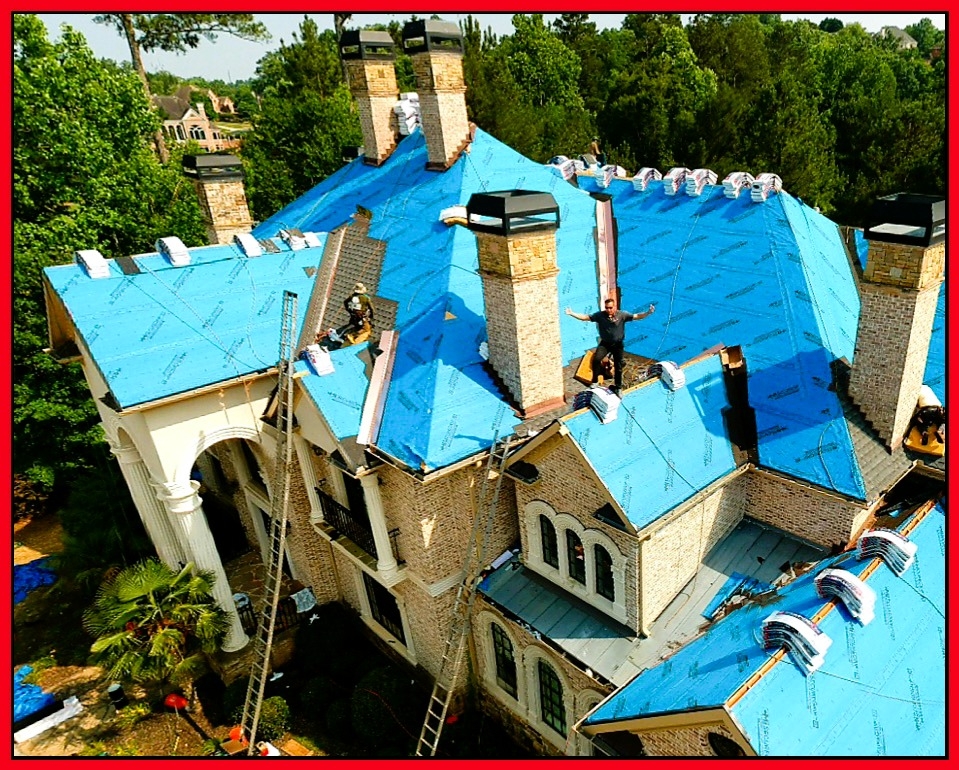
Proper installation begins with the deck and the layers beneath the tiles. After tear-off, the decking is inspected and any deteriorated sections are replaced — composite slate is a multi-decade system, and it should never go down over compromised decking. A high-temperature synthetic underlayment is the standard substrate; the comparison between modern membranes and old felt is covered in our guide to synthetic underlayment versus felt. Self-adhering ice and water shield is applied at eaves, valleys, and penetrations, where wind-driven rain is most likely to find a path in.
The details that protect the roof for decades live at the transitions. Valleys, chimney and skylight flashing, sidewall step and reglet flashing, and kickout flashing at roof-to-wall terminations all have to be executed precisely, and they are the locations where a price-first contractor cuts corners that surface as leaks years later. Hip and ridge tiles, the pipe boots, and the starter course each have manufacturer-specified methods for composite systems. This is why we install premium materials only with crews trained to the specific product line — the warranty and the performance both depend on it, and our approach to every project reflects that standard.
8. The System Beneath the Tiles: Ventilation and Attic Performance
A roof is a system, not just a surface, and a premium 50-year material amplifies the importance of everything underneath it. Inadequate attic ventilation traps the heat and moisture that degrade decking and shorten the life of any roofing material — and manufacturer warranties on premium products specify minimum ventilation as a condition of coverage. Installing composite slate over a poorly ventilated attic risks both the structure and the warranty that justified the investment.
Balanced ventilation pairs intake at the soffits with exhaust at the ridge so that air moves continuously through the attic, carrying heat and humidity out before they can do damage. Our guide to balanced ridge and soffit ventilation explains why the two have to work together as a system. In Georgia's heat, a radiant barrier in the attic can further cut summer heat gain, and homeowners thinking holistically should review how the attic and roof function as one integrated system. A composite slate roof installed over a corrected, properly ventilated assembly will deliver its full rated service life; installed over a neglected one, it will not.
9. Where Synthetic Slate Makes Sense — and Where It Does Not
Composite slate is an excellent material, but it is not the right material for every home, and a contractor who recommends it for every roof is selling, not advising. The honest fit comes down to architecture, ownership horizon, and what the home is trying to achieve.
It makes the most sense on homes whose architecture calls for slate or shake — Tudors, Georgians, French Country, Cape Cod, and estate-scale traditionals — where the aesthetic genuinely elevates the property and the homeowner intends to keep the home long enough for the cost-per-year math to work in their favor. It is particularly compelling for homes in Buckhead, Alpharetta, and Johns Creek where the look fits the neighborhood and the existing framing cannot easily carry natural slate.
It makes less sense on a contemporary or ranch-style home where the slate aesthetic is at odds with the architecture, on a property the owner expects to sell within a few years and will not hold long enough to recover the premium, or where an HOA's architectural guidelines restrict material profiles. In those cases a premium architectural asphalt, a cool reflective shingle, or standing seam metal may serve the homeowner better. The right answer comes from looking at the specific home, which is exactly what the assessment is for.
Many Georgia insurers discount premiums for Class 4 roofing materials. Because most premium composite slate carries the top UL 2218 impact rating, a synthetic slate roof can qualify for the same hail-resistance credit as Class 4 asphalt — a savings worth confirming with your carrier before you finalize a material decision.
10. Warranties, Insurance, and Long-Term Protection
Premium composite slate carries some of the strongest warranties in residential roofing — material warranties commonly run 50 years, with several manufacturers offering limited lifetime coverage and prorated terms that extend well beyond. Many of these warranties are transferable to a subsequent owner, which converts the roof from a depreciating component into a documented asset at resale. The warranty's value, however, is entirely dependent on installation to the manufacturer's specification by a contractor the manufacturer recognizes, which is why product-specific training matters as much as the material itself.
On the insurance side, the Class 4 impact rating that most premium composite slate carries frequently qualifies for a hail-resistance premium discount with Georgia carriers — the same credit available for Class 4 asphalt. The impact resistance also reduces the likelihood of a hail claim in the first place, since the tiles flex rather than fracture. If a severe storm does cause damage, our insurance claims assistance team documents the scope properly so the claim reflects the actual cost of repairing a premium material, and our storm damage restoration work restores it to specification. Homeowners navigating a claim should also review the distinction between replacement cost value and actual cash value, which determines what a premium-roof claim actually pays.
11. What to Expect from a 1Source Composite Slate Project
Understanding how a premium material project is actually managed helps Atlanta homeowners separate a thorough, documented process from a price-first approach that skips the steps protecting the investment.
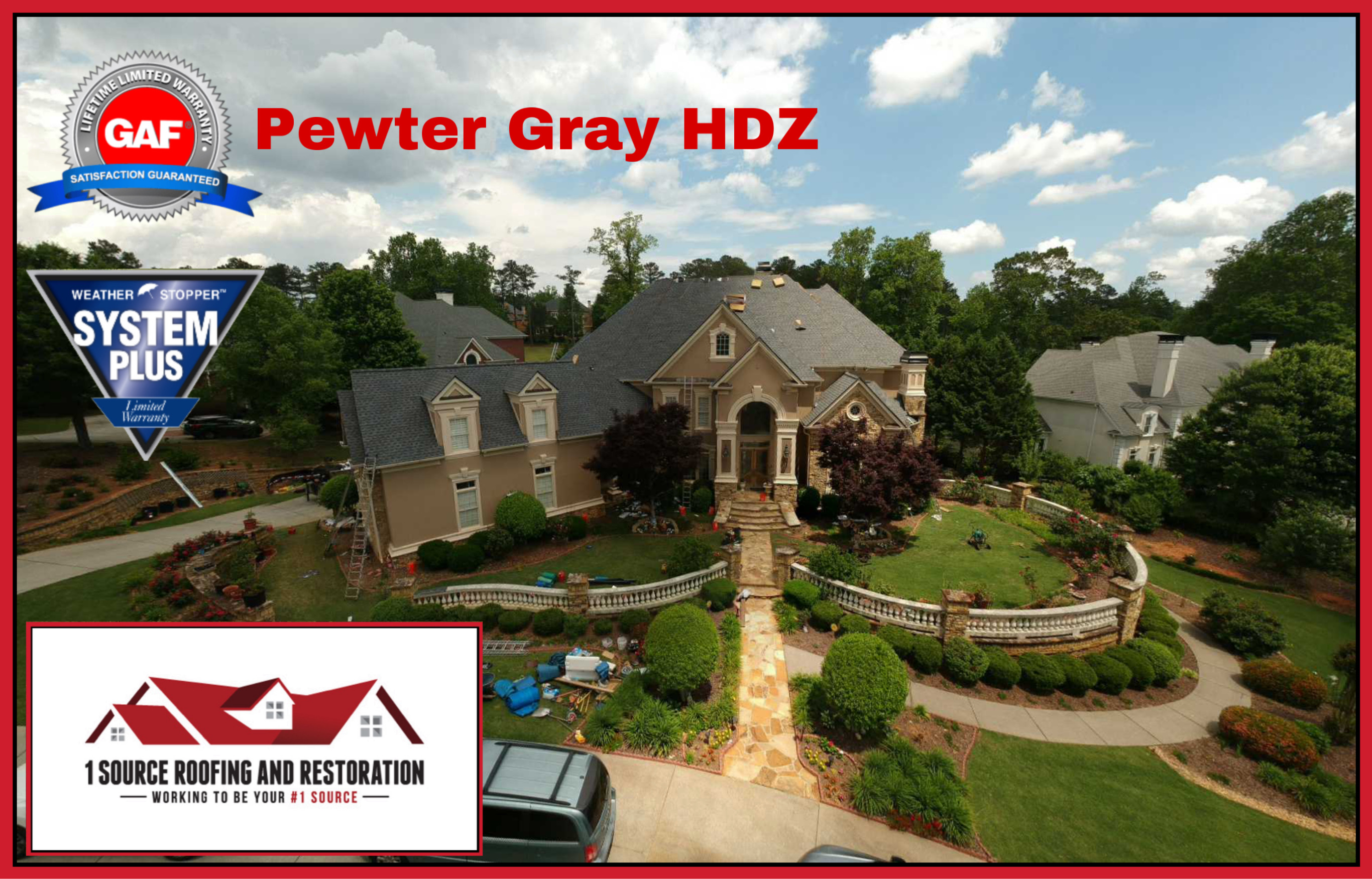
The process begins with a free on-site assessment that covers every variable relevant to a premium roof. Our inspector measures the roof to establish an accurate square count, evaluates the existing framing and decking to confirm the home is sound for the new system, documents penetrations and transition details, and assesses the ventilation system that the manufacturer warranty depends on. We bring installed material samples and arrange viewings on real roofs so you choose a product with eyes on the actual material. The assessment produces a written report with photographs and a product recommendation matched to your home's architecture, your HOA requirements, and your ownership goals.
From there we prepare a written scope of work that itemizes every component: tear-off and disposal, decking replacement if warranted, high-temperature underlayment, ice and water shield placement, the specific composite product and warranty terms, all transition flashing, ventilation correction, cleanup, and permit coordination with the appropriate metro Atlanta jurisdiction. Every line is explicit, so you evaluate substance rather than a single number — the same standard we apply whether the project is a roof repair or a full premium replacement.
During installation, a site supervisor is present throughout — not a salesperson who appears at the start and end. The crew is trained to the specific composite product line, the installation meets both manufacturer specification and Georgia building code, and the permit inspection closes the project with independent verification. For estate homes throughout metro Atlanta, the management standard matches what the investment warrants. You can see completed work in our photo gallery, read about who we are, and start the conversation through our contact page — though most homeowners simply call.
Schedule Your Free Composite Slate Assessment
Framing evaluation, installed material samples, product recommendation, and written scope — before any commitment. Serving Buckhead, Alpharetta, Sandy Springs, and all of metro Atlanta.
(404) 277-1377 — No ObligationCertified by Industry-Leading Manufacturers