Drive through Buckhead, the gated enclaves of Johns Creek, or the equestrian estates north of Alpharetta and you will notice a shift on the rooflines that did not exist a decade ago. The crisp vertical lines of standing seam metal — once reserved for mountain lodges and modern architecture — now crown traditional brick Georgians, French country estates, and transitional new builds across metro Atlanta. This is not a fashion cycle. It is the result of a quiet engineering revolution that solved the problems that kept metal off residential homes for two generations.
The metal roof your grandfather knew leaked at the screws, oil-canned in the heat, faded within a decade, and roared in the rain. Every one of those failures has been engineered out. Concealed-fastener clip systems eliminated the penetrations. Fluoropolymer coatings ended the fading. Striation and tension-leveling controlled the oil-canning. Solid-deck installation over synthetic underlayment silenced the noise. What remains is a roof that lasts two to three times longer than asphalt, reflects Georgia's brutal summer sun, and shrugs off the wind and hail that define our storm seasons.
This guide walks through the specific advances that matter for an Atlanta estate: how the concealed-fastener system actually works, why coating chemistry determines lifespan, what the energy numbers mean for a 105-degree July, how these systems perform against hail and uplift, and where the long-term math lands against premium asphalt. By the end you will understand not just that standing seam has improved, but precisely why — and whether it belongs on your home.
1. What Actually Changed: From Barn Metal to Estate-Grade Roofing
To understand why standing seam now belongs on a multi-million-dollar home, it helps to be precise about what failed on the old metal roofs. The metal roofing of the 1960s through the 1990s was overwhelmingly exposed-fastener product — corrugated and ribbed panels screwed straight through the face of the metal into the framing below. Every screw was a hole in the weather surface, sealed by a rubber washer with a service life far shorter than the steel itself. As those washers hardened, cracked, and backed out, the roof developed thousands of potential leak points.
The coatings were no better. Early metal panels wore acrylic and polyester paint systems that chalked and faded within ten to fifteen years under sustained UV exposure. A roof installed a rich bronze faded to a blotchy tan, and homeowners learned to associate metal with a tired, weathered look. Combine the leaking screws with the fading paint and the drumming rain of panels installed over open purlins, and metal earned a reputation that kept it off residential streets for a generation.
Standing seam is a fundamentally different product. The fasteners are concealed beneath the panels, the seams interlock above the water line, the coatings are fluoropolymer systems engineered to hold color for the life of the roof, and residential installation occurs over a solid, fully decked and underlaid surface. The advances are not cosmetic refinements of the old product. They are a different category of roof that happens to share the word "metal." When we recommend a roof replacement in standing seam for an estate client, we are specifying a system with no functional relationship to the barn roof that shaped the public's perception.
2. The Concealed-Fastener Revolution
The single most consequential advance in residential metal roofing is the concealed-fastener clip system, and it deserves a clear explanation because it is the reason standing seam lasts as long as it does. In a standing seam assembly, the metal panels do not touch the screws that hold the roof down. Instead, engineered clips are fastened to the roof deck along the panel edges, and the panels hook onto those clips. The vertical seams where adjacent panels meet are then folded together — either mechanically seamed with a powered tool or snapped into a self-locking profile — so the joint rises above the plane where water travels.
The consequence is that there are zero penetrations through the weather surface across the entire field of the roof. Water cannot find a fastener to seep around because no fastener breaks the surface. This eliminates the failure mode that doomed exposed-fastener metal: the slow degradation of rubber washers around thousands of through-screws. With standing seam, the only penetrations are the deliberate ones — pipe boots, vents, and flashings — which are detailed and flashed with the same care as any quality roof.
The clip system delivers a second, less obvious benefit: thermal movement accommodation. Metal expands and contracts significantly across Georgia's temperature swings, where a roof surface can move from 40 degrees on a winter morning to 160 degrees in direct July sun. Floating clip designs allow the panels to slide as they expand and contract while the clips stay anchored to the deck. A face-screwed panel cannot move — so it buckles, elongates the screw holes, and eventually leaks. The floating-clip standing seam panel simply breathes with the temperature. This is engineering that directly addresses the conditions a roof faces in the Southeast, and it is invisible from the ground.
3. Coating Chemistry: Why PVDF Changed Everything
If concealed fasteners solved the leaking, fluoropolymer coatings solved the fading — and coating chemistry is the variable that most directly determines how a metal roof looks in year thirty. The premium standard is PVDF, polyvinylidene fluoride, marketed under the Kynar 500 and Hylar 5000 resin brands. These coatings bond pigment in a fluoropolymer matrix so stable that manufacturers warrant the finish against significant fade and chalk for decades, with real-world performance routinely exceeding the warranty period.
The contrast with the alternative matters when you are comparing proposals. SMP coatings — silicone-modified polyester — cost less and are common on builder-grade and agricultural metal. SMP holds up adequately in low-UV conditions, but in the sustained, intense sun of a metro Atlanta summer, SMP finishes chalk and fade meaningfully faster than PVDF. On an estate home where the roof is a defining architectural element, specifying PVDF is not an upgrade; it is the baseline. Below is how the common residential coating systems compare for Georgia conditions.
| Coating System | Fade / Chalk Resistance | Typical Finish Warranty | Best Suited For |
|---|---|---|---|
| PVDF (Kynar 500 / Hylar 5000) | Excellent — minimal fade over decades | 30–35 yrs | Estate homes; the standard for premium Atlanta installations |
| SMP (Silicone-Modified Polyester) | Moderate — visible chalk/fade in high UV | 25–40 yrs (prorated) | Outbuildings; lower-visibility applications |
| Polyester / Acrylic | Limited — fades within 10–15 yrs | Short / limited | Agricultural metal only; not specified residentially |
| Galvalume (bare, no paint) | N/A — develops natural patina | Substrate warranty 25+ yrs | Modern architectural looks; corrosion-resistant base layer |
Beyond color retention, modern PVDF coatings are formulated with reflective pigments that contribute directly to energy performance — a point covered in detail below. The coating is no longer just protection and appearance. It is an active component of how the roof manages heat across a Georgia summer, which is one more reason the chemistry on the proposal deserves scrutiny.
4. Defeating Oil-Canning: Striation and Tension-Leveling
Oil-canning — the visible waviness in the flat areas of a metal panel — was a chronic aesthetic complaint on early metal roofs and remains the issue most likely to disappoint a homeowner who chose metal for its clean lines. It is an inherent characteristic of flat sheet metal, caused by internal stresses in the steel or aluminum coil and amplified by thermal movement and substrate irregularities. It does not affect performance, but on an estate roof, appearance is performance.
Two manufacturing advances have substantially controlled it. The first is striation — fine longitudinal grooves rolled into the flat of the panel during forming. Striations stiffen the pan and break up the light reflection that makes waviness visible, so minor stresses no longer read as distortion across a long panel. The second is tension-leveling, a coil-processing step that relieves internal stress in the metal before it is ever formed into panels, producing flatter, more dimensionally stable material to start with.
Installation discipline matters as much as the material. Proper panel handling, correct clip spacing, and a flat, well-prepared deck all reduce the conditions that provoke oil-canning. A standing seam roof that lies crisp and flat across a wide estate elevation is the product of both engineered material and careful field craft. When evaluating a metal proposal, ask whether the panels are striated and whether the installer details their approach to deck preparation — it separates a roof that will photograph beautifully for thirty years from one that will disappoint by the first summer.
The advances are real, but they only pay off with correct installation. A concealed-fastener system, PVDF coating, and striated panel still depend on a flat deck, correct clip spacing, proper thermal-movement detailing, and precise seaming. The roof is only as good as the crew that forms and locks it. A free on-site assessment establishes whether your deck and structure are ready for a standing seam system.
5. Energy Performance in Georgia's Heat
Cooling, not heating, drives the energy economics of an Atlanta roof. Our summers deliver heat indexes of 105 to 115 degrees, long cooling seasons that stretch from April into October, and afternoon sun that bakes a dark roof for hours. This is precisely the climate where a reflective metal roof earns its keep, and the modern advances in cool-metal coatings make the difference measurable.
A dark asphalt shingle absorbs the majority of the solar energy that hits it, re-radiating that heat downward into the attic and driving up cooling loads. A PVDF-coated metal panel formulated with reflective pigments does the opposite: it reflects a large share of solar radiation and emits absorbed heat efficiently. Many standing seam systems meet ENERGY STAR reflectance criteria and qualify under Georgia's cool-roof provisions. The practical result is a meaningfully cooler attic, lower peak cooling demand, and reduced strain on HVAC equipment through the long Atlanta summer.
There is also a structural energy benefit specific to metal. Because the roof reflects rather than stores heat, the temperature swing the deck and attic experience each day is gentler, which protects insulation performance and reduces the thermal cycling that ages everything beneath the roof. Paired with balanced ridge-and-soffit ventilation and adequate attic insulation, a reflective standing seam roof becomes part of a thermal system rather than a heat liability. For homeowners weighing reflective options across materials, our guide to cool roof technology and reflective shingles covers how the same principles apply to asphalt — though metal carries the reflective advantage furthest.
6. Storm Resilience: Wind, Hail, and Atlanta's Weather
Metro Atlanta sits in a corridor that sees severe thunderstorms, damaging straight-line winds, periodic hail, and the occasional remnants of Gulf systems pushing inland. A roof here is a storm-defense system first and a design element second, and standing seam is among the most resilient assemblies available for residential use.
On wind, the engineered clip-and-seam design carries uplift ratings that exceed Georgia's structural design wind speeds with substantial margin. Many residential standing seam profiles achieve UL 580 Class 90 — the highest uplift class in that test standard — and mechanically seamed systems perform at the top of the range because the folded seam mechanically locks the panels together rather than relying on a snapped joint. Compared with shingles, which fail tab by tab when wind lifts and breaks the adhesive seal, a continuous interlocked metal panel presents the wind almost nothing to grab.
On hail, heavier-gauge factory-formed metal resists the punctures and surface loss that compromise asphalt. A hailstone that fractures an asphalt shingle and strips its protective granules may leave only a cosmetic dent on a metal panel while the weather barrier remains fully intact. Impact-resistant metal assemblies can earn UL 2218 Class 4 — the top impact classification, the same standard discussed in our review of Class 4 impact-resistant shingles — which supports insurance premium credits with many Georgia carriers. For homeowners who have weathered repeated storm damage claims, the durability of metal can end a costly cycle of repairs and reinstallations.
7. Panel Profiles and Seam Types
Standing seam is a family of systems, not a single product, and the profile choice affects both performance and appearance. Understanding the main distinctions helps a homeowner read a proposal and grasp why two metal roofs at different price points are genuinely different roofs.
The primary divide is between mechanically seamed and snap-lock profiles. A mechanically seamed panel is folded closed on the roof with a powered seaming tool, producing a tight, weathertight fold — typically a single-lock 90-degree or a double-lock 180-degree seam. Double-lock mechanical seaming is the premium standard for low-slope and high-exposure applications and delivers the highest weather and uplift performance. A snap-lock panel clicks together by hand without seaming tools, installs faster, and performs well on steeper residential slopes where water sheds quickly.
Seam height and panel width also matter. Taller seams — 1.5 to 2 inches — keep the interlock further above the water plane and suit lower slopes; shorter seams suit steeper pitches. Narrower panels create more pronounced vertical shadow lines, the crisp linear look many estate clients want, while wider panels read more subtle but are more prone to oil-canning without striation. There are also concealed-fastener metal shingle and metal tile systems that mimic slate or shake while delivering metal's longevity — a path to a traditional appearance with modern performance. The right profile depends on your roof's slope, your architectural style, and your exposure, all of which an assessment evaluates on site.
8. Why Installation Determines Lifespan
No advance in metal roofing matters if the system is installed poorly, and standing seam is less forgiving of error than asphalt because its performance depends on precise geometry. The panels must be cut and formed to exact lengths, the clips spaced correctly for the wind zone, the seams locked completely along their entire run, and the thermal-movement details executed so the roof can breathe without binding.
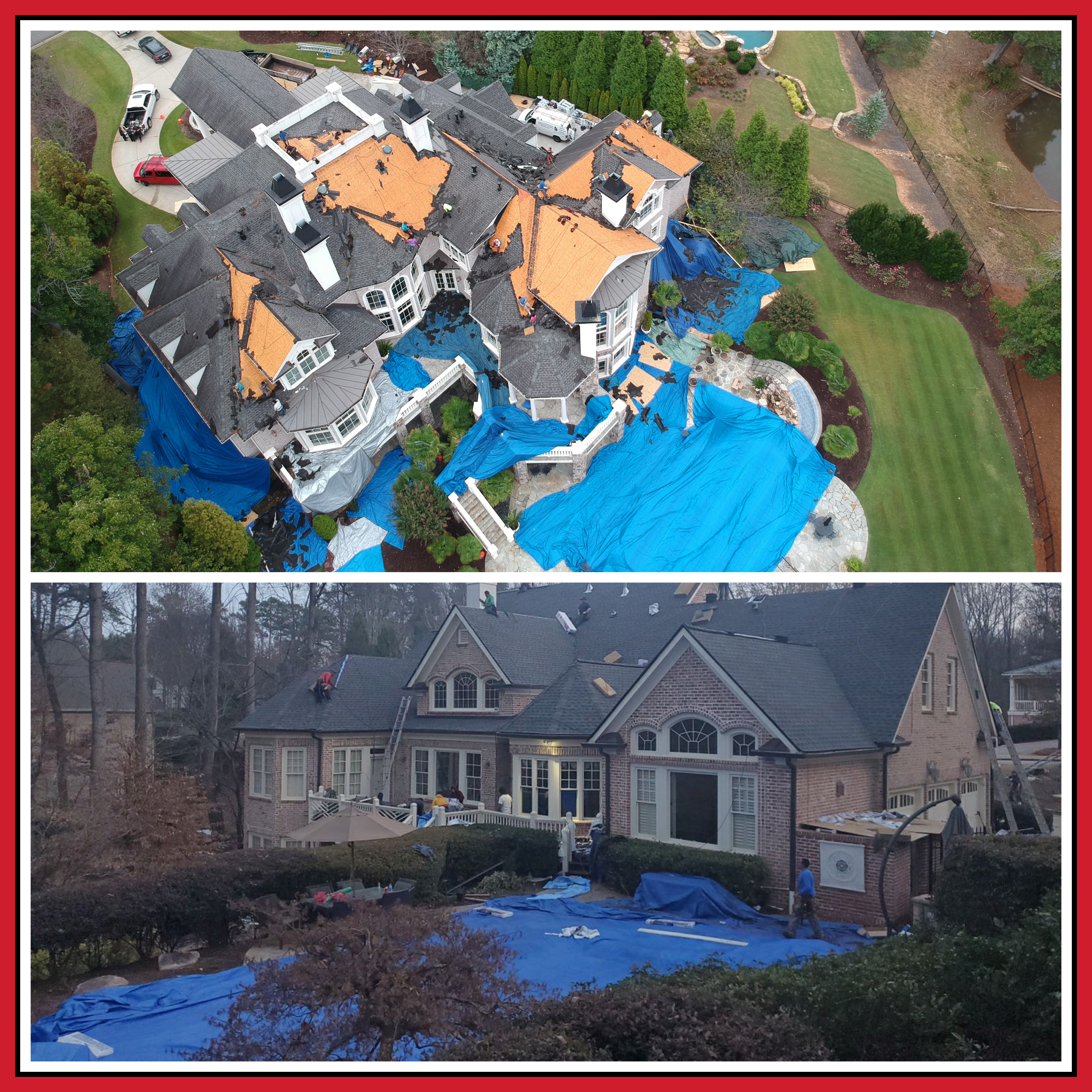
Deck preparation is the foundation. A standing seam roof installs over a solid, sound deck — not over open purlins — and the deck must be flat and dry. Any delaminated or moisture-damaged decking discovered during tear-off must be replaced before panels go down, because waviness in the deck telegraphs straight up into the finished metal as oil-canning. Beneath the panels, a high-temperature synthetic underlayment is the professional standard; the reasons the industry moved to synthetic are covered in our comparison of synthetic underlayment versus felt, and the case is even stronger under metal, which conducts heat readily.
Flashing and detail work separate a roof that lasts sixty years from one that leaks at year five. Valleys, headwalls, sidewalls, ridges, and penetrations on a standing seam roof require custom-fabricated metal flashings that integrate with the panel profile and accommodate the same thermal movement as the field panels. This is craftsmanship that cannot be improvised. When 1Source installs a standing seam roof on an estate in Buckhead or Johns Creek, the flashing details are fabricated to the specific roof — because the most advanced panel on the market still fails at a poorly executed transition.
Is Your Home a Candidate for Standing Seam?
Free on-site assessment. We evaluate your deck, structure, slope, and architectural fit, then present a written scope before any commitment.
Call (404) 277-13779. The Long-Term Math: Cost-Per-Year vs. Premium Asphalt
The upfront figure for a standing seam roof is higher than asphalt, and any honest discussion has to address it directly. The accurate way to compare the two is not the project figure but the project figure divided by the years of service it delivers — the cost-per-year framework that reframes the entire material decision.
Consider a representative metro Atlanta estate. A premium architectural asphalt roof might run in the low-to-mid five figures and realistically deliver 24 years of service in Georgia's climate before requiring replacement. A standing seam system on the same home runs higher upfront but delivers 50 to 60 years of service. When you annualize each — dividing the total project by its service life — the per-year figures land far closer than the sticker comparison suggests, and over a long ownership horizon the metal roof frequently comes out ahead.
The asphalt homeowner faces a second replacement cycle within roughly a quarter-century, and that replacement will cost substantially more than today's project because of accumulated material and labor inflation. The standing seam homeowner does not face that cycle within a typical ownership lifetime at all. Add the cooling-energy savings across decades of Georgia summers, the potential insurance credits from Class 4 impact resistance, and the resale premium of a roof a buyer will never have to replace, and the long-term economics favor metal for the right home and the right ownership horizon. The framework does not make metal correct for every house — short ownership timelines and structural constraints change the answer — but it corrects the instinct to judge a roof by its first-day figure.
10. Which Atlanta Homes Are Right for Standing Seam
Standing seam is not the right roof for every home, and a contractor who recommends it universally is not assessing — they are selling. The advances make it an exceptional choice for specific situations, and an experienced estimator's job is to match the system to the home.
The strongest candidates are estate-class homes with a long ownership horizon, where the cost-per-year math and the resale value of a generational roof both work in the homeowner's favor. Modern and transitional architecture suits the clean vertical lines of standing seam naturally, while traditional homes are increasingly pairing metal accents — on bay windows, porches, and dormers — with asphalt or specifying metal shingle profiles that read traditional. Homes with complex rooflines, low-slope sections, or chronic leak histories at flashing transitions benefit from metal's weathertight seam design and the elimination of granule-shedding shingles.
Energy-conscious homeowners in our climate gain the most from the reflective performance, and those who have endured repeated storm claims gain from the durability. Structural considerations factor in as well — standing seam is lighter than slate or tile and rarely requires reinforcement, which makes it a far more practical route to a premium look than natural slate. Homes governed by an HOA should confirm metal is permitted, though the design-conscious associations in many of Atlanta's premium neighborhoods increasingly approve it. We serve estate clients across Alpharetta, Sandy Springs, and Roswell, and the assessment is where the fit gets determined for your specific property.
Specify the system on your timeline, not an emergency one. The homeowners who get the best standing seam outcomes plan deliberately — selecting profile, seam type, and PVDF color thoughtfully rather than rushing a decision after a leak forces action during storm season, when crews and materials are stretched thin across the region.
11. Maintenance and What to Expect Over the Decades
One of the quieter advantages of a modern standing seam roof is how little it asks of you over its life. The exposed-fastener metal of the past demanded periodic re-tightening and washer replacement as the rubber aged. The concealed-fastener system has no such schedule — there are no exposed washers to fail, no granules to shed, and no organic material for moss or algae to colonize the way they do on aging asphalt.
Routine care amounts to keeping gutters and valleys clear of debris so water sheds freely, and an annual or post-storm visual inspection of penetrations, flashings, and seams. Because the field of the roof has no fasteners and no granule layer, the things that do warrant attention are the deliberate details — pipe boots, vent flashings, and transitions — which are inspected the same way on any quality roof. Our overview of a seasonal roof maintenance routine applies directly, with the welcome difference that a metal roof simply has fewer failure points to monitor.
When something does need attention over a sixty-year life — a flashing detail at a renovated addition, damage from a fallen limb — metal repairs are precise work best handled by a crew that understands the panel and seam system. The repair philosophy mirrors any premium roof: address the specific detail without disturbing the surrounding field. For estate clients, we document the installed system thoroughly so that any future service, ownership transfer, or insurance question has a clear record of exactly what is on the roof.
12. The 1Source Standing Seam Process
A standing seam roof is an engineered system, and the process that produces a good one looks different from a price-first shingle job. Understanding what a properly managed metal installation involves helps Atlanta homeowners evaluate proposals and recognize the difference between a contractor who fabricates and details metal as a craft and one who is improvising on an unfamiliar product.
The process begins with a free on-site assessment that goes beyond a shingle estimate. Our estimator measures the roof precisely, evaluates the deck and structure for a metal system, examines slope and exposure to recommend the right seam type and panel profile, reviews flashing transitions and penetrations that will require custom fabrication, and discusses PVDF color and finish options appropriate to your home and any HOA requirements. This produces a written assessment documented with photographs — the foundation for an accurate scope.
From the assessment we prepare a written scope of work that itemizes every component: tear-off and disposal, deck repair if warranted, high-temperature synthetic underlayment, panel gauge and profile, coating system and color, clip type and spacing, seam type, all custom flashing and trim, ridge and ventilation detailing, and permit coordination. You evaluate and compare that explicit scope rather than a vague description of "a metal roof." During installation a site supervisor manages the crew throughout, panels are formed and seamed to specification, and the installation meets both manufacturer requirements and Georgia building code. For our full range of work, the services overview and project gallery show the standard we hold across materials, and our team brings the certified, manufacturer-trained craft that a standing seam system demands.
Schedule Your Free Standing Seam Assessment
Deck and structure evaluation, profile and seam recommendation, PVDF color consultation, and a written scope — before any commitment. Serving Atlanta, Buckhead, Alpharetta, and all of metro Atlanta.
(404) 277-1377 — No ObligationCertified by Industry-Leading Manufacturers