Walk across an asphalt parking lot in Atlanta on a July afternoon and you understand the problem cool roofing solves. A dark surface in direct sun does not just feel hot — it can climb to 150 or 160 degrees Fahrenheit, far above the air temperature around it. Your roof does the same thing. A standard dark shingle absorbs the overwhelming majority of the sunlight that hits it, and a large share of that heat drives downward into the attic and, eventually, into the rooms you are paying to keep cool.
Cool roofing flips that equation. By engineering the shingle surface to reflect a much larger fraction of incoming sunlight, a reflective roof stays dramatically cooler in the sun, holds less heat against the attic, and reduces the load on your air conditioning during the months that matter most in Georgia. The result is a roof that works with the climate rather than fighting it.
This guide explains how the technology actually works, what the ratings mean, what reflective shingles realistically do for a Georgia home's cooling costs, and how the choice fits into a complete roof system. The science is real and well documented. The savings depend on the specifics of your home — which is exactly why this is a decision worth understanding before you select a roof.
1. How Cool Roof Technology Actually Works
Sunlight is not a single thing. The energy reaching your roof spans the spectrum — visible light that you can see, ultraviolet at the short-wavelength end, and a large band of near-infrared radiation that the human eye cannot perceive at all. That invisible near-infrared portion carries roughly half of the sun's total heat-delivering energy. This single fact is the key to modern cool shingles.
A conventional dark asphalt shingle absorbs nearly all of the sunlight that strikes it across every band — visible and infrared alike. Reflective shingles use mineral granules coated with specially engineered pigments that bounce away a far larger share of that near-infrared energy. Because the eye cannot see infrared, a shingle can reflect a great deal of solar heat while still appearing dark gray, weathered brown, or slate to anyone standing in the yard. The roof looks traditional; it behaves like a far lighter surface in the parts of the spectrum that carry heat.
Two properties define how a roof surface manages heat. Solar reflectance is the fraction of incoming sunlight the surface bounces away, on a scale from 0 to 1. Thermal emittance is how readily the surface releases the heat it does absorb back to the sky rather than conducting it inward. A good cool roof scores well on both: it reflects most of the sun and quickly sheds whatever it absorbs. The combined effect is a roof deck that runs tens of degrees cooler at the peak of a Georgia summer afternoon.
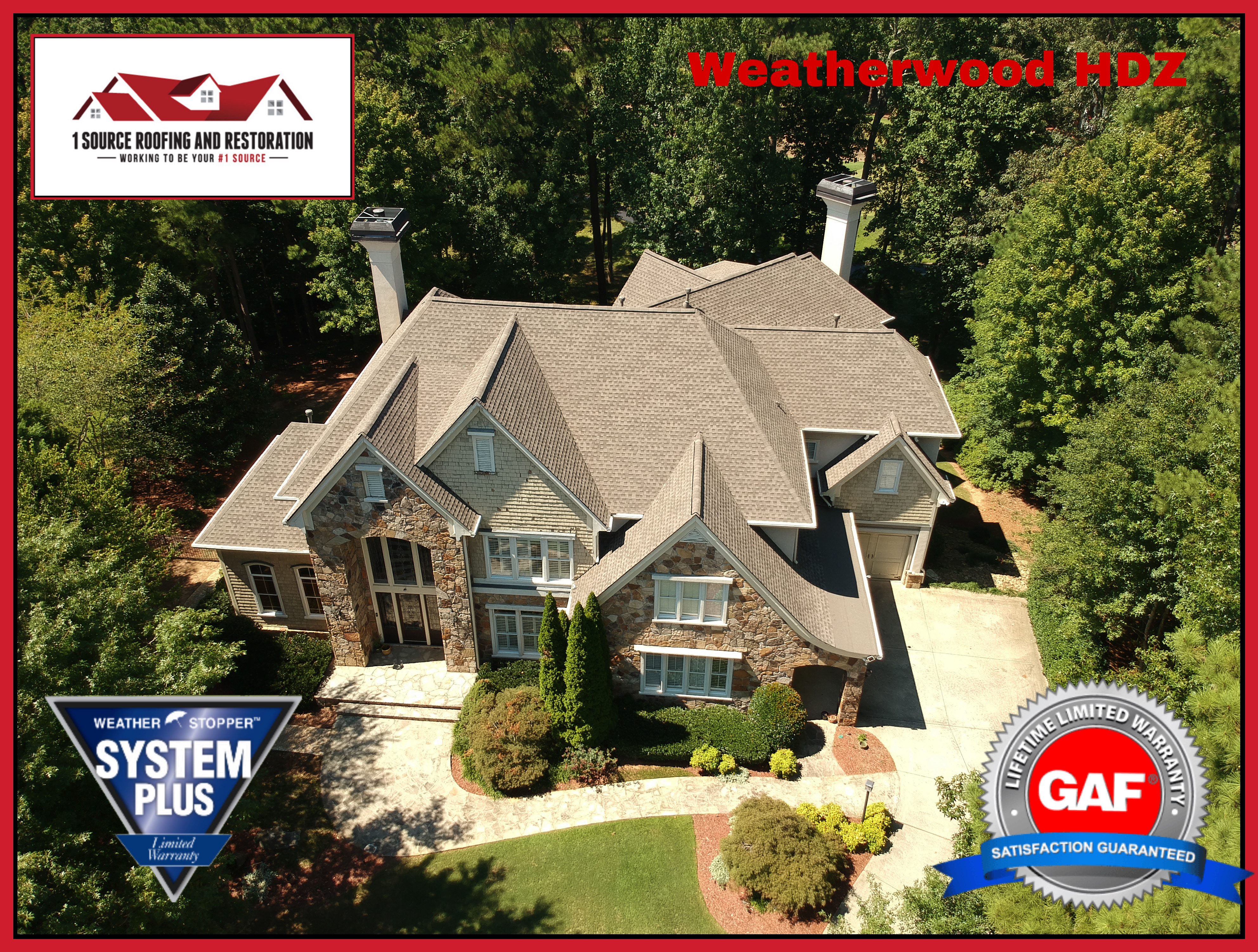
This is why cool roofing has moved from a niche commercial product to a mainstream residential option. Two decades ago, a "cool roof" meant a bright white membrane on a flat commercial building — fine for a warehouse, unacceptable on a luxury home with HOA color standards. Infrared-reflective granule technology removed that constraint. Today a homeowner in Buckhead or Alpharetta can choose a deep, architecturally appropriate color and still gain meaningful reflective performance.
2. Why This Matters Specifically in Georgia's Climate
The value of a reflective roof scales with how much cooling a home demands, and metro Atlanta demands a great deal. Our cooling season is long — air conditioning typically runs from May into September, and shoulder-season heat can push it earlier and later. Summer afternoons routinely deliver heat indexes between 100 and 115 degrees, paired with the intense, near-vertical sun angle that maximizes solar load on a roof.
Equally important is humidity. Georgia summers combine heat with sustained moisture, which means air conditioning systems work hard not only to lower temperature but to remove latent humidity from the air. A cooler attic reduces the thermal load that the system has to overcome before it can address comfort and humidity, freeing capacity and reducing runtime during the hottest hours.
Atlanta's tree canopy complicates the picture in a way worth naming. Many established neighborhoods enjoy mature shade that already moderates roof temperatures. On a heavily shaded lot, the marginal benefit of reflective shingles is smaller. On a newer subdivision lot with full sun exposure — common throughout north Fulton, Forsyth, and Cherokee county developments — the benefit is substantial. The honest answer is that sun exposure on your specific roof is one of the largest variables, and it is something we assess directly during an on-site evaluation rather than guessing from a map.
3. Understanding the Ratings: Solar Reflectance, SRI, and the CRRC
Reflective performance is not a marketing adjective — it is a measured, published, third-party-verified number. Knowing how to read the ratings lets you compare products on substance rather than on a brochure's promise.
The Cool Roof Rating Council (CRRC) is the independent body that tests and publishes solar reflectance and thermal emittance values for roofing products. Every rated product carries a verified initial value and a three-year aged value, because reflectance declines somewhat as a roof weathers and accumulates surface deposits. A trustworthy comparison uses the aged numbers, since that is what your roof will actually deliver over most of its life.
The Solar Reflectance Index (SRI) combines reflectance and emittance into a single figure for easy comparison, where higher means cooler. ENERGY STAR certification provides a separate threshold: for steep-slope residential roofs, a product must meet a minimum initial and aged solar reflectance to qualify, which is the certification many incentive and rebate programs reference.
The table below shows how reflectance varies across common Atlanta roofing choices. The figures are representative ranges for comparison, not product-specific values — always check the CRRC listing for the exact shingle you are considering.
| Roof Surface | Typical Solar Reflectance | Approx. Peak Surface Temp (Atlanta summer) | Cool-Rated? |
|---|---|---|---|
| Standard dark asphalt shingle | 0.05–0.10 | 150–160°F | No |
| Standard medium-tone shingle | 0.10–0.18 | 140–150°F | No |
| Reflective dark cool shingle | 0.25–0.30 | 120–135°F | Yes |
| Reflective light cool shingle | 0.30–0.40 | 110–125°F | Yes |
| Reflective metal (cool coating) | 0.30–0.65 | 100–120°F | Yes |
| White TPO / membrane (low-slope) | 0.70–0.80 | 95–110°F | Yes |
The pattern is clear: moving from a conventional dark shingle to a reflective dark cool shingle can drop peak surface temperature by 25 to 40 degrees while keeping the same architectural appearance. For homeowners exploring reflective options beyond shingles, our companion guides on cool roof coatings and radiant barrier roof decking cover complementary approaches to the same goal.
Reflectance is a verified number, not a claim. Before you commit to a "cool" product, confirm its rating on the Cool Roof Rating Council directory and check the three-year aged value — not just the initial figure. We pull the CRRC and ENERGY STAR data for every reflective product we recommend so you can compare apples to apples.
4. What Happens in Your Attic — and Why It Matters Most
The reason reflective shingles save energy is not magic at the roof surface; it is what does not happen below it. When a dark roof reaches 155 degrees, that heat radiates down through the underlayment and decking into the attic, where temperatures on a Georgia afternoon can exceed 130 to 140 degrees. That superheated attic then drives heat downward through ceiling insulation into the living space, and — critically — heats any HVAC equipment and ductwork stored up there.
This is the single most important factor in whether cool shingles pay off for a particular home. A large share of Atlanta homes built in recent decades place the air handler and ductwork in the attic. When that equipment sits in 135-degree air, the refrigerant lines, the air handler cabinet, and every linear foot of duct absorb heat. Cooled air leaving the system warms as it travels through hot ducts, so the system runs longer to deliver the same comfort. Lowering attic temperature by 20 to 30 degrees directly reduces that parasitic loss.
Your attic and roof are not separate systems — they perform as one assembly, a point we cover in depth in our guide on treating the attic and roof as a single system. Reflective shingles, insulation, and ventilation each address a different part of the heat path. The reflective surface reduces how much heat enters. Insulation slows how much reaches the living space. Ventilation removes what accumulates. Address only one and you leave performance on the table.
5. Cool Shingles and Ventilation Work as a Team
Reflective shingles cut the heat entering the roof; balanced ventilation removes the heat that still gets in. These two strategies are complementary, and the strongest results come from pairing them. A reflective roof over a stagnant, under-vented attic still helps, but it leaves a meaningful share of the available benefit unrealized.
Balanced ventilation means matched intake and exhaust — soffit vents drawing cooler air in at the eaves and ridge vents releasing hot air at the peak, sized to work together. We detail the engineering in our balanced ventilation guide, but the principle is straightforward: air enters low, picks up heat, and exits high in a continuous convective loop. When that loop runs efficiently beneath a reflective roof, attic temperatures stay close to outdoor ambient even at the peak of an Atlanta afternoon.
There is also a warranty dimension. Major shingle manufacturers specify minimum ventilation as a condition of their material warranties, including the premium GAF coverage tiers. Installing a high-performance reflective shingle over an inadequate ventilation system can compromise that warranty during its most valuable years. When we plan a roof replacement, ventilation is evaluated and corrected as part of the scope — not treated as an afterthought.
6. Realistic Energy Savings for a Georgia Home
Honest numbers matter here, because reflective roofing is sometimes oversold. The realistic range for a metro Atlanta home is a 7 to 15 percent reduction in cooling energy, with the upper end reserved for homes that have attic-mounted HVAC equipment, significant sun exposure, and a complete reflective-plus-ventilation system. Homes with shaded roofs, no attic equipment, and already-excellent insulation land at the lower end.
Translate that into dollars with a concrete example. Suppose a 2,800-square-foot Atlanta home spends roughly $1,900 on cooling across the May-through-September season — a reasonable figure for a home of that size in our climate. A 10 percent reduction is about $190 per year. Over a 25-year shingle service life, that is roughly $4,750 in cooling savings, before accounting for electricity rate increases that would push the figure higher. For a home with attic-mounted equipment realizing the upper end of the range, the lifetime savings can comfortably exceed $7,000.
Two points keep this framing honest. First, the cool-shingle upgrade itself is modest relative to the total roof investment — the reflective granule technology adds a small premium over a comparable standard shingle, not a separate roof. Second, the comfort benefit is real but harder to monetize: upstairs bedrooms that historically ran hot in late afternoon become noticeably more livable, and the HVAC system cycles less aggressively, which extends its service life. For homeowners pursuing the full picture, our overview of radiant barriers in Georgia attics covers a complementary upgrade that stacks with reflective shingles.
Find Out What a Reflective Roof Would Do for Your Home
Free on-site assessment. We evaluate your sun exposure, attic, equipment placement, and ventilation — then recommend the right reflective product for your home and color preferences.
Call (404) 277-13777. You Do Not Have to Sacrifice the Look You Want
The most persistent myth about cool roofs is that they have to be white or pale. That was true of early commercial products and is no longer true of residential shingles. Infrared-reflective granule technology means a homeowner can select a deep charcoal, a rich mission brown, a weathered wood tone, or a classic slate gray and still gain genuine reflective performance.

This matters enormously in our market. Many of the premium communities we serve in Johns Creek, Sandy Springs, and Roswell carry HOA covenants that restrict roof color to a defined palette of darker, traditional tones. A pale reflective roof would never pass architectural review. A cool-rated shingle in an approved charcoal or brown sails through — and quietly delivers reflective performance the covenant never anticipated. You can browse real installed colors in our project photo gallery to see how darker reflective tones read on Atlanta homes.
The visual reflectance and the thermal reflectance are decoupled. A roof that looks identical to a neighbor's conventional shingle can run 30 degrees cooler in the sun because of what is happening in the infrared band the eye never registers. For homeowners who care about both curb appeal and performance, this is the development that makes the decision easy.
8. Reflective Shingles Versus Other Cool Roofing Paths
Reflective asphalt shingles are not the only way to achieve a cooler roof, and the right choice depends on roof slope, investment horizon, and aesthetic goals. Understanding the alternatives clarifies where cool shingles fit.
Reflective metal roofing can achieve higher reflectance than shingles, particularly with factory-applied cool coatings, and delivers exceptional service life. It carries a higher upfront investment and a distinct appearance that suits some Atlanta estates beautifully — see our overview of standing seam metal advances for that path. Cool roof coatings apply a reflective layer over an existing roof and shine on low-slope and commercial applications, as our coatings guide explains.
For the flat and low-slope sections common on contemporary Atlanta homes and on commercial buildings, single-ply membranes carry the highest reflectance of all. White TPO and PVC roofs reflect 70 to 80 percent of sunlight; our comparison of TPO, EPDM, and PVC membranes walks through the trade-offs, and our commercial roofing team handles those systems directly. Reflective shingles occupy the practical middle for the steep-slope residential roofs that define most of metro Atlanta — meaningful reflective gain, full color flexibility, and a cost structure that integrates seamlessly into a standard replacement.
The moment to choose reflective shingles is when you are already replacing the roof. The reflective upgrade adds only a small premium over a comparable standard shingle when it is part of a planned replacement. Retrofitting reflectivity onto a roof that does not need replacing rarely makes financial sense — so if your roof is nearing the end of its life, this is the decision point.
9. Rebates, Tax Credits, and Georgia Energy Code
The financial case for reflective shingles can extend beyond utility savings. Georgia's energy code recognizes cool roofing as a recognized pathway toward building-envelope efficiency, and several incentive mechanisms can apply to qualifying products.
At the federal level, the residential energy efficient home improvement credit can apply to qualifying ENERGY STAR roofing components under certain conditions, though eligibility rules shift with each tax year and depend on how the product is classified. At the state and utility level, Georgia Power and some municipal utilities periodically offer efficiency incentives that can include reflective roofing as part of a broader home-performance package. These programs change year to year, which makes timing and documentation important.
The practical reality is that almost every incentive program references the same two credentials: an ENERGY STAR certification and a CRRC rating with verified reflectance values. If your product carries both, you are positioned to claim whatever incentives are active when you install. We track these credentials for every reflective product we recommend, and our dedicated guide to cool roof rebates and Georgia energy code covers the current landscape in detail. For the broader code framework, our building codes hub and technical standards hub collect the relevant requirements.
10. What Proper Installation Requires
A reflective shingle delivers its rated performance only when the rest of the roof system supports it. The granules do their job at the surface; the layers beneath determine whether the assembly performs as designed and lasts its full service life.
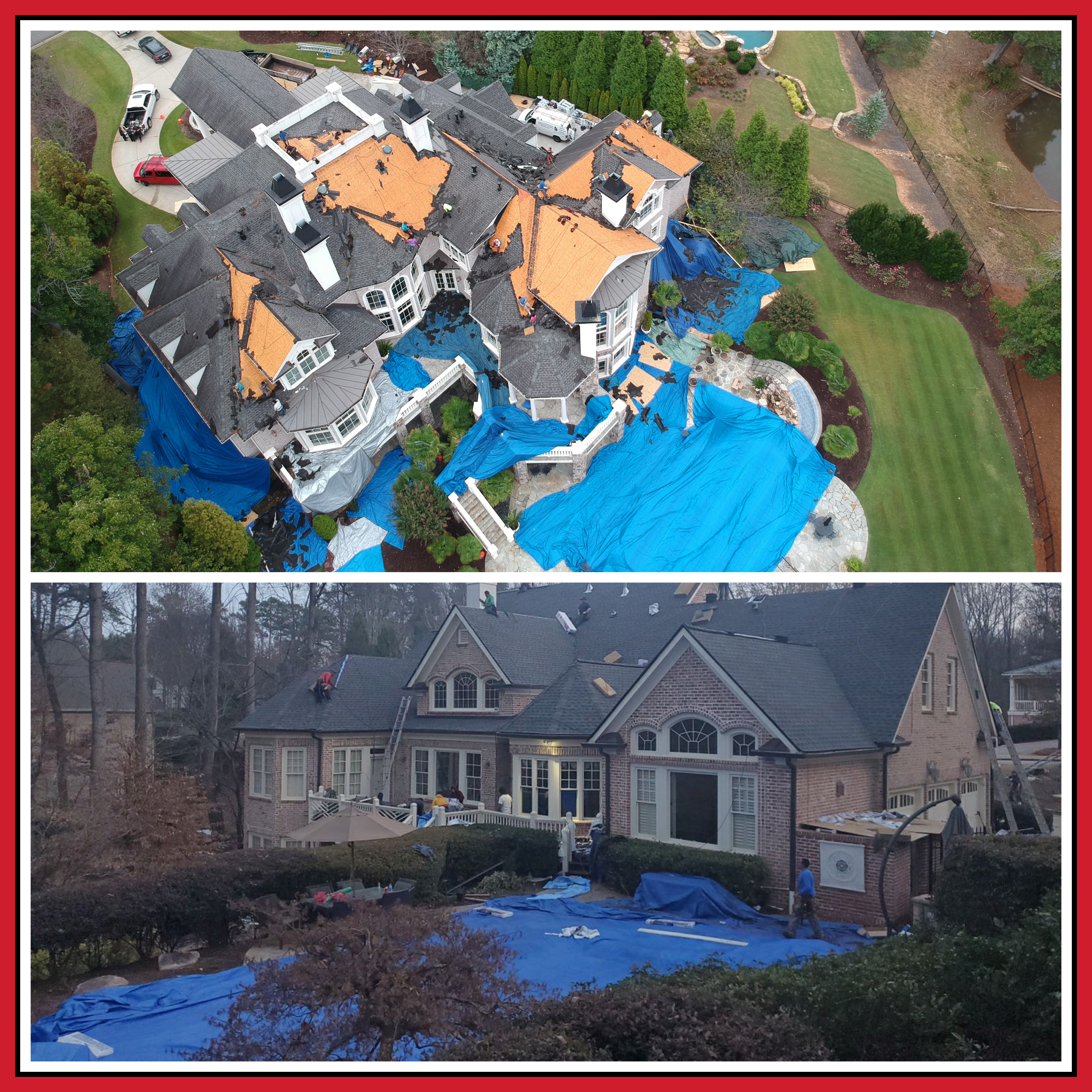
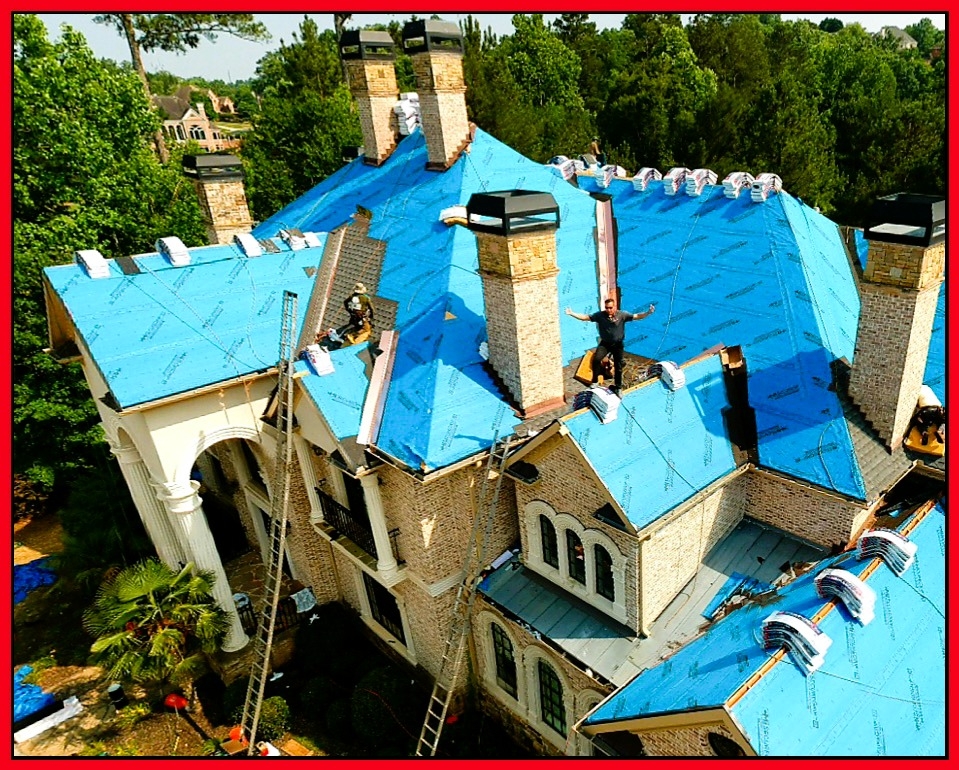
Installation begins with the deck. A reflective roof installed over delaminated or moisture-damaged decking will not perform, and the warranty depends on a sound substrate. After tear-off, we assess every section of decking and replace what has deteriorated before any new material goes down. The underlayment layer matters too — modern synthetic underlayment contributes to the assembly's heat and moisture management in ways traditional felt does not.
Beyond the deck and underlayment, the reflective system depends on correct ventilation, proper drip edge, sound flashing at every transition, and ridge ventilation matched to soffit intake. Each component is specified and documented in the written scope before work begins. Cutting any of them to reduce the project figure undermines both the reflective performance and the manufacturer warranty. For homeowners weighing whether their current roof has reached this point, our guide on roof repair versus replacement helps frame the decision, and our roof repair team handles cases where a full replacement is not yet warranted.
11. Which Atlanta Homes Benefit Most
Reflective shingles are a strong choice for most metro Atlanta homes, but the magnitude of benefit varies. Naming the high-impact profiles helps you judge where your home falls.
- Homes with attic-mounted HVAC and ductwork. This is the clearest win. Lowering attic temperature reduces parasitic heat gain on the equipment and ducts, where it converts almost directly into reduced runtime and longer system life.
- Full-sun lots in newer subdivisions. Developments throughout Forsyth, Cherokee, and north Fulton counties often lack mature shade. These roofs absorb maximum solar load and gain the most from reflectivity.
- Two-story homes with hot upstairs bedrooms. When the second floor sits directly under the roof, a cooler attic translates into measurably more comfortable bedrooms during late-afternoon and evening peak heat.
- Large estate homes with substantial roof area. The savings scale with roof square footage, so larger premium homes in Marietta and across north Atlanta see larger absolute returns.
- Homes already planning a replacement. When the reflective choice is folded into a scheduled replacement, the incremental cost is small and the payback is favorable.
Homes that benefit least are those with heavily shaded roofs, no attic equipment, and already-excellent insulation and ventilation. Even there the reflective option does no harm and adds modest savings — it simply is not the transformative upgrade it is for a full-sun home with attic-mounted equipment. An on-site assessment is how we determine where your home actually sits on this spectrum.
12. Durability, Storms, and Long-Term Performance
A reasonable question is whether reflective technology compromises durability. It does not. The infrared-reflective pigments are integrated into the same ceramic-coated mineral granules that protect any quality architectural shingle from ultraviolet degradation. A cool shingle is, structurally, a premium architectural shingle with engineered granules — it carries the same wind ratings, the same impact options, and the same warranty structure as its conventional counterpart.
In fact, the cooler operating temperature can extend shingle life. Asphalt shingles age partly through thermal cycling — the daily expansion and contraction that gradually breaks down the asphalt binder. A surface that peaks at 125 degrees instead of 155 experiences less extreme cycling, which can slow that aging process over decades of Georgia sun.
Reflective shingles are also fully compatible with storm-resilience upgrades that matter in our region. They are available in Class 4 impact-resistant versions for hail protection and pair with six-nail wind fastening for the wind ratings Georgia's storm patterns demand. If a storm does damage a reflective roof, the same storm damage restoration and insurance claims assistance processes apply as with any premium roof — the reflective technology adds no complication to a covered claim.
Schedule Your Free Reflective Roofing Assessment
Sun-exposure evaluation, attic and equipment review, ventilation check, reflective product recommendation, and a written scope — before any commitment. Serving Atlanta, Buckhead, Alpharetta, and all of metro Atlanta.
(404) 277-1377 — No ObligationCertified by Industry-Leading Manufacturers