A hailstorm rolls through Gwinnett County on a spring afternoon. Two weeks later you notice granules in the gutters and a few shingles that look bruised. Now you are facing something most homeowners only do once or twice in their lives: filing a roof insurance claim. The process feels opaque on purpose, and the stakes are real. A claim handled well restores your roof to current code at the insurer's expense. A claim handled poorly leaves you with a payout that does not cover the work the roof actually needs.
This guide breaks the entire Georgia roof claim process into clear, ordered steps — what happens, who does what, what the words mean, and where homeowners most often lose money without realizing it. We have walked hundreds of metro Atlanta homeowners through this exact sequence, from the first storm through the final check. The single most useful thing to understand up front is that the claim is not a form you fill out and wait on. It is an evidence-driven process, and the quality of that documentation shapes what the insurer determines you are owed.
Read it through before you call your carrier. The order in which you do things matters, and a few decisions early in the process shape the entire outcome.
1. Start at the Storm: Establishing Your Date of Loss
Every roof claim begins with a specific, datable event. Insurers do not pay for a roof that simply wore out — they pay for sudden damage from a covered peril, and the most common covered perils in metro Atlanta are wind and hail. The first thing your claim needs is a defensible date of loss: the day the storm hit your property.
This matters more than homeowners expect. When an adjuster reviews your claim, one of the first things the carrier checks is whether verifiable weather data supports a hail or high-wind event at your address on the date you reported. Services like the National Weather Service storm reports and commercial hail-verification databases log the size and location of hail and wind events down to the neighborhood. If your reported date lines up with a documented storm in Alpharetta, Marietta, or wherever your home sits, your claim starts on solid ground. If it does not, you have a problem before the adjuster ever climbs a ladder.
Make a habit of noting significant storms. After any event with marble-sized or larger hail, or wind gusts above roughly 50 mph, treat it as a potential date of loss and get the roof looked at. Georgia's storm season runs heaviest from March through July, but damaging events occur year-round. Learning how to spot hail damage on a shingle roof from the ground gives you an early signal without putting yourself on a ladder.
2. Get an Independent Roof Inspection Before You File
This is the step most homeowners skip, and skipping it is the most common early mistake. Before you call your insurance company, have a qualified roofing contractor inspect the roof and tell you honestly whether you have a claimable loss. There are two reasons this order matters.
First, you avoid filing a claim you should not file. If a contractor inspects and finds only normal wear with no storm damage, you have lost nothing — and you have avoided putting a denied or withdrawn claim on your record. A claim that gets opened and then closed without payment still shows up in the industry claims database that insurers share, and it can affect how your next claim and your next premium are treated. An honest contractor will tell you when you do not have a case.
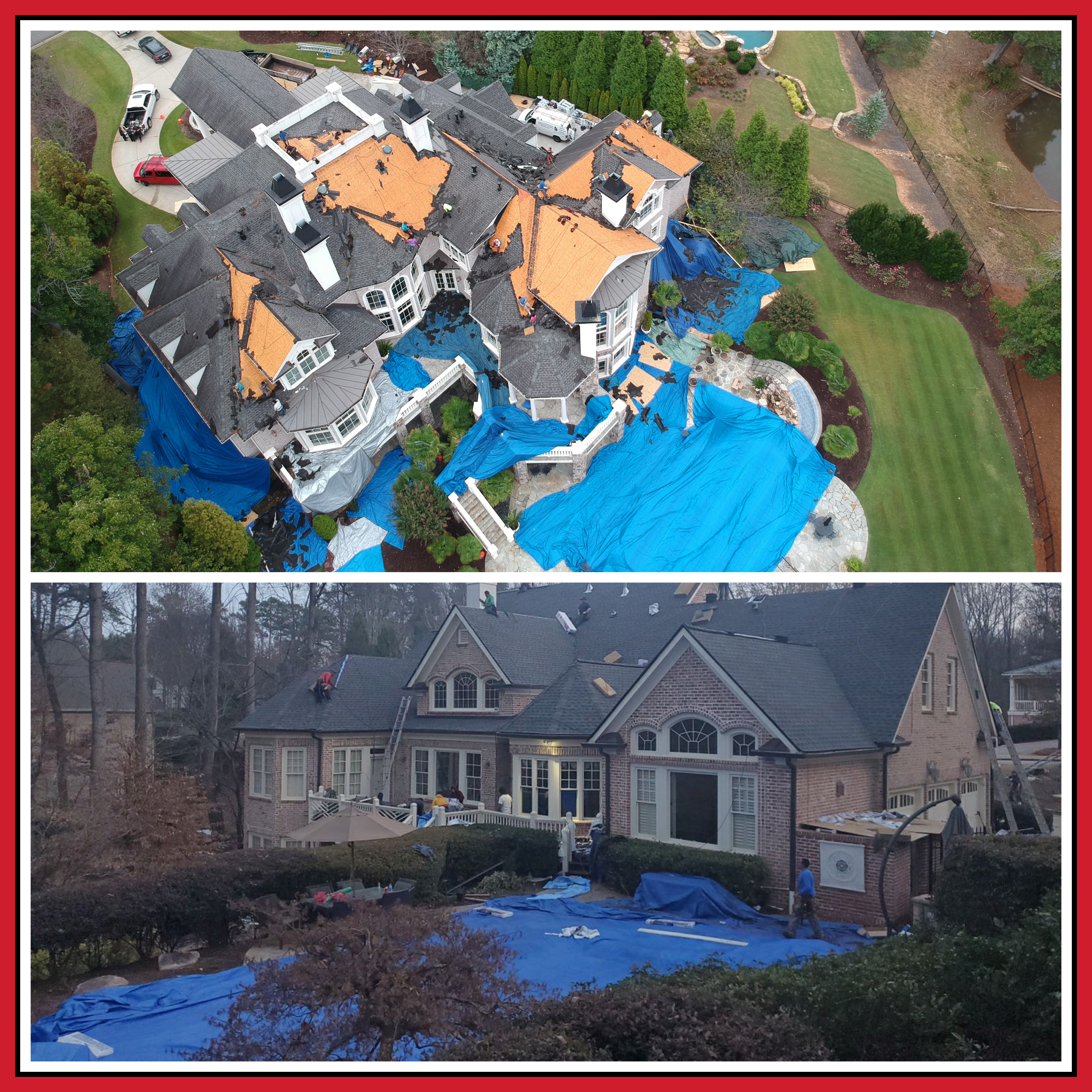
Second, when there is genuine damage, the contractor's inspection becomes your baseline scope. A thorough storm damage assessment documents hail bruising, wind-creased and torn shingles, damaged ridge caps, dented metal vents and flashing, and compromised pipe boots — with photographs and measurements. Many contractors now use drone roof inspections to capture high-resolution overhead imagery that reveals damage patterns hard to see from the ground or even from the surface. That documentation is what you will hold up against the adjuster's findings later.
3. Read Your Policy: ACV, RCV, and Your Deductible
Before the claim moves forward, pull your declarations page and understand three things, because they determine how much money actually reaches you.
Your deductible is what you pay out of pocket before coverage applies. Many Georgia policies now carry a separate, higher wind-and-hail deductible expressed as a percentage of the dwelling coverage rather than a flat dollar amount. On a home insured for $600,000, a 2% wind-hail deductible is $12,000 — a meaningful figure that changes whether a marginal claim is worth filing at all.
The bigger distinction is Replacement Cost Value (RCV) versus Actual Cash Value (ACV), and it decides what your roof is worth to the insurer. We cover this in depth in our companion guide on how RCV vs ACV decides what a roof claim pays, but the short version follows.
| Factor | Replacement Cost Value (RCV) | Actual Cash Value (ACV) |
|---|---|---|
| What it pays | Full cost to replace with new materials | Depreciated value based on roof age and condition |
| Depreciation | Held back, then recoverable after work is completed | Permanently withheld — you never recover it |
| Out-of-pocket on a 15-yr roof | Generally your deductible only | Deductible plus the depreciated difference |
| How payment arrives | In stages: ACV first, depreciation released on completion | One reduced payment |
| Trend in Georgia | Still common on newer policies | Increasingly applied to older roofs |
If your policy is RCV, the insurer initially pays the depreciated value (the ACV portion) minus your deductible, then releases the withheld depreciation once the work is finished and invoiced. That structure is why an RCV roof claim arrives in multiple checks. If your policy is ACV, the depreciation is gone for good, and you cover the gap yourself. Knowing which one you have before you file removes the single biggest surprise homeowners hit at settlement.
4. Document the Damage Thoroughly
Evidence wins claims. The more complete your documentation before the adjuster arrives, the less room there is for the scope to be quietly reduced. Our detailed walkthrough on how to document storm damage for a successful claim covers the full method; the essentials are straightforward.
Photograph everything, dated. Capture wide shots that establish the whole roof, then close-ups of individual hail strikes, creased shingles, torn tabs, damaged flashing, dented gutters and downspouts, and any collateral damage to gutters, screens, AC fins, and outdoor surfaces — because collateral hail damage on softer metals corroborates that hail of a damaging size struck the property. Photograph the interior too: ceiling stains, attic moisture, and any water intrusion. Keep granule samples from the gutters. Save the contractor's written inspection report. If water has already reached the living space, our guidance on emergency roof tarping explains how to stop further damage without compromising the claim — and document the tarp work, because mitigation costs are themselves often reimbursable.
Keep a single claim file from day one. Storm date, weather report, contractor inspection, every photo, every email and phone call with your carrier, the adjuster's estimate, and all receipts. When a claim drags or a payout falls short, the homeowner with an organized, dated record almost always recovers more than the one relying on memory.
5. File the Claim and Open Your Case
With damage confirmed and documented, you contact your insurer to open the claim. You can file by phone, app, or online. Have your policy number, the date of loss, and a short factual description of the damage ready. State the facts plainly — a storm on a specific date caused hail and wind damage to the roof — and avoid speculating about cause or age. The carrier assigns a claim number; record it, along with the name and direct contact of the claim representative.
At this point the insurer schedules an adjuster to inspect. During an active metro Atlanta storm season, when thousands of claims open at once, that scheduling can take anywhere from a few days to several weeks. As soon as you have the adjuster appointment, do one thing immediately: tell your roofing contractor the date and time so they can meet the adjuster on site. That single coordination step has more effect on your outcome than almost anything else in the process.
Meet Your Adjuster With an Expert on the Roof
We schedule our crews to walk the roof alongside your insurance adjuster — pointing out every strike, crease, and code item so nothing gets missed.
Call (404) 277-13776. The Adjuster Inspection: The Most Important Day
The adjuster's on-site inspection is the pivot point of the entire claim. The adjuster works for your insurer, climbs your roof, and writes an estimate. That estimate becomes the carrier's official position on what the loss is worth. Everything afterward is measured against it.
Adjusters are not villains, but they are managing dozens of claims at once and moving fast. Line items get missed. Hail strikes on the back slope go uncounted. Code-required components — drip edge, ice-and-water shield at valleys and eaves, proper synthetic underlayment, adequate ridge and soffit ventilation — are frequently omitted from a first-pass estimate. Steep-pitch labor and multi-layer tear-off get underpriced. None of this is necessarily bad faith; it is the predictable result of speed.
This is exactly why your contractor needs to be on the roof at the same time. When a knowledgeable roofer walks the surface beside the adjuster, they document damage in real time — chalking each strike, measuring the squares, and identifying every component the job requires under Georgia code. Inspections with no contractor present routinely produce a thinner scope than inspections where an experienced roofer is present. We send our crews to these meetings as a standard part of our insurance claims assistance precisely because the few hours spent there determine the size of the settlement.

7. Reviewing the Scope of Loss and Estimate
A week or two after the inspection, the carrier sends you the scope of loss — an itemized estimate, usually generated in industry software like Xactimate, listing every line item, unit price, quantity, depreciation, and the math that produces your ACV and RCV figures. Read it line by line against your contractor's inspection report.
Compare the two scopes carefully. Does the adjuster's square count match the measured roof area? Are both slopes accounted for? Is drip edge included? Ice-and-water shield at the valleys and eaves? Starter strip, ridge cap, pipe boots, and step flashing? Is the tear-off priced for the actual number of layers? Is steep-pitch or high-roof labor applied where the roof warrants it? Each missing or underpriced item is money the policy owes that the first estimate left on the table. This is the document that turns into a supplement.
If you carry Class 4 impact-resistant shingles or your policy includes a code-upgrade endorsement, confirm those entitlements appear in the scope. Ordinance-or-law coverage, when present, pays to bring the roof up to current code even where the old roof was not — a real and frequently overlooked benefit.
8. Filing Supplements for What the Estimate Missed
A supplement is a formal request for additional payment covering work or materials the original estimate omitted or underpriced. Supplements are not a gray area or a trick — they are a routine, expected part of nearly every roof claim, and they are how the final settlement comes to reflect the real cost of restoring your roof to code.
Two kinds of items drive supplements. The first is omissions from the original scope — the code components and labor adjustments noted above. The second is hidden conditions discovered only after work begins. Once the old roof comes off, deteriorated decking, rotted fascia, or compromised structural members may be exposed that no one could see from the surface. Under most policies, damage that is part of the covered loss and was not visible at inspection is supplementable. Your contractor photographs the condition, measures it, cites the relevant Georgia building code, and submits the supplement to the carrier for approval.
Do not sign off on a final settlement before tear-off if you can avoid it. Deck rot, structural decay, and code deficiencies are routinely hidden under old shingles. Settling the claim before the roof is opened can forfeit your right to recover those costs — and on metro Atlanta homes from the 1980s and 1990s, hidden decking damage is common, not rare.
Handling supplements well is where contractor experience pays off most directly. A roofer who knows Georgia code, prices in current Xactimate values, and documents thoroughly will get supplements approved that an inexperienced or out-of-state storm-chaser would never even identify. This is the difference between a claim that pays for a code-compliant roof and one that leaves the homeowner covering the gap.
9. When You and the Insurer Disagree
Most claims settle once the documented damage and the adjuster's scope are reconciled. Occasionally a carrier denies a clearly valid claim, lowballs the scope, or stalls. Georgia law gives you several paths forward.
The first step is a written request for re-inspection, supported by your documentation, when the adjuster's findings conflict with your contractor's report. A second adjuster or a desk review often resolves the gap once the evidence is laid out. If disagreement persists, most policies contain an appraisal clause — a contractual dispute-resolution mechanism in which each side hires an independent appraiser, and the two select a neutral umpire. Appraisal resolves the amount of the loss without litigation and is frequently faster and far less costly than a lawsuit. For coverage disputes — where the insurer denies that the loss is covered at all, rather than disputing the amount — you may file a complaint with the Georgia Office of Insurance and Safety Fire Commissioner, or consult an attorney who handles first-party property claims.
Throughout any dispute, your organized claim file is your strongest asset. Carriers respond differently to a homeowner backed by dated photographs, a code-cited contractor scope, and a clear paper trail than to one relying on memory and frustration.
10. How the Money Actually Arrives
Understanding the payment sequence prevents the most common settlement-stage panic — the homeowner who sees a first check far smaller than the roof costs and assumes the claim was shorted.
On an RCV policy, payment typically comes in stages. First check: the ACV amount (replacement cost minus depreciation) minus your deductible, issued after the scope is agreed. This is intentionally less than the full job cost — the depreciation is being held back, not denied. If your roof or home carries a mortgage, this check is usually made out jointly to you and your lender, and the lender releases funds in draws as work progresses. Second check: the recoverable depreciation, released once the work is completed and the contractor submits a final invoice proving the full RCV was spent. Additional checks: any approved supplements, paid as they clear. The net result on a properly handled RCV claim is that your total out-of-pocket lands at or near your deductible.
On an ACV policy, you receive a single depreciated payment and cover the remainder yourself. Knowing your policy type from step three is what keeps this stage from being a shock.
11. Choosing the Right Contractor for a Claim
The contractor you choose shapes both the size of your settlement and the quality of the roof you end up with. Two warnings matter most in metro Atlanta.
After every major storm, out-of-state storm-chasing crews flood the region, knock doors, promise to "waive your deductible," and disappear before warranty issues surface. Waiving or rebating a deductible is insurance fraud in Georgia, and a contractor who offers it is telling you exactly how they treat the rules. A roof installed by a transient crew with no local presence leaves you with no one to call when a leak appears two winters later.
Choose a local, licensed, manufacturer-certified contractor with a permanent address and a verifiable track record. As a GAF and CertainTeed certified roofer, our installations qualify for manufacturer warranties that transient crews cannot offer, and our crews are here long after the claim closes. You can review our completed project gallery and read homeowner accounts of claims we have guided. For estate properties in Buckhead, Alpharetta, and Sandy Springs, the standard is the same: thorough documentation, full code scope, and a roof built to specification.
12. Commercial and Multi-Family Roof Claims
Commercial and multi-family roof claims follow the same skeleton — date of loss, documentation, adjuster inspection, scope, supplements, payment — but the stakes and complexity rise sharply. Low-slope membrane systems like TPO, EPDM, and PVC require adjusters who understand membrane damage, seam integrity, and ponding, and the scope often involves engineering reports rather than a quick walkthrough.
Business-interruption coverage, larger deductibles, code-upgrade triggers for older buildings, and the coordination of multiple stakeholders all make thorough documentation more valuable, not less. Our commercial roofing team documents these claims for property managers and building owners across metro Atlanta, including water damage restoration when a roof failure has reached the interior. The principle holds at every scale: the claim is an evidence-driven process, and the side with thorough, well-organized documentation fares better.
13. How 1 Source Documents Your Claim Start to Finish
We built our claims process around a simple idea: your roof damage should be fully documented from the start, and you should never be left guessing what comes next.
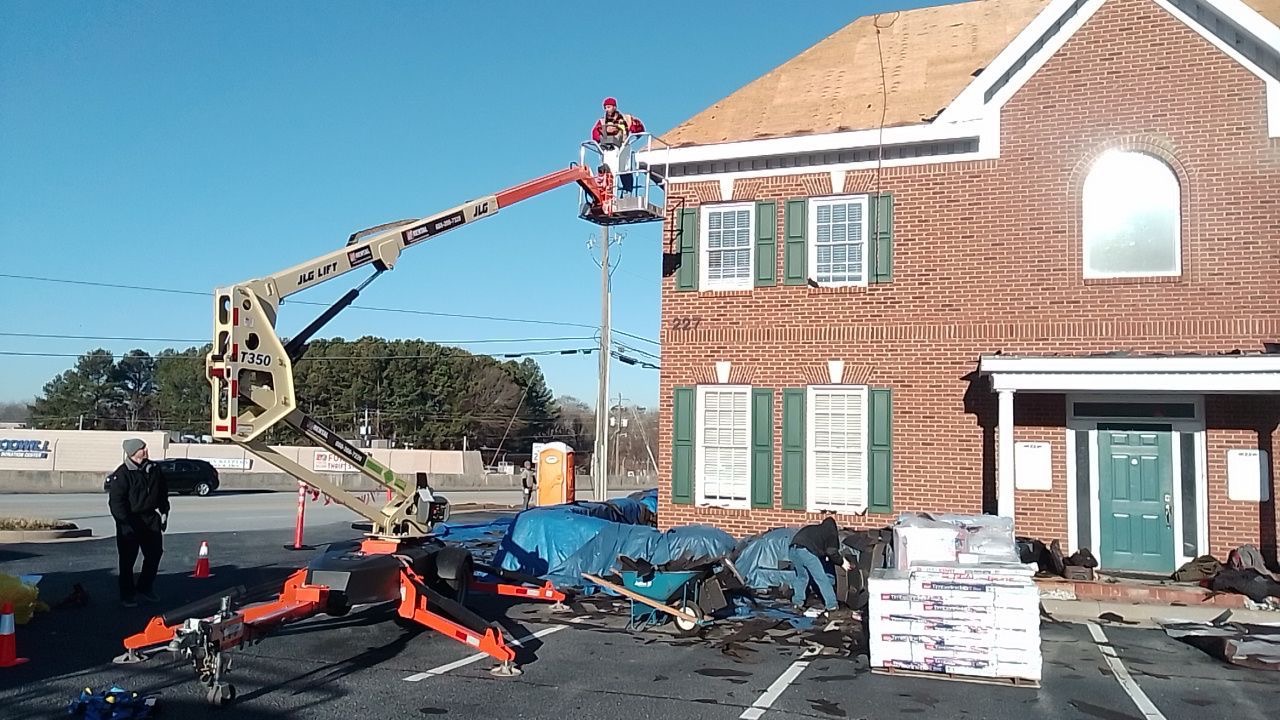
It starts with a free, no-obligation inspection. We tell you honestly whether you have a claimable loss before you ever contact your carrier — and if you do not, we say so. When there is genuine damage, we document it completely: drone imagery, surface inspection, interior and attic checks, and a written scope keyed to Georgia building code. You file the claim and control it; we provide the documentation and estimate that support it, and then we coordinate to meet your adjuster on the roof so the scope reflects the real damage from the start.
After the scope comes back, we review it against our inspection, prepare and submit any supplements the estimate missed, and track each approval through to payment. We install to GAF and CertainTeed specification with full code components, document hidden conditions discovered at tear-off, and provide the final invoicing your carrier needs to release recoverable depreciation. Through the whole process you have one local team and one point of contact. Learn more about why metro Atlanta homeowners choose 1 Source, explore our complete roofing services, or start with a free inspection request.
Start Your Claim With a Free Roof Inspection
Honest assessment, complete documentation, and an expert who meets your adjuster on the roof. Serving Atlanta, Buckhead, Roswell, Johns Creek, and all of metro Atlanta.
(404) 277-1377 — No ObligationCertified by Industry-Leading Manufacturers