Most Atlanta homeowners think of wind damage as a coastal problem. It is not. The roofs we replace after storm events in Gwinnett, Fulton, and Cobb counties were rarely hit by a hurricane. They were peeled back by straight-line thunderstorm gusts, lifted by the downdraft edge of a severe cell, or stripped by an EF-1 tornado that touched down for ninety seconds in a single subdivision. Metro Atlanta sits in one of the more active severe-thunderstorm corridors in the Southeast, and wind — not water alone — is what removes shingles and exposes the deck.
Wind mitigation is the practice of building a roof that stays attached and keeps water out when the wind is doing its worst. The reason it matters financially, beyond the obvious protection of your home, is that insurance carriers increasingly recognize and reward roofs built to a higher wind standard. A roof engineered to resist uplift is a lower risk to insure, and a growing number of carriers writing policies in Georgia will price that lower risk into your premium — if you can document it.
This guide explains what wind mitigation actually involves at the roof level, which specific upgrades carriers recognize, how the FORTIFIED standard fits Atlanta's storm profile, and how to capture the premium credit you may be entitled to. The work happens in the parts of the roof you never see, which is precisely why it is so often skipped — and why documenting it correctly is half the value.
1. Why Wind Is Atlanta's Underrated Roof Threat
Georgia is not a hurricane state in the way the Gulf Coast is, and that fact lulls homeowners into discounting wind as a roofing concern. The data tells a different story. Metro Atlanta averages dozens of severe-thunderstorm warnings every year, and severe by definition means winds of 58 mph or greater. Straight-line winds in a strong summer cell routinely exceed 70 mph, and the spring tornado season — March through May — regularly produces brief, intense touchdowns across the northern suburbs.
What makes these events so damaging to roofs is not sustained pressure but the sudden, turbulent gusting. Wind does not push a roof down; it pulls it up. As air accelerates over the ridge and around the eaves, it creates negative pressure — suction — strongest at the perimeter and corners of the roof. A shingle that is sealed and fastened to spec rides it out. A shingle at the edge, with a marginal seal or a high nail, lifts at the tab, catches the wind underneath, and the failure cascades from there. One lost shingle exposes the fastener heads of the next course, and a single gust event can unzip an entire slope.
This is why storm damage restoration in metro Atlanta is so often a wind story rather than a hail story. And it is why the upgrades that resist uplift — at the edge, at the deck, and in the seal — return value here even though Georgia is nowhere near the coast.
2. What Wind Mitigation Actually Means at the Roof Level
Wind mitigation is a system, not a single product. The strength of a roof against uplift is determined by a chain of connections running from the shingle face down to the framing, and the chain is only as strong as its weakest link. Building code establishes the minimum for that chain. Wind mitigation deliberately exceeds it at the points most likely to fail.
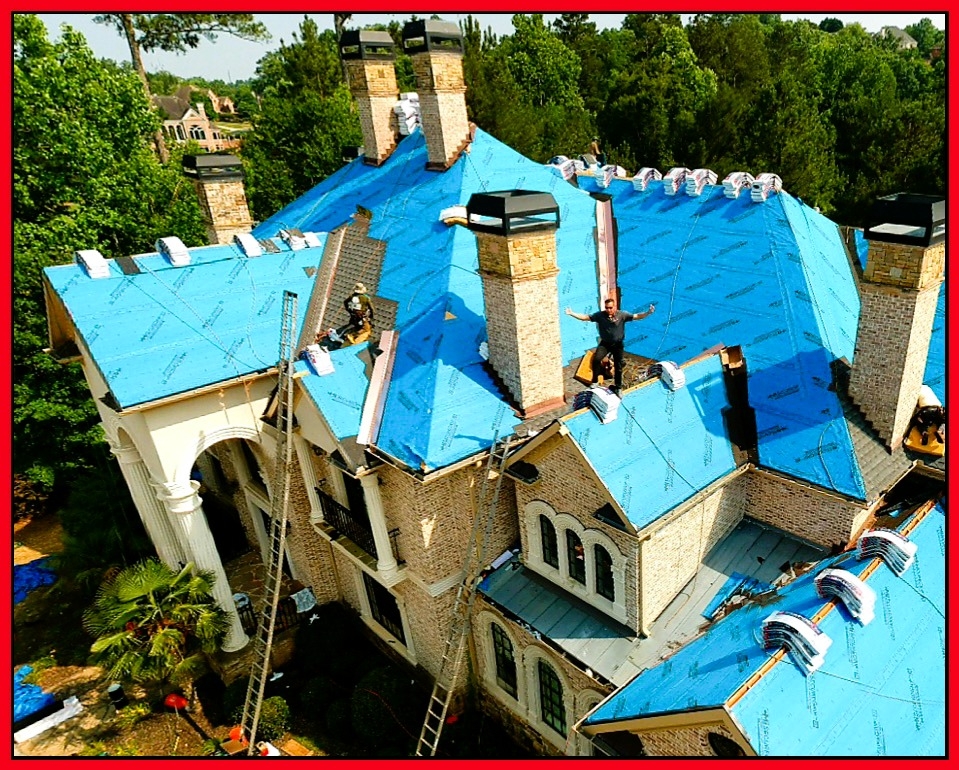
There are four pressure points worth understanding. First, the shingle-to-shingle seal: every modern shingle has a factory-applied adhesive strip that bonds each tab to the course below once heat activates it. A properly sealed roof resists tab lift; an unsealed or improperly nailed roof does not. Second, the shingle-to-deck attachment: the nails that hold each shingle to the plywood, and whether there are four or six of them, placed correctly in the nailing zone. Third, the deck-to-frame attachment: the nails that hold the plywood sheathing itself to the rafters and trusses — the link that fails catastrophically in the strongest events. Fourth, the edge and perimeter details: drip edge, starter strip, and rake treatment that defend the most pressure-loaded zone of the entire roof.
Wind mitigation reinforces all four. Most are invisible once the roof is finished, which is exactly why they get value-engineered out of low-bid jobs — the homeowner can't see what was skipped. A properly scoped roof replacement treats them as standard, not as line items to cut.
3. The Specific Upgrades Insurers Recognize
Not every roofing improvement earns a credit. Carriers focus on the features with documented loss-reduction value — the ones that engineering studies and claims data show actually keep roofs on houses. The list below covers the upgrades most commonly recognized in Georgia underwriting, ordered roughly by impact.
| Upgrade | What It Does | Where It Lives | Credit Relevance |
|---|---|---|---|
| Sealed Roof Deck | Taped or fully-adhered deck seams create a secondary water barrier if shingles are lost | Deck surface (tear-off only) | High — core FORTIFIED requirement |
| Ring-Shank Deck Re-Nailing | 8d ring-shank nails at 6"/6" spacing roughly double sheathing uplift resistance | Deck-to-frame (tear-off only) | High — addresses catastrophic failure mode |
| Six-Nail Shingle Fastening | Six nails per shingle instead of four raises the wind warranty rating | Shingle-to-deck | Moderate — required for high-wind ratings |
| Sealed Starter & Drip Edge | Code-compliant metal edge plus sealed starter strip locks down the perimeter | Eaves and rakes | High — edge is where failure begins |
| High-Wind / Impact-Rated Shingles | Shingles rated to 130 mph; Class 4 impact resists hail and debris | Roof cover | Moderate to high — often a separate credit |
| FORTIFIED Roof Designation | Bundles the above into one inspected, certified standard recognized by carriers | Whole-roof certification | Highest — single documented credential |
The pattern is clear: insurers reward features that keep the deck attached and keep water out when the cover fails. Two of the highest-value upgrades — sealed decking and ring-shank re-nailing — can only be installed during a full tear-off, because they live on or below the deck surface. That timing reality is the single most important planning point in this guide, and we return to it in section seven.
4. The Sealed Roof Deck: Your Secondary Water Barrier
Of all the wind-mitigation upgrades, the sealed roof deck delivers the most protection for the money, and it is the centerpiece of the FORTIFIED standard for good reason. The premise is simple and sobering: assume the shingles will come off. In a severe wind event, that is a realistic outcome even for a well-built roof. The question that determines whether you face a cosmetic repair or a flooded-out interior is what the wind finds underneath.
On a conventional roof, what it finds is bare plywood with seams between every four-by-eight sheet. Wind-driven rain pours straight through those seams into the attic, the insulation, and the ceilings below. A sealed roof deck closes that pathway. The seams are taped with a flashing tape engineered for the application, or the entire deck is covered with a self-adhering membrane, creating a continuous water barrier bonded directly to the sheathing. If the shingles depart, the deck still sheds water for days — long enough to get a tarp on or a repair scheduled before the interior is ruined.
For homeowners weighing the full membrane approach, the principles overlap heavily with what we cover in our guides on self-adhering ice and water shield and on synthetic underlayment versus felt. The sealed deck is not an exotic add-on; it is the disciplined application of materials a quality roofer already stocks, installed before the cover goes down. The incremental cost during a tear-off is modest. The cost of skipping it shows up as a water damage claim after the next severe storm.
A sealed roof deck assumes the shingles will fail — and protects you anyway. It is the one wind-mitigation upgrade that turns a lost-shingle event from an interior catastrophe into a manageable exterior repair. It can only be installed during a tear-off, which makes a planned roof replacement the moment to build it in.
5. Deck Attachment: Stopping the Catastrophic Failure
If the sealed deck addresses what happens after shingles fail, deck attachment addresses the failure mode no homeowner wants to experience: the plywood itself leaving the house. When sheathing is pulled off the framing in a severe event, the roof is open to the sky and the structure is compromised. This is the difference between a roof that loses some shingles and a home that becomes uninhabitable overnight.
Older Atlanta homes — particularly the 1980s and 1990s housing stock now reaching its second roofing cycle — were typically sheathed with smooth-shank nails or, on the oldest construction, staples. Both have limited withdrawal resistance under repeated uplift loading. The wind-mitigation upgrade is re-nailing the entire deck with 8d ring-shank nails at a tightened 6-inch field and 6-inch edge spacing. The ring shank grips the wood fibers and resists pull-out at roughly twice the load of a smooth-shank fastener. We cover the mechanics of this in depth in our guide to roof deck re-nailing for wind uplift.
Like the sealed deck, this is a tear-off operation. With the old shingles and felt removed, the crew can see every sheet and refasten it before the new system goes on. It adds a defined, predictable scope to the project and transforms the weakest link in the uplift chain into one of the strongest. For homeowners pursuing the FORTIFIED standard, enhanced deck attachment is not optional — it is foundational.
6. Shingle Fastening and Edge Details
Above the deck, two details govern whether the cover stays put: how the shingles are nailed, and how the perimeter is finished. Both are routinely shortchanged on price-first installations, and both matter enormously to wind performance.
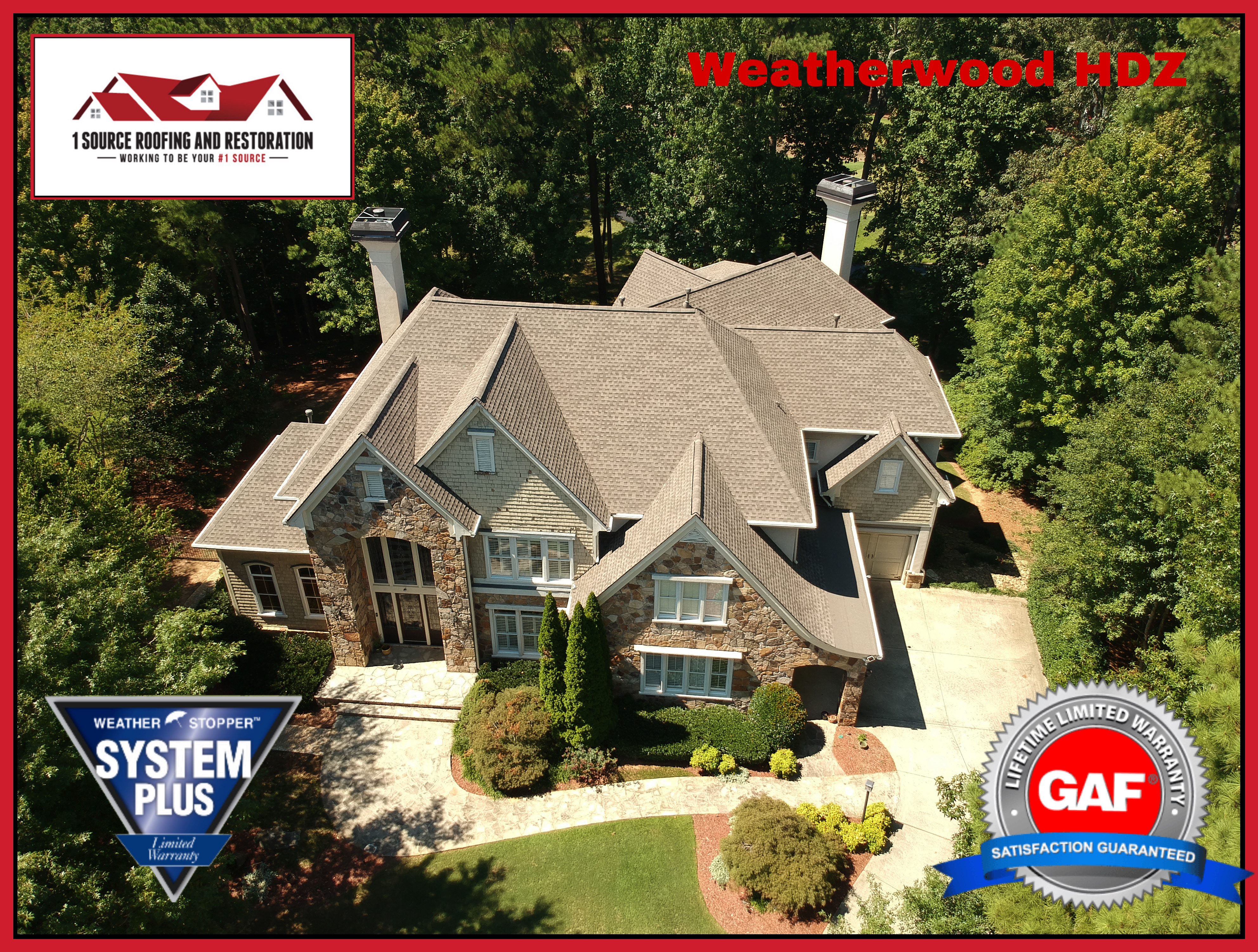
Shingle manufacturers publish two installation specifications for most architectural shingles: a standard four-nail pattern and a six-nail pattern. The four-nail pattern meets code in normal conditions. The six-nail pattern is what unlocks the manufacturer's high-wind warranty — commonly a 130 mph rating — by adding two fasteners that hold the shingle through a wider arc of uplift. The difference in labor is two extra nails per shingle. The difference in performance is the gap between a roof that holds in a 90 mph gust and one that begins to fail. Our full breakdown lives in six-nail versus four-nail shingle fastening.
The perimeter is the other half of the equation, because wind failure almost always starts at the edge. Three details defend it. Starter strip shingles provide a sealed, factory-adhesive first course at the eaves and rakes, eliminating the lifting point that a cut three-tab starter leaves behind. Drip edge — the metal flashing required by Georgia residential code — locks the perimeter and protects the deck edge from moisture. And hip and ridge cap upgrades finish the highest-pressure lines of the roof with purpose-built, wind-rated caps rather than field shingles bent over the ridge. Together these details close the openings the wind looks for first.
Find Out Which Upgrades Your Roof Qualifies For
Free on-site assessment. Our inspectors evaluate your deck, fastening, and edge conditions and explain exactly which wind-mitigation features fit your home and your insurer.
Call (404) 277-13777. The FORTIFIED Roof Standard and Atlanta's Storm Profile
The cleanest way to bundle wind-mitigation upgrades into a credential carriers recognize is the FORTIFIED standard, developed by the Insurance Institute for Business and Home Safety. FORTIFIED is a voluntary, evidence-based construction standard that goes beyond minimum building code, and its entry tier — FORTIFIED Roof — targets precisely the three failure points covered above: the sealed roof deck, enhanced deck attachment, and locked-down edges.
What makes FORTIFIED especially well-suited to metro Atlanta is that the Roof tier delivers most of the resilience benefit without the structural reinforcement that the higher Silver and Gold tiers require. Atlanta's threats are severe thunderstorms, straight-line wind, and brief tornadoes — not the multi-hour sustained hurricane winds that drive the higher tiers on the coast. The Roof tier matches the risk profile. It is documented through an independent, IBHS-approved evaluator who verifies the work with photographs and issues an official certificate, which is exactly the kind of third-party proof an underwriter trusts.
We walk through the full standard, tier by tier, in our dedicated guide to the FORTIFIED roof standard. For homeowners in storm-active suburbs like Alpharetta, Marietta, and Roswell, a FORTIFIED Roof designation is the strongest single piece of documentation you can hand your agent when asking for a wind-resistance credit.
8. How to Actually Capture the Premium Credit
Here is the reality that surprises homeowners: building a wind-resistant roof does not automatically lower your premium. The credit is rarely applied on its own. You have to claim it, document it, and ask your carrier to price it in. Georgia does not mandate standardized wind-mitigation discounts the way Florida does, so the credit structure varies meaningfully from one carrier to the next — and some offer favorable underwriting rather than a line-item discount.
The process has three parts. First, document the work as it happens. The qualifying features are buried under the finished roof, so the only proof is dated photographs taken during installation — the deck attachment, the sealed seams, the starter and edge details — plus product specifications, the permit and final inspection record, and any FORTIFIED certificate. Second, obtain the right report. Some carriers accept a contractor's documentation package; others require a formal wind-mitigation inspection. Third, ask your agent directly whether a wind-resistance or impact-resistance credit is available on your policy and what documentation triggers it.
Because wind-mitigation features overlap heavily with storm-damage and claims work, the same documentation discipline that earns a premium credit also strengthens any future claim. Our broader insurance claims resources and our walkthrough of navigating a roof insurance claim explain how proper records protect you on both sides of the policy.
Undocumented wind-mitigation work earns you nothing. The qualifying features disappear under the finished roof. Without dated installation photos, product specs, and inspection records, your insurer has no basis to apply a credit — and you paid for resilience without the financial return it should deliver.
9. Impact-Resistant Shingles and the Companion Hail Credit
Wind rarely travels alone in Atlanta. The same severe cells that produce damaging gusts often carry hail, and many carriers offer a separate impact-resistance credit that pairs naturally with a wind-mitigation upgrade. Class 4 impact-rated shingles — the highest UL 2218 classification — resist the cracking and granule loss that a hailstorm inflicts on standard shingles, and they frequently carry the high-wind rating as well.
For homeowners already opening the roof for a wind-resistant rebuild, stepping up to a Class 4 shingle is an efficient way to stack a second potential credit on top of the first. We cover the specifics, including how the discount works and which products qualify, in our guide to Class 4 impact-resistant shingles. The companion benefit is durability: a Class 4 shingle that shrugs off hail also resists wind-borne debris, which is the projectile that does the most cover damage in a severe Atlanta storm.
One practical note for premium homes: the heaviest impact-rated products, including synthetic slate and composite systems, combine luxury appearance with genuine storm resilience. For estate properties in Buckhead and Johns Creek, that pairing of aesthetics and performance is often the deciding factor.
10. Ventilation, the Ridge, and Whole-System Resilience
Wind mitigation does not stop at the field of the roof. Ridge vents, the ventilation system, and the way the attic breathes all factor into how the roof performs under pressure — and into the durability that keeps the wind-resistant features working for decades rather than years.
Ridge vents sit on the highest-pressure line of the roof, and a poorly attached vent is a wind-failure point that can open the attic directly to driving rain. A wind-rated ridge vent, externally baffled and mechanically fastened to specification, resists uplift while still moving air. The balance matters: as we explain in our guide to balanced ridge and soffit ventilation, an attic that runs cool and dry preserves the shingle seal and the deck for the full service life. Premature seal failure from a baked, under-ventilated attic undermines the very wind resistance you paid to build.
The attic and the roof are one system. Heat, moisture, and airflow that the homeowner never sees govern how long the cover stays sealed and how sound the deck remains. Our overview of how the attic and roof work as a single system ties these pieces together. A wind-mitigation package built without attention to ventilation is a package with a shorter useful life — which is why a complete roofing system approach, not a shingles-only mindset, is the standard worth holding your contractor to.
11. How 1 Source Builds and Documents a Wind-Resistant Roof
Knowing which upgrades earn a credit is only useful if the roof is actually built to standard and documented to prove it. The 1 Source approach to wind-mitigation work is built around both — the installation discipline and the paper trail that turns that discipline into an insurance benefit.
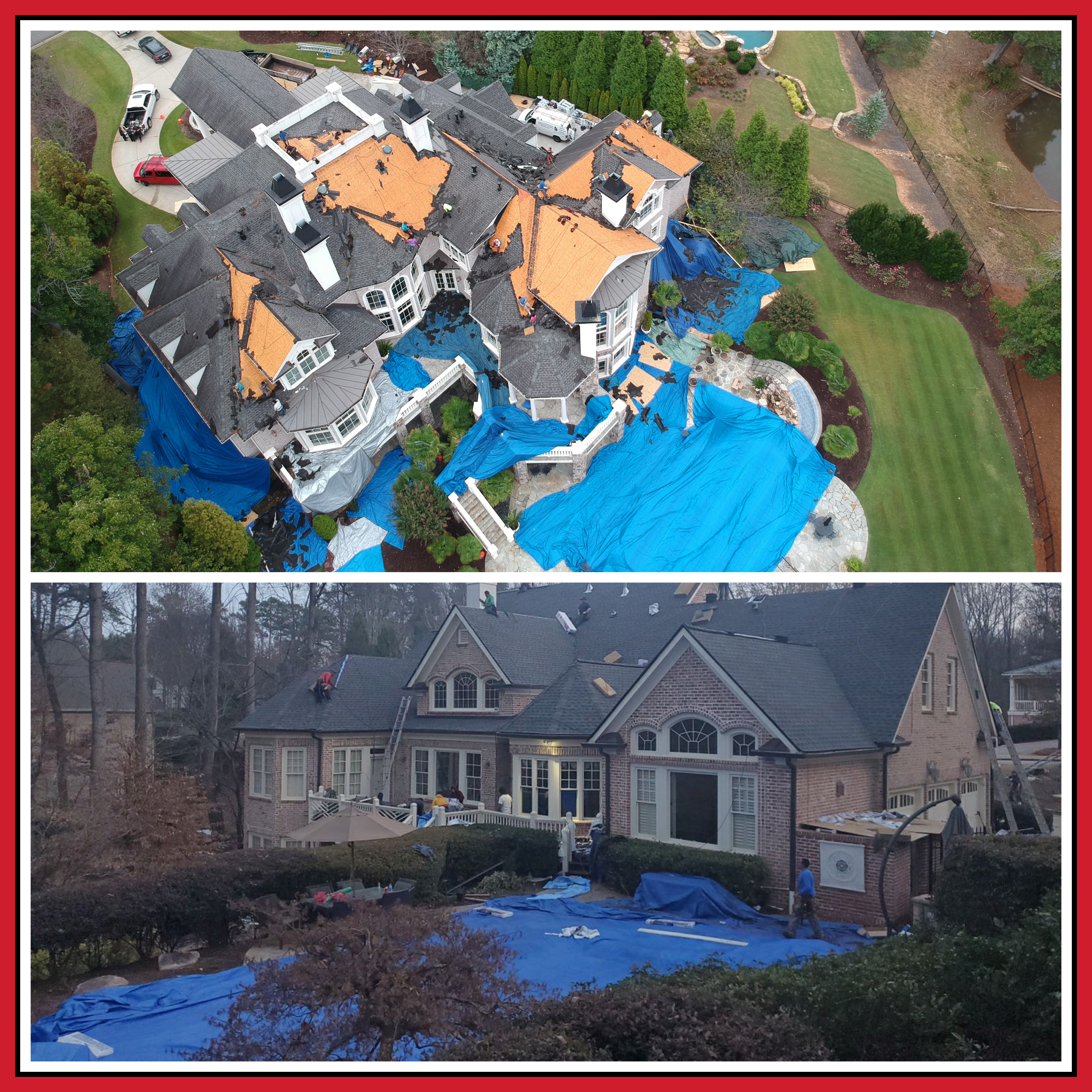
It begins with a free on-site assessment. Our inspector evaluates the existing roof, the deck condition where accessible, the current fastening and edge details, and the ventilation system, then explains which wind-mitigation features fit your home and which credits your specific situation may support. For homeowners whose roofs are still serviceable, we are direct about whether the upgrades justify acting now or scheduling for the next replacement cycle — the honest answer, covered in our guide on roof repair versus replacement, is not always a sale.
During installation, the wind-mitigation features are built in sequence and photographed at each stage: the deck after re-nailing, the sealed seams before the cover, the starter and drip edge at the perimeter, and the six-nail fastening pattern on the field shingles. The site supervisor manages the work and assembles the documentation package — installation photos, product specifications, permit and inspection records, and the FORTIFIED certificate when that path is chosen — so you hand your agent a complete file rather than a verbal claim.
For premium properties across metro Atlanta, from Sandy Springs estates to commercial buildings needing commercial roofing resilience, the standard is the same: build the roof to resist the wind, and document it so the resilience pays you back. You can review our completed work in the photo gallery and read homeowner experiences on our testimonials page. To understand why homeowners choose us for work this exacting, see why choose 1 Source.
Build a Roof That Lowers Your Risk — and May Lower Your Premium
Free on-site assessment with a clear explanation of qualifying upgrades, documentation, and your insurer's available credits. Serving Atlanta, Buckhead, Alpharetta, and all of metro Atlanta.
(404) 277-1377 — No ObligationCertified by Industry-Leading Manufacturers