
Water Damage Restoration in Atlanta, GA
Roof leak causing interior damage? We stop the leak and restore your home — fast response across metro Atlanta. Call (404) 277-1377.
Certified by Industry-Leading Manufacturers
Water intrusion from a roof leak begins causing mold damage within 24-48 hours. Do not wait. Call (404) 277-1377 now.
The Two-Part Water Damage Problem
Water damage from a roof leak is not a single repair. It is two separate but deeply interconnected problems that must both be resolved — and resolving only one leaves the situation worse than it appears.
Part 1 is the source of the leak — the failure point in the roof itself. This might be missing or damaged shingles after a hailstorm, compromised flashing around a chimney or valley, a failed pipe boot, or a membrane defect on a flat section. The source is where water enters the building envelope. Until the source is permanently repaired, any interior work is futile — you will be remediating the same damage on a repeating cycle.
Part 2 is the interior damage the water already caused — saturated insulation in the attic, damaged drywall on ceilings and walls, moisture absorbed into roof sheathing and framing members, and the biological consequence that follows sustained moisture exposure: mold. The interior damage is frequently more extensive and more costly than the roofing repair itself. A contractor who patches the roof but leaves wet insulation in your attic is not solving your problem — they are leaving a mold colony in place and handing you a future remediation bill that will dwarf the original repair cost.
1 Source Roofing handles both parts under a single project scope. We stop the source, assess the interior damage with moisture meters and attic inspection, remove saturated materials before mold can colonize them, treat affected structural members, and restore the interior to pre-damage condition. This dual-scope approach is what distinguishes a water damage restoration specialist from a standard roofing contractor who patches the exterior and considers the job complete.
This page addresses water damage from roof leaks — the ongoing leak mitigation and interior remediation that follows a roofing failure. This is distinct from our Storm Damage Restoration service, which focuses on weather event response and insurance claims for sudden storm-caused damage. The two situations often overlap, but the service emphasis differs: storm damage response is about immediate event documentation and insurance coordination; water damage restoration is about stopping the leak and repairing what the water already destroyed.
Why Time Matters — The 24-48 Hour Window
Mold is not an external invader that enters your home through the roof alongside the water. Mold spores are present in every indoor environment at low concentrations, dormant under normal humidity conditions. When water intrusion elevates local moisture levels — in insulation, drywall, and wood framing — those dormant spores activate. Under warm, humid conditions typical of Atlanta attics, mold colonization of organic materials can begin within 24 to 48 hours of sustained water exposure.
This is not a worst-case scenario framing. It is the standard timeline, documented consistently in building science and insurance industry research. Atlanta's climate — high humidity, warm temperatures for most of the year — accelerates biological growth relative to drier climates. A roof leak that might allow a three-day window for remediation in a Denver winter allows far less time in an Atlanta summer.
Once mold colonizes insulation, drywall paper, and wood framing, the remediation process expands dramatically. Contaminated materials must be removed rather than dried. Structural members that develop surface mold require antimicrobial treatment and may require replacement if colonization penetrates the wood fiber. The scope and cost difference between catching a leak within hours and addressing it after two weeks of undetected moisture exposure is substantial.
"The difference between a $2,000 repair and a $20,000 remediation project is often a matter of days. We have seen both outcomes on properties across Atlanta. The ones that called immediately paid for a repair. The ones that waited paid for a reconstruction."
Beyond mold, sustained structural moisture creates wood rot in load-bearing framing. Roof sheathing that absorbs water for weeks begins to delaminate. Rafters and ceiling joists that remain wet can develop rot that compromises structural capacity. These are not cosmetic problems — they are structural deficiencies that require engineering assessment and potentially significant reconstruction.
If your water damage resulted from a storm event, see our Storm Damage Restoration page for weather event response and insurance coordination. If a tree caused the roof breach that allowed water entry, see our Tree Removal page.
Signs of Water Damage from Roof Leaks
Roof leaks rarely announce themselves dramatically. More often, they are slow and chronic — a flashing failure that allows water to enter during specific wind-driven rain events, a nail hole that wicks moisture during heavy downpours, a seam separation that admits water only when snow accumulates and melts. By the time visible symptoms appear inside the home, the damage above the ceiling line is frequently more extensive than the visible indicator suggests.
Know what to look for:
- Brown ceiling stains (ring-shaped or spreading) — The classic indicator of overhead water intrusion. The brown ring pattern forms as mineral-laden water evaporates, leaving deposits at the perimeter of the wet area. The stain's location on the ceiling may not correspond directly to the leak source — water follows roof structure and insulation, traveling laterally before dripping through. A stain in the center of a room may originate from a failure near the eave.
- Sagging or bubbling drywall — Ceiling drywall that has absorbed significant moisture loses structural integrity. A sagging or bubbling ceiling section has absorbed enough water to deform — and may be retaining standing water above it. This is a structural failure risk. Do not ignore deformed ceiling drywall.
- Water dripping from light fixtures or electrical boxes — This is an immediate electrical hazard. Water and energized electrical components create shock and fire risk. Cut power to the affected circuit at the breaker panel before investigating further. This symptom indicates significant water accumulation in the ceiling cavity above.
- Wet or compressed insulation in the attic — Fiberglass batt insulation that has absorbed water compresses visibly and develops a gray-brown discoloration. Saturated insulation loses its thermal performance entirely and retains moisture long after the roof source is repaired — providing the prolonged moisture environment that supports mold growth. Wet insulation must be removed and replaced.
- Dark staining on attic sheathing boards — Roof decking that has absorbed moisture develops dark staining and, in more advanced cases, surface mold growth. This symptom indicates the leak has been active long enough to wet structural wood — the timeline for remediation has already compressed.
- Wall staining below window frames — Staining on interior wall surfaces beneath window openings typically indicates flashing failure at the window rough opening or the connection between the window frame and siding. This is a distinct failure mode from a field roof leak and requires different diagnostic and repair approaches.
- Musty odor on upper floors — A persistent musty smell in upper-floor rooms or in the attic is frequently the first indication of mold growth, appearing before visible mold or ceiling staining. If you smell mold, assume it is there. A professional inspection with moisture meters will confirm the source and extent.
Our Water Damage Restoration Process
1 Source's water damage restoration process is structured to address both the roof failure and the interior damage it caused — sequenced to stop further damage immediately, assess the full scope before any material is removed, and restore the structure to pre-damage condition with documentation suitable for insurance claims.
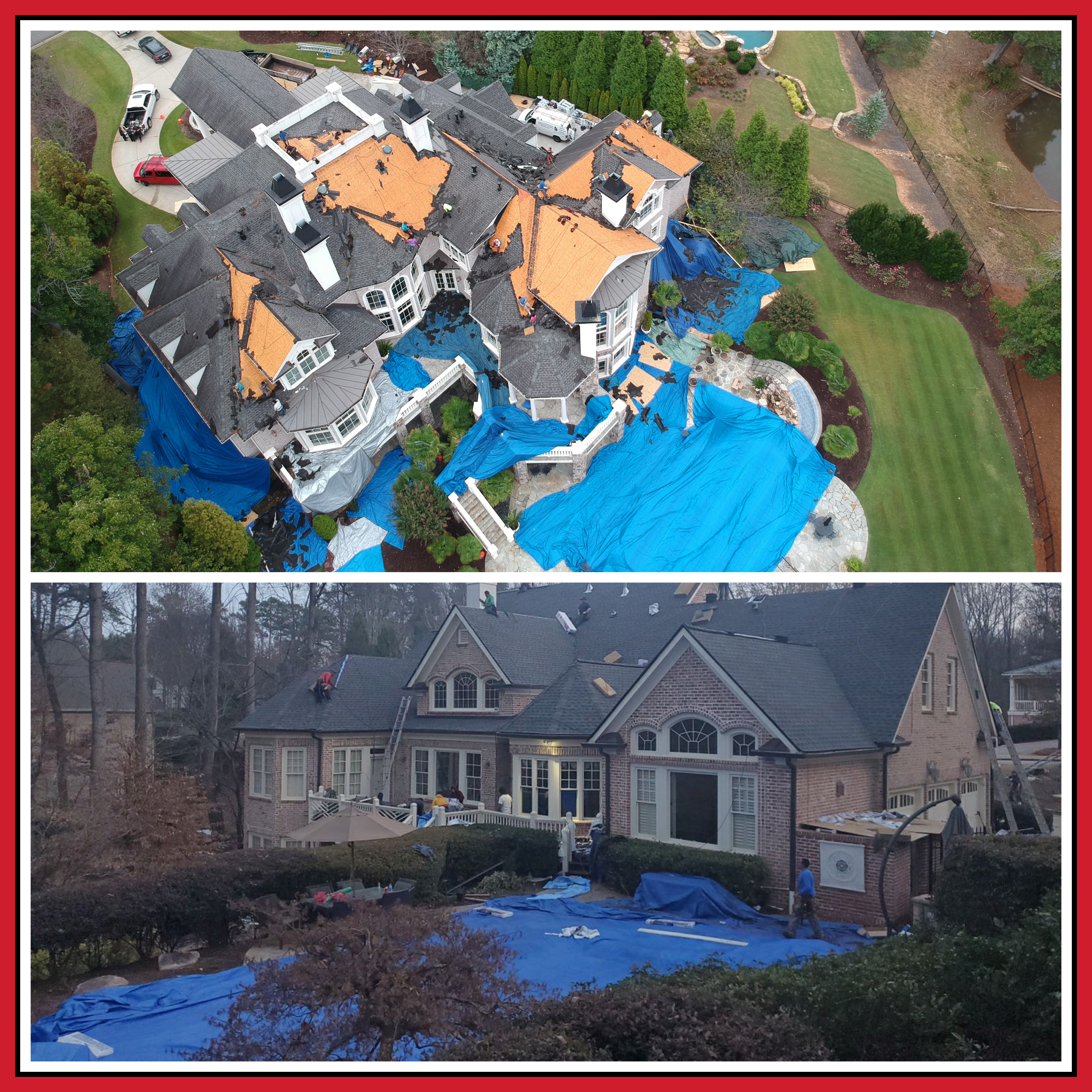
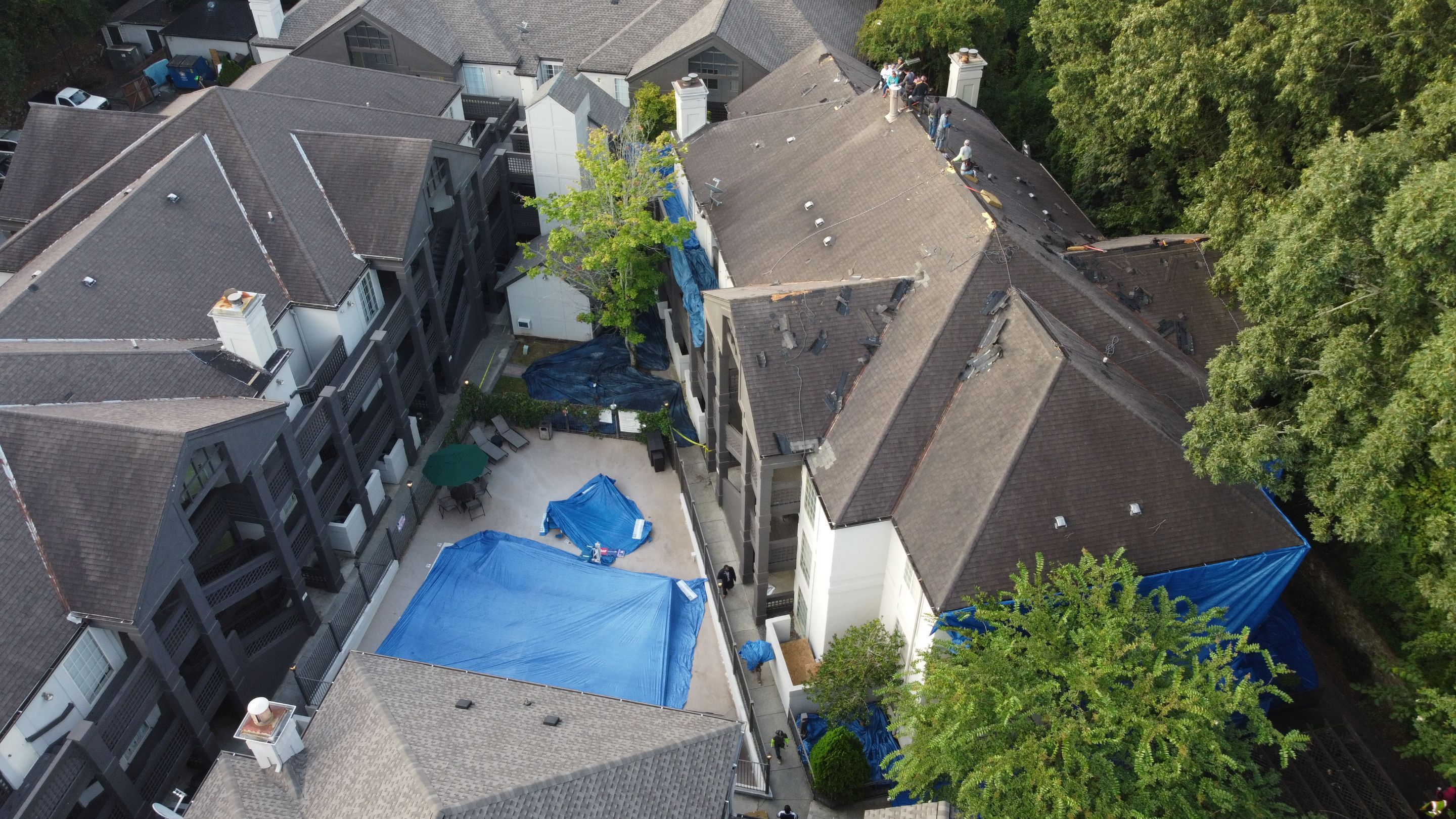
- Emergency Response and Source Identification — Our team arrives and immediately locates the active leak point. If the roof source cannot be permanently repaired during the initial visit (due to weather, material availability, or scope), emergency tarping is installed to stop further water entry while permanent repair is scheduled. We do not leave active leak situations open overnight.
- Moisture Assessment — Using calibrated moisture meters and thermal imaging where applicable, we map the full extent of moisture intrusion — attic insulation, roof decking, ceiling drywall, wall cavities, and any structural framing in the affected area. This assessment establishes the true scope of damage, which is frequently larger than the visible ceiling stain suggests. The moisture map drives the remediation plan.
- Interior Access and Documentation — Before any material removal begins, we photograph every affected area in detail — ceiling stains, attic conditions, insulation state, visible mold, structural member conditions. This documentation is the foundation of the insurance claim. Remediation that begins before documentation creates a claim that cannot be fully supported.
- Wet Material Removal — Saturated insulation and damaged drywall are removed to the boundaries established by the moisture assessment — not just the visibly stained areas. Insulation that tests wet beyond the visible damage perimeter must come out. Drywall with elevated moisture readings must be removed even if it shows no visible staining. The goal is eliminating all moisture-retaining organic material before mold can establish.
- Drying and Antimicrobial Treatment — Exposed structural framing and decking are allowed to reach target moisture content before enclosure. Any structural members showing surface mold or elevated biological growth are treated with EPA-registered antimicrobial agents. We do not close wet walls or ceilings — doing so traps moisture and guarantees future mold development.
- Roof Repair or Replacement — The source is repaired permanently at this stage if it was not addressed in the emergency response visit. We do not close the interior until the roof repair is complete and confirmed watertight. Closing interior work before confirming the roof is repaired is a common shortcut that leads to repeat damage and repeat remediation costs.
- Interior Restoration — Insulation is replaced at the specified R-value for the attic zone. Drywall is replaced, taped, and finished to match existing ceiling and wall texture. Paint matching is performed where feasible. The goal is returning the affected areas to pre-damage appearance and function.
- Insurance Documentation — We provide a complete photographic and measurement record of all damage, remediation work performed, materials replaced, and final conditions — in the format required for insurance claim submission and adjuster review. We attend adjuster meetings on request to ensure interior damage scope is fully captured in the claim settlement.
Active Roof Leak? Call Now.
Water damage worsens by the hour. Mold risk begins within 24 hours of sustained water intrusion. 1 Source serves all metro Atlanta — fast response, full restoration from roof to interior.
Call (404) 277-1377Does Insurance Cover Water Damage from Roof Leaks?
The short answer is: it depends on the cause, and the cause must be documented correctly. Standard homeowners insurance policies cover sudden, accidental water damage resulting from a covered peril — which typically includes storm damage, wind damage, hail, and other sudden events. What standard policies do not cover is water damage resulting from long-term neglect, gradual deterioration, or a known problem the homeowner failed to address.
This distinction matters enormously, and it is where documentation becomes the deciding factor in claim outcomes. Consider two scenarios that look similar on the surface: in the first, a hailstorm last Tuesday damaged three shingles and the resulting leak caused ceiling damage and wet insulation in the attic — this is a covered event. In the second, a roof that has been aging for fifteen years developed slow deterioration that allowed moisture infiltration over several seasons — this is a maintenance issue, and the insurer may deny the water damage claim on neglect grounds.
The challenge is that the insurer's adjuster will be looking for evidence of which scenario applies to your property. Evidence of prior water staining that predates the current damage, deferred roofing maintenance, or an aging roof with documented service life issues all create grounds for partial or full denial. Evidence of a recent storm event, fresh damage with clear event correlation, and a well-maintained roof with documented inspection history all support a covered claim.
1 Source's documentation establishes the cause and timeline with the specificity that insurance adjusters require. We document the damage before any remediation begins, correlate the damage pattern to the identified leak source, and provide written assessment in the format that supports maximum coverage recovery. For properties navigating the insurance claim process, see our Insurance Claims Assistance page — we handle water damage claims with the same rigor as storm damage claims, including adjuster meeting attendance to ensure interior damage scope is fully included in the settlement.
Service Area — Water Damage Restoration Across Metro Atlanta
1 Source responds to roof-related water damage emergencies throughout the Atlanta metro area. We serve properties in Alpharetta, Buckhead, Sandy Springs, Marietta, Roswell, and Johns Creek, plus Duluth, Lawrenceville, Kennesaw, Suwanee, Cumming, Buford, Norcross, Tucker, and surrounding communities across Gwinnett, Fulton, Cobb, DeKalb, Forsyth, and Cherokee counties.
For active water intrusion emergencies, we prioritize same-day response across our entire service area. Tell our team when you call that you have an active leak — we triage emergency situations ahead of scheduled work.
Our base of operations is Lawrenceville, GA (283 Swanson Drive, Lawrenceville, GA 30043), which positions us well for rapid response across Gwinnett County and the eastern metro. For properties in Fulton, Cobb, and the northern suburbs, our crews travel throughout the metro area for water damage restoration projects of any scale.
Related Services
- Stop the leak at the source — Roof Repair for targeted repairs to specific failure points, or Roof Replacement for end-of-life roofs where repair is no longer the right answer.
- If a storm caused the roof failure that led to water damage, see Storm Damage Restoration for weather event response and insurance coordination.
- Filing an insurance claim for water damage? Insurance Claims Assistance — we document, scope, and support claims from first call through settlement.
What Our Customers Say
"1 Source found water damage in our attic that we didn't even know existed. They repaired the roof and replaced the insulation in one project — we never had to coordinate between separate contractors."
Patricia N., Sandy Springs"Active leak during a storm — they were out the next morning with tarps and a full assessment. Handled the insurance paperwork too. The whole process was organized and professional from the first call."
James D., AlpharettaFrequently Asked Questions About Water Damage Restoration
What Atlanta homeowners ask most often about roof leak damage and remediation
How quickly does water damage spread after a roof leak?
Water moves quickly through a structure. Within minutes, water penetrating the roof deck saturates insulation and begins pooling on ceiling drywall. Within hours, ceiling materials can become saturated enough to sag or collapse. Within 24-48 hours, mold spores in the environment can begin to colonize wet organic materials — insulation, drywall paper, and wood framing. Within weeks of unaddressed water intrusion, structural wood members can develop rot and lose load-bearing capacity. The first 24 hours are critical. Call 1 Source at (404) 277-1377 as soon as you notice signs of a roof leak.
What are signs of water damage from a roof leak?
The most visible signs: brown ceiling stains (often ring-shaped), sagging or bubbling drywall, water dripping from a light fixture or electrical box, and musty odors on upper floors. In the attic: compressed or discolored insulation, dark staining on roof sheathing boards, and visible mold on rafters or joists. Many roof leaks are slow and chronic — the visible ceiling stain is often the last symptom to appear, after significant attic damage has already occurred. A professional attic inspection finds damage the ceiling doesn't reveal.
Does homeowner's insurance cover water damage from roof leaks?
Generally, yes — if the cause of the leak is a covered event (storm, wind, hail, sudden damage). Insurance typically does not cover water damage from neglect, deferred maintenance, or a roof that has deteriorated naturally over time. The key is establishing cause and timeline: 1 Source documents the damage in a format that clearly attributes the leak to a specific event rather than long-term wear. We also attend adjuster meetings to ensure interior damage is fully scoped — not just the visible ceiling stain.
Can I wait to call for water damage repair?
No. Every hour of delay expands the damage and the remediation cost. More critically, waiting creates an insurance problem: if an insurer's adjuster determines you had notice of a leak and delayed action, they may deny coverage for secondary damage (mold, structural rot) on the grounds of homeowner neglect. Document the damage immediately with photos, open an insurance claim, and call a contractor. 1 Source prioritizes active water intrusion calls — tell us it is an active situation when you call.