Two homes on the same Roswell street take identical hail damage in the same May storm. Both file claims. One homeowner receives a check that covers a full new roof minus the deductible. The other receives roughly half that amount and is told the rest is "depreciation." Same storm, same damage, same insurer in many cases — and a five-figure difference in the settlement. The reason almost always comes down to two acronyms buried on the declarations page: RCV and ACV.
Replacement Cost Value and Actual Cash Value are the two methods a homeowners policy uses to put a dollar figure on a damaged roof. They are not interchangeable, and the gap between them widens every year your roof ages. Most homeowners never look at which one their policy uses until a storm forces the question — and by then the terms are fixed. Understanding the difference before a loss is one of the highest-leverage financial decisions a Georgia homeowner can make about a roof.
This guide explains exactly how each valuation method settles a claim, how depreciation is calculated, what recoverable depreciation means and how to collect it, and why metro Atlanta carriers have shifted so heavily toward ACV for roofs in recent years. By the end, you will be able to read your own declarations page and know, before the next storm, what your roof claim would actually pay.
1. What RCV and ACV Actually Mean
Every property insurance settlement starts with one question: what is the damaged item worth? The two answers your policy can give are Replacement Cost Value and Actual Cash Value, and the difference between them is depreciation.
Replacement Cost Value (RCV) is what it costs today to replace your roof with new materials of like kind and quality. If a new architectural shingle roof on your home would cost $18,000 to install at current Atlanta material and labor rates, that figure is the RCV. It does not matter whether your existing roof is two years old or twenty — RCV looks only at the cost to put a new equivalent roof in place.
Actual Cash Value (ACV) is the replacement cost minus depreciation for age and wear. Depreciation reflects the value the roof has already used up over its service life. That same $18,000 roof, if it were 15 years into a 25-year expected life, would be depreciated for the 15 years of life already consumed. The ACV — the amount the insurer considers the roof to actually be worth at the moment of the loss — might be closer to $7,000.
The distinction is not academic. On a roof, which depreciates steadily and predictably, the spread between RCV and ACV grows every single year. A roof claim is one of the few areas of a homeowners policy where the valuation method routinely changes the settlement by ten thousand dollars or more. Knowing whether your storm damage restoration claim will be settled on RCV or ACV is the single most consequential detail in your coverage.
2. How an RCV Settlement Works Step by Step
Replacement Cost Value coverage does not usually hand you the full replacement amount in one check. The process is staged, and understanding the stages prevents the most common homeowner mistake: assuming the first payment is all you are going to get.
When a covered loss is approved on an RCV policy, the insurer typically issues the ACV payment first — the depreciated value, minus your deductible. This is often called the initial or actual cash value payment. The difference between that figure and the full replacement cost is held back as recoverable depreciation. The carrier is essentially saying: we will pay the depreciated amount now, and we will release the rest once you prove you actually replaced the roof.
After the work is complete, you submit the final invoice from your roofing contractor showing the actual cost of the replacement. The insurer then releases the recoverable depreciation, up to the full RCV, minus only the deductible already accounted for. The net result is that the homeowner's out-of-pocket cost is limited to the deductible, provided the work is completed and documented within the policy's time limit.
This two-payment structure is why documentation matters so much on an RCV claim. The held-back depreciation is real money — often $6,000 to $10,000 on an aged roof — and it is only released against proof of completed work. A homeowner who pockets the first check and never completes the replacement forfeits the second payment entirely. Working with a contractor who provides a clear contract, itemized scope, and a final paid invoice is what converts recoverable depreciation from a number on a worksheet into a check in hand.
3. How an ACV Settlement Works Step by Step
An Actual Cash Value policy is simpler in mechanics and harder on the wallet. There is no recoverable depreciation to chase, because the depreciation is never coming back. The insurer calculates the full replacement cost, subtracts depreciation, subtracts the deductible, and issues a single check. That is the entire settlement.
The financial consequence is direct. On an ACV roof claim, the homeowner is responsible for the depreciation amount in addition to the deductible. If the full replacement cost is $18,000, the depreciation is $9,000, and the deductible is $2,000, the insurer pays $7,000 and the homeowner covers the remaining $11,000 to actually get a new roof installed. The roof still needs full replacement at full price — the policy simply does not fund the portion of value the roof had already used up.
This is the core reason ACV catches so many homeowners off guard. The damage assessment and the scope of work are identical to an RCV claim. The roof needs the same materials, the same labor, the same permits. The only difference is how much of that the policy pays. A homeowner who assumed insurance would "cover the roof" discovers at settlement that it covered roughly 40 percent of it.
ACV is not inherently a defective policy — it usually carries a lower premium, and for a homeowner with a brand-new roof the depreciation gap is small. The problem is timing. ACV becomes punishing precisely when a roof is most likely to need a claim: in the back half of its service life, when years of depreciation have accumulated. That is when Georgia's hail and wind events do their damage, and that is when the ACV gap is largest.
4. How Depreciation Is Calculated on a Roof
Depreciation is the hinge that separates RCV from ACV, so it is worth understanding precisely how carriers calculate it. Most insurers use a straight-line method tied to the expected useful life of the roofing material. The roof loses an equal fraction of its value each year across that expected life.
The basic formula is: depreciation percentage equals the roof's age divided by its expected service life. A 12-year-old architectural shingle roof with a 30-year expected life is depreciated 40 percent (12 ÷ 30). The ACV is then 60 percent of replacement cost. The same roof at 20 years old is depreciated 67 percent, leaving an ACV of just 33 percent of replacement cost. The math is relentless and it always moves in the insurer's favor as the roof ages.
Carriers vary in the details. Some cap depreciation at a maximum percentage — for instance, never depreciating below 30 percent of replacement value regardless of age. Others apply proprietary depreciation schedules that account for material type, with metal and tile depreciating more slowly than asphalt. Many also distinguish between material depreciation and labor: some carriers depreciate only materials and pay labor at full value, which meaningfully raises the payout. Because these schedules differ, the depreciation figure on any given claim should always be checked against the adjuster's estimate worksheet line by line.
| Factor | Replacement Cost Value (RCV) | Actual Cash Value (ACV) |
|---|---|---|
| What it pays | Full cost of a new equivalent roof | Replacement cost minus depreciation |
| Effect of roof age | No impact on payout | Older roof = lower payout |
| Homeowner out-of-pocket | Deductible only (after completion) | Deductible plus full depreciation amount |
| Payment structure | Two payments: ACV first, depreciation released after work | Single payment, no recoverable depreciation |
| Premium | Modestly higher | Lower |
| Documentation needed | Signed contract and final paid invoice to recover depreciation | Damage documentation only |
The table makes the trade-off plain. ACV saves money on premium every year the roof is healthy and costs money — often a great deal — on the one year it is damaged. For most homeowners holding a roof through its full service life, the expected value of RCV coverage is strongly positive.
5. Recoverable Depreciation: The Money Most Homeowners Leave Behind
Recoverable depreciation exists only on RCV policies, and it is the single most commonly forfeited sum in roof claims. Understanding it is the difference between collecting the full value of your coverage and walking away from thousands of dollars you were entitled to.
Recall the staged RCV payment: the carrier pays the depreciated value first and holds the depreciation in reserve. That reserved amount is recoverable — but only if you meet the conditions. The two universal conditions are that you actually complete the replacement, and that you submit proof of the actual cost incurred. The proof is the contractor's final invoice showing the completed scope and the amount paid.
The third condition is the one that trips people up: time. Policies impose a deadline for recovering depreciation, commonly six months to a year from the date of loss, though some extend to two years. Miss the window and the recoverable depreciation is gone, even though it was rightfully owed. A homeowner who delays the replacement waiting to "see if the roof gets worse," or who tries to coordinate the work around an unrelated renovation, can run out the clock without realizing it.
Recoverable depreciation is not a bonus — it is money the carrier already owes you under an RCV policy. To collect it, you must complete the roof replacement and submit a final paid invoice within the policy's time limit. A documented scope of work and a clear contractor invoice are exactly what convert that held-back amount into your second settlement check.
This is where an experienced contractor earns their place in the process. A roofing company that handles insurance claims assistance regularly will structure the contract, scope, and invoicing to match the insurer's worksheet line items, so the depreciation release is approved without friction. Mismatched paperwork — a contractor scope that does not align with the adjuster's estimate — is a leading cause of delayed or partial depreciation recovery.
6. Why Georgia Policies Are Shifting Toward ACV for Roofs
If your renewal recently moved your roof from RCV to ACV — or added a roof payment schedule you had not seen before — you are not imagining a trend. Carriers across Georgia and the broader Southeast have steadily restructured roof coverage over the past several years, and the reasons are rooted in metro Atlanta's storm exposure.
Atlanta sits in an active hail and severe-wind corridor. Spring storm seasons routinely produce hail events across Gwinnett, Cobb, Fulton, Cherokee, and Forsyth counties, and the frequency of damaging wind from thunderstorm downbursts has kept roof claims elevated. Faced with rising claim volume, insurers have used three primary levers: ACV-only endorsements for roofs over a certain age, separate percentage-based wind and hail deductibles, and cosmetic-damage exclusions that decline payment for hail bruising that does not breach the waterproofing layer.
The most common change is an age-triggered ACV schedule: roofs newer than 10 or 15 years settle at RCV, while older roofs automatically drop to ACV regardless of the policy's general valuation method. A homeowner who bought an RCV policy years ago may find that their now-aging roof has quietly been reclassified to ACV at renewal. The policy still says RCV in the dwelling section — but a roof endorsement overrides it.
None of this is hidden, exactly. It is disclosed in the declarations page and the roof endorsement. But it is disclosed in dense policy language that most homeowners never read until a claim forces them to. Reading those documents now, before a storm, is the entire point of this guide.
7. How to Read Your Declarations Page
Your declarations page — the "dec page" — is the one- or two-page summary at the front of your policy. It contains the answer to the RCV-versus-ACV question, if you know where to look. You do not need to read the full policy to find it.
Look first for the dwelling coverage (Coverage A) loss settlement provision. It will state either "replacement cost" or "actual cash value." This is the general valuation method for your home's structure, including the roof, unless a more specific endorsement overrides it. Next, scan for any roof-specific endorsement or schedule — often titled "Roof Surfaces Payment Schedule," "Windstorm or Hail Loss to Roof Surfacing," or similar. If one exists, its terms control the roof regardless of what Coverage A says.
Then find the deductible lines. Many Georgia policies now carry two: a flat all-peril deductible and a separate, larger percentage-based wind and hail deductible expressed as a percentage of Coverage A. On a home insured for $500,000 of dwelling coverage, a 2 percent wind/hail deductible is $10,000 — a number that surprises homeowners expecting their familiar $1,000 deductible. Confirm both the valuation method and the deductible structure together; they combine to determine your true out-of-pocket cost.
Not Sure What Your Roof Claim Would Pay?
Our team documents storm damage to match adjuster line items and helps you understand your policy's valuation terms. Free inspection, no obligation.
Call (404) 277-13778. A Side-by-Side Claim Example
Numbers make the difference concrete. Consider a 2,200-square-foot home in Marietta with a 16-year-old architectural shingle roof, damaged by a covered hail event. The full replacement cost — materials, labor, tear-off, underlayment, flashing, permit — comes to $19,000. The roof's expected service life is 27 years, so straight-line depreciation at 16 years is roughly 59 percent. The deductible in both scenarios is $2,000.
Under an RCV policy: The carrier issues an initial ACV payment of about $5,790 (the $19,000 replacement cost depreciated 59 percent, then reduced by the $2,000 deductible). After the homeowner completes the replacement and submits the final invoice, the carrier releases the recoverable depreciation of approximately $11,210. Total insurer payment: $17,000. The homeowner's net cost is the $2,000 deductible.
Under an ACV policy: The carrier issues a single payment of about $5,790 and that is the end of it. The homeowner still needs the full $19,000 roof. After the insurance payment, the homeowner is out of pocket roughly $13,210 — the $2,000 deductible plus the $11,210 of depreciation that an RCV policy would have returned.
Same house, same storm, same damage, same scope of work. The valuation method alone creates an $11,210 swing in the homeowner's cost. That figure dwarfs years of the premium difference between RCV and ACV coverage. This is the calculation every Georgia homeowner should run against their own declarations page before storm season.
9. How Valuation Interacts With Repair vs. Replacement
The RCV-versus-ACV question becomes even more consequential when the claim involves partial damage and the adjuster proposes a repair rather than a full replacement. Insurers prefer to pay for repairs where they reasonably can, because a repair scope is smaller than a replacement scope.
The complication for many Atlanta homes is shingle matchability. Discontinued shingle lines, weathered color variation, and sealant bonding make it genuinely difficult to blend new shingles into a partially damaged slope. When a true match is unavailable, the argument shifts toward replacing the full slope or roof rather than spot-repairing it — and that argument is far stronger when supported by detailed documentation. Whether that larger scope is funded at RCV or ACV again determines the homeowner's exposure.
Deciding between repair and replacement is rarely a pure insurance question; it is a roofing question with insurance consequences. Our breakdown of roof repair versus replacement walks through the structural and economic factors, and a thorough roof repair assessment establishes whether a slope can be saved or must be replaced. The documentation produced during that assessment is what an adjuster needs to approve the correct scope.
10. Documentation: The Lever That Moves Every Settlement
Across both RCV and ACV claims, one factor consistently separates fully funded settlements from underpaid ones: the quality of the damage documentation. Insurance adjusters work from evidence. Vague claims get conservative settlements; well-documented claims get accurate ones.
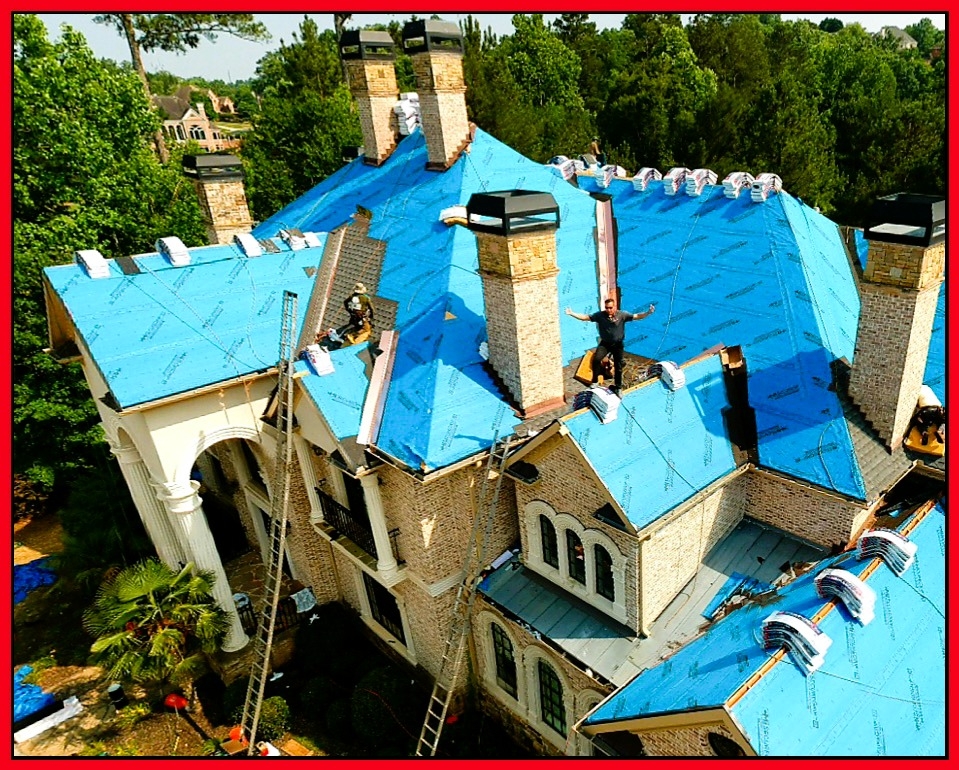
Effective documentation includes dated, geolocated photographs of every damaged slope; close-ups of individual hail strikes or wind-lifted shingles with a measurement reference; documentation of collateral damage to soft metals like gutters, vents, and flashing that corroborates a hail event; and a written scope of work itemized to match the adjuster's estimating software line items. Our guide to documenting storm damage for a successful claim details the full process.
For affluent metro Atlanta homes with complex rooflines, this documentation increasingly relies on technology. A drone roof inspection safely captures every slope, valley, and penetration at high resolution without ladder risk, and produces the kind of comprehensive visual record that supports an accurate scope. The result is fewer disputes over what was damaged and a settlement scope that reflects the real condition of the roof.
Document the damage before any temporary repairs or tarping alter the evidence. Once a roof is patched or weeks pass, proving the extent and cause of the original damage becomes far harder — and a thin evidence file invites a conservative settlement under either valuation method.
11. What to Do Before the Next Storm Season
The most valuable action on this entire topic is one you take while the sky is clear. Once a storm hits, the policy terms are locked for that loss. Before then, you have options.
Pull your declarations page and identify your roof's valuation method and any roof-specific endorsement, using the steps in section 7. If your roof settles at ACV — or is scheduled to drop to ACV at a future age — call your agent and ask what an RCV endorsement would cost. On many policies the additional premium is modest relative to the depreciation exposure on a single aged-roof claim. Ask specifically about the wind and hail deductible structure, since a percentage-based deductible can quietly raise your out-of-pocket cost by thousands even on an otherwise favorable policy.
It also helps to know your roof's true condition and remaining life before you negotiate coverage. A current professional assessment establishes the roof's age, material, and condition — useful both for the coverage conversation and as a baseline if you later need to prove a storm caused new damage. The same assessment surfaces whether a proactive roof replacement makes sense on your timeline rather than an emergency one, and steps to extend your roof's lifespan can keep it inside the RCV window longer.
12. How 1Source Supports Your Roof Insurance Claim
A roofing contractor does not adjust your claim — the insurer's adjuster does that, and only a licensed public adjuster can negotiate on your behalf. What an experienced contractor does is produce the documentation and the precisely scoped estimate that an accurate settlement depends on, and then deliver the completed work that releases recoverable depreciation on an RCV claim.
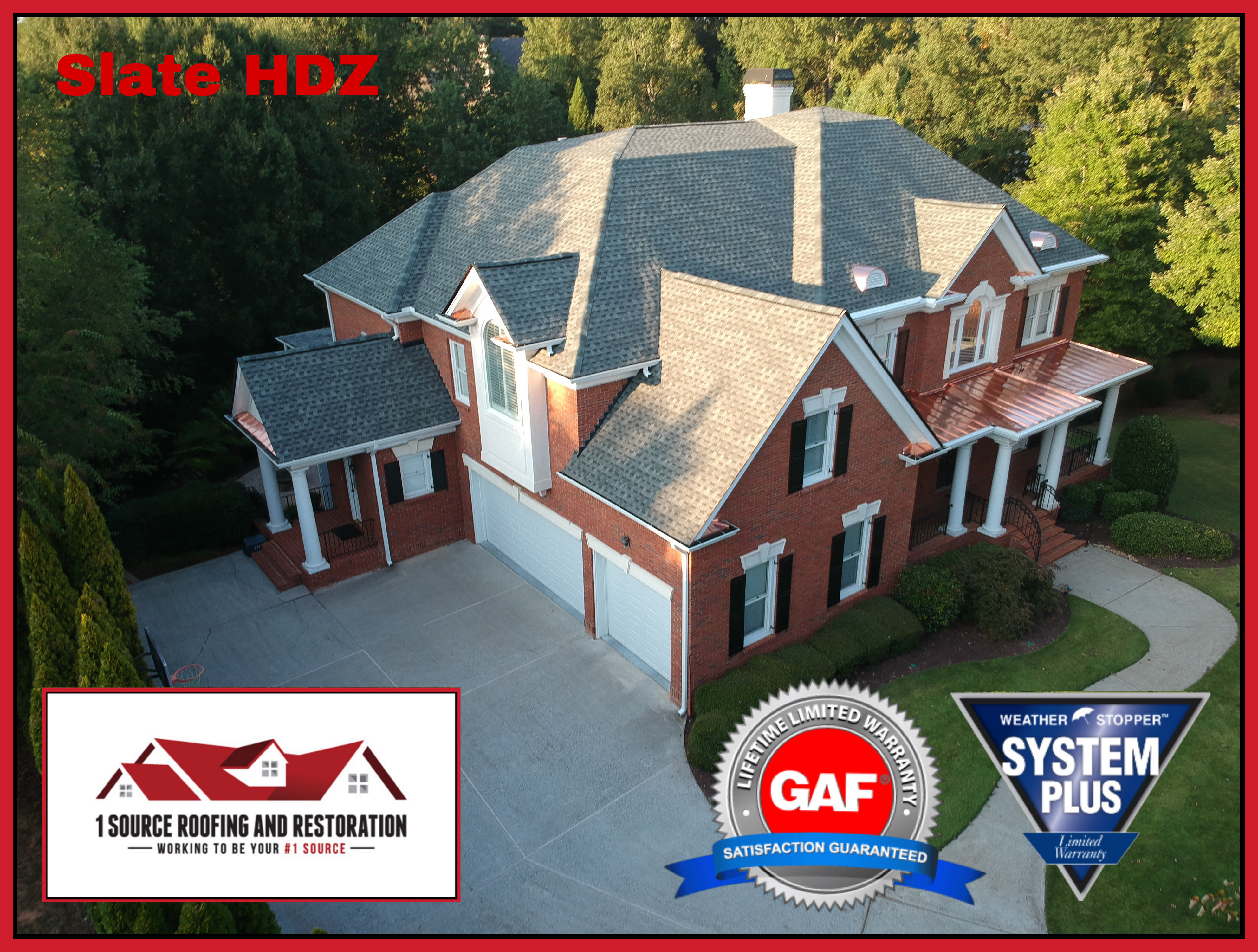
The 1Source process for a storm claim begins with a free, no-obligation inspection. Our team documents every damaged slope with dated photographs and, where appropriate, drone imagery, then prepares a written scope of work itemized to align with how insurance estimating software structures its line items. That alignment is what minimizes disputes over the scope and helps the adjuster approve an accurate settlement under whichever valuation method your policy uses.
From there, we help you understand the practical mechanics of your specific claim: whether you are on RCV or ACV, what the recoverable depreciation figure means if you are on RCV, and what completion and invoicing are required to collect it within the policy's time limit. We coordinate the replacement, provide the final paid invoice formatted for the depreciation release, and ensure the installation meets Georgia building code and manufacturer warranty requirements so the new roof is fully documented for any future claim or property sale.
For estate homes across Alpharetta, Buckhead, and Johns Creek, the standard is the same as the property investment warrants: thorough documentation, manufacturer-compliant installation, and complete paperwork that protects the value of your claim. The starting point is always the free inspection — because understanding what your policy will pay should come before any storm forces the question.
Schedule Your Free Storm Damage Inspection
Documented damage assessment, scope aligned to adjuster line items, and full support through the claim and depreciation recovery. Serving Atlanta, Sandy Springs, Roswell, and all of metro Atlanta.
(404) 277-1377 — No ObligationCertified by Industry-Leading Manufacturers