
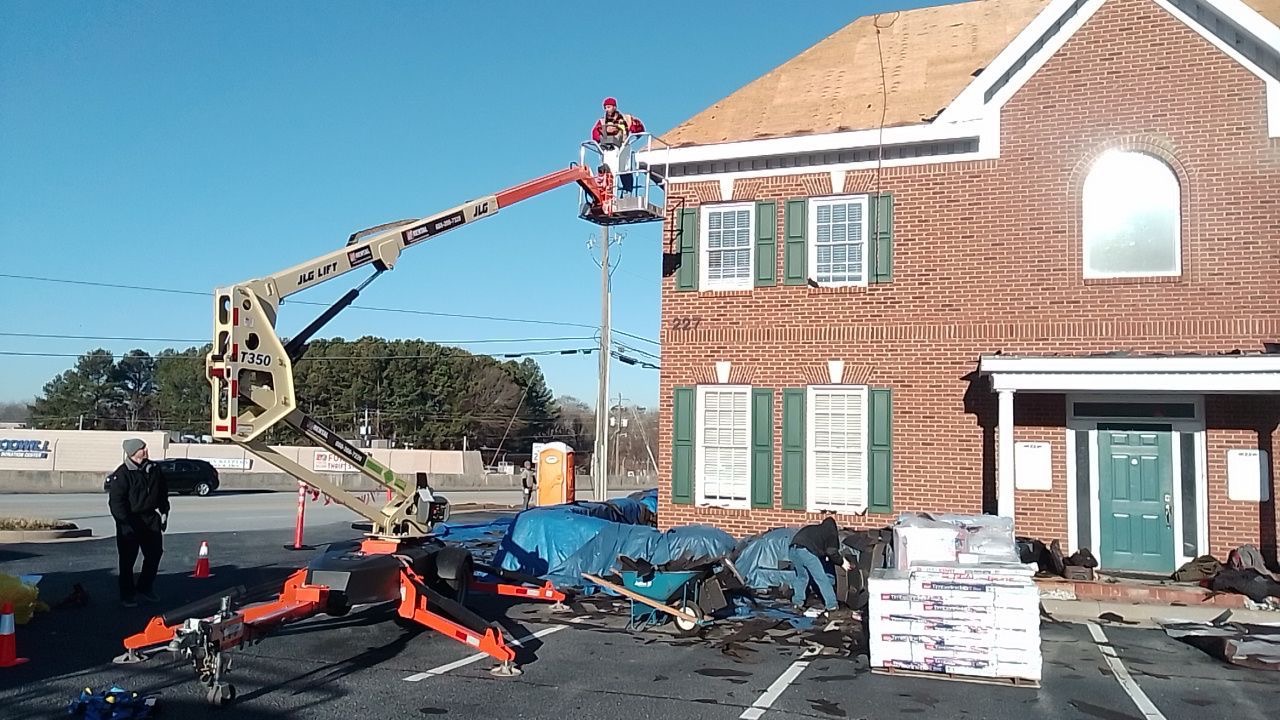
If you manage a commercial building anywhere in metro Atlanta, the flat roof over it is almost certainly a single-ply membrane — a wide, factory-made sheet of synthetic material seamed together on site. Three membranes dominate the market: TPO, EPDM, and PVC. They look broadly similar from the parking lot, but they behave very differently under Georgia's combination of brutal summer UV, persistent humidity, and the kind of sudden heavy rain that defines an Atlanta afternoon in July.
Choosing the right one is a decision that follows the building for two to three decades. Get it right and you have a roof that quietly does its job through every storm season. Get it wrong — by specifying the cheapest sheet for a building that needed chemical resistance, or a dark membrane on a building that bakes all summer — and you inherit recurring leaks, premature failure, and a replacement cycle that arrives a decade early.
This guide walks through how TPO, EPDM, and PVC actually differ in chemistry, seam construction, energy performance, chemical resistance, and real-world longevity in Georgia. The goal is not to crown a single winner. It is to give a property owner or facility manager enough grounding to specify the right membrane for a specific building — and to read a contractor's proposal with the right questions in hand.
1. What a Single-Ply Membrane Actually Is
Before comparing the three, it helps to understand what they have in common. A single-ply membrane is exactly what the name says: one layer of flexible synthetic sheeting, manufactured in a factory to a consistent thickness, then rolled out across the roof deck and seamed at the overlaps. This is fundamentally different from the older built-up and modified bitumen systems that layered felt, asphalt, and gravel into a thick assembly built up on site.
Membrane thickness is measured in mils — thousandths of an inch. Commercial single-ply comes in 45-mil, 60-mil, and 80-mil weights, with 60-mil being the practical standard for most Atlanta commercial buildings. The thicker the membrane, the more puncture resistance and the longer the realistic service life, which is why specifying thickness matters as much as choosing the material family.
All three membranes attach to the deck in one of three ways: mechanically fastened with plates and screws, fully adhered with bonding adhesive, or held down with ballast. The attachment method affects wind-uplift performance, which is not a trivial concern given the straight-line wind and occasional tornado activity that move through north Georgia each spring. For a deeper look at how the underlying assembly behaves, our overview of commercial roofing systems covers deck preparation and attachment in more detail.
2. TPO: The Reflective Workhorse
Thermoplastic polyolefin — TPO — emerged in the 1990s and has become the most widely installed commercial membrane in North America. It is a blend of polypropylene and ethylene-propylene rubber, typically manufactured in white, and reinforced with a polyester scrim for dimensional stability. Two qualities drive its popularity: it is a thermoplastic, meaning its seams can be hot-air welded into a fused bond, and its white surface reflects most of the solar energy that hits it.
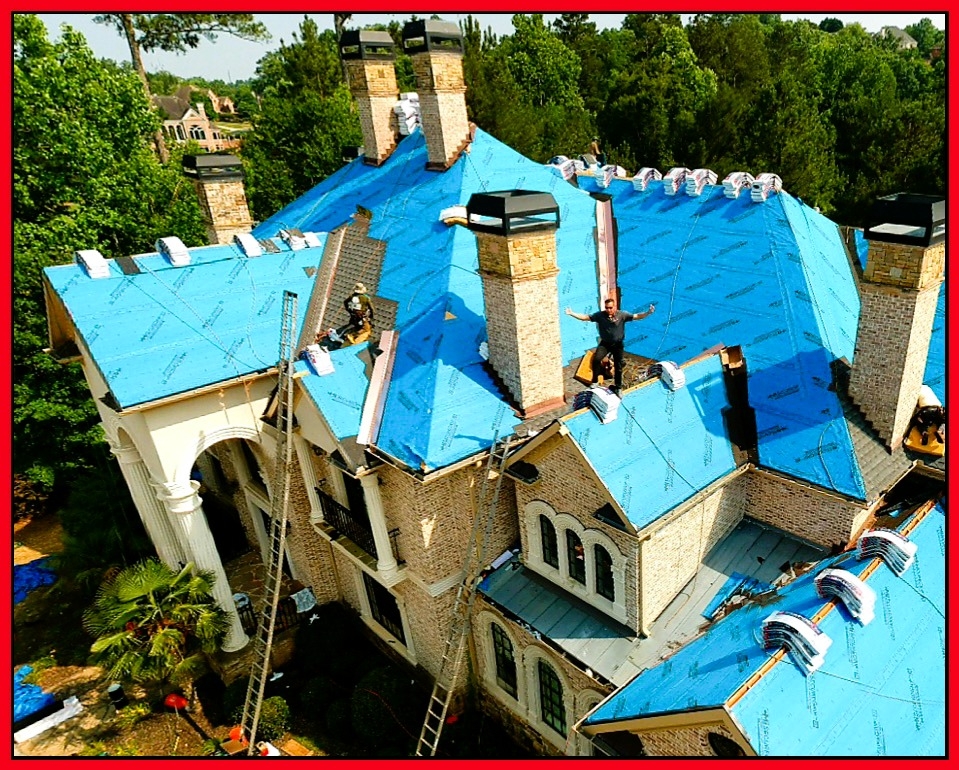
That reflectivity matters a great deal in Atlanta. A white TPO roof reflects 70 to 80 percent of incoming solar radiation, keeping the roof surface and the space below it markedly cooler through the long Georgia cooling season. For a single-story warehouse, retail box, or office building with a large roof footprint relative to its conditioned volume, that translates into real reductions in air-conditioning runtime from May through September. White TPO also satisfies cool-roof provisions in the Georgia energy code, a point worth confirming during design.
TPO's main historical weakness was inconsistency. Early formulations from some manufacturers weathered poorly, and the industry went through a period of accelerated weathering and seam failures before chemistry stabilized. Today's premium TPO is a far more reliable product, but the lesson stands: with TPO especially, the manufacturer and the membrane grade matter. TPO also resists grease and chemicals poorly compared to PVC, which makes it the wrong choice for buildings with rooftop kitchen exhaust.
3. EPDM: The Proven Rubber Veteran
Ethylene propylene diene monomer — EPDM — is the elder statesman of single-ply roofing, with a track record stretching back to the 1960s. It is a true synthetic rubber, supplied in wide black sheets, and it has weathered more decades of real-world exposure than any other single-ply membrane. That long history is its greatest selling point: when an EPDM roof is installed correctly, the industry knows precisely how it ages, because countless roofs have done exactly that for 25 to 30 years.
EPDM excels at flexibility and weathering. Rubber stays pliable across a wide temperature range, handles the thermal expansion and contraction of a roof deck without cracking, and shrugs off ozone and UV exposure. Black EPDM is also the simplest membrane to repair — a leak can be patched with rubber and adhesive by a crew familiar with the system, which keeps long-term maintenance straightforward.
The trade-offs are two. First, standard EPDM is black, and a black roof in Atlanta absorbs heat rather than reflecting it, pushing surface temperatures past 160 degrees on a summer afternoon and adding to cooling load. White and coated EPDM exist but cost more and give up some of the material's cost advantage. Second, EPDM seams are bonded with adhesive tape or liquid adhesive rather than heat-welded, so seam reliability depends heavily on surface preparation and workmanship. A clean, well-rolled EPDM seam performs for decades; a contaminated one is a future leak.
4. PVC: The Chemical-Resistant Specialist
Polyvinyl chloride — PVC — is the third major thermoplastic membrane, and in many respects it is the premium option. Like TPO, it is hot-air welded at the seams and available in reflective white. What sets PVC apart is its resistance to grease, oils, animal fats, and a broad range of industrial chemicals. This is not a marketing distinction; it is the deciding factor for a whole category of buildings.
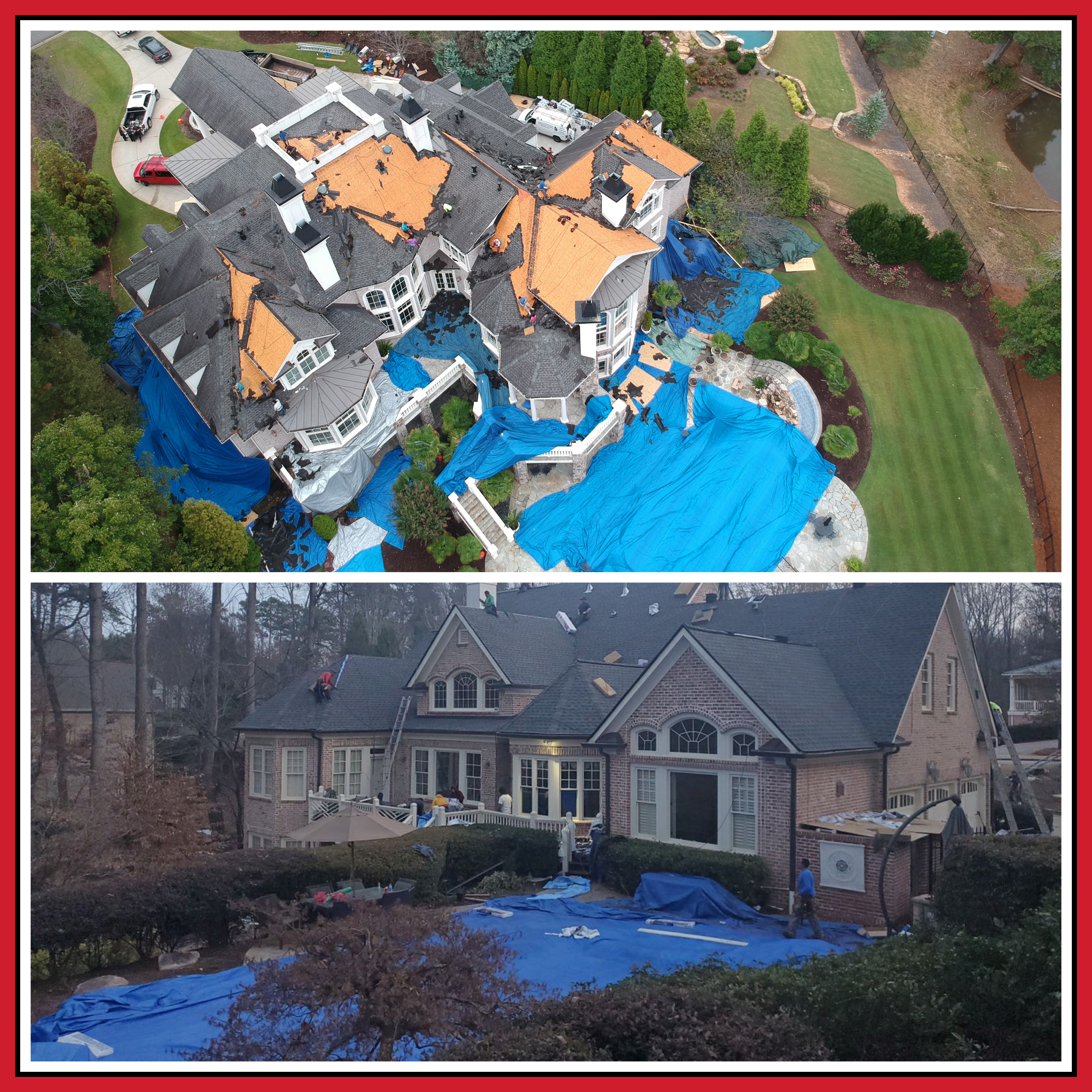
Any building in metro Atlanta with rooftop kitchen exhaust — restaurants, food service, grocery, hospitality — should be on PVC at least in the grease-exposure zones. Grease that lands on TPO or EPDM degrades the membrane and shortens its life dramatically; PVC holds up. The same logic applies to manufacturing facilities, pharmacies with chemical exhaust, and any building venting oils or solvents onto the roof. For these structures, PVC is not a luxury, it is the correct specification.
PVC also offers strong fire resistance and excellent welded-seam strength, and it shares TPO's reflective cooling benefit in its white formulation. The trade-offs are cost and flexibility. PVC carries the highest material cost of the three, and over a very long service life it can become less flexible than EPDM as plasticizers migrate out of the sheet. Modern PVC formulations have improved markedly on plasticizer retention, but the long-term flexibility edge still belongs to rubber. For most owners, the chemical resistance and welded seams justify the premium when the building's use calls for them.
5. Head-to-Head: How the Three Membranes Compare
The table below summarizes how TPO, EPDM, and PVC stack up across the factors that matter most for an Atlanta commercial building. Treat it as a starting framework — the right choice depends on the specific building, its rooftop equipment, and how long the owner intends to hold the property.
| Factor | TPO | EPDM | PVC |
|---|---|---|---|
| Material type | Thermoplastic polyolefin | Synthetic rubber | Thermoplastic vinyl |
| Standard color | White (reflective) | Black (white available) | White (reflective) |
| Seam method | Hot-air welded | Adhesive tape / glue | Hot-air welded |
| Typical lifespan | 20–25 yrs | 25–30 yrs | 25–30 yrs |
| Solar reflectivity | High | Low (black) | High |
| Chemical / grease resistance | Fair | Poor | Excellent |
| Relative material cost | Most economical | Moderate | Highest |
| Best suited for | Reflective cooling on large roofs | Long-proven durability; simple repairs | Grease and chemical exposure |
Notice that no column wins on every row. TPO leads on initial value and reflectivity, EPDM on proven longevity and reparability, PVC on chemical resistance and welded-seam strength. The discipline is matching the strengths to the building, not chasing a single "best" membrane in the abstract.
6. Seams: Where Flat Roofs Actually Fail
The single most important detail on any flat roof is the seam, because the seam is where two sheets meet and where water finds its way in if the bond is weak. Understanding how each membrane is joined explains a great deal about real-world performance.
TPO and PVC are both thermoplastics, which means heat softens them and they re-fuse when cooled. A trained crew runs a hot-air welder along the overlap, melting the two sheets together into a single continuous bond. Done correctly, that welded seam is stronger than the surrounding membrane — the sheet will tear before the seam pulls apart. This is the chief reason TPO and PVC have steadily taken market share from EPDM over the past two decades.
EPDM, being a thermoset rubber, cannot be melted. Its seams are joined with specialized seam tape or liquid adhesive that bonds chemically to the rubber surface. A clean, properly primed, well-rolled EPDM seam lasts for decades. But the bond depends entirely on surface prep, and a seam contaminated with dust or installed in marginal conditions becomes the roof's weak point. On any membrane, seam quality comes down to crew skill and equipment calibration, which is why we treat welder testing and seam probing as standard quality control on every commercial install. If you ever see staining on a ceiling below a flat roof, the seam is the first place we investigate during water damage assessment.
Membrane chemistry sets the ceiling; installation determines whether you reach it. A 60-mil membrane with properly welded, probe-tested seams outlasts a thinner membrane with hurried seams every time — regardless of whether you chose TPO, EPDM, or PVC. The crew matters as much as the material.
7. Energy Performance in Georgia's Climate
Atlanta's cooling season runs long and hard. From late spring into early fall, rooftop surface temperatures and air-conditioning load are linked directly, and the membrane color is the most visible lever a building owner controls. This is where the reflective thermoplastics pull ahead of black rubber.
A white TPO or PVC roof reflects the majority of incoming solar energy, so the roof surface stays close to ambient air temperature even in direct July sun. A black EPDM roof, by contrast, absorbs that energy and can climb past 160 degrees, radiating heat down through the deck and insulation into the conditioned space below. For a building with a large roof area relative to its floor space — the typical single-story commercial footprint in metro Atlanta — the difference in cooling cost across a season is meaningful, not marginal.
Reflective membranes also tie into Georgia energy code and utility incentives. Cool-roof requirements in the code favor high-reflectance surfaces, and a white TPO or PVC roof generally satisfies them without additional coatings. EPDM can be specified in white or field-coated to gain reflectivity, but that adds cost and erodes its price advantage. If energy performance is a priority and the building has no chemical-exposure concern, white TPO is frequently the most direct path to a reflective, code-compliant roof. Reflectivity is also one piece of the broader attic-and-roof energy picture we cover in our guide to cool roof coatings.
8. Lifespan, Maintenance, and the Cost-Per-Year View
The figure that matters most over a building's life is not the installed cost — it is the installed cost divided by years of reliable service. All three membranes, installed well and maintained, deliver decades. Where they diverge is in how they age and how easily they are kept in service.
EPDM has the longest documented service record and ages gracefully; its rubber stays flexible, and patches and repairs are straightforward. PVC, when its chemical resistance is being used, often justifies its higher upfront cost by simply not failing in environments that would destroy a cheaper membrane within a few years. TPO delivers strong value when reflectivity is the priority and the building has no grease exposure, with modern formulations closing the longevity gap on the older membranes.
Regardless of membrane, the variable that most determines whether a roof reaches its full lifespan is maintenance. Single-ply roofs need periodic inspection of seams, flashings, drains, and penetrations, and prompt attention to small issues before water gets under the membrane. A neglected roof of any chemistry fails early; a maintained one delivers its full service life and often beyond. Treating the roof as a managed asset rather than a forgotten surface is the single most cost-effective decision an owner makes, a principle that applies equally to a flat roof and to a steep-slope roof replacement.
Not Sure Which Membrane Your Building Needs?
Free on-site commercial roof assessment. We evaluate your deck, rooftop equipment, and exposure, then recommend the right membrane in writing.
Call (404) 277-13779. Installation and Attachment Methods
How a membrane attaches to the deck affects wind performance, installation speed, and cost. The three common methods apply across all three membrane families, and the right choice depends on the deck type, the building's wind exposure, and whether a tear-off or recover is planned.
Mechanically fastened systems use plates and screws driven into the deck along the seam lines. This is fast and economical and performs well against wind uplift when engineered correctly, but the fasteners create stress points and the membrane can flutter in high wind if the pattern is under-designed. Fully adhered systems bond the entire membrane to the substrate with adhesive, producing a smooth, flutter-free surface with excellent uplift resistance — the premium approach, and often the right one for north Georgia's straight-line wind events. Ballasted systems hold the membrane down with river rock or pavers; they are economical but heavy and less common on modern commercial work.
Tear-off versus recover is the other major installation decision. If the existing roof is a single sound, dry system, Georgia code generally permits installing a new membrane over a cover board without removing the old roof — a recover that saves significant tear-off and disposal cost. The prerequisite is a dry, structurally sound substrate, because trapping moisture under a new membrane causes deck rot and voids the warranty. We confirm substrate condition with a moisture survey before ever recommending a recover, and we document the deck the same way we would on any structural assessment.
10. Storm Resilience and Wind Uplift in North Georgia
Metro Atlanta sits in a region that sees severe thunderstorms, straight-line wind, hail, and the occasional tornado each spring. A flat roof's resilience comes down to two things: how well the membrane is attached against uplift, and how well it resists puncture from hail and wind-borne debris.
Wind uplift on a low-slope roof is concentrated at the perimeter and corners, where wind accelerating over the building edge creates suction. A properly engineered attachment pattern increases fastening density or adhesive coverage in those zones, and skipping that detail is a common cause of membrane peeling in a storm. Thicker membranes — 60-mil and 80-mil — also resist hail and debris puncture far better than thin sheets, which is a meaningful consideration given how regularly hail moves through north Georgia.
When a storm does damage a commercial roof, fast, documented response limits the interior loss. We handle emergency stabilization and the full claim process through our storm damage restoration team, and for the paperwork side, our insurance claims assistance ensures the membrane scope on the proposal matches what the adjuster documents. Aligning those two is the difference between a claim that pays the full repair and one that leaves the owner short.
A small flat-roof leak rarely stays small. Water that gets under a membrane spreads laterally across the deck and shows up far from its entry point — often after insulation is already saturated. Annual inspection and prompt seam repair are the lowest-cost protection a commercial roof can have.
11. How to Choose the Right Membrane for Your Building
The decision becomes straightforward once it is framed around the building rather than the brochure. A short series of questions resolves most cases.
- Does the roof carry kitchen or chemical exhaust? If yes, specify PVC at the exposure zones — the chemical resistance is non-negotiable for those buildings.
- Is the roof large relative to the conditioned space, with cooling cost a priority? A reflective white membrane — TPO or PVC — pays back over Georgia's long cooling season.
- Is proven, simple-to-repair longevity the top priority, and is energy cost secondary? EPDM's decades-long track record and easy repairs make it a sound, durable choice.
- How long will you hold the property? A long hold favors investing in a thicker membrane and a fully adhered system; a shorter horizon may shift the balance, though cutting membrane thickness to save upfront is usually a false economy.
- What does the deck and existing roof allow? A sound, dry, single existing system may permit a recover; a wet or multi-layered roof needs a tear-off.
For most metro Atlanta commercial buildings with no chemical exposure, the realistic choice narrows to white TPO for reflective value or EPDM for proven durability, with PVC reserved for buildings that genuinely need its chemical resistance. The right answer depends on the specifics, which is exactly why a physical assessment beats any rule of thumb. Our broader roofing resource library covers adjacent flat-roof topics in more depth.
12. Related Low-Slope Systems Worth Knowing
Single-ply membranes are not the only option for a low-slope roof, and a thorough evaluation considers the alternatives. Knowing where each fits helps an owner understand why a contractor recommends one path over another.
For complex roofs with many penetrations or transitions, a seamless option can outperform sheet goods because there are no seams to fail. Our guides to liquid-applied membranes and spray polyurethane foam roofing cover those seamless approaches, which suit roofs where the geometry makes welded sheets difficult to detail cleanly. For built-up and torch-applied systems still common on older Atlanta buildings, modified bitumen roofing remains a viable category with its own modern improvements.
And when an existing membrane is aging but the deck is sound, a restoration coating can extend service life by years without a full tear-off — a strategy we detail in our guide to commercial roof restoration coatings. For property managers weighing roof spend across a portfolio, our overview of roof asset management frames these choices as a long-term capital strategy rather than a series of emergencies.
13. What to Expect from a 1 Source Commercial Roof Assessment
A membrane recommendation is only as good as the assessment behind it. Our commercial process begins with a free on-site evaluation that documents the variables a brochure cannot: deck type and condition, existing roof layers, rooftop equipment and exhaust, drainage, perimeter detailing, and the building's wind exposure. We use a moisture survey where a recover is being considered, because trapping water under a new membrane is the most expensive mistake on a flat roof.
From that assessment we produce a written scope — membrane type and thickness, attachment method, insulation and cover board specification, flashing and termination details, drain and penetration treatment, and warranty terms — so you are comparing equivalent proposals rather than headline figures. A welded-seam membrane installed by a crew that probe-tests every seam is a different product from the same membrane installed in a hurry, and the written scope is where that difference becomes visible.
For commercial owners and facility managers across metro Atlanta — from Marietta and Sandy Springs to Alpharetta and the office corridors of Buckhead — the standard is the same: a documented assessment, an honest membrane recommendation matched to the building, and an installation that earns the warranty. You can learn more about our background on the about page or reach us directly through contact.
Schedule Your Free Commercial Roof Assessment
Deck evaluation, moisture survey, membrane recommendation, and written scope — before any commitment. Serving commercial buildings across Johns Creek, Roswell, and all of metro Atlanta.
(404) 277-1377 — No ObligationCertified by Industry-Leading Manufacturers