
The ceiling stain almost never sits below the hole. That single fact frustrates more Atlanta homeowners than any other when a roof starts to leak. You see a brown ring spreading across the dining room ceiling, you assume the failure is in the roof directly above it, and a repair gets aimed at the wrong spot. The water keeps coming. Meanwhile the actual entry point — a cracked pipe boot, a lifted shingle, a failed valley seam fifteen feet away — keeps feeding moisture into the roof assembly, where it travels downhill along the decking and insulation until it finally surfaces somewhere convenient enough to drip.
Infrared thermal imaging exists to solve exactly this problem. A thermal camera does not guess where water entered. It maps where water currently is, traces the saturated path back toward its origin, and shows the true extent of the damage rather than only the part that has reached your finished ceiling. For metro Atlanta homes — where summer humidity, sustained heat, and frequent wind-driven rain accelerate every kind of moisture intrusion — this diagnostic capability turns a guessing game into an evidence-based assessment.
This guide explains how thermal roof scanning works at the physics level, what it can and cannot reveal, when conditions allow an accurate scan, and how a properly conducted infrared assessment changes the outcome of both a repair and an insurance claim. Understanding the technology is what separates homeowners who chase leaks blindly from those who fix them once, precisely, and permanently.
1. The Physics: Why Wet Roofs Glow in Thermal Images
Infrared cameras do not see water. They see heat. Every surface above absolute zero emits infrared radiation, and a thermal camera translates the intensity of that radiation into a color map of surface temperatures. The reason this matters for roofing comes down to a property called thermal mass — the capacity of a material to absorb, store, and release heat.
Water has a remarkably high thermal mass. It absorbs solar energy slowly during the day and releases it slowly at night. Dry roofing materials — shingles, dry decking, dry insulation — have far lower thermal mass, so they heat up quickly under the Georgia sun and cool down quickly once it sets. When moisture saturates the insulation or decking beneath a roof surface, that wet area becomes a heat reservoir. It holds the day's accumulated warmth long after the surrounding dry materials have given theirs up to the cooling night air.
The result is a temperature contrast. In the hour or two after sunset, a dry roof surface might read 70 degrees while the area above trapped moisture reads 76 or 78 degrees — a difference invisible to the eye but glaringly obvious to a calibrated thermal sensor. The wet zones appear as warm islands against a cooling background, and their shape on the thermal image traces the exact boundary of the saturated material below. This is why a single small leak can produce a sprawling, irregular warm signature: the water has spread sideways through the assembly, and the thermal image reveals every inch of that spread.
The same principle works in reverse during the morning hours. As the sun heats the roof, wet areas warm more slowly than dry ones, appearing as cool zones instead of warm ones. Both windows are usable, but the post-sunset cooling period generally produces the cleanest contrast on residential asphalt systems, which is why most professional scans are scheduled then.
2. Why Roof Leaks Travel So Far From Their Source
To appreciate what infrared solves, you have to understand how water actually moves through a roof. The waterproofing surface — shingles, underlayment, flashing — is the first defense. When that surface is breached, water does not fall straight down. It follows the path of least resistance, which on a sloped roof means running along the top of the decking or the underlayment, downhill and sideways, until it finds a seam, a fastener penetration, or a low spot where it can soak into the decking or drip into the insulation cavity below.
A leak that enters at a failed chimney flashing on the ridge can travel ten or fifteen feet down the roof plane before it penetrates the deck. By the time it shows up on a ceiling, the homeowner is looking at a stain whose location bears no relationship to the failure point. Exploratory repairs aimed at the stain accomplish nothing, and the cycle of patch-and-fail repeats until someone finds the real source.
Georgia's climate intensifies this problem. Wind-driven rain during severe thunderstorm season forces water under shingle edges and into penetration details that would shed a vertical rain harmlessly. Sustained humidity slows the drying of any moisture that does get in, giving saturation time to spread before the next storm adds to it. Homes with complex rooflines — the multi-valley, multi-dormer traditionals common in Buckhead and Alpharetta — offer more pathways for hidden migration than a simple gable ever could.
This is the gap thermal imaging fills. By revealing the entire saturated footprint rather than just the exit point, an infrared scan lets an inspector reason backward up the slope to the likely entry — turning a diffuse symptom into a located cause.
3. Infrared Versus Traditional Leak Detection
A skilled roofer with decades of experience can find many leaks through visual inspection alone — reading the failure patterns in flashing, the telltale lift of wind-damaged shingles, the cracked rubber of an aging pipe boot. Visual inspection remains the foundation of any honest structural assessment. But it has hard limits, and those limits are exactly where infrared earns its place.
The comparison below outlines what each method does well and where it falls short. The professional standard is to use them together, not to choose between them.
| Method | What It Reveals | Key Limitation | Best Use |
|---|---|---|---|
| Visual Inspection | Surface failures — lifted shingles, cracked boots, failed flashing, worn sealant | Cannot see subsurface moisture or how far water has spread | First-pass diagnosis of obvious surface defects |
| Moisture Meter Probing | Confirms wet material at a specific tested point | Point-by-point only; can miss saturation between test spots | Verifying and quantifying a suspected wet area |
| Water Testing | Confirms whether a specific detail leaks under controlled flow | Slow, labor-intensive, tests one detail at a time | Isolating a single stubborn penetration |
| Infrared Thermal Imaging | The full footprint of trapped moisture and its migration path | Needs the right conditions; sees the symptom, not the literal hole | Mapping hidden saturation across an entire roof plane |
Notice the pattern. Visual and water-test methods are precise but narrow — they confirm one thing at one location. Infrared is broad — it surveys an entire roof and shows where moisture lives, then directs the precise methods to the spots that matter. A thermal scan that flags three warm anomalies tells the inspector exactly where to probe with a moisture meter for confirmation. The technologies reinforce one another.
Infrared shows the symptom; experience finds the cause. A thermal scan maps where water is sitting in the roof assembly. A qualified inspector then reasons up the slope to locate the entry point and verifies it by hand. The camera and the craftsman work together — neither replaces the other.
4. The Conditions a Reliable Scan Requires
Thermal imaging is powerful, but it is conditional. A scan run at the wrong time of day, on a wet surface, or in high wind produces a confusing image that can mislead rather than clarify. Knowing the conditions that make a scan trustworthy is part of knowing whether the diagnosis you receive is sound.
Surface must be dry. Standing water or recent rain on the surface masks the subsurface temperature differences the camera is hunting for. After a storm, the right approach is to scan once the surface has dried — which still captures the trapped subsurface moisture while eliminating surface interference.
Sufficient temperature swing. The roof needs to have absorbed solar heat and then begun to cool. A heavily overcast day that never let the roof warm produces weak contrast. Clear Georgia afternoons followed by cooling evenings — typical of spring and fall — create the differential the method depends on.
Low wind. Wind strips heat off the surface evenly and erases the subtle differences between wet and dry zones. Calm conditions preserve the contrast. Gusty post-frontal weather is poor for scanning even if the sky is clear.
Timing the cooling curve. The sweet spot is the window after sunset when dry materials have shed their heat but wet materials are still releasing theirs. Scan too early and everything still reads warm; scan too late and even the wet zones have cooled toward equilibrium. An experienced operator reads the cooling curve and works within it.
5. Drone-Mounted Thermal Imaging for Complex Roofs
Mounting a thermal sensor on a drone transformed roof diagnostics. A handheld camera operated from the roof surface covers one plane at a time and puts a technician on a steep, potentially compromised structure. A drone-mounted thermal payload flies the entire roof in minutes, captures every plane from a consistent altitude and angle, and stitches the imagery into a single moisture map of the whole structure — all without anyone setting foot on questionable decking.
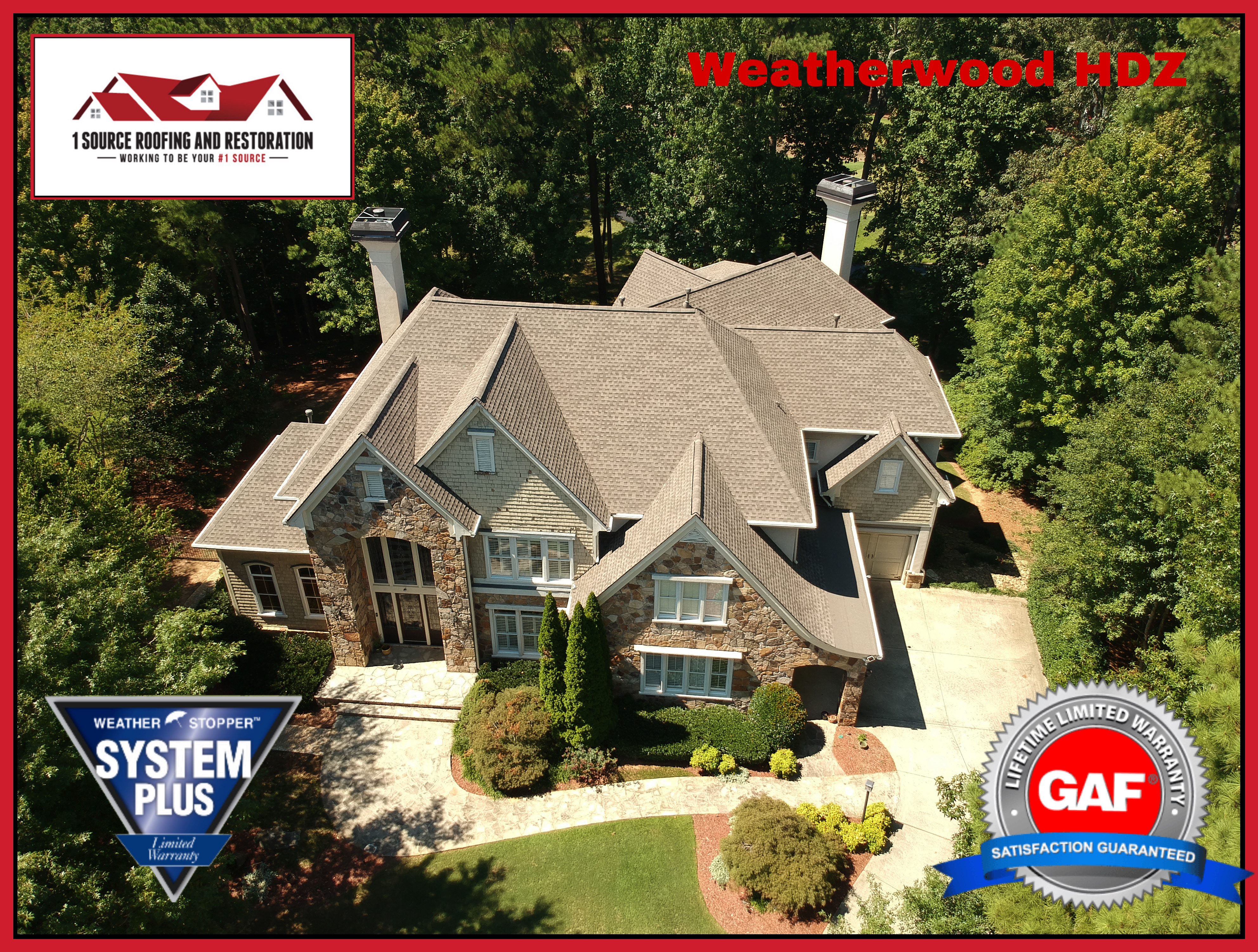
For the estate-scale homes throughout metro Atlanta — steep pitches, multiple intersecting planes, dormers, and turrets — aerial thermal imaging is not merely convenient, it is the only way to scan the full roof consistently and safely. The drone holds a uniform standoff distance, so every section is captured under comparable conditions, which makes the resulting thermal map directly comparable plane to plane. A handheld scan from varying angles and distances introduces inconsistencies that aerial work eliminates.
The combination of visible-light and thermal cameras on a single flight is especially valuable. The visible imagery documents surface condition — shingle wear, flashing detail, debris — while the thermal layer reveals what lies beneath. Reviewed side by side, they let an inspector correlate a warm subsurface anomaly with a specific surface defect directly above or upslope of it. To understand how the aerial inspection workflow fits together, our guide on how drone roof inspections work walks through the full process from flight planning to reporting.
6. Where Infrared Performs Best: Low-Slope and Commercial Roofs
Thermal imaging delivers its most dramatic results on low-slope and flat commercial roofs, and the reason is structural. Built-up, modified bitumen, TPO, and EPDM systems are assembled over thick layers of insulation board. When a membrane seam or penetration fails, water saturates that insulation and stays there — flat roofs do not shed trapped water the way a steep slope does. The saturated insulation becomes a large, well-defined thermal reservoir, and the resulting infrared image is often a textbook example of the technique: crisp warm patches whose edges trace the wet insulation board almost perfectly.
For property managers responsible for commercial roofing assets, this precision is financially significant. A flat roof rarely needs full replacement when only a fraction is wet. Infrared mapping identifies exactly which insulation sections are saturated, allowing a targeted cut-and-replace of the wet zones while preserving the dry majority of the roof. The difference between replacing 1,200 square feet of wet insulation and replacing an entire 20,000 square foot roof is enormous — and only a thermal scan reveals which option the roof actually requires.
This same diagnostic logic underpins smart asset-management programs that track roof condition over time rather than reacting to emergencies. Periodic thermal scanning establishes a moisture baseline and catches saturation early, while it is still a contained repair. Our overview of commercial roof restoration coatings explains how a sound, dry substrate — confirmed by infrared — becomes the foundation for extending roof life without a full tear-off.
Suspect a Hidden Leak? Find It Before It Spreads
Free on-site assessment with thermal-imaging diagnostics where conditions warrant. Our inspectors map the moisture, locate the source, and present a written scope before any commitment.
Call (404) 277-13777. Thermal Imaging on Residential Asphalt Roofs
Sloped asphalt shingle roofs — the overwhelming majority of metro Atlanta homes — present a more nuanced thermal target than flat commercial systems, but the technology remains valuable when applied correctly. The slope sheds water faster, so saturated zones can be smaller and more transient than on a flat roof, which makes timing and operator skill more important. A scan run in the proper post-sunset window on a dry, calm evening still reveals the warm signatures of wet decking and saturated attic insulation with clarity.
Some of the most useful residential thermal work happens from inside the attic rather than over the roof. Scanning the underside of the decking from within the attic can reveal active or recent moisture intrusion as distinct cool or warm patches on the deck and rafters, often correlating directly with the warm zones seen from above. This two-sided approach — exterior aerial thermal plus interior attic thermal — brackets the moisture from both faces of the assembly and produces the most confident diagnosis.
The attic is also where the roof's health connects to the rest of the home's performance. Poor ventilation traps humid air against the deck, and the resulting condensation can mimic or compound a true leak. Distinguishing a ventilation-driven moisture problem from a roof penetration leak is exactly the kind of question thermal imaging, read by an experienced inspector, can answer. Our article on why your attic and roof function as one system explores how ventilation, insulation, and the roof surface interact to determine where moisture ends up.
8. The Hidden Leak Sources Infrared Helps Locate
Thermal imaging does not name the defect — it points to the wet area and lets the inspector identify the failure. Knowing the usual suspects upslope of a saturated zone speeds that identification considerably. A handful of details account for the majority of residential roof leaks in metro Atlanta.
Pipe boots are the single most common entry point. The rubber collar that seals around plumbing vents degrades under Georgia UV exposure, cracks, and admits water that then runs down the deck. Because the boot sits mid-slope, the resulting interior stain is almost always well below it. Our guide to lifetime pipe boots explains why upgrading this one detail eliminates the most frequent leak on the roof.
Flashing transitions — where the roof meets a wall, chimney, or dormer — fail when the metal corrodes, the sealant ages, or the original installation was wrong. Kickout flashing at the bottom of a roof-to-wall junction is notoriously omitted, channeling water behind the siding instead of into the gutter. The wall rot that follows is hidden until it is severe, and thermal imaging at the junction often catches it first. See our breakdowns of kickout flashing and step versus reglet flashing for how these details should be built.
Valleys concentrate the runoff of multiple roof planes into a single channel, making them high-volume failure points when the valley material or underlayment is compromised. The method used to build a valley determines how well it handles that volume, as our comparison of open, closed, and woven valleys details.
Underlayment failure is the quiet one. When the surface shingles let water past, the underlayment is the last line of defense. An aged, brittle felt that has lost its integrity allows water straight to the deck, and thermal imaging frequently reveals broad saturation traceable to underlayment that should have been replaced. The shift to better materials, covered in our piece on synthetic underlayment versus felt, exists precisely to reduce these failures.
9. Thermal Documentation for Storm Damage Claims
Metro Atlanta's severe-weather season produces wind and hail events that damage roofs in ways the surface does not always advertise. Hail can bruise a shingle and fracture its mat without dislodging granules visibly; wind can lift and reseat shingles, breaking the seal and admitting water at the next storm. The interior consequence — trapped moisture — may not show as a ceiling stain for weeks. Thermal imaging captures that subsurface moisture as objective, dated evidence.
This matters enormously in the claims process. Adjusters work from documentation, and a thermal image overlaid on a roof diagram, showing the measured extent of saturation, supports a repair scope that matches the true condition of the roof. When visible surface damage understates the subsurface spread, infrared documentation prevents a claim from being settled for less than the actual damage warrants. Pairing thermal evidence with a thorough damage report is a core part of effective insurance claims assistance.
The documentation discipline matters as much as the imaging itself. A scan is most persuasive when it is dated, georeferenced to the roof, and accompanied by corresponding visible-light photography and moisture-meter confirmation. Our guide to documenting storm damage for a successful claim details how to assemble evidence that adjusters accept, and the broader insurance claims resource hub covers how coverage structures affect what a claim ultimately pays.
Trapped moisture does not pause while you wait. Saturated decking loses structural integrity, attic insulation loses R-value, and a contained repair grows into a deck-replacement project across a single humid Georgia season. The earlier a scan locates the moisture, the smaller the corrective scope remains.
10. The Honest Limitations of Thermal Imaging
A diagnostic tool oversold becomes a liability. Thermal imaging is genuinely powerful, but a responsible roofer is clear about what it cannot do. Understanding the limits is what makes the results trustworthy.
Infrared sees temperature, not water. It detects the heat signature moisture creates, which means anything else that alters surface temperature — a shaded section, a reflective vent, residual warmth from an HVAC unit, debris piles — can produce an anomaly that is not moisture. Reading a thermal image correctly requires experience to separate true wet signatures from thermal noise. An untrained operator can misread reflections and shadows as leaks, generating false alarms that erode trust in the method.
The scan is also a snapshot of a moment. A roof that has been dry for weeks may show no anomalies even though a seasonal leak will reappear with the next driving rain. This is why thermal imaging supplements rather than replaces a comprehensive physical inspection — the camera confirms current moisture, while a hands-on assessment of flashing, fasteners, and material condition predicts future failures the camera cannot yet see.
Finally, the technique demands the right conditions, as covered earlier. A scan forced into poor conditions to meet a schedule produces an unreliable image. The professional answer is to wait for a usable window rather than deliver a confident-looking but meaningless result. At 1Source, thermal imaging is deployed as one instrument in a full diagnostic process — never as a gimmick to manufacture findings.
11. How 1Source Integrates Thermal Imaging Into an Assessment
Understanding how a professional diagnostic process actually unfolds helps Atlanta homeowners recognize the difference between a thorough assessment and a surface-level look that misses what matters. The 1Source approach treats thermal imaging as one layer within a complete evaluation, not a standalone product.
The process begins with a free on-site assessment. Our inspector first conducts the hands-on examination that any sound diagnosis requires — checking flashing, penetrations, shingle condition, and the attic interior for the visible evidence that experience reads directly. Where the symptoms point to hidden moisture, and where conditions allow, thermal imaging is brought in to map the subsurface saturation that the visual inspection cannot reach. The two layers are correlated: a warm thermal signature is matched to the upslope surface defect most likely feeding it, then confirmed with a moisture meter.
From that evidence, we prepare a written scope of work that documents the located source, the mapped extent of the moisture, and the precise corrective work required — not a vague "we found a leak." When the damage is contained, the scope targets only the failed area, sparing the sound majority of the roof. When the scan reveals saturation broad enough to compromise the decking or warrant a larger correction, the written assessment documents that finding with the thermal and visible imagery that supports it, so a repair-versus-replace decision rests on evidence rather than guesswork.
For estate homes throughout Sandy Springs, Johns Creek, and the premium neighborhoods of metro Atlanta, this evidence-based standard protects both the structure and the finished interiors a homeowner has invested in. Precise location means targeted repair, and targeted repair means no exploratory demolition of ceilings and walls to chase a leak that thermal imaging already found. The free assessment starts the process before any financial commitment — because you should know exactly what is wrong, and where, before deciding what to do about it. Learn more about why homeowners choose 1Source or explore our full range of roofing services.
Schedule Your Free Roof Diagnostic Assessment
Hands-on inspection, thermal-imaging moisture mapping where conditions allow, and a written scope that pinpoints the source — before any commitment. Serving Atlanta, Buckhead, Roswell, and all of metro Atlanta.
(404) 277-1377 — No ObligationCertified by Industry-Leading Manufacturers