A commercial roof rarely fails all at once. It weathers. The membrane chalks and shrinks, seams pull at the corners, flashing details lose their bond, and the surface that once shed water cleanly starts to hold puddles longer after a storm. For a property owner watching maintenance line items climb, the assumption is that the next step is a full tear-off. Often it is not. A roof that is aging on the surface but still sound underneath is exactly the kind of asset that a restoration coating system is built to extend.
Restoration coatings have moved from a niche product to a mainstream strategy on flat and low-slope commercial roofs across metro Atlanta. The reason is straightforward: a coating renews the waterproofing surface and adds a reflective, energy-saving layer for a fraction of what removing and replacing the existing roof costs — and it does so without the disposal fees, business interruption, and weather exposure that come with a tear-off. For TPO, EPDM, metal, modified bitumen, and built-up roofs that have life left in the structure, coating is frequently the smarter capital decision.
This guide explains what restoration coatings actually do, the chemistries available and how they perform in Georgia's heat and humidity, how the application process works, when coating is the right call and when it is not, and how the economics compare to replacement. By the end you will understand whether your building is a candidate and what a properly scoped coating project should include.
1. What a Restoration Coating Actually Does
A roof restoration coating is a fluid-applied membrane. It arrives as a liquid, is applied over the cleaned and prepared existing roof, and cures into a seamless, monolithic waterproofing layer that bonds to the surface beneath it. Unlike a patch or a single repair, a coating treats the entire roof as one continuous system — there are no laps, no fasteners penetrating the surface, and no seams for water to find. On a roof whose original failure points are its seams and detail work, eliminating those seams is the entire value proposition.
Three things happen when a coating is applied correctly. First, the existing membrane is encapsulated and protected from the ultraviolet exposure and thermal cycling that were degrading it. Second, every seam, fastener head, and flashing transition is sealed under a continuous film reinforced with fabric at the stress points. Third, the surface becomes highly reflective, which lowers the roof's operating temperature and slows the chemical breakdown of everything beneath it. The roof stops aging at the rate it was aging, and the clock effectively resets.
What a coating does not do is rebuild a roof that has already failed structurally. It is a restoration of a sound assembly, not a resurrection of a wet, rotted one. That distinction governs the entire decision, and it is the first thing a qualified commercial roofing contractor establishes before recommending coating over replacement.
2. How Coatings Extend Roof Life and Defer Replacement
The economic logic of coating rests on a single idea: replacement should happen when the structure of the roof fails, not when the surface wears out. Most commercial roofs reach the end of their stated service life because the top layer has degraded — the membrane has chalked, the granules have washed off the modified bitumen, the metal seams have opened. The deck, the insulation, and the structural assembly underneath are frequently still in good condition. Tearing all of that out to replace a worn surface discards good material along with the bad.
A coating renews the surface in place and adds a measured number of years — typically 10 to 20 depending on the system and the mil thickness applied. When that period ends, the roof has not returned to a failed state. It can be cleaned and recoated with a fresh topcoat, which renews the warranty for another cycle. This renewability is what separates coating from every other roofing strategy. A tear-off resets the clock once, at full cost, every 20 to 25 years. A coating program resets the clock repeatedly, at roughly a third of the cost each time, indefinitely as long as the structure stays sound.
For a property owner or asset manager, this changes the capital planning conversation entirely. Instead of facing one large, disruptive replacement event, the roof becomes a maintainable asset with predictable, smaller reinvestment cycles. That predictability is the foundation of a real roof asset management program, where the goal is to maximize the years of service extracted from every dollar invested in the building envelope.
3. The Major Coating Chemistries and How They Perform
Not all coatings are interchangeable. The right chemistry depends on the existing roof type, the local climate, and how the roof drains. In metro Atlanta — with 50 inches of annual rainfall, prolonged summer heat, high humidity, and roofs that frequently hold ponding water after storms — moisture resistance and reflectivity matter most. The four families below cover the systems that perform here.
| Coating Type | Best Suited For | Ponding Water | Reflectivity | Typical Warranty |
|---|---|---|---|---|
| Silicone | Flat roofs that pond; metal; single-ply membranes | Excellent — does not break down in standing water | High (white) | 15–20 yrs |
| Acrylic (water-based) | Sloped roofs that drain well; metal; modified bitumen | Limited — softens under prolonged ponding | Very high (bright white) | 10–15 yrs |
| Polyurethane | High-traffic roofs; areas needing impact resistance | Good | Moderate to high | 10–15 yrs |
| Asphaltic / aluminum | Built-up roofs; modified bitumen; cost-effective renewals | Good | Moderate (aluminum pigment) | 7–12 yrs |
Silicone is the dominant choice for flat Atlanta roofs because it is essentially immune to ponding water — it will not re-emulsify or break down where water sits, which is the failure mode that ends most acrylic systems on dead-flat roofs. Silicone also holds its reflectivity well and resists the UV degradation that drives the whole restoration in the first place. Its tradeoffs are a slicker surface when wet and the fact that recoating requires a silicone-compatible product. For roofs that hold water, it is the professional default.
Acrylic coatings deliver the highest reflectivity of any common system, are economical, and are easy to apply and recoat. They perform beautifully on sloped metal and well-draining membranes where water moves off quickly. On roofs that pond, acrylic is the wrong choice — sustained standing water softens the film over time. Polyurethane brings superior abrasion and impact resistance, making it the right topcoat where foot traffic, equipment service, or hail exposure are concerns. Asphaltic and aluminum-pigmented coatings remain a sound, lower-cost renewal for built-up and modified bitumen roofs, restoring waterproofing and adding modest reflectivity where a full reflective white system is not required.
4. Reflectivity and Energy Savings in Georgia's Climate
The reflective performance of a coating is not a marketing feature in Atlanta — it is a measurable line item on the building's utility bills. An aged dark EPDM membrane or a weathered built-up roof reflects somewhere between 5 and 30 percent of incoming solar radiation; the rest becomes heat. On a July afternoon that surface can reach 160 to 180 degrees, and that heat radiates into the building all day and well into the evening. A bright white reflective coating flips that equation, reflecting 80 to 87 percent of the sun's energy and keeping the surface far closer to ambient temperature.
On a single-story building where conditioned space sits directly under the roof, that temperature difference translates into a 10 to 20 percent reduction in summer cooling costs, with the largest savings on buildings that run high cooling loads or have HVAC equipment that is already near capacity. The reduced heat gain does double duty: it lowers the load the air conditioning has to fight, and it reduces the runtime hours on rooftop units, which extends their service life. For a warehouse, a retail box, or a multi-tenant flat-roof building, the energy effect alone can recover a meaningful share of the coating's cost over its warranty period.
There is a code dimension as well. Georgia's energy code includes cool-roof provisions for qualifying low-slope roofs in the state's climate zone, and a reflective coating is a recognized way to meet them on an existing roof without a full replacement. The same physics that lowers the cooling bill is what these provisions are designed to encourage. Property owners weighing reflectivity should read it alongside our deeper treatment of cool roof coatings and the available cool roof rebates and energy code incentives, since some utility and efficiency programs offset part of the project cost.
A coating is only as good as the roof under it. Before any product touches your roof, the assembly must be verified dry and sound. A moisture survey — infrared scan or core samples — tells us whether wet insulation is hiding under the membrane. Coating over trapped moisture seals the problem in; identifying and replacing it first is what makes the restoration last.
5. Is Your Roof a Coating Candidate? The Assessment
The single most important step in any coating project happens before a coating is ever selected: determining whether the roof should be coated at all. A coating restores a weathered but structurally sound roof. Applied over a roof that is already failing — one with saturated insulation, widespread deck rot, or extensive membrane separation — it traps that moisture and the underlying deterioration continues out of sight until it surfaces as a structural problem far more expensive than the coating that masked it.
The assessment centers on moisture. We perform an infrared scan, which reveals the warm, wet sections of the assembly after sunset as they release retained heat, or we pull core samples to inspect the insulation and deck directly. The findings drive the recommendation. A roof with isolated wet areas can have those sections cut out, dried, and rebuilt before coating proceeds over the sound remainder. A roof where moisture has compromised more than roughly a quarter of the surface is generally a replacement candidate, not a coating candidate — the cost of remediating that much wet assembly approaches the cost of starting over.
Beyond moisture, the inspection evaluates the existing membrane's adhesion and remaining integrity, the condition of seams and flashing details, the drainage pattern and any chronic ponding, and the structural soundness of the deck. The roof type matters too: a sound TPO, EPDM, metal, modified bitumen, or built-up roof are all coatable with the right chemistry, and our breakdown of TPO, EPDM, and PVC membranes explains how each ages. This is the same discipline a thorough structural assessment brings to any major building-envelope decision — verify the substrate before investing in the surface.
6. The Coating Application Process, Step by Step
A coating project succeeds or fails on surface preparation. The coating is the easy part; the preparation is where experienced crews separate from inexperienced ones. The sequence below reflects how a properly scoped restoration proceeds on an Atlanta commercial roof.
Cleaning. The roof is power-washed to remove dirt, biological growth, chalk, and loose material, then allowed to dry completely. Adhesion depends entirely on a clean substrate — coating bonds to the roof, not to the grime on top of it. Repairs. Wet insulation identified in the moisture survey is cut out and replaced. Open seams, blisters, and damaged flashings are repaired. Fasteners that have backed out are reset. Priming. Many substrates, particularly metal and certain single-plies, require a primer to ensure the topcoat bonds permanently rather than peeling within a season.
Detail and seam reinforcement. This is the heart of the restoration. Every seam, every penetration, every flashing transition, and every fastener head is treated with a base coat embedded with reinforcing polyester fabric, creating a thick, monolithic, crack-resistant membrane at exactly the points where the original roof was failing. Field application. The base coat and topcoat are applied across the entire field by spray or roller to the manufacturer's specified mil thickness — the most important number in the entire project, since warranty and longevity are both tied directly to it. Skimping on mil thickness to stretch material is the most common way a coating job is quietly compromised.
Inspection and warranty. Wet-film and dry-film thickness are verified, the work is inspected against the manufacturer's specification, and the system is registered for its warranty. Because there is no tear-off, the entire process keeps the building occupied and operating, with work confined to dry-weather windows. There is no point at which the interior is exposed to weather, which is one of the quiet advantages a coating holds over a phased replacement.
Find Out If Your Roof Can Be Restored
Free commercial roof assessment with a moisture survey. We tell you honestly whether coating extends your roof or whether replacement is the right call.
Call (404) 277-13777. Coating Versus Replacement: When Each Makes Sense
The honest answer to "should I coat or replace?" is that it depends on the condition of the assembly and the owner's horizon for the building. Neither option is universally correct, and a contractor who recommends the same answer for every roof is selling a product rather than solving a problem. The comparison below frames the decision the way we present it during an assessment.
Coating is the right call when the deck and insulation are sound and dry, the membrane is weathered but adhered, ponding is manageable or addressable, and the owner wants to extend the roof's life and lower energy costs without the disruption and capital outlay of a tear-off. It is also the right call when business operations cannot tolerate the noise, debris, and exposure of a replacement, or when the building is held for income and the owner wants predictable, smaller reinvestment cycles rather than one large event.
Replacement is the right call when moisture has compromised a large share of the assembly, the deck is structurally deteriorated, the roof has reached the point where remediation costs approach the cost of starting over, or the existing system has design flaws — chronic drainage failure, inadequate slope — that a coating cannot correct. A roof that leaks because water has nowhere to go will keep leaking with a beautiful new coating on top of it. In those cases the work belongs in a full roof replacement, and pretending otherwise only delays the inevitable at added expense.
There is a middle path worth naming: targeted repair followed by coating. Many roofs are not failed but have specific problems — a section of wet insulation, a run of open seams, failed flashing at a parapet. Addressing those issues through focused roof repair first, then coating the restored assembly, captures the best of both approaches. The repair fixes what is broken; the coating protects the whole roof and renews its service life.
8. The Economics: Cost, Tax Treatment, and Return
A restoration coating typically runs 40 to 60 percent of the cost of removing and replacing the same roof. That figure understates the full advantage, because the comparison also avoids tear-off labor, dumpster and disposal fees, the cost of protecting building contents during exposure, and the business interruption that a replacement imposes on tenants and operations. When those soft costs are included, the gap between coating and replacement on a candidate roof is often wider than the material numbers alone suggest.
The tax treatment deserves a direct conversation with your accountant, because it can be the deciding factor. A roof coating is frequently classified as a repair or maintenance expense, which can be deducted in full in the year the work is performed. A full roof replacement is generally a capital improvement that must be depreciated over a long recovery period — meaning the deduction is spread thin across decades rather than realized immediately. For a profitable business, the difference in present-value tax benefit between an immediate deduction and a multi-decade depreciation schedule is substantial.
Stacked together, the return on a coating comes from four sources: the lower upfront outlay versus replacement, the deferral of the next replacement cycle, the ongoing energy savings from reflectivity, and the favorable tax treatment. For a metro Atlanta property owner running the numbers, a coating on a sound roof frequently pays for itself well inside its warranty period. The framing should never be about minimizing what you spend — it is about maximizing the years of protected, energy-efficient service you extract from a building asset you intend to hold.
9. Maintenance and Warranty Renewal Over Time
A coating is not a finish-and-forget product, and treating it that way shortens its life. The systems that reach and exceed their warranty terms are the ones that receive basic, scheduled attention. The maintenance burden is light — far lighter than what an aging uncoated roof demands — but it is real, and it is what protects the warranty.
Twice-yearly inspections, ideally in spring after the storm season and in fall before winter, catch the small issues before they become claims: debris clogging drains, a flashing detail that needs touch-up, mechanical damage from an HVAC service crew, a section of ponding that has worsened. Keeping drains and scuppers clear is the highest-value maintenance task on any flat roof, coated or not — standing water is the enemy of every roofing system, and a coating buys margin against it but is not a license to ignore drainage.
The defining advantage of a coating appears as the warranty nears its end. Rather than facing a tear-off, the roof is cleaned and given a fresh topcoat — a recoat — which renews the warranty for another full term at a fraction of replacement cost. A roof on a disciplined coating and recoat program can deliver decades of continuous service from a single original assembly, with each renewal costing a small share of what one replacement would. This is the long game that makes coating the foundation of a serious building-envelope strategy, and it pairs naturally with proactive measures like drainage and gutter maintenance that protect the roof system from overflow damage.
Every season a coatable roof waits, it moves closer to the replacement-only line. Weathered membranes do not hold steady — they degrade, seams open, and water finds the assembly. A roof that is a strong coating candidate today can become a tear-off in two or three more Atlanta storm seasons. The window to restore rather than replace is open now and narrows with time.
10. Coating Common Atlanta Commercial Roof Types
Different membranes age differently and require different coating strategies. Understanding how your specific roof type behaves informs both the chemistry selection and the preparation work.
Built-up and modified bitumen roofs are common on older Atlanta commercial buildings. They age by losing their surfacing — gravel migrates, granules wash off, and the asphalt below begins to oxidize and crack under UV. A coating restores the waterproofing and adds reflectivity that the original surface never had, and these roofs are among the most rewarding to coat because the reflective gain over a dark, heat-absorbing bitumen surface is so large. EPDM — the black rubber membrane on countless flat roofs — chalks and shrinks with age, pulling at seams and corners. A coating system designed for EPDM seals those stressed seams and adds the reflectivity the black membrane fundamentally lacks.
TPO and PVC single-plies are widely installed on newer Atlanta buildings. They age primarily at the seams and where the membrane has thinned from UV exposure. Coating extends a single-ply that is sound but approaching the end of its surface life, deferring replacement and renewing the seams. Metal roofs, common on Atlanta warehouses and industrial buildings, fail at the fastener penetrations and panel seams long before the metal itself gives out, and they rust where the finish has worn through. A coating seals every fastener and seam, stops active rust progression after proper preparation, and adds substantial reflectivity to a surface that otherwise bakes in the sun. Across all of these, the principle holds: the structure tells you whether to coat, and the membrane type tells you how.
11. Why Atlanta Property Owners Choose 1 Source for Restoration Coatings
A coating is only as good as the contractor who specifies and applies it, because the parts that determine its lifespan — the moisture survey, the surface preparation, the mil thickness, the seam reinforcement — are invisible once the topcoat is on. A property owner cannot see whether the substrate was clean, whether wet insulation was found and replaced, or whether the coating was applied at full specified thickness. That is exactly why the choice of contractor matters more on a coating than on almost any other roofing work.
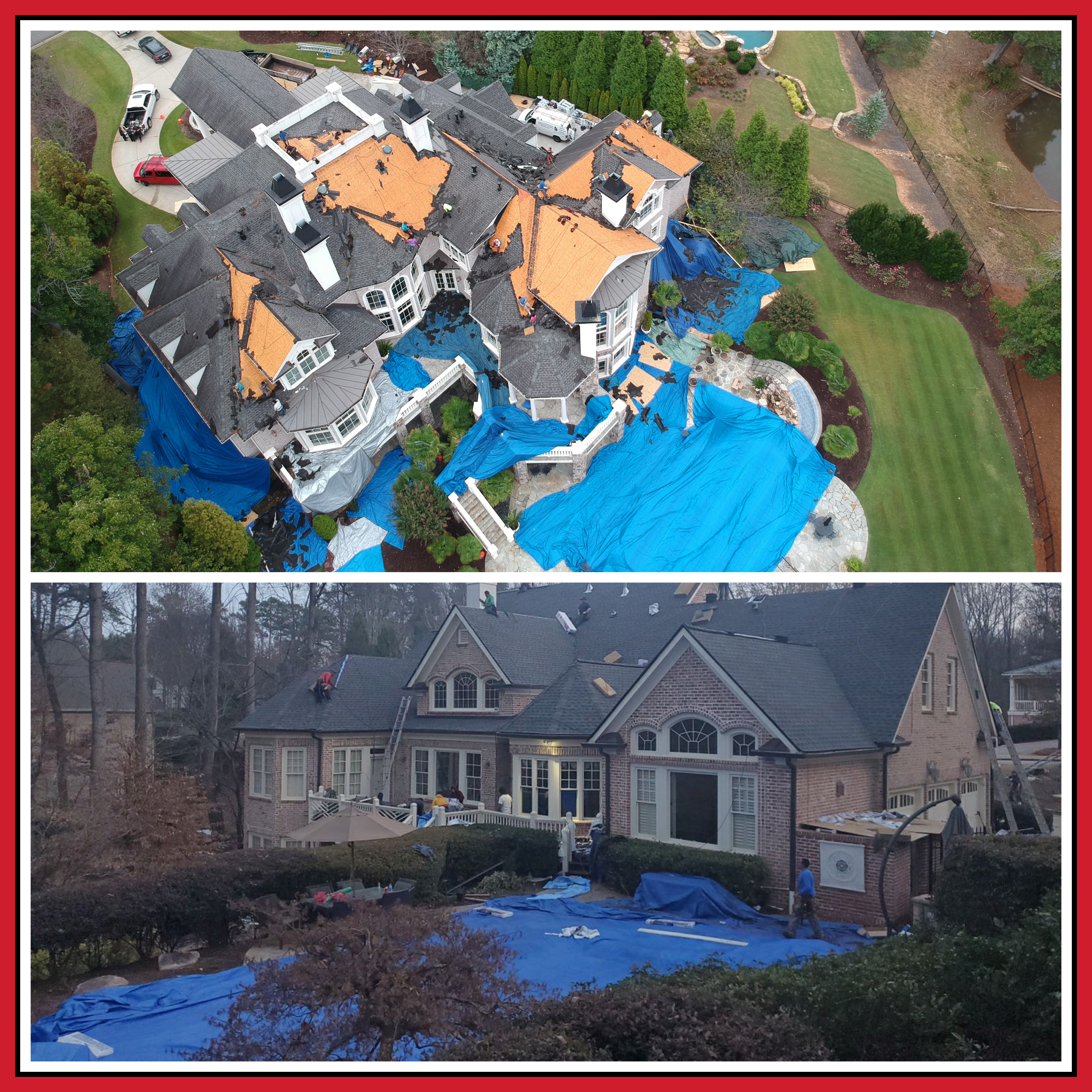
Our commercial process begins with the assessment, not the sale. We perform the moisture survey, evaluate the assembly honestly, and tell you whether coating extends your roof or whether replacement is the right answer — including when the right answer costs us the coating job. We work to manufacturer specifications for the systems we apply, document the preparation and thickness at every stage, and register the warranty so it is enforceable. For property managers running multiple buildings, that documentation becomes the backbone of a roof asset management program that turns reactive roof spending into a planned, predictable line item.
We serve commercial properties across the metro Atlanta market — from Alpharetta and Johns Creek to Sandy Springs, Marietta, and the commercial corridors throughout the region. Whether the right answer for your building is a coating, a targeted repair, or a full replacement, the assessment is free and the recommendation is honest. You can review our full commercial roofing services or start with a conversation about your specific roof.
Schedule Your Free Commercial Roof Assessment
Moisture survey, assembly evaluation, and an honest recommendation — coating, repair, or replacement — before any commitment. Serving Alpharetta, Marietta, and all of metro Atlanta.
(404) 277-1377 — No ObligationCertified by Industry-Leading Manufacturers