Most commercial roofs are managed by accident. A leak appears over a tenant suite, a call goes out, a crew patches it, an invoice gets coded to repairs, and the roof returns to being invisible until the next leak. For a property manager running a portfolio of office, retail, industrial, or multifamily buildings across metro Atlanta, that reactive cycle is expensive in ways that never show up cleanly on one line of a ledger. It shows up as shortened roof life, emergency premiums, tenant complaints, and capital surprises that blow up a year's numbers.
Roof asset management replaces that cycle with discipline. It treats every roof in the portfolio the way a fleet manager treats vehicles or a facilities team treats HVAC: as a tracked asset with a known age, a documented condition, a maintenance schedule, and a funded plan for its eventual replacement. The roof stops being a surprise. It becomes a forecastable line in the capital plan.
This guide lays out how to build and run a roof asset management program for an Atlanta commercial portfolio — the inventory, the condition scoring, the inspection cadence, the maintenance budgeting, and the repair-restore-replace decision framework. The objective throughout is the one that matters to ownership: lower total cost of ownership across the life of every roof, with no emergencies and no surprises.
1. What Roof Asset Management Actually Means
Asset management is a borrowed discipline. It comes from the world of capital equipment, where organizations long ago stopped buying machines and forgetting about them. They track the machine, service it on a schedule, log every intervention, and plan its replacement before it fails. Applied to roofing, the same logic produces dramatically different financial outcomes than the patch-and-pray approach most portfolios run by default.
A roof asset management program rests on four pillars. The first is a complete inventory: every roof, with its membrane type, installation date, square footage, slope, warranty terms, and rooftop equipment documented in one place. The second is condition assessment: a repeatable scoring method applied on a schedule, so the trajectory of each roof is visible over time, not just its state on one bad day. The third is preventive maintenance: scheduled work that addresses small problems before they become structural ones. The fourth is lifecycle planning: using condition data to forecast and fund replacements years in advance.
None of these pillars is exotic. What makes them powerful is the combination and the consistency. A property manager who can open a file and see that Building C's TPO roof scored 78 last fall, 74 this spring, has eleven years on a twenty-year warranty, and has a funded replacement penciled for year nineteen is operating at a completely different level than one who finds out about Building C when the tenant calls about a ceiling stain.
2. The True Cost of the Reactive Maintenance Trap
The reactive model feels inexpensive because each individual repair is small. That is exactly why it persists, and exactly why it costs so much. The expense is distributed and delayed, which makes it invisible to the capital process until it isn't.
Start with the membrane itself. A single-ply commercial roof — TPO, EPDM, or PVC — is engineered to deliver a long, predictable service life when its seams, flashings, and penetrations are maintained. Left alone, those same details fail first. A lifted seam admits water into the insulation below the membrane. Wet insulation loses its R-value, so energy costs rise, and it stays wet, so it rots the facer and corrodes fasteners. By the time the interior leak appears, the damage has spread laterally across an area many times larger than the original defect. The roof that could have lived 25 years now fails at 17, and the replacement arrives years before it was budgeted.
Then there is the cascade beyond the roof. Water that reaches a tenant space damages ceilings, finishes, inventory, and equipment. It triggers lease disputes and abatement claims. It pulls maintenance staff into emergency mode at premium cost. A property manager who has lived through a Friday-afternoon leak over a retail tenant's stockroom understands that the roof repair was the smallest cost in the event.
The deeper damage is to planning credibility. Reactive replacements are unbudgeted by definition, which means they compete with planned capital projects, get financed under pressure, and undermine the manager's standing with ownership. A program that converts roofs into forecastable assets is, in part, a tool for protecting that credibility. For roofs that have already crossed into damage, our commercial roof repair and water damage restoration teams stabilize the situation — but the goal of asset management is to make those calls rare.
3. Building the Roof Inventory
Everything starts with knowing what you own. A surprising number of portfolios cannot produce a basic roof inventory on demand: managers know roughly how many buildings they oversee but cannot say what membrane is on each, how old it is, or whether its warranty is still active. The inventory is the foundation, and it is straightforward to build.
For each roof, the file should capture the membrane or system type, the manufacturer and product line, the installation date, the total square footage and the breakdown by section if the roof has multiple membranes, the slope or drainage configuration, and the warranty terms with expiration dates. It should also document rooftop assets — HVAC units, exhaust fans, grease ducts, solar arrays, satellite equipment, and any walkway pads — because that equipment is where most foot traffic and most penetration leaks originate.
Documentation has improved dramatically with aerial tools. Rather than relying on a clipboard and a memory, a thorough program photographs each roof from above and at deck level, captures penetration details, and stores everything in the roof file. Our team uses the same documentation discipline described in our guide to drone roof inspections, which captures conditions a ground-level walk misses and creates a dated visual baseline for every roof in the portfolio.
4. Condition Scoring: Measuring Roof Health Over Time
An inventory tells you what you have. Condition scoring tells you what shape it is in and, more importantly, which direction it is heading. The point is not a single grade — it is the trend line. A roof scoring 80 this year and 79 next year is stable. A roof scoring 80, then 71, then 60 across three assessments is failing on a schedule you can now see coming.
A practical condition score evaluates several dimensions and rolls them into a number, typically on a 0–100 scale. The membrane surface is assessed for cracking, blistering, granule loss, ponding, and UV degradation. Seams and flashings are checked for lifting, splitting, and adhesion failure. Penetrations and rooftop equipment are inspected for sealant failure and improper repairs. Drainage is evaluated for ponding, clogged drains, and slope problems. The substrate is probed where access allows, and a moisture survey identifies wet insulation that no surface inspection would reveal.
| Condition Score | Roof Health | Recommended Action | Capital Posture |
|---|---|---|---|
| 90–100 | Excellent / near-new | Routine maintenance; protect warranty | No reserve draw; monitor |
| 75–89 | Good | Preventive maintenance; minor flashing repairs | Fund reserve steadily |
| 60–74 | Fair / aging | Targeted repairs; evaluate restoration coating | Begin replacement timeline |
| 40–59 | Poor | Moisture survey; restoration or staged replacement | Replacement within 2–4 yrs |
| Below 40 | Failing | Replacement; coating no longer viable | Plan replacement now |
The discipline that makes scoring valuable is consistency: the same method, applied on the same schedule, by inspectors who document with photographs and notes. A score recorded once and never repeated is a snapshot. A score recorded twice a year for a decade is an asset-management instrument that tells ownership exactly when each roof needs money and how much.
The trend matters more than the number. A roof's condition score in isolation is a single data point. Two or three scores plotted over time reveal the rate of decline — and that rate is what lets a property manager fund a replacement years before the roof forces the decision on an emergency timeline.
5. Inspection Cadence for Atlanta's Climate
Georgia's weather sets the inspection schedule. Metro Atlanta sees an active severe-weather season, frequent hail across the northern suburbs, high wind events, and summer rooftop temperatures that punish membranes and accelerate UV breakdown. A program built for a milder climate would under-inspect Atlanta roofs.
The baseline cadence is two scheduled inspections per year. A late-spring inspection prepares the roof for the storm season and catches winter damage. A fall inspection assesses what the summer heat and storm season did and prepares drainage for the wet months. On top of that baseline, any significant hail or wind event triggers a prompt post-storm inspection — ideally within days, before subtle damage compounds.
The post-storm inspection is where Atlanta portfolios most often leave money on the table. Hail rarely punches an immediate hole in a commercial membrane; it bruises and fractures it, and wind lifts seams that look fine from the parapet. The interior leak that proves the damage may not arrive for months, by which point the connection to the storm is harder to document and the claim window may have closed. Pairing condition scoring with prompt post-event documentation is the heart of effective storm damage restoration on a managed portfolio, and it ties directly into the insurance claims process described later.
6. Designing the Preventive Maintenance Program
Preventive maintenance is the engine of the whole program. Inspections find problems; the maintenance program fixes them while they are small. The two have to be coupled — an inspection that finds a lifted seam and files a report without triggering a repair has accomplished nothing.
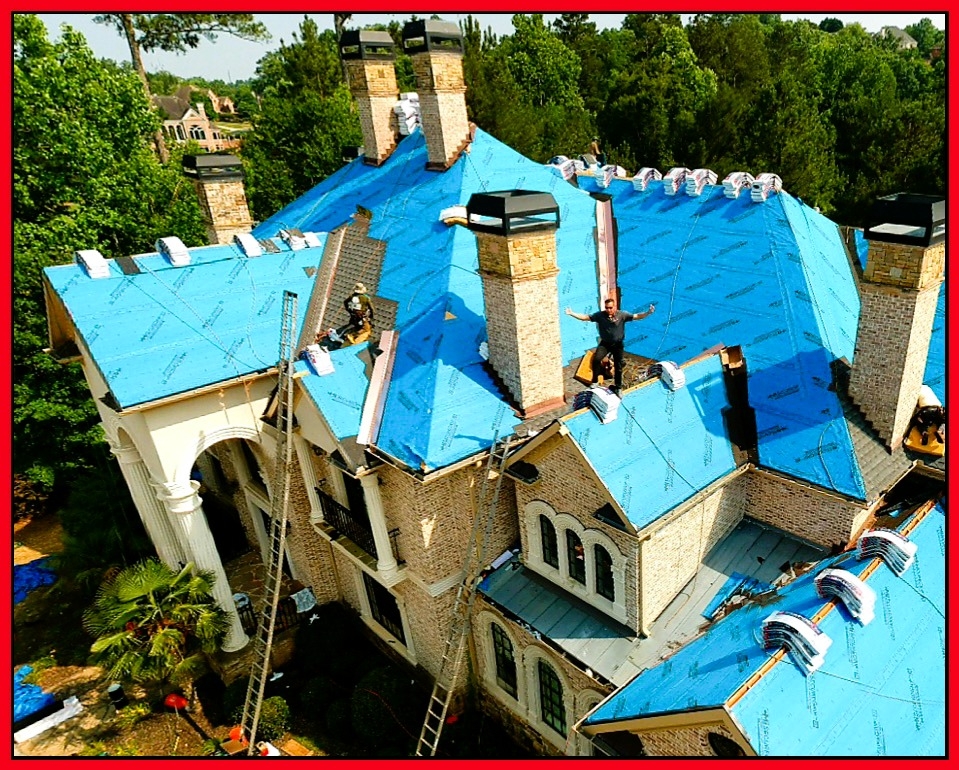
A well-designed program addresses the predictable failure points on a schedule. Drains and scuppers are cleared so water leaves the roof instead of ponding. Seams and flashings are inspected and resealed where adhesion is weakening. Pitch pans and penetration seals — the single most common leak source on equipment-heavy commercial roofs — are checked and refilled. Debris is removed before it dams drainage or punctures the membrane. Loose fasteners, lifted edge metal, and damaged walkway pads are corrected. Minor membrane damage is patched to manufacturer specification before it admits water.
The economics are not subtle. Annual preventive maintenance on a commercial roof typically runs a few cents per square foot. Replacement runs several dollars per square foot. A program that spends ten cents a year to defer a six-dollar replacement by five or more years is not a cost center — it is one of the highest-return activities in facilities management. The work itself is straightforward; the value comes from doing it on schedule rather than after a failure. The same flashing and detailing principles that protect residential roofs apply here, as our guides to kickout flashing and step versus reglet flashing explain in depth.
7. The Repair, Restore, or Replace Decision
Every aging roof eventually forces a strategic decision, and it is rarely binary. Between a small repair and a full replacement sits restoration — a category that many property managers overlook and that often delivers the best return when the conditions are right.
Repair is appropriate when damage is localized and the surrounding membrane is sound. A failed pitch pan, a punctured section under a unit, a length of split seam — these are repairs, and on a managed roof they are caught early and stay small.
Restoration applies a fluid-applied coating or membrane over a roof whose substrate and structure remain sound but whose surface is aging. When the insulation is dry and the deck is solid, a restoration system can add 10 to 15 years of service life for roughly 40 to 60 percent of replacement cost, with no tear-off, no business interruption, and a renewable warranty. It also restores reflectivity, which matters in Atlanta's heat. Our detailed treatment of commercial roof restoration coatings and cool roof coatings covers when this path makes sense and when it does not.
Replacement is the answer when the membrane is past its serviceable life, when the insulation is widely saturated, or when the deck shows structural concern. Coating a failing system only hides the saturation and wastes the coating investment. The signal that separates a restoration candidate from a replacement candidate is data: a core sample and an infrared moisture survey documented in the roof file. Without that evidence, the repair-restore-replace decision is a guess; with it, the decision is defensible to ownership. When replacement is the right call, our commercial roofing team scopes the project around tenant operations.
Membrane selection at replacement is itself an asset-management decision. Choosing among TPO, EPDM, and PVC affects cost, reflectivity, chemical resistance, and service life, and the right choice depends on the building's use and rooftop equipment. Our comparison of TPO vs EPDM vs PVC walks through the trade-offs; for low-slope sections, our guides to spray polyurethane foam, liquid-applied membranes, and modified bitumen cover the alternatives.
Get a Baseline on Every Roof You Manage
We document, score, and forecast each roof in your portfolio — at no cost and no obligation. You leave with a roof file and a funded plan.
Call (404) 277-13778. Lifecycle Costing and Capital Budgeting
The financial payoff of asset management is the ability to fund roofs the way you fund every other long-lived asset: by spreading their cost across their service life and funding the reserve accordingly. The right metric is not the replacement price — it is cost per square foot per year of service delivered.
Consider two paths for the same 40,000 square foot single-ply roof. Under run-to-failure, the roof receives no maintenance, fails at year 17, and is replaced. Under a managed program, the roof receives twice-yearly inspections and scheduled maintenance, is restored once at year 15, and reaches replacement at year 27. The second path costs more in maintenance and adds a restoration, yet it delivers ten additional years of service and defers the largest capital outlay by a decade. On a cost-per-year basis, the managed roof is meaningfully cheaper, and the deferral lets the reserve fund the replacement in full rather than financing it under emergency conditions.
Condition scoring is what makes the reserve credible. When each roof carries a documented score trajectory and a projected replacement year, the capital plan stops being a guess. Ownership can see, three to five years out, which roofs need money and when — and the reserve can be funded smoothly instead of in panicked lump sums. That predictability is the deliverable property managers are ultimately hired to produce.
9. Warranties, Insurance, and the Power of Documentation
The roof file does double duty. Beyond driving maintenance and budgeting, it protects two financial instruments that are easy to lose without it: the manufacturer warranty and insurance coverage.
Most commercial roofing manufacturers attach maintenance conditions to their no-dollar-limit warranties. A warranty that looks like a 20-year safety net can be voided by undocumented neglect or by an unauthorized repair that nobody recorded. The roof file — dated inspection reports, photographs, and records of repairs performed to specification — is what keeps that warranty enforceable. When a manufacturer claim is filed, the file is the evidence that obligations were met.
On the insurance side, documentation decides claims. A portfolio with a pre-storm condition baseline can demonstrate exactly what shape each roof was in before a hail event, which transforms a contested claim into a documented one. Without that baseline, a carrier can attribute storm damage to pre-existing wear, and the burden of proof falls on the owner after the fact. Our overview of how to document storm damage for a successful claim and the distinction between RCV and ACV coverage apply directly to commercial portfolios, and our insurance claims assistance team works these claims regularly. Carriers also tend to look more favorably on a documented, maintained portfolio at renewal.
Without a pre-storm baseline, a hail claim becomes an argument. The roof file — dated photos, condition scores, and maintenance records — is what lets you prove a roof's condition before the storm rather than negotiate it afterward. The cheapest time to document a roof is before it gets hit.
10. Energy Performance and Sustainability Gains
A managed roof is usually a more efficient roof, and in Atlanta's climate that translates into real operating savings. Summer rooftop surface temperatures on a dark, neglected membrane routinely exceed 150°F, driving cooling loads and shortening membrane life simultaneously. A maintained reflective surface — or a restoration coating that renews reflectivity — lowers the cooling burden and the thermal stress on the membrane at the same time.
The insulation tie-in is what most owners miss. Wet insulation under a leaking membrane loses its R-value, so a neglected roof quietly raises energy costs long before it produces a visible leak. Catching and drying or replacing that insulation through the maintenance program protects both the building envelope and the utility expense. The reflective and energy principles are the same ones covered in our guides to cool roof technology and cool roof rebates and Georgia energy code, which can offset part of a restoration investment.
For owners pursuing sustainability goals, a managed roof also extends the timeline before a roof's materials enter the waste stream. Restoration over tear-off keeps the existing membrane in service rather than in a landfill, and a longer service life means fewer replacement cycles over the building's life. For properties evaluating rooftop additions, our guides to building-integrated solar roofing and vegetative green roofs cover how those systems interact with the underlying membrane.
11. Running a Multi-Building Portfolio Program
The principles scale, but a portfolio of fifteen or fifty buildings needs an operating rhythm that a single roof does not. The goal is a standing program a property manager can run with a roofing partner rather than a series of one-off calls.
A mature portfolio program has a few moving parts. There is a central roof database — the combined inventory and scoring records for every roof. There is a recurring inspection schedule that batches buildings geographically so crews move efficiently across metro Atlanta, from Alpharetta and Johns Creek in the north to Marietta, Roswell, Sandy Springs, and Buckhead. There is a prioritized work plan that ranks repairs and replacements by condition score and risk, so the limited capital and maintenance budgets go to the roofs that need them most. And there is a reporting layer that gives ownership a portfolio-wide view of condition, spend, and forecast.
The reporting matters as much as the field work. A property manager who can hand ownership a single dashboard — every roof, its score, its trend, its projected replacement year, and its funded reserve — is delivering exactly what asset management promises. The roofs are no longer a recurring crisis; they are a managed, predictable category of the capital plan.
12. Choosing a Roofing Partner Who Thinks in Assets
The program is only as good as the partner who runs the field side of it. A roofing contractor who sells replacements has little incentive to extend roof life; a partner who thinks in assets is invested in the opposite outcome — maximizing the service life of every roof and being honest about when restoration beats replacement and when it does not.
The right partner brings a few things to the table. Documentation discipline: photographs, dated reports, and a roof file you can actually use. Manufacturer certification across the major single-ply systems, so warranty work is performed correctly. Storm response capacity, because Atlanta portfolios need fast post-event inspections during a busy season. And an objective restore-versus-replace stance backed by moisture surveys and core samples rather than a default toward the larger invoice.
1 Source Roofing and Restoration runs commercial portfolios across the metro Atlanta market with that asset-management mindset. We document and score every roof, run the maintenance program on schedule, respond quickly after storms, and tell you honestly when a roof has years of life left in it. You can learn more about our company, see why owners choose us, review our project gallery and client testimonials, or explore the full range of our roofing services. When you are ready, our team will build a baseline on every roof you manage.
Turn Your Roofs Into Managed Assets
A documented baseline, a condition score, and a funded plan for every roof in your portfolio — before the next storm or the next surprise. Serving commercial properties across Alpharetta, Buckhead, and all of metro Atlanta.
(404) 277-1377 — No ObligationCertified by Industry-Leading Manufacturers