
For two decades, residential solar in Atlanta meant one thing: rectangular panels bolted to aluminum rails that were lag-screwed through the shingles into the rafters. The roof did its job, the panels did theirs, and the two systems lived in awkward coexistence on the same plane. Building-integrated photovoltaics — BIPV — collapse that arrangement into a single layer. The roofing material itself generates power. There is no rack, no separate array, no penetrations punched through a finished roof to hold a frame in place.
This is the direction premium residential roofing is heading, and metro Atlanta's affluent neighborhoods are among the earliest adopters in the Southeast. Homeowners in Buckhead, Alpharetta, and Johns Creek who are already replacing aging roofs are asking a sharper question than they did five years ago: if the roof has to come off anyway, why install a passive surface when an integrated one can produce energy for the life of the roof?
This guide explains what BIPV roofing actually is, how the technology has matured, how it performs in Georgia's specific climate, what it costs relative to conventional alternatives, and how to evaluate whether an integrated solar roof belongs on your home. The short version: BIPV is no longer experimental. It is a deployable roofing system with real warranties, real production data, and real installation discipline behind it — and the moment to consider it is the moment your roof is due for replacement.
1. What Building-Integrated Photovoltaics Actually Are
Building-integrated photovoltaics describe any product where the solar-generating component is the building envelope, rather than something attached to it. On a roof, that means the shingle, tile, or membrane that keeps water out is the same element that converts sunlight to electricity. The distinction matters because it changes who should install it. A racked array is an electrical and mounting job performed on top of a roof. A BIPV roof is a roofing job that happens to generate power — and getting the weatherproofing right is the part that fails first when the wrong trade installs it.
The residential BIPV category breaks into a few recognizable forms. Solar shingles are the most familiar: photovoltaic cells laminated into a shingle-sized unit that interlocks with both adjacent solar units and the standard architectural shingles that fill non-generating areas of the roof. Solar tiles take the same idea into the form factor of a tile or slate roof, common on Mediterranean and estate-style homes throughout north Atlanta. Integrated metal-roof laminates bond thin-film photovoltaic strips into the flat pans of a standing-seam metal roof, an approach that pairs naturally with the standing-seam systems many Atlanta estates already favor.
Each form solves the same core problem differently, but they share the defining trait: remove the solar function and you have removed part of the roof. That integration is the source of every advantage BIPV offers and every reason it demands a roofing contractor rather than a panel installer.
2. How BIPV Differs From Rack-Mounted Panels
The clearest way to understand BIPV is to set it directly against the conventional rack-mounted array that dominated the last twenty years. The two approaches diverge on appearance, on how water is managed, and on how the roof and the solar system age together.
A rack-mounted system keeps the existing roof intact and fastens an aluminum rail system over it. Those rails require lag bolts driven through the shingles into the rafters — typically dozens of penetrations across a residential array. Each penetration is sealed with flashing and sealant, and each is a point that must hold for the life of the roof. When a racked array sits on a roof that later needs replacement, the entire array must be removed and reinstalled, a cost rarely mentioned at the time of the original solar sale.
BIPV eliminates the rack entirely. The generating units lie flush in the roof plane, integrated into the same waterproofing assembly as the surrounding shingles. There is no frame casting shadows, no gap collecting leaves and debris, and no array-removal expense at the next reroof — because the solar and the roof are replaced as one system on the same schedule. The visual result is a roof that reads as a single clean surface from the street, which is precisely why BIPV has gained traction in neighborhoods where homeowners associations and architectural-review boards have historically resisted visible rooftop hardware.
| Consideration | BIPV Solar Roof | Rack-Mounted Panels |
|---|---|---|
| Roof penetrations | None beyond standard roofing details | Dozens of rail-mount lag points |
| Appearance | Flush, single-plane roof surface | Raised array with visible framing |
| Roof + solar replacement | Replaced together as one system | Array removed and reinstalled at reroof |
| Best timing | During a planned roof replacement | Any time on a sound existing roof |
| HOA / review-board acceptance | High — reads as a normal roof | Variable — visible hardware |
| Installer discipline required | Roofing weatherproofing expertise | Mounting and electrical expertise |
Neither approach is universally correct. A homeowner with a five-year-old roof in excellent condition has little reason to tear it off for BIPV; rack-mounted panels make sense in that case. But a homeowner facing a roof replacement regardless has a genuine decision to make, and BIPV deserves a serious seat at that table.
3. The Three Major BIPV Technologies
Not all integrated solar products are built the same way, and the differences affect efficiency, durability, and which roof styles they suit. Understanding the categories helps a homeowner read product proposals critically rather than accepting marketing names at face value.
Crystalline silicon solar shingles are the workhorse of residential BIPV. They use the same high-efficiency monocrystalline cells found in premium conventional panels, packaged into a roofing-scale laminate. Efficiency is strong — generally the highest of the integrated options — and the products have the longest field track record. These are what most homeowners picture when they imagine a solar roof, and they pair with architectural-shingle fields to complete the non-generating sections of the roof plane.
Thin-film integrated products deposit photovoltaic material in extremely thin layers onto a flexible backing, which can then be bonded into metal roofing pans or formed into low-profile laminates. Thin-film tolerates high heat and diffuse light somewhat better than crystalline silicon, a meaningful trait in Georgia's hazy, humid summers, though its per-square-foot efficiency runs lower. It shines on standing-seam metal roofs, where the laminate bonds into the flat pan between seams.
Solar tiles and slates bring integrated generation to the tile and slate aesthetic prized on estate homes across north Fulton and east Cobb. These products replicate the dimensional appearance of clay tile or natural slate while embedding photovoltaic cells in the exposed faces. They carry the highest material premium of the three categories but deliver an architectural result that homeowners replacing a synthetic slate or composite roof often find compelling.
The installer matters more than the brand. A BIPV roof is only as good as its weatherproofing. The most advanced solar shingle on the market will leak if the flashing, underlayment, and deck preparation are treated as an afterthought. Choose a certified roofing contractor who installs the integrated product as a roof first and a power plant second.
4. How BIPV Performs in Atlanta's Climate
Solar economics are local, and Georgia's climate shapes BIPV performance in specific ways. The headline number is favorable: metro Atlanta averages roughly 4.7 to 5.0 peak sun hours per day across the year, a strong residential solar resource that comfortably exceeds many northern markets. A well-oriented south-facing roof plane in Alpharetta or Sandy Springs has the raw solar input to make integrated generation worthwhile.

Two climate realities require attention. The first is heat. Photovoltaic cells lose a fraction of their efficiency as temperature rises, and Georgia summers push roof-surface temperatures well past 140°F. Because BIPV sits flush against the roof rather than floating on a rack with airflow beneath it, cell temperatures can run higher than a ventilated array. Quality products account for this with heat-tolerant chemistry and engineered backside airflow, and proper attic and roof-deck ventilation — the same balanced ridge-and-soffit ventilation that protects any Georgia roof — directly improves both energy yield and shingle longevity. Ventilation is not an accessory on a BIPV roof; it is part of the energy system.
The second reality is weather. Atlanta sits in a corridor that sees frequent wind-driven rain, periodic hail, and the occasional severe thunderstorm complex. A BIPV roof must therefore carry wind and impact ratings equal to a premium shingle roof — ideally a Class 4 impact rating — and be installed with flashing discipline that assumes water will be driven sideways, not just fall straight down. Products that meet those standards perform reliably across Georgia's seasons. Products that treat weatherproofing as secondary to power generation do not belong on an Atlanta roof, regardless of their efficiency rating.
5. Durability, Wind, and Hail Resistance
The single most common question homeowners raise about solar roofing is durability: can a roof that generates electricity also survive a Georgia hailstorm? The answer, for properly specified products installed correctly, is yes — and the reasoning is worth understanding.
BIPV products earn the same ratings that govern conventional roofing. UL 1703 and the newer UL 7103 standards test integrated photovoltaic roofing for fire, mechanical load, and electrical safety. Wind resistance is rated to the same uplift standards as shingles, and the best products are tested to withstand the design wind speeds relevant to the Southeast. Impact resistance is graded on the same Class 1 through Class 4 scale used for shingles, with Class 4 representing the highest tested resistance to hail-sized impacts.
The integration itself confers a durability advantage. A rack-mounted array adds wind load to the roof through the raised profile of the panels and the leverage of the mounting frame; high winds find purchase under and around the array. A flush BIPV surface presents far less of a wind target, behaving aerodynamically much like the roof it replaces. The trade-off is that damage to an integrated unit is a roofing repair rather than a simple panel swap — which again points back to selecting a contractor who can service the system the way it was installed, the way a roof repair specialist services any premium roof.
Considering a Solar Roof for Your Atlanta Home?
Our assessment evaluates roof orientation, pitch, ventilation, and structure — so you know whether BIPV fits before you commit to anything.
Call (404) 277-13776. The Economics: What a Solar Roof Is Worth
BIPV carries a product premium over a conventional roof, and any honest discussion of integrated solar has to start there. The right comparison, though, is not BIPV against a plain shingle roof. It is BIPV against the combined cost of a new roof plus a separate rack-mounted array — because for the homeowner replacing a roof and wanting solar, those are the two real paths.
Viewed that way, the math shifts. A homeowner who installs a premium roof and then mounts panels on top is paying for two complete systems: the full roofing assembly, and the array with its rails, hardware, and labor. BIPV consolidates those into one assembly that performs both jobs. You eliminate the duplicate structural layer, the rack hardware, and the array-removal cost at the next reroof. You also recover the federal residential clean-energy tax credit on the generating components, which materially improves the effective figure when the system is installed during the tax year it is placed in service.
The framework that clarifies the decision is the same cost-per-year lens that governs any premium roofing investment. A standard architectural roof delivers roughly 25 years of service and generates no offsetting value. A BIPV roof delivers comparable weatherproofing service while producing electricity every one of those years — energy that offsets utility cost and, in Georgia's rising-rate environment, offsets more each year. Over a 25-year horizon, the production stream is part of the return, not a separate luxury. The decision turns on roof timing, ownership horizon, and aesthetic priority far more than on first cost in isolation.
The economics work best at the moment of replacement. Installing BIPV over a sound roof means discarding good roof life; installing conventional solar on an aging roof means paying to remove and reinstall the array at the next reroof. The most efficient time to evaluate a solar roof is when a replacement is already due.
7. Installation: Why It Is a Roofing Discipline
The defining truth of BIPV — the one that separates a roof that performs for thirty years from one that leaks in three — is that it is roofing work first. The electrical interconnection matters, but it is the weatherproofing that determines lifetime outcomes, and weatherproofing is what roofing contractors do.
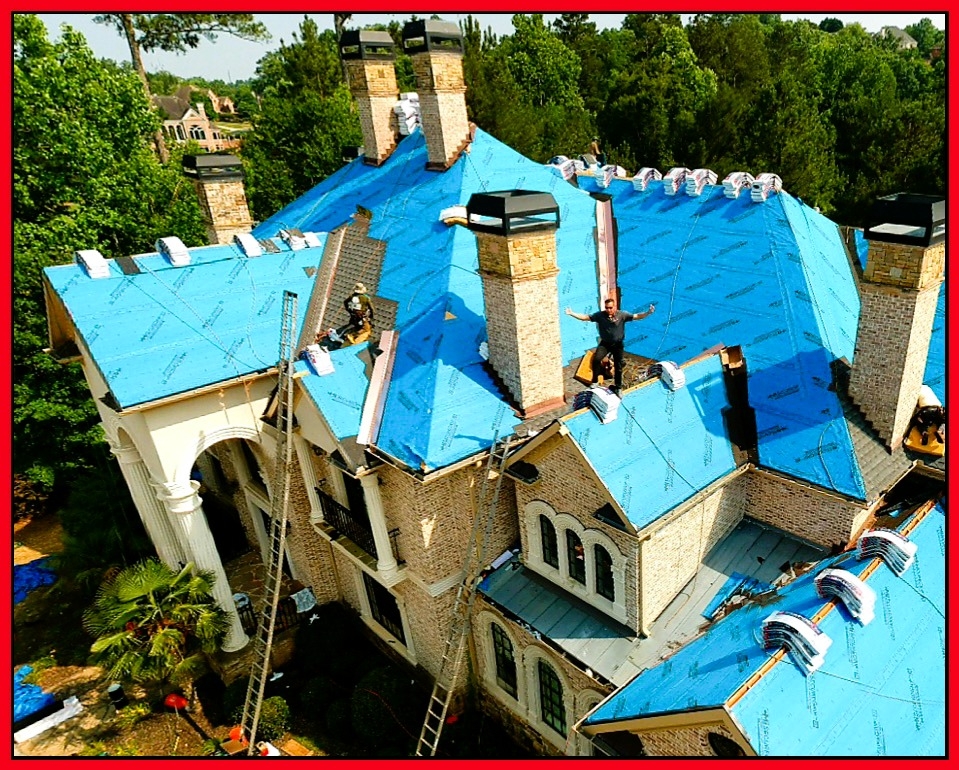
A BIPV installation begins exactly like any quality roof replacement: complete tear-off of the existing system, inspection of the deck, and replacement of any deteriorated decking discovered underneath. The integrated product is then installed over a properly specified underlayment with self-adhering ice-and-water shield at eaves, valleys, and penetrations — the same vulnerable transitions that fail on any roof. Flashing at chimneys, walls, and pipe penetrations is executed to roofing standards, not solar-installer standards. Where solar shingles meet conventional shingles in the non-generating field, the integration detail must shed water as reliably as any course transition.
The electrical side then connects the generating units into strings, ties them through inverters or microinverters, and integrates with the home's panel and, increasingly, with battery storage. A licensed electrician handles the interconnection and the utility coordination. But the roof comes first, in both sequence and importance. A homeowner evaluating a BIPV proposal should confirm that a certified roofing contractor owns the weatherproofing scope — not a solar company subcontracting the roof to the lowest bidder. The same standard that protects a conventional roof, documented in a clear written scope, protects a solar one.
8. Aesthetics and Curb Appeal on Premium Homes
For many of the homeowners 1 Source serves across Buckhead, Alpharetta, and Johns Creek, appearance is not a secondary consideration — it is the deciding one. A multi-million-dollar home with a carefully composed exterior is poorly served by an aluminum array bolted across its most visible roof plane. This is where BIPV earns its keep before a single kilowatt is counted.
An integrated solar roof reads as a roof. From the street, a well-installed solar-shingle field looks like a dark architectural shingle roof; a solar-tile installation looks like slate. There is no raised hardware, no frame, no shadow gap. Color-matched conventional shingles fill the non-generating sections so the entire plane presents as a unified surface. For homeowners in neighborhoods governed by architectural-review boards that have rejected visible panels, this is often the only path to rooftop generation that survives approval.
The curb-appeal advantage extends to resale. A clean integrated roof signals a current, high-specification home in a way that a retrofitted panel array does not. Buyers increasingly value the energy story, and a BIPV roof tells it without the visual compromise that has made some buyers wary of conventional rooftop solar. For estate properties where every exterior element is intentional, the integrated approach aligns the energy investment with the architectural one.
9. Pairing BIPV With Battery Storage
A solar roof generates most of its power at midday, while a household consumes most of its power in the evening. Battery storage bridges that gap, and the pairing has become a natural companion to BIPV on premium Atlanta homes. The integrated roof produces; the battery stores the daytime surplus for evening use and for backup during the grid outages that accompany Georgia's severe storm season.
The resilience benefit resonates particularly in metro Atlanta, where summer thunderstorm complexes and the occasional ice event take down power lines with regularity. A BIPV roof paired with storage keeps essential circuits running when the neighborhood goes dark — a tangible advantage for homes with medical equipment, home offices, or simply the expectation that a premium property should not lose power every time a line goes down. The storage system also lets a homeowner capture more of their own generation rather than exporting it at whatever rate the utility offers, improving the lifetime value of the roof's production.
Storage is not mandatory for a BIPV roof to make sense, but the two technologies are designed to work together, and any serious solar-roof evaluation should consider whether storage belongs in the same project. The integration that defines BIPV extends naturally to a system that generates, stores, and manages a home's energy as one coordinated whole.
10. Maintenance and Long-Term Care
A BIPV roof asks for the same disciplined care any premium roof deserves, with a few solar-specific additions. Because the generating surface is the roof, keeping it clean and unshaded directly affects both weatherproofing and output. Georgia's pollen seasons and the leaf litter from mature hardwoods can film a solar surface and shave production; periodic cleaning by professionals who understand the product restores yield without risking the integrated cells.
Periodic inspection follows the same logic that governs any roof in a storm-prone region. After significant wind or hail, a BIPV roof should be inspected by a roofing professional — both for weatherproofing integrity and for any impact damage to generating units. This is identical in spirit to the post-storm inspection any Atlanta homeowner should schedule, and it is one reason drone roof inspections have become valuable: they document the entire plane without foot traffic on the generating surface. Monitoring software, standard on modern BIPV systems, flags production drops that can indicate a shaded, soiled, or damaged section before it becomes a larger problem.
When repair is needed, it is a roofing repair. A damaged integrated unit is replaced within the roof plane, with the surrounding weatherproofing restored to original specification. This is precisely why the choice of installer carries forward for decades — the company that installs the roof should be the company equipped to maintain and repair it, the way 1 Source stands behind every roof replacement it completes.
11. Who Should Consider a BIPV Roof
Building-integrated solar is not the right answer for every home, and a roofing contractor who tells you otherwise is selling rather than advising. The homeowners for whom BIPV makes the strongest case share a recognizable profile, and understanding it helps a homeowner self-qualify before the conversation begins.
The clearest candidate is the homeowner whose roof is already due for replacement. If the existing roof has reached the end of its service life, the tear-off is happening regardless, and the marginal decision is simply what surface to install in its place. A homeowner replacing a roof on a south- or southwest-facing home with good sun exposure, a long ownership horizon, and a preference for a clean exterior is the ideal BIPV candidate. New construction is the second natural fit, where the roof is being built fresh and integrated solar can be specified from the start.
Conversely, a homeowner with a recent roof in sound condition usually should not tear it off for BIPV — rack-mounted panels preserve the remaining roof investment. A home with heavy permanent shading from mature trees, deep north-facing primary roof planes, or a short ownership horizon may not recover the integrated premium. The honest evaluation weighs roof timing, orientation, structure, shading, and how long the homeowner intends to stay. That is exactly the analysis a free on-site assessment is built to provide.
12. The Future of the Solar Roof
BIPV is following the trajectory every maturing building technology follows: efficiency rises, cost declines, product variety expands, and what was once a luxury experiment becomes a mainstream specification. Cell efficiency has climbed steadily, integrated products now span shingles, tiles, slates, and metal laminates, and the installation discipline has consolidated around certified roofing contractors rather than the patchwork of early adopters who treated solar roofs as electrical projects.
The larger shift is conceptual. The roof is no longer just a barrier that keeps weather out — it is becoming an active component of the home's energy system, generating and, with storage, managing power across the day. This reframing aligns with where high-end residential construction is already heading, alongside cool-roof technology and radiant-barrier decking that treat the roof as a performance system rather than a passive cover. BIPV is the most complete expression of that idea: a roof that protects and produces at once.
For Atlanta homeowners, the practical takeaway is straightforward. The technology is ready. The economics work best at the moment of replacement. And the difference between a solar roof that performs for three decades and one that disappoints comes down to who installs it. As with any premium roofing investment, the integrated solar roof rewards homeowners who treat the decision as a roofing decision first — and who choose a contractor equipped to deliver it. Compare the integrated approach against the alternatives in our guide to solar shingles versus solar panels before you decide.
Certified by Industry-Leading Manufacturers
Schedule Your Free Roof and Solar Assessment
Orientation, pitch, ventilation, structure, and a written scope — before any commitment. Serving Atlanta, Buckhead, Alpharetta, and all of metro Atlanta.
(404) 277-1377 — No Obligation