Walk into an unconditioned metro Atlanta attic at three o'clock on a July afternoon and the air will hit you like an open oven. Surface temperatures on a sun-exposed roof deck routinely climb past 150°F, and the attic air sitting beneath it can hold steady at 130°F or higher. That heat does not stay in the attic. It radiates downward through the ceiling, soaks into the ductwork running through the space, and forces the air conditioner to run longer and harder than the thermostat setting alone would suggest. For Georgia homeowners, that attic is the single largest uncontrolled heat load on the house.
Radiant barrier roof decking attacks that problem at its source. Instead of treating the attic as a hot box to be insulated against, the decking reflects the sun's radiant energy before it ever turns into trapped heat. It is one of the few roofing upgrades that delivers a measurable, year-after-year return in a climate as hot and sun-intense as ours — and because it is built into the structural roof deck, the natural moment to install it is during a roof replacement.
This guide explains what radiant barrier decking actually is, the building physics behind why it works, how it performs specifically in Georgia's climate, how it compares to other attic heat-control methods, and how it fits into a properly scoped replacement. By the end you will understand whether it belongs in your next roof — and the questions to ask before a contractor specifies it.
1. What Radiant Barrier Roof Decking Actually Is
Radiant barrier roof decking is an engineered oriented strand board (OSB) panel manufactured with a thin, durable layer of aluminum bonded to one face. The wood panel handles the structural job every roof deck performs — spanning the rafters or trusses, carrying the load of the shingles, and providing the nailing surface for the entire roof assembly. The aluminum facing adds a second function the panel performs at the same time: it reflects radiant heat.
The most common products in the Atlanta market are LP TechShield and Georgia-Pacific ForceField. Both look much like standard OSB sheathing from the top, but flip a panel over and you see the metallic surface. During installation the reflective side always faces down into the attic, never up toward the shingles. That orientation is not optional — it is fundamental to how the panel works, and it is one of the details that separates a correct installation from a wasted upgrade.
A quality aluminum facing reflects roughly 97% of the radiant heat that strikes it, which is another way of saying it has a very low emissivity — typically rated at 0.03 to 0.05. Emissivity measures how readily a surface re-radiates absorbed heat. A standard wood deck has an emissivity near 0.90, meaning it eagerly radiates the sun's heat down into the attic. The aluminum-faced panel barely radiates at all. That single material property is the entire mechanism behind the temperature drop homeowners feel.
2. The Building Physics: How Radiant Heat Moves Into Your Attic
Heat moves three ways: conduction, convection, and radiation. Most homeowners are familiar with the first two because that is what insulation addresses. Conduction is heat traveling through a solid material, like the warmth that creeps through a ceiling. Convection is heat carried by moving air, like the hot draft that rises off a roof deck. Radiation is different — it is infrared energy traveling through space, the same way the sun's heat crosses 93 million miles of vacuum to reach the earth.
On a summer day, the sun heats the shingles, the shingles conduct that heat into the roof deck, and the underside of a standard deck then radiates that energy across the attic air gap directly toward your insulation and ductwork. This radiant transfer is the dominant heat path in a hot attic, and it is exactly the path that conventional fiberglass insulation handles poorly. Insulation is designed to slow conduction and convection. It does almost nothing to stop radiant energy from crossing an open air space.
This is the gap radiant barrier decking fills. By placing a low-emissivity aluminum surface on the attic-facing side of the deck, the panel refuses to radiate that heat downward. The energy is reflected back up toward the shingles and vented out through a properly balanced ventilation system instead of being dumped into the attic. The result is an attic that runs dramatically cooler during the hours that matter most — the late-afternoon peak when air conditioning demand and utility rates are both at their highest.
3. Why the Air Gap Makes or Breaks Performance
A radiant barrier only works if the reflective surface faces an open air space. This is the single most important and most misunderstood detail of the entire technology. Radiant heat reflection requires an air gap; the moment you press another material flat against the reflective surface, it stops reflecting and starts conducting heat straight through the contact point.
In a radiant barrier decking installation, the air gap is the attic itself — the open volume between the underside of the deck and the insulation lying on the attic floor. That gap is exactly what the panel is designed to face, which is why decking-integrated radiant barriers perform so reliably compared to some retrofit foils that get installed incorrectly.
Dust is the enemy of any reflective surface. Radiant barriers that face upward — like foils laid flat on the attic floor — gradually accumulate dust that destroys their reflectivity within a few years. Radiant barrier decking faces downward, so the reflective aluminum stays clean and keeps performing for the full life of the roof. Orientation is not a minor detail; it determines whether the upgrade lasts five years or forty.
This downward-facing orientation is the structural advantage of decking-integrated radiant barriers. The aluminum is protected inside the roof assembly, shielded from foot traffic during attic access, and positioned so gravity keeps dust off the reflective face. A correctly installed radiant barrier deck delivers the same reflectivity in year thirty that it did the week it was installed.
4. Why Georgia's Climate Makes This Upgrade Pay Off
Radiant barriers deliver their largest returns in hot, sunny climates, and metro Atlanta sits squarely in that profile. The Department of Energy specifically identifies radiant barriers as most cost-effective in hot climates, and Georgia delivers the conditions that make the math work: long cooling seasons, intense direct sun, and high cooling loads that run from April well into October.
Atlanta records roughly 1,800 to 2,000 cooling degree days in a typical year — a measure of how much and how long air conditioning is needed. Summer attic temperatures regularly exceed 130°F, and the region's combination of latitude and clear-sky summer days drives substantial solar radiation onto every south- and west-facing roof plane. Each of those factors increases the radiant heat load that a barrier can intercept, which is precisely why the same product that saves a homeowner in Minnesota almost nothing saves a homeowner in Marietta or Johns Creek a meaningful amount every cooling season.
The payoff is amplified by a feature of Georgia housing stock that many homeowners overlook: ductwork location. A large share of metro Atlanta homes route HVAC ducts and the air handler through an unconditioned attic. When that attic sits at 130°F, the conditioned air inside those ducts absorbs heat on its way to the living space, and the equipment fights to overcome losses that never appear on the thermostat. Drop the attic temperature by 20 to 30 degrees and you reduce that duct heat gain directly. For these homes, radiant barrier decking is not a marginal comfort upgrade — it is a structural fix for a recurring energy penalty. The same logic underpins our guidance on treating the attic and roof as one system.
5. Real Energy Savings: What the Numbers Show
The honest answer on savings is that they fall within a range, and the range depends on your home's specific conditions. Field studies and manufacturer testing consistently place attic temperature reductions at 20 to 30°F on peak summer afternoons, with whole-home cooling energy savings most commonly landing between 7% and 12%. Homes with attic ductwork sit at the upper end; homes with extremely heavy insulation and ducts already inside conditioned space sit lower because there is less heat penalty left to recover.
The table below frames where radiant barrier decking delivers the strongest return based on home characteristics common across metro Atlanta. These are planning guidelines drawn from typical performance, not guarantees — your actual savings depend on insulation levels, ventilation balance, thermostat behavior, and utility rates.
| Home Characteristic | Expected Cooling Savings | Why |
|---|---|---|
| HVAC ducts in unconditioned attic | High (10–12%+) | Lower attic temperature directly reduces duct heat gain and equipment runtime |
| Single-story home, large roof footprint | High | Greater roof area relative to volume means more radiant load intercepted |
| West- and south-facing roof exposure | Moderate to High | These planes absorb the most direct afternoon sun in Georgia |
| Moderate attic insulation (R-19 to R-30) | Moderate (7–10%) | Radiant barrier compensates for the insulation's weakness against radiant heat |
| Heavy insulation, ducts in conditioned space | Lower (4–7%) | Less residual heat penalty remains for the barrier to recover |
| Two-story home with small attic footprint | Lower to Moderate | Smaller roof-to-volume ratio limits the absolute heat reduction |
There is a comfort dividend that does not show up on the utility bill but matters every day. Upstairs bedrooms that ran hot in the afternoon become livable. The bonus room over the garage stops being the room nobody uses in August. Rooms with cathedral ceilings and limited insulation depth benefit disproportionately because the radiant barrier addresses the heat path that thin insulation cannot. For homeowners who pair this upgrade with cool reflective shingles, the combined effect on attic temperature is greater than either measure alone.
6. Radiant Barrier Decking vs. Other Attic Heat-Control Methods
Radiant barrier decking is one of several ways to address attic heat, and the right choice depends on whether you are already replacing your roof. Each approach intercepts heat at a different point and carries different cost and durability tradeoffs.
- Radiant barrier decking — Built into the structural deck during replacement. Highest durability, downward-facing reflective surface stays clean, and zero added labor beyond the deck itself since the deck is being replaced regardless. The clear winner when a roof is already being torn off.
- Retrofit attic radiant barrier (foil) — Reflective foil stapled to the underside of the rafters inside an existing attic. Works without a roof replacement, but installation is labor-intensive in a hot, cramped attic, and quality depends entirely on correct air-gap orientation. Best for homeowners with a newer roof who want heat control now.
- Reflective deck coating — A low-emissivity paint sprayed onto the underside of an existing deck. Less effective than foil or factory-applied facing and prone to coverage gaps, but viable as a retrofit in tight attics.
- Additional attic insulation — Addresses conduction and convection, not radiation. Complementary to a radiant barrier rather than a substitute. Georgia code requires R-38 in our climate zone regardless.
- Cool roof shingles or coatings — Reduce how much heat the roof absorbs in the first place. Work at the top of the assembly while radiant barrier decking works at the bottom; the two stack well together. See our guides on cool roof coatings and cool roof rebates for the incentive side.
For a deeper look at standalone attic retrofits, our companion article on radiant barriers in Georgia attics covers the foil and coating options in detail. The distinction is simple: if the roof is staying, you retrofit; if the roof is being replaced, you upgrade the deck.
7. Will It Affect Your Shingles or Warranty?
A common concern is whether reflecting heat back toward the shingles makes them run hotter and shortens their life. It is a fair question, and the answer is reassuring. Independent testing shows radiant barrier decking raises shingle surface temperature by only a few degrees — typically 2 to 5°F — which sits well within the normal operating range shingles already endure on any Georgia roof. The reflective layer faces the attic, not the shingles, so the bulk of the reflected energy vents out the ridge rather than cooking the surface above.
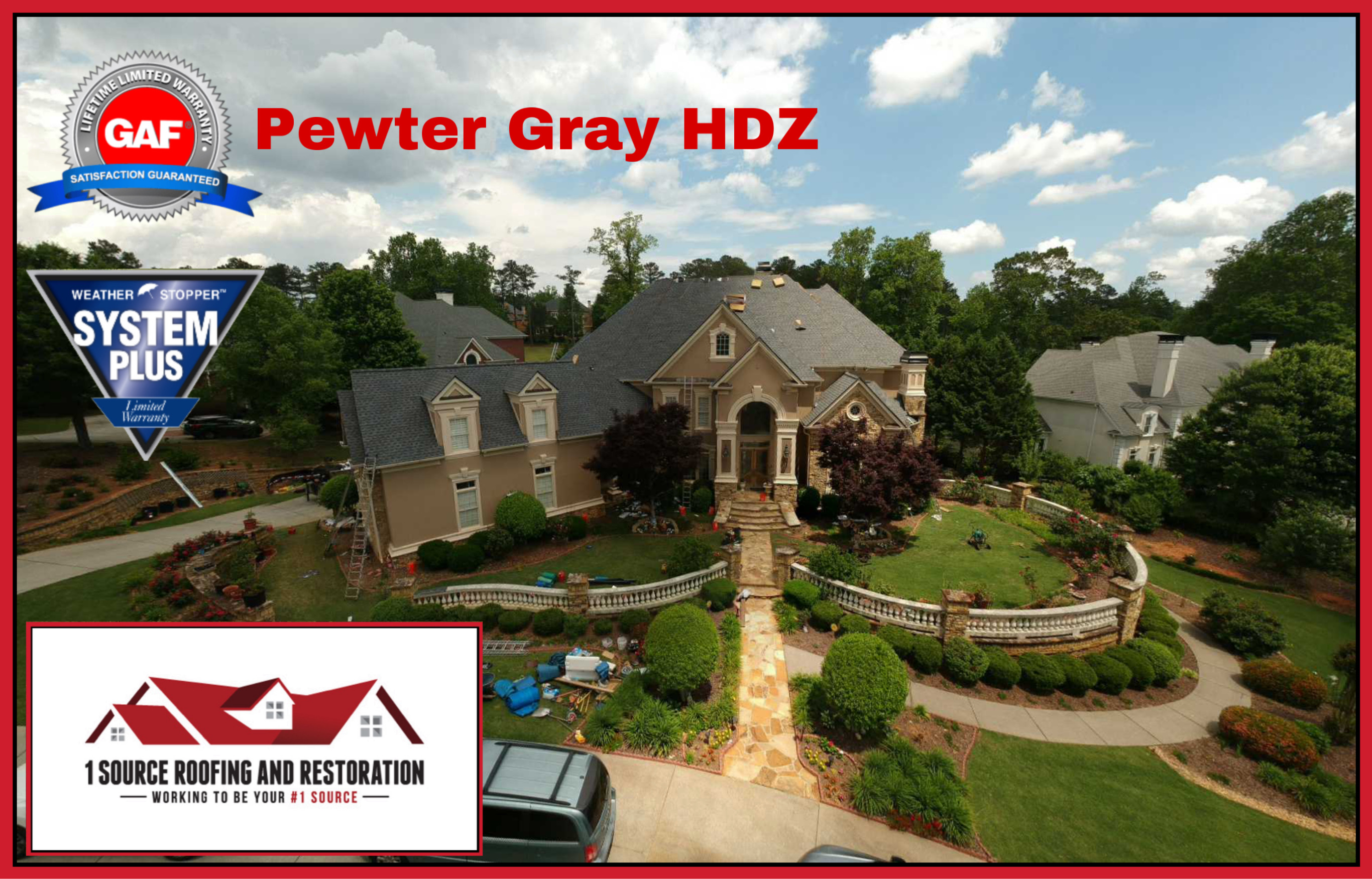
Major shingle manufacturers have settled this question through their warranty terms. GAF and CertainTeed both honor their shingle warranties over rated radiant barrier decking products, and the decking manufacturers — LP and Georgia-Pacific — publish compatibility documentation specifically for use under asphalt shingles. As a GAF Certified contractor, we confirm product compatibility with your chosen shingle line before it ever appears in your scope of work, so there is no warranty ambiguity.
Proper ventilation is the factor that keeps incremental heat irrelevant. A balanced ridge-and-soffit system continuously moves the reflected energy out of the attic before it accumulates. We install ventilation to manufacturer specification on every replacement, which is the same standard that protects the shingle warranty on any roof. Our guide to balanced roof ventilation explains why intake and exhaust must be sized as a system.
Cooler Attic, Lower Bills, One Upgrade
Find out whether radiant barrier decking fits your next roof. Free on-site assessment, written scope, no obligation.
Call (404) 277-13778. Radiant Barrier and Insulation Are a Team
The most persistent misconception about radiant barrier decking is that it replaces insulation. It does not, and treating it as a substitute leaves real performance on the table. The two systems address different heat transfer mechanisms, and a high-performing attic uses both.
Insulation slows conduction and convection — it resists heat passing through the solid ceiling assembly and dampens the movement of warm air. Radiant barrier decking blocks radiation — the infrared energy the sun drives through open air. Insulation does almost nothing against radiant heat crossing the attic gap, and a radiant barrier does almost nothing against conductive heat traveling through the ceiling. Each covers the other's blind spot.
Georgia energy code requires a minimum of R-38 attic insulation in metro Atlanta's climate zone, and that requirement stands whether or not radiant barrier decking is present. The ideal sequence in a high-performance attic is straightforward: the reflective deck keeps the attic dramatically cooler, and the code-level insulation then prevents that lower-temperature attic from driving heat into the conditioned rooms below. Layered correctly, the two measures compound. We treat them as a single design problem, which is the philosophy behind our attic-and-roof-as-one-system approach.
9. How Radiant Barrier Decking Is Installed
Because the reflective panel is the structural roof deck, installing it means replacing the deck — which only happens during a roof replacement. There is no way to slide a new deck under existing shingles. This is why the natural and most cost-effective moment to upgrade is when your current roof reaches the end of its service life and a full replacement is already on the table.
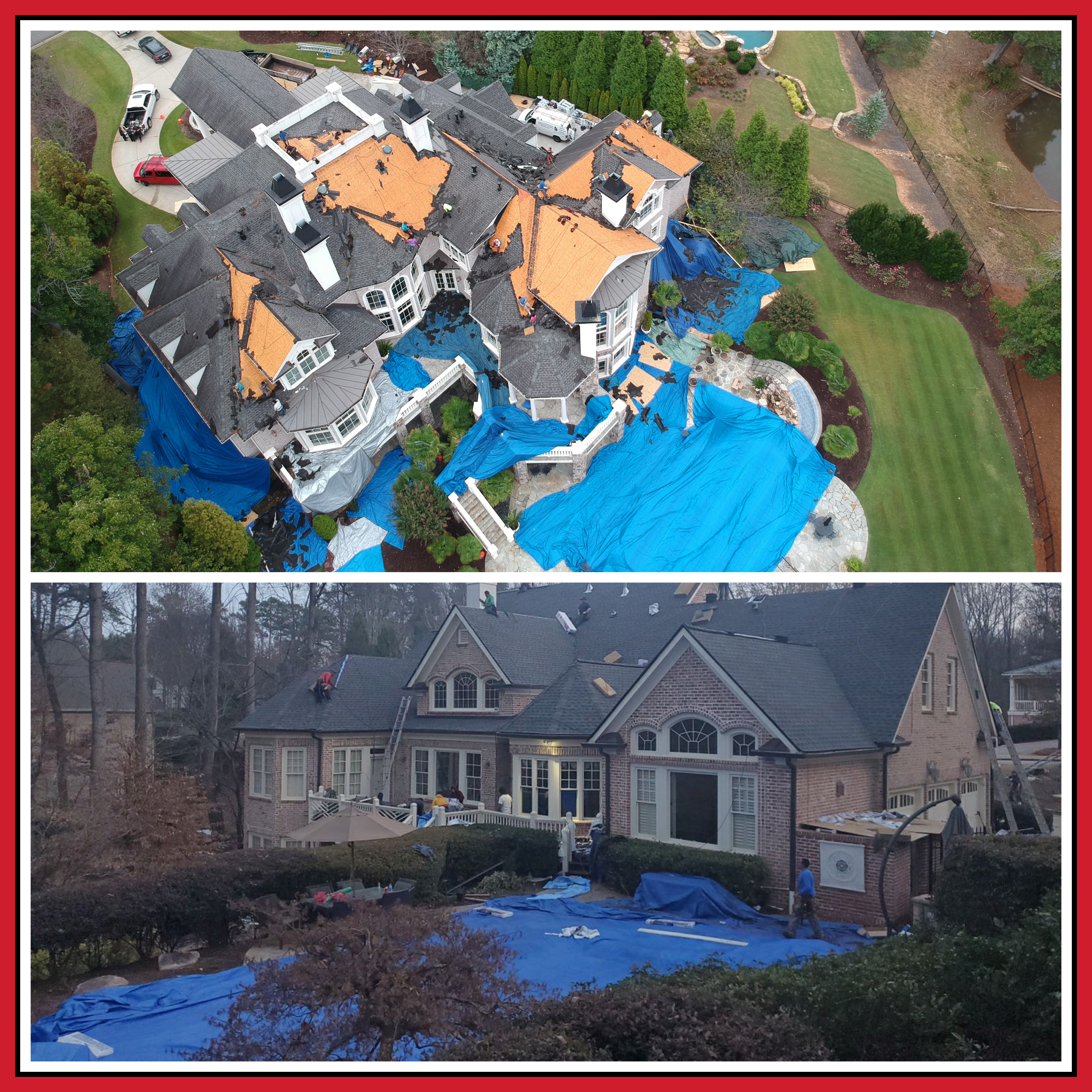
The sequence on a 1Source replacement follows a clear order. The crew tears off the existing shingles and underlayment down to the deck, then removes the old OSB or plywood sheathing where the radiant barrier panels will go. The new radiant barrier panels are installed reflective-side down, fastened to code with the correct nailing pattern, and gapped at the panel edges to allow for thermal expansion. From there the assembly is built up normally: synthetic underlayment, ice-and-water shield at the eaves and valleys, the chosen shingles, and a balanced ridge-and-soffit ventilation system.
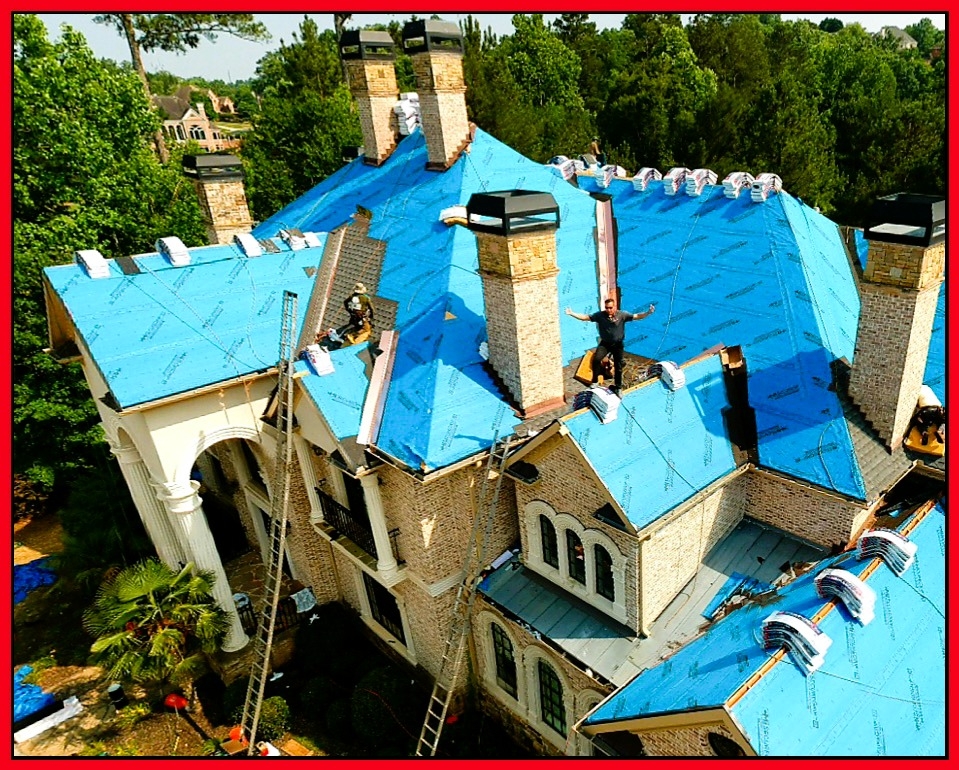
The incremental cost of choosing radiant barrier panels over standard OSB is modest precisely because the deck is being installed regardless. You are paying the material upcharge on the panels, not a separate labor line item — the crew is already decking the roof. That cost structure is what makes the upgrade pencil out so well at replacement time and so poorly as a standalone retrofit. For homeowners in Alpharetta and Sandy Springs already planning a replacement, the decision often comes down to a small premium for a permanent energy improvement.
10. Radiant Barrier Considerations for Commercial and Low-Slope Roofs
The radiant heat problem is not limited to homes. Metro Atlanta office buildings, warehouses, and retail spaces with low-slope roofs face the same solar load, and the interior heat gain drives both cooling cost and equipment wear. While radiant barrier OSB decking is a residential and steep-slope product, the underlying principle — managing radiant heat at the roof — carries directly into commercial roofing strategy.
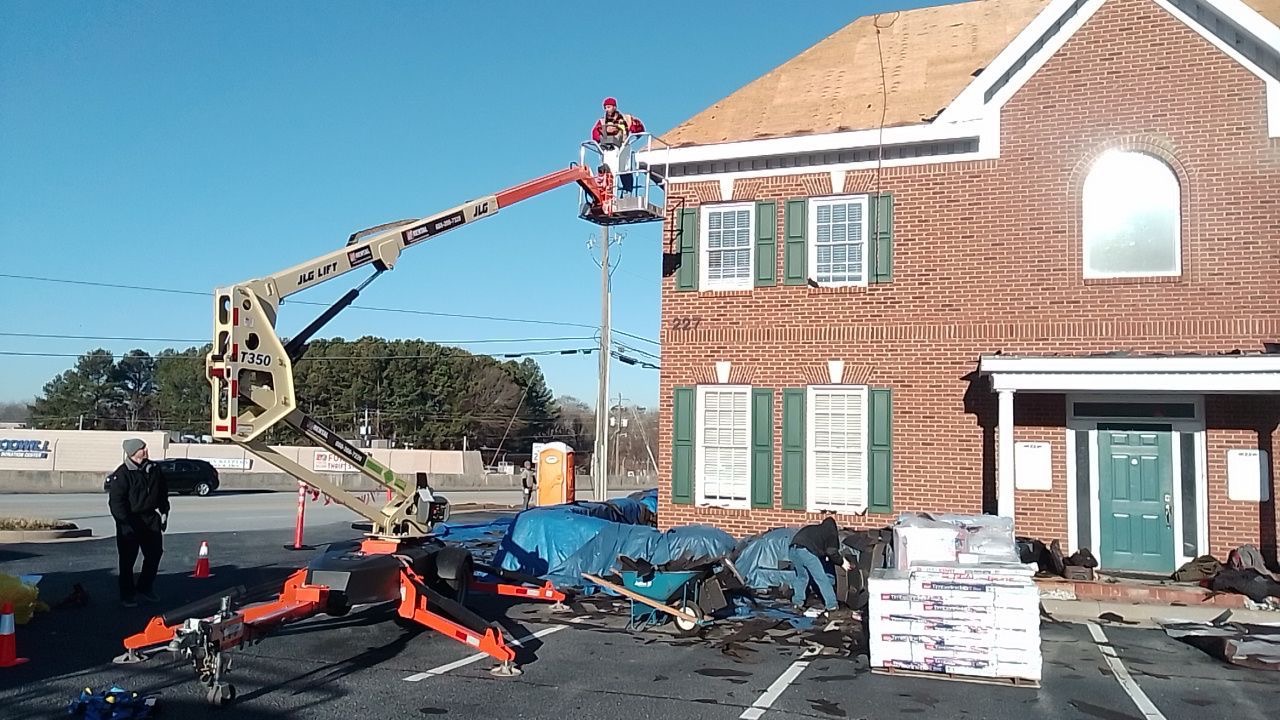
On low-slope commercial roofs, the reflective work happens at the top of the assembly rather than the deck. Highly reflective single-ply membranes and white roof coatings reduce the heat the roof absorbs in the first place, which is the commercial parallel to radiant barrier decking. Our commercial roofing team evaluates roof color, membrane reflectivity, and insulation as an integrated energy package, and our guide to commercial roof restoration coatings covers reflective coating options that extend roof life while cutting cooling load.
For property managers weighing energy improvements across a portfolio, the calculus mirrors the residential case: the most cost-effective moment to upgrade reflectivity is when the roof is already being addressed. Building these decisions into a planned roofing program rather than reacting to failures consistently produces better economics.
11. Which Georgia Homeowners Benefit Most
Radiant barrier decking is not equally valuable for every home, and an honest assessment matters. The homeowners who see the strongest return share a few characteristics, and recognizing whether your home fits the profile helps set expectations before you invest.
The ideal candidate has HVAC ductwork running through an unconditioned attic, a roof nearing the end of its service life, significant west- or south-facing roof exposure, and a single-story or wide footprint that puts a lot of roof over the living space. A home in Roswell with an aging roof, a hot upstairs, and an air handler in the attic is close to a textbook case — the upgrade addresses the exact heat penalty that home pays every summer.
Timing is the deciding factor. If your roof is within a few years of replacement, waiting and upgrading the deck during the tear-off captures radiant barrier decking at its lowest possible cost. If your roof is brand new, a standalone attic radiant barrier retrofit is the more sensible path. The worst economics come from tearing off a sound roof solely to install reflective decking — let the roof's natural replacement cycle drive the timing.
Homes with their ductwork already inside conditioned space, very recent roofs, or heavily shaded lots will see smaller returns, and we will tell you so directly. The point of a free assessment is to match the upgrade to the home, not to specify a premium product on every roof regardless of fit. Where the conditions line up — and across metro Atlanta they frequently do — radiant barrier decking is one of the most reliable energy upgrades a homeowner can build into a roof.
12. How 1Source Approaches Radiant Barrier Decking
Our process begins with a free on-site assessment that evaluates more than the shingles. We document your roof's remaining service life, inspect attic ventilation and insulation, note where your ductwork runs, and identify the roof planes carrying the heaviest sun exposure. That assessment tells us whether radiant barrier decking is the right call for your specific home or whether a retrofit or different upgrade serves you better.
When the conditions favor it, we specify the product explicitly in a written scope of work — the panel manufacturer and rating, confirmation of compatibility with your chosen shingle line, the ventilation specification that supports it, and the insulation context. You see exactly what you are investing in before any commitment, with the energy rationale documented rather than promised verbally.
During installation, a site supervisor confirms the panels go down reflective-side-down with the correct nailing and edge gapping, and verifies the ventilation system is balanced to manufacturer specification so the reflected heat actually leaves the attic. The same documentation discipline we bring to a roof repair or a storm damage restoration applies here: photographs, code compliance, and permit closure where required.
You can review our completed work in the photo gallery or read why metro Atlanta homeowners choose us on the why choose 1Source page. When you are ready to find out whether radiant barrier decking belongs in your next roof, the assessment is the place to start — and it costs nothing.
Schedule Your Free Roof Assessment
Roof condition, attic evaluation, ventilation check, and a written scope with the right energy upgrades for your home — before any commitment. Serving Atlanta, Buckhead, Alpharetta, and all of metro Atlanta.
(404) 277-1377 — No ObligationCertified by Industry-Leading Manufacturers