
Roofing Code Violations and Penalties in Georgia
What happens when roofing work violates Georgia building code. Fines, stop-work orders, insurance claim denials, and the corrective action required to bring your roof into compliance.
Certified by Industry-Leading Manufacturers
Common Roofing Code Violations in Georgia
Roofing code violations fall into two broad categories: administrative violations (failure to obtain permits or inspections) and technical violations (installation that does not meet the Georgia-adopted IRC). Both carry consequences, though the enforcement path and penalties differ.
Administrative Violations
Missing permits: Performing roofing work without a required building permit is the most common administrative violation. Building inspectors in Gwinnett County, Fulton County, Cobb County, and DeKalb County patrol neighborhoods looking for signs of active roofing work. A dumpster in the driveway, shingle wrappers in the yard, and workers on the roof without a posted permit card trigger enforcement action.
Open permits: A contractor who pulls a permit but never requests the final inspection leaves an "open permit" on the property record. Open permits indicate work was started but never verified for code compliance. They appear in title searches and can delay home sales.
Expired permits: Building permits carry expiration dates, typically 180 days to one year depending on the jurisdiction. Work performed after the permit expires requires a new permit, often with a re-inspection of all previously completed work.
Technical Violations
Improper installation: Shingles installed with incorrect fastener patterns, wrong nail placement, insufficient nail penetration into the deck, or incorrect exposure create technical violations. The building inspector can identify these issues during the final inspection or during a random compliance check.
Missing components: Installing shingles without required drip edge, omitting underlayment, skipping flashing at penetrations, or failing to install ice and water shield where required are all technical violations that trigger inspection failure.
Wrong materials: Using shingles that do not meet the wind resistance rating for the wind zone, installing materials that lack the required ASTM listing, or using products past their shelf life all constitute material violations.
Exceeding overlay limits: Installing a third layer of shingles on a roof that already has two layers violates the re-roofing provisions of the IRC. This violation requires complete removal of all layers and reinstallation from the deck up.
Stop-Work Orders and Code Enforcement in Georgia
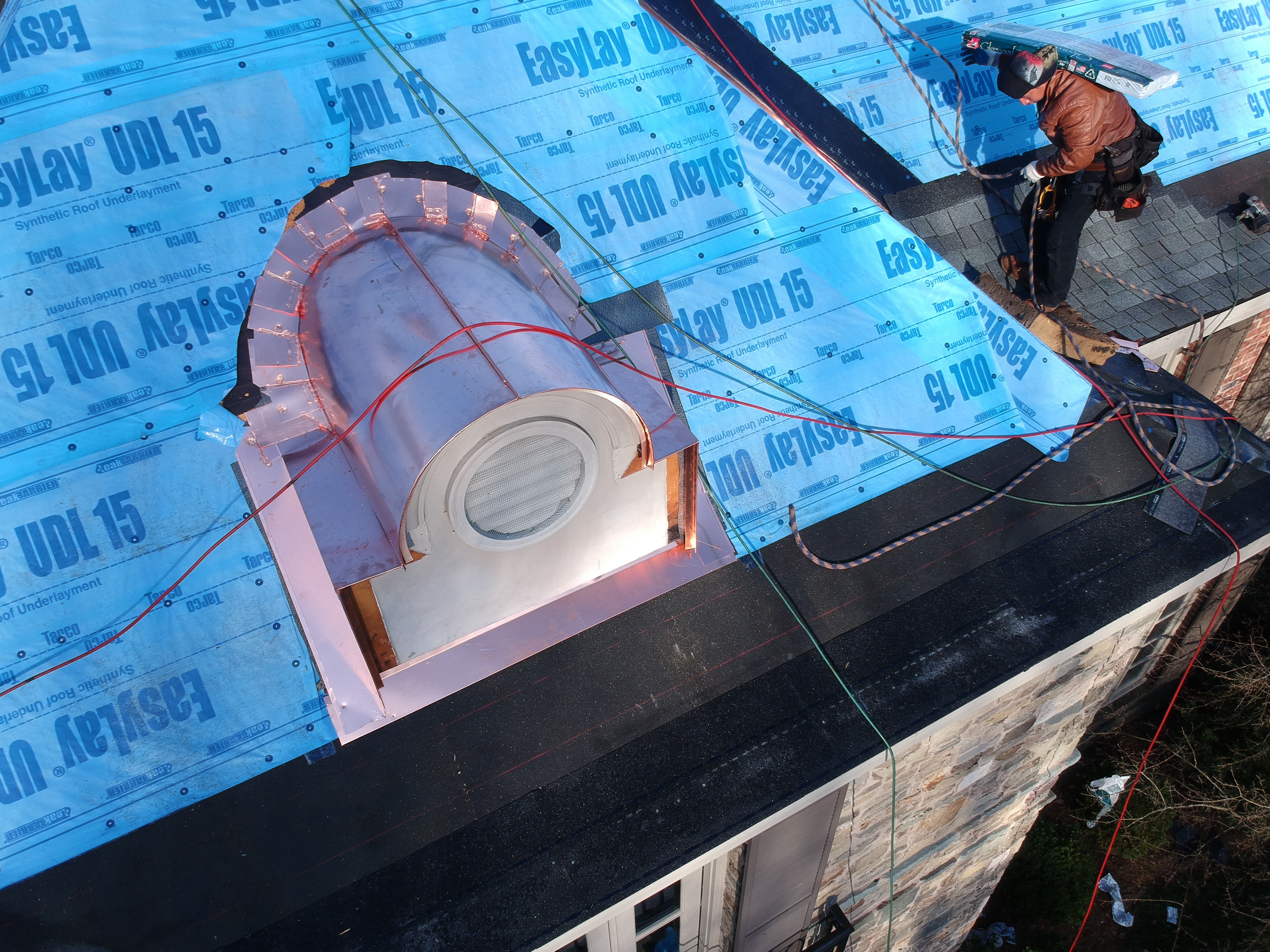
When a building official identifies a code violation during active construction, the first enforcement tool is a stop-work order. This is a legal directive that requires all work on the project to stop until the violation is corrected and the building department grants permission to resume.
How Stop-Work Orders Are Issued
A building inspector can issue a stop-work order in the field, posted on the property and delivered to the contractor. The order specifies the violation, the code section being violated, and the steps required to resume work. Continuing work after a stop-work order is a separate violation that carries additional penalties.
Common triggers for stop-work orders on roofing projects include:
- Work in progress without a posted permit
- Contractor not registered or licensed in the jurisdiction
- Visible installation defects observed from ground level or during an unscheduled inspection
- Complaints from neighbors or other parties
- Work scope exceeding the permitted scope
Resolution Process
Resolving a stop-work order requires the contractor to address the specific violation. For a missing permit, this means applying for and obtaining the permit (with penalty fees). For a technical violation, this means correcting the installation defect and requesting an inspection. The building official must verify the correction before lifting the order and allowing work to continue.
In metro Atlanta jurisdictions, the resolution timeline varies. Gwinnett County building department processes stop-work order resolutions within 1-3 business days when the contractor submits required documentation. Fulton County and the City of Atlanta may take longer depending on workload and the complexity of the violation.
A stop-work order stops your project cold. The contractor cannot resume until the building department lifts the order. Every day of delay costs money and extends the time your home sits with an unfinished roof.
Fines by Jurisdiction and Violation Type
Fine amounts for roofing code violations vary by jurisdiction and by the nature of the violation. Georgia does not impose a uniform statewide fine schedule for building code violations. Instead, each county and municipality sets its own penalty structure through local ordinance.
| Violation Type | Typical Fine Range | Additional Consequences | Correction Required |
|---|---|---|---|
| Working without a permit | $500 - $5,000 | Double permit fee, work stoppage | Obtain retroactive permit, pass inspection |
| Continuing work after stop-work order | $1,000 - $10,000 | Possible criminal misdemeanor charge | Full compliance with original order plus new violations |
| Improper fastener pattern | Inspection failure (no direct fine) | Failed inspection, warranty voided | Remove and reinstall affected shingles with correct pattern |
| Missing drip edge or flashing | Inspection failure | Failed inspection, warranty voided | Install required components, request re-inspection |
| Third layer of shingles (overlay violation) | Inspection failure | Complete tear-off required | Remove all layers, inspect deck, reinstall from scratch |
| Unlicensed contractor | $500 - $5,000 (contractor) | Criminal misdemeanor, possible restitution | Licensed contractor must complete or redo work |
| Substandard materials (wrong ASTM rating) | Inspection failure | Manufacturer warranty void | Remove non-compliant materials, replace with rated products |
The financial impact of a violation extends far beyond the fine itself. A forced tear-off and reinstallation doubles the cost of the roofing project. A voided manufacturer warranty eliminates $5,000 to $15,000 in coverage value. A denied insurance claim can cost tens of thousands of dollars. And a delayed home sale due to open permits or discovered violations can cost a percentage of the home's sale price in concessions.
In affluent metro Atlanta neighborhoods where homes in Buckhead, Johns Creek, and Alpharetta sell for $750,000 to $3 million or more, the financial exposure from a code violation is significant. A $15,000 roofing project done wrong can create $50,000 or more in corrective costs, lost warranty value, and sale complications.
Avoid Code Violations. Work with a Certified Contractor.
1 Source Roofing pulls permits, passes inspections, and documents every installation for warranty registration. Code compliance is not optional on the homes we serve.
Call (404) 277-1377How Code Violations Lead to Insurance Claim Denials
Your homeowner's insurance policy assumes your home meets applicable building codes. When you file a claim for roof damage, the insurance company sends an adjuster who evaluates the damage and the condition of the existing roof. If that adjuster identifies code violations, the insurer has grounds to deny the claim, reduce the payout, or exclude specific damage from coverage.
Common Scenarios Where Violations Affect Claims
Storm damage on an unpermitted roof: A homeowner files a claim after a severe thunderstorm damages the roof. The adjuster discovers the roof was replaced three years ago without a permit. The insurer argues the roof was not installed to code and denies the claim for the damaged section.
Water intrusion from missing flashing: A homeowner files a claim for interior water damage. The adjuster traces the leak to a chimney-to-roof intersection where flashing was never installed or was installed wrong. The insurer classifies this as a pre-existing defect rather than storm damage and denies coverage.
Wind damage from improper nailing: High winds lift shingles that were installed with a 3-nail pattern in a zone requiring 4 or 6 nails. The adjuster pulls a shingle and counts nails. The insurer denies the wind damage claim because the installation did not meet the wind zone requirements.
Insurance companies investigate claims. On a $20,000+ roof claim, they will look for evidence of code compliance. They will check whether a permit was pulled. They will inspect installation quality. They will compare the materials to the wind resistance requirements for the area. A code violation gives them a legal basis to deny or reduce the claim.
For homeowners navigating the insurance claims process, code-compliant installation is the foundation of a strong claim. 1 Source Roofing documents every installation with photographs and warranty registrations that demonstrate code compliance. If a future claim arises, the homeowner has proof that the roof was installed per code by a certified contractor.
How Code Violations Affect Home Sales in Georgia
Georgia's seller disclosure requirements obligate homeowners to reveal known material defects, including known building code violations. Even when the seller does not know about a violation, the buyer's home inspector or the title company may discover it through public records, visual inspection, or permit history review.
Open Permits
An open permit is a permit that was pulled but never received a final inspection. Open permits appear in municipal records and are discoverable during title searches. When a buyer's title company finds an open permit, the sale cannot close until the permit is resolved. Resolution requires scheduling and passing the final inspection, or in some cases, reopening the permit and bringing the work into compliance with the code that was in effect when the permit was issued.
Unpermitted Work
A buyer's home inspector can identify unpermitted work through several indicators: roof age that does not match permit records, installation quality inconsistent with professional work, or materials that do not match the era of the last permitted project. In Sandy Springs, Roswell, and other jurisdictions where building department records are accessible online, buyers and inspectors can verify permit history before making an offer.
Disclosure Requirements
Georgia's Seller Property Disclosure Statement requires sellers to disclose known defects in the roof structure and covering. If you know the roof was installed without a permit, or if you know the installation does not meet code, you must disclose this fact. Failure to disclose a known defect exposes the seller to legal liability after closing.
For homeowners planning to sell a home in metro Atlanta's competitive luxury market, a code-compliant roof with closed permits and documented warranty coverage is a selling point. A roof with open permits, visible defects, or suspected code violations is a liability that buyers and their agents will use as leverage in negotiations.
How to File a Complaint Against a Roofing Contractor in Georgia
If you believe your roofing contractor violated building code, failed to pull permits, performed substandard work, or abandoned the project, Georgia provides several channels for filing complaints and seeking resolution.
Georgia Contractors Licensing Board
The Georgia Contractors Licensing Board (part of the Georgia Secretary of State's office) regulates contractors who perform residential and commercial work. Filing a complaint with the board triggers an investigation that can result in license suspension, revocation, fines, and required restitution. The board has authority over contractors licensed in Georgia and can act on complaints about code violations, contract breaches, and abandonment.
Local Building Department
Your local building department handles complaints about specific properties. If you believe unpermitted work was performed on a property, or if you believe completed work does not meet code, the building department can inspect the property and take enforcement action. Building department complaints target the property and the work, not the contractor specifically.
Georgia Consumer Protection Division
The Consumer Protection Division of the Georgia Attorney General's office handles complaints about deceptive business practices, fraud, and consumer protection violations. If a contractor misrepresented their licensing, collected payment without performing work, or used bait-and-switch tactics, this division can investigate and pursue legal action.
Better Business Bureau
The BBB accepts complaints about both member and non-member businesses. While the BBB does not have enforcement authority, complaints create a public record that affects the contractor's BBB rating and profile. Many consumers check BBB ratings before hiring contractors.
Documentation You Need
Before filing any complaint, gather:
- Signed contract and any change orders
- Payment records (checks, credit card statements, receipts)
- Photographs of the work (before, during, and after)
- Written correspondence (emails, text messages, letters)
- Permit records (or confirmation that no permit was pulled)
- Independent inspection reports if you hired a separate inspector
- Manufacturer product documentation and warranty information
Document everything. Photographs, contracts, receipts, and written communications are the evidence that supports your complaint. Without documentation, enforcement agencies have limited ability to act.
How to Prevent Code Violations on Your Roofing Project
The best approach to code violations is prevention. Homeowners who hire qualified contractors, verify permits, and understand the basics of code compliance avoid the fines, delays, and financial losses that violations create.
Verify Contractor Credentials
Before signing a contract, verify that the contractor holds a valid Georgia contractor's license, maintains active liability insurance, carries workers' compensation coverage, and holds manufacturer certifications from GAF or CertainTeed. Certified contractors face regular audits of their installation quality and business practices. They have a financial incentive to maintain code compliance because their certification depends on it.
Confirm the Permit
Ask the contractor to provide the permit number before work begins. Call your local building department and confirm the permit was issued for your address and for the scope of work described in your contract. After the work is complete, verify that the final inspection was scheduled, completed, and passed.
Understand What You Are Paying For
A code-compliant roof includes specific components: proper underlayment, drip edge at eaves and rakes, flashing at all intersections and penetrations, adequate ventilation, wind-rated shingles with correct fastener patterns, and proper starter and ridge cap installation. If a contractor's bid omits any of these components, the installation will not meet code.
1 Source Roofing provides detailed proposals that list every component of the installation, references the applicable code requirements, and includes the permit as part of the project scope. We pull permits, attend inspections, and close out permits on every project. If you want a roofing contractor who treats code compliance as a core standard rather than an afterthought, call us at (404) 277-1377.
Roofing Code Violations — Frequently Asked Questions
Answers to common questions about code violations, penalties, and enforcement in Georgia.
What happens if a roofer works without a permit in Georgia?
Unpermitted roofing work in Georgia can trigger fines ranging from $500 to $5,000 depending on the jurisdiction. The building department can issue a stop-work order and require the contractor to obtain a permit retroactively, which often includes penalty fees double the original permit cost. In serious cases, the building official can require removal and reinstallation of the completed work. The homeowner bears responsibility for unpermitted work on their property, even if the contractor failed to pull the permit.
Can insurance deny a claim for a roof that violates building code?
Yes. Homeowner's insurance policies typically require that the home meet applicable building codes. If a roof was installed without a permit or in violation of the Georgia building code, the insurer can deny claims related to that roof. Storm damage claims, water intrusion claims, and structural damage claims can all be denied if the insurer determines the roof was non-compliant at the time of installation.
How do I file a complaint against a roofing contractor in Georgia?
Georgia homeowners can file complaints through multiple channels. The Georgia Contractors Licensing Board handles complaints about licensed contractors. The Georgia Secretary of State's Consumer Protection Division addresses fraud and deceptive practices. Your local building department handles code violation complaints about specific properties. The Better Business Bureau accepts complaints about member and non-member businesses. Document everything with photographs, contracts, receipts, and correspondence before filing.
Do roofing code violations affect home sales in Georgia?
Yes. Georgia's disclosure laws require sellers to disclose known material defects, which includes known code violations. A home inspector working for the buyer may identify unpermitted work or code-non-compliant installations. Open permits appear in public records and title searches. Any of these issues can delay or terminate a sale, require the seller to fund corrective work, or result in a price reduction negotiated by the buyer.