
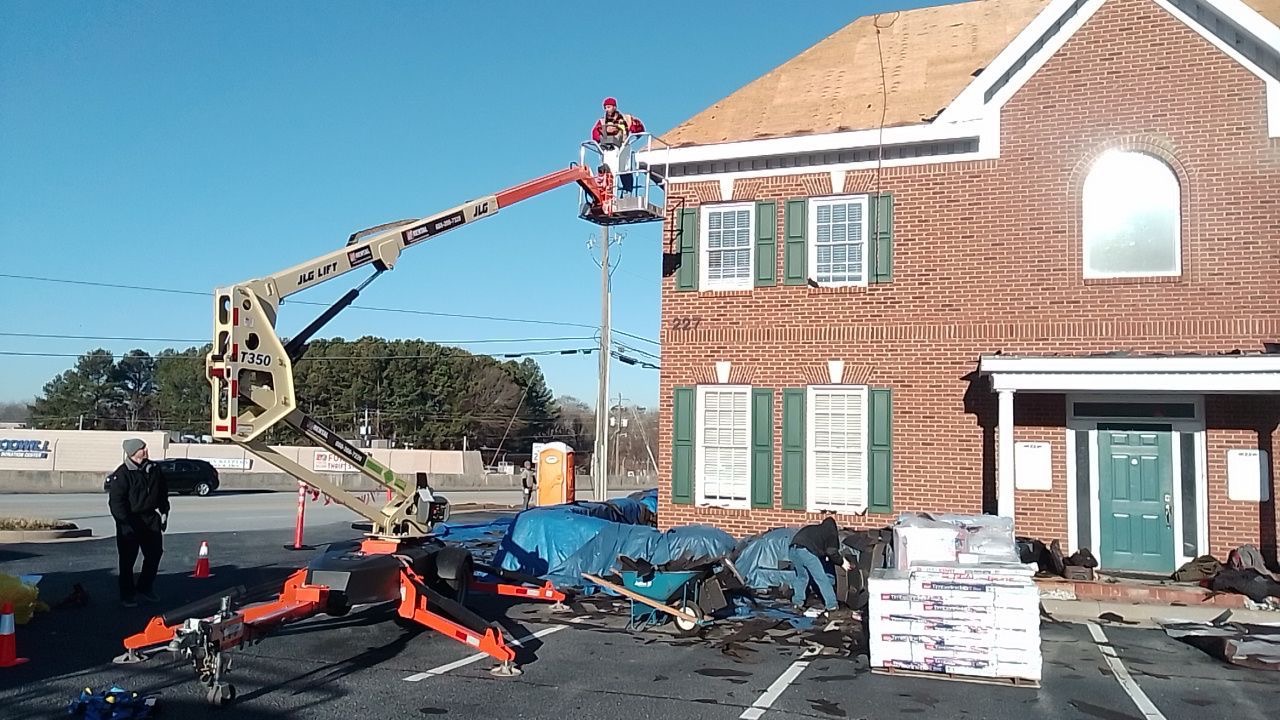
Roof Underlayment Code in Georgia
IRC Section R905.1 requires underlayment on every asphalt shingle roof in Georgia. This guide covers product standards, attachment methods, ice barrier thresholds, and the synthetic vs. felt decision.
Certified by Industry-Leading Manufacturers
Georgia's Underlayment Requirements Under the 2024 IRC
Underlayment is the secondary weather barrier between your roof deck and your shingles. It catches water that penetrates the shingle layer through wind-driven rain, ice dams, or fastener failures. The IRC treats underlayment as a mandatory roofing component. No code-compliant asphalt shingle installation in Georgia proceeds without it.
IRC Section R905.1.1 establishes the general underlayment requirement: "An underlayment layer shall be applied over the roof deck." This applies to all asphalt shingle roofs governed by R905.2, all wood shake roofs governed by R905.7, and most tile installations. The section then specifies which products satisfy the requirement and how they must be applied based on roof slope and geographic conditions.
Georgia adopts the IRC through the Department of Community Affairs (DCA) with state-specific amendments. The underlayment provisions in R905.1.1 carry through to Georgia's adopted code without significant modification. Local jurisdictions enforce these requirements through their building departments. When your contractor pulls a permit in Alpharetta or Marietta, the building inspector checks underlayment installation during the final roof inspection.
The 2024 IRC refines underlayment provisions in several areas. Product standard references now include updated ASTM editions. Attachment requirements for high-wind areas carry additional specificity. The slope-dependent layering rules remain structurally the same as prior editions but include clarified language on transition zones where different slopes meet on the same roof.
Underlayment serves three functions the code recognizes. First, it protects the roof deck from moisture during the construction period between deck installation and shingle application. Second, it provides a secondary drainage plane if water penetrates the primary roof covering. Third, it serves as the substrate for self-sealing asphalt shingle strips that bond through heat activation. Without underlayment, the sealant strip contacts bare wood or OSB, compromising the seal.
The code establishes approved underlayment products through ASTM standard references. Three primary ASTM standards govern underlayment materials used under asphalt shingles in Georgia:
- ASTM D226 — Standard Specification for Asphalt-Saturated Organic Felt Used in Roofing and Waterproofing (Type I and Type II)
- ASTM D4869 — Standard Specification for Asphalt-Saturated Organic Felt Underlayment Used in Steep-Slope Roofing
- ASTM D6757 — Standard Specification for Inorganic Underlayment for Use with Steep-Slope Roofing Products
Any product that meets one of these three standards satisfies the IRC underlayment requirement for Georgia asphalt shingle installations. For the full code framework that governs roofing in Georgia, including permits, inspections, and enforcement structure, see our Georgia residential roofing code guide.
Synthetic vs. Asphalt-Saturated Felt: What the Code Allows
The code does not favor one underlayment type over another. ASTM D226 felt and ASTM D6757 synthetic are both code-compliant. The choice between them is a performance and cost decision, not a code compliance decision. Both pass inspection. But the products differ in ways that matter on the job site and over the life of the roof.
Asphalt-Saturated Felt (ASTM D226)
Traditional roofing felt is an organic fiber mat saturated with asphalt. ASTM D226 defines two grades: Type I (No. 15 felt, approximately 8 pounds per square) and Type II (No. 30 felt, approximately 20 pounds per square). The IRC permits either type as a single-layer underlayment on roofs at 4:12 or steeper.
Felt has been the standard underlayment product for decades. It is widely available, inexpensive, and familiar to every roofing crew. It absorbs moisture and lays flat against the deck, providing good contact for shingle sealant strip activation. It tears with moderate force, which means wind can damage exposed felt during construction delays. UV exposure degrades felt within days. If your roof deck sits exposed to weather for more than a few days before shingle installation, felt can deteriorate to the point where it no longer meets the ASTM standard.
Synthetic Underlayment (ASTM D6757)
Synthetic underlayment is a woven or non-woven polypropylene or polyester sheet. Products that meet ASTM D6757 satisfy the IRC underlayment requirement. Synthetic underlayment offers several performance advantages over felt:
- Tear resistance: Synthetic products resist tearing at forces 5 to 10 times higher than felt. This matters during installation (crews walk on underlayment) and during weather events between installation phases.
- UV stability: Most synthetic products tolerate 90 to 180 days of UV exposure before shingle installation. Felt degrades within a week. For projects that experience weather delays, this difference protects the deck.
- Weight: A roll of synthetic underlayment covering 10 squares weighs approximately 25 to 35 pounds. An equivalent coverage of No. 15 felt weighs approximately 45 to 60 pounds. Lighter rolls reduce crew fatigue and improve handling on steep slopes.
- Slip resistance: Many synthetic products incorporate a textured walking surface that provides better traction than felt on steep roofs. Crew safety on 8:12 or steeper slopes improves with synthetic underlayment.
- Lay-flat performance: Synthetic does not wrinkle or buckle the way felt does in humid conditions. A flat underlayment surface produces a cleaner shingle installation and eliminates the telegraphing (visible bumps through shingles) that wrinkled felt can cause.
ASTM D4869: The Middle Ground
ASTM D4869 covers asphalt-saturated felt products designed for steep-slope roofing. Products meeting this standard are heavier and more tear-resistant than standard D226 Type I felt, but they remain organic-based products subject to the same UV and moisture limitations. Some contractors use D4869 products as a middle ground between basic felt and synthetic, getting better durability at a lower cost than full synthetic.
| Property | ASTM D226 Type I (No. 15 Felt) | ASTM D226 Type II (No. 30 Felt) | ASTM D6757 (Synthetic) |
|---|---|---|---|
| Weight per square | ~8 lbs | ~20 lbs | ~3-5 lbs |
| Tear resistance | Low | Moderate | High |
| UV exposure tolerance | 3-7 days | 7-14 days | 90-180 days |
| Slip resistance | Low (wet) | Low (wet) | High (textured) |
| Moisture absorption | Yes (wrinkles) | Yes (wrinkles) | No |
| Code compliant in GA | Yes | Yes | Yes |
| Approximate cost per square | $3-5 | $6-10 | $8-15 |
For roof replacement projects in metro Atlanta, 1 Source Roofing uses synthetic underlayment as the standard. The performance advantages justify the modest cost difference, and synthetic underlayment is a required component in both GAF and CertainTeed system warranty programs.
Single-Layer vs. Double-Layer Application
The IRC ties underlayment layer count to roof slope. Steeper roofs shed water faster and face lower risk of moisture infiltration through the shingle system. Lower slopes hold water longer and require enhanced protection. The slope thresholds are specific and non-negotiable.
Single-Layer: 4:12 and Steeper
Roofs at 4:12 (four inches of rise per twelve inches of run) or steeper require a single layer of code-compliant underlayment. The application rules are straightforward:
- Apply the first course along the eave, parallel to the roof edge
- Each subsequent course overlaps the one below by at least 2 inches at horizontal laps
- End laps (where two rolls meet along the same course) must overlap by at least 4 inches
- The underlayment must cover the entire roof deck before shingle installation begins
Most residential roofs in Buckhead, Johns Creek, Roswell, and other premium Atlanta neighborhoods have primary roof slopes between 6:12 and 12:12. These fall into the single-layer category. The steeper the slope, the less time water spends on the underlayment surface, and the lower the risk of penetration through lap seams.
Double-Layer: 2:12 to Less Than 4:12
Roofs between 2:12 and 4:12 require double-layer underlayment. The IRC prescribes a specific application method that produces two layers of felt across the entire roof surface:
- Start with a 19-inch-wide starter strip along the eave edge
- Apply a full 36-inch-wide sheet over the starter, aligning its lower edge with the eave
- Each subsequent 36-inch sheet overlaps the preceding sheet by 19 inches, leaving 17 inches exposed
- This pattern produces two layers of felt at every point on the roof surface
The alternative to double-layer felt is a single layer of self-adhered modified bitumen sheet (ice and water shield) covering the entire low-slope section. This creates a continuous waterproof membrane that bonds to the deck surface. Some contractors prefer this method because it is faster to install and provides superior water resistance. The trade-off is higher material cost.
Low-slope sections appear on many metro Atlanta homes as porch roofs, garage transitions, dormer roofs, and bump-out additions. A home with a main roof at 8:12 may have a porch roof at 3:12. Your contractor must identify each slope zone during the pre-installation survey and apply the correct underlayment system to each. Mixing up the requirements results in a failed inspection. Our asphalt shingle code page covers how slope thresholds interact with the full R905.2 shingle installation requirements.
A 3:12 porch roof needs double-layer underlayment even when the main roof at 8:12 gets single layer. Each slope zone carries its own code requirement, and the contractor must identify every zone during the pre-installation survey.
Need Code-Compliant Underlayment on Your Roof?
1 Source Roofing installs GAF and CertainTeed underlayment systems that meet IRC R905.1 and qualify for full manufacturer warranties. Every installation passes local building inspection.
Call (404) 277-1377High-Wind Underlayment Attachment
Standard underlayment attachment uses cap nails or staples spaced at intervals sufficient to hold the material flat against the deck until shingles are applied. The code increases attachment requirements in areas with design wind speeds of 120 mph or greater. While metro Atlanta sits at 115 mph (below the enhanced threshold), the Georgia coast and transition zones require these additional measures.
Standard Attachment (Under 120 mph)
For the 115 mph wind zone covering Alpharetta, Sandy Springs, Johns Creek, Roswell, Marietta, and Buckhead, the code requires underlayment attachment with corrosion-resistant fasteners. Cap nails are the preferred fastener because the plastic or metal cap distributes the holding force across a wider area, reducing the chance of the underlayment tearing through around the fastener.
Standard spacing calls for cap nails at 12 inches on center along lap edges and 24 inches on center in the field of each sheet. This holds the underlayment flat during the construction period and prevents wind from lifting it before shingle installation. Smooth-shank roofing nails without caps can pull through underlayment in moderate wind, so cap nails are the professional standard even where the code does not mandate them.
Enhanced Attachment (120 mph and Above)
In the 120+ mph wind zone, the IRC requires a more aggressive attachment pattern. The specific requirements depend on the code edition and any local amendments, but the general provisions include:
- Cap nails or cap staples at 6 inches on center along all edges and laps
- Additional rows of fasteners across the field of each sheet at 12 inches on center
- Sealed or taped lap joints to prevent wind-driven rain from entering through the horizontal seams
- Self-adhered underlayment at eaves, rakes, and hips where uplift forces concentrate
Georgia's coastal counties (Chatham, Glynn, Camden, McIntosh, Liberty, Bryan) fall in the 130+ mph zone and require these enhanced attachment methods. Inland counties south and east of the fall line sit at 115-120 mph. Metro Atlanta at 115 mph uses standard attachment, but contractors who work across multiple wind zones must know both protocols.
Manufacturer Attachment Requirements
Both GAF and CertainTeed publish installation instructions for their underlayment products that specify attachment patterns. GAF Deck Armor synthetic underlayment requires cap nails at 6 inches on center at horizontal laps and 12 inches on center in the field. CertainTeed DiamondDeck has similar requirements. These manufacturer specifications often exceed the IRC minimum and become part of the code requirement through R905.2.6, which mandates compliance with manufacturer installation instructions.
For a detailed breakdown of wind speed zones across Georgia and how they affect roofing material and fastener requirements, see our wind speed requirements guide.
Ice Barrier Requirements: Does Atlanta Need Them?
IRC Section R905.1.2 mandates ice barrier underlayment in areas where the average daily temperature in January is 25°F (-4°C) or below, as determined by the National Weather Service data referenced in the code. Ice barriers must extend from the eave edge to at least 24 inches past the interior face of the exterior wall.
Metro Atlanta: Below the Threshold
Atlanta's average January temperature hovers around 43°F (6°C). This places the entire metro area well above the 25°F threshold. Under a strict reading of the IRC, ice barrier underlayment is not mandatory for residential roofs in Alpharetta, Buckhead, Sandy Springs, Johns Creek, Roswell, Marietta, or anywhere in the Atlanta metro area.
This does not mean ice and water shield is unnecessary in metro Atlanta. It means the code does not require it at eaves as a baseline condition. The distinction matters: a contractor who skips ice and water shield at eaves in Atlanta does not violate the IRC. But that contractor may violate manufacturer warranty requirements, which brings us to the next point.
Manufacturer Requirements Override the Minimum
GAF requires ice and water shield (StormGuard or WeatherWatch) at eaves, valleys, and around penetrations for all Enhanced, Silver Pledge, and Golden Pledge warranty registrations. CertainTeed requires WinterGuard ice and water shield in the same locations for SureStart Plus and extended warranty coverage. Because R905.2.6 requires installation "in accordance with the manufacturer's printed instructions," the manufacturer's ice and water shield requirement becomes a de facto code requirement on any installation that claims those warranty levels.
At 1 Source Roofing, we install ice and water shield at eaves, valleys, around chimneys, and at all roof penetrations on every asphalt shingle installation. This exceeds the code minimum for metro Atlanta but satisfies both GAF and CertainTeed warranty requirements. It also provides genuine protection against the ice events that hit Atlanta every few years, when backed-up ice at the eave can push water under shingle tabs.

North Georgia Mountains: Above the Threshold
Counties in the north Georgia mountains (Rabun, Towns, Union, Fannin, Gilmer, Pickens, Dawson, Lumpkin) drop below the 25°F January average. Properties in these areas fall under the mandatory ice barrier provision. If you own a second home in Blue Ridge, Ellijay, or Dahlonega and need roofing work, the ice barrier requirement applies to that property even though your primary residence in metro Atlanta is exempt.
The ice barrier must be a self-adhering polymer-modified bitumen sheet that complies with ASTM D1970. Products like GAF StormGuard, CertainTeed WinterGuard, and Grace Ice & Water Shield meet this standard. The barrier bonds to the deck surface and self-seals around fastener penetrations, creating a waterproof membrane at the eave where ice dam conditions concentrate moisture.
Self-Adhered vs. Mechanically Fastened Underlayment
The IRC recognizes two categories of underlayment based on how they attach to the roof deck: mechanically fastened products (nailed or stapled) and self-adhered products (peel-and-stick membrane). Each has specific code provisions and practical applications.
Mechanically Fastened Underlayment
Felt (ASTM D226, D4869) and most synthetic underlayment (ASTM D6757) products attach to the deck with cap nails or cap staples. The installer rolls the product across the deck and fastens it at intervals specified by the manufacturer and the code. This is the standard attachment method for full roof-surface underlayment on slopes at 4:12 or steeper.
Mechanical fastening is fast and economical. A crew can cover a 30-square roof with synthetic underlayment in under two hours. The fasteners hold the material flat during the construction period and compress it against the deck. The shingles applied over the underlayment provide the permanent weather seal. The underlayment's role shifts from primary weather barrier (during construction) to secondary drainage plane (for the life of the roof).
The limitation of mechanically fastened underlayment is that it does not seal around the fastener penetrations. Every cap nail creates a small hole in the underlayment. On a properly installed and shingled roof, these holes are covered by shingle courses and sealed by the shingle sealant strip. But in areas where water can pool or back up (eaves during ice events, valleys during heavy rain), these fastener holes become potential entry points.
Self-Adhered Underlayment
Self-adhered underlayment products are polymer-modified bitumen sheets with a factory-applied adhesive backing. You peel a release liner and press the product onto the deck surface. The adhesive bonds to plywood and OSB, creating a waterproof membrane that self-seals around any fasteners driven through it.
The code mandates self-adhered underlayment (meeting ASTM D1970) in specific locations:
- Ice barrier zones: Where the January temperature threshold is met (north Georgia mountains)
- Low-slope alternative: As a single-layer substitute for double-layer felt on slopes between 2:12 and 4:12
- Manufacturer requirements: At eaves, valleys, and penetrations where GAF and CertainTeed specify ice and water shield for warranty coverage
Self-adhered products cost more than mechanically fastened alternatives. GAF StormGuard runs approximately $60-80 per roll (covering 2 squares). CertainTeed WinterGuard falls in a similar range. By comparison, a roll of synthetic underlayment covering 10 squares costs approximately $80-150. The cost-per-square of self-adhered product is 3 to 5 times higher than synthetic. This cost difference is why full-roof self-adhered underlayment is reserved for special conditions rather than standard practice.
Hybrid Approach: Standard Practice for Metro Atlanta
The standard installation approach for metro Atlanta combines both attachment methods on the same roof. Self-adhered ice and water shield goes at the eaves (extending 36 inches past the interior wall line), in all valleys (36 inches wide centered on the valley line), around chimneys and skylights, and at pipe penetrations. Mechanically fastened synthetic underlayment covers the remaining field area.
This hybrid approach satisfies the IRC, exceeds the ice barrier exemption for metro Atlanta (providing protection the code does not require but conditions occasionally demand), and meets the manufacturer warranty specifications from both GAF and CertainTeed. It is the standard for every 1 Source Roofing installation.
The hybrid approach works: self-adhered ice and water shield at eaves, valleys, and penetrations, with synthetic underlayment across the field. This combination meets code, satisfies warranty requirements, and provides genuine protection at every vulnerable point on the roof.
What 1 Source Installs Under Every Roof
Every roof replacement that 1 Source Roofing performs uses a GAF or CertainTeed underlayment system designed to meet code, satisfy manufacturer warranty requirements, and protect your home for the full life of the shingle system above it.
GAF Deck Armor Premium Breathable Roof Deck Protection
Deck Armor is GAF's premium synthetic underlayment product. It meets ASTM D6757 and provides 180 days of UV exposure tolerance. Its engineered breathable design allows moisture vapor to escape from the attic while blocking liquid water from above. Deck Armor's non-slip surface provides crew safety on steep slopes common in Buckhead and Johns Creek where roof pitches reach 12:12 or steeper.
Deck Armor is a required component of GAF's Lifetime Roofing System for Silver Pledge and Golden Pledge warranty registration. When we install a GAF system, Deck Armor goes on the field areas, and GAF StormGuard ice and water shield goes at eaves, valleys, and penetrations.
GAF FeltBuster Synthetic Roofing Felt
FeltBuster is GAF's standard synthetic underlayment, positioned as a direct replacement for traditional felt. It meets ASTM D6757 at a lower cost than Deck Armor. FeltBuster provides strong tear resistance, non-slip surface texture, and 90 days of UV exposure protection. We use FeltBuster on projects where the budget guides the underlayment selection but synthetic performance remains the priority.
Ice and Water Shield at Critical Locations
Regardless of which field underlayment we use, every 1 Source Roofing installation includes self-adhered ice and water shield at:
- Eaves: Extending from the drip edge to at least 36 inches past the interior face of the exterior wall
- Valleys: 36 inches wide, centered on the valley line
- Chimneys: Full wrap around the chimney base, extending 24 inches onto the roof surface in all directions
- Skylights: Full perimeter wrap with 12-inch minimum extension onto the deck
- Pipe penetrations: 12-inch minimum radius around each pipe boot
This installation pattern exceeds the IRC minimum for metro Atlanta (where ice barrier is not mandated) but satisfies both GAF and CertainTeed warranty programs. It protects against the ice storms that hit Atlanta every few winters and against wind-driven rain intrusion at the most vulnerable points in any roofing system. See our underlayment and ice dam protection guide for the manufacturer-specific details on each product.
Underlayment Inspection
Building inspectors in metro Atlanta check underlayment application during the final roofing inspection. They verify product type, lap dimensions, and attachment at accessible edges. On most inspections, the underlayment is covered by shingles except at the eave, where the inspector can lift a starter course to verify proper underlayment installation and drip edge sequencing. Our project managers attend every inspection and are prepared to show material documentation (product labels, ASTM compliance stamps) if the inspector requests it.
For homes across Alpharetta, Sandy Springs, Roswell, Marietta, and the greater Atlanta area, proper underlayment is the foundation of a code-compliant, warranty-eligible roof. It is the layer you never see after installation day, but it is the layer that protects your home when the shingle system above it is tested by Georgia's storms. Call 1 Source Roofing at (404) 277-1377 to schedule your free inspection.
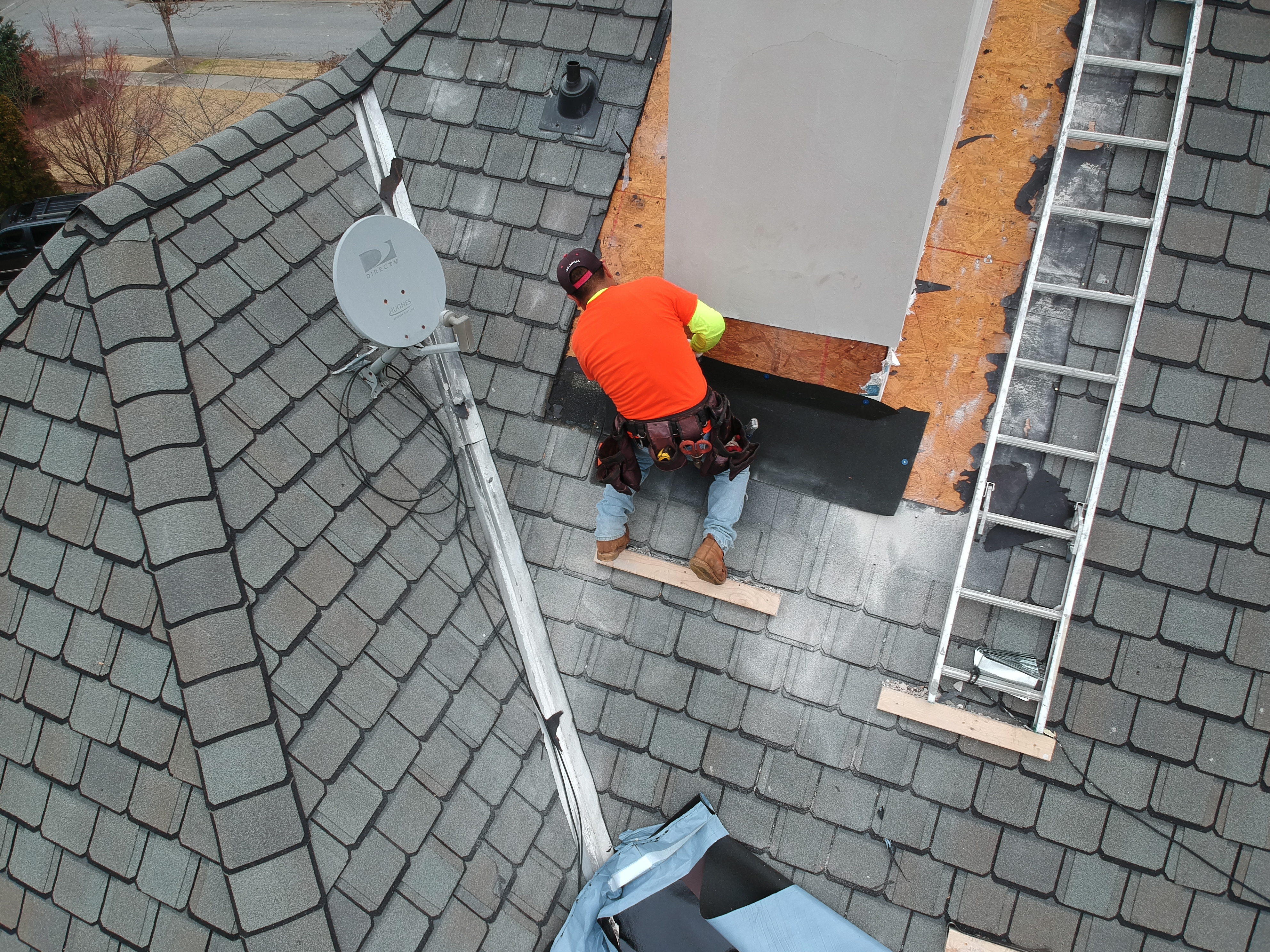
Roof Underlayment Code Requirements — Frequently Asked Questions
Common questions about Georgia's underlayment standards, product choices, and installation requirements.
Does Georgia code require underlayment on every roof?
Yes. IRC Section R905.1.1, adopted by Georgia, requires underlayment on all asphalt shingle roofs. The underlayment must comply with ASTM D226 (asphalt-saturated felt), ASTM D4869 (asphalt-saturated felt for roofing and waterproofing), or ASTM D6757 (inorganic/synthetic underlayment). The code does not permit asphalt shingles to be applied to the roof deck without an underlayment layer.
Can I use synthetic underlayment instead of felt in Georgia?
Yes. Georgia code permits synthetic underlayment that complies with ASTM D6757. Synthetic products offer higher tear resistance, lower weight, better UV stability during construction delays, and superior slip resistance for crew safety. Both GAF Deck Armor and CertainTeed DiamondDeck meet ASTM D6757 and satisfy the IRC underlayment requirement for Georgia installations.
Does Atlanta need ice and water shield underlayment?
The IRC requires ice barrier underlayment in areas where the average January temperature is 25 degrees Fahrenheit or below. Metro Atlanta's average January temperature sits above this threshold, so ice barrier is not code-mandated for most Atlanta-area homes. Both GAF and CertainTeed require ice and water shield at eaves, valleys, and penetrations for their enhanced warranty programs. Most professional contractors install it in these vulnerable areas regardless of the code minimum.
When does Georgia code require double-layer underlayment?
Georgia code requires double-layer underlayment on asphalt shingle roofs with slopes between 2:12 and 4:12. This low-slope condition requires either two layers of ASTM D226 Type I felt applied with a 19-inch head lap, or a single layer of self-adhered modified bitumen sheet covering the entire roof surface. Roofs at 4:12 or steeper use standard single-layer underlayment.
Related Building Code and Technical Guides
These pages cover related code requirements and technical installation standards for Georgia residential roofing:
- Georgia Residential Roofing Code Guide — Complete overview of IRC Chapter 9, permits, and inspections
- Asphalt Shingle Code Requirements — IRC R905.2 shingle classifications, wind ratings, fastener patterns
- Wind Speed Requirements for Georgia Roofs — ASCE 7 wind maps, exposure categories, uplift calculations
- Roof Ventilation Code Requirements — IRC R806 ventilation ratios and methods
- Roof Slope Minimum Requirements — Slope thresholds for all roof covering types
- Underlayment and Ice Dam Protection — Product selection, application methods, manufacturer requirements
- Drip Edge Installation Guide — Profile types, eave vs. rake sequencing, code requirements
- Flashing Standards Guide — Step flashing, counter flashing, valley treatments
- Technical Standards Library — Complete index of roofing technical resources
Questions about underlayment requirements for your home? Call 1 Source Roofing at (404) 277-1377 for a free roof inspection and code compliance evaluation.