

Roof Flashing Code in Georgia
Flashing failures cause more roof leaks in Atlanta than shingle failures. Georgia code specifies where flashing goes, what materials qualify, and how contractors must install it.
Certified by Industry-Leading Manufacturers
Georgia's Flashing Requirements Under the IRC
Georgia adopts the International Residential Code (IRC) through the Georgia Department of Community Affairs (DCA). IRC Section R903.2 contains the core flashing mandate: "Flashings shall be installed at wall and roof intersections, at gutters, wherever there is a change in roof slope or direction, and around roof openings." The language leaves no ambiguity. Every penetration, intersection, and transition on your roof requires flashing.
Section R903.2 applies to new construction and reroofing. When you replace your roof, every flashing component must meet current code, regardless of what the original installation included. Contractors who reuse old flashing during a roof replacement violate this requirement unless the existing flashing meets current material and condition standards.
The IRC specifies flashing at these locations:
- Roof-to-wall intersections (where a roof slope meets a vertical wall)
- Valleys (where two roof planes meet at an interior angle)
- Chimneys (base flashing, counter flashing, and cricket where required)
- Skylights (head, sill, and side flashing)
- Plumbing vents and exhaust fans (boot flashings)
- Drip edge at eaves and rakes
- Changes in roof slope or direction
Local jurisdictions in Fulton, Gwinnett, DeKalb, and Cobb counties enforce these requirements through permit inspections. The building inspector checks flashing installation before approving the completed roof. Missing flashing, improper material, or incorrect installation triggers a failed inspection and mandatory correction.
For the full Georgia residential roofing code framework, see our Georgia Residential Roofing Code Guide.
Types of Flashing Required by Code
Each flashing type serves a specific function at a specific location. Substituting one type for another creates leak paths that may not appear for months or years. Here is what the code requires and where each type belongs.
Step Flashing
Step flashing protects roof-to-wall intersections where a sloped roof meets a vertical sidewall. Each piece of step flashing is an L-shaped metal segment, woven into the shingle courses so that one leg sits on the roof deck and the other turns up behind the wall cladding. IRC Section R903.2 requires step flashing at every roof-to-wall junction. The minimum size is 4 inches by 4 inches (4-inch leg on the roof, 4-inch leg up the wall). Each piece must overlap the one below it by at least 2 inches. Learn more about our flashing installation in Atlanta.
Counter Flashing
Counter flashing covers the top edge of step flashing or base flashing where it meets masonry or stucco walls. On chimneys, the counter flashing embeds into a mortar joint or reglet cut into the brick face. The counter flashing overlaps the base or step flashing below, creating a two-layer water barrier that allows the roof to move without breaking the seal. Read our chimney flashing installation guide for detailed techniques.
Valley Flashing
Valleys collect water from two converging roof planes and channel it to the gutter. The IRC allows both open and closed valley methods, but the metal flashing in open valleys must be at least 24 inches wide (12 inches on each side of the valley centerline). Closed valleys use shingle weaving or cut techniques with ice and water shield membrane underneath. Both methods appear later in this guide.
Drip Edge
IRC Section R905.2.8.5 requires drip edge at eaves and rakes on asphalt shingle roofs. Drip edge directs water away from the fascia board and into the gutter. At the eave, drip edge installs beneath the underlayment. At the rake, drip edge installs over the underlayment. This layering sequence prevents water from wicking backward beneath the roofing material. Many older Atlanta homes lack drip edge, making it a common code upgrade item during roof repair and replacement.
Kickout Flashing (Diverter Flashing)
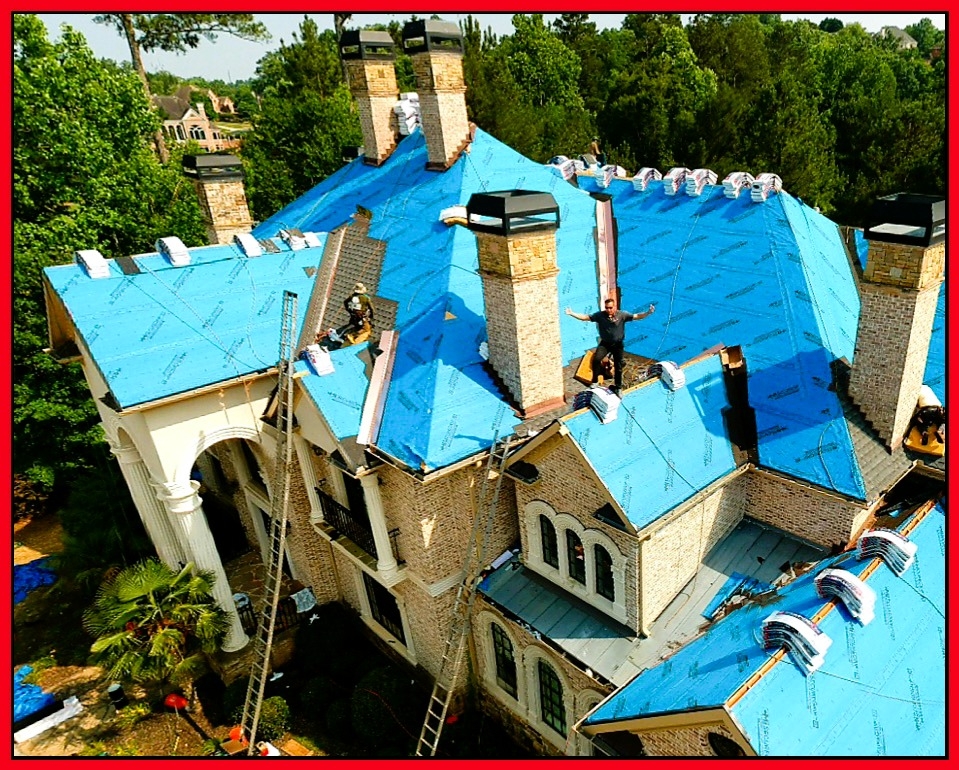
Where a roof slope terminates at a sidewall above the wall's lower termination, water cascading off the roof edge hits the wall below. A kickout diverter redirects this water into the gutter. The IRC requires flashing at all roof-to-wall intersections, and metro Atlanta inspectors cite missing kickout diverters as a top violation. These small components prevent the most common source of hidden water damage behind exterior wall cladding. See our flashing repair services in Alpharetta.
Material Standards for Roof Flashing
The IRC requires flashing materials to be "corrosion-resistant" and compatible with adjacent roofing and wall materials. Georgia's climate tests this requirement. Atlanta averages 50 inches of rain per year. High summer humidity accelerates corrosion on exposed metal. The material you choose must perform for the full life of the roof.
Galvanized Steel
The most common flashing material on residential roofs. Galvanized steel carries a zinc coating that protects the base steel from corrosion. ASTM A653 governs the standard, with G90 coating weight (0.90 oz/sq ft of zinc) as the minimum for roofing applications. Thinner coatings (G60) corrode faster in Atlanta's wet climate. Minimum gauge: 26 gauge for step and counter flashing, 24 gauge for valley flashing.
Aluminum
Lighter than steel and resistant to corrosion without a coating. ASTM B209 covers aluminum sheet for flashing. Minimum thickness: 0.019 inches for step and counter flashing. Aluminum works well in most applications but cannot contact copper, lead, or dissimilar metals without a separation barrier. In coastal Georgia, aluminum outperforms galvanized steel because salt air accelerates zinc depletion.
Copper
The premium flashing material for high-end Atlanta homes. ASTM B370 covers copper sheet and strip for building construction. Minimum weight: 16 oz per square foot (equivalent to about 0.0216 inches thick). Copper develops a green patina over time that protects against further corrosion. Copper flashing outlasts the roof system itself, often performing for 50 to 80 years. The cost premium runs 3 to 5 times more than galvanized steel, making it a choice reserved for properties where longevity and aesthetics justify the investment.
| Material | ASTM Standard | Minimum Gauge/Thickness | Expected Life | Best Application |
|---|---|---|---|---|
| Galvanized Steel (G90) | A653 | 26 ga (step), 24 ga (valley) | 20-30 years | Standard residential |
| Aluminum | B209 | 0.019" minimum | 25-40 years | Coastal, lightweight |
| Copper (16 oz) | B370 | 0.0216" minimum | 50-80 years | Premium, historic |
| Lead-coated Copper | B101 | 0.0216" minimum | 60-100 years | High-end, patina match |
Galvanic corrosion destroys flashing where dissimilar metals contact each other. Aluminum touching copper corrodes within years. Steel touching copper corrodes faster. Your contractor must specify compatible metals across the entire roof system: flashing, gutters, roof panels, and fasteners. 1 Source Roofing documents material compatibility on every project scope.
Chimney Flashing Code
Chimneys represent the most complex flashing condition on a residential roof. Four sides of the chimney meet the roof surface at different angles, and each side requires a different flashing treatment. Atlanta's luxury homes often feature oversized chimneys with stone or brick facades that compound these challenges.
Base Flashing
Base flashing wraps the perimeter of the chimney where it meets the roof deck. At the front (downslope) face, a continuous apron flashing extends at least 4 inches up the chimney face and 4 inches onto the roof surface. Along the sides, step flashing weaves into the shingle courses. At the back (upslope) face, base flashing ties into the cricket or the upper roof surface.
Counter Flashing
Counter flashing overlaps the top edge of the base flashing on all four sides. On brick chimneys, the counter flashing embeds into a mortar joint at least 1 inch deep. On stone chimneys, a reglet (saw-cut groove) receives the flashing edge. The counter flashing must overlap the base flashing by at least 2 inches. Sealant alone, without mechanical embedding, does not meet code because sealant fails within 5 to 10 years, long before the roof reaches replacement age.
Cricket (Saddle) Requirements
IRC Section R903.2.2 states: "A cricket or saddle shall be installed on the ridge side of any chimney or penetration greater than 30 inches wide, as measured perpendicular to the slope." This requirement applies to most chimneys on Atlanta luxury homes, where masonry chimneys with stone veneers often measure 36 to 48 inches wide.
The cricket diverts water around the chimney instead of allowing it to pool behind the upslope face. Water pooling behind a chimney erodes sealant, saturates underlayment, and rots the roof deck. The cricket must be framed from the roof deck, sheathed, and covered with either the same roofing material as the surrounding roof or with sheet metal flashing.
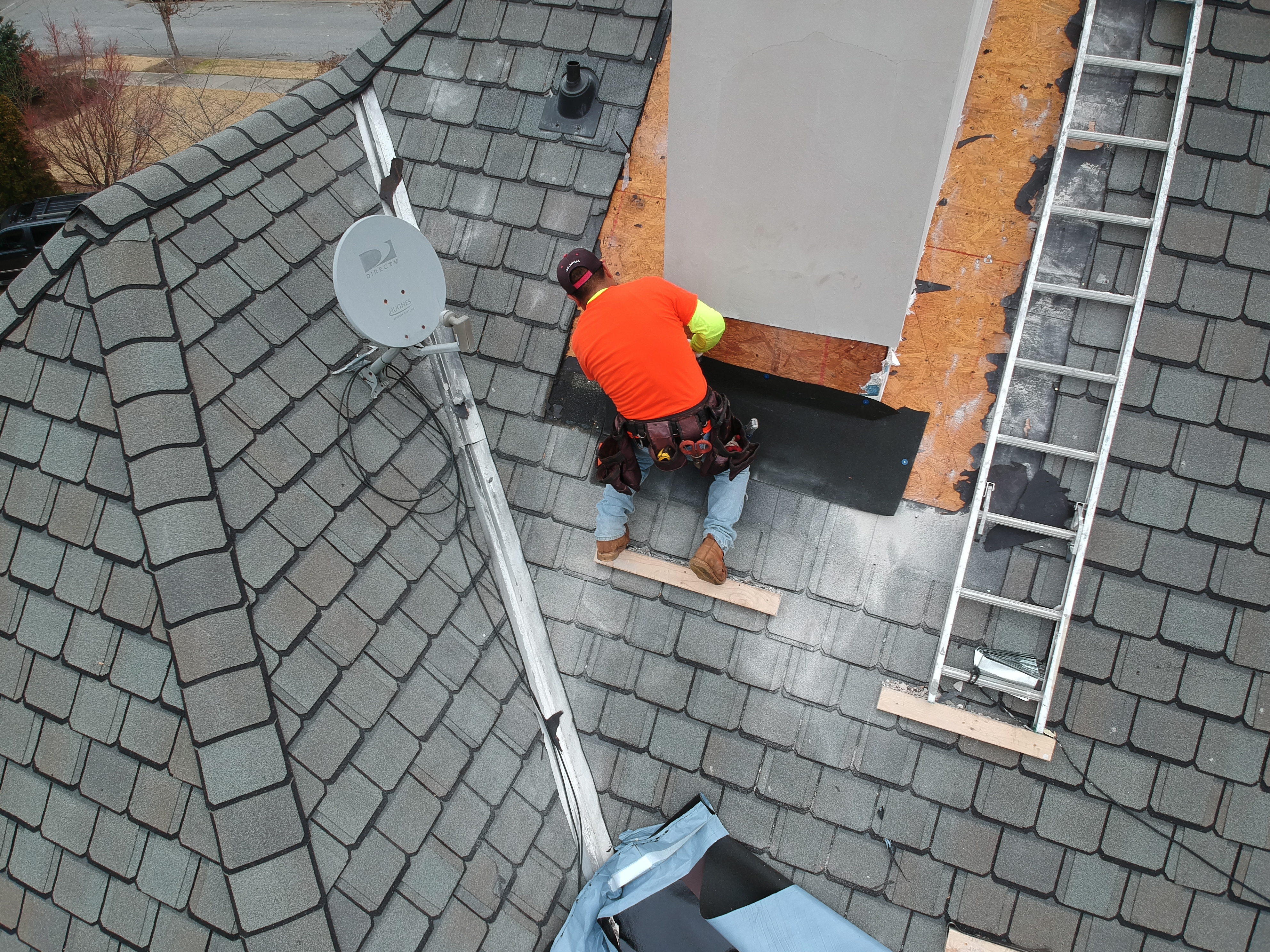
For complete details on chimney flashing techniques, visit our chimney flashing installation page.
Flashing Problems? We Find Them Before They Leak.
1 Source Roofing inspects every flashing point on your roof. We identify code violations, material failures, and installation defects. Free inspections for metro Atlanta homeowners.
Call (404) 277-1377Valley Flashing Methods
Roof valleys channel more water per square foot than any other roof surface. Two converging planes funnel rainwater into a concentrated flow path that accelerates during heavy storms. Atlanta receives intense summer thunderstorms that dump 1 to 2 inches per hour. Your valley flashing method must handle that volume without allowing water beneath the shingles.
Open Valley Method
Open valleys use exposed metal flashing down the valley centerline. Shingles terminate 3 to 6 inches from the centerline on each side, leaving the metal visible. The IRC requires open valley metal to be at least 24 inches wide (12 inches on each side of center). Material must be corrosion-resistant: 26-gauge galvanized steel (G90 minimum), aluminum, or copper.
Open valleys perform well on steep-slope roofs where water velocity keeps debris moving. They also allow easier future repair because damaged sections can be accessed without disturbing surrounding shingles. High-end Atlanta homes with complex rooflines often feature open copper valleys as both a functional and aesthetic choice.
Closed Valley Method
Closed valleys weave or cut shingles across the valley line, concealing the valley beneath the roofing material. The IRC permits closed valleys but requires ice and water shield membrane in the valley beneath the shingles. The membrane must extend at least 24 inches from the valley centerline on each side (IRC Section R905.2.7.1 for ice barrier in valleys).
Two closed valley techniques exist:
- Woven valley: Shingles from each roof plane alternate across the valley, interlocking. Creates a thick, layered valley but makes individual shingle replacement difficult.
- Cut valley (California valley): Shingles from one plane extend across the valley. Shingles from the adjacent plane are trimmed along a chalk line. Cleaner appearance than woven but requires precise cutting to avoid exposing the membrane below.
GAF specifies the closed-cut valley method for Timberline shingle installations. CertainTeed permits both woven and cut methods. Manufacturer specifications govern which method your contractor should use based on the shingle product selected.
| Valley Method | Metal Required | Membrane Required | Best For |
|---|---|---|---|
| Open (metal) | Yes, 24" minimum width | Recommended | Complex roofs, steep slopes, premium aesthetics |
| Closed (woven) | No | Yes, 24" each side of center | Simple valleys, uniform shingle appearance |
| Closed (cut) | No | Yes, 24" each side of center | Clean lines, GAF recommended method |
Common Flashing Code Violations
Building inspectors in Gwinnett, Fulton, DeKalb, and Cobb counties flag these flashing violations more than any other roofing deficiency. Each one creates a water entry point that may not produce visible damage for months.
1. Missing Kickout Diverters
The most cited flashing violation in metro Atlanta. Where a roof slope ends at a sidewall, water runs off the edge and cascades down the wall surface below. Without a kickout diverter at the bottom of the step flashing run, water infiltrates behind the siding, soaks wall sheathing, and feeds mold growth inside the wall cavity. Many roofing contractors omit this $15 component. Insurance claims for the resulting wall damage run $5,000 to $15,000. See our Buckhead flashing repair page for common repair scenarios.
2. Improper Step Flashing
Contractors sometimes replace individual step flashing pieces with a continuous L-shaped metal strip bent along the roof-to-wall intersection. Continuous flashing restricts the shingle courses from lying flat and traps water behind the metal. Step flashing works because each piece overlaps the one below it, creating a shingle-like cascade that directs water outward at every course. Continuous metal substitutes fail to achieve this cascade effect.
3. Sealant-Only Chimney Flashing
Applying roofing cement or sealant around a chimney base without installing metal base and counter flashing violates code and fails within 3 to 7 years as sealant cracks and shrinks. Inspectors reject this method on sight. Proper chimney flashing requires metal, embedded counter flashing, and a cricket when the chimney exceeds 30 inches in width.
4. Missing Drip Edge
Older Atlanta homes built before drip edge requirements took effect often lack this component. During reroofing, the IRC requires drip edge at all eaves and rakes. Contractors who install new shingles over existing decking without adding drip edge fail the permit inspection. The cost of drip edge material runs under $200 for most homes. The cost of a failed inspection and rework far exceeds that.
5. Reusing Deteriorated Flashing
During a tear-off, some contractors reuse existing step flashing and valley metal to save time. If the existing metal shows corrosion, bending damage, or sealant deterioration, reuse violates the IRC's corrosion-resistance requirement. 1 Source Roofing replaces all step flashing, valley flashing, and pipe boots on every full roof replacement.
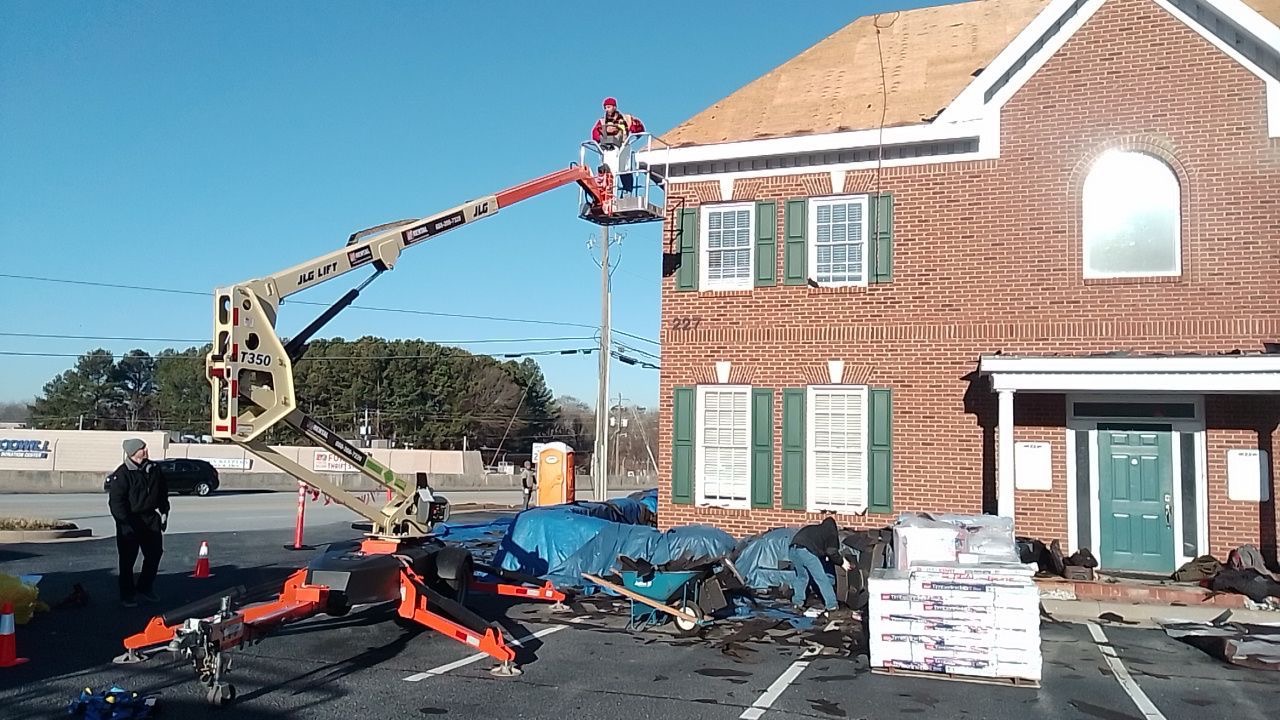
A $15 kickout diverter prevents $10,000 in wall damage. Every flashing point on your roof serves a specific drainage function, and missing a single one creates an entry point for water.
1 Source's Flashing Installation Standards
1 Source Roofing and Restoration exceeds Georgia's flashing code minimums on every installation. Code sets a floor. Our standard sits above it.
All-new flashing on every replacement. We replace every piece of step flashing, valley metal, pipe boot, drip edge, and chimney flashing during a full roof replacement. Reusing old components saves the contractor 30 minutes and creates leak risks that last 20 years.
Kickout diverters at every roof-to-wall termination. No exceptions. Our crews install kickout diverters at every point where a roof slope ends at a sidewall. Many contractors skip this step. We consider it mandatory.
Proper chimney flashing with embedded counter flashing. We cut reglets or use mortar joints to embed counter flashing on every chimney. We install crickets behind every chimney wider than 30 inches. Sealant supplements metal flashing; it does not replace it.
Material compatibility documentation. We specify all flashing metals on the project scope sheet. When copper gutters or specialty metals exist on the home, we match flashing materials to prevent galvanic corrosion.
Photographic documentation. We photograph flashing installation at every critical point before shingles cover the work. This documentation supports permit inspections, warranty claims, and future insurance claims.
Our flashing installation work spans every community in metro Atlanta:
- Flashing repair in Alpharetta
- Flashing repair in Buckhead
- Flashing installation in Atlanta
- Chimney flashing installation
- Roof repair in Sandy Springs
- Roof repair in Johns Creek
- Roof repair in Marietta
- Roof repair in Roswell
For related building code topics, explore our Georgia Residential Roofing Code Guide, wind speed requirements, minimum roof slope standards, and ventilation requirements.
Roof Flashing Code FAQ
What does Georgia code require for roof flashing?
Georgia adopts IRC Section R903.2, which requires flashing at every roof-to-wall junction, valley, chimney, skylight, vent pipe, and any point where the roof plane intersects a vertical surface or penetration. The flashing must be corrosion-resistant metal or an approved alternative material, installed to direct water onto the roof surface below.
Does my chimney need a cricket or saddle by code?
Yes, if the chimney measures more than 30 inches wide on the upslope side. IRC Section R903.2.2 requires a cricket behind any chimney exceeding that width. The cricket diverts water around the chimney and must be covered with the same roofing material as the surrounding roof or with sheet metal flashing.
What is a kickout diverter and is it required in Georgia?
A kickout diverter redirects water away from a wall where a roof slope ends at a sidewall. While the IRC does not name "kickout diverter" by those words, it requires flashing at all roof-to-wall intersections. Metro Atlanta building inspectors enforce kickout diverter installation because this intersection is the most common source of hidden water damage behind wall cladding.
Can I use aluminum flashing with copper gutters?
No. Aluminum in contact with copper causes galvanic corrosion that destroys the aluminum within a few years. Georgia code requires flashing materials to be compatible with adjacent metals and roofing materials. When your home has copper gutters or copper roofing, all contact-point flashing must also be copper to prevent corrosion.