
HOA Rules vs Building Code for Roofing in Georgia
When your HOA adds requirements beyond building code, when building code overrides HOA rules, and how to navigate both for a roofing project in Atlanta's luxury communities.
Certified by Industry-Leading Manufacturers
Your Roof Answers to Two Sets of Rules
Every homeowner in an HOA community faces a dual regulatory framework for roofing projects. The Georgia building code (the IRC with state amendments) sets minimum structural, fire safety, and weather protection requirements. Your HOA's covenants, conditions, and restrictions (CC&Rs) layer aesthetic, material, and procedural requirements on top. Both must be satisfied. Meeting code but violating HOA rules triggers HOA enforcement. Meeting HOA rules but violating code triggers building department enforcement.
The distinction matters because the two systems serve different purposes. Building code protects health and safety. It ensures your roof can resist wind loads, shed water, resist fire, and perform as a structural component of your home. The building department enforces code through permits and inspections. Violations trigger fines, stop-work orders, and required corrective action.
HOA rules protect property values and community aesthetics. They ensure visual consistency across the neighborhood by controlling material choices, colors, profiles, and installation timing. The HOA enforces its rules through architectural review committees, fines, and legal action under the CC&Rs. Georgia courts treat CC&Rs as binding contracts, giving HOAs strong enforcement authority.
In metro Atlanta's luxury communities, where homes in Alpharetta, Johns Creek, Buckhead, Roswell, and Sandy Springs sit in HOA-governed subdivisions, navigating both systems is a standard part of every roofing project. 1 Source Roofing works with HOAs across these communities and understands the review process for each.
When HOA Rules Exceed Building Code Requirements
HOA restrictions on roofing go beyond what building code requires. The code does not care what color your shingles are. The code does not require architectural-style shingles over 3-tab. The code does not restrict your choice of manufacturer. The HOA can and does impose all of these restrictions.
Material Restrictions
Many HOAs in metro Atlanta require architectural (dimensional) shingles and prohibit 3-tab shingles. Some communities require specific product lines. A few high-end communities specify natural materials (slate, cedar shake, or tile) and prohibit asphalt shingles entirely. These material restrictions are enforceable as long as they do not conflict with building code. Since the code permits all of these materials (when installed per code), the HOA restriction stands.
Color Requirements
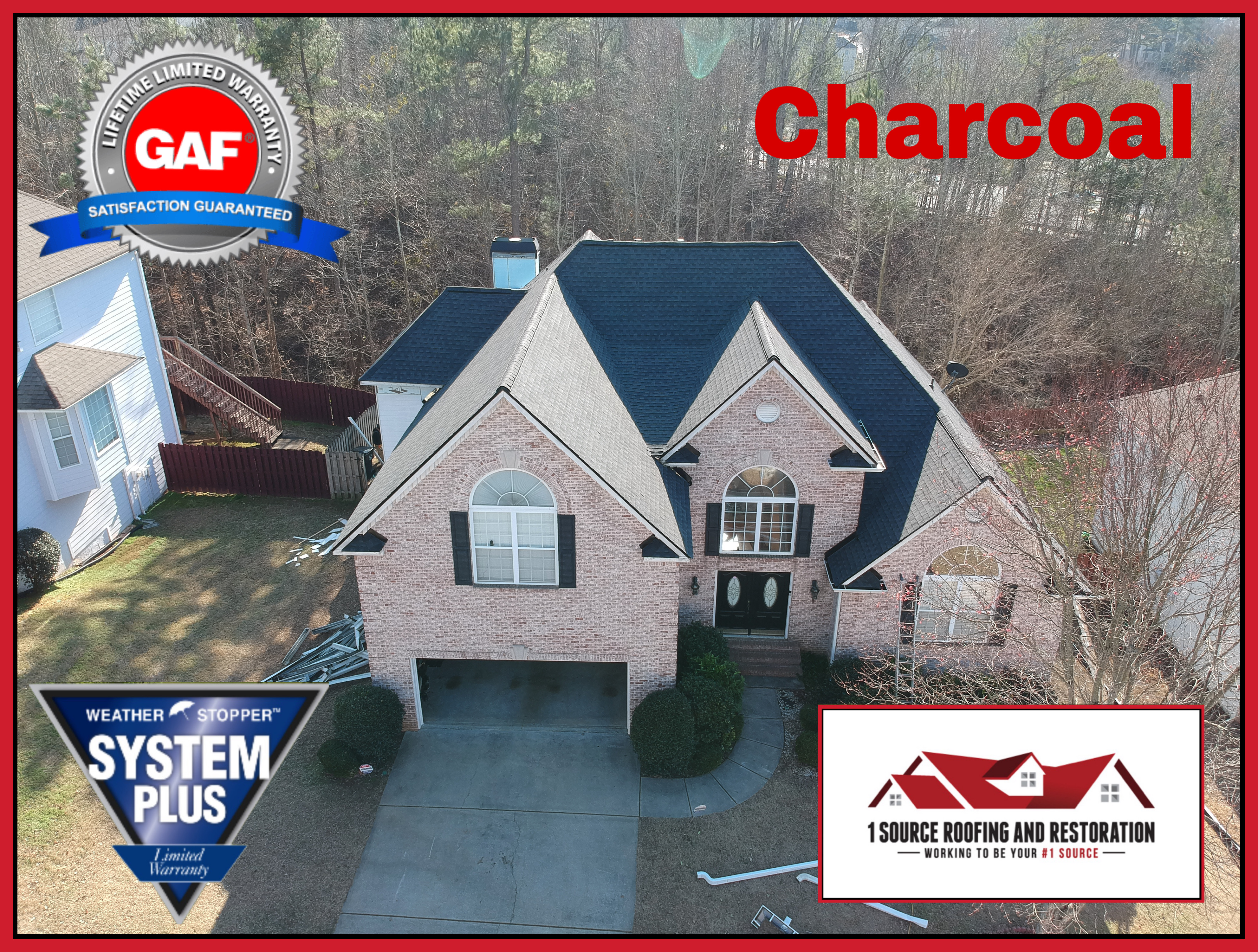
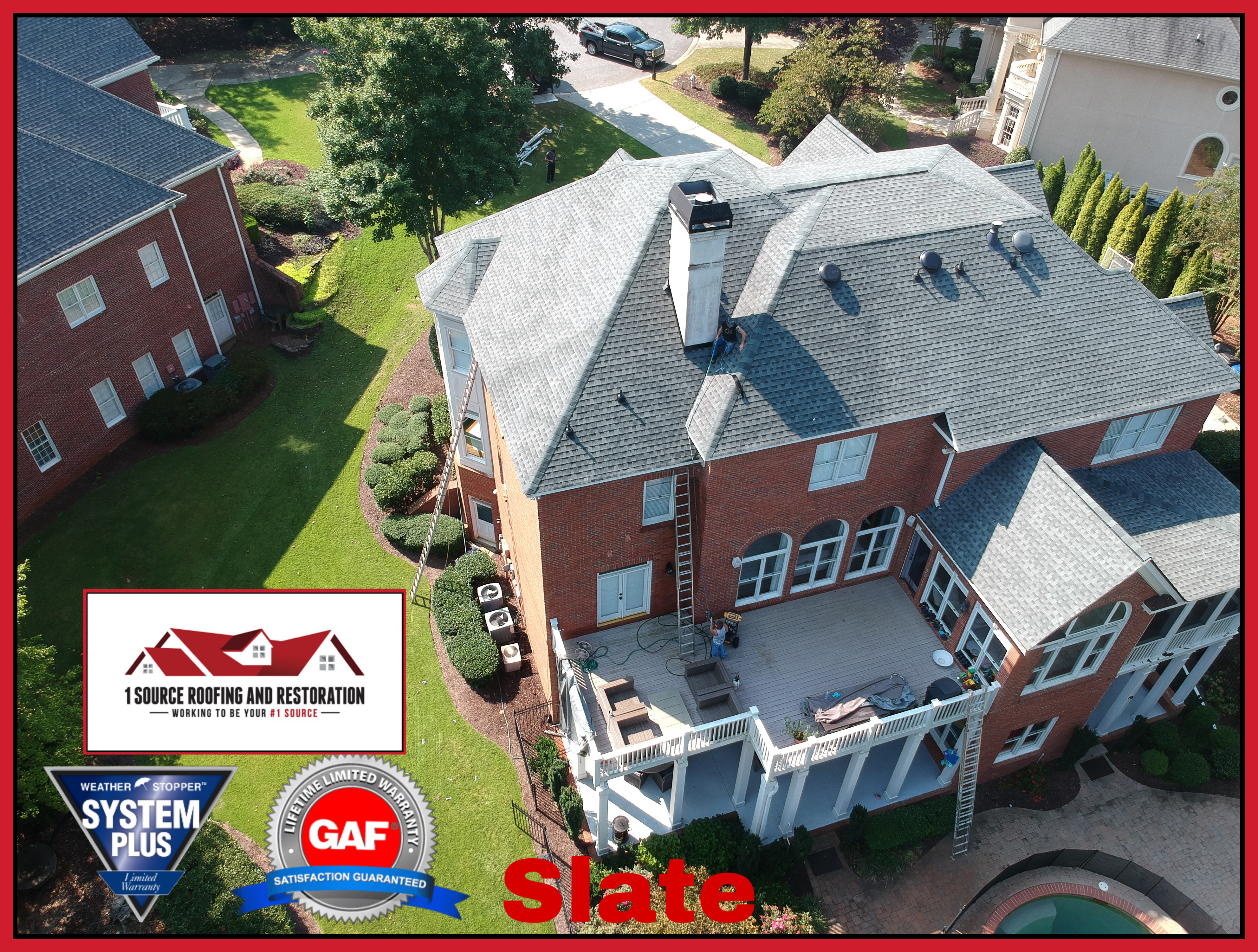
Color restrictions are the most common HOA roofing rule. Many communities maintain an approved color palette, often limited to 6-12 shingle colors. Some require the replacement shingle to match the existing color. Others allow a change but require the new color to come from the approved list. Color names vary by manufacturer, so the HOA may specify GAF colors, CertainTeed colors, or generic color families (charcoal, weathered wood, slate gray).
Contractor Requirements
Some HOAs require contractors to carry specific insurance minimums, provide a certificate of insurance to the HOA management company, and register with the community before starting work. A few communities maintain approved contractor lists. These requirements protect the community from liability and ensure contractors meet a baseline quality standard.
Timing and Access Restrictions
HOAs may restrict construction hours (no work before 7 AM or after 6 PM), limit the duration of dumpster placement (48-72 hours maximum), require advance notification to adjacent homeowners, and restrict vehicle access on community streets. These restrictions affect project scheduling and logistics.
| Category | Typical HOA Rule | IRC Building Code Requirement | Which Governs? |
|---|---|---|---|
| Shingle Color | Approved palette of 6-12 colors | No color requirement | HOA (aesthetic) |
| Shingle Profile | Architectural only, no 3-tab | No profile requirement | HOA (aesthetic) |
| Wind Resistance | May not address | ASTM D7158 Class G minimum for metro Atlanta | Building code (safety) |
| Fire Rating | May require Class A | Class A in designated areas | Building code minimum; HOA may exceed |
| Material Type | May require natural materials (slate, tile) | Must meet applicable ASTM standards | Both (HOA restricts type; code sets performance) |
| Permit Required | Usually not addressed | Yes, for roof replacement | Building code (mandatory) |
| Architectural Review | Pre-approval required before work | Not required by code | HOA (procedural) |
| Ventilation | Rarely addressed | 1:150 ratio minimum | Building code (performance) |
When Building Code Overrides HOA Rules
Georgia building code establishes minimum safety and performance standards that no private agreement can waive. If an HOA rule conflicts with building code on a safety or structural issue, the building code prevails. This principle protects homeowners from HOA decisions that would compromise the structural integrity or safety of their homes.
Structural Requirements
An HOA cannot waive the requirement for a building permit. An HOA cannot approve a roofing installation that violates the structural provisions of the IRC. If the HOA demands a material (such as natural slate or concrete tile) that exceeds the structural capacity of the existing roof framing, the building code requires a structural engineer's evaluation before the material can be installed. The HOA's material preference does not override the structural load requirements of the code.
Wind Resistance
The wind zone map sets minimum wind resistance ratings for roofing materials. An HOA cannot approve a shingle that does not meet the design wind speed for the location. If the HOA's approved color list includes products from a manufacturer whose shingles do not meet the wind resistance requirement, the homeowner must select a different product that satisfies both the HOA color requirement and the code wind rating.
Fire Classification
The IRC requires fire classification ratings for roof coverings. In areas where Class A is required, an HOA cannot approve a material with a lower fire rating. Conversely, an HOA can require Class A even when the code does not, because the HOA restriction is stricter, not weaker, than code.
Life Safety Systems
Ventilation, flashing, underlayment, and drip edge requirements exist to protect the building from weather intrusion and structural damage. An HOA cannot direct a contractor to omit these components. If the HOA's preferred installation method or appearance conflicts with code-required components, the code requirement takes precedence.
"Georgia courts treat CC&Rs as binding contracts. An HOA can restrict your shingle color to six options. It cannot waive the wind resistance rating your county requires."
We Navigate HOA Requirements and Building Code Together
1 Source Roofing works with HOAs across metro Atlanta's luxury communities. We handle architectural review submissions, select HOA-approved materials, and ensure every installation meets Georgia building code.
Call (404) 277-1377Georgia Property Owners' Association Act and Roofing
The Georgia Property Owners' Association Act (O.C.G.A. 44-3-220 through 44-3-235) governs HOAs in Georgia. This statute establishes the legal framework for HOA authority, enforcement powers, and homeowner rights. Understanding its provisions helps homeowners navigate disputes and know their rights during a roofing project.
HOA Authority Under the Act
The Act grants HOAs the power to enforce architectural standards recorded in the community's declaration (CC&Rs). This includes the authority to require pre-approval for exterior modifications, impose fines for violations, and pursue legal remedies including injunctive relief and lien placement. The Act also requires HOAs to follow their own procedures: if the CC&Rs specify an architectural review process, the HOA must follow that process before taking enforcement action.
Homeowner Protections
The Act provides several protections relevant to roofing projects. The HOA must give written notice of any violation and provide a reasonable opportunity to cure (correct) the violation before imposing fines. The HOA must hold a hearing before the board if the homeowner requests one. The HOA cannot impose fines retroactively for rules that were not in effect when the violation occurred.
Solar Panel and Energy Provisions
Georgia law limits HOA restrictions on solar panels. Under O.C.G.A. 44-3-232, an HOA cannot prohibit solar panels on a residential property, though it can impose reasonable aesthetic requirements regarding placement, screening, and installation methods. This means your HOA cannot prevent you from adding solar panels during a roof replacement, but it can require specific placement locations and visual screening that minimizes visibility from the street.
This provision intersects with building code because solar panel installations on existing roofs may require a structural engineer's review to verify the roof framing can support the additional load. Both the HOA aesthetic requirement and the code structural requirement must be satisfied.
Common HOA Roofing Restrictions in Atlanta Luxury Communities
Metro Atlanta's HOA communities range from modest neighborhoods with basic architectural standards to exclusive gated communities with detailed material specifications. The restrictions increase with property values. A $400,000 home in a basic subdivision may face only color restrictions. A $2 million home in a premier community may face restrictions on material type, manufacturer, specific product line, color, profile, contractor qualifications, and installation timeline.
Alpharetta Communities
Alpharetta's luxury communities include Windward, Country Club of the South, The Manor Golf and Country Club, and Haynes Manor. These communities maintain architectural review boards that review roofing applications. Material restrictions vary but most require architectural-grade asphalt shingles at minimum. Country Club of the South and The Manor specify approved colors and may require samples for review. Turnaround time ranges from 2 to 4 weeks.
Johns Creek Communities
Johns Creek communities including St. Ives Country Club, Rivermont, Atlanta National, and Laurel Springs maintain architectural standards that control roofing materials and colors. St. Ives requires pre-approval with color samples and contractor documentation. Atlanta National specifies approved shingle lines from major manufacturers. These communities process applications through management companies that coordinate board review.
Sandy Springs and Buckhead
Sandy Springs subdivisions and Buckhead neighborhoods range from communities with minimal architectural controls to exclusive enclaves with rigid material specifications. Some Buckhead communities require natural slate or composite slate products and prohibit standard asphalt shingles. Sandy Springs communities more commonly restrict colors and profiles within the asphalt shingle category.
Roswell and Marietta
Roswell communities including Big Creek, Northwood, and various historic district properties maintain architectural standards. Old Roswell's historic district may impose additional requirements through the city's historic preservation commission, creating a three-way intersection of HOA rules, building code, and historic preservation standards. Marietta's East Cobb communities follow standard HOA architectural review processes.
How to Navigate the HOA Architectural Review for Roofing
The architectural review process adds a step to your roofing project timeline. Planning for this step prevents delays, fines, and conflicts that can complicate and extend the project. 1 Source Roofing handles HOA submissions for our clients across metro Atlanta's managed communities.
Step 1: Request the Guidelines
Contact your HOA management company and request the current architectural review guidelines for roofing. These guidelines list approved materials, colors, required documentation, and the submission process. Some communities provide downloadable forms on their management company's website. Others require written requests.
Step 2: Select Materials Within Guidelines
Choose your shingle color and product from the HOA's approved list. If the guidelines specify manufacturers, select from those manufacturers. If the guidelines specify colors by name, match the name exactly. Some communities require actual shingle samples for the board to review. Your contractor should provide samples from the manufacturer's sample kit.
Step 3: Submit the Application
Submit the completed application with all required documentation. Common requirements include a description of the work, the contractor's license and insurance certificates, the shingle manufacturer and color selection, and a timeline for the work. Submit before signing a final contract with your contractor to avoid scheduling conflicts if the review takes longer than expected.
Step 4: Receive Approval
The architectural review board reviews the application and issues an approval, conditional approval, or denial. Conditional approvals typically require a minor change such as selecting a different color from the approved list. Denials should include the specific reason and guidance for resubmission. Most boards review applications at monthly meetings, so timing your submission relative to the meeting schedule affects turnaround time.
Step 5: Coordinate with Building Permit
After receiving HOA approval, your contractor can pull the building permit and schedule the installation. The permit and HOA approval run in parallel from a timeline perspective. Some homeowners submit the HOA application and permit application simultaneously to reduce total lead time.
"Most HOA review boards in metro Atlanta meet monthly. A roofing application submitted the day after a board meeting waits 30 days. Submitted the day before, it gets reviewed in 24 hours."
HOA-Compliant Roofing from 1 Source Roofing
1 Source Roofing serves homeowners in HOA communities across metro Atlanta. We understand the architectural review process, maintain relationships with HOA management companies, and provide the documentation that review boards require.
Our approach to HOA projects includes reviewing the community's architectural guidelines before preparing your proposal, selecting materials that satisfy both HOA restrictions and Georgia building code, providing shingle samples and manufacturer documentation for the review board, submitting insurance certificates and contractor credentials as required, and coordinating the project timeline with both the HOA approval and the building permit.
As a GAF Certified and CertainTeed Certified contractor, we install products from the two manufacturers most commonly approved by metro Atlanta HOAs. GAF Timberline HDZ and CertainTeed Landmark series shingles are available in a wide range of colors that satisfy the vast majority of HOA-approved palettes. Both product lines exceed wind zone requirements, carry Class A fire ratings, and qualify for enhanced manufacturer warranty programs.
If your community requires specialty materials (synthetic slate, composite shake, or natural stone), we install those products and coordinate with structural engineers when the material change requires a load analysis of the existing roof framing.
Call us at (404) 277-1377 to discuss your HOA's requirements and schedule your free roof inspection. We serve Alpharetta, Buckhead, Johns Creek, Marietta, Roswell, Sandy Springs, and every community within a 30-mile radius of Atlanta.
HOA and Building Code for Roofing — Frequently Asked Questions
Answers to common questions about navigating HOA rules and building code for roofing projects in Georgia.
Can my HOA require a specific shingle color or brand?
Yes. Georgia HOAs with architectural review authority can restrict shingle colors, require specific shingle profiles (architectural vs. 3-tab), and in some cases specify approved manufacturers or product lines. These restrictions are enforceable through the community's covenants, conditions, and restrictions (CC&Rs) that you agreed to when purchasing the home. The HOA cannot require materials that violate building code, but they can restrict your choices within the range of code-compliant options.
Does building code override HOA rules for roofing?
Building code overrides HOA rules on life safety and structural requirements. If the Georgia building code requires a specific wind resistance rating, fire classification, or structural standard, the HOA cannot waive or reduce that requirement. However, the HOA can add aesthetic and material restrictions beyond code. The practical result is that your roof must satisfy both: the building code minimum and the HOA's additional requirements.
How long does HOA architectural review take for a roofing project?
Architectural review timelines vary by community. Most HOAs in metro Atlanta process roofing applications within 2 to 4 weeks. Some communities with volunteer boards meet monthly, creating potential delays of 30 to 45 days. Emergency repairs for storm damage may qualify for expedited review. Submit your application before signing a final contract with your roofing contractor to avoid scheduling conflicts.
What happens if I replace my roof without HOA approval in Georgia?
Installing a roof without required HOA approval can trigger fines, forced removal and replacement with approved materials, and legal action. Georgia courts enforce HOA covenants as binding contracts. The HOA can fine you daily until the violation is corrected, place a lien on your property for unpaid fines, and in extreme cases pursue injunctive relief requiring you to remove the non-compliant roof at your expense.