
Wind Speed Requirements for Roofing in Georgia — Design Standards and Compliance
Wind speed zones, uplift ratings, and fastener schedules that determine whether your roof can withstand Georgia's severe weather.
Certified by Industry-Leading Manufacturers
Why Wind Speed Matters for Your Roof
Wind is not a uniform force. It does not push evenly against your roof like a hand pressing flat against a table. Wind creates complex pressure differentials: positive pressure on the windward face, negative pressure (suction) on the leeward face and across the top surface. These pressure differentials generate uplift forces that try to peel the roof covering away from the deck, starting at the most vulnerable points: edges, corners, and ridges.
A roof is an airfoil. The same aerodynamic principles that generate lift under an airplane wing generate uplift across your roof surface during high winds. The magnitude of this uplift depends on wind speed, roof geometry (slope, hip vs. gable, overhang depth), the building's height, and the surrounding terrain. A 6/12 gable roof on a two-story home in an open subdivision experiences different wind loads than a 4/12 hip roof on a single-story home surrounded by mature trees.
Georgia's weather patterns make wind resistance a defining concern for residential roofing. The state sits in the path of tropical systems that push inland from the Gulf and Atlantic coasts, generating sustained winds and gusts well above normal conditions. Severe thunderstorms, common from March through September, produce straight-line winds that regularly exceed 60 mph and can reach 80-100 mph in derecho events. Tornadoes, while less frequent, can produce localized winds exceeding 150 mph. And even routine afternoon convective storms in metro Atlanta frequently generate gusts in the 40-60 mph range.
The practical question for every homeowner is straightforward: can my roof handle the wind it is likely to encounter during its service life? The Georgia building code answers this question through mandatory design wind speed requirements that set the minimum performance bar for every roofing system installed in the state.
Georgia's Basic Wind Speed Map and What It Means
The IRC references ASCE 7 (Minimum Design Loads and Associated Criteria for Buildings and Other Structures) for wind speed designations. ASCE 7-16, the current referenced edition, provides wind speed maps that assign a basic wind speed to every location in the United States. These maps were developed from decades of meteorological data and represent the expected maximum 3-second gust speed at 33 feet above ground in open terrain (Exposure Category C).
For Georgia, the wind speed designations break down geographically:
| Region | Basic Wind Speed (mph) | Risk Category | Key Cities |
|---|---|---|---|
| Inland / North Georgia | 115 | II (standard residential) | Atlanta, Lawrenceville, Alpharetta, Marietta, Roswell |
| Central Georgia | 115 | II | Macon, Warner Robins, Athens |
| Southern Georgia (inland) | 115-120 | II | Albany, Valdosta, Tifton |
| Coastal Georgia | 130+ | II | Savannah, Brunswick, St. Simons |
Metro Atlanta — including Alpharetta, Buckhead, Sandy Springs, Johns Creek, Roswell, and Marietta — falls squarely in the 115 mph zone. This means roofing materials and fastener schedules must be rated for at least 115 mph wind resistance.
Exposure Categories: How Terrain Affects Wind Load
The basic wind speed is only half the equation. ASCE 7 also defines exposure categories that account for how surrounding terrain affects wind speed at the building site:
- Exposure B: Urban and suburban areas with closely spaced buildings or dense tree cover. Most of metro Atlanta's established residential neighborhoods — including much of Buckhead, Sandy Springs, and Roswell — fall into Exposure B. The surrounding structures and vegetation reduce effective wind speeds at the roof level.
- Exposure C: Open terrain with scattered obstructions. New subdivisions on previously cleared farmland, homes adjacent to open fields, or properties on ridgelines with limited surrounding structures may qualify as Exposure C. Wind speeds at the roof level are higher in Exposure C than Exposure B.
- Exposure D: Flat, unobstructed areas along shorelines. Not applicable to metro Atlanta, but relevant for Georgia's coastal communities.
A home in Exposure B experiences lower wind pressures at the roof level than the same home in Exposure C at the same basic wind speed. This difference shows up in the code's wind load calculations and can affect whether a 4-nail or 6-nail pattern satisfies the structural requirements for a specific installation.
The basic wind speed printed on a map is the starting point. Exposure category, roof geometry, and building height all modify the actual wind load your roof must resist.
Understanding Shingle Wind Resistance Ratings
Shingle manufacturers test their products against two primary ASTM wind resistance standards. Knowing these standards, and how they differ from marketing claims, matters for selecting the right shingle for your wind zone and for knowing what your warranty actually covers.
ASTM D3161: Fan-Induced Wind Resistance
ASTM D3161 tests shingles by mounting them on a test deck and subjecting them to a constant-velocity airflow for two hours. The shingle passes or fails at three classification levels:
- Class A: 60 mph (rarely referenced for modern shingles)
- Class F: 110 mph
- Class G: 120 mph (not to be confused with D7158 Class G)
- Class H: 150 mph
The test uses a fan blowing directly across the shingle surface at the specified speed. Shingles that remain sealed and attached for the full two-hour test period pass at that classification. This test measures resistance to sustained, uniform airflow — a condition that occurs during prolonged storm events.
ASTM D7158: Uplift Resistance
ASTM D7158 tests shingle performance differently. Instead of blowing air across the shingle surface, this test applies pressure differentials that simulate the suction forces wind creates across a roof. The classification levels are:
- Class D: 90 mph
- Class G: 120 mph
- Class H: 150 mph
The D7158 test is generally considered more representative of real-world conditions because actual wind damage is caused primarily by uplift (suction) rather than direct airflow. A shingle might resist direct wind pressure at 120 mph but fail under suction at a lower speed — or vice versa. Both tests provide useful data, but D7158 is the standard most frequently referenced in modern code compliance.
What the Ratings Mean in Practice
For metro Atlanta's 115 mph wind zone, shingles must meet at least ASTM D7158 Class G (120 mph) or ASTM D3161 Class F (110 mph) when installed with the manufacturer's specified fastener pattern. Most premium architectural shingles from GAF and CertainTeed meet or exceed these requirements:
| Shingle | ASTM D3161 | ASTM D7158 | Manufacturer Wind Warranty |
|---|---|---|---|
| GAF Timberline HDZ | Class F (110 mph) | Class H (150 mph) | 130 mph (15-year, enhanced with 6-nail) |
| GAF Timberline UHDZ | Class H (150 mph) | Class H (150 mph) | 130 mph WindProven (no nail requirement) |
| CertainTeed Landmark | Class F (110 mph) | Class G (120 mph) | 110 mph (standard), enhanced options available |
| CertainTeed Landmark Pro | Class F (110 mph) | Class H (150 mph) | 130 mph (with enhanced warranty registration) |
The critical distinction: the ASTM test rating reflects laboratory conditions. The manufacturer's wind warranty reflects what the manufacturer guarantees under their warranty terms, which specify installation requirements (fastener pattern, starter strip, certified installer) that must be met for coverage to apply. A GAF Timberline HDZ tested to D7158 Class H (150 mph) carries a 130 mph wind warranty, but only when installed with the correct nailing pattern by a GAF Certified contractor.
Is Your Roof Ready for Georgia's Next Storm?
A free inspection from 1 Source Roofing evaluates your roof's wind resistance against current code requirements. GAF Certified. CertainTeed Certified. Serving metro Atlanta for over a decade.
Call (404) 277-1377Nail Patterns and Fastener Schedules for High-Wind Areas
The fastener is the mechanical connection between the shingle and the roof deck. Every other wind resistance feature (the shingle's material properties, its sealant strip, its physical weight) is secondary to whether the nails hold the shingle to the deck. A shingle rated for 150 mph with improper nailing might fail at 70 mph. This is not theoretical; it is the most common cause of premature wind damage on otherwise code-compliant roofing systems.
Standard 4-Nail Pattern
The standard fastener pattern for architectural asphalt shingles places four nails per shingle strip, positioned in the manufacturer's designated nailing zone, a narrow horizontal band typically located 5/8 to 1 inch below the top of the cutouts (on three-tab) or within the manufacturer's marked area (on architectural shingles). Each nail must:
- Be a minimum 12 gauge (0.105") shank diameter with a 3/8" minimum head diameter
- Penetrate the roof deck a minimum of 3/4" (or through the deck if less than 3/4" thick)
- Be driven flush with the shingle surface: not overdriven (which breaks through the mat) and not underdriven (which leaves the head proud and prevents the overlying shingle from sealing)
- Pass through both the installed shingle and the top edge of the underlying course, locking two shingle layers together
The 4-nail pattern satisfies code requirements for standard applications in metro Atlanta's 115 mph zone in Exposure Category B, when the shingle product carries the appropriate wind rating. Our shingle nailing guide includes detailed diagrams of proper nail placement for GAF and CertainTeed shingle lines.
6-Nail Pattern: When and Why
The 6-nail pattern adds two additional fasteners, one approximately 2 inches from each end of the shingle strip, for a total of six nails per strip. This pattern is required or recommended in several situations:
- Higher wind speed zones: Properties in the 120-130 mph zones (southern and coastal Georgia) require the 6-nail pattern for most shingle products.
- Exposure Category C or D: Even in the 115 mph zone, properties with open exposure may require the 6-nail pattern based on calculated wind loads.
- Manufacturer warranty enhancement: GAF's enhanced wind warranty on the Timberline HDZ requires a 6-nail pattern. Without it, the wind warranty is reduced from 130 mph to the standard level.
- Steep-slope applications: Roofs steeper than 21:12 (approximately 60 degrees) may require additional fasteners per manufacturer specifications.
- Local jurisdiction requirements: Some metro Atlanta jurisdictions specify 6-nail patterns regardless of wind zone calculations.
The cost difference between a 4-nail and 6-nail pattern is small: roughly 50% more nails per square, which translates to approximately $5-10 per square in additional material cost. The labor difference is also small. Given the significant improvement in wind resistance, many contractors, including 1 Source Roofing, default to the 6-nail pattern on all installations regardless of the minimum code requirement.
Hand-Sealing Requirements
In addition to mechanical fastening, asphalt shingles rely on a thermally activated sealant strip (adhesive) on the underside of each shingle that bonds to the shingle below. This sealant activates through solar heat exposure, typically requiring several weeks of warm weather after installation. In high-wind zones, or when shingles are installed during cold weather, the code and manufacturer specifications may require hand-sealing: the manual application of roofing cement to each shingle tab to ensure immediate wind resistance before the factory sealant activates.
Our hand-sealing guide covers when hand-sealing is required, proper cement application technique, and the specific conditions that trigger this requirement in Georgia installations. For shingles installed during cold weather months, hand-sealing is particularly important because the factory sealant may not activate for weeks or months.
Wind-Resistant Details — Drip Edge, Hip, and Ridge
The field of the roof — the broad, flat area between edges and penetrations — is actually the least vulnerable zone during high winds. The highest wind pressures occur at edges, corners, and ridges, where airflow separates from the roof surface and creates intense suction. ASCE 7 divides the roof into three pressure zones for design purposes:
- Zone 1 (Field): The interior area of the roof surface. Lowest wind pressure. Standard fastener patterns are designed for this zone.
- Zone 2 (Edge/Perimeter): A strip along the eaves, rakes, and ridges, typically extending 3-6 feet inward from the edge. Wind pressure in Zone 2 can be 1.5 to 2 times higher than in Zone 1.
- Zone 3 (Corner): The corner areas where two edges meet. Wind pressure in Zone 3 can be 2 to 3 times higher than in Zone 1. These are the areas most likely to sustain wind damage first.
This pressure distribution explains why wind damage almost always starts at an edge or corner. The shingle that peels away from the rake edge during a storm was experiencing two to three times the wind load of the shingles in the middle of the roof. Code-compliant installation addresses this through specific edge, hip, and ridge requirements.
Drip Edge in Wind Zones
Drip edge, the metal flashing strip installed at eaves and rakes, serves a dual purpose in wind resistance. First, it mechanically holds the shingle edge against the deck, preventing wind from getting under the shingle at the most vulnerable point. Second, it provides a clean termination that directs water off the roof edge rather than allowing it to wick back under the shingles via capillary action.
The IRC requires drip edge at both eaves and rakes on asphalt shingle roofs. The drip edge installation sequence matters: at eaves, drip edge is installed under the underlayment; at rakes, drip edge is installed over the underlayment. This sequencing ensures that water always flows onto the drip edge rather than behind it, regardless of whether it runs down the rake or across the eave.
In high-wind applications, drip edge fastener spacing decreases from the standard 12-inch interval to 6 or 8 inches. Some manufacturers specify maximum 4-inch spacing at corners (Zone 3). The drip edge profile also matters — Type D (hemmed) and Type F (extended flange) profiles provide better wind resistance than the basic Type C profile because they extend further under the shingle edge.
Hip and Ridge Shingles
Hip and ridge caps are field-cut or factory-manufactured shingle pieces that cover the hip and ridge lines of the roof. These locations experience high wind loads and are frequently the first point of failure in wind events. The code requires that hip and ridge shingles be fastened with at least two nails per piece, with the nails placed so they are covered by the overlapping cap piece.
Factory-manufactured hip and ridge products — like GAF's Seal-A-Ridge and TimberTex or CertainTeed's Shadow Ridge — provide more consistent coverage and better wind resistance than field-cut alternatives because they are designed with integral sealant strips sized for hip and ridge applications. Our hip, ridge, and starter shingle guide covers the specific products and installation methods that satisfy both code and manufacturer requirements.
Starter Strip: The Foundation of Edge Wind Resistance
The starter strip — the first course of shingles installed along the eave and up the rakes — is arguably the most critical component for wind resistance. The starter strip provides the sealant bond for the first course of shingles and establishes the nailing reference for the entire roof. Without a proper starter strip, the first course of shingles has no sealant backing, making it vulnerable to wind uplift at the most exposed location on the roof.
Both GAF and CertainTeed manufacture dedicated starter strip products (GAF's Pro-Start, CertainTeed's SwiftStart) with pre-applied sealant strips positioned specifically to align with the first course of field shingles. Using these products — rather than cutting field shingles for starters — provides more reliable sealant activation and more consistent wind resistance along the entire perimeter.
When Wind Exceeds Design Standards — Storm Damage Assessment
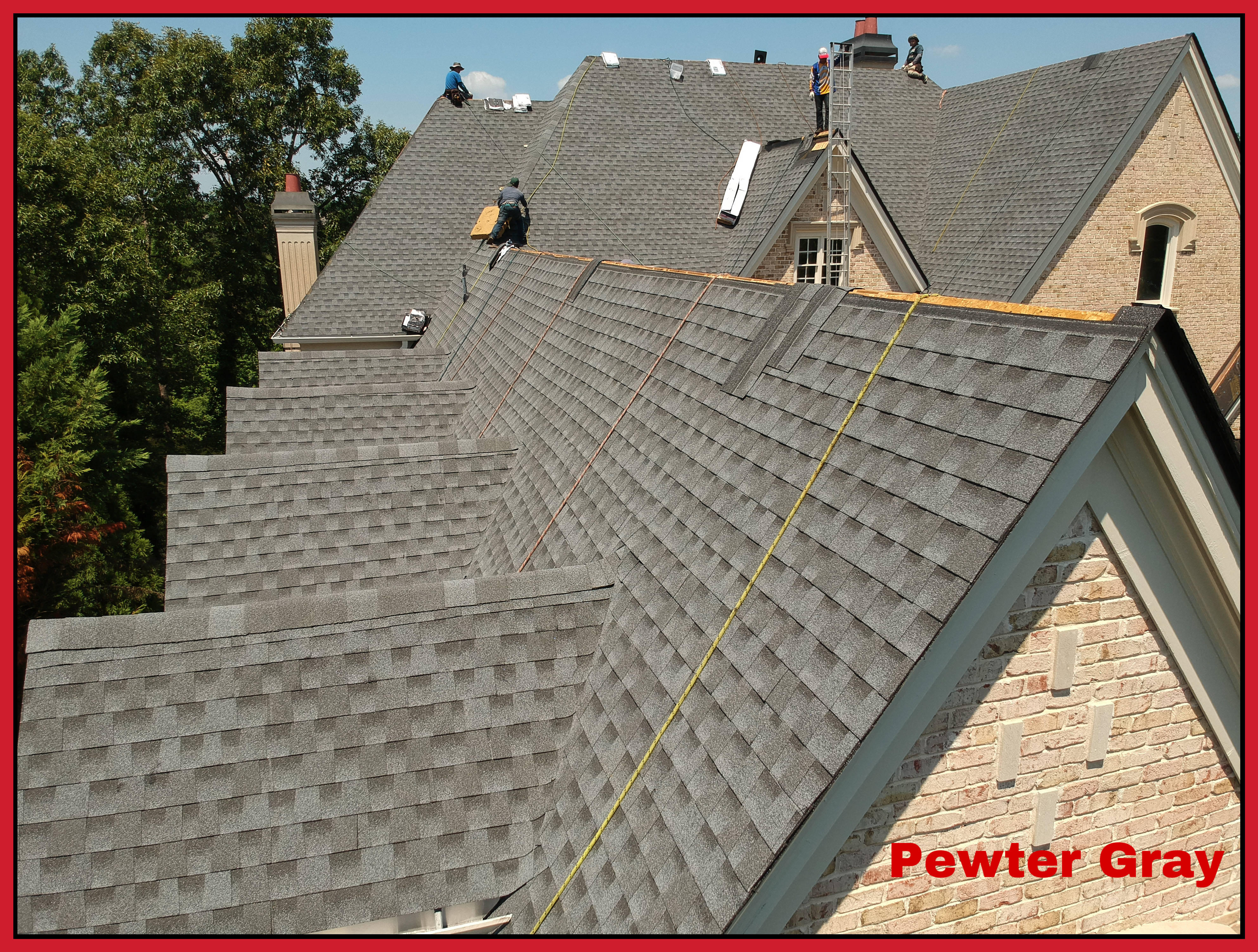
Building codes establish minimum design standards, not guarantees. A roof installed to the 115 mph standard in metro Atlanta is designed to resist winds up to that threshold — but Georgia storms can and do exceed it. When they do, even properly installed roofing systems sustain damage. Knowing what wind damage looks like, how to assess it, and what your options are determines how quickly you recover.
How Wind Damages Roofs
Wind damage follows predictable patterns that reflect the pressure zone distribution discussed earlier:
- Lifted or missing shingles at edges and corners: The highest-pressure zones fail first. Look for shingles that have lifted, creased, or torn away from the roof edge, particularly at gable rakes and along the eave at corners.
- Broken sealant bonds: Wind can break the adhesive bond between shingle courses without physically removing the shingle. These "lifted" shingles may lay back down after the storm but have lost their seal — they will be vulnerable to the next wind event and will likely not reseal on their own.
- Creased shingles: Wind that lifts a shingle but does not tear it away can create a permanent crease in the shingle mat. A creased shingle will not lay flat, will not reseal properly, and becomes a water entry point. Creased shingles must be replaced.
- Missing hip and ridge caps: Ridge and hip caps are highly exposed and are common casualties of high wind events.
- Debris impact damage: Wind-driven debris — tree branches, loose building materials from neighboring properties — can puncture, crack, or dislodge shingles anywhere on the roof, not just in high-pressure zones.
Professional Storm Damage Assessment
After a significant wind event, a professional inspection is the only reliable way to determine the full extent of damage. Ground-level observation misses most wind damage — lifted sealant bonds, creased shingles, and partial tears are not visible from the ground, even with binoculars. A trained inspector on the roof can identify damage patterns, photograph them for documentation, and provide an accurate scope of repair or replacement.
1 Source Roofing provides free post-storm inspections across metro Atlanta. Our inspectors document every area of damage with photographs, GPS-tagged to the property, and provide a written assessment that can be used for insurance claim purposes. We do not charge for this service — it is part of how we serve our community after severe weather events. See our storm damage restoration page for details on our assessment and restoration process.
Insurance Claims for Wind Damage
Standard homeowner's insurance policies in Georgia cover wind damage to roofs, subject to deductible and policy terms. Filing a claim requires documentation of the damage, the date and nature of the weather event, and a scope of repair prepared by a qualified contractor or the insurance company's adjuster.
The claim process works best when the homeowner has a contractor involved from the beginning. The contractor provides an independent damage assessment and repair scope that the adjuster can compare against their own findings. Discrepancies between the contractor's scope and the adjuster's scope are common and are normally resolved through a re-inspection process called a "supplement" where both parties review the roof together.
Our insurance claims assistance program walks homeowners through every step of the process — from initial documentation to adjuster meeting to supplement negotiation to final settlement. We work with every major insurance carrier active in Georgia. For more on how the adjuster meeting works, see our adjuster meeting guide. If your claim has been denied, our denied claim guide covers your options.
Building codes set the minimum standard. Storms ignore code books. When wind exceeds design parameters, the gap between proper installation and shortcuts determines whether you replace a few shingles or an entire roof.
Going Beyond Minimum Code — Choosing a Wind-Resistant Roofing System
Code sets a floor, not a ceiling. For homeowners in metro Atlanta's premium neighborhoods with homes valued at $500,000 to several million dollars, exceeding the minimum wind resistance requirements adds measurable long-term protection.
Practical ways to exceed the code minimum on wind resistance:
- 6-nail pattern everywhere: Default to six nails per shingle regardless of zone calculations. The cost is negligible; the wind resistance improvement is meaningful.
- Class H shingles: Select shingle products that achieve ASTM D7158 Class H (150 mph) rather than settling for the minimum Class G (120 mph) required in the 115 mph zone. GAF Timberline HDZ and CertainTeed Landmark Pro both qualify.
- Enhanced starter strip and hip/ridge products: Use manufacturer-specific starter and hip/ridge products with integral sealant strips rather than field-cutting field shingles for these critical edge applications.
- Enhanced drip edge profiles: Specify Type D or Type F drip edge profiles with tighter fastener spacing at edges and corners.
- Certified installation: Use a GAF Certified or CertainTeed Certified contractor who has been trained in the manufacturer's specific wind-resistance installation details. Certification is not a marketing badge — it represents verified training on the fastener patterns, sealant requirements, and accessory products that determine real-world wind performance.
The cost premium for a wind-resistant roofing system that exceeds code is typically 5-10% above a code-minimum installation. On a $15,000-$25,000 roof replacement, that translates to $750-$2,500 — a modest investment against the $10,000-$50,000 cost of storm damage repair on a home where the roof failed to perform.
For a complete overview of Georgia's building code requirements beyond wind resistance — including material standards, flashing, underlayment, and permit processes — see our Georgia residential roofing code guide. Our technical standards library provides manufacturer-specific installation details for every component discussed on this page.
Wind Speed Requirements — Frequently Asked Questions
Common questions about wind codes, shingle ratings, and storm-resistant roofing in Georgia.
What is the basic wind speed requirement for roofing in metro Atlanta?
Metro Atlanta falls in the 115 mph basic wind speed zone under ASCE 7-16, the wind load standard referenced by the International Residential Code. This is a 3-second gust speed measured at 33 feet above ground in Exposure Category C — not a sustained wind speed. It means roofing systems installed in metro Atlanta must be designed and fastened to resist wind loads generated by 115 mph gusts. Coastal Georgia has higher designations reaching 130 mph or more.
What is the difference between a 4-nail and 6-nail pattern?
A 4-nail pattern places four fasteners per shingle strip in the manufacturer's designated nailing zone. A 6-nail pattern adds two additional fasteners — one near each end of the shingle strip — for a total of six per strip. The 6-nail pattern increases wind resistance by roughly 20-30% depending on shingle type and provides more pull-through resistance during high winds. Most manufacturers require the 6-nail pattern for their enhanced wind warranties, and code may require it in higher wind speed zones or for specific roof geometries.
Do wind ratings on shingles guarantee no wind damage?
No. Wind ratings indicate the wind speed at which shingles passed laboratory testing under controlled conditions. Real-world performance depends on installation quality, fastener placement, sealant activation, roof geometry, surrounding terrain, and the specific characteristics of the wind event. A shingle rated for 130 mph can still sustain damage at lower speeds if improperly installed, if the sealant strip did not fully activate, or if the shingle is in a high-stress zone like a roof edge or corner. Proper installation by a certified contractor is the most important factor in actual wind performance.
How do I know if my roof meets current wind code requirements?
The most reliable method is a professional roof inspection by a licensed contractor who understands current code requirements. During a free inspection, 1 Source Roofing evaluates shingle condition, fastener patterns, flashing details, drip edge installation, and overall system integrity against current Georgia code standards. If your roof was installed before the current code edition was adopted, it was built to the code in effect at the time — but any replacement or major repair must meet current standards.