

Roof Load Requirements in Georgia
Georgia code governs how much weight your roof must support. This guide covers dead loads, live loads, snow loads, load combinations, and when switching roofing materials triggers a structural review for metro Atlanta homes.
Certified by Industry-Leading Manufacturers
Understanding Roof Load Requirements Under the Georgia Building Code
Every residential roof in Georgia must support three categories of load: dead loads (the weight of the roofing materials and structure itself), live loads (temporary loads from workers, equipment, and environmental forces), and environmental loads (wind, snow, and rain). The IRC addresses these in Sections R301.5 and R301.6, which Georgia adopts through the Department of Community Affairs (DCA).
The roof structure that a builder or engineer designs must resist the worst-case combination of these loads without failure. "Failure" in structural terms means collapse, permanent deformation, or excessive deflection that damages finishes or compromises waterproofing. The code sets minimum load values and requires the structure to meet them with a safety factor built into the design.
For homeowners in Alpharetta, Buckhead, Sandy Springs, and other metro Atlanta communities, roof loads become a practical concern during two events: when selecting roofing materials for a roof replacement (because different materials weigh different amounts) and when adding features that increase the load on the existing structure (solar panels, rooftop HVAC units, green roof systems).
The IRC provides prescriptive span tables for standard residential framing that assume specific load values. When a project exceeds those assumed loads, the prescriptive tables no longer apply and an engineer must design the structure for the actual loads. This triggers additional cost and time, which is why understanding load requirements before selecting materials saves homeowners from expensive mid-project changes.
Our team at 1 Source Roofing evaluates structural load implications before recommending materials. When a homeowner considers switching from asphalt shingles to tile, slate, or another heavy material, we flag the load question early and coordinate with structural engineers when the project requires it.
Roof Dead Loads: Material Weight by Roofing Type
Dead load is the permanent weight of the roof assembly: the roofing material, underlayment, sheathing, framing, insulation, and any permanently attached equipment. Dead load does not change over time (unless someone adds or removes materials). The structural design must support the dead load continuously for the life of the building.
The roofing material contributes the most variable dead load component because different materials have vastly different weights. Sheathing, underlayment, and framing weights stay consistent across material choices. The table below shows the weight contribution of common roofing materials, expressed in pounds per square foot (psf) of roof area:
| Roofing Material | Weight (psf) | Weight per Square (100 sq ft) | Structural Impact |
|---|---|---|---|
| 3-tab asphalt shingles | 2.0 - 2.5 | 200 - 250 lbs | Standard design; no additional review |
| Architectural asphalt shingles | 2.5 - 4.0 | 250 - 400 lbs | Standard design; no additional review |
| Premium/designer asphalt shingles | 3.5 - 5.0 | 350 - 500 lbs | Verify framing for heavy premium lines |
| Standing seam metal | 1.0 - 2.0 | 100 - 200 lbs | Lightest option; reduces dead load |
| Metal shingles/panels | 1.5 - 3.0 | 150 - 300 lbs | Comparable to asphalt; no review needed |
| Concrete tile | 9.0 - 12.0 | 900 - 1,200 lbs | Structural review required |
| Clay tile | 8.0 - 15.0 | 800 - 1,500 lbs | Structural review required |
| Natural slate | 10.0 - 20.0 | 1,000 - 2,000 lbs | Structural review required; heaviest option |
| Synthetic slate/shake | 2.0 - 4.5 | 200 - 450 lbs | Comparable to asphalt; verify specific product |
| Wood shakes | 3.0 - 4.5 | 300 - 450 lbs | Comparable to heavy asphalt; verify framing |
A typical roof assembly (beyond just the covering material) adds approximately 8 to 12 psf of dead load from the sheathing (2-3 psf), underlayment (0.5-1 psf), framing (4-6 psf), and insulation (1-2 psf). The total dead load equals the material weight plus the assembly weight. For a standard asphalt shingle roof, total dead load runs 12 to 16 psf. For a concrete tile roof, total dead load runs 20 to 24 psf.
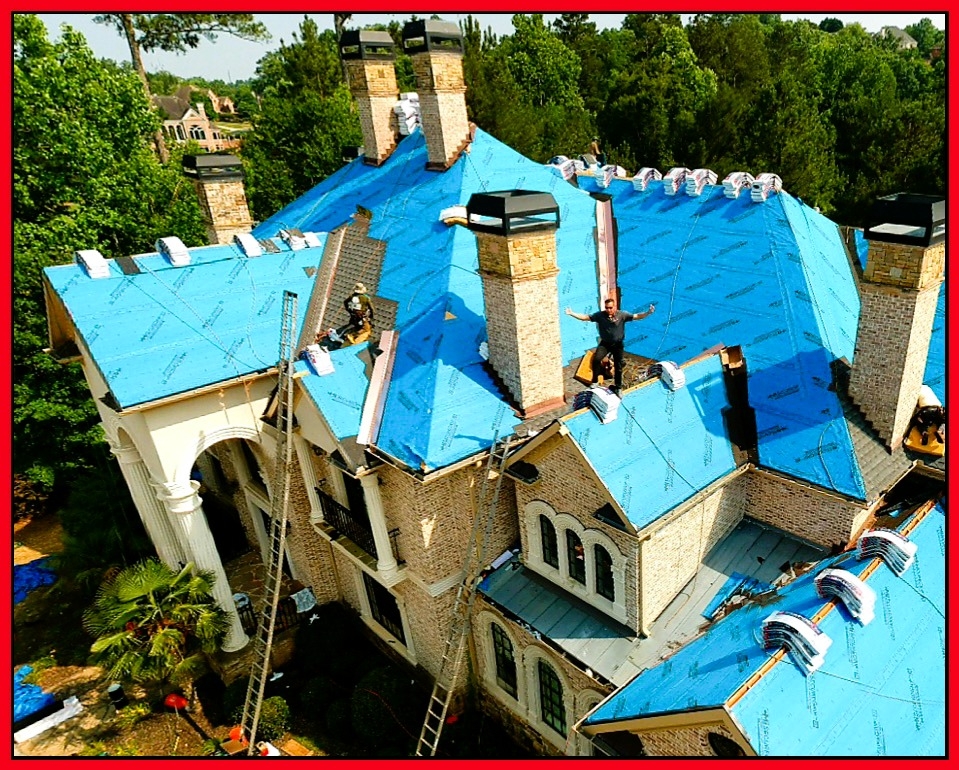
The dead load comparison matters when a homeowner wants the look of slate or tile on a home originally framed for asphalt shingles. The framing was designed to support 12 to 16 psf of total dead load. Concrete tile pushes that to 20 to 24 psf. Natural slate pushes it to 22 to 32 psf. The rafters, trusses, bearing walls, and foundation must all handle the increase. This is not a minor structural question.
Roof Live Loads: The 20 PSF Minimum and What It Covers
The IRC requires a minimum roof live load of 20 psf for residential roofs. Live loads represent temporary forces: workers walking on the roof during installation or repair, equipment staged during construction, and the weight of accumulated debris. Unlike dead loads, live loads are present only during specific events and are not permanent.
The 20 psf minimum ensures that the roof can support maintenance workers and their equipment without structural distress. Two workers standing close together on a small area of roof can concentrate 400 or more pounds on a few square feet. The 20 psf live load, distributed across the tributary area of each rafter, provides the capacity to absorb this concentrated loading.
The IRC allows reduced live loads for steep roofs. Roofs with slopes steeper than 4:12 can use reduced live loads because steep pitches shed rain, snow, and debris more efficiently, and workers access steep roofs less frequently. The reduction formula depends on slope, but even at steep pitches, the minimum live load does not drop below 12 psf. For most metro Atlanta homes with roof pitches between 4:12 and 8:12, the full 20 psf applies.
Flat or low-slope roofs (below 1/4:12) face additional live load considerations for ponding water. If a flat roof deflects under load and creates a depression, water accumulates in that depression, adding more load, which causes more deflection, which collects more water. This progressive failure mode (called ponding instability) requires flat roofs to carry sufficient stiffness to resist the ponding cycle. Commercial roofing projects with low-slope roofs address ponding through increased structural stiffness and positive drainage design.
Live loads and dead loads combine for the total gravity load the structure must support. The IRC uses load combinations defined in ASCE 7 to calculate the worst-case scenario. The primary gravity combination is: 1.2 x Dead Load + 1.6 x Live Load. For a standard asphalt shingle roof with 14 psf dead load and 20 psf live load, the factored combination is: 1.2(14) + 1.6(20) = 16.8 + 32 = 48.8 psf. The structure must resist 48.8 psf at the factored level without failure.
Considering a Material Change for Your Roof?
Our team evaluates structural load implications before recommending materials. We coordinate with engineers when your project requires structural verification.
Call (404) 277-1377Snow Load Requirements for Georgia Roofs
Georgia's snow load requirements vary by elevation and geographic location. Metro Atlanta sits at approximately 1,050 feet elevation and receives an average of 2.1 inches of snow per year. The ground snow load for the Atlanta area per ASCE 7 is 5 psf, among the lowest in the country. At this level, the IRC's 20 psf minimum live load far exceeds the snow load, meaning snow does not govern roof design for most of metro Atlanta.
North Georgia tells a different story. Mountain communities in Rabun, Towns, Union, Fannin, and Gilmer counties sit above 2,000 feet and receive 10 to 20 inches of annual snowfall. Ground snow loads in these areas range from 10 to 15 psf. While still modest compared to northern states (where snow loads reach 40 to 100+ psf), the higher loads in north Georgia's mountains can affect roof design when combined with other loads.
The conversion from ground snow load to roof snow load involves factors for roof slope, exposure, thermal condition, and importance. For a standard heated residence with a moderately sloped roof in an exposed location, the roof snow load runs 60 to 80 percent of the ground snow load. In metro Atlanta, that reduces the 5 psf ground load to 3 to 4 psf on the roof, which the 20 psf live load already covers with margin.
Snow drift loading at roof transitions creates localized loads that can exceed the ground snow load. When wind blows snow from a higher roof section to a lower adjacent section, the snow accumulates at the transition and forms a drift. Drift loads are calculated based on the height difference between the two roof sections and can reach 20 to 40 psf at the drift location. For homes in Roswell, Marietta, and other metro Atlanta areas with complex roof geometries (multiple levels, dormers, valley intersections), snow drift loading deserves attention even though the ground snow load is low.
Ice dams create a different kind of snow-related load. Georgia's freeze-thaw cycles in January and February can build ice at the eave line that adds concentrated weight along the roof perimeter. The underlayment code addresses ice dam water infiltration, but the structural load from accumulated ice at the eave adds dead weight that the framing must support.
When a Reroofing Project Triggers Structural Load Review
A roof replacement that uses the same material type as the original roof (asphalt to asphalt, metal to metal) does not change the dead load and does not trigger structural review. The structure already supports that weight. Replacing like with like is structurally neutral.
Four scenarios trigger a structural review during reroofing:
1. Switching to Heavier Materials
Replacing asphalt shingles with concrete tile, clay tile, or natural slate increases dead load by 3 to 5 times. This increase requires a licensed structural engineer to evaluate the existing rafters or trusses, bearing walls, headers, and foundation for the additional weight. The engineer produces a report that either confirms the existing structure can handle the load or specifies reinforcement (sistered rafters, supplemental beams, foundation upgrades).
2. Adding a Second Layer of Shingles
Georgia code permits a second layer of asphalt shingles over one existing layer in some conditions (see our reroofing code guide). The second layer adds 2 to 4 psf of dead load. For most residential structures, this additional load falls within the original design capacity. However, homes with marginal framing (undersized rafters, long spans, degraded lumber) may not tolerate the addition. A structural assessment should confirm capacity before overlaying.
3. Adding Solar Panels
Roof-mounted solar panels add 2 to 5 psf of dead load, depending on the panel type and mounting system. Ballasted systems on flat roofs add more weight because the ballast (concrete blocks) holds the panels in place without roof penetrations. Racked systems on sloped roofs use clamps and rails that add less weight but concentrate loads at the attachment points. Building departments in metro Atlanta increasingly require structural verification for solar installations.
4. Adding Rooftop Equipment
HVAC condensers, satellite equipment, antenna mounts, or other heavy equipment installed on the roof add concentrated dead loads that the framing must support at the mounting locations. The IRC requires that the structure support the equipment weight plus the standard roof loads without exceeding the design capacity of any framing member.
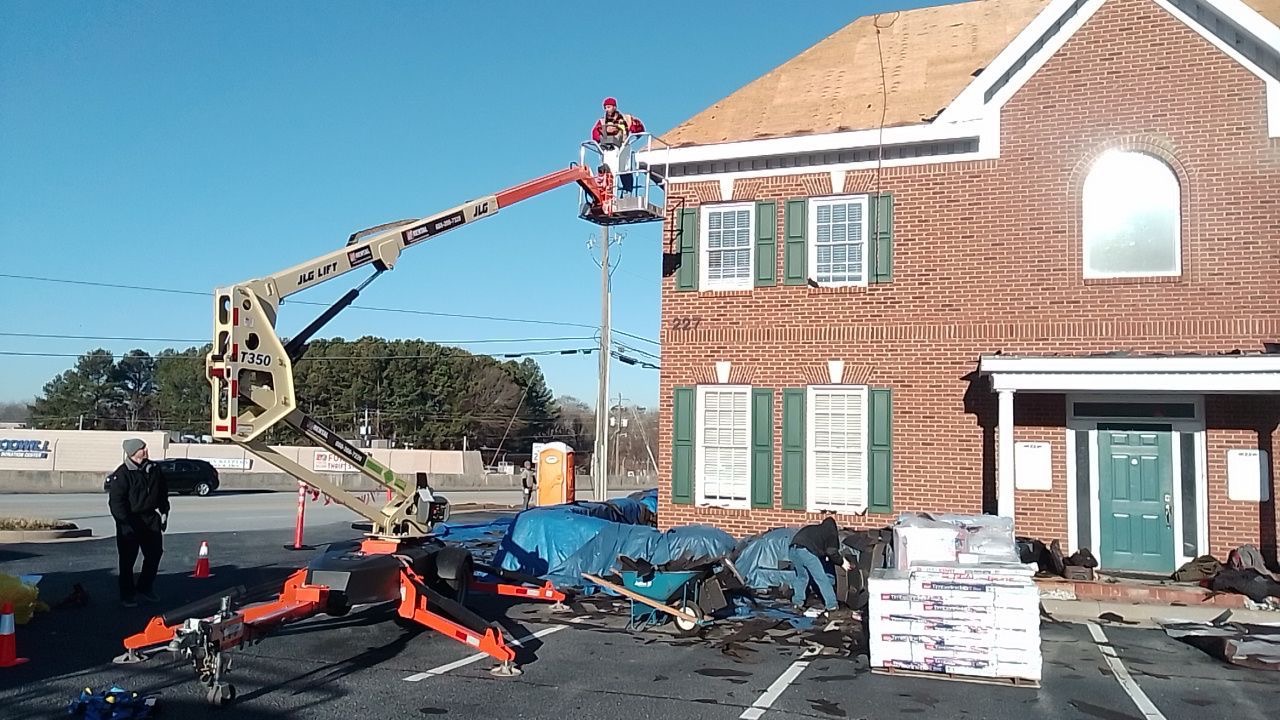
Our team at 1 Source Roofing identifies load concerns during the initial inspection. If you are considering a material change that increases dead load, we connect you with licensed structural engineers who evaluate the existing structure and provide the documentation your building department requires for the permit.
How Load Combinations Determine Your Roof's Structural Requirement
A roof never experiences just one type of load in isolation. Dead load is always present. Live load applies during maintenance. Wind load applies during storms. Snow load applies during winter weather. The structural design must account for the possibility of multiple loads occurring at the same time. The IRC, through its reference to ASCE 7, defines specific load combinations that represent the worst-case simultaneous loading scenarios.
The primary load combinations relevant to Georgia residential roofs include:
| Combination | Formula (LRFD) | Georgia Application |
|---|---|---|
| Gravity only | 1.2D + 1.6L | Workers on roof during maintenance or installation |
| Wind + dead load | 0.9D + 1.0W | Wind uplift (subtracts dead load from uplift resistance) |
| Dead + wind + live | 1.2D + 1.0W + 0.5L | Wind during occupied or maintenance conditions |
| Dead + snow | 1.2D + 1.6S | North Georgia mountain areas only |
In metro Atlanta, the wind uplift combination (0.9D + 1.0W) often governs roof connection design. This combination checks whether wind uplift forces exceed the dead weight holding the roof down. When uplift exceeds 0.9 times the dead load, the connection must provide mechanical resistance to keep the roof attached. This is where hurricane straps enter the equation.
Heavier roofing materials provide a structural advantage in the wind uplift combination because more dead load means more weight resisting uplift. A concrete tile roof at 12 psf resists more wind uplift through gravity alone than an asphalt shingle roof at 3 psf. This does not eliminate the need for mechanical connections, but it reduces the load that the connections must resist.
The gravity combination (1.2D + 1.6L) governs rafter and truss sizing because it represents the maximum downward load on the framing. This combination determines whether the rafters can span the required distance without excessive deflection. The IRC provides span tables (in Chapter 8) that assume standard dead loads. When the actual dead load exceeds the table's assumed value, the prescriptive span tables no longer apply and the framing must be designed by an engineer.
Heavier roofing materials resist more wind uplift through gravity but demand more from the structure below. The load combinations balance these competing forces in the structural design. A concrete tile roof at 12 psf provides better uplift resistance than asphalt at 3 psf, but the framing, walls, and foundation must handle the increased gravity load.
When Georgia Requires a Structural Engineer for Roof Projects
Georgia law requires a licensed professional engineer (PE) to design structural systems that fall outside the IRC's prescriptive provisions. For roof structures, this means any project where the loads, spans, or configurations exceed what the IRC span tables cover must have an engineer's stamp.
Situations that require a structural engineer for roofing projects in Georgia include:
- Material change to heavy roofing: Switching from asphalt to tile, slate, or other materials that exceed 8 psf
- Long rafter spans: Rafter spans that exceed the IRC Table R802.4 maximums for the lumber size and grade
- Truss modifications: Any alteration to manufactured trusses (cutting members, adding openings, reinforcing chords)
- Attic conversions: Converting attic space to habitable use, which changes the floor live load requirement from 20 psf (uninhabitable attic) to 40 psf (habitable space)
- Complex roof geometries: Multi-level roofs, cantilevered overhangs, or unusual configurations not covered by prescriptive tables
- Solar panel installations: Large solar arrays that add significant dead load or create concentrated attachment loads
The engineer evaluates the existing structure, calculates the applied loads using ASCE 7 methods, and designs any required reinforcement. The engineer's sealed drawings become part of the permit application. Building departments in Gwinnett County, Fulton County, Cobb County, and DeKalb County require engineer-stamped drawings for any project that triggers these conditions.
The engineering cost for a residential structural evaluation runs $500 to $2,500, depending on the scope. A simple material change evaluation (can this structure support tile?) falls at the lower end. A full attic conversion with structural reinforcement design falls at the upper end. The cost is a fraction of the total project but provides the structural assurance and permit documentation the project requires.
For context on how the truss and rafter code connects to load requirements, and how the roof deck code relates to load transfer, see our companion guides.
Roof Load Requirements: Frequently Asked Questions
Answers to common questions about roof structural loads, material weights, and engineering requirements in Georgia.
What is the minimum roof live load requirement in Georgia?
The IRC requires a minimum roof live load of 20 pounds per square foot (psf) for residential structures in Georgia. This load accounts for workers performing maintenance, inspections, and repairs on the roof. Roofs with slopes steeper than 4:12 may qualify for reduced live loads under certain code provisions, but 20 psf is the standard baseline used in metro Atlanta residential design.
Can I switch from asphalt shingles to tile or slate without structural changes?
In most cases, no. Asphalt shingles weigh 2 to 4 pounds per square foot. Concrete tile weighs 9 to 12 psf. Clay tile weighs 8 to 15 psf. Natural slate weighs 10 to 20 psf. The original roof structure was designed for the weight of asphalt shingles. Adding 3 to 5 times more dead load requires a structural engineer to verify that the rafters, trusses, bearing walls, and foundation can support the additional weight. Reinforcement is almost always needed.
Does Georgia have a snow load requirement for roofs?
Metro Atlanta's ground snow load is 5 psf per ASCE 7, which is among the lowest in the country. The IRC's minimum 20 psf roof live load exceeds the snow load requirement, so snow does not govern roof design in the Atlanta area. North Georgia mountain communities above 2,000 feet elevation face higher ground snow loads of 10 to 15 psf, which can affect roof design in those areas.
When does a reroofing project trigger a structural load review?
A reroofing project triggers structural review when the new roofing material weighs more than the original material. Replacing asphalt shingles with asphalt shingles does not trigger review because the dead load stays the same. Replacing asphalt with tile, slate, metal panels with heavy gauge, or adding solar panels requires an engineer to verify the structure can handle the increased dead load. Adding a second layer of shingles over existing shingles also increases dead load and may trigger review.
Explore More Georgia Roofing Code Guides
- Georgia Residential Roofing Code Guide
- Roof Truss and Rafter Code in Georgia
- Roof Deck and Sheathing Code in Georgia
- Hurricane Strap Requirements in Georgia
- Wind Speed Requirements for Georgia
- Roof Fire Rating Code in Georgia
- Roofing Contractor Licensing in Georgia
- Georgia Reroofing and Tear-Off Code
- Asphalt Shingle Requirements
- Roof Replacement Services
- Commercial Roofing Services
- Roof Repair Services