
Roofing Contractor Licensing in Georgia
Georgia does not require a state roofing license. Local jurisdictions set their own rules. This guide covers what the law requires, what you should verify before hiring, and how manufacturer certifications fill the gap where state regulation does not.
Certified by Industry-Leading Manufacturers
Georgia Does Not Require a State Roofing License
Georgia stands among a minority of states that do not require a state-level license for roofing contractors. Florida requires state licensing and a trade exam. North Carolina requires state licensing. Alabama, Tennessee, and South Carolina require state licensing or registration. Georgia requires none of these at the state level.
This means that any individual or company can perform roofing work in Georgia without passing a state examination, without demonstrating competency to a state licensing board, and without meeting state-mandated insurance minimums. The Georgia Secretary of State's office does not issue roofing contractor licenses. The Georgia Department of Community Affairs (DCA) sets building codes but does not regulate contractor qualifications.
The absence of state licensing creates a significant gap in consumer protection. After major storms hit metro Atlanta, contractors from other states flood the area. These storm chasers set up temporary operations, solicit homeowners door-to-door, and collect deposits for work they may perform poorly or abandon. Without a state licensing requirement, no state agency has the authority to prevent these operators from working in Georgia.
For homeowners in Alpharetta, Buckhead, Sandy Springs, Johns Creek, Roswell, and Marietta, this regulatory gap means the responsibility for verifying contractor qualifications falls on you. The state will not filter out unqualified operators. You must verify insurance, local business licensing, manufacturer certifications, and references before signing a contract.
The Georgia General Assembly has considered state licensing bills for residential contractors in multiple legislative sessions. None have passed. Industry groups remain divided on the question. Until the law changes, the local jurisdiction is the primary regulatory layer, and manufacturer certifications are the primary quality indicator.
Local Business License Requirements by Metro Atlanta Jurisdiction
While Georgia lacks a state roofing license, individual cities and counties require business licenses (also called occupational tax certificates) for contractors operating within their boundaries. These local licenses verify that the business is registered, pays local taxes, and meets basic operating requirements. They do not test trade competency or verify installation quality.
| Jurisdiction | License Required? | Insurance Proof Required? | Additional Requirements |
|---|---|---|---|
| Gwinnett County | Yes, occupational tax certificate | Yes, for permit applicants | Must register with county before pulling permits |
| Fulton County | Yes, business license | Yes, liability + workers' comp | Unincorporated areas require county registration |
| Cobb County | Yes, occupational tax certificate | Yes, for permit work | Annual renewal required |
| DeKalb County | Yes, business license | Yes, liability insurance | Must provide insurance certificate with permit application |
| City of Atlanta | Yes, business license | Yes, liability + workers' comp | Contractor registration with the city required |
| City of Alpharetta | Yes, business license | Yes | Must hold city business license to pull permits |
| City of Roswell | Yes, occupational tax certificate | Yes | Annual registration |
| City of Marietta | Yes, business license | Yes, liability + workers' comp | Must register before performing work |
| City of Sandy Springs | Yes, business license | Yes | Contractor must be registered with the city |
| City of Johns Creek | Yes, business license | Yes | Permits require active business registration |
The common thread across metro Atlanta jurisdictions: a contractor must hold a local business license to pull building permits. A contractor who shows up without a local business license cannot obtain a roofing permit, which means the work proceeds without permit and without inspection. Unpermitted work violates the building code, voids most manufacturer warranties, and creates disclosure problems when you sell the home.
1 Source Roofing and Restoration holds active business registrations across metro Atlanta jurisdictions. We pull permits for every roofing project because the permit triggers the inspection that verifies code compliance. Skipping the permit saves a few hundred dollars and abandons the only independent verification that the work meets code.
Insurance Requirements for Roofing Contractors in Georgia
Georgia law requires employers with three or more employees to carry workers' compensation insurance. This requirement applies to roofing contractors, who employ crews that face significant workplace hazards. Roofing ranks among the most dangerous occupations in the United States, with falls from heights as the leading cause of fatal injury. Workers' compensation insurance covers medical expenses and lost wages for workers injured on the job.
If a roofing contractor without workers' compensation sends a crew to your property and a worker falls and sustains injury, you as the property owner may face liability for that worker's medical bills and lost income. Georgia courts have held property owners liable when uninsured contractors are injured on their property. This liability exposure runs into hundreds of thousands of dollars for a serious fall injury.
General liability insurance protects the homeowner if the contractor damages the property during the work. Roofing projects involve heavy materials, power equipment, and work at heights that creates risk to the building, landscaping, vehicles, and adjacent properties. A minimum of $1 million per occurrence in general liability coverage is the standard expectation. Reputable contractors carry $2 million or more.
What to Verify
- Certificate of insurance (COI): Request a current certificate that names you as the certificate holder. The certificate lists the policy numbers, coverage amounts, and effective dates.
- Workers' compensation: Verify the policy is active and covers the number of employees the contractor will assign to your project. Call the insurance carrier to confirm (the number is on the COI).
- General liability: Verify the per-occurrence and aggregate limits. Confirm the policy is active and has not been canceled or suspended.
- Umbrella/excess liability: Some contractors carry an umbrella policy that provides additional coverage above the base general liability limit. This adds an extra layer of protection for the homeowner.
"A roofing contractor without workers' compensation exposes you to liability for every injury on your property. Request the certificate of insurance. Call the carrier. Verify coverage before any crew sets foot on your roof."
1 Source Roofing maintains comprehensive insurance coverage that exceeds the minimums most jurisdictions require. We provide certificates of insurance to every customer before work begins. Our coverage protects your property and protects you from liability throughout the project.
Work With a Certified, Insured Contractor
GAF Certified, CertainTeed Certified, BBB A+ Accredited, licensed across metro Atlanta. Schedule a free inspection with a contractor you can verify.
Call (404) 277-1377How Manufacturer Certifications Replace State Licensing in Georgia
In states without a roofing license requirement, manufacturer certifications serve as the primary quality indicator. These certifications are not handed out freely. Manufacturers invest billions in their brand reputation and restrict certification to contractors who meet training, insurance, business stability, and customer satisfaction standards.
GAF Certified Contractor
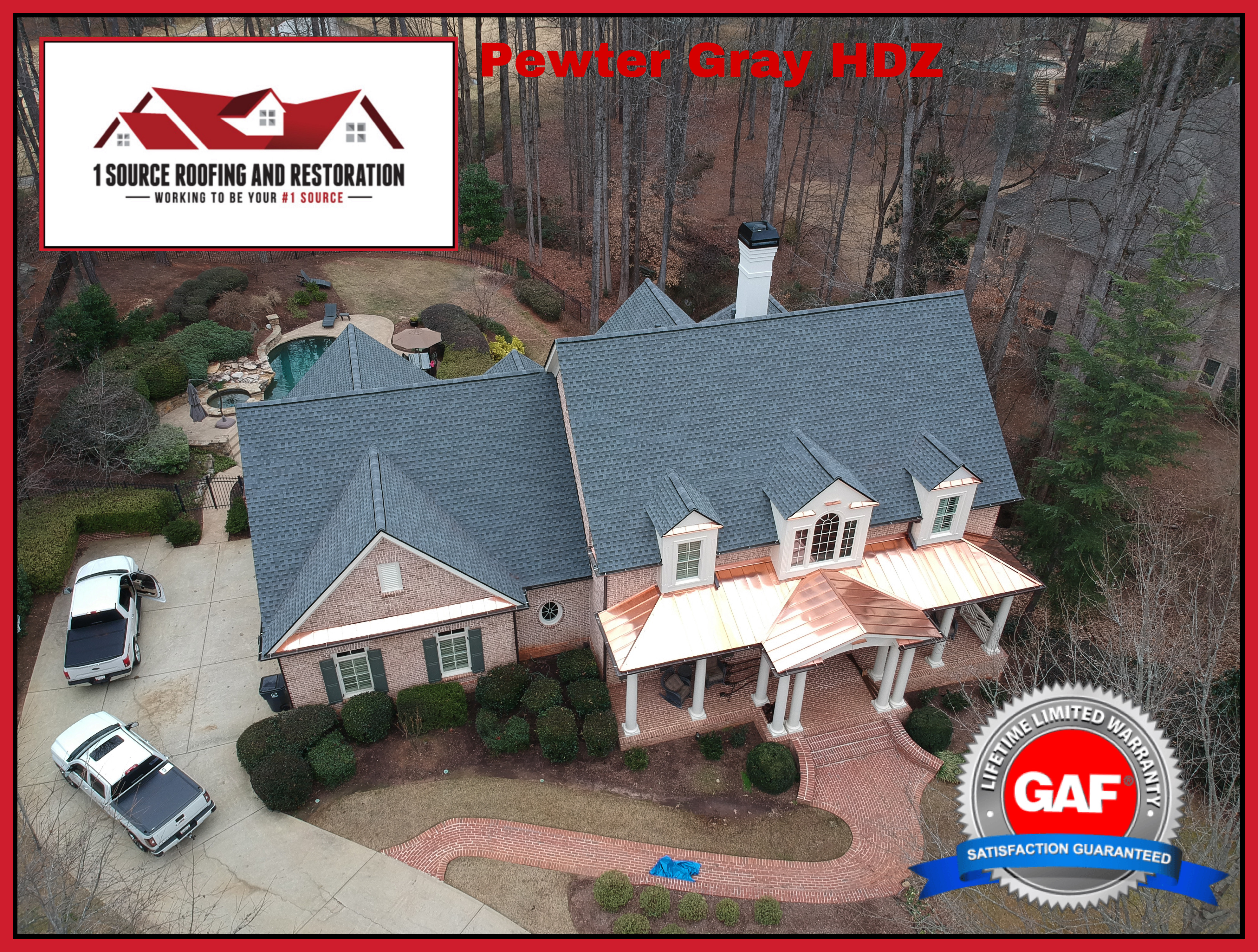
GAF, the largest roofing manufacturer in North America, restricts its Certified Contractor program to contractors who meet requirements for proper licensing and insurance, a proven track record of professional installation, and commitment to ongoing training. GAF Certified Contractors can offer GAF's System Plus limited warranty, which covers materials and installation labor. Non-certified contractors can only offer the standard material warranty with no labor coverage. For details on GAF certification, see our GAF certification page.
CertainTeed SELECT ShingleMaster
CertainTeed's SELECT ShingleMaster designation requires contractors to complete CertainTeed's credentialing courses, maintain proper insurance, and demonstrate installation quality. The certification authorizes the contractor to offer CertainTeed's SureStart Plus extended warranty, which covers both materials and workmanship. See our CertainTeed certification page for details.
Why Certifications Matter More Than a State License
A state license tests whether a contractor can pass a written examination about building codes and business practices. It does not verify installation quality, material knowledge, or customer satisfaction after the exam. Manufacturer certifications go further: they require ongoing performance monitoring, customer feedback review, and recertification. A contractor who performs poor work loses the certification and the ability to offer enhanced warranties.
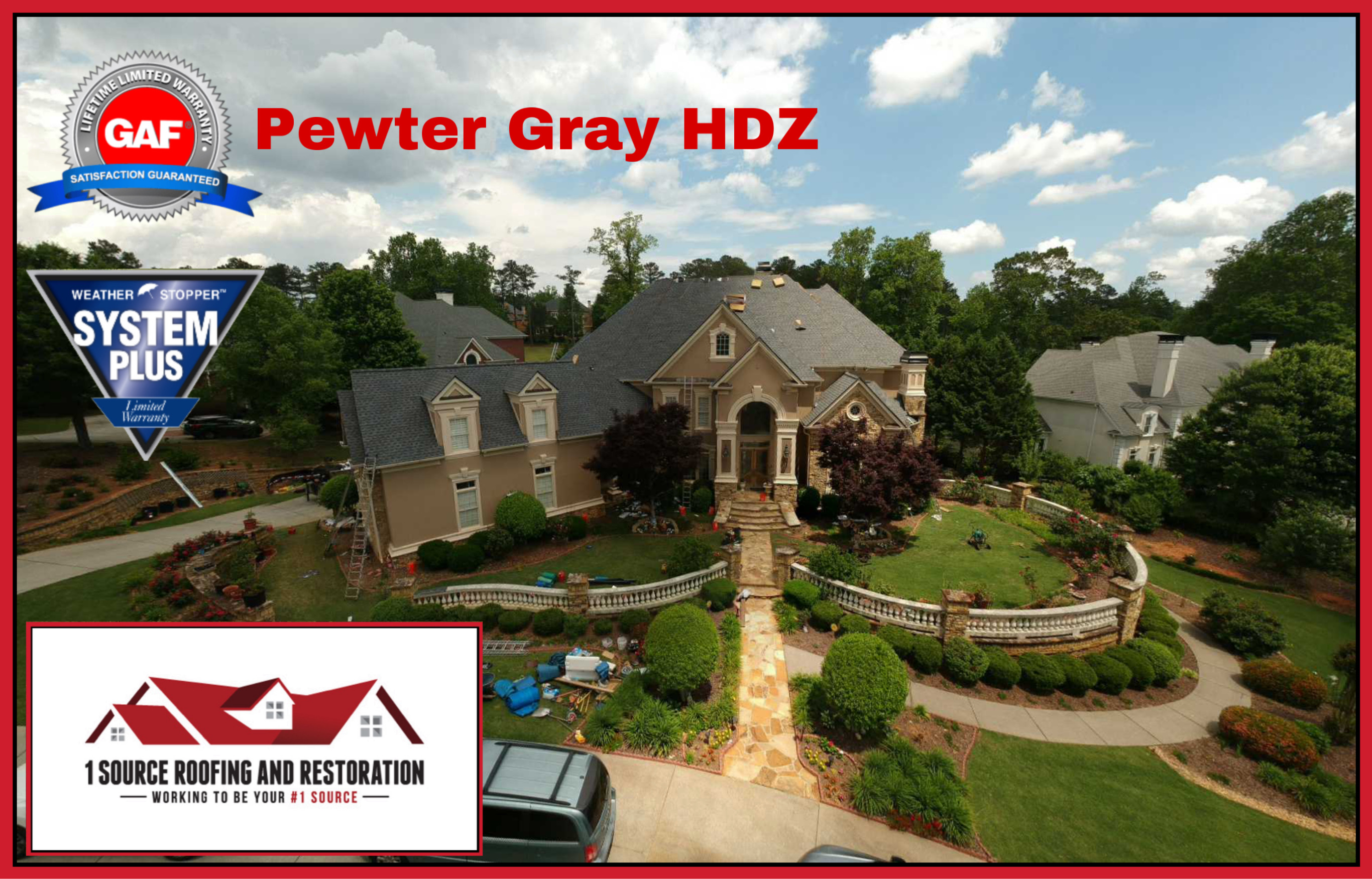
For metro Atlanta homeowners, the combination of local business licensing, verified insurance, and manufacturer certifications provides a stronger quality filter than a state roofing license alone would. 1 Source Roofing holds both GAF Certified and CertainTeed SELECT ShingleMaster designations, plus BBB A+ accreditation. These certifications represent an investment in training, insurance, and quality standards that goes beyond what any state license would require.
Red Flags: Identifying Unqualified Roofing Contractors in Georgia
Georgia's lack of state licensing means unqualified operators can enter the market with no barriers. After every major storm event, metro Atlanta sees an influx of storm chasers who canvass neighborhoods, offer low prices, collect deposits, and disappear or deliver substandard work. Knowing the red flags protects your investment.
Warning Signs to Watch For
- No physical business address: The contractor operates from a personal vehicle or a PO Box with no permanent office or warehouse. A business that cannot show you a physical location may not exist in six months when you need warranty service.
- No written contract or vague terms: A legitimate contractor provides a detailed written contract that specifies the scope of work, materials, timeline, payment schedule, warranty terms, and permit responsibilities. Verbal agreements or one-page contracts with vague language provide no protection.
- Large upfront payment demands: Contractors who demand 50 percent or more before starting work may need your money to fund another project. Standard payment structures run 10 to 30 percent at signing, with the balance due at completion. Georgia law does not cap upfront payments, so this protection relies on your negotiation.
- No insurance documentation: Any hesitation to provide a certificate of insurance signals that the contractor lacks coverage. Legitimate contractors carry documentation and provide it without delay.
- No local business license: Ask for the local business license or occupational tax certificate for the jurisdiction where your property sits. No local license means the contractor cannot pull permits and the work will proceed without inspection.
- No manufacturer certifications: In a state without a roofing license, manufacturer certifications are the quality benchmark. A contractor with no manufacturer affiliations has no third-party verification of their installation competency.
- Pressure to sign during the first visit: Storm chasers use urgency tactics ("we have a crew available tomorrow," "this price expires today") to prevent you from verifying their credentials or getting competing estimates. A contractor who pressures you to sign before you can verify their qualifications does not want you to verify them.
- No references from recent local work: Ask for three to five references from projects completed in the past 12 months within 30 miles of your home. Call the references. Drive by the properties. A contractor with no local references has no local track record.
How 1 Source Exceeds Georgia's Minimum Contractor Requirements
Georgia's minimum requirements for a roofing contractor amount to a local business license and workers' compensation insurance (for firms with three or more employees). That is a low bar. 1 Source Roofing and Restoration operates far above it.
Here is what we bring to every project:
- GAF Certified Contractor: Verified training, insurance, and installation quality per GAF's program requirements. Authorizes GAF System Plus warranties.
- CertainTeed SELECT ShingleMaster: Credentialed through CertainTeed's training program. Authorizes SureStart Plus extended warranties.
- BBB A+ Accreditation: Business ethics and customer complaint resolution verified by the Better Business Bureau.
- General liability insurance: Coverage that meets or exceeds jurisdictional requirements across metro Atlanta.
- Workers' compensation insurance: Full coverage for every crew member on every project.
- Local business registrations: Active registrations across Gwinnett, Fulton, Cobb, and DeKalb counties and their municipalities.
- Permits on every project: We pull permits and schedule inspections because code compliance protects the homeowner, not the contractor.
- 10+ years serving metro Atlanta: Established operations in Lawrenceville, GA since 2015. Local references available from every community we serve.
"Georgia does not require a state roofing license. That makes your due diligence the only filter between a qualified contractor and an unqualified one. Verify insurance. Verify certifications. Verify references."
When you hire 1 Source Roofing, you hire a contractor that has been verified by the two largest shingle manufacturers in North America, accredited by the BBB, registered across metro Atlanta jurisdictions, and insured beyond the minimum requirements. That combination of credentials does not exist by accident. It takes investment, training, and a commitment to quality that storm chasers and fly-by-night operations cannot match.
Your Contractor Verification Checklist for Georgia
Before signing a roofing contract with any contractor in Georgia, complete these verification steps. Each step takes 10 to 15 minutes. Together, they eliminate 90 percent of the risk associated with hiring a roofing contractor in an unregulated state.
| Step | What to Verify | How to Verify |
|---|---|---|
| 1 | Local business license active in your jurisdiction | Ask for the license number; verify with the city or county clerk's office |
| 2 | General liability insurance (minimum $1M per occurrence) | Request COI; call the insurance carrier to confirm active coverage |
| 3 | Workers' compensation insurance | Request COI; verify with the Georgia State Board of Workers' Compensation |
| 4 | Manufacturer certifications (GAF, CertainTeed, or equivalent) | Search the manufacturer's online contractor locator to confirm active status |
| 5 | BBB rating and complaint history | Search bbb.org for the company name and review the rating and complaint record |
| 6 | Local references (3+ projects in past 12 months) | Call references; ask about communication, timeline, cleanup, and warranty follow-through |
| 7 | Written contract with scope, materials, price, timeline, warranty | Read every line before signing; confirm permit pulling is included |
| 8 | Payment terms (no more than 30% upfront) | Negotiate if the contractor demands more; final payment at project completion |
A contractor who passes all eight steps represents a verified, credentialed, insured professional. In Georgia's unregulated market, this verification process is the homeowner's primary protection against substandard work. Take the time to complete it. The 90 minutes you invest in verification protects a $10,000 to $30,000 roofing investment.
For guidance on permits and inspections that verify the work itself, see our roofing permit requirements guide. For the broader Georgia building code framework that governs how the work must be performed, see our Georgia residential roofing code guide.
.JPG)
Contractor Licensing: Frequently Asked Questions
Answers to common questions about roofing contractor licensing, insurance, and qualifications in Georgia.
Does Georgia require a state license for roofing contractors?
No. Georgia does not require a state-level roofing contractor license. Unlike states such as Florida, California, and North Carolina that mandate state licensing with examinations, Georgia leaves contractor regulation to local jurisdictions. Individual cities and counties set their own business license and registration requirements for roofing contractors. This means the licensing requirements vary depending on where the work is performed.
What insurance should a Georgia roofing contractor carry?
At minimum, a Georgia roofing contractor should carry general liability insurance (at least $1 million per occurrence) and workers' compensation insurance as required by Georgia law for employers with three or more employees. Many reputable contractors carry $2 million or more in general liability. Ask for a certificate of insurance and verify it with the insurance carrier directly. A contractor without workers' comp exposes you to liability for worker injuries on your property.
How do manufacturer certifications compare to a state roofing license?
Manufacturer certifications like GAF Certified Contractor and CertainTeed SELECT ShingleMaster require contractors to meet training, insurance, and quality standards that exceed anything a state license demands. These certifications verify installation competency through manufacturer-administered programs, require ongoing education, and authorize the contractor to offer enhanced manufacturer warranties. In Georgia's unregulated market, manufacturer certifications serve as the most reliable indicator of contractor quality.
What are the red flags of an unlicensed or unqualified roofing contractor?
Red flags include: no physical business address (operates from a personal vehicle), no written contract or vague contract terms, requests for large upfront payments (more than 30 percent), no proof of insurance when asked, no local business license, no manufacturer certifications, no references from recent local projects, and pressure to sign immediately after a storm. Legitimate contractors provide documentation without hesitation.
Explore More Georgia Roofing Code Guides
- Georgia Residential Roofing Code Guide
- Roofing Permit Requirements in Georgia
- Roof Fire Rating Code in Georgia
- Hurricane Strap Requirements in Georgia
- Roof Deck and Sheathing Code in Georgia
- Roof Load Requirements in Georgia
- Roof Truss and Rafter Code in Georgia
- GAF Certified Contractor
- CertainTeed Certified Contractor
- Roof Replacement Services
- Insurance Claims Assistance
- About 1 Source Roofing