
Roof Slope Requirements in Georgia
Every roof covering material has a minimum slope. Go below it, and the material fails. This guide covers slope minimums for every residential roof covering type under the Georgia-adopted IRC, plus how slope determines your underlayment specification.
Certified by Industry-Leading Manufacturers
Why Roof Slope Determines Your Material Options
Roof slope is the angle of the roof surface expressed as a ratio of vertical rise to horizontal run. A 6:12 slope rises 6 inches for every 12 inches of horizontal distance. Slope drives every major decision in a roofing project: material selection, underlayment specification, drainage performance, and service life.
Water moves down a steep roof fast. It moves down a low-slope roof slow. The slower the water moves, the longer it sits on the roof surface, and the greater the opportunity for it to find a path through seams, nail holes, and material laps. Every roof covering material has an engineered minimum slope below which the material cannot shed water fast enough to prevent infiltration. The IRC codifies these minimums in Section R905, with individual subsections for each material type.
Georgia homes span a wide range of roof slopes. Traditional colonial and craftsman homes in Buckhead and Sandy Springs feature steep slopes between 8:12 and 12:12. Ranch homes in Marietta and Roswell sit at moderate slopes between 4:12 and 6:12. Porch roofs, dormers, and additions on homes throughout the metro area may drop to 2:12 or 3:12. A single home can have three or four different slopes across its roof planes, and each slope determines the material and underlayment requirements for that section.
Contractors who treat the entire roof as a single slope make costly mistakes. A porch roof at 3:12 requires different underlayment than the main roof at 8:12, even when both use the same shingle product. Your contractor must identify every slope on your roof during the pre-installation survey and plan the appropriate underlayment system for each section. Our underlayment code page covers the full specification for each slope category.
Complete Slope Minimums by Roof Covering Material
The IRC assigns a minimum slope to each roof covering type based on the material's ability to shed water at that angle. The following table compiles every residential roof covering material and its minimum slope under the Georgia-adopted IRC.
| Roof Covering Material | IRC Section | Minimum Slope | Degree Equivalent | Underlayment Requirement |
|---|---|---|---|---|
| Asphalt shingles | R905.2.2 | 2:12 | 9.5 degrees | Single layer at 4:12+; double layer at 2:12 to 4:12 |
| Clay tile | R905.3.2 | 2.5:12 | 11.8 degrees | Double layer underlayment required |
| Concrete tile | R905.3.2 | 2.5:12 | 11.8 degrees | Double layer underlayment required |
| Slate shingles | R905.6.2 | 4:12 | 18.4 degrees | Single layer underlayment |
| Wood shingles | R905.7.2 | 3:12 | 14.0 degrees | Single layer underlayment |
| Wood shakes | R905.8.2 | 4:12 | 18.4 degrees | Interlayment between courses |
| Metal shingles | R905.10.2 | 3:12 | 14.0 degrees | Per manufacturer specification |
| Standing seam metal | R905.10.2 | 0.25:12 | 1.2 degrees | Per manufacturer specification |
| Metal roof panels (lapped) | R905.10.2 | 3:12 | 14.0 degrees | Per manufacturer specification |
| Built-up roofing | R905.9.2 | 0.25:12 | 1.2 degrees | Integral to built-up system |
| Modified bitumen | R905.11.2 | 0.25:12 | 1.2 degrees | Integral to system |
| Single-ply membrane (TPO/EPDM) | R905.13.2 | 0.25:12 | 1.2 degrees | Integral to system |
This table is the single most important reference for material selection on any Georgia roofing project. Your contractor must measure the slope of each roof section and verify that the proposed material meets or exceeds the minimum slope for that section. A material installed below its minimum slope violates code and will fail inspection.
Slope determines material. Material determines underlayment. A slope measurement error cascades through every downstream specification on the project.
Asphalt Shingle Slope Rules and Underlayment Tiers
Asphalt shingles are the dominant residential roof covering in metro Atlanta, installed on more than 90 percent of the homes we serve. The IRC divides asphalt shingle installations into three slope categories, each with distinct underlayment requirements.
Below 2:12: Not Permitted
Asphalt shingles cannot be installed on roof surfaces with a slope below 2:12. The water flow rate at slopes below 2:12 is too slow for the shingle lap system to prevent infiltration. These surfaces require low-slope roof coverings: built-up roofing, modified bitumen, or single-ply membrane. Metro Atlanta homes with flat porch roofs, sun-room additions, or commercial-style flat sections fall into this category.
2:12 to Less Than 4:12: Enhanced Underlayment
Slopes between 2:12 and 4:12 permit asphalt shingles but require enhanced underlayment protection. The code offers two options:
- Double-layer felt: Two layers of ASTM D226 Type I felt applied with a 19-inch starter strip and subsequent 36-inch courses with 19-inch head laps, creating continuous double coverage.
- Self-adhering membrane: A single layer of ASTM D1970 self-adhering modified bitumen sheet (ice and water shield) across the entire low-slope section. This provides superior protection because the membrane seals around nail penetrations.
Low-slope sections appear on many Atlanta homes as porch roofs, dormers, additions, and transition zones between building masses. Your contractor must identify these areas during the pre-installation survey. A single layer of felt on a 3:12 porch roof violates code, even if the main roof at 8:12 uses single-layer underlayment.
4:12 and Steeper: Standard Underlayment
Roofs at 4:12 or steeper require a single layer of underlayment complying with ASTM D226 Type I (No. 15 felt), ASTM D4869 Type I, or ASTM D6757 (synthetic underlayment). Most homes in Buckhead, Johns Creek, Alpharetta, and other premium neighborhoods have main roof slopes between 6:12 and 12:12. These roofs fall within the standard single-layer category.
Not Sure About Your Roof Slope?
1 Source Roofing measures every roof plane and specifies the correct material and underlayment for each slope zone. Free inspections for metro Atlanta homeowners.
Call (404) 277-1377Metal, Tile, Slate, and Wood: Slope Rules by Material
Standing Seam Metal: 0.25:12
Standing seam metal roofing accepts the lowest slope of any steep-slope material because its raised, mechanically locked seams prevent water entry at the panel joints. The 0.25:12 minimum (approximately 1.2 degrees) makes standing seam the only steep-slope option for near-flat residential roof sections. Standing seam panels run continuously from ridge to eave, eliminating horizontal laps. The seam height (typically 1 to 2 inches) provides a physical barrier that water cannot overcome at these low slopes.
Metal Shingles and Lapped Metal Panels: 3:12
Metal shingles and lapped metal roof panels have horizontal joints between panels. These joints rely on overlap and sealant to prevent water entry. At slopes below 3:12, water moves too slow across these joints, and wind can push it uphill through the laps. The 3:12 minimum reflects this engineering limitation.
Clay and Concrete Tile: 2.5:12
Tile roofs require a 2.5:12 minimum slope under IRC R905.3.2. Tile profiles create channels that direct water downslope, but the tile-to-tile laps and the gap between the tile and the underlayment create pathways for wind-driven rain at low slopes. The underlayment system beneath tile must be double-layer, providing a secondary waterproof barrier. Tile roofs on luxury homes in Buckhead and Sandy Springs often sit at steep slopes (6:12 to 10:12), well above the minimum.
Slate: 4:12
Natural slate requires a 4:12 minimum slope under IRC R905.6.2. Slate shingles are heavy (800 to 1,500 pounds per square), rigid, and rely on gravity and overlap to shed water. At slopes below 4:12, water dwells on the slate surface long enough to wick into the head lap between courses. The 4:12 minimum provides sufficient gravitational force to move water off the slate before wicking occurs.
Wood Shingles: 3:12 / Wood Shakes: 4:12
Wood shingles (machine-sawn, smooth surface) accept a 3:12 minimum slope. Wood shakes (hand-split, rough surface) require 4:12. The rough texture of shakes slows water flow more than smooth shingles, requiring a steeper slope to compensate. Both wood products require ventilation beneath the covering to prevent moisture accumulation and rot. Wood shakes require interlayment (a layer of felt between each course) that acts as a secondary drainage plane.
| Slope Range | Permitted Materials | Not Permitted | Common in Metro Atlanta |
|---|---|---|---|
| Below 0.25:12 | None (ponding condition) | All materials | Rare (structural defect) |
| 0.25:12 to 2:12 | Standing seam metal, built-up, modified bitumen, single-ply | Asphalt shingles, tile, slate, wood | Flat porch roofs, commercial sections |
| 2:12 to 2.5:12 | Above + asphalt shingles (enhanced underlayment) | Tile, slate, wood shakes | Low-slope additions, dormers |
| 2.5:12 to 3:12 | Above + clay tile, concrete tile | Slate, wood shakes | Some ranch-style homes |
| 3:12 to 4:12 | Above + metal shingles, wood shingles | Slate, wood shakes | Transitional slopes |
| 4:12 and above | All materials permitted | None | Most residential main roofs |
How Slope Affects Drainage, Material Life, and Project Cost
Drainage Performance
A steeper roof sheds water faster. On a 12:12 slope (45 degrees), water velocity across the roof surface is approximately 3 times faster than on a 4:12 slope (18 degrees). Faster drainage means less time for water to find pathways through shingle laps, nail holes, and flashing seams. Steep roofs tolerate minor installation imperfections that would cause leaks on low-slope surfaces.
Material Longevity
Shingle life correlates with slope. Asphalt shingles on a 10:12 slope shed water and dry faster than identical shingles on a 3:12 slope. The low-slope shingles spend more time wet, accelerating granule erosion, algae growth, and sealant strip degradation. A shingle rated for 30 years on a 6:12 slope may last 20 to 25 years on a 3:12 slope in Georgia's humid climate.
Construction Cost
Steeper roofs cost more to build, maintain, and replace. A 12:12 slope has approximately 41 percent more surface area than a flat roof covering the same floor plan. More surface area means more shingles, more underlayment, more fasteners, and more labor. Safety equipment requirements increase with slope: roofs above 6:12 require toe boards, roofs above 8:12 require personal fall arrest systems. These safety costs add to the project price.
The flip side: low-slope sections cost less in materials but more in underlayment (double-layer requirement) and carry higher long-term maintenance costs. The enhanced underlayment requirement for slopes between 2:12 and 4:12 adds $50 to $80 per square in material cost compared to single-layer underlayment. See our insulation and energy code page for how slope and attic geometry interact with energy requirements.
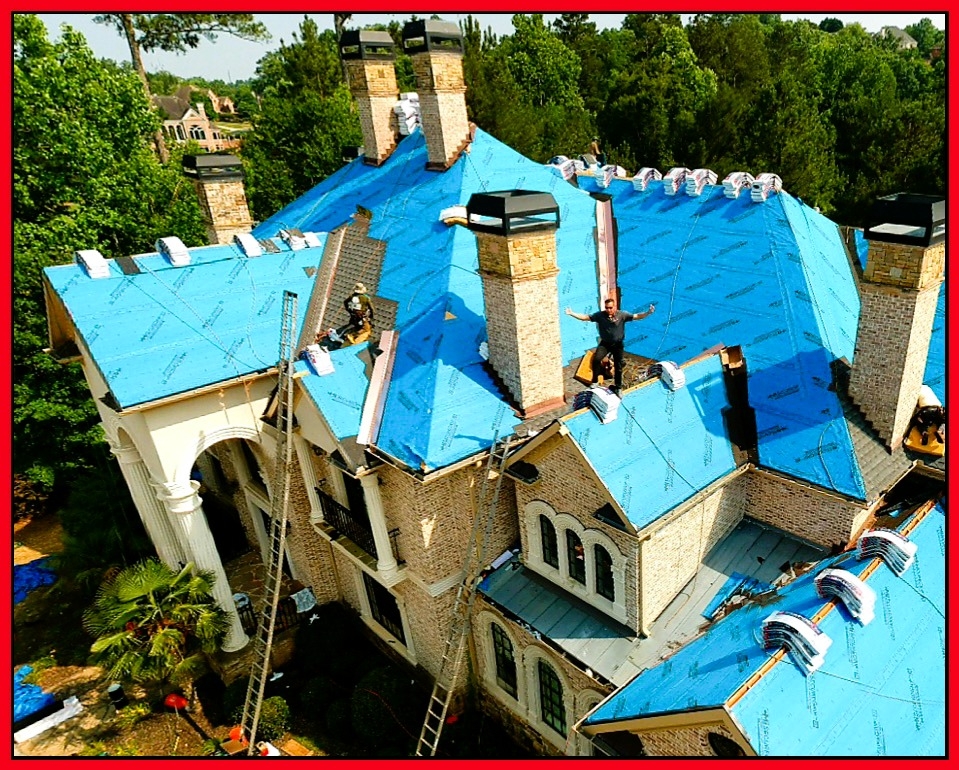
A 3:12 porch roof and a 10:12 main roof on the same house need different underlayment systems. Miss that distinction, and the low-slope section fails while the steep section lasts 30 years. Each slope zone carries its own code requirement, and each requires independent specification.
How 1 Source Handles Multi-Slope Roofs
Every roof replacement that 1 Source Roofing performs starts with a slope survey. Our project manager measures every roof plane with a pitch gauge and records the slope on the project plan. This measurement drives the material specification, underlayment plan, and permit application for each section of the roof.
Slope-Based Specification
For roof planes at 4:12 and steeper, we install synthetic underlayment (single layer) with ice and water shield at eaves and valleys. For roof planes between 2:12 and 4:12, we install full ice and water shield membrane across the entire low-slope section. For sections below 2:12, we recommend standing seam metal or a commercial-grade low-slope system rather than attempting to use asphalt shingles at an insufficient slope.
Transition Zone Treatment
Where a steep roof plane meets a low-slope section, the transition creates a concentrated water flow zone. We extend ice and water shield membrane through the transition area and at least 24 inches onto each adjoining surface. Flashing at the transition directs water from the steep plane onto the low-slope surface without allowing it to back up under the steep-slope shingles.
For homeowners in Alpharetta, Johns Creek, Roswell, and other premium neighborhoods with architecturally complex homes, slope management is the difference between a roof that performs for 30 years and one that leaks within 5 years at the low-slope sections. The complex roof lines that give your home its character also create the installation challenges that separate competent contractors from careless ones.
Roof Slope Requirements — Frequently Asked Questions
Common questions about Georgia's roof slope minimums, material selection by slope, and underlayment requirements.
What is the minimum roof slope for asphalt shingles in Georgia?
The minimum slope for asphalt shingles under IRC R905.2.2 is 2:12 (two inches of rise per twelve inches of horizontal run). Roofs between 2:12 and 4:12 require enhanced underlayment protection, either double-layer felt or a full layer of self-adhering ice and water shield membrane. Roofs below 2:12 cannot use asphalt shingles and must use a low-slope roof covering system.
What roof slope does standing seam metal roofing require in Georgia?
Standing seam metal roofing has the lowest minimum slope of any steep-slope roof covering: 0.25:12 (one-quarter inch of rise per twelve inches of run) under IRC R905.10.2. This near-flat slope works because standing seam panels use factory-formed raised seams that lock and prevent water entry. Metal shingle panels require a steeper 3:12 minimum slope.
How do you measure roof slope?
Roof slope is expressed as a ratio of vertical rise to horizontal run, with the run always set at 12 inches. A 6:12 slope rises 6 inches for every 12 inches of horizontal distance. You can measure slope from inside the attic using a level and tape measure, from the roof surface using a pitch gauge, or from ground level using a smartphone inclinometer app and the roof edge angle.
Does roof slope affect underlayment requirements in Georgia?
Yes. For asphalt shingle roofs, slopes of 4:12 and steeper require single-layer underlayment. Slopes between 2:12 and 4:12 require double-layer felt underlayment or a full layer of self-adhering ice and water shield membrane. Low-slope roof coverings below 2:12 have their own underlayment requirements. Slope is the primary variable that determines your underlayment specification.
Related Building Code and Technical Guides
These pages cover related code requirements and technical installation standards for Georgia residential roofing:
- Georgia Residential Roofing Code Guide — Complete overview of IRC Chapter 9, permits, and inspections
- Asphalt Shingle Code Requirements — IRC R905.2 wind ratings, fastener patterns, slope minimums
- Roof Underlayment Code Requirements — Underlayment standards by slope category
- Ice Barrier and Ice Dam Code — ASTM D1970 membrane specs for low-slope protection
- Roof Ventilation Code Requirements — How slope affects ventilation ratios and methods
- Roof Insulation and Energy Code — Insulation requirements by roof geometry
- Reroofing and Tear-Off Requirements — Slope considerations for reroofing projects
- Roof Fastener and Nailing Code — Nail specifications that connect to slope-based underlayment
- Wind Speed Requirements — How slope interacts with wind uplift calculations
Questions about the slope of your roof? Call 1 Source Roofing at (404) 277-1377 for a free roof inspection and slope assessment.