

Ridge Vent Code in Georgia
Net free area calculations, baffle requirements, manufacturer specifications, and the IRC ventilation standards that govern ridge vent installation on Georgia roofs.
Certified by Industry-Leading Manufacturers
What a Ridge Vent Does and Why It Dominates Modern Roofing
A ridge vent is a continuous exhaust vent installed along the peak of a roof. Hot air rises through the attic, reaches the highest point, and exits through the ridge vent opening. Soffit vents at the eaves provide intake. The ridge vent provides exhaust. Together they create a passive airflow system that requires no electricity, no moving parts, and no maintenance.
Ridge vents dominate residential roofing because they exhaust air uniformly across the entire attic. A 50-foot ridgeline with a continuous ridge vent pulls warm air from every rafter bay equally. Compare that to a pair of gable vents, which create horizontal cross-flow that leaves the center of the attic stagnant, or a few static box vents, which create hot spots between each vent location. Uniform exhaust means no thermal dead zones and no localized moisture accumulation.
The IRC R806 does not mandate ridge vents. It mandates adequate net free ventilation area with balanced intake and exhaust. But the roofing industry has settled on ridge-to-soffit ventilation as the best system for most residential roofs. GAF, CertainTeed, and every major shingle manufacturer recommend ridge vent exhaust paired with soffit intake. Both manufacturers require adequate ventilation for their warranty programs. Install shingles on an under-ventilated roof, and the manufacturer can deny a warranty claim for premature aging caused by excessive heat.
For homes across Alpharetta, Buckhead, and Sandy Springs, ridge vents solve the exhaust equation while maintaining a clean roofline. No visible vents protrude from the roof slope. Cap shingles cover the vent body, creating a finished appearance that matches the rest of the shingle installation. For premium homes where aesthetic standards are high, the invisible profile of a ridge vent is a significant advantage over box vents, turbines, or powered fans.
IRC R806 and Net Free Ventilation Area for Ridge Vents
IRC Section R806.1 sets the ventilation requirement: 1 square foot of net free ventilation area for every 150 square feet of attic floor space (1:150 ratio). The ratio drops to 1:300 when a Class I or II vapor retarder is installed on the warm side of the insulation and 40 to 50 percent of the ventilation area is in the upper portion of the attic.
Net Free Area (NFA) is the metric that matters. NFA measures the actual open area through which air passes, after accounting for screens, baffles, weather filters, and any other obstruction within the vent body. Every code-compliant ridge vent product carries an NFA rating per linear foot, tested and published by the manufacturer.
NFA Ratings for Common Ridge Vent Products
| Product | NFA per Linear Foot | External Baffle | Weather Filter | Profile Height |
|---|---|---|---|---|
| GAF Cobra SnowCountry | 18 sq in | Yes | Yes | Low profile |
| GAF Cobra Exhaust Vent | 18 sq in | Yes | Yes | Low profile |
| GAF Cobra Rigid Vent 3 | 18 sq in | Yes | Yes | Rigid |
| CertainTeed Ridge Vent | 18 sq in | Yes | Yes | Low profile |
| CertainTeed FlintBoard | 16 sq in | Yes | Yes | Rigid |
| Air Vent ShingleVent II | 18 sq in | Yes | Yes | Low profile |
| Owens Corning VentSure | 18 sq in | Yes | Yes | Low profile |
Most quality ridge vent products converge on 18 square inches of NFA per linear foot. This number drives the calculation: How much ridge length do you need for a given attic size?
The Calculation
For a 2,400 square foot attic using the 1:150 ratio: Total NFA required = 2,400 / 150 = 16 square feet (2,304 square inches). Exhaust (ridge vent) should provide 50 percent = 1,152 square inches. At 18 square inches per linear foot, you need 1,152 / 18 = 64 linear feet of ridge vent. If the ridge is only 45 feet long, the ridge vent provides 810 square inches of exhaust NFA, which is 342 square inches short. That shortfall requires either supplemental exhaust (off-ridge vents) or confirmation that the 1:300 ratio applies (reducing the exhaust requirement to 576 square inches, well within the 810 the ridge provides).
These calculations must happen before installation, not after the inspector flags a deficiency. Every roof replacement we perform starts with measured attic dimensions and NFA calculations that determine the ventilation design.
External Baffles and Weather Filters: The Features That Separate Good Ridge Vents from Bad Ones
A ridge vent without an external baffle is a hole in your roof. Wind passes over it, but the vent relies entirely on thermal convection (hot air rising) to exhaust attic air. In low-wind conditions, exhaust volume drops. During rain, water enters freely. An external baffle changes the aerodynamics.
The external baffle is a raised profile on the outer edges of the ridge vent that forces wind to accelerate as it passes over the vent opening. This acceleration creates negative pressure (Bernoulli's principle) above the vent slot, which pulls air from the attic even in light wind conditions. Wind-tunnel testing shows baffled ridge vents exhaust 20 to 40 percent more air volume than non-baffled vents under identical wind speeds. In calm conditions, the baffle makes no difference, and the vent relies on thermal buoyancy. But wind assistance boosts performance during every breeze.
Weather Protection
Georgia's weather delivers heavy rain, wind-driven rain during thunderstorms, and occasional snow. A ridge vent must resist water infiltration under these conditions. Quality ridge vent products achieve this through a combination of external baffles (which deflect rain upward and over the vent), internal weather filters (non-woven fabric or foam strips that block water droplets while allowing air passage), and overlapping design (the vent body overlaps the roof deck slot to create a drip path that directs water to the shingle surface).
GAF tests their Cobra ridge vents under simulated hurricane-force wind-driven rain (110 mph with water spray). Products that pass this test carry the "Wind Driven Rain" designation. CertainTeed performs similar testing. We install only tested, rated ridge vent products on every roof replacement because Georgia thunderstorms test ventilation products regularly. A ridge vent that leaks during the first heavy rain is a callback that costs time, money, and customer trust.
The difference matters: a ridge vent without a baffle is a slot in your roof. A baffled ridge vent is an engineered exhaust system that pulls air even in light wind.
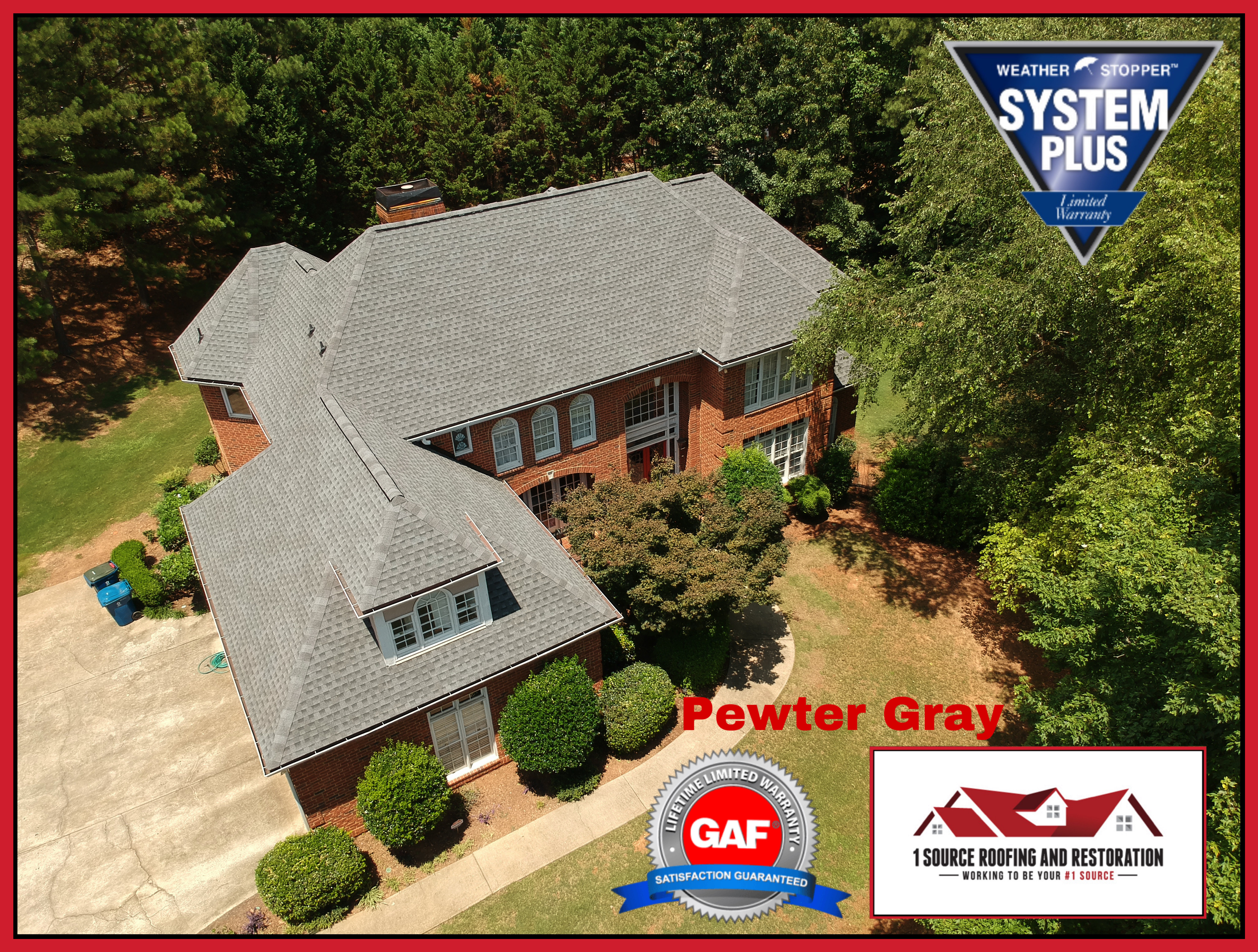
Ridge Vent Installation: Slot Cut, Shingle Cut-Back, and Fastening
Proper ridge vent installation requires a precise sequence. Errors at any step compromise ventilation performance, weather protection, or structural integrity. Here is the process our crews follow on every installation.
Step 1: Shingle Cut-Back
Before cutting the deck slot, the field shingles must be cut back from the ridge. The cut-back distance varies by manufacturer but typically ranges from 2 to 4 inches from the ridge on each side. This exposes the roof deck where the slot will be cut and provides clearance for the ridge vent body to sit flat against the deck surface.
Step 2: Slot Cut in Roof Deck
Using a circular saw set to the deck thickness (typically 7/16" to 3/4" for OSB or plywood), the crew cuts a slot along each side of the ridge board. The slot width follows the manufacturer's specification, usually 1 inch on each side of the ridge for a total 2-inch opening. On roofs without a ridge board, the slot is cut 1 to 1.5 inches from the peak on each side. The cut must stop 6 to 12 inches from each end of the ridge to maintain structural integrity at the gable ends and prevent rain entry at the termination points.
Step 3: Ridge Vent Installation
The ridge vent is positioned over the slot, centered on the ridge. Fastening follows manufacturer specifications. GAF Cobra products require 2-inch ring-shank nails driven through the vent and into the deck and framing below. The nails must penetrate the rafter or truss chord for pull-out resistance. Overlapping sections maintain weather continuity. End caps seal the termination points.
Step 4: Cap Shingle Installation
Cap shingles (ridge cap shingles) cover the ridge vent body. GAF TimberTex or Z-Ridge, and CertainTeed Shadow Ridge are purpose-made cap shingle products designed for ridge vent applications. The cap shingles are installed per manufacturer instructions with the exposure and fastener pattern specified for the product. The cap shingles protect the ridge vent from UV exposure, add weather protection, and create the finished appearance that blends with the field shingles.
Common Installation Errors
- Slot too narrow: Restricts NFA and starves the vent of airflow. The installer must follow the manufacturer's slot width specification.
- Slot not cut at all: We have found ridge vents installed over intact decking on homes where a previous contractor skipped the slot cut. The vent sits there as decoration with zero function.
- End caps missing: Open vent ends allow wind-driven rain, insects, and debris into the attic. Every run of ridge vent must terminate with a sealed end cap.
- No soffit intake: A ridge vent without soffit vent intake pulls conditioned air from the living space through ceiling penetrations instead of pulling fresh air from the eaves. The exhaust system works, but it works against the homeowner.
NFA Calculation Reference: Ridge Vent Requirements by Attic Size
The following table provides quick reference calculations for common attic sizes using both the 1:150 and 1:300 ventilation ratios. Exhaust NFA assumes a 50/50 intake/exhaust split. Ridge vent length assumes 18 square inches of NFA per linear foot.
| Attic Floor Area (sq ft) | Total NFA at 1:150 (sq in) | Exhaust NFA (50%) | Ridge Length Needed | Total NFA at 1:300 (sq in) | Ridge Length at 1:300 |
|---|---|---|---|---|---|
| 1,200 | 1,152 | 576 | 32 ft | 576 | 16 ft |
| 1,600 | 1,536 | 768 | 43 ft | 768 | 21 ft |
| 2,000 | 1,920 | 960 | 53 ft | 960 | 27 ft |
| 2,400 | 2,304 | 1,152 | 64 ft | 1,152 | 32 ft |
| 2,800 | 2,688 | 1,344 | 75 ft | 1,344 | 37 ft |
| 3,200 | 3,072 | 1,536 | 85 ft | 1,536 | 43 ft |
| 3,600 | 3,456 | 1,728 | 96 ft | 1,728 | 48 ft |
The table reveals a practical reality for larger homes. A 3,600 square foot attic under the 1:150 ratio needs 96 linear feet of ridge vent for exhaust alone. Many homes in Johns Creek and Alpharetta have complex roof designs with multiple ridges, hips, and valleys. The total ridge length available for vent installation may fall short of the calculated need. In those cases, we supplement with off-ridge vents or verify that the 1:300 ratio applies to bring the requirement into range.
Ridge Vent Compatibility with Different Roof Types
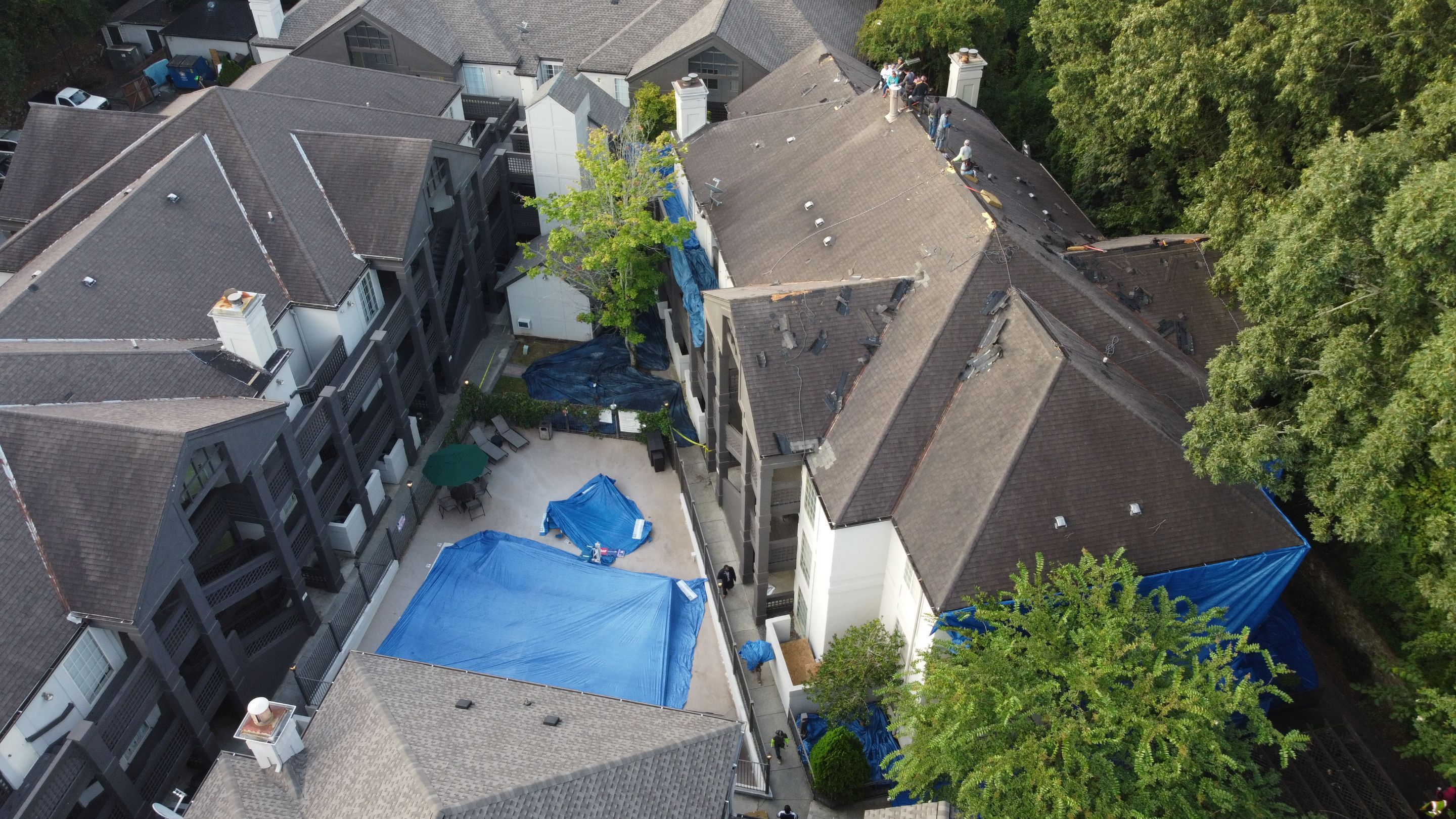
Not every roof geometry accommodates a standard ridge vent. The product works best on gable roofs with long, continuous ridgelines. Hip roofs, mansard roofs, and complex multi-level roof designs present challenges that require adapted solutions.
Gable Roofs
Gable roofs are the ideal application for ridge vents. The ridge runs the full length of the building, providing maximum vent length and NFA. A simple gable roof with a 50-foot ridge covered in continuous ridge vent provides 900 square inches of exhaust NFA. Combined with adequate soffit vents on both eaves, the system delivers balanced ventilation with no dead zones.
Hip Roofs
Hip roofs have a shorter main ridge because the roof slopes on all four sides rather than just two. A hip roof on a 50 x 30-foot footprint might have only a 20-foot ridge, providing 360 square inches of exhaust NFA. That falls short for a 1,500 square foot attic under the 1:150 ratio (which needs 720 square inches of exhaust). Supplemental options include hip ridge vent products that run along the hip lines, off-ridge vents on the upper roof slopes, or confirmation of the 1:300 ratio. Many premium homes in Roswell and Marietta have hip roofs, and we design ventilation systems that account for the reduced ridge length.
Complex / Multi-Level Roofs
Homes with multiple roof levels, intersecting ridges, dormers, and valleys create separate attic compartments. Each compartment needs its own ventilation system. A ridge vent on the upper roof does not ventilate the attic space above a lower roof section. Each separate attic must have its own intake and exhaust, calculated independently. We map the attic compartments during the estimate process and design ventilation for each one.
Low-Slope Sections
Ridge vents require a minimum roof slope to function properly. Most manufacturers specify a minimum 3:12 pitch. Below that pitch, the thermal convection that drives airflow weakens, and the vent's weather protection degrades because low-slope roofs hold water closer to the ridge. Low-slope sections on residential homes (porch roofs, additions, bump-outs) use different ventilation strategies or liquid-applied roofing systems that do not rely on ridge exhaust.
The ventilation design must match the roof geometry. A ridge vent solves nothing if the ridge is too short or the attic has isolated compartments that each need their own intake and exhaust.
Ridge Vents Without Soffit Intake: The Most Expensive Mistake in Roofing
A ridge vent is an exhaust device. It removes air from the attic. The air it removes must come from somewhere. With proper soffit vents, that air enters at the eaves, flows upward through the attic, and exits at the ridge. The system works as designed.
Without soffit intake, the ridge vent pulls replacement air from the path of least resistance. That path is through ceiling penetrations, recessed lights, attic hatches, and plumbing chases. The ridge vent pulls conditioned air from your living space into the attic and out the roof. Your HVAC system conditions replacement air that infiltrates through the building envelope. Your energy bills spike. The air sealing work you paid for gets undermined by the ventilation system.
We encounter this situation on at least one roof per month. A contractor installed a ridge vent during a reroof but never checked the soffit intake. The soffits are painted shut, blocked by insulation, or have solid (non-vented) panels. The homeowner notices higher energy bills and cannot figure out why. The ridge vent is working, but it is working against the homeowner because the intake side of the equation is missing.
Every roof replacement we perform includes a soffit intake inspection. If the soffits need new vents, we coordinate that work. If insulation is blocking existing vents, we install baffles. If the soffit material is solid vinyl with no perforations, we recommend replacing sections with vented panels. The ridge vent does its job only when the soffit vents do theirs.
For detailed requirements on intake ventilation, including NFA calculations per vent type and installation standards, see our Soffit Vent Code in Georgia reference page.
Frequently Asked Questions About Ridge Vent Code in Georgia
What is the NFA rating on a ridge vent?
NFA stands for Net Free Area, the actual open area through which air can pass through the vent. Ridge vent NFA is rated per linear foot. A standard ridge vent like the GAF Cobra SnowCountry provides 18 square inches of NFA per linear foot. A 40-foot ridge with this vent delivers 720 square inches (5 square feet) of net free exhaust area. The NFA rating accounts for the internal baffles, weather filters, and mesh that reduce the gross opening size.
Does Georgia code require ridge vents on every roof?
No. Georgia code adopts IRC R806, which requires adequate net free ventilation area with balanced intake and exhaust. The code does not mandate ridge vents or any specific vent type. Ridge vents, gable vents, turbine vents, off-ridge vents, and powered attic ventilators are all code-compliant exhaust options. Ridge vents have become the industry standard because they provide uniform exhaust along the full ridgeline, but the code allows any vent that delivers the required NFA.
How wide should the slot cut be for a ridge vent?
Most ridge vent manufacturers specify a slot width of 1 inch on each side of the ridge board, for a total opening of approximately 2 inches when the ridge board is present. On roofs without a ridge board (where rafters meet at the peak), the cut-back is typically 1 to 1.5 inches from the ridge on each side. Always follow the specific manufacturer's installation instructions for the product being installed. Cutting too narrow restricts airflow. Cutting too wide weakens the ridge structure and allows weather infiltration.
Can I install a ridge vent on a hip roof?
Ridge vents work on hip roofs but provide less exhaust capacity because hip roofs have shorter ridgelines than gable roofs of the same footprint. A hip roof with a 15-foot ridge delivers roughly one-third the exhaust NFA of a gable roof with a 45-foot ridge. Supplemental exhaust using off-ridge vents or hip ridge vent products fills the gap. Several manufacturers make hip ridge vent adapters designed to maintain continuous ventilation along hip ridges.