

Attic Air Sealing Code in Georgia
IECC air barrier requirements, ACH50 targets for Climate Zone 3, blower door testing standards, and the penetration sealing methods that stop conditioned air from leaking into your attic.
Certified by Industry-Leading Manufacturers
Why Air Leaks Cost You More Than Bad Insulation
Air leaks through the ceiling plane do more damage to your energy bill than thin insulation. The Building Science Corporation estimates that air leakage accounts for 25 to 40 percent of the heating and cooling load in a typical residential home. That number exceeds the contribution of inadequate insulation in most cases. Warm, humid air from your living space rises through every gap, crack, and penetration in the ceiling, carrying both heat and moisture into the attic. The process bypasses your insulation as if it were not there.
The physics are straightforward. Warm air is less dense than cool air. In winter, heated indoor air rises and finds every opening in the ceiling plane: gaps around plumbing stacks, holes where electricians drilled through top plates, spaces around recessed light cans, and the edges of attic access hatches. This upward movement creates a pressure differential called the stack effect. The warmer the indoor air relative to the attic, the stronger the driving force. In summer, the process reverses on hot days when attic temperatures exceed indoor temperatures, and hot attic air pushes down through the same openings.
For homes in Buckhead, Sandy Springs, and Alpharetta, where summer attic temperatures reach 140 to 160°F, the heat-driven air exchange through ceiling penetrations forces HVAC systems to work harder and run longer. A sealed ceiling plane stops this exchange. The insulation then does its job resisting conductive heat transfer without convective air currents undermining its performance.
Moisture matters as much as heat. Air leaking into the attic carries water vapor from showers, cooking, and breathing. That moisture condenses on cool surfaces in the attic during winter and contributes to mold, mildew, and roof deck deterioration. A tight air barrier at the ceiling plane keeps moisture where it belongs and protects the roof structure above.
IECC Section R402.4: Air Barrier and Insulation Installation
IECC Section R402.4 establishes the air barrier requirement for residential buildings. The code states that the building thermal envelope shall be durably sealed to limit infiltration. The sealing methods between dissimilar materials shall allow for differential expansion and contraction. The code lists specific locations where the air barrier must be continuous:
- Ceiling and attic: The air barrier must be installed at any ceiling adjacent to the attic space, including the junction of the ceiling and top plate of exterior walls.
- Walls: Behind electrical boxes, at the intersection of walls and foundations, and at window and door frames.
- Floors: Between the floor assembly and the garage, at cantilevers, and over unconditioned basements.
- Shaft, penetrations, and duct openings: All utility penetrations through the air barrier must be sealed.
Section R402.4.1.1 provides a detailed table of air barrier component requirements. For the ceiling/attic plane, the code requires that the air barrier be installed at the interior side of the insulation in the ceiling. Dropped ceilings, soffits over cabinets, and tray ceilings must have the air barrier aligned with the insulation. Access hatches and doors to unconditioned attic spaces must be sealed and insulated to the same level as the surrounding ceiling.
ACH50 Targets for Georgia (Climate Zone 3)
The IECC sets maximum air leakage rates verified by blower door testing. For Georgia's Climate Zone 3, the maximum allowable air leakage is 5 ACH50 (air changes per hour at 50 pascals of pressure). This applies to new construction. A blower door test pressurizes the house to 50 pascals and measures the total volume of air leaking through the envelope per hour. Divide that number by the house volume to get ACH50.
For a 2,500 square foot home with 8-foot ceilings (20,000 cubic feet), 5 ACH50 means no more than 100,000 cubic feet per hour of leakage at 50 pascals. That sounds like a large number, but in practice, achieving 5 ACH50 requires deliberate sealing of every penetration, joint, and opening in the building envelope. Older homes in Marietta and Roswell built before energy code enforcement often test at 10 to 15 ACH50 or higher.
"Building Science Corporation field testing shows air leakage accounts for 25-40% of a home's heating and cooling load. Insulation cannot compensate for unsealed penetrations."
The Twelve Most Common Attic Air Leak Locations
Building science research and field experience point to the same set of recurring air leak locations in residential attics. Each location represents a pathway through the ceiling plane that allows conditioned air to escape. Sealing these pathways before adding insulation is the foundation of energy code compliance.
| Leak Location | Typical Gap Size | Sealing Method | Material |
|---|---|---|---|
| Plumbing vent stacks | 1/4" to 1" annular gap | Caulk or foam around pipe | Fire-rated caulk or spray foam |
| Electrical wire penetrations | 1/8" to 1/2" per wire | Caulk each penetration | Acoustical sealant or fire caulk |
| Recessed light fixtures (non-IC) | Multiple gaps around housing | Cover with airtight box | Rigid foam or manufactured cover |
| HVAC register boots | 1/4" to 1" around boot edge | Mastic or foam seal boot to drywall | Duct mastic or spray foam |
| Bathroom exhaust fan housing | 1/2" to 1" around housing | Caulk housing to drywall | Fire-rated caulk |
| Chimney chase (framing gap) | 1" to 3" gap around chase | Sheet metal + fire caulk | Aluminum flashing + fire-rated sealant |
| Dropped soffits / bulkheads | Entire open soffit cavity | Rigid foam board cut to fit | Rigid foam + spray foam edges |
| Attic access hatch / pull-down stairs | 1/4" to 1/2" perimeter gap | Weatherstrip + insulated cover | Foam weatherstrip + rigid foam |
| Top plates (wall-to-attic junction) | Gaps at intersecting walls | Caulk or foam along top plate | Spray foam or acoustical sealant |
| Whole-house fan opening | Entire fan opening (4-16 sq ft) | Insulated, sealed cover | Rigid foam + weatherstrip |
| Knee wall cavities | Open stud bays | Rigid foam + seal edges | Rigid foam board + spray foam |
| Ductwork penetrations through ceiling | 1/2" to 2" around duct | Mastic seal duct to drywall | Duct mastic or UL-listed tape |
The chimney chase and dropped soffits represent the largest single leak points in most homes. A chimney chase can leak more air per hour than all the electrical wire penetrations combined. Dropped soffits over kitchen cabinets or bathroom vanities create open cavities that connect the wall stud bays directly to the attic. These large-area leaks demand rigid blocking with sealed edges, not just a bead of caulk.
Blower Door Testing: How Georgia Verifies Air Sealing Compliance
The blower door test is the definitive measurement of building envelope tightness. A calibrated fan mounts in an exterior door frame and pressurizes (or depressurizes) the house to 50 pascals. The fan measures the volume of air it must move to maintain that pressure. More air volume means more leakage. The result, expressed as ACH50, tells you how many times the house volume of air exchanges per hour through leaks in the envelope.
Georgia code requires blower door testing for new residential construction. The test must demonstrate compliance with the 5 ACH50 maximum for Climate Zone 3. The test follows ASTM E779 or RESNET/ICC 380 protocols. A certified energy rater or HERS rater typically performs the test.
What the Numbers Mean
Understanding ACH50 results gives homeowners a benchmark for their home's performance:
- 1 to 3 ACH50: Tight construction. New, well-sealed homes and high-performance retrofits. Mechanical ventilation required to maintain indoor air quality.
- 3 to 5 ACH50: Good performance. Meets Georgia code for new construction. Well-sealed existing homes after comprehensive air sealing work.
- 5 to 7 ACH50: Average for homes built in the 2000s with moderate air sealing. Below current code but above the worst performers.
- 7 to 12 ACH50: Leaky. Common in homes built before 2000 with no deliberate air sealing. Significant energy waste through envelope leaks.
- 12+ ACH50: Very leaky. Older homes with no air sealing work, missing weatherstripping, open chases, and major penetrations. Energy bills reflect the leakage.
Most older homes in Johns Creek, Alpharetta, and Buckhead built in the 1980s and 1990s test between 8 and 15 ACH50. A comprehensive air sealing project can reduce those numbers to the 4 to 6 ACH50 range, cutting infiltration-related energy losses by 40 to 60 percent.
Testing During Roofing Projects
A standard roof replacement does not require a blower door test. Blower door testing applies to new construction and to whole-house energy retrofits seeking energy code compliance or rebate qualification. If a homeowner combines a roof replacement with insulation upgrades and air sealing work, a blower door test before and after the work documents the improvement and may qualify the project for utility rebates through programs like Georgia Power's residential efficiency program.
How Roofing Projects Connect to Attic Air Sealing
A roof replacement does not directly involve ceiling-plane air sealing, but several aspects of roofing work intersect with the air barrier system. Understanding these connections helps homeowners make informed decisions about combining roofing and energy work.
Re-Decking and Air Barrier Continuity
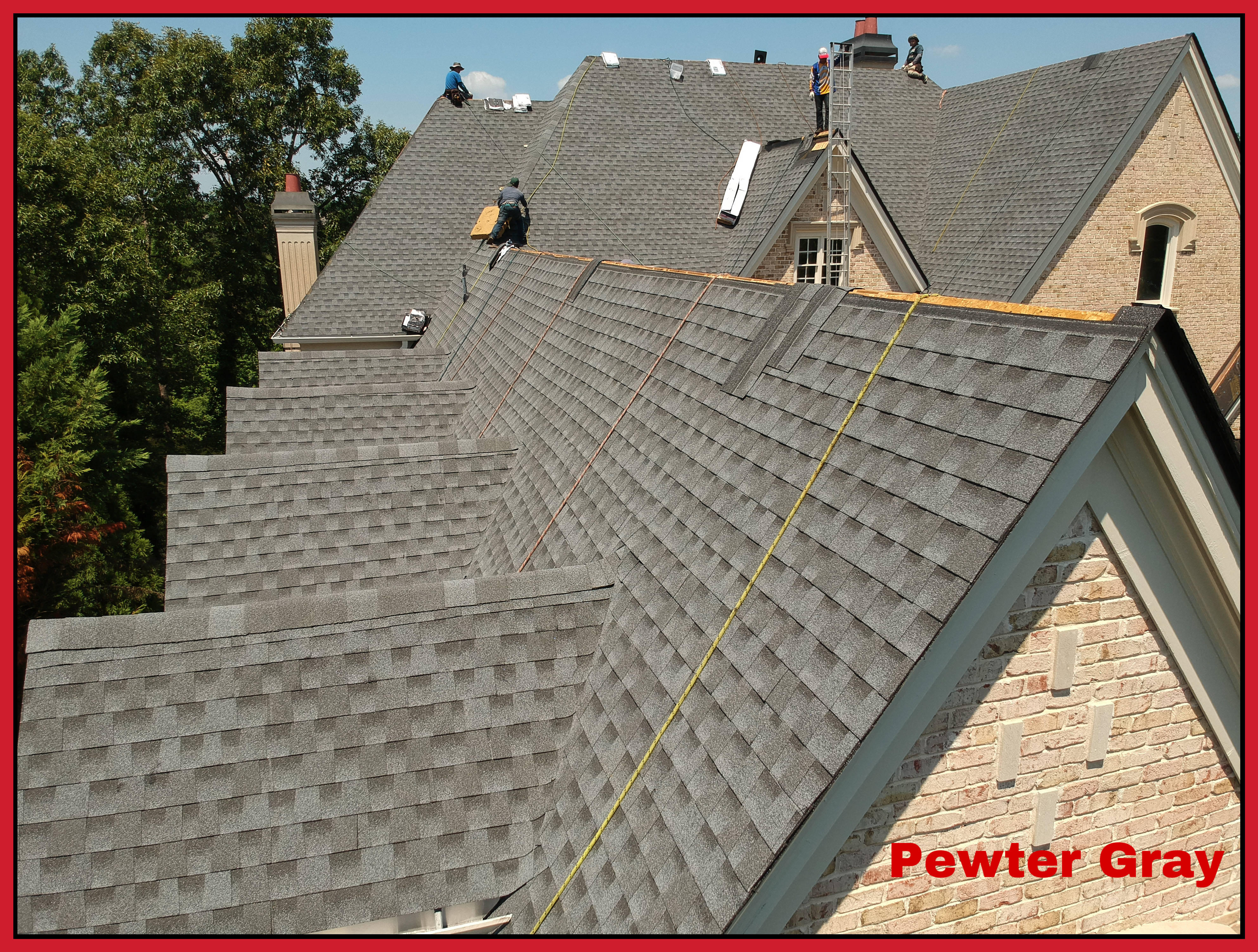
When damaged roof decking requires replacement, the roofing crew removes sheathing panels and exposes the attic from above. This provides access to the top of the ceiling plane, where air sealing is easier to perform than from the cramped attic interior. Sealing top plates, wire penetrations, and vent stacks from above during a tear-off and re-deck project takes advantage of the open access. Smart homeowners coordinate air sealing work with the roofing timeline to capture this opportunity.
Ventilation Modifications and Air Leakage
Adding or modifying roof ventilation during a reroof can create new air pathways without correct sealing. Cutting a slot for a ridge vent, adding soffit vents, or installing off-ridge vents creates openings in the roof assembly. These openings must ventilate the attic space above the air barrier, not create pathways that short-circuit the building envelope. Correct installation ensures ventilation openings connect to the attic airspace and do not communicate directly with conditioned spaces.
Insulation Disturbance
Roofing work sometimes disturbs attic insulation, especially during roof repairs that require accessing the underside of the deck from the attic. Displaced insulation exposes the ceiling plane and any unsealed penetrations beneath. If the insulation is moved during repair work, the air sealing condition of the exposed area should be assessed before the insulation is replaced.
Sealed Attic Assemblies
Some homeowners choose sealed (unvented) attic assemblies where spray foam insulation is applied to the underside of the roof deck, bringing the attic inside the conditioned envelope. This approach eliminates the ceiling-plane air barrier requirement because the air barrier moves to the roof deck. The IRC R806.5 permits this assembly under specific conditions. A sealed attic is neither better nor worse than a ventilated attic with a sealed ceiling plane. Both work when executed correctly. The choice depends on ductwork location, attic use, budget, and homeowner preference.
"IECC R402.4 requires the air barrier to be installed and inspected before insulation conceals it. A roof tear-off that exposes the deck gives top-side access to every ceiling penetration."
Energy Savings from Attic Air Sealing in Atlanta's Climate
The Department of Energy estimates that air sealing reduces heating and cooling costs by 10 to 20 percent in homes with significant leakage. For a home in Sandy Springs spending $3,600 per year on energy, that translates to $360 to $720 in annual savings. Combined with proper insulation and a radiant barrier, air sealing forms the foundation of a high-performance attic assembly.
The savings come from two sources. First, sealed penetrations stop the direct loss of conditioned air into the attic. Every cubic foot of cooled air that escapes through a ceiling gap must be replaced by outdoor air infiltrating through other envelope leaks, and your HVAC system must condition that replacement air. Second, a sealed air barrier allows insulation to perform to its rated R-value. Without air sealing, convective air movement through insulation degrades its effective thermal resistance. An R-30 insulation batt over an unsealed ceiling plane may perform like R-15 in practice because air currents through the insulation carry heat around the fibers.
Air sealing also improves indoor air quality and comfort. Sealed homes have fewer drafts, more consistent room temperatures, and less dust infiltration from the attic. For homes in Marietta and Roswell with allergies or sensitivity to pollen, reducing attic air exchange with the living space makes a noticeable difference during Georgia's long pollen season.
The connection between air sealing and cool roofing deserves attention. A cool roof reduces the temperature of the attic. Air sealing prevents attic air from entering the living space. Together, these measures reduce both the temperature of the attic air and the volume of attic air that reaches your living space. Each improvement multiplies the benefit of the other.
Frequently Asked Questions About Attic Air Sealing Code in Georgia
What is the ACH50 target for Georgia homes?
Georgia falls in IECC Climate Zone 3, which sets a maximum air leakage rate of 5 ACH50 (air changes per hour at 50 pascals of pressure) for new residential construction. This means the entire volume of air in the home should exchange no more than 5 times per hour when a blower door pressurizes the house to 50 pascals. Existing homes undergoing renovation may not be held to this standard unless the scope triggers full energy code compliance.
Does a roof replacement require attic air sealing?
A standard roof replacement (tear-off and re-shingle on existing decking) does not trigger attic air sealing requirements under Georgia code. Air sealing requirements apply to new construction and to renovations that alter the building envelope. If the roofing project includes adding insulation, converting attic space, or replacing more than 50 percent of the roof structure, the project may trigger energy code compliance that includes air sealing.
What are the most common attic air leaks?
The most common attic air leaks occur at plumbing vent stacks, electrical wire penetrations, recessed light fixtures (non-IC-rated), HVAC register boots, bathroom exhaust fan housings, chimney chases, dropped soffits over kitchen cabinets, and the gaps around attic access hatches or pull-down stairs. These penetrations create direct pathways for conditioned air to escape into the attic, bypassing insulation entirely.
Should air sealing happen before or after insulation?
Air sealing must happen before adding insulation. Once insulation covers the ceiling plane, the penetrations and gaps that need sealing become invisible and inaccessible. The IECC requires the air barrier to be installed and inspected before insulation conceals it. Blowing insulation over unsealed penetrations wastes money because the air leaks bypass the insulation through convective loops that carry conditioned air into the attic.