
Roof Valley Installation — Open Valley vs Closed-Cut Valley Methods
A technical comparison of valley installation methods with manufacturer specifications, performance data, and field observations from metro Atlanta roofing projects.
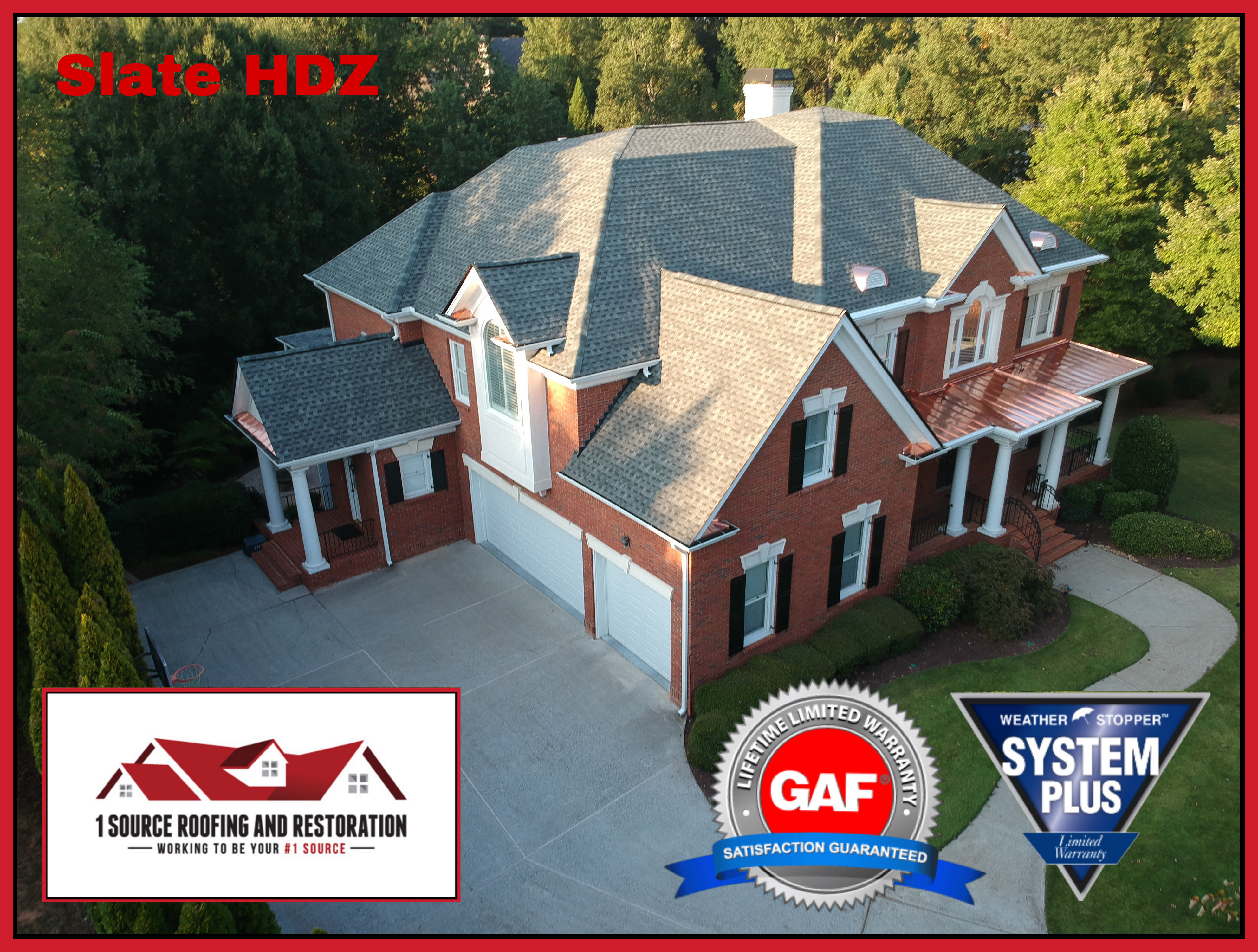
Certified by Industry-Leading Manufacturers
Manufacturer Technical Bulletins
- California Closed Valleys Technical Advisory (GAF)
- Valley Flashing Options (GAF)
- Open Valley Installation (CertainTeed)
- Closed-Cut Valley Installation (CertainTeed)
Why Roof Valleys Demand More Attention Than Any Other Roof Detail
A roof valley is the internal angle formed where two sloping roof planes converge. On a simple gable roof, there may be no valleys at all. On a multi-plane residence in Buckhead or Alpharetta — the kind of home with dormers, cross gables, additions, and architectural complexity — there can be a dozen or more valleys, each channeling water from two separate roof planes into a single drainage path. The water volume concentrated in a valley during a heavy Georgia thunderstorm is dramatically higher than the volume flowing across any equivalent area of the open field. That concentration makes valley installation one of the most consequential decisions on any roofing project.
Valley failures account for a significant percentage of the roof leaks we diagnose across metro Atlanta. The failure modes are predictable: inadequate underlayment beneath the valley, improper shingle trimming that damages the waterproofing layer, missing or incorrectly installed metal flashing, and debris accumulation that dams water and forces it beneath the shingle edges. Every one of these failures traces back to installation decisions made during the original roofing project — decisions that follow or deviate from the manufacturer's published specifications.
GAF and CertainTeed both publish detailed valley installation specifications for their shingle systems. These are not suggestions. For a warranty-eligible installation, the valley method must conform to the manufacturer's requirements. A contractor who installs GAF shingles but uses a valley method that deviates from GAF's specifications has installed a roof that may not be covered under the manufacturer warranty — even if the shingles themselves were nailed correctly across the rest of the field.
This page covers the three primary valley installation methods — open valley, closed-cut valley, and woven valley — with specifications from both GAF and CertainTeed. We also address the California closed valley advisory and the underlayment requirements that apply to all valley methods. For related technical standards, see our technical standards hub.
Open Valley Installation — Metal Flashing Exposed Between Shingle Planes
The open valley method uses a metal flashing channel installed in the valley before any shingles are applied to either roof plane. Shingles from both converging planes terminate several inches from the valley centerline, leaving the metal flashing exposed and visible as the primary water channel. The exposed metal provides an unobstructed path for water flow, with no shingle edges crossing the valley to impede drainage.
GAF Open Valley Specifications
GAF specifies the following requirements for open valley installation with their shingle systems:
- A 36-inch-wide self-adhered ice and water shield (leak barrier) must be installed in the valley first, centered on the valley centerline — 18 inches on each side
- The valley metal must be a minimum of 24 inches wide (12 inches on each side of centerline) for standard residential applications. W-profile or crimped-center metal is recommended to prevent water crossover
- Valley metal must be 26-gauge galvanized steel, painted aluminum, or copper. Unpainted galvanized is acceptable but painted metal resists corrosion longer in humid climates like Georgia's
- Shingles must be trimmed to create a minimum 3-inch exposure of metal at the top of the valley, widening to a minimum of 4 inches at the bottom. This taper accommodates the increasing water volume as the valley extends downslope
- The upper corner of each shingle adjacent to the valley must be clipped at a 45-degree angle to prevent water from wicking along the shingle edge and behind the adjoining courses
- No nails may be driven within 6 inches of the valley centerline. Nailing too close to the center penetrates the ice and water shield and creates a direct water entry path
- Each shingle adjacent to the valley must be set in a 3-inch-wide strip of roofing cement along its trimmed edge
CertainTeed Open Valley Specifications
CertainTeed's open valley requirements share the same fundamental approach with several specification differences:
- Self-adhered underlayment (ice and water shield) must extend a minimum of 18 inches on each side of the valley centerline, matching GAF's 36-inch total coverage requirement
- Valley metal width must be a minimum of 24 inches. CertainTeed specifies W-shaped or crimped valley metal to create a center channel that prevents water from one plane from crossing to the opposite plane during heavy flow
- Shingle exposure of the valley metal must be a minimum of 6 inches wide at the top, increasing 1/8 inch per foot of valley length toward the eave. This graduated exposure is wider than GAF's specification and provides additional flow capacity
- CertainTeed requires that no roofing nails penetrate the valley metal at any point. Nails must be placed a minimum of 6 inches from the valley centerline
- The trimmed edge of each shingle must be sealed with plastic roof cement in a 3-inch-wide application along the shingle edge to prevent wind uplift
When to Use Open Valleys
Open valleys are the preferred method in several conditions that are common on metro Atlanta homes. High-volume water flow — valleys that collect drainage from large roof areas or multiple converging planes — benefits from the unobstructed metal channel. Complex rooflines with multiple valley intersections at different angles are easier to waterproof with open metal than with shingle overlays. Roofs with steep pitches generate higher-velocity water flow, and open metal valleys handle that velocity without the turbulence that shingle overlays create at the valley transition.
Open valleys are also the superior choice for long-term maintenance accessibility. Debris that accumulates in a valley — leaves, pine needles, granule runoff — can be cleaned from an open metal valley without disturbing the shingle installation. Debris in a closed-cut valley lodges beneath the overlapping shingle edges and is difficult to remove without lifting shingles.
Closed-Cut Valley Installation — Shingle Overlay Without Exposed Metal
The closed-cut valley method extends shingles from one roof plane (typically the one with the longer run or lower slope) completely across the valley and onto the opposing roof deck. Shingles from the second roof plane are then installed across the valley, overlapping the first layer, and trimmed in a straight line approximately 2 inches from the valley centerline. The result is a valley with no exposed metal — the appearance is of one continuous shingle field crossing the valley, with the opposing shingles terminating in a clean cut line.
GAF Closed-Cut Valley Specifications
GAF's closed-cut valley requirements for warranty-eligible installations:
- A 36-inch-wide self-adhered ice and water shield must be installed in the valley, centered on the valley centerline, before any shingles are applied — identical to the open valley underlayment requirement
- Shingles from the first roof plane (the "run-through" plane) are installed across the valley and extended a minimum of 12 inches onto the opposing roof deck
- Shingles from the second roof plane are then installed across the valley, overlapping the first layer. These shingles are trimmed in a straight line 2 inches from the valley centerline
- The trimmed edge must be cut cleanly — no ragged edges, no exposed fiberglass mat. A hook blade in the utility knife must be used to prevent cutting into the underlying shingle layer during trimming
- The upper corner of each trimmed shingle must be clipped at 45 degrees to prevent water wicking along the shingle edge
- Each trimmed shingle must be set in a 6-inch-wide application of roofing cement along the valley
- No nails may be driven within 6 inches of the valley centerline on either side
CertainTeed Closed-Cut Valley Specifications
CertainTeed's closed-cut valley approach follows a similar methodology with these specific requirements:
- Self-adhered underlayment (ice and water shield) in the valley — 36-inch minimum width, centered on the valley centerline
- The first roof plane's shingles extend across the valley a minimum of 12 inches past the valley centerline onto the opposing roof deck
- The opposing plane's shingles are trimmed in a straight chalk line 2 inches from the valley center. CertainTeed emphasizes that the cut line must follow the valley precisely — a wavering cut creates inconsistent coverage and aesthetic defects
- CertainTeed's specification requires that the trimming cut must not penetrate the underlying shingle layer. A cutting board or sheet of metal must be placed beneath the top layer during trimming to protect the run-through shingles from blade damage
- Trimmed shingle edges must be embedded in a minimum 4-inch-wide application of roofing cement along the valley
- No fasteners within 6 inches of the valley centerline
When to Use Closed-Cut Valleys
Closed-cut valleys provide a cleaner aesthetic than open valleys — there is no visible metal strip breaking the shingle field. This visual continuity makes closed-cut valleys popular on homes where curb appeal is a priority, including the high-end residences in Sandy Springs, Roswell, and Johns Creek that 1 Source regularly works on. The closed-cut method also eliminates the expansion and contraction noise that metal valley flashing can produce during rapid temperature changes — a minor but real concern for homeowners with valleys above living spaces.
However, closed-cut valleys have limitations. They provide less water flow capacity than open metal valleys because the overlapping shingle layers create resistance to water movement through the valley. In high-volume conditions — wide valleys, steep pitches, or large drainage areas — the water can back up beneath the cut edge of the top layer and enter the roof system. For valleys that handle heavy water loads, open valleys are the more reliable choice.
Need Your Valleys Inspected or Replaced?
Valley failures are among the most common roof leak sources. 1 Source Roofing inspects every valley during our free assessments. Call today.
Schedule Your Free InspectionWoven Valley Method — Why Manufacturers Do Not Recommend It for Architectural Shingles
The woven valley method installs shingles from alternating roof planes across the valley, weaving each course from one plane over the valley and onto the opposing deck, then weaving the next course from the opposite plane back across. The result is an interlocked pattern with no cut line and no exposed metal. Woven valleys were standard practice during the era of three-tab shingles — thin, flexible shingles that could fold across a valley angle without excessive stress.
The transition to laminate (architectural) shingles has made woven valleys problematic. Architectural shingles are significantly thicker and stiffer than three-tab products. When a laminate shingle is folded across a valley, the additional thickness prevents the shingle from lying flat against the valley surface. This creates humps at each course transition, gaps between the shingle and the roof deck, and stress concentrations at the fold point that can crack the shingle over time.
Neither GAF nor CertainTeed recommends woven valleys for their laminate shingle lines. GAF's Timberline series installation instructions do not include the woven valley method as an approved option. CertainTeed's Landmark and Grand Manor installation guides similarly omit woven valleys from their approved valley methods. A contractor who installs a woven valley with architectural shingles is departing from the manufacturer's installation requirements, and the resulting installation may not qualify for manufacturer warranty coverage.
If a contractor proposes a woven valley for your re-roofing project with architectural shingles, that proposal should raise questions about the contractor's familiarity with current manufacturer specifications. The woven method saves labor time — there is no cutting involved — but the performance and warranty implications make it an inappropriate choice for modern shingle systems.
California Closed Valley — The Method That Both Manufacturers Caution Against
The California closed valley (also called a California cut valley or long-cut valley) is a variation of the closed-cut method that has gained popularity among production roofing crews because it is faster to install than a standard closed-cut valley. In a California closed valley, shingles from the larger roof plane are run across the valley, and the cut line is placed directly on the valley centerline rather than 2 inches to one side. The opposing plane's shingles are butted against this cut line without the offset that a standard closed-cut valley provides.
The problem with this method is water channeling. In a standard closed-cut valley, the 2-inch offset between the cut line and the valley center creates a channel where water flows along the trimmed shingle edge and onto the run-through shingles below. In a California closed valley, the cut line sits on the valley center itself, which means water flowing down the valley is directed along the cut edge of the shingle rather than across it. This concentrates water at the weakest point in the system — the trimmed edge where the shingle's waterproof surface has been removed by the cut.
GAF has published an advisory specifically addressing California closed valleys, noting that this method can concentrate water flow and increase the risk of leakage at the cut edge. The advisory recommends using either a standard closed-cut valley (with the 2-inch offset from center) or an open valley method instead. CertainTeed's installation documentation does not include the California closed valley as an approved method for their laminate shingle lines.
1 Source Roofing does not install California closed valleys. The time savings are minimal — measured in minutes per valley — while the long-term risk to the homeowner is measured in years of potential water intrusion. We use either open valleys or standard closed-cut valleys, depending on the specific conditions of each valley on each project. The method selection is driven by water volume, valley length, roof pitch, and aesthetic preferences — not by crew speed.
Underlayment Application in Valleys — The Foundation Beneath the Flashing
Regardless of which valley method is used — open, closed-cut, or any variation — the underlayment application in the valley is the same fundamental requirement from both manufacturers. Self-adhered ice and water shield (leak barrier) must be installed in every valley before metal flashing or shingles are applied. This is non-negotiable for warranty-eligible installations from both GAF and CertainTeed.
The ice and water shield in a valley serves as the secondary water barrier — the last line of defense if the primary valley system (metal flashing or shingle overlay) fails to shed water under extreme conditions. Because valleys concentrate water from two roof planes into a single channel, the volume and velocity of water through a valley during a heavy thunderstorm far exceeds what the open field of the roof experiences. Wind-driven rain can force water laterally beneath shingle edges and behind metal flashing. Ice accumulation during Georgia's occasional freeze events can dam water in the valley, creating hydrostatic pressure that pushes water through gaps that would not leak under normal flow conditions.
GAF Valley Underlayment Specifications
GAF requires a minimum 36-inch-wide application of self-adhered leak barrier centered in the valley. The leak barrier must extend 18 inches on each side of the valley centerline. When the leak barrier is applied in multiple pieces (as is necessary on long valleys), each piece must overlap the piece below it by a minimum of 6 inches, with the upper piece overlapping onto the lower piece — the same directional overlap principle as shingle installation. The leak barrier must lie flat in the valley without wrinkles, bubbles, or lifted edges. Any imperfection in the leak barrier application creates a potential water entry point beneath the primary valley system.
CertainTeed Valley Underlayment Specifications
CertainTeed's valley underlayment requirements mirror GAF's in scope: a minimum 36-inch-wide self-adhered underlayment application centered on the valley centerline. CertainTeed's technical documentation adds that the self-adhered underlayment must be applied over the field underlayment (synthetic or felt) — not directly to the bare roof deck with the field underlayment applied over it. This layering sequence ensures that the ice and water shield in the valley is the topmost underlayment layer, providing uninterrupted waterproof coverage from the valley outward to the field.
CertainTeed also specifies that in regions where ice dam protection is recommended (and Georgia is included in this category for specific elevation and exposure conditions), the valley underlayment should extend beyond the 18-inch minimum on each side. Wider coverage provides additional protection against the ice dam conditions that occur in north Georgia during winter weather events and against the wind-driven rain that every Atlanta-area homeowner experiences multiple times per year.
For comprehensive coverage of underlayment types and ice dam protection requirements, see our underlayment and ice dam protection technical page.
Valley Method Comparison — Open vs. Closed-Cut vs. Woven
| Characteristic | Open Valley | Closed-Cut Valley | Woven Valley |
|---|---|---|---|
| Metal flashing visible | Yes | No | No |
| Water flow capacity | Highest | Moderate | Lowest |
| Debris maintenance | Easy to clean | Difficult — debris under shingle edges | Difficult — debris in folds |
| GAF approved for laminates | Yes | Yes | Not recommended |
| CertainTeed approved for laminates | Yes | Yes | Not recommended |
| Visual appearance | Metal channel visible | Clean shingle field | Interlocked pattern |
| Installation labor | Moderate | Moderate — cutting required | Lowest — no cutting |
| Best application | High-volume, steep pitch, complex | Aesthetic priority, moderate volume | Three-tab shingles only (legacy) |
Frequently Asked Questions About Roof Valley Installation
Answers to the valley installation questions Atlanta homeowners ask most
What is the difference between an open valley and a closed-cut valley?
An open valley uses a metal flashing channel exposed between the two converging roof planes — shingles terminate several inches from the valley centerline, leaving the metal visible as the primary water channel. A closed-cut valley extends shingles from one plane across the valley, then trims the opposing plane's shingles 2 inches from the valley center, leaving no metal exposed. Open valleys provide superior water flow. Closed-cut valleys provide a cleaner visual appearance.
Which valley method do GAF and CertainTeed recommend?
Both manufacturers accept open and closed-cut valley methods for warranty-eligible installations. Neither recommends woven valleys for laminate (architectural) shingles due to the thickness of the material. Both have issued advisories regarding the California closed valley method due to water channeling risks. The method choice depends on water volume, aesthetics, and specific roof conditions.
What is a California closed valley and why is it controversial?
A California closed valley places the cut line directly on the valley centerline rather than 2 inches to one side. This concentrates water flow along the cut edge of the shingle — the weakest point in the system. GAF has published an advisory noting this method can increase leakage risk. CertainTeed does not include it as an approved method. 1 Source does not install California closed valleys on any project.
What underlayment is required in roof valleys?
Both GAF and CertainTeed require a minimum 36-inch-wide self-adhered ice and water shield in all valleys — 18 inches on each side of the valley centerline. This underlayment must be installed before any metal flashing or shingle courses. The self-adhered membrane provides waterproof protection beneath the valley system and is the last defense against water entry during severe weather. Call (404) 277-1377 for more information.
Can you use woven valleys with architectural shingles?
Neither GAF nor CertainTeed recommends woven valleys for laminate (architectural) shingles. The thickness of architectural shingles prevents them from lying flat when folded across a valley, creating humps, gaps, and stress points that crack over time. If a contractor proposes a woven valley with architectural shingles, that is a departure from manufacturer recommendations and may void the warranty.
Technical Bulletins from GAF and CertainTeed
The information on this page is backed by official manufacturer technical bulletins. These documents provide the installation specifications, warranty requirements, and best practices that certified contractors like 1 Source Roofing follow on every project.