
Cool Roof Requirements in Georgia
Solar reflectance standards, ENERGY STAR thresholds, and SRI minimums that determine whether your roof fights Atlanta's heat or surrenders to it.
Certified by Industry-Leading Manufacturers
What Makes a Roof "Cool" and Why Georgia Homeowners Should Care
A cool roof reflects more sunlight and absorbs less heat than a standard roof. Two measurable properties define the difference: solar reflectance and thermal emittance. Solar reflectance measures the fraction of solar energy a roof surface bounces back into the atmosphere. Thermal emittance measures how fast a roof surface releases absorbed heat. A roof that scores high on both stays cooler under direct sun.
Standard dark asphalt shingles reflect about 5 to 15 percent of incoming solar radiation. They absorb the rest. On a 95°F day in Alpharetta or Buckhead, that absorption drives shingle surface temperatures above 170°F. The heat migrates through the roof deck, into the attic, through the insulation, and into the living space. Your air conditioner fights that heat load for five to six months of every Georgia summer.
Cool roof shingles use reflective granule technology to bounce 25 to 40 percent of solar energy away from the surface. That single change drops surface temperatures by 50 to 60°F compared to standard dark shingles under identical conditions. The attic stays cooler. The HVAC system runs less. The shingles themselves last longer because extreme heat accelerates the oxidation of asphalt binders.
Georgia sits in IECC Climate Zone 3A, classified as hot-humid. The cooling season runs from April through October. Annual cooling costs dominate residential energy budgets. The Department of Energy identifies the Southeast as the region with the highest potential return on cool roofing investment because the cooling load dwarfs the heating penalty. A cool roof in Sandy Springs saves money eight months of the year and costs a few extra dollars in heating during the three coldest months. The math favors cool roofing in every metro Atlanta zip code.
IECC Requirements for Roof Reflectance in Georgia
Georgia adopts the International Energy Conservation Code (IECC) as part of its state minimum standard codes. The IECC sets thermal envelope requirements for residential buildings, including roof insulation R-values, radiant barrier provisions, and air sealing standards. Cool roof requirements within the IECC apply most directly to low-slope roofing on commercial buildings, but the energy performance principles shape residential roofing decisions across the state.
For steep-slope residential roofing (the standard pitched roof on most Atlanta homes), the IECC does not mandate a specific solar reflectance value. Instead, the code requires minimum attic insulation (R-30 in Climate Zone 3A) and adequate roof ventilation. Homeowners and builders choose cool roofing products as a performance upgrade that exceeds code minimums and delivers measurable energy savings.
The IECC does reference ASHRAE 90.1 for commercial buildings, which sets mandatory cool roof requirements for low-slope roofs in Climate Zone 3. These commercial standards require a minimum initial solar reflectance of 0.70 and thermal emittance of 0.75, or a minimum SRI of 82. While these numbers apply to commercial projects, they establish the benchmark that residential cool roof products aim to approach.
Georgia's energy code also connects to attic air sealing requirements under IECC Section R402.4. A cool roof works best as part of a complete thermal envelope strategy: reflective shingles on top, sealed air barrier at the ceiling plane, adequate insulation between, and balanced ridge vent and soffit vent ventilation moving air through the attic. No single component delivers maximum performance alone.
"A cool roof alone does not replace proper insulation or ventilation. It adds a first line of defense that reduces the heat load before it reaches the attic."
ENERGY STAR Roof Products Program
The EPA's ENERGY STAR program certifies roofing products that meet minimum solar reflectance thresholds. For steep-slope roofing (residential shingles), ENERGY STAR requires an initial solar reflectance of 0.25 or greater and a three-year aged solar reflectance of 0.15 or greater. These numbers represent the minimum bar. Many certified products exceed these thresholds.
The ENERGY STAR label matters for two reasons. First, it provides a third-party verification that the product performs as the manufacturer claims. The Cool Roof Rating Council (CRRC) tests and lists the reflectance and emittance values for every rated product. Second, ENERGY STAR certification qualifies the product for utility rebates and tax incentives in Georgia. Georgia Power and other utilities periodically offer rebates for ENERGY STAR-rated cool roofing installations.
Solar Reflectance Index: The Single Number That Defines Cool Roof Performance
The Solar Reflectance Index (SRI) combines solar reflectance and thermal emittance into one number on a scale where a standard black surface (reflectance 0.05, emittance 0.90) scores 0 and a standard white surface (reflectance 0.80, emittance 0.90) scores 100. Some highly reflective, high-emittance surfaces score above 100.
SRI matters because reflectance alone does not tell the whole story. A metal roof might reflect 60 percent of solar radiation but have low emittance, meaning it holds onto absorbed heat for hours. A coated membrane might reflect 70 percent and emit absorbed heat within minutes. SRI captures both behaviors in a single comparison metric.
ENERGY STAR sets steep-slope minimums based on reflectance (0.25 initial), but building codes and green building programs like LEED reference SRI. The IECC commercial cool roof requirement translates to an SRI of 82. Residential programs and rebate qualifications vary, but an SRI above 25 for steep-slope products (shingles) represents the entry point for cool roof classification.
| Roofing Material | Solar Reflectance (Initial) | Thermal Emittance | SRI (Initial) | ENERGY STAR Eligible |
|---|---|---|---|---|
| Standard Dark Shingle | 0.05 – 0.15 | 0.85 – 0.91 | 1 – 12 | No |
| Standard Light Shingle | 0.15 – 0.25 | 0.85 – 0.91 | 12 – 25 | Borderline |
| Cool-Rated Asphalt Shingle | 0.25 – 0.40 | 0.85 – 0.91 | 25 – 45 | Yes |
| Metal Roof (Painted, Light Color) | 0.50 – 0.70 | 0.75 – 0.90 | 55 – 82 | Yes |
| Clay/Concrete Tile (Light) | 0.40 – 0.60 | 0.80 – 0.90 | 45 – 70 | Yes |
| TPO/PVC Membrane (White) | 0.70 – 0.85 | 0.85 – 0.95 | 82 – 110 | Yes |
| Liquid-Applied Coating (White) | 0.70 – 0.85 | 0.85 – 0.92 | 80 – 105 | Yes |
The table shows the performance gap between standard and cool-rated products. A homeowner in Johns Creek replacing a dark shingle roof (SRI 5) with a cool-rated shingle (SRI 35) gains a sevenfold improvement in solar performance. That gain translates to measurable cooling cost reductions every summer.
Cool Roof vs. Standard Roof: Temperature Comparison in Atlanta Conditions
The Oak Ridge National Laboratory and Lawrence Berkeley National Laboratory have published extensive field data comparing cool and standard roof temperatures in southeastern climates. The numbers confirm what building science predicts: cool roofs run dramatically cooler under identical solar exposure.
On a clear July afternoon in Atlanta (ambient temperature 95°F, peak solar intensity 1,000 W/m²), a standard dark asphalt shingle roof reaches surface temperatures of 160 to 175°F. The attic space below that roof reaches 140 to 150°F. The ceiling below the attic absorbs heat through the insulation, and the HVAC system works to remove that heat from the living space.
Under the same conditions, a cool-rated asphalt shingle roof reaches surface temperatures of 110 to 130°F. The attic space stays below 120°F. That 20 to 30°F reduction in attic temperature translates directly into reduced cooling load. The insulation separating the attic from the living space faces a smaller temperature differential, which means less heat transfer and less work for the air conditioner.
| Measurement Point | Standard Dark Shingle | Cool-Rated Shingle | Difference |
|---|---|---|---|
| Roof Surface | 165°F | 120°F | -45°F |
| Roof Deck (Underside) | 155°F | 112°F | -43°F |
| Attic Air (Center) | 145°F | 115°F | -30°F |
| Ceiling Surface (Interior) | 84°F | 78°F | -6°F |
| HVAC Runtime (Peak Hours) | 85% duty cycle | 70% duty cycle | -15% |
The 6°F ceiling temperature difference might appear small, but it represents a significant fraction of the thermal load your HVAC system fights. A system maintaining 72°F against an 84°F ceiling works harder than one fighting a 78°F ceiling. Over five months of Georgia summer, that reduced duty cycle adds up to real savings on your power bill.
Cool Roof Shingle Options from GAF and CertainTeed
Both GAF and CertainTeed manufacture shingle lines that meet ENERGY STAR cool roof criteria. As a GAF Certified contractor and CertainTeed Certified contractor, we install both product lines and can match cool roof performance to your aesthetic preferences and budget.
GAF Cool Roof Collection
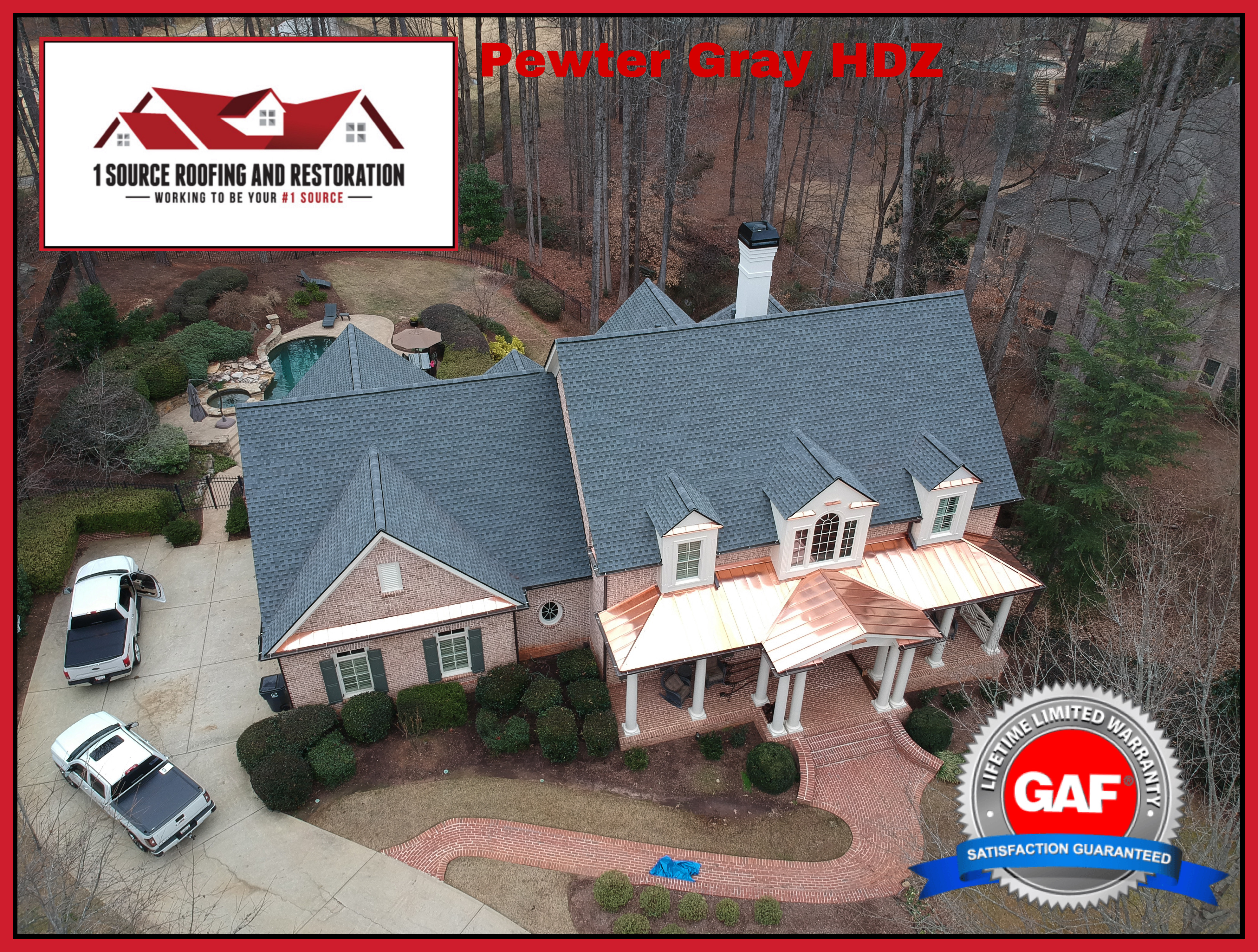
GAF offers ENERGY STAR-rated colors across their Timberline HDZ and Timberline UHDZ lines. The reflective granule technology embeds ceramic-coated granules that reflect infrared radiation while maintaining the color appearance homeowners expect. GAF's Pewter Gray, Birchwood, and Weathered Wood colors carry ENERGY STAR certification in their cool series variants. The GAF product specifications list the CRRC-rated solar reflectance and thermal emittance values for each certified color.
GAF backs their Timberline shingles with the Golden Pledge warranty when installed by a certified contractor. That warranty covers manufacturing defects for 50 years and includes workmanship coverage. Cool roof granules do not change the warranty terms. The same shingle, the same warranty, with added energy performance.
CertainTeed Cool Roof Collection
CertainTeed's Landmark and Landmark Pro lines include ENERGY STAR-rated colors that use their SolarCap reflective granule system. Colors like Georgetown Gray, Cobblestone Gray, and Moire Black (in their cool-rated formulation) meet the 0.25 initial solar reflectance threshold. CertainTeed publishes CRRC product ratings for every cool-rated color, allowing direct comparison of reflectance and emittance values.
CertainTeed's SureStart warranty provides non-prorated coverage for 10 years on Landmark shingles and 15 years on Landmark Pro, with total coverage extending to the product's rated lifespan. The cool roof granules integrate into the standard manufacturing process and carry the same warranty as non-cool versions.
Color Does Not Equal Coolness
This point trips up many homeowners. A standard light gray shingle and a cool-rated light gray shingle look identical. The difference is invisible: the cool-rated version contains granules engineered to reflect near-infrared radiation (the portion of sunlight that carries the most heat). Standard granules, regardless of color, absorb most infrared energy. You cannot identify a cool roof shingle by its appearance. You identify it by its CRRC listing and ENERGY STAR label.
This means homeowners in Roswell and Marietta who want the performance benefits of cool roofing do not need to choose a white or ultra-light color. Cool-rated shingles come in mid-tone grays, browns, and blends that match the architectural character of every neighborhood we serve.
"The difference between a standard shingle and a cool-rated shingle is invisible to the eye but measurable with an infrared thermometer."
Rebates, Tax Credits, and Incentives for Cool Roofing in Georgia
Cool roofing products qualify for several financial incentive programs at the federal, state, and utility level. The availability and amounts change from year to year, so we recommend verifying current programs before finalizing your roof replacement decision.
Federal Tax Credits
The Inflation Reduction Act of 2022 extended and expanded the Energy Efficient Home Improvement Credit (Section 25C). ENERGY STAR-certified roofing products qualify for a tax credit of 30 percent of the product cost, up to $150 per year for roofing materials. This credit applies to the cool-rated shingle material, not installation labor. You must install the products on your primary residence to qualify.
Georgia Power Rebates
Georgia Power has offered rebates for ENERGY STAR-rated roofing products through their Residential Energy Efficiency program. Rebate amounts and eligibility requirements change annually. Contact Georgia Power or check their website for the current program year before scheduling your roof installation. We help homeowners identify applicable rebate programs during the estimate process.
Property Value Impact
Beyond direct rebates, cool roofing contributes to home value. The Appraisal Institute recognizes energy-efficient improvements as a factor in residential property valuation. Homes in Buckhead and Sandy Springs that feature documented energy-efficient roofing, proper attic air sealing, and adequate insulation appeal to buyers who scrutinize utility costs and building performance. A cool roof is a tangible, documentable improvement that shows up on a home energy audit.
Lifespan Extension
The financial case for cool roofing extends beyond energy savings. Lower surface temperatures reduce thermal cycling, the daily expansion and contraction that fatigues asphalt binders. A shingle that runs 50°F cooler during peak sun experiences less thermal stress over its lifespan. Industry research suggests cool-rated shingles can last 10 to 15 percent longer than identical products in non-cool formulations under the same exposure conditions. On a roof replacement that costs $15,000 to $30,000, extending the service life by two to four years represents meaningful value.
.JPG)
How Cool Roofing Connects to Ventilation, Insulation, and Air Sealing
A cool roof delivers maximum value when it works with every other component of the building envelope. Replacing dark shingles with cool-rated shingles on a home that has blocked soffit vents, inadequate insulation, and unsealed attic penetrations captures only a fraction of the potential savings. The roof reflects heat. The ventilation system removes heat that reaches the attic. The air barrier prevents conditioned air from leaking into the attic. The insulation resists heat transfer from attic to living space. Remove any component from that chain and performance drops.
When we perform a roof replacement, we inspect the entire system. We check soffit vent intake, ridge vent exhaust, insulation depth and condition, and visible air leaks at penetrations. If the ventilation system needs work, we address it during the reroof. If we find significant air sealing or insulation deficiencies, we document them and recommend remediation. A cool roof on top of a broken thermal envelope is a missed opportunity.
Radiant barriers pair well with cool roofing. The cool shingles reduce the amount of heat reaching the roof deck. A radiant barrier on the underside of the roof deck reflects the remaining radiant heat back upward instead of allowing it to radiate into the attic space. Together, cool shingles and a radiant barrier can reduce attic temperatures by 40 to 50°F compared to a standard dark roof with no radiant barrier. That combination represents the most aggressive passive cooling strategy available for residential roofs in Georgia's climate.
For homeowners considering a full thermal envelope upgrade during their roof replacement, we coordinate with insulation contractors and HVAC professionals to deliver a system-level improvement, not isolated product swaps. That approach maximizes your return on every dollar spent.
Frequently Asked Questions About Cool Roof Requirements in Georgia
Does Georgia require cool roofs on residential homes?
Georgia does not mandate cool roofs on all residential homes. The IECC energy code that Georgia adopts sets requirements for roof insulation and radiant barriers in Climate Zone 3, but cool roof reflectance standards apply primarily to low-slope commercial roofs. Homeowners who choose cool roofing products gain energy savings and may qualify for utility rebates, but no Georgia code forces the choice on steep-slope residential roofs.
How much can a cool roof reduce cooling costs in Atlanta?
A cool roof can reduce peak cooling demand by 10 to 15 percent in Atlanta's climate. The Department of Energy estimates annual cooling savings between $0.10 and $0.40 per square foot of roof area for homes in the Southeast. On a 2,000 square foot roof, that translates to $200 to $800 in annual savings depending on insulation levels, HVAC efficiency, and shingle color selection.
What is the Solar Reflectance Index and why does it matter?
The Solar Reflectance Index (SRI) combines solar reflectance and thermal emittance into a single number on a 0 to 100+ scale. A standard black surface scores 0; a standard white surface scores 100. ENERGY STAR requires steep-slope roofing to have an initial SRI of at least 25. Higher SRI means the roof surface stays cooler, which reduces heat transfer into the attic and lowers cooling loads.
Do light-colored shingles qualify as cool roofing?
Not all light-colored shingles meet cool roof standards. Color alone does not determine solar reflectance. GAF and CertainTeed manufacture specific cool-roof-rated shingle lines that use reflective granule technology to bounce infrared radiation. These products carry ENERGY STAR certification and meet CRRC-listed reflectance values. Standard light-colored shingles reflect more heat than dark shingles but may not meet the formal ENERGY STAR or IECC thresholds.