
Roof Replacement Permit Requirements in Georgia
Georgia building codes require permits for roof replacement in every metro Atlanta county. Skipping the permit saves a few hundred dollars upfront and can cost tens of thousands in insurance denials, sale complications, and forced rework later.
Certified by Industry-Leading Manufacturers
When Is a Roofing Permit Required in Georgia?
The short answer: if you are tearing off your existing roof and installing a new one, you need a permit. This applies across every metro Atlanta jurisdiction.Gwinnett County, Fulton County, DeKalb County, Cobb County, Cherokee County, Forsyth County, and every incorporated city within them.
Georgia building codes follow the International Residential Code (IRC), which the state adopts through the Georgia Department of Community Affairs (DCA) with state-specific amendments. Under these codes, a roof replacement is classified as a building alteration that requires a construction permit issued by the local building department. The permit triggers an inspection process that verifies the work meets current code standards for deck preparation, underlayment installation, fastener patterns, and flashing details.
Full roof replacement: Always requires a permit. This includes a complete tear-off and re-roof, a second-layer overlay (where permitted), or conversion from one roofing material to another. There are no exceptions for full replacements in any metro Atlanta jurisdiction.
Partial re-roofing: Most counties require a permit for partial re-roofing that exceeds a certain square footage threshold or percentage of the total roof area. Gwinnett County, for example, requires a permit when more than one roofing square (100 square feet) is being replaced. Fulton County uses a similar threshold. If you are replacing one slope of a two-slope roof, that is a partial re-roof that almost certainly exceeds the threshold.
Repairs: Minor repairs (replacing a handful of damaged shingles after a storm, patching a small leak, re-sealing a chimney flashing) generally do not require a permit. The line between "repair" and "partial replacement" varies by jurisdiction and is sometimes ambiguous. When in doubt, call the local building department and describe the scope of work. They will tell you whether a permit is needed. It takes five minutes and costs nothing.
Storm damage restoration: After a major storm event, counties sometimes issue emergency provisions that streamline the permitting process for storm damage restoration. These provisions do not eliminate the permit requirement; they accelerate it. You still need a permit, but the turnaround time may be shortened and some documentation requirements may be relaxed during a declared emergency. Even during these periods, the work must meet the same code standards and pass the same inspections.
One area that catches homeowners off guard: the two-layer rule. Georgia (following the IRC) allows a maximum of two layers of asphalt shingles on a roof. If your home already has two layers, a re-roof is not an option; you must do a full tear-off. The permit application requires you to declare how many layers are currently on the roof. Lying on the application is a code violation that carries fines and can result in a forced tear-off at your expense.
"Gwinnett County charges $175 to $350 for a residential re-roof permit. Fulton County charges $200 to $500. The fee covers plan review, two inspections, and a permanent record that supports insurance claims and home sales."
How to Obtain a Roofing Permit in Metro Atlanta
The roofing permit process in metro Atlanta follows a standard sequence: application, review, issuance, construction, inspection, and closeout. The timeline from application to permit issuance typically runs three to ten business days, depending on the county and the current workload at the building department.
Step 1: Submit the application. Most metro Atlanta counties now accept online permit applications through their respective portals. Gwinnett County uses iGov, Fulton County uses Accela, Cobb County uses their Community Development portal, and DeKalb County uses a combination of online and in-person processing. The application asks for the property address, the scope of work (tear-off and re-roof, overlay, etc.), the roofing material being installed, the number of existing layers, and the estimated project value.
Step 2: Provide documentation. At minimum, you will need a property survey or site plan showing the structure, the contractor's license number and insurance certificates, and a description of the roofing system being installed. Some jurisdictions require a more detailed scope of work that specifies underlayment type, slope measurements, ventilation details, and the manufacturer's installation specifications being followed.
Step 3: Pay the fee. Permit fees are calculated based on the estimated project value, the roof area, or a flat fee structure, depending on the county. Fees range from approximately $150 to $500 for a standard residential re-roof. The fee is paid at the time of application or upon permit issuance, depending on the county's process.
Step 4: Receive the permit. Once the building department reviews and approves the application, the permit is issued. The permit card must be posted on the property in a visible location during construction. This is a legal requirement. The permit establishes the county's authority to inspect the work and the contractor's commitment to meet the code standards specified in the application.
Step 5: Begin work and schedule inspections. With the permit in hand, work can begin. The permit typically specifies which inspections are required: a pre-cover inspection (before the roofing material is installed over the underlayment) and a final inspection (after the roof is complete). Inspections must be scheduled through the building department, usually with 24 to 48 hours' notice.
Who should pull the permit? Georgia law allows both licensed contractors and homeowners to pull permits for residential work. However, when a licensed contractor pulls the permit, the contractor becomes the responsible party for code compliance. This means the contractor, not the homeowner, is legally accountable for correcting any deficiencies found during inspection. When a homeowner pulls their own permit and hires a contractor to do the work, the homeowner bears the legal responsibility. If the contractor does substandard work, the homeowner must correct it to close the permit, even if the contractor has left the job.
A contractor who asks you to pull the permit yourself is waving a red flag. Licensed, insured contractors pull their own permits because they stand behind their work. If a contractor is unwilling to put their license on a permit, there is usually a reason, and that reason is never good for the homeowner.
What Roofing Inspections to Expect After Permit
Pulling the permit triggers an inspection process that verifies the work meets Georgia's adopted building codes. Most metro Atlanta jurisdictions require two inspections for a standard residential roof replacement: a pre-cover inspection and a final inspection. Some counties combine these into a single final inspection, but the two-inspection model is the standard.
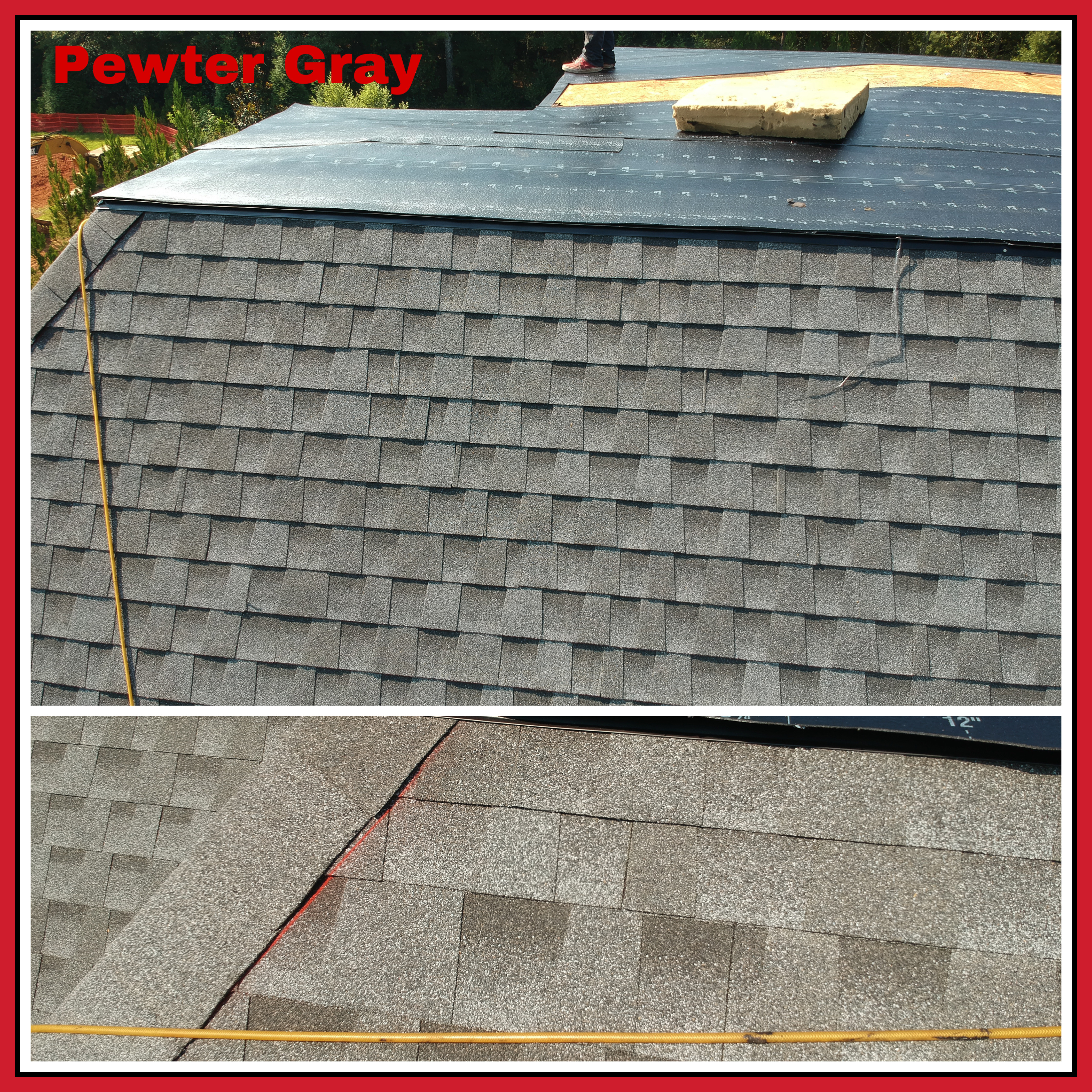
Pre-cover inspection (also called sheathing or substrate inspection): This inspection happens after the old roofing material is removed and before the new material is installed. The inspector examines the roof deck for structural integrity, checking for rotted sheathing, damaged rafters, and proper fastening of deck panels to the framing. They verify that the deck thickness meets code requirements (typically 7/16" or 1/2" OSB or plywood for residential roofs). They check that the underlayment is installed correctly, that drip edge is in place at the eaves and rakes, and that valley flashing is properly configured.
This is the most informative inspection from a quality standpoint because it reveals what is hidden beneath the finished roof surface. A deck with rotted sections, missing or inadequate fasteners, or improper underlayment application will be caught at this stage, before it gets buried under shingles. Once the shingles are on, these problems become invisible until they cause leaks years later.
Final inspection: This happens after the roof is fully installed. The inspector checks the finished roofing surface for proper installation patterns, correct hip and ridge cap installation, adequate flashing at all penetrations (vents, pipes, chimneys, skylights), and proper ventilation. They verify that the installed system matches what was specified on the permit application. If the permit says "architectural shingles with ice-and-water shield in valleys," the final inspection confirms that is what was installed.
Common reasons for failed inspections:
- Insufficient deck repair: Rotted or delaminated sheathing that was covered over rather than replaced. This is the single most common pre-cover inspection failure.
- Missing or incorrect drip edge: Drip edge is required at all eaves and rakes under the current IRC. Older homes may not have had drip edge, but a re-roof triggers the requirement for current code compliance.
- Inadequate underlayment: Using single underlayment where double is required (typically on slopes between 2:12 and 4:12), or failing to extend ice-and-water shield the required distance from the eave.
- Improper nailing: High nailing, insufficient nails per shingle, or overdriven fasteners that do not adequately secure the shingle to the deck.
- Flashing deficiencies: Step flashing at sidewalls, counter-flashing at chimneys, and transition flashing between roof planes that does not meet code detailing requirements.
- Ventilation imbalance: Insufficient ridge or soffit ventilation, or a combination of ventilation types (ridge vent and power vent on the same attic) that creates airflow short-circuiting.
A failed inspection is not the end of the world. The inspector issues a correction list, the contractor addresses the deficiencies, and a re-inspection is scheduled. The key is that these problems get caught and fixed, which is the entire point of the inspection process. On a roof installed without a permit, these same problems go undetected until they cause damage.
We Handle the Permit Process Start to Finish
1 Source Roofing pulls all permits, schedules all inspections, and ensures your roof passes code on the first try. You do not have to visit a county office or fill out a single form.
Call (404) 277-1377Risks of Unpermitted Roof Replacement in Georgia
Some contractors pitch skipping the permit as a way to save money and start work faster. The permit fee itself is $200 to $400 on a typical residential re-roof. The savings from skipping it are negligible relative to the project cost. The risks from skipping it are severe.
Insurance claim denial: When you file a homeowner's insurance claim for roof damage.whether from a hailstorm, a fallen tree, or water intrusion.the insurance adjuster's first question is whether the current roof was installed with a permit. If it was not, the insurer has grounds to deny the claim. Their reasoning: a roof installed without permit and inspection has no verified code compliance, and the damage may result from substandard installation rather than the claimed cause. This is not theoretical. Insurance claim denials based on unpermitted work happen regularly in metro Atlanta, and they typically surface at the worst possible moment.when you are already dealing with damage and need the coverage most.
Home sale complications: When you sell your home, the buyer's lender will typically require a title search and may require a building department records check. If the county's records show the original roof at a certain age but the actual roof is clearly newer, the discrepancy raises questions. A buyer's inspector or attorney who identifies an unpermitted roof replacement will flag it as a deficiency. You may be required to obtain a retroactive permit, have the roof inspected (which may require partial removal to verify deck condition), pay late fees and penalties, and correct any code deficiencies found.all while under contract with a closing deadline.
In the worst case, a buyer walks away from the deal entirely. A home with unpermitted major work is a liability that many buyers, particularly those purchasing in Atlanta's affluent neighborhoods like Buckhead, Sandy Springs, and Johns Creek, will not accept.
Retroactive permitting: Some counties allow retroactive permits for work already completed without authorization. This is not a simple rubber stamp. The county will require an application, the standard fee (often with a penalty multiplier of 2x to 4x), and an inspection of the installed work. Since the roof is already covered, the inspector cannot verify deck condition, underlayment, or flashing details without partial demolition. You may be required to remove sections of the finished roof to expose the substrate for inspection. If the inspector finds code violations, you pay for the corrections. The total cost of retroactive permitting routinely exceeds what the original permit would have cost by a factor of ten or more.
County enforcement: Building departments have become more aggressive about identifying unpermitted work. Aerial photography, neighbor complaints, and contractor license database cross-referencing all feed into enforcement efforts. Gwinnett County and Cobb County both operate active code enforcement divisions that issue notices of violation, fines, and stop-work orders for unpermitted construction. A stop-work order on an active roof replacement.with the deck exposed and no roofing material installed.creates an immediate weather damage risk for the homeowner.
Contractor liability: A licensed contractor who performs work without pulling the required permit is in violation of their license terms. If the county catches it, the contractor faces fines, license suspension, or license revocation. Reputable contractors will not risk their license to save a homeowner $300 on a permit fee. If a contractor suggests skipping the permit, it often means they are not properly licensed, not properly insured, or planning to cut other corners on the installation.
"Retroactive permitting after unpermitted work requires the standard fee (often with a 2x to 4x penalty multiplier), partial roof removal for inspection access, and correction of any code violations found. Total cost routinely exceeds the original permit fee by 10x or more."
What a Licensed Contractor Handles for You
When you hire a licensed roofing contractor for a roof replacement, the permit process should be transparent and handled by the contractor. At 1 Source Roofing, permit management is built into every project.
Pre-project assessment: Before we submit a permit application, we conduct a thorough roof inspection that documents the current condition. We measure the roof area, count existing layers, assess deck condition from attic access points, identify slope zones that affect material and underlayment specifications, and photograph the existing roof for reference. This assessment generates the data that populates the permit application accurately.
Permit application: We prepare and submit the permit application to the appropriate jurisdiction. For homes in Gwinnett County, we file through the Gwinnett iGov portal. For Fulton County properties, through Accela. For Cobb County, through their Community Development system. We know the specific documentation requirements, fee structures, and processing timelines for every county we serve. The application goes out under our contractor's license, which means we.not you.are the party responsible for code-compliant installation.
Inspection coordination: Once work begins, we schedule all required inspections at the appropriate stage of the project. For a pre-cover inspection, we coordinate the timing so the inspector arrives after the deck is prepped and underlayment is installed, but before shingles go on. This requires managing the construction schedule around the building department's inspection availability.typically a 24- to 48-hour window. We do not cover the deck before the pre-cover inspection, period. If the inspector cannot come for two days, the deck stays exposed under temporary waterproofing until the inspection passes.
Correction handling: If an inspector notes any deficiency, we address it immediately and schedule a re-inspection. In our experience, inspection corrections on properly planned projects are rare. When they do occur, they typically involve details like an additional piece of flashing at a wall transition or an additional ridge vent baffle. We correct them the same day when possible and schedule the re-inspection for the next available slot.
Permit closeout: After the final inspection passes, we confirm that the permit is closed in the county's system. A closed permit means the county has verified that the work meets code and the project is complete. This closed permit becomes part of the property's permanent record.documentation that protects you during insurance claims, refinancing, and home sales for as long as you own the property.
As both a GAF Certified Contractor and a CertainTeed Certified Contractor, we follow manufacturer installation specifications that meet or exceed code requirements. This means our installations typically exceed minimum code standards, which makes passing inspections straightforward. Code is the floor. Manufacturer specifications are the standard we build to. The gap between the two is the margin of quality that separates a compliant roof from an excellent one.

Permit Requirements by Metro Atlanta County
Each metro Atlanta county administers its own building department with its own application process, fee schedule, and timeline. The underlying code requirements are the same (Georgia-adopted IRC), but the administrative processes differ. The following table summarizes the current permit landscape across the counties we serve most frequently:
| County | Permit Required? | Typical Fee Range | Online Portal? | Typical Turnaround |
|---|---|---|---|---|
| Gwinnett County | Yes, all re-roofs | $175 – $350 | Yes (iGov) | 3–5 business days |
| Fulton County | Yes, all re-roofs | $200 – $500 | Yes (Accela) | 5–7 business days |
| DeKalb County | Yes, all re-roofs | $175 – $400 | Partial (hybrid) | 5–10 business days |
| Cobb County | Yes, all re-roofs | $175 – $350 | Yes | 3–5 business days |
| Cherokee County | Yes, all re-roofs | $150 – $300 | Yes | 3–5 business days |
| Forsyth County | Yes, all re-roofs | $150 – $300 | Yes | 3–5 business days |
Note on incorporated cities: Some cities within these counties operate their own building departments and issue their own permits independently of the county. The City of Atlanta (within Fulton and DeKalb counties), the City of Marietta (within Cobb County), the City of Roswell (within Fulton County), and the City of Alpharetta (within Fulton County) all have independent building departments. When you are within an incorporated city, the city's building department.not the county's.is the permit authority. We verify which jurisdiction applies before submitting any permit application.
For homeowners in Alpharetta, Roswell, and Marietta, the city building department is your permitting authority. For homeowners in unincorporated areas of these counties.including much of East Cobb, parts of north Fulton, and areas of Suwanee and Lawrenceville.the county building department handles permitting.
HOA requirements add another layer. Many Atlanta-area homeowners associations require architectural review board (ARB) approval before exterior modifications, including roof replacement. ARB approval is separate from the building permit and typically focuses on aesthetic standards: shingle style, color, and material restrictions. In communities like Country Club of the South and St. Ives, ARB approval must be obtained before work begins, and the chosen roofing material must fall within the community's approved palette. We help homeowners identify ARB requirements and can provide shingle color samples for ARB submission.
How Permits Interact with Insurance Claims
For homeowners filing an insurance claim for roof damage, the permit process and the claims process run in parallel and reinforce each other. A permitted, inspected roof replacement strengthens your position with the insurance company at every stage.
During the initial claim: When you report roof damage to your insurer, the adjuster reviews the existing roof's age, condition, and installation history. A roof with a closed building permit on record demonstrates that the previous installation was code-compliant and professionally installed. This establishes the baseline condition of the roof before damage occurred.which is exactly what the adjuster needs to evaluate the claim. Without a permit on record, the adjuster has no independent verification that the roof was properly installed, which opens the door to coverage disputes.
During the adjuster meeting: When 1 Source Roofing meets with the adjuster on the roof, we present the scope of damage, the proposed repair or replacement plan, and the permit requirements. The adjuster factors the permit fee into the claim settlement amount. A legitimate claim processed through a licensed contractor with proper permitting receives the full scope of coverage. The permit is a cost item that the insurer expects and reimburses.
After the replacement: The closed permit on the new roof becomes your documentation for the next twenty to thirty years. If you file another claim in ten years, the insurer will reference the permit record to verify when the roof was installed, what materials were used, and that the work met code. This is particularly valuable when dealing with insurance versus out-of-pocket roof replacement decisions.a permitted installation protects your coverage regardless of how the work was funded.
For homeowners who have received a denied insurance claim, the presence or absence of a building permit on the previous roof installation is often a factor in the denial. If the denial is based on "pre-existing conditions" or "improper installation," a permit record for the prior roof can serve as evidence against those claims. Conversely, the absence of a permit weakens your appeal position significantly.
Bottom line: the permit protects you twice. Once during installation (through inspection that catches defects) and once afterward (through documentation that supports insurance claims and property value). There is no scenario in which skipping the permit works in the homeowner's favor.
For questions about the permit process for your specific property, or to schedule a free inspection that includes slope measurement, condition assessment, and permit jurisdiction identification, call 1 Source Roofing at (404) 277-1377. We handle every permit, every inspection, and every detail so you do not have to.
Frequently Asked Questions About Roofing Permits in Georgia
Common questions from homeowners about permit requirements, costs, and the inspection process for roof replacement in metro Atlanta.
Do I need a permit to replace my roof in Georgia?
Yes. Every metro Atlanta county.Gwinnett, Fulton, DeKalb, Cobb, Cherokee, and Forsyth.requires a building permit for a full roof replacement. This applies whether you are doing a complete tear-off or an overlay. Minor repairs (replacing a few damaged shingles or re-sealing a flashing) may be exempt in some jurisdictions, but a full replacement always requires a permit. The permit triggers inspections that verify your new roof meets current building code.
How much does a roofing permit cost in metro Atlanta?
Residential roofing permit fees in metro Atlanta range from $150 to $500, depending on the county and the project scope. Gwinnett County typically charges $175 to $350. Fulton County runs $200 to $500. Cherokee and Forsyth counties tend to be at the lower end, around $150 to $300. The fee covers the application processing and all required inspections. On a $20,000 roof replacement, the permit represents one to two percent of the total project cost.
Can a homeowner pull their own roofing permit?
Georgia allows homeowners to pull building permits for work on their own primary residence. However, when you pull the permit yourself, you become the legally responsible party for code compliance. If the roof fails inspection, you.not the contractor.are responsible for corrections. When a licensed contractor pulls the permit, they assume that responsibility. For this reason, we strongly recommend having your contractor pull the permit. Any contractor unwilling to put their license on the permit should be viewed with skepticism.
What happens if I replace my roof without a permit?
Unpermitted roof replacement creates several risks. Your homeowner's insurance may deny future claims on the basis that the roof lacks verified code compliance. When you sell the home, the unpermitted work may surface during title searches or buyer inspections, potentially derailing the sale or requiring costly retroactive permitting. The county can issue fines and require you to obtain a retroactive permit at a penalty fee of two to four times the standard rate. In the worst case, the county may require partial roof removal to allow inspection of the underlying deck and underlayment.