

Proper Shingle Nailing and Installation — Manufacturer Specifications
Nail placement zones, nail count requirements, gun vs. hand nailing, wind zone specifications, and temperature guidelines from GAF and CertainTeed.
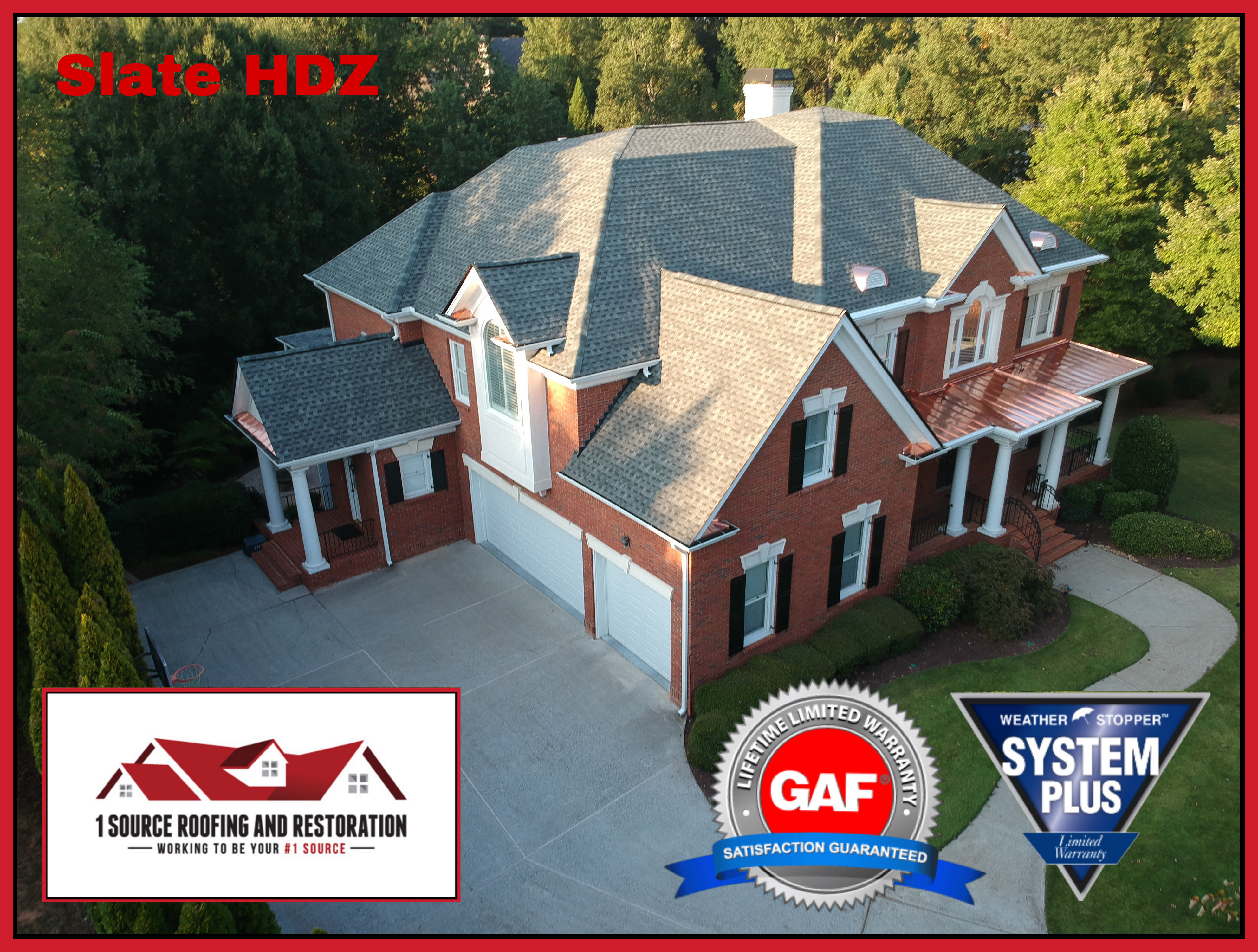
Certified by Industry-Leading Manufacturers
Manufacturer Technical Bulletins
- Timberline Series Shingle Nail Placement (GAF)
- Laminate Shingle Nailing Preferences (CertainTeed)
Why Nail Placement Is the Single Most Important Installation Variable
Every roofing shingle is designed around a specific nail placement zone. Not a general area. A specific, narrow band across the shingle body where the nail must penetrate in order for the shingle system to perform as the manufacturer designed it. When a nail is driven within this zone, it passes through the installed shingle and engages the top edge of the shingle course below, mechanically locking the two layers together. This interlocking is what creates wind uplift resistance. This interlocking is what prevents shingles from lifting, folding, and blowing off during the 60-mph gusts that sweep through metro Atlanta during storm season.
When a nail is driven above this zone — a condition called high nailing — it penetrates only the single shingle layer. There is no engagement with the course below. The shingle is fastened to the roof deck, but it is not locked to the shingle below it. The result is a shingle that can pivot upward from its bottom edge when wind catches beneath it, because the only thing holding the bottom half of the shingle down is the adhesive strip. Adhesive strips are designed to work in concert with proper nailing — they are not designed to be the sole wind resistance mechanism.
Both GAF and CertainTeed have invested significant engineering resources in defining their nail placement zones. GAF's Timberline HDZ features the StrikeZone — a factory-printed indicator on the shingle surface that shows the crew exactly where to drive each nail. CertainTeed's laminate shingles include a similar nailing reference line. These indicators exist because the manufacturers know, from testing and from field failure analysis, that nail placement is the primary determinant of whether a shingle system will survive high winds or fail catastrophically.
This page documents the nailing and installation specifications from both GAF and CertainTeed. If you are evaluating a roofing contractor for your home, the questions to ask are straightforward: Do they nail in the manufacturer's specified zone? Do they use the correct number of nails? Do they adjust their nail guns throughout the day as conditions change? The answers to these questions will tell you more about the quality of the installation you will receive than any marketing claim.
Nail Placement Zones — Standard Nailing vs. High Nailing
The nail placement zone on a shingle is the band where the nail simultaneously fastens the installed shingle to the deck and engages the top edge of the course below. On a standard architectural shingle with a 5-5/8-inch exposure, this zone is typically a band approximately 1 inch wide located between 1 inch and 2 inches above the top of the cutout or laminate overlay. The exact location varies by manufacturer and by product line — which is why the factory-printed indicators on modern shingles are so important.
.JPG)
GAF Timberline Nail Placement — The StrikeZone
GAF's Timberline HDZ shingles incorporate the StrikeZone nailing area, which is visually indicated on the shingle surface. The StrikeZone is positioned so that a nail driven within this band will pass through the full thickness of the installed shingle and penetrate into the top 1 inch of the shingle course below. For standard 4-nail installation, GAF specifies nails placed at four points across the StrikeZone — one near each end of the shingle (approximately 1 inch from the edge) and two interior nails spaced evenly across the shingle width. For 6-nail high-wind installation, two additional nails are placed between the four standard positions, providing six evenly distributed fastening points across the shingle width.
GAF's LayerLock technology works in conjunction with proper StrikeZone nailing. When the nail passes through the StrikeZone and engages the mechanically bonded overlap area of the shingle below, the two layers lock together in a way that increases wind resistance beyond what either the nail or the adhesive strip provides individually. This is a system-level performance enhancement that only functions when the nails are placed within the specified zone. Nails driven above the StrikeZone — high nailed — bypass the LayerLock engagement entirely, reducing the installed shingle's wind resistance to a fraction of its rated performance.
CertainTeed Laminate Nailing Position
CertainTeed's Landmark and Landmark Premium shingles specify a nailing zone located on the nailing line printed on the shingle surface. CertainTeed's installation instructions define the nailing zone as a band where the nail penetrates through the top laminate layer and engages the underlying layer of the shingle below. For standard installation, CertainTeed requires 4 nails per shingle. For enhanced wind resistance (which CertainTeed designates as their MAX DEF wind warranty), 6 nails per shingle are required.

CertainTeed's specifications also address the lateral position of nails relative to the shingle edges. Nails must not be placed closer than 1 inch from the side edge of the shingle. Nails placed too close to the shingle edge can crack the fiberglass mat during driving, creating a tear-out point where the shingle can pull free from the nail under wind load. This edge distance requirement applies to both hand nailing and pneumatic nailing.
The High Nailing Problem
High nailing is the most common installation defect identified during manufacturer warranty inspections and during the re-roofing assessments that 1 Source performs across metro Atlanta. A high-nailed shingle looks correct from the ground — the shingle is flat, the exposure is consistent, and the nail heads are not visible. But when the shingle is lifted during inspection, the nail position tells the story. Instead of engaging the top of the shingle below, the nail sits in the single-layer area of the shingle where it provides only deck fastening — no interlocking with the course below.
Why does high nailing happen? Speed. When a crew is driving nails rapidly with a pneumatic nailer, the natural tendency is to nail high on the shingle because the nailer's contact point is at the operator's natural hand height. Driving nails lower — into the manufacturer's specified zone — requires the operator to deliberately position the nailer lower on the shingle with each stroke. On a production crew installing 25 to 30 squares per day, this deliberate positioning is a discipline that not every crew maintains throughout a full workday. The result is shingles that are fastened to the deck but not locked to the course below — and those shingles will be the first to lift and tear off during a wind event.
How Many Nails Per Shingle — Standard vs. High-Wind Requirements
The number of nails per shingle is directly correlated to the wind resistance rating of the installed roof system. Both GAF and CertainTeed publish specific nail count requirements based on the wind zone and the warranty tier the homeowner selects.
| Condition | GAF Requirement | CertainTeed Requirement |
|---|---|---|
| Standard installation (non-high-wind) | 4 nails per shingle | 4 nails per shingle |
| High-wind zone (110+ mph rated) | 6 nails per shingle | 6 nails per shingle |
| Mansard / steep slope (>60 degrees) | 6 nails per shingle | 6 nails per shingle |
| GAF WindProven warranty | 4 nails in StrikeZone (with LayerLock) | N/A |
| CertainTeed MAX DEF wind warranty | N/A | 6 nails per shingle |
| Nail type | 11-gauge galvanized, 3/8" head, 1.25" minimum penetration into deck | 11 or 12-gauge galvanized, 3/8" head, 3/4" minimum penetration into deck |
Metro Atlanta's location in Georgia's wind exposure map places most residential properties in a zone where 6-nail installation is strongly recommended, even if the local building code does not explicitly require it. The thunderstorm complexes that move through the metro area from April through October regularly produce straight-line winds exceeding 60 mph, with isolated gusts above 80 mph during severe events. A 4-nail installation meets minimum code in many jurisdictions, but a 6-nail installation provides measurably greater wind resistance at a marginal cost increase — typically less than $50 on a standard residential roof. For homeowners investing in a premium shingle system on a high-value home, the 6-nail option is the appropriate choice.
1 Source Roofing installs 6 nails per shingle on every project in the metro Atlanta area. The cost difference is negligible relative to the project total, and the performance difference during a wind event is substantial. We do not offer 4-nail installation as a standard option because we do not consider it appropriate for the wind conditions that Atlanta-area roofs must withstand.
Concerned About How Your Roof Was Nailed?
High nailing is the most common installation defect on Atlanta roofs. 1 Source can inspect your shingle installation and identify nailing deficiencies. Call today.
Schedule Your Free InspectionPneumatic Nail Guns vs. Hand Nailing — What the Manufacturers Permit
Both GAF and CertainTeed permit the use of pneumatic nail guns for shingle installation. Hand nailing is also acceptable. Neither manufacturer mandates one method over the other. The critical specification is not how the nail is driven — it is where the nail is placed and how deep it is driven. A properly adjusted pneumatic nailer in the hands of an experienced operator will produce results identical to hand nailing. An improperly adjusted nailer — or a nailer in the hands of an untrained operator — will produce defects at every nail point across the entire roof.
Pneumatic Nailer Depth Adjustment
The most common pneumatic nailing defect is overdriving — driving the nail head below the surface of the shingle, through the fiberglass mat, and into the asphalt substrate beneath. An overdriven nail tears the reinforcing fiberglass layer that gives the shingle its structural integrity. The nail head sits in a depression surrounded by fractured mat, and the holding power of the nail is dramatically reduced. Under wind load, the shingle tears away from the overdriven nail location because the mat around the nail has already been compromised.
The second most common defect is underdriving — the nail head protrudes above the shingle surface because the air pressure was insufficient to drive the nail fully. An underdriven nail prevents the shingle course above from lying flat against the shingle below. This creates a gap between courses where wind can catch beneath the upper shingle, and it prevents the adhesive strip from making full contact with the shingle below. Both conditions reduce wind resistance.
Proper depth is achieved when the nail head sits flush with the shingle surface — fully driven through the shingle but not breaking through the fiberglass mat. This requires continuous adjustment of the nailer's air pressure throughout the workday. Morning temperatures, afternoon heat, altitude, and the compressor's output pressure all affect how deep the nail drives. A crew that sets the air pressure at 8 AM and does not adjust it again is a crew that will overdrive or underdrive nails as conditions change.
Hand Nailing Advantages and Limitations
Hand nailing allows the installer to feel the nail seat into the deck through the hammer handle. An experienced hand nailer can tell immediately if a nail has hit solid decking or found a gap between deck boards. Hand nailing also eliminates the overdriving and underdriving issues inherent in pneumatic nailing — the installer controls the depth with each stroke.
The practical limitation of hand nailing is speed. A pneumatic nailer drives nails at a rate several times faster than hand nailing. For a production roofing crew completing one to two roofs per day, hand nailing every nail would reduce daily output to the point where project timelines extend significantly. For this reason, the vast majority of residential roofing in metro Atlanta — including 1 Source Roofing projects — uses pneumatic nailers with trained operators who maintain proper depth adjustment throughout the workday.
Wind Zone Requirements for Metro Atlanta Installations
Wind zone designations determine the minimum fastening requirements for shingle installations. Georgia's building code references ASCE 7 wind speed maps to determine the design wind speed for each location. Metro Atlanta's basic wind speed typically falls in the 115-120 mph range for the 3-second gust design speed used in current building codes. This wind speed does not mean that Atlanta regularly experiences 120-mph winds — it is the statistical design speed that structures in the area must be engineered to withstand.
For shingle installations, the wind zone determination affects nail count, adhesive requirements, and the applicability of enhanced wind warranties. Both GAF and CertainTeed offer enhanced wind resistance warranties that require specific installation protocols beyond the standard requirements.
GAF WindProven Warranty
GAF's WindProven limited wind warranty is available when Timberline HDZ shingles are installed by a GAF Certified contractor using proper StrikeZone nailing with the required number of nails. The WindProven warranty provides coverage against wind damage with no maximum wind speed limitation — a significant advantage over standard warranties that typically cap wind coverage at 110 or 130 mph. The WindProven warranty requires proper StrikeZone nailing because the LayerLock technology that enables the unlimited wind speed coverage only functions when the nails are placed in the correct zone.
CertainTeed Wind Resistance Program
CertainTeed's enhanced wind resistance program requires 6-nail installation and the use of their specified nailing zone for all shingles. When installed per specification by a CertainTeed certified contractor, the Landmark and Landmark Premium shingles qualify for enhanced wind warranty coverage. CertainTeed's MAX DEF wind coverage requires 6 nails per shingle and proper nailing zone placement — the same fundamental requirements as GAF's program, applied to CertainTeed's product specifications.
For Atlanta-area homeowners on homes valued at $500,000 or more, the enhanced wind warranties from both manufacturers are worth the minimal additional cost of 6-nail installation. A standard wind warranty with a 110-mph cap may leave a homeowner uncovered after a severe thunderstorm event that produces gusts above that threshold — events that occur multiple times per decade in metro Atlanta. The enhanced warranties eliminate that coverage gap.
Installation Temperature Requirements and Cold Weather Protocols
Shingle installation is a temperature-sensitive process. The asphalt composition of roofing shingles makes them responsive to ambient temperature in ways that affect both handleability and long-term performance. Both GAF and CertainTeed publish temperature guidelines that define the acceptable conditions for installation and the additional procedures required when installation must occur outside the optimal range.
The 40-Degree Threshold
Both manufacturers recommend installing shingles when the ambient temperature is at or above 40 degrees Fahrenheit. This threshold exists for two reasons:
- Shingle flexibility. Below 40 degrees, the asphalt in the shingle becomes stiff and brittle. Shingles that are flexible at 60 degrees can crack when bent at 30 degrees. The bending occurs during normal handling — removing shingles from the bundle, positioning them on the roof, bending them over hip and ridge lines. A cracked shingle is a failed shingle, and the crack may not be visible during installation but will open under thermal cycling during the first summer.
- Adhesive strip activation. The self-seal adhesive strip on the underside of each shingle is heat-activated. The strip requires sustained temperatures above 40 degrees (some manufacturers specify 45 degrees) to soften, bond to the shingle below, and create the seal that resists wind uplift. Shingles installed in cold weather may sit unsealed for weeks or months until temperatures rise. During that interval, the unsealed shingles are vulnerable to wind damage.
Cold Weather Installation Protocol
When installation must occur below 40 degrees — a situation that arises during Georgia's winter months, particularly in December through February when morning temperatures can drop into the 20s — both manufacturers require hand-sealing. Hand-sealing involves applying a dab of roofing cement (approximately the size of a quarter) beneath each shingle tab along the adhesive line. This manual seal substitutes for the heat-activated adhesive strip and provides immediate wind resistance without waiting for thermal activation.
Hand-sealing is labor-intensive. It adds significant time to the installation process. It also requires discipline — every tab on every shingle across the entire roof must be sealed. Missing even a section of shingles leaves that area vulnerable until warm weather arrives. For homeowners scheduling roof replacements during the winter months, the additional labor cost of hand-sealing should be discussed and budgeted during the proposal stage.
Hot Weather Considerations
Georgia summers present the opposite concern. When roof surface temperatures exceed 150 degrees — common on dark-colored roofs in July and August — freshly installed shingles are extremely soft and susceptible to scuffing from foot traffic. Boot prints, knee impressions, and tool marks can permanently deform the shingle surface during installation on extreme heat days. GAF and CertainTeed both recommend minimizing foot traffic on freshly installed shingles in high heat and using foam-soled shoes rather than hard-soled boots. Our crews adjust their work patterns on extreme heat days, installing from the ridge downward and using planking to distribute weight across shingle courses that have not yet had time to cool and firm.
Frequently Asked Questions About Shingle Nailing
Answers to the nailing and installation questions Atlanta homeowners ask most
How many nails should be used per shingle?
Standard installation requires 4 nails per shingle. High-wind zones and enhanced wind warranties require 6 nails. Metro Atlanta's storm exposure makes 6-nail installation the recommended standard. 1 Source installs 6 nails per shingle on every project. The cost difference is negligible; the performance difference during a wind event is substantial. Call (404) 277-1377 to discuss your project.
What is the difference between high nailing and standard nailing?
Standard nailing places the nail in the manufacturer's designated zone where it passes through the installed shingle and engages the top edge of the course below, locking them together. High nailing places the nail above this zone, fastening only the single shingle layer to the deck without engaging the course below. High nailing reduces wind resistance by 15-20 percent and is the most common installation defect on Atlanta roofs.
Can you use a nail gun for shingle installation?
Yes. Both GAF and CertainTeed permit pneumatic nail guns. The nail gun must be adjusted so each nail is driven flush with the shingle surface — not overdriven through the fiberglass mat and not underdriven with the head protruding. Air pressure must be adjusted throughout the day as temperature and conditions change. Overdriven nails lose holding power; underdriven nails prevent shingle sealing.
What temperature is too cold to install shingles?
Both manufacturers recommend installation at or above 40 degrees Fahrenheit. Below 40 degrees, shingles become brittle and may crack during handling, and the adhesive strip will not activate. Installation below 40 degrees requires hand-sealing each shingle tab with roofing cement — a labor-intensive process that adds time and cost but provides immediate wind resistance.
Where exactly should nails be placed on a GAF Timberline shingle?
GAF Timberline HDZ shingles feature the StrikeZone nailing area — a factory-marked zone on the shingle surface. For 4-nail installation, nails go at each side and at two interior points within the StrikeZone. For 6-nail high-wind installation, two additional nails are placed between the four standard positions. All nails must be within the StrikeZone — nails outside this band do not meet specification and may void the warranty.
Technical Bulletins from GAF and CertainTeed
The information on this page is backed by official manufacturer technical bulletins. These documents provide the installation specifications, warranty requirements, and best practices that certified contractors like 1 Source Roofing follow on every project.