
Modified Bitumen Roofing Code in Georgia
ASTM material standards, application methods, torch safety restrictions, membrane overlap requirements, and insulation specifications for low-slope roof sections in metro Atlanta.
Certified by Industry-Leading Manufacturers
IRC R905.11: Georgia's Code for Modified Bitumen Roofing Systems
Modified bitumen fills a critical role in residential roofing: it covers the flat and low-slope sections that steeper-slope materials cannot reach. On luxury homes in Buckhead, Sandy Springs, and Alpharetta, flat roof sections appear over porches, breezeways, garage additions, bonus rooms, and contemporary architectural elements. These sections need a waterproof membrane that performs at slopes where asphalt shingles, clay tile, and slate cannot go.
IRC Section R905.11 governs modified bitumen roofing in Georgia. The section references three ASTM standards that correspond to the three primary application methods: ASTM D6162 for SBS (styrene-butadiene-styrene) polymer-modified bituminous sheet applied with hot mopping, ASTM D6163 for SBS sheets applied by torching, and ASTM D6164 for APP (atactic polypropylene) polymer-modified bituminous sheet. Each standard defines the membrane's physical properties, reinforcement requirements, and performance benchmarks.
Georgia adopts R905.11 through the Department of Community Affairs. Local building departments across metro Atlanta enforce it through the permit and inspection process. Modified bitumen installations require permits, inspections, and compliance with both the IRC requirements and the manufacturer's published installation specifications.
1 Source Roofing and Restoration holds GAF certification and CertainTeed certification. Both manufacturers produce modified bitumen systems for low-slope applications. Our crews install these systems on the flat and low-slope sections of residential roofs across metro Atlanta, coordinating the modified bitumen work with the steep-slope roofing material on the same project.
ASTM D6162, D6163, D6164: Three Standards for Three Application Methods
Modified bitumen membranes use asphalt modified with polymer additives that improve flexibility, temperature resistance, and longevity compared to standard built-up roofing. Two polymer types dominate the market: SBS (styrene-butadiene-styrene) and APP (atactic polypropylene). Each polymer creates distinct membrane properties, and the ASTM standards reflect these differences.
ASTM D6162 covers SBS-modified bitumen sheets designed for hot asphalt (mopped) application. The installer spreads hot asphalt on the substrate and embeds the membrane into the hot asphalt. This method creates an immediate full-surface bond. D6162 specifies minimum tensile strength, elongation, tear resistance, and low-temperature flexibility requirements for the membrane.
ASTM D6163 covers SBS-modified bitumen sheets designed for torch application. The installer uses a propane torch to melt the membrane's underside as it unrolls onto the substrate. The melted bitumen creates the bond. D6163 membranes require a thicker bottom coating than D6162 sheets to provide enough meltable material for the torch bond.
ASTM D6164 covers APP-modified bitumen sheets. APP modification creates a more plastic, heat-stable membrane than SBS. APP sheets are typically torch-applied, although some products offer heat-weld or hot-air application. D6164 specifies different physical property requirements than the SBS standards, reflecting APP's distinct polymer characteristics.
| ASTM Standard | Polymer Type | Application Method | Key Property |
|---|---|---|---|
| D6162 | SBS | Hot mopped asphalt | High elongation, low-temp flexibility |
| D6163 | SBS | Torch-applied | High elongation, thick bottom coating |
| D6164 | APP | Torch-applied / heat-weld | Heat stability, UV resistance |
For residential applications in metro Atlanta, SBS-modified membranes (D6162 and D6163) outperform APP in one critical area: low-temperature flexibility. Georgia's winter temperatures drop below freezing 35 to 45 days per year. SBS membranes maintain flexibility down to -20 degrees Fahrenheit, while APP membranes stiffen at temperatures below 25 degrees. On a January morning, an SBS membrane flexes with thermal movement in the deck. An APP membrane at the same temperature resists flexing and concentrates stress at the membrane-to-substrate bond.
Minimum 0.25:12 Slope: Modified Bitumen for Flat and Near-Flat Roofs
IRC R905.11 sets the minimum slope for modified bitumen at 0.25:12, meaning one quarter inch of rise per twelve inches of horizontal run. This matches standing seam metal as the lowest-slope residential roofing material permitted under Georgia code.
The 0.25:12 minimum establishes the floor, but the roof must still drain. Standing water on any roof, even at slopes that meet code minimums, creates problems: accelerated membrane deterioration under UV and thermal cycling, algae and moss growth, increased dead load on the structure, and mosquito breeding habitat. The IRC requires positive drainage across the entire roof surface, which means the as-built slope must produce observable water movement toward the drainage points after rainfall.
Positive drainage depends on the structural frame, not the membrane. The roof framing or structural deck must slope toward drains, scuppers, or gutters. On wood-framed residential construction, the framer creates slope by using tapered joists, shimming the joists, or installing tapered rigid insulation over a flat deck. The minimum 0.25:12 slope must exist in the structural substrate before the membrane ever touches the surface.
For luxury homes in Johns Creek and Roswell with flat porch roofs or low-slope addition roofs, the architect specifies the slope direction and drainage path in the construction documents. On retrofit projects where the existing flat roof lacks adequate slope, the contractor can build slope using tapered insulation boards. These foam boards start at one thickness at the high point and taper to a thinner dimension at the drain or edge, creating the required slope above the existing flat deck.
Need a Low-Slope Roof Section Replaced or Repaired?
1 Source Roofing and Restoration installs modified bitumen systems on flat and low-slope residential roof sections across metro Atlanta. We match the low-slope work with your steep-slope roofing for a complete, warrantied system.
Call (404) 277-1377Torch-Applied vs. Self-Adhered vs. Cold-Process: Three Paths to the Same Membrane
Modified bitumen reaches the roof substrate through three application methods. Each method creates a full-surface bond between the membrane and the substrate, but the installation process, safety profile, and cost structure differ.
Torch-applied installation uses a propane-fueled torch with an open flame exceeding 1,000 degrees Fahrenheit. The installer heats the membrane's underside until the bitumen liquefies, then rolls the membrane onto the substrate. The melted bitumen creates an immediate, continuous bond. Torch application produces the strongest bond and the most reliable seam welds. The tradeoff: open flame on a residential roof in a neighborhood setting creates fire risk that demands careful control.
Self-adhered installation uses membranes with a factory-applied adhesive backing. The installer peels a release liner from the membrane's underside and presses the membrane onto the primed substrate. No heat, no flame, no hot asphalt. Self-adhered membranes bond through pressure-sensitive adhesive that activates with hand pressure and roller consolidation. The bond strengthens over the first 24 to 72 hours as the adhesive cures. Temperature matters: self-adhered membranes require ambient temperatures above 40 degrees Fahrenheit (some products require 50 degrees) for proper adhesive activation.
Cold-process installation uses liquid adhesive applied to the substrate with a roller, brush, or spray. The installer spreads the adhesive, then rolls the membrane into the wet adhesive bed. Cold-process adhesives are solvent-based or water-based, and the bond develops as the solvent evaporates. This method produces a strong bond without heat but generates solvent fumes that require ventilation considerations on enclosed roofing areas.
| Application Method | Bond Strength | Fire Risk | Temperature Limit | Best For |
|---|---|---|---|---|
| Torch-Applied | Strongest | High (open flame) | None (torch provides heat) | Commercial, experienced crews |
| Self-Adhered | Good | None | 40-50°F minimum ambient | Residential, occupied buildings |
| Cold-Process | Good | None | 40°F minimum ambient | Residential, large flat areas |
| Hot Mopped | Strong | Moderate (hot kettle) | None (hot asphalt provides heat) | Large commercial projects |
For residential projects in Buckhead and Sandy Springs, self-adhered membranes represent the safest and most practical choice. No open flame near the home, no hot asphalt kettle in the driveway, and no fume concerns for occupants. The adhesive bond performs well in Georgia's climate, and the installation is clean, quiet, and fast.
Torch Application Fire Restrictions in Georgia Residential Areas
Georgia fire codes impose specific requirements on torch-applied modified bitumen installation in residential settings. These requirements go beyond the IRC's material and application standards and address the fire safety concerns of using open flame on an occupied structure in a residential neighborhood.
The Georgia State Minimum Fire Safety Standards, enforced through the Office of the State Fire Marshal, require a hot work permit for any torch application on residential buildings. The hot work permit process involves: notification to the local fire department, a fire watch during all torch operations, a fire watch for a minimum of one hour after the last torch operation ends, a fire extinguisher rated for Class B fires within 10 feet of the torch operator at all times, and removal or protection of all combustible materials within 35 feet of the torch work area.
Several metro Atlanta jurisdictions add local requirements beyond the state minimums. DeKalb County requires the contractor to file the hot work permit 48 hours before torch work begins. Gwinnett County requires a copy of the installer's torch-application certification from the membrane manufacturer. Fulton County requires the permit holder to demonstrate that the installer has completed NRCA (National Roofing Contractors Association) torch safety training.
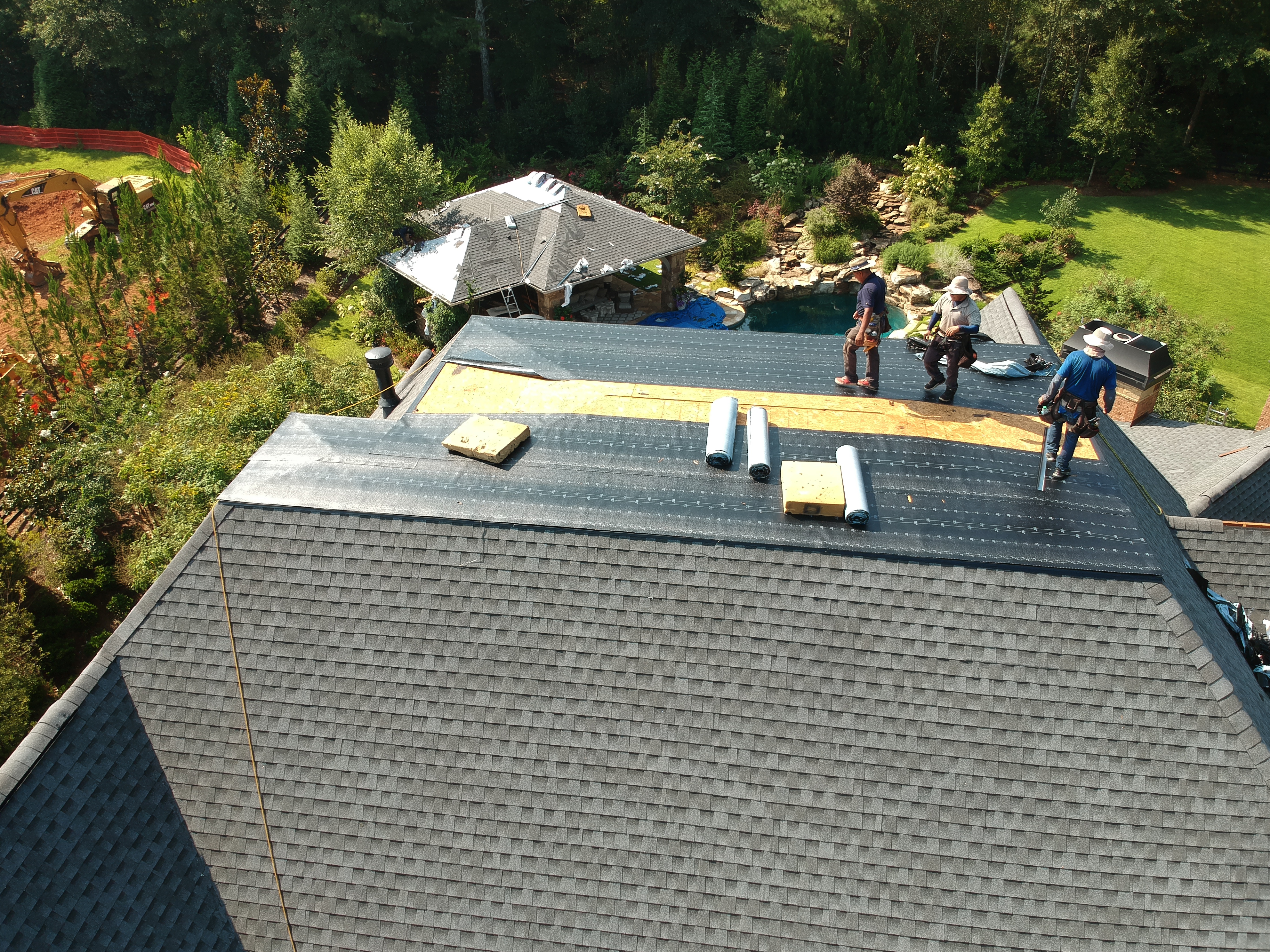
The fire risk with torch application is real. The propane torch generates flame temperatures exceeding 1,000 degrees Fahrenheit. Wood roof decking, existing roofing materials, and insulation beneath the deck can ignite if the torch operator dwells too long in one spot or allows flame to reach combustible substrates. Most torch-related roofing fires occur at seam overlaps where the operator applies extra heat to seal the seam, and the heat transfers through the membrane to the combustible substrate below.
For these reasons, many residential roofing contractors in metro Atlanta have moved away from torch application for residential projects. Self-adhered and cold-process methods deliver comparable membrane performance without the fire risk, the hot work permit, or the fire watch requirement. 1 Source Roofing and Restoration uses self-adhered modified bitumen systems for residential low-slope applications, eliminating the open-flame risk for your home and neighborhood.
Membrane Overlap Requirements and Insulation Board Specifications
IRC R905.11 requires minimum overlap dimensions at all membrane seams. Side laps (where the long edges of adjacent membrane rolls overlap) must be a minimum of 3 inches. End laps (where the end of one roll overlaps the beginning of the next roll in the same row) must be a minimum of 6 inches. These overlap dimensions create redundant waterproofing at every seam joint.
Seam integrity matters more on a low-slope roof than on any steep-slope application. Water moves slowly across a 0.25:12 surface. At seams, water can wick into the overlap through capillary action if the seam bond is incomplete. A properly bonded seam with the full 3-inch or 6-inch overlap prevents capillary wicking by creating a sealed channel that water cannot enter.
The contractor must also verify that end laps between adjacent rows are offset by at least 36 inches. This staggering prevents a continuous seam line from running across the roof, which would create a weak point where multiple seams align. Staggered seams distribute any potential weakness across different locations on the roof surface.
Insulation board requirements under the Georgia energy code (based on IECC 2015) apply to all low-slope roof assemblies, including modified bitumen. For Climate Zone 3A (which covers metro Atlanta), the energy code requires a minimum roof insulation R-value of R-38 for residential construction. On a low-slope roof with modified bitumen, this insulation typically consists of polyisocyanurate (polyiso) rigid foam boards installed over the roof deck and beneath the membrane.
The insulation boards serve dual functions: thermal insulation and membrane substrate. The modified bitumen membrane bonds to the top surface of the insulation board (or to a cover board installed over the insulation). The insulation board must have sufficient compressive strength to support foot traffic during installation and maintenance without crushing. Polyiso boards with a minimum 20 psi compressive strength meet this requirement for residential applications.
For homes in Marietta and Alpharetta with flat-roof additions or sunroom sections, proper insulation beneath the modified bitumen membrane prevents summer heat gain through the flat roof and reduces winter heat loss. The low-slope section of the roof often sits directly above living space, making insulation performance even more important than in a vented attic under a steep-slope roof.
Permits, Inspections, and Integrating Modified Bitumen with Steep-Slope Roofing
Every modified bitumen installation in Georgia requires a building permit. The permit application must include the ASTM standard for the membrane (D6162, D6163, or D6164), the application method, the manufacturer's product data sheet, and the insulation specification with R-value documentation. If torch application is planned, the hot work permit must accompany the building permit.
Building inspectors check several items specific to modified bitumen: membrane overlap dimensions at side laps and end laps, seam bond integrity (often tested with a probe or pull test), insulation board thickness and R-value, flashing details at all penetrations and perimeter edges, and drainage (positive slope toward discharge points). The inspector may also verify that the membrane matches the ASTM standard cited on the permit.
On most residential projects, modified bitumen covers a portion of the total roof area while steep-slope materials (asphalt shingles, metal panels, or standing seam) cover the rest. The transition between the two systems is one of the most leak-prone details on any residential roof. The modified bitumen membrane must extend up the slope change and terminate beneath the steep-slope material with a minimum 4-inch overlap. Metal flashing covers the transition and directs water from the steep slope onto the membrane surface below.
This transition detail requires coordination between the low-slope and steep-slope installation teams. If the steep-slope crew installs first, the modified bitumen installer must integrate the membrane with the existing steep-slope material. If the flat-roof crew installs first, the steep-slope crew must protect the membrane during their work and properly terminate their material at the slope change. On well-managed projects, the transition work happens in a coordinated sequence with both teams present.
1 Source Roofing and Restoration manages both the steep-slope and low-slope portions of residential roofing projects. A single contractor handling both systems eliminates the coordination gaps that create leaks at slope transitions. We pull one permit covering the entire roof, coordinate the installation sequence, and accept warranty responsibility for the complete system. Homeowners in Johns Creek, Roswell, and Buckhead receive one point of contact and one warranty covering every roof surface.
Modified Bitumen Roofing Code: Frequently Asked Questions
Answers to common questions about Georgia modified bitumen roofing code for metro Atlanta homeowners.
What code section governs modified bitumen roofing in Georgia?
IRC Section R905.11 governs modified bitumen roofing in Georgia. This section covers material standards (ASTM D6162, D6163, and D6164), minimum slope requirements, application methods, and membrane overlap specifications. Local building departments enforce these requirements through permitting and inspection.
What is the minimum slope for modified bitumen roofing in Georgia?
The minimum slope under IRC R905.11 is 0.25:12, one quarter inch of rise per foot of horizontal run. This makes modified bitumen one of only two residential materials (alongside standing seam metal) permitted on near-flat surfaces. The roof must still maintain positive drainage with no ponding areas.
What are the three application methods for modified bitumen in Georgia?
Three methods exist: torch-applied (open flame melts the membrane's underside), self-adhered (factory-applied adhesive bonds without heat), and cold-process (liquid adhesive spread before membrane placement). Each has specific code and safety implications. Self-adhered is preferred for residential projects due to zero fire risk.
Are there fire restrictions for torch-applied modified bitumen in Georgia residential areas?
Yes. Georgia fire codes require a hot work permit for torch application on residential buildings. The installer must maintain a fire watch during and for one hour after torch work. A Class B fire extinguisher must be within 10 feet at all times. Many metro Atlanta contractors use self-adhered methods to eliminate fire risk.