
How to Read a Roofing Specification Document
The spec sheet tells you exactly what goes on your roof. Learn to read it, and you control the outcome of every roofing project.
Certified by Industry-Leading Manufacturers
What Is a Roofing Specification and Who Writes It
A roofing specification is a written document that defines every material, method, and standard for a roofing project. It spells out exactly which shingles go on the roof, which underlayment goes beneath them, how flashings are installed at every penetration, and what quality standards the finished work must meet. When a spec is written correctly, there is zero ambiguity about what the contractor is installing and how.
On commercial projects, the specification is typically written by an architect or a roofing consultant. The document follows the Construction Specifications Institute (CSI) MasterFormat — a standardized numbering system that organizes construction specifications into divisions and sections. Division 07 covers Thermal and Moisture Protection, and Section 07 31 00 specifically addresses asphalt shingles. The architect references ASTM standards for material performance, manufacturer product lines for specific materials, and industry best practices for installation methods.
On residential projects, the specification process works differently. Homeowners rarely hire architects to write roofing specs. Instead, the contractor's proposal functions as the de facto specification. This is where problems start. A vague proposal — one that says "install new shingles" without naming the manufacturer, product line, underlayment type, or warranty tier — leaves the homeowner with no way to verify what actually gets installed on their roof.
The distinction matters because the specification is the single document that holds the contractor accountable. Without it, disputes come down to "he said, she said." With a proper spec, disputes come down to "the document says X, and the contractor installed Y." That clarity protects everyone involved — the homeowner, the contractor, and the manufacturer's warranty.
A specification also serves as the baseline for comparing bids. When three contractors bid on the same specification, the homeowner can compare prices knowing all three are bidding on identical materials and methods. Without a spec, each contractor proposes different materials at different quality levels, and the lowest bid almost always wins — regardless of whether it represents the best value or the worst roof.
Georgia's residential building code (Georgia Amendments to the IRC) sets minimum requirements for roofing installations, but a specification can — and should — exceed code minimums. Code tells you the floor. A good spec tells you the standard your specific project will meet.
The Key Sections of a Roofing Specification
A formal roofing specification follows the CSI MasterFormat structure. For residential asphalt shingle roofing, the primary section is 07 31 00 — Asphalt Shingles. But a complete roofing spec touches multiple sections, each covering a different component of the roof system. Understanding this structure helps you read any specification document — commercial or residential — and know exactly where to find the information you need.
Every specification section is divided into three parts:
- Part 1 — General: Scope of work, related sections, references to applicable standards (ASTM, UL, FM), quality assurance requirements, submittals required, and warranty requirements.
- Part 2 — Products: Specific manufacturers, product names, model numbers, material properties, and acceptable substitutions. This is where the spec names the exact shingle (e.g., GAF Timberline HDZ), the underlayment (e.g., GAF FeltBuster), and every accessory component.
- Part 3 — Execution: Surface preparation, installation methods, fastener patterns, flashing details, cleanup procedures, and protection of finished work. This part tells the installer exactly how to put the materials on the roof.
Here is how the major specification sections map to roof system components:
| CSI Section | Title | What It Covers |
|---|---|---|
| 07 31 00 | Asphalt Shingles | Shingle product, underlayment, starter strips, ridge caps, fasteners, installation method |
| 07 62 00 | Sheet Metal Flashing | Step flashing, counter-flashing, valley metal, drip edge, chimney flashing |
| 07 72 00 | Roof Accessories | Pipe boots, vent flashings, skylight curbs, roof-mounted equipment pads |
| 07 71 00 | Roof Specialties | Ridge vents, soffit vents, attic ventilation components |
| 07 25 00 | Weather Barriers | Ice-and-water shield, synthetic underlayment, vapor barriers |
| 06 10 00 | Rough Carpentry | Roof decking replacement, fascia board repair, sheathing requirements |
Most residential contractors do not hand homeowners a CSI-formatted specification. But the best contractors — the ones installing roofs on $1 million+ homes in Buckhead, Sandy Springs, and Johns Creek — provide proposals that cover every element listed above. The format may differ from a commercial spec, but the information should be identical in substance.
When you read a proposal or specification, check each section against this table. If the document skips flashing details, that is a gap. If it omits the underlayment product name, that is a gap. Every gap is an opportunity for the installer to substitute cheaper materials or skip steps entirely — and you may never know until the roof fails.
Understanding Material Submittals and Product Data Sheets
A material submittal is manufacturer documentation proving that the product being installed meets the specification requirements. On commercial projects, submittals are mandatory — the contractor must provide them before installation begins, and the architect must approve them. On residential projects, submittals are rarely requested, but they should be.
There are three types of submittals relevant to roofing:
Product Data Sheets are manufacturer-published documents that list a product's physical properties, test results, code compliance, and installation requirements. A product data sheet for an asphalt shingle will show its ASTM D3462 compliance, wind resistance rating (ASTM D7158 Class H or Class F), fire classification (UL 790 Class A), and dimensional specifications. This is the document that proves the shingle meets code and manufacturer standards.
Shop Drawings are contractor-prepared drawings showing how materials will be installed on the specific project. For roofing, shop drawings might detail flashing configurations at complex roof-to-wall intersections, cricket dimensions behind chimneys, or custom valley treatments. On a standard residential re-roof, shop drawings are uncommon. On high-end homes with complex roof geometries — multiple dormers, turret roofs, curved valleys — shop drawings prevent installation errors that lead to leaks.
Samples are physical product specimens submitted for approval. For roofing, this usually means shingle color samples. On luxury homes where the roof color must coordinate with stone, brick, or stucco, the architect or homeowner reviews physical shingle samples against the home's exterior materials before approving the final color selection.
What to look for in a product data sheet:
- ASTM Compliance: The shingle should meet ASTM D3462 (fiberglass-reinforced asphalt shingles). The underlayment should meet ASTM D226 (asphalt-saturated felt) or ASTM D4869 (self-adhering underlayment). The ice-and-water shield should meet ASTM D1970.
- Wind Resistance: ASTM D7158 Class H (150 mph) is the gold standard for Georgia, where severe thunderstorms and occasional hurricanes produce extreme wind speeds. Class F (110 mph) meets code minimums but offers less protection.
- Fire Classification: UL 790 Class A is required in most Georgia jurisdictions and provides the highest fire resistance rating for roof coverings.
- Warranty Terms: The data sheet references the manufacturer's warranty structure but does not contain the full warranty document. Request the actual warranty certificate separately.
Even on residential projects, asking your contractor for product data sheets on the shingle, underlayment, and ice-and-water shield gives you documented proof of what materials are going on your roof. If the contractor cannot provide data sheets, they may not know exactly what they are installing — which should concern every homeowner.
At 1 Source Roofing, we provide product data sheets and manufacturer documentation for every material we install. Our GAF certification and CertainTeed certification mean we install products according to manufacturer specifications — not shortcuts.
Need Help Reading a Roofing Proposal?
Our team walks homeowners through every line item, material choice, and warranty option — so you know exactly what you are paying for before any work begins.
Call (404) 277-1377Reading and Comparing Warranty Documentation
Warranty documents are the most misunderstood part of any roofing specification. Homeowners hear "lifetime warranty" and assume full coverage forever. The differences between warranty types can mean tens of thousands of dollars if a problem develops ten or fifteen years after installation.
There are three distinct warranty types in residential roofing:
Manufacturer Material Warranty covers defects in the shingle itself — manufacturing flaws that cause premature granule loss, cracking, or failure. This warranty does NOT cover installation errors, storm damage, or normal wear. GAF's standard material warranty on Timberline HDZ shingles provides lifetime coverage (defined as the reasonable expected lifespan of the product) but is prorated after the first ten years, meaning the manufacturer's financial responsibility decreases over time.
Manufacturer System Warranty is an upgraded warranty available only when a certified contractor installs a complete system of products from one manufacturer. GAF's System Plus warranty, available through GAF Certified contractors, provides 50-year non-prorated coverage on materials and includes coverage for the cost of labor to repair or replace defective materials. The Golden Pledge warranty extends that to include workmanship coverage backed by GAF itself. These system warranties require every component — shingles, starter strip, ridge cap, underlayment, ventilation — to come from the same manufacturer.
Contractor Workmanship Warranty covers installation errors made by the roofing crew. A workmanship warranty is only as strong as the contractor behind it. A five-year workmanship warranty from a company that goes out of business in three years is worth nothing. A ten-year workmanship warranty from an established, insured contractor with a decade of history has real value.
When comparing warranty documents, focus on these specific terms:
- Prorated vs. Non-Prorated: A prorated warranty reduces the manufacturer's payment obligation each year. After year 15, a prorated warranty might cover only 40% of material costs. A non-prorated warranty covers 100% of materials for the stated period.
- Labor Coverage: Standard material warranties do NOT cover labor. System warranties from GAF and CertainTeed can include labor coverage, but only when installed by a certified contractor using a complete manufacturer system.
- Transfer Provisions: If you sell your home, can the warranty transfer to the new owner? Most manufacturer warranties are transferable once within the first 20 years, but the new owner must register the transfer within 60 days of closing. Miss that window, and the warranty defaults to a reduced, non-transferable version.
- Exclusions: Every warranty excludes certain causes of failure — typically acts of God (storms, hail, lightning), foot traffic damage, improper repairs by other contractors, and failure to maintain adequate attic ventilation. Read the exclusions before you assume you are covered.
Here is a side-by-side comparison of GAF warranty tiers:
| Feature | Standard | System Plus | Silver Pledge | Golden Pledge |
|---|---|---|---|---|
| Material Coverage | Lifetime (prorated) | 50-year non-prorated | 50-year non-prorated | 50-year non-prorated |
| Labor Coverage | None | 2 years | 10 years | 25 years |
| Workmanship (GAF-backed) | No | No | 10 years | 25 years |
| Transferable | Yes (reduced) | Yes | Yes | Yes |
| Requires Certified Contractor | No | Yes | Yes (Master Elite) | Yes (Master Elite) |
The difference between a standard material warranty and a Golden Pledge warranty is enormous. The standard warranty covers only defective shingles and pays less each year. The Golden Pledge covers materials, labor, and workmanship for 25 years, backed by a $4 billion manufacturer — not just the contractor. That difference is worth understanding before you sign a contract.
What a Professional Roofing Proposal Should Include
A roofing proposal is the residential equivalent of a commercial specification. It defines the scope of work, the materials being installed, the standards being followed, and the financial terms. A good proposal eliminates surprises. A bad proposal creates them.
Every professional roofing proposal should include these elements:
Scope of Work — The proposal must state clearly what the contractor will do. For a full roof replacement, the scope should include: removal and disposal of existing roofing materials (including the number of layers being removed), inspection and repair of roof decking, installation of drip edge at eaves and rakes, installation of ice-and-water shield in valleys and at eaves, installation of synthetic underlayment across the entire roof deck, installation of shingles including starter strips and ridge caps, replacement of pipe boots and vent flashings, installation or replacement of step flashing at walls, and final cleanup including magnetic nail sweep of the property.
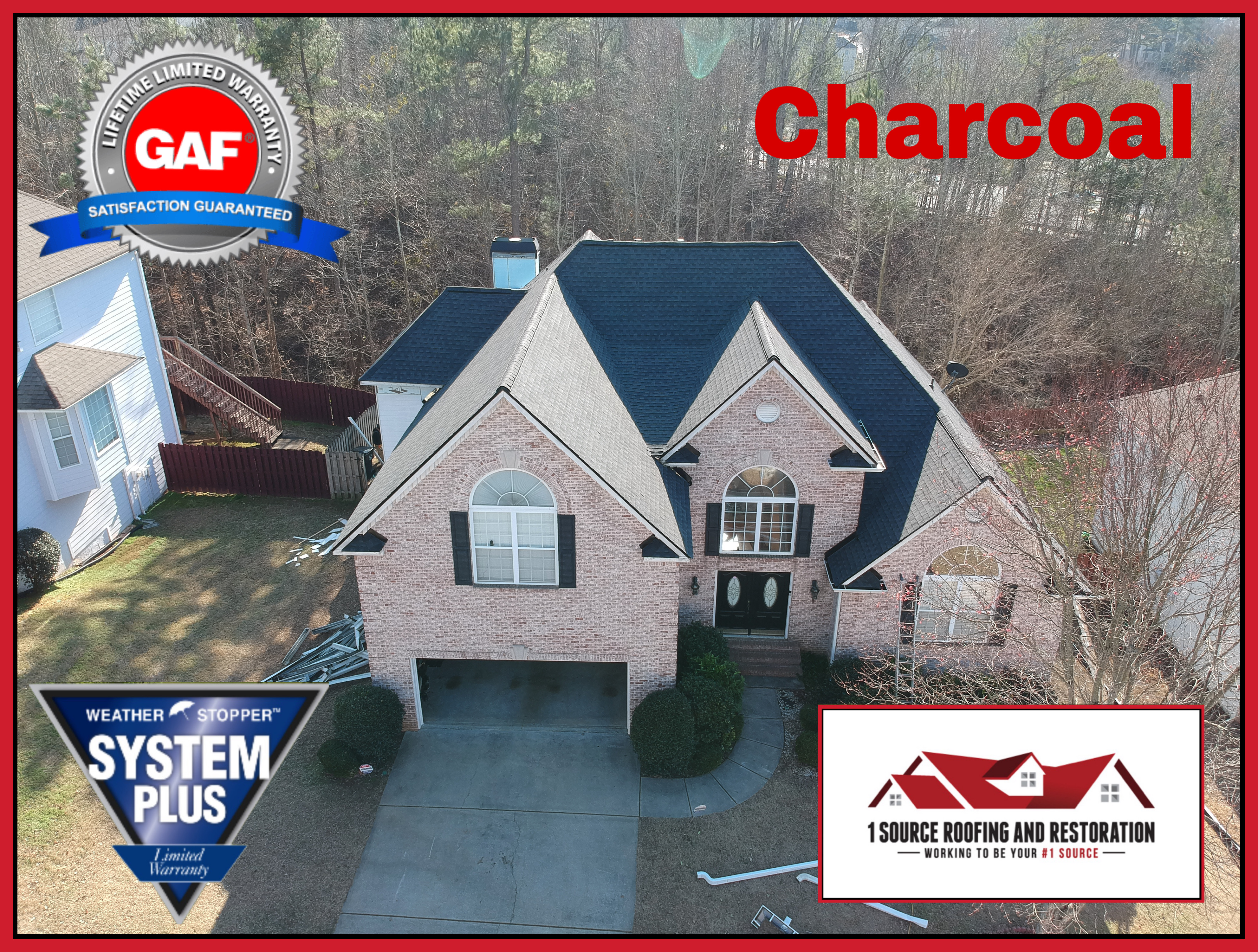
Material Specifications — Every material should be identified by manufacturer and product name. Not "architectural shingles" but "GAF Timberline HDZ, Charcoal." Not "underlayment" but "GAF FeltBuster Synthetic Underlayment." Not "flashing" but "aluminum step flashing, 5x7 inches, .019 gauge." This level of specificity prevents substitution and gives you a verifiable record of what was installed.
Warranty Tier — The proposal should state which warranty tier the installation qualifies for. If the contractor is GAF Certified and installing a full GAF system, the proposal should state "this installation qualifies for GAF System Plus warranty coverage." If the contractor is offering their own workmanship warranty, the proposal should state the duration and terms.
Project Timeline — When will the crew arrive? How long will the project take? What happens if weather delays the project? A professional proposal addresses timing expectations.
Payment Terms — The proposal should state the total price, the payment schedule (deposit, progress payments, final payment), and accepted payment methods. Georgia law does not require a specific deposit structure for roofing contracts, but industry standard is 10-30% deposit with the balance due upon completion.
Insurance and Licensing — The proposal should reference the contractor's general liability insurance, workers' compensation insurance, and Georgia business license. Any contractor who will not provide proof of insurance before starting work is a contractor you should not hire.
Red flags in roofing proposals that should stop you from signing:
- No manufacturer or product names listed for materials
- No warranty information or vague references to "manufacturer warranty"
- Demand for full payment upfront before any work begins
- No proof of insurance included or offered
- Handwritten proposal on a blank sheet of paper with no company letterhead
- Pressure to sign immediately, especially after a storm
- Price dramatically lower than all other bids — the materials have to come from somewhere
- No mention of drip edge, underlayment, or flashing — these are required components, not optional extras
A professional proposal from an established company will run two to four pages. It will read like a document prepared for a person spending $15,000 to $40,000 on their home — because that is exactly what it is. If the proposal looks like it took five minutes to write, the installation might get the same level of attention.
.JPG)
A Homeowner's Guide to Understanding Your Roofing Proposal
You received three roofing proposals. One is $12,000. One is $18,000. One is $22,000. They all say "new roof." How do you decide?
The answer is in the details — and most homeowners have never been taught how to read those details. Here is a step-by-step approach to understanding exactly what each proposal offers.
Step 1: Confirm the shingle product. Look for a specific manufacturer and product name. "GAF Timberline HDZ" is specific. "Architectural shingle" is not. "30-year shingle" is marketing language that tells you nothing about actual product quality. Two shingles can both be called "architectural" while having completely different wind ratings, warranty terms, and expected lifespans. If the proposal does not name the exact product, call the contractor and ask. Write down the answer.
Step 2: Check the underlayment. The underlayment is the waterproofing layer between your deck and your shingles. There are three options: 15-lb felt (cheapest, shortest lifespan), 30-lb felt (better, still limited), and synthetic underlayment (best, required by most manufacturers for full warranty coverage). If the proposal does not specify the underlayment type, the contractor may be planning to use the cheapest option — or skip it entirely in areas where they think no one will check. Read more about underlayment standards and ice dam protection.
Step 3: Look for ice-and-water shield. Georgia code requires ice-and-water shield at eaves in areas where the average January temperature is 25 degrees F or below. Metro Atlanta sits right on this boundary. Regardless of code requirements, ice-and-water shield in valleys, at eaves, and around penetrations prevents the leaks that destroy ceilings and drywall. If the proposal does not mention ice-and-water shield, ask why.
Step 4: Verify flashing scope. Flashings are the metal pieces that waterproof every transition point on your roof — where the roof meets a wall, around chimneys, at pipe penetrations, and along valleys. Old flashings can be reused in some cases, but rusted, bent, or deteriorated flashings must be replaced. The proposal should state whether existing flashings will be reused or replaced. If it says nothing about flashing, that is a gap you need filled before signing.
Step 5: Understand the warranty being offered. Ask three direct questions. First: "What manufacturer warranty tier does this installation qualify for?" Second: "Does the warranty cover labor, or only materials?" Third: "What is your company's workmanship warranty, and what does it cover?" Write down the answers. Compare them across all three proposals.
Step 6: Compare scope, not just price. Line up all three proposals and compare them element by element. Does Contractor A include drip edge replacement while Contractor B does not? Does Contractor C specify a premium underlayment while the others specify felt? Is one contractor including a full deck inspection and repair while another assumes the deck is fine? Every difference in scope explains a difference in price.
The cheapest proposal is often the most expensive roof. A contractor who cuts costs by using thinner underlayment, skipping ice-and-water shield in valleys, reusing deteriorated flashings, and installing a shingle system that does not qualify for the manufacturer's best warranty is saving money on day one — and costing you money every year after. A roof leak at year seven that damages $8,000 worth of drywall, insulation, and paint wipes out every dollar you saved by going with the low bid.
At 1 Source Roofing, we structure every proposal to show exactly what you are getting: specific materials by name, the warranty tier you qualify for, and a complete scope of work that covers every component of your roof system. We want you to compare us against any contractor in metro Atlanta — because when you compare the actual scope, the value speaks for itself.
If you have received a proposal from another contractor and want a second opinion on what it includes (or what it leaves out), call us at (404) 277-1377. We are happy to review it with you — no obligation, no pressure. An informed homeowner makes better decisions, and better decisions lead to better roofs.
Specification Standards Every Roofer Should Know
For roofing professionals reading this page, here is a reference list of the ASTM standards, code sections, and manufacturer requirements that appear most frequently in residential roofing specifications across metro Atlanta.
ASTM Standards for Asphalt Shingle Systems:
- ASTM D3462: Standard Specification for Asphalt Shingles Made from Glass Felt and Surfaced with Mineral Granules — the baseline standard every fiberglass shingle must meet
- ASTM D7158: Standard Test Method for Wind Resistance of Sealed Asphalt Shingles — classifies shingles as Class D (90 mph), Class F (110 mph), or Class H (150 mph)
- ASTM D1970: Standard Specification for Self-Adhering Polymer Modified Bituminous Sheet Materials Used as Steep Roofing Underlayment for Ice Dam Protection
- ASTM D226: Standard Specification for Asphalt-Saturated Organic Felt Used in Roofing and Waterproofing — covers traditional felt underlayment
- ASTM D4869: Standard Specification for Asphalt-Saturated (Organic Felt) Underlayment Used in Steep-Slope Roofing — supersedes D226 for many applications
- ASTM E108 / UL 790: Standard Test Methods for Fire Tests of Roof Coverings — establishes Class A, B, and C fire ratings
These are the specific test methods and performance thresholds that separate code-compliant materials from materials that should never go on a roof. When a specification calls for "ASTM D3462-compliant shingles," it means the shingle has been tested and certified to meet specific requirements for composition, dimensions, weight, tear strength, and granule adhesion. Learn more in our ASTM standards guide for asphalt shingles.
Georgia Code References:
- IRC Section R905.2: Asphalt shingle installation requirements — covers slope limitations, underlayment requirements, fastener specifications, and flashing requirements
- IRC Section R905.2.7: Ice barrier requirements — ice-and-water shield at eaves in climate zones where required
- IRC Section R806: Roof ventilation requirements — minimum 1:150 or 1:300 net free ventilating area depending on vapor retarder and ventilation balance
For a full breakdown of Georgia-specific amendments and how they affect residential roofing installations, read our Georgia residential roofing code guide. For more on installation methods and manufacturer requirements, explore our technical standards library, including detailed guides on shingle installation, flashing standards, and drip edge installation.
Frequently Asked Questions About Roofing Specifications
Common questions from homeowners and professionals about reading roofing specs, proposals, and warranty documents.
What should a roofing proposal include?
A complete roofing proposal should include a detailed scope of work (tear-off, deck inspection, new materials, installation method), specific manufacturer and product names for every material, the warranty tier being offered, a project timeline, payment terms, and proof of insurance and licensing. Any proposal missing these elements deserves scrutiny before you sign.
How do I compare roofing bids fairly?
To compare roofing bids fairly, normalize every proposal to the same scope. Confirm each bid specifies the same shingle product line, the same underlayment type, matching flashing materials, and equivalent warranty coverage. A bid that omits ice-and-water shield or specifies a thinner underlayment will always look cheaper — but the installed roof will perform worse and fail sooner. Line up the proposals side by side and compare element by element before comparing price.
What are material submittals in roofing?
Material submittals are manufacturer documents that prove the products being installed meet the project specification requirements. They typically include product data sheets showing ASTM compliance, installation instructions, warranty terms, and color or sample selections. On commercial projects, submittals must be approved by the architect before installation begins. On residential projects, a good contractor provides product data sheets and warranty documentation voluntarily — ask for them.
What warranty documents should I receive after installation?
After a roof installation, you should receive the manufacturer's material warranty certificate (registered in your name), documentation of the warranty tier (standard, system, or extended), and the contractor's workmanship warranty with specific terms and duration. For GAF-certified installations, you should receive a Silver Pledge or Golden Pledge warranty certificate. Keep these documents with your home records permanently — you will need them if you ever file a warranty claim or sell your home.