Sandy Springs, GA
When storm damage strikes your Riverside or Powers Ferry home, you need more than a contractor — you need an advocate. 1 Source Roofing guides Sandy Springs homeowners through every step of the insurance claims process, from damage documentation to final settlement.
Trusted by Sandy Springs Homeowners
The Local Challenge
Sandy Springs homeowners face a distinct combination of factors that make roofing insurance claims both more frequent and more complicated than in many other Atlanta suburbs. The city sits along the Chattahoochee River corridor — a zone where converging weather patterns generate wind events strong enough to lift ridge caps, tear flashing loose, and drive heavy tree limbs through decades-old roofing systems. Those same mature trees that give neighborhoods like Riverside and Powers Ferry their canopied character are also among the most common sources of significant roof damage claims in North Fulton County.
The housing stock itself adds another layer of complexity. Many Sandy Springs homes were built in the 1970s, 1980s, and early 1990s. Roofing systems from that era — original three-tab shingles, aging underlayment, galvanized flashings — are approaching or well past their design lifespan. When a storm damages an aging roof, insurance adjusters must determine how much of the damage is storm-caused and how much is attributable to age and wear. That determination directly affects what your insurance company is willing to pay, and it is frequently contested.
At 1 Source Roofing and Restoration, we have worked with homeowners throughout Sandy Springs for over a decade. We understand how adjusters evaluate claims in this market, what documentation strengthens a case for full replacement versus repair, and how to navigate the supplemental claim process when an initial settlement falls short of what a proper restoration requires.
Important for Sandy Springs homeowners: Georgia law (O.C.G.A. § 33-7-11 and related provisions) protects your right to obtain an independent damage assessment before accepting any insurance settlement. You are not required to accept the first offer. Our team documents damage in detail so you have evidence to support the full scope of covered losses.
How It Works
We do not hand you a pamphlet and tell you to figure it out. Our team is actively involved at every stage, from the moment you call us after a storm to the day your restored roof is complete and your final insurance check clears.
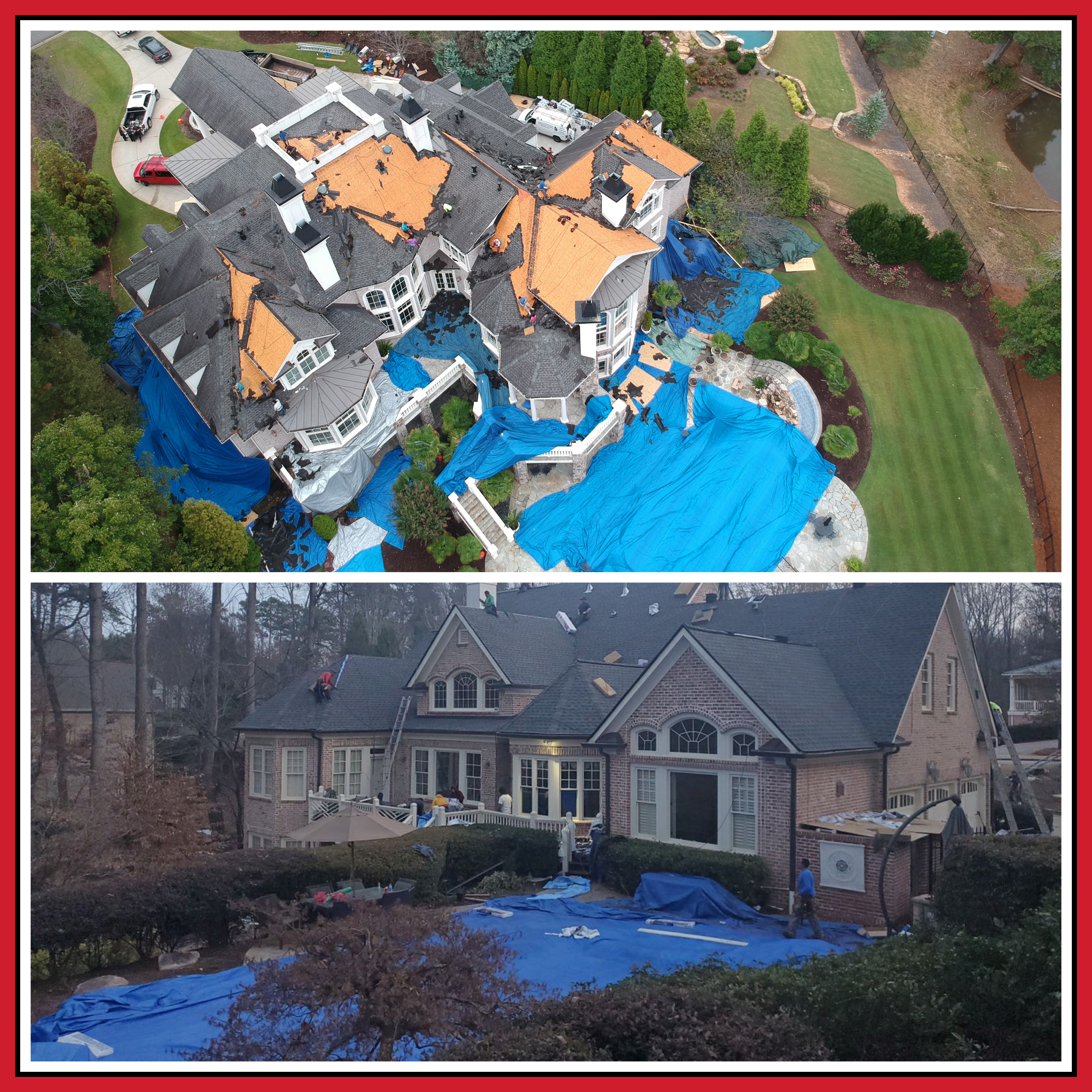
Our certified inspector performs a thorough roof inspection within 24 to 48 hours of your call. We document every point of damage with high-resolution photographs, measurements, and written notes — building a complete record before anything is disturbed or weathered further.
Many homeowners are unsure when damage crosses the threshold from a maintenance issue to a valid insurance claim. We review your documentation with you and advise honestly on whether the damage warrants a claim. If it does, we provide a written damage summary you can submit with your initial filing.
This is one of the most important steps — and one most homeowners handle alone. We meet the insurance adjuster at your home, walk the roof alongside them, and point out documented damage that could otherwise be missed or attributed to pre-existing wear. Our presence at the adjuster meeting consistently results in more complete initial scopes of loss.
When we receive the adjuster's estimate, we review every line item. If the scope is incomplete — missing layers, omitting code-required upgrades, or applying incorrect pricing for Sandy Springs labor rates — we prepare a written supplement with supporting documentation and present it to your insurance company on your behalf.
Once the claim is settled, we complete the restoration using materials matched to your home's existing profile and approved by your insurer. We handle all permit coordination with the City of Sandy Springs and communicate directly with your insurance company so you are not caught between competing versions of the project scope.
We provide a full completion packet — photos of the finished installation, material warranties, permit close-out documentation, and a record of all correspondence with your insurer. This protects you if questions arise later and keeps your home's maintenance records complete for future resale.
A brief conversation with our team before you contact your insurance company can save you significant time and prevent common documentation mistakes that reduce claim settlements. There is no cost for the initial assessment.
Call (404) 277-1377 NowLocal Weather Patterns
The Chattahoochee River valley creates a natural wind corridor through the heart of Sandy Springs. When storm systems track across North Georgia — particularly the severe thunderstorm lines that develop ahead of cold fronts from late spring through early fall — wind speeds along the river corridor consistently exceed those measured at Hartsfield-Jackson, the standard benchmark insurers often use when evaluating wind claims.
This geographic reality matters for your claim. An insurer relying solely on airport weather station data may underestimate the wind speeds your specific neighborhood experienced during a given event. We work with meteorological data providers and storm event databases to document actual wind conditions at the property level when necessary. For Heritage and North Springs homes situated near the Chattahoochee National Recreation Area boundary, this kind of localized documentation has made a meaningful difference in claim outcomes.
Wind damage is not always immediately visible from the ground. Our inspectors are trained to identify:
Each of these damage types has a specific documentation protocol. Insurance adjusters are trained to look for the same evidence we document — but they are also trained to attribute ambiguous damage to pre-existing conditions. Our documentation leaves as little ambiguity as possible.
A Sandy Springs Specialty
Sandy Springs is one of the most heavily canopied cities in metro Atlanta. The mature oak, pine, and sweetgum trees that define neighborhoods like Riverside and Powers Ferry are a significant part of what makes these properties valuable — and they are also one of the most common sources of serious roof damage claims in the city.
Tree damage claims involve several layers of complexity that other forms of storm damage do not. The most important — and most frequently misunderstood — is the question of liability. Many homeowners believe their neighbor is responsible if the neighbor's tree falls on their home. In most Georgia cases, that is not how liability works unless you can demonstrate that the neighbor had prior written notice that the tree was dead, diseased, or an imminent hazard. For the vast majority of storm-related tree falls, your own homeowner's policy is the applicable coverage.
When a tree or large limb falls on your home during a storm, your homeowner's policy generally covers:
The scope of covered damage is almost always larger than what is immediately visible. A falling tree or heavy limb can cause damage across a wide radius of the impact point — cracked decking, shifted rafters, compromised flashing, and displaced shingles well beyond the obvious impact zone. Our inspection protocol specifically accounts for secondary and peripheral damage that less thorough assessments miss.
Time matters with tree damage claims. Georgia's mild climate means that evidence of storm causation can deteriorate quickly. Moss, staining, and normal weathering can make recent impact damage look like long-standing deterioration within a few weeks. Call us as soon as safely possible after the event so we can document conditions at their most clear.
Most roofing companies do roofing. We do roofing and we understand the claims process well enough to protect your interests throughout it. Here is what that means in practice.
Every inspection produces a structured photo log, written damage narrative, and measurements organized to match the line-item format insurance adjusters use. This is not a handwritten estimate — it is a professional damage report.
We attend the adjuster inspection as your roofing professional, not as a contractor trying to sell work. Our role is to ensure the adjuster sees what the storm did — not a curated view of only what is convenient to approve.
When an initial estimate is incomplete, we prepare line-item supplements using Xactimate pricing — the same estimating platform most Georgia insurers use — so there is no basis for disputing the cost methodology.
Georgia building code changes since your home was built often require code-compliant upgrades when a roof is replaced. We identify required code upgrade costs and ensure they are properly included in the insurance scope.
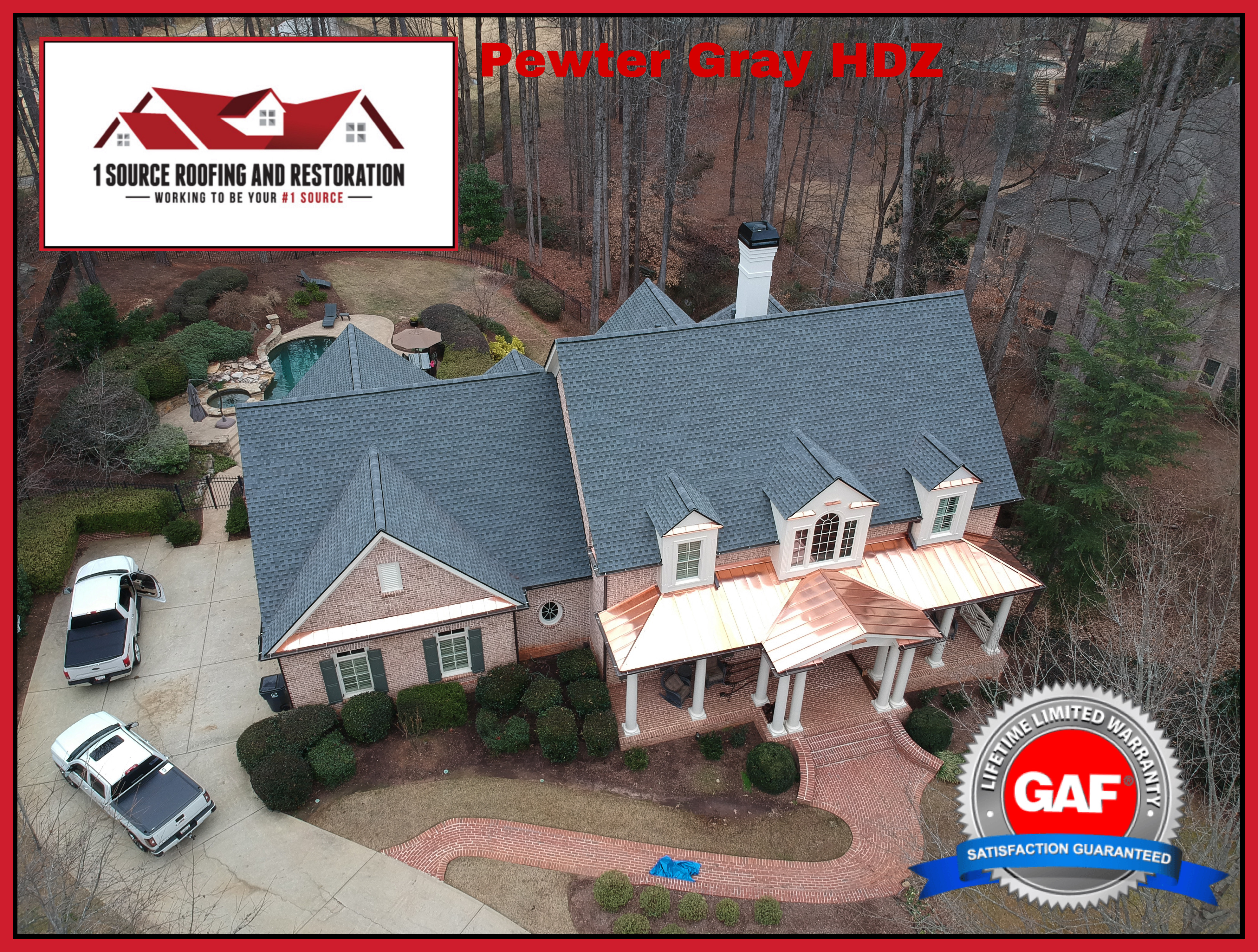
Many Sandy Springs homes feature architectural shingles, slate-profile materials, or premium underlayment systems. We ensure replacement materials match the existing specification — not a lesser substitute offered to reduce the claim value.
With your authorization, we communicate directly with your insurer throughout the process. You do not need to become an expert in insurance claims procedure — that is our job.
Where We Work
Sandy Springs is not a single neighborhood — it is a collection of distinct communities, each with its own housing character, tree canopy density, and storm exposure profile. Our team has worked across all of them. Here is what we know about each area's unique considerations for insurance claims.
One of Sandy Springs' most established communities, Riverside is characterized by large lots, significant mature tree coverage, and homes built primarily from the late 1960s through the 1980s. The older roofing stock here frequently involves original or once-replaced three-tab shingles nearing the end of their serviceable life. When storm damage occurs, the question of age versus storm causation is central to every claim. Our documentation is specifically designed to establish storm causation clearly even when pre-existing wear is present. The river proximity also means elevated wind exposure during storm events.
Powers Ferry combines established residential streets with some of Sandy Springs' most significant homes — properties in the multi-million dollar range with premium roofing materials that require careful specification matching in any insurance claim. Large hardwood trees are common throughout the neighborhood, making fallen-limb damage a regular occurrence. We handle the full scope of claims here, including complex interior damage that results when a roof breach is not immediately identified and remediated.
Heritage sits in the northern portion of Sandy Springs near the Chattahoochee National Recreation Area, placing it directly in the wind corridor discussed above. Homes here tend to be newer construction from the 1990s and 2000s, meaning architectural shingles are more common — and proper material matching in a replacement claim requires attention to manufacturer, line, and color profile. We verify that insurance-approved replacement materials match existing specs before any work begins.
North Springs encompasses a range of residential styles from established ranch homes to larger two-story properties. The area's mix of housing ages means claims range from simple storm-damage repairs on relatively newer roofs to complete replacement assessments on systems installed two or three decades ago. We approach each property on its own merits, providing an honest assessment of what the storm caused and what the appropriate remediation scope should be — regardless of whether that means a repair or a full replacement.
Insurance companies employ trained adjusters to protect their interests. You deserve someone equally knowledgeable protecting yours. Call 1 Source Roofing and Restoration — we work for you, not your insurer.
Call (404) 277-1377A Critical Consideration
A substantial portion of Sandy Springs' residential housing was constructed between 1965 and 1995. That means many homes are currently carrying roofing systems that are twenty-five to fifty years old — and even the most durable architectural shingles have a design life of twenty-five to thirty years under optimal conditions. In Georgia's climate, with its combination of heat, humidity, freeze-thaw cycles, and frequent storm activity, effective service life is often shorter.
When a storm damages an aging roof, insurance companies frequently invoke a concept called actual cash value — the replacement cost of the damaged material minus depreciation for age and condition. For a roof that is fifteen or twenty years old, this depreciation can be substantial. However, most comprehensive homeowners insurance policies in Georgia provide what is called replacement cost value coverage, which pays the full cost of replacement regardless of age once the claim is approved and work is completed.
Here is how the two-payment structure typically works with replacement cost value policies: your insurer first issues an actual cash value payment (replacement cost minus depreciation). This is called the initial check. Once you complete the replacement with a licensed contractor and submit documentation, the insurer releases the recoverable depreciation — the held-back portion that brings the total payment up to full replacement cost. The difference between the two amounts can be tens of thousands of dollars on a higher-value Sandy Springs property.
Many homeowners do not realize they need to take action to recover the depreciation holdback. The process requires proper documentation, timely filing of the recoverable depreciation claim, and contractor documentation showing that the work was completed to the approved scope. We manage all of this on your behalf so that the full benefit of your policy is realized.
On aging roofs, insurance adjusters are trained to document and attribute damage to pre-existing conditions — granule loss from age, prior repairs, surface cracking — rather than the storm event. This is a legitimate consideration, but it is frequently over-applied. Our inspection documents the specific storm event's contribution to the damage profile separately from background aging, creating a clear record that supports the covered portion of the claim even when pre-existing wear is present.
If you are not sure whether your Sandy Springs roof damage is a maintenance issue or an insurable event, call us before making that determination on your own. A brief professional assessment can save you from either missing a valid claim or filing one that will create complications with your insurer.
The answers to the questions we hear most often from Sandy Springs homeowners navigating the claims process.
Filing a legitimate storm damage or wind damage claim — the type most Sandy Springs homeowners face after Chattahoochee corridor weather events — typically does not raise your rates, because these are classified as weather-related losses beyond your control. However, filing multiple claims within a short period or filing for maintenance-related issues can affect your premium. We help you assess damage honestly before filing so you only pursue claims that are strong and warranted.
After you file a claim, your insurance company dispatches an adjuster to inspect the damage. The adjuster writes a scope of loss — a line-item estimate of what they believe the repair or replacement will cost. This scope often underestimates real costs or misses damage entirely. Our team meets the adjuster on-site, points out all documented damage, and advocates for a complete and accurate scope. If there is a significant discrepancy, we can support a supplemental claim or reinspection request.
Georgia homeowners insurance policies generally cover sudden, accidental losses — wind damage, hail impact, damage from fallen trees or limbs, and storm-driven water intrusion. What is typically excluded is damage resulting from lack of maintenance, gradual deterioration, or age. Sandy Springs' mature tree canopy makes falling limb claims especially common. We document the causal event clearly to support coverage under the correct policy provision.
Yes. Georgia law gives you the right to select your own licensed roofing contractor regardless of which company your insurer suggests. You are not obligated to use an insurer's preferred vendor network. 1 Source Roofing and Restoration works directly with your insurance company on your behalf. We handle all documentation, supplements, and communications so that the approved scope matches the true scope of work required to restore your home.