

Spray Foam Roofing Code in Georgia
IRC Section R905.14 governs spray polyurethane foam (SPF) roofing across Georgia. This guide covers ASTM material standards, minimum thickness, protective coating requirements, fire rating concerns, thermal barrier code, and re-coat schedules for flat roofs.
Certified by Industry-Leading Manufacturers
Georgia Adopts IRC R905.14 for Spray Foam Roofing
Georgia regulates spray polyurethane foam (SPF) roofing through the International Residential Code, adopted with state-specific amendments by the Georgia Department of Community Affairs (DCA). Section R905.14 of the IRC governs SPF roof coverings, setting material standards, thickness requirements, protective coating specifications, and fire classification rules.
SPF roofing works differently from every other roof covering type. Instead of installing pre-manufactured sheets or panels, the contractor sprays a two-component liquid mixture directly onto the roof substrate. The chemicals react on contact, expanding into a closed-cell polyurethane foam that bonds to the substrate and creates a seamless, monolithic waterproofing and insulation layer. No seams. No laps. No fasteners. The foam IS the roof covering.
This seamless quality eliminates the most common failure points on flat roofs. Seam failures account for the majority of leaks on TPO, EPDM, and built-up roofing systems. SPF has no seams to fail. The trade-off is that SPF requires a protective coating to resist UV degradation, and it requires specialized equipment and trained applicators that limit the contractor pool.
The 2024 IRC cycle maintains the core SPF provisions while updating referenced ASTM standard editions. The framework remains consistent with previous code cycles: comply with the ASTM material standards, meet the minimum slope, apply the required protective coating, and achieve the fire classification required by the jurisdiction.
Local jurisdictions enforce R905.14 through their building departments. Building inspectors in Alpharetta, Marietta, Sandy Springs, Buckhead, and throughout metro Atlanta verify compliance during the final roofing inspection.
For a broad overview of how Georgia adopts and enforces roofing codes, see our Georgia residential roofing code guide. This page focuses on the specific provisions of R905.14 that govern SPF installations.
ASTM Material Standards for SPF Roofing
IRC R905.14 references two primary ASTM standards for spray foam roofing: one for the foam itself and one for the protective coating. Both standards must be satisfied for a code-compliant installation.
| ASTM Standard | Material | Key Requirements | Application |
|---|---|---|---|
| ASTM D6464 | Spray polyurethane foam (SPF) | Density, compressive strength, closed-cell content, tensile strength | Foam body of the roof system |
| ASTM C1029 | SPF for roofing applications | Density (minimum 2.5 pcf), thermal resistance, dimensional stability | Roofing-grade SPF specification |
| ASTM D6083 | Acrylic coating for SPF | Tensile strength, elongation, accelerated weathering | Protective coating option |
| ASTM D6694 | Silicone coating for SPF | Tensile strength, elongation, ponded water resistance | Protective coating option |
| ASTM E108 | Fire test standard | Class A, B, or C fire rating by assembly | Complete roof assembly fire classification |
ASTM D6464 and C1029: SPF Material Standards
ASTM D6464 provides the general specification for spray-applied rigid cellular polyurethane foam. ASTM C1029 narrows the specification for roofing applications. The key physical properties for roofing-grade SPF include:
- Density: Minimum 2.5 pounds per cubic foot (pcf) for roofing applications. Higher density (3.0 pcf) provides greater compressive strength and hail resistance.
- Closed-cell content: Minimum 90 percent. The closed-cell structure provides waterproofing by preventing water absorption into the foam matrix.
- Compressive strength: Minimum 40 psi at 10 percent deformation. This determines the foam's ability to support foot traffic, equipment loads, and hail impact without permanent deformation.
- Thermal resistance: Approximately R-6.5 per inch at mean temperature. A 1.5-inch SPF application provides R-9.75. A 3-inch application provides R-19.5.
The foam chemicals come as two separate components: an isocyanate (A-side) and a polyol resin blend (B-side). The applicator heats both components to specified temperatures, pumps them through heated hoses to a spray gun, and mixes them at the gun nozzle. The mixed chemicals react within seconds, expanding 20 to 30 times their liquid volume into rigid closed-cell foam. This reaction is sensitive to temperature, humidity, wind speed, and the ratio of A-side to B-side chemicals. Proper equipment calibration and trained operators produce consistent foam density and cell structure across the entire roof surface.
Your contractor should document the foam manufacturer, product number, lot numbers, and application conditions (ambient temperature, substrate temperature, humidity, wind speed) for every spray session. This documentation supports permit closeout, warranty claims, and future insurance evaluations.
Minimum Thickness and Slope Requirements
IRC R905.14 sets the minimum slope for SPF roofing at 0.25:12, matching the threshold for built-up roofing, TPO, and EPDM. SPF has a unique advantage at this threshold: the foam itself can be sprayed in variable thickness to create positive slope on a structurally flat deck. No tapered insulation required. The applicator sprays thicker foam at the high point and thinner foam at the drainage point to build slope directly into the roof covering.
This slope-building capability makes SPF ideal for re-roofing flat sections that lack positive drainage. Rather than tearing off the existing roof and installing tapered insulation, an SPF contractor can spray over the prepared existing surface and build the slope into the foam application. The result: a roof that drains where the old one ponded, with improved insulation value from the foam itself.
Thickness Guidelines
The code requires compliance with the manufacturer's minimum thickness specification. For roofing-grade SPF, the industry standard minimum is 1.5 inches. Most Georgia installations specify 2 to 3 inches for enhanced performance:
| SPF Thickness | Approximate R-Value | Compressive Strength | Application |
|---|---|---|---|
| 1.5 inches (minimum) | R-9.75 | Adequate for foot traffic | Re-roof over existing membrane, minimal insulation needs |
| 2.0 inches | R-13 | Good for moderate foot traffic | Standard residential flat sections |
| 3.0 inches | R-19.5 | Excellent hail and traffic resistance | New construction, energy code compliance |
| 4.0+ inches | R-26+ | Maximum performance | High-performance buildings, slope building |
Georgia's energy code under IECC Chapter 4 requires minimum R-25 for roof insulation in Climate Zone 3A (metro Atlanta) for new construction. A 4-inch SPF application at R-26 meets this requirement through the roof covering alone, without additional rigid insulation below. For re-roofing projects, the existing building provisions may allow lower R-values, but adding insulation value through thicker SPF costs little additional material and reduces cooling costs throughout the building's life.
SPF builds slope, insulation, and waterproofing in a single application. No other roofing material combines all three functions in one seamless layer.

Protective Coating Requirements
Exposed polyurethane foam degrades under ultraviolet radiation. Without a protective coating, UV breaks down the foam's cellular structure, creating a powdery surface layer that erodes with rain and wind. Within six to twelve months of unprotected exposure, the foam loses significant thickness and waterproofing integrity. Georgia code requires a protective coating over all SPF roofing installations.
The coating serves four functions: UV protection, additional waterproofing, solar reflectivity, and fire resistance. The coating type you select affects all four performance characteristics and determines the re-coat schedule that maintains the system over its service life.
Silicone Coatings
Silicone elastomeric coatings (ASTM D6694) provide the best UV resistance and ponded water tolerance. Silicone does not absorb water, so it maintains its properties even in low spots where water collects after rainfall. Silicone coatings maintain flexibility across a wide temperature range, resisting cracking in Georgia's winter cold and softening resistance in summer heat.
The primary drawback: silicone coatings attract dirt and biological growth. A white silicone coating on a flat roof in Roswell or Sandy Springs will show staining from tree pollen, algae, and airborne particulates within two to three years. This is a cosmetic issue, not a performance issue. The coating continues to protect the foam regardless of surface soiling. Power washing restores the original appearance.
Acrylic Coatings
Acrylic elastomeric coatings (ASTM D6083) cost less than silicone and resist dirt accumulation better. Acrylics maintain a cleaner appearance on visible flat roof sections. The trade-off: acrylic coatings absorb water. In ponding areas where water stands for more than 48 hours after rainfall, acrylic coatings degrade faster than silicone. Acrylics work well on roofs with positive drainage where ponding does not occur.
Polyurethane Coatings
Polyurethane elastomeric coatings provide the highest abrasion resistance and tensile strength of the three coating types. They resist foot traffic, mechanical equipment contact, and hail impact better than silicone or acrylic. Polyurethane coatings work well on roofs with regular maintenance foot traffic (HVAC access, gutter cleaning) or in areas exposed to falling tree debris.
Re-Coat Schedules
No coating lasts forever. Georgia's intense UV exposure, combined with summer heat and pollen accumulation, degrades coatings over time. A re-coat every 10 to 15 years maintains the coating's protective function and extends the SPF system's service life beyond 30 years. Re-coating costs a fraction of full roof replacement and requires no tear-off of the existing system. The contractor cleans the existing surface, repairs any damaged foam areas, and applies a new coating layer over the existing one.
This renewable quality is SPF's strongest long-term value proposition. While a TPO or EPDM membrane reaches end of life and requires complete replacement, an SPF roof just needs a new coat of protective coating. The foam body remains in place, maintaining its insulation value and waterproofing integrity for decades.
Need Spray Foam Roofing Installed to Georgia Code?
1 Source Roofing installs and maintains flat roof systems that meet IRC R905.14 requirements. GAF Certified and CertainTeed Certified for complete roofing solutions across metro Atlanta.
Call (404) 277-1377Fire Rating and Thermal Barrier Requirements
Polyurethane foam is a combustible material. This fact drives the most complex code requirements for SPF roofing: fire classification of the assembly and thermal barrier requirements that protect the foam from interior fire exposure.
Exterior Fire Classification
The SPF roofing assembly (foam plus protective coating) must meet ASTM E108 fire classification requirements. The fire rating applies to the complete assembly, not the foam or coating individually. Most SPF roofing systems with elastomeric coatings achieve Class A or Class B fire ratings under ASTM E108 when tested as a complete assembly.
Class A is the highest fire rating and is required in jurisdictions with wildland-urban interface designations. Your contractor must verify that the specific SPF and coating combination specified for your project carries a current ASTM E108 test report at the required fire classification. The test report must reference the same foam density, coating type, and coating thickness that will be installed on your roof.
Interior Thermal Barrier
Georgia's building code requires a thermal barrier between spray polyurethane foam and the occupied interior space. The thermal barrier prevents the foam from contributing fuel to an interior fire and protects occupants from toxic combustion gases. The standard thermal barrier is 1/2-inch gypsum wallboard (drywall) installed on the interior side of the roof deck below the foam.
This requirement applies when SPF is sprayed directly onto the underside of a roof deck (as in cathedral ceiling applications) or when the roof deck is exposed to an occupied attic or living space. In standard flat roof applications where the SPF is sprayed on the exterior surface of a structural deck, the deck itself provides the thermal barrier if it meets the 15-minute thermal barrier test (NFPA 275 or equivalent).
Concrete decks, metal decks with ceiling assemblies, and wood decks with gypsum board below all satisfy the thermal barrier requirement. Exposed wood decks without gypsum board below may require additional thermal barrier installation before SPF can be applied to the exterior surface.
Ignition Barrier Alternative
In unoccupied spaces (attics, crawl spaces), an ignition barrier may substitute for the full thermal barrier. An ignition barrier has a lower fire resistance threshold. Intumescent coatings, fiber-reinforced cement board, and certain mineral fiber products qualify as ignition barriers. This distinction matters for SPF applied in attic spaces rather than on exterior roof surfaces.
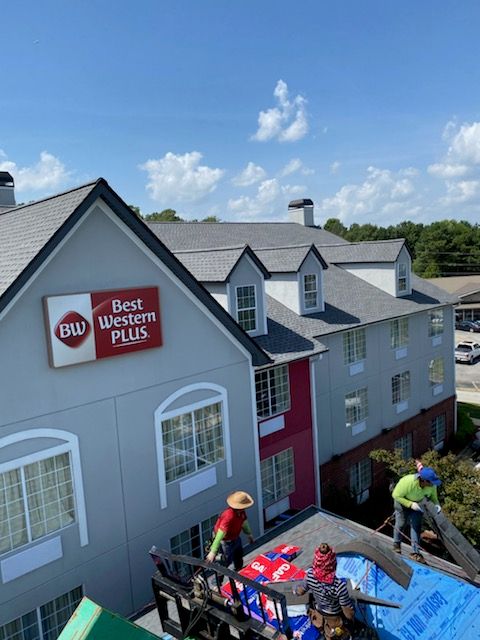
How 1 Source Manages SPF Roofing Projects
Every flat roof project that 1 Source Roofing manages meets or exceeds IRC R905.14 requirements. We coordinate SPF application, protective coating selection, and fire classification verification to deliver a code-compliant, warranty-backed system.
Pre-Installation Assessment
Before SPF application begins, our project manager inspects the existing roof substrate. We verify deck condition, identify moisture-damaged areas that require repair, evaluate drainage patterns, and determine whether the existing roof system requires tear-off or qualifies as a spray-over substrate. SPF adheres to most existing roof surfaces (BUR, EPDM, metal, concrete), but the substrate must be dry, clean, and structurally sound.
We pull permits for every project that requires one. In Alpharetta, Sandy Springs, Johns Creek, Roswell, Marietta, and throughout the 30-mile radius we serve, we maintain active business licenses and know each jurisdiction's permit process.
Application Coordination
SPF application requires specialized equipment and trained operators. We coordinate with certified SPF applicators who verify ambient conditions (temperature between 50 and 100 degrees F, humidity below 85 percent, wind speed below 15 mph) before starting each spray session. The applicator monitors foam rise, density, and surface profile throughout the application and adjusts equipment settings to maintain consistent quality.
On projects that combine flat SPF sections with steep-slope shingle roofing, we coordinate the transition details between the two systems. The flashing code at the intersection requires careful detailing. SPF's adhesive bond to vertical surfaces simplifies flashing at parapets, curbs, and wall transitions, but the coating must extend over all foam surfaces including vertical flashings.
Post-Installation and Maintenance
After installation and coating, we schedule the final building inspection. Our project manager meets the inspector on site. We also establish a maintenance and re-coat schedule that protects the SPF system for its full service life. A closed permit with a passed inspection documents code compliance, protects your insurance coverage, and supports your property's resale position.
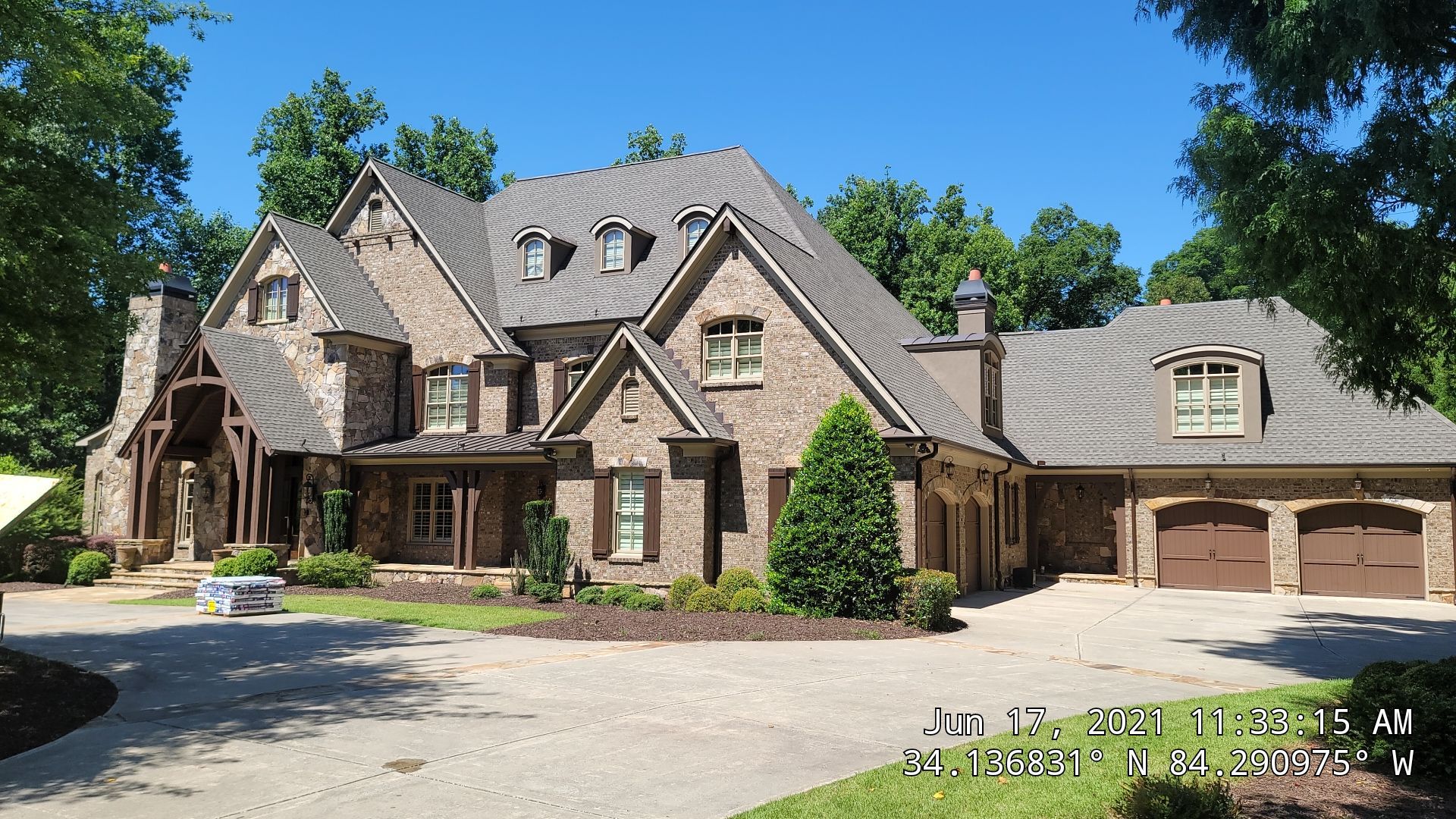
For homeowners in Buckhead, Johns Creek, and other premium neighborhoods, a code-compliant SPF installation combines waterproofing, insulation, and seamless performance in one system. The foam, coating, and drainage must all meet code for the assembly to perform as designed.
Spray Foam Roofing Code -- Frequently Asked Questions
Common questions about Georgia's SPF roofing standards, coating requirements, and fire classification rules.
What code section governs spray foam roofing in Georgia?
IRC Section R905.14 governs sprayed polyurethane foam (SPF) roofing in Georgia. This section covers minimum slope (0.25:12), foam material standards under ASTM D6464, protective coating requirements under ASTM C1029, minimum thickness, and fire classification. Georgia adopts the IRC through the Department of Community Affairs.
How thick must spray foam roofing be in Georgia?
IRC R905.14 requires spray foam roofing to meet the manufacturer's minimum thickness specification, which is typically 1.5 inches for roofing applications. This provides both waterproofing and thermal insulation (approximately R-9 to R-10). Thicker applications increase R-value and improve hail resistance. Most Georgia installations specify 2 to 3 inches of SPF.
Does spray foam roofing require a protective coating?
Yes. Exposed polyurethane foam degrades under UV radiation within months. Georgia code requires a protective coating over all SPF roofing. Common coating types include silicone, acrylic, and polyurethane elastomeric coatings. The coating protects the foam from UV, provides additional waterproofing, and contributes to the assembly's fire classification. Re-coating every 10 to 15 years extends the system's service life.
Can spray foam roofing go on a residential home in Georgia?
Yes. Spray foam roofing is code-compliant for residential flat and low-slope sections in Georgia, including additions, covered patios, pool houses, and garage roofs. The system must meet IRC R905.14 requirements for slope, foam thickness, protective coating, and fire classification. SPF provides both waterproofing and insulation in a single application.
Related Building Code and Technical Guides
These pages cover related code requirements and technical installation standards for Georgia roofing:
- Georgia Residential Roofing Code Guide -- Complete overview of IRC Chapter 9, permits, and inspections
- Built-Up Roofing Code -- BUR ply requirements, ASTM standards, and surfacing under IRC R905.9
- TPO and PVC Roofing Code -- Thermoplastic membrane requirements under IRC R905.13
- EPDM Rubber Roofing Code -- Thermoset membrane requirements under IRC R905.12
- Roof Insulation and Energy Code -- R-value requirements and insulation standards for Georgia
- Roof Flashing Code -- Flashing requirements at transitions, penetrations, and edges
- Reroofing and Tear-Off Requirements -- When tear-off is required vs. recover installation
- Roofing Permit Requirements -- Permit process and inspection requirements by jurisdiction
- Commercial Roofing Services -- 1 Source commercial flat roof installation and repair
Questions about spray foam roofing code requirements for your property? Call 1 Source Roofing at (404) 277-1377 for a free roof inspection and code compliance evaluation.