
EPDM Rubber Roofing Code in Georgia
IRC Section R905.12 governs thermoset single-ply roofing across Georgia. This guide covers EPDM membrane standards, thickness requirements, seam methods, attachment options, and puncture resistance code for flat roofs in metro Atlanta.
Certified by Industry-Leading Manufacturers
Georgia Adopts IRC R905.12 for Thermoset Membranes
Georgia regulates thermoset single-ply roofing through the International Residential Code, adopted with state-specific amendments by the Georgia Department of Community Affairs (DCA). Section R905.12 of the IRC governs EPDM (ethylene propylene diene monomer) membranes, the most common thermoset roofing material in North America. The section sets material standards, slope requirements, attachment methods, and seam specifications.
EPDM stands apart from thermoplastic membranes like TPO and PVC in its chemistry. Thermoset materials undergo a chemical crosslinking reaction during manufacture that makes them resistant to heat softening. You cannot heat-weld EPDM. Instead, seams use adhesive or tape bonding. This chemistry gives EPDM exceptional UV resistance, ozone resistance, and weathering performance. EPDM membranes routinely last 30 to 40 years on flat roofs in the Southeast.
The 2024 IRC cycle maintains the core thermoset provisions while updating the referenced ASTM D4637 standard edition. The framework remains consistent: comply with the ASTM material standard, meet the minimum slope, use an approved attachment method, and execute seams according to manufacturer specifications.
Local jurisdictions enforce R905.12 through their building departments. Building inspectors in Alpharetta, Marietta, Sandy Springs, Buckhead, and every other metro Atlanta municipality verify compliance during the final roofing inspection.
EPDM matters for homeowners when your property includes flat or low-slope roof sections. Garage roofs, flat additions, covered patios, modern architectural designs, and transitions between building volumes all require a membrane system. EPDM offers one of the most proven, cost-effective options for these applications, and it carries a track record in Georgia's climate that spans four decades.
For a broad overview of how Georgia adopts and enforces roofing codes, including the permit process and inspection requirements, see our Georgia residential roofing code guide. This page focuses on the specific provisions of R905.12 that govern EPDM installations.
ASTM D4637 Material Standard for EPDM
IRC R905.12 requires EPDM membranes to comply with ASTM D4637, "Standard Specification for EPDM Sheet Used in Single-Ply Roof Membrane." This standard defines the physical properties, testing methods, and minimum performance thresholds that every EPDM product must meet for code-compliant installation in Georgia.
Membrane Classification
ASTM D4637 classifies EPDM membranes by type and grade:
- Type I: Non-reinforced EPDM sheet. A homogeneous rubber membrane without internal reinforcement. Offers maximum elongation (300 percent or greater) and flexibility.
- Type II: Reinforced EPDM sheet. Incorporates a polyester scrim or fabric reinforcement within the rubber compound. Provides enhanced dimensional stability and tear resistance at the cost of reduced elongation.
| Property | Type I (Non-Reinforced) | Type II (Reinforced) | Test Method |
|---|---|---|---|
| Minimum thickness | 45 mil or 60 mil | 45 mil or 60 mil | ASTM D412 |
| Tensile strength (minimum) | 1,450 psi | 1,000 psi (machine direction) | ASTM D412 |
| Elongation at break | 300% minimum | 200% minimum | ASTM D412 |
| Tear resistance | 150 lbf/in minimum | 200 lbf/in minimum | ASTM D624 |
| Ozone resistance | No cracking after 168 hours | No cracking after 168 hours | ASTM D1149 |
Thickness Selection
EPDM membranes come in two standard thicknesses: 45-mil and 60-mil. The code does not mandate a specific thickness beyond requiring compliance with ASTM D4637. However, the thickness you choose affects puncture resistance, tear strength, hail resistance, and service life.
The 45-mil membrane satisfies code requirements and works for applications with minimal foot traffic and no mechanical equipment. The 60-mil membrane provides 33 percent more rubber compound, which translates to measurably better puncture resistance, longer UV resistance, and greater tolerance for thermal cycling stress at seams and flashings.
For residential flat sections in Johns Creek, Roswell, and other affluent neighborhoods, we recommend 60-mil EPDM as the standard. The cost difference between 45-mil and 60-mil runs $0.10 to $0.20 per square foot of membrane. On a 500-square-foot garage roof, that equals $50 to $100 of additional material cost for a membrane that lasts 5 to 10 years longer. The math favors the thicker membrane on every project.
Firestone Building Products (now Holcim) produces the RubberGard line, the most installed EPDM membrane in North America. Carlisle SynTec produces the Sure-Seal line. Both carry ASTM D4637 compliance. Your contractor should verify current ASTM compliance documentation for the specific product and lot delivered to your project.
Seam Adhesive vs. Seam Tape
EPDM is a thermoset material. Unlike TPO and PVC, it cannot be heat-welded. EPDM seams rely on chemical adhesive bonding or factory-formulated seam tape to join overlapping membrane edges. The seam method determines the bond strength, installation speed, and long-term reliability of the membrane system.
Adhesive Seams (Splice Adhesive)
The adhesive seam method uses a multi-step process. The installer cleans both membrane surfaces in the overlap zone with a solvent-based cleaner. A splice adhesive (contact cement formulated for EPDM) coats both surfaces. After the adhesive reaches the proper tack stage, the installer rolls the top membrane onto the bottom membrane and applies heavy roller pressure to achieve full contact. A bead of lap sealant covers the exposed edge to prevent moisture wicking.
Adhesive seams require precise execution. The contact adhesive must reach the correct tack level before the membranes meet. Too much adhesive creates a weak glueline. Too little adhesive leaves unbonded voids. Ambient temperature and humidity affect open time (the interval between adhesive application and membrane contact). Georgia's summer heat accelerates adhesive cure, giving installers a shorter working window. Winter cold extends open time and can prevent proper bonding if temperatures drop below the adhesive manufacturer's minimum application temperature (typically 40 degrees Fahrenheit).
Tape Seams (Factory-Formulated Seam Tape)
Seam tape uses a factory-applied butyl-based adhesive strip to bond the membrane overlap. The installer cleans both surfaces, removes the release liner from the tape, positions the top membrane, and applies roller pressure. Tape seams eliminate the variability of field-applied adhesive and reduce sensitivity to ambient temperature conditions.
Major EPDM manufacturers have shifted toward tape seam systems as their primary recommendation. Firestone's QuickSeam formable flashing and Carlisle's FAST Adhesive tape system both provide consistent bond strength across a wider temperature range than contact adhesive. Tape seams also reduce VOC emissions on the job site, which matters in residential neighborhoods where homeowners and neighbors are present during installation.
Regardless of seam method, the overlap width must meet the manufacturer's minimum specification (typically 3 to 6 inches for field seams). The installer must achieve uniform contact across the full overlap width without wrinkles, fish-mouths, or unbonded pockets. A probe test along the seam edge after bonding verifies that the edge is sealed and the bond extends the full width of the overlap.

Ballasted, Mechanically Attached, and Fully Adhered
IRC R905.12 permits three attachment methods for EPDM membranes. Each method has different structural requirements, wind uplift characteristics, and cost profiles. Your contractor selects the attachment method based on the roof structure, wind zone, building height, and intended use of the roof surface.
Fully Adhered
Fully adhered installation bonds the membrane to the substrate with adhesive across the entire surface. The substrate can be rigid insulation board, cover board, or the structural deck itself. Full adhesion provides the best wind uplift resistance per square foot because the entire membrane surface resists uplift forces.
Fully adhered EPDM works well on small residential flat sections where the membrane is visible from the ground or from upper-story windows. The membrane lies flat without the billowing that can occur between mechanical fastener rows on windy days. For luxury homes in Buckhead and Sandy Springs, the clean appearance of a fully adhered EPDM membrane suits architectural flat sections that are part of the home's visual design.
Mechanically Attached
Mechanical attachment uses rows of fasteners and plates driven through the membrane edge into the roof deck. The next membrane sheet overlaps the fastener row, and the seam bonds the two sheets together, concealing the fasteners. Fastener spacing determines the wind uplift rating.
Mechanical attachment costs less than full adhesion and installs faster. It works well on larger flat sections where the membrane is not visible and wind uplift calculations allow the wider fastener spacing. The membrane between fastener rows can flutter in high winds, which does not damage the system but creates a visible and audible effect that some homeowners find unacceptable on visible flat sections.
Ballasted
Ballasted installation lays the membrane loose over the insulation and uses aggregate (river rock) or concrete pavers at 10 to 12 pounds per square foot to hold it in place. The structural framing must support this dead load in addition to all other code-required loads.
| Attachment Method | Wind Uplift Performance | Cost | Best Application |
|---|---|---|---|
| Fully adhered | Highest | Highest | Visible flat sections, high-wind zones |
| Mechanically attached | Moderate to high | Moderate | Larger flat sections, standard wind zones |
| Ballasted | Moderate | Lowest material cost, highest structural cost | Large commercial roofs with adequate structure |
Georgia's wind speed requirements determine the minimum uplift rating for your project. Metro Atlanta's 115 mph design wind speed under ASCE 7-16 requires a system rated to resist the calculated uplift pressure in field, perimeter, and corner zones. Your contractor must verify that the selected attachment method achieves the required rating for every zone on your roof.
Need EPDM Rubber Roofing Installed to Georgia Code?
1 Source Roofing installs EPDM membrane systems that meet IRC R905.12 requirements and manufacturer warranty specifications. GAF Certified and CertainTeed Certified for full system warranty coverage.
Call (404) 277-1377Puncture Resistance and Long-Term Durability
EPDM's rubber composition gives it natural flexibility and puncture resistance that rigid membrane materials cannot match. The membrane absorbs impact energy by deforming rather than cracking. This property makes EPDM resilient against hail, dropped tools, foot traffic, and falling branches.
Georgia's severe thunderstorm season delivers hail events across metro Atlanta every spring and summer. While large hail can damage any roof covering, EPDM's elasticity allows it to absorb impacts that would crack rigid thermoplastic membranes or fracture built-up roofing surfacing. The 60-mil thickness provides measurably better hail resistance than 45-mil for this reason.
UV and Ozone Resistance
EPDM contains carbon black filler (in standard black membranes) that absorbs UV radiation and prevents it from degrading the polymer chains. This UV absorption mechanism gives EPDM one of the longest UV resistance profiles of any roofing membrane. Field studies by Firestone and Carlisle show EPDM membranes maintaining physical properties after 30 to 40 years of continuous UV exposure in the Southeast.
Ozone attacks rubber by breaking carbon-carbon double bonds in the polymer chain, causing surface cracking called "ozone cracking." EPDM's molecular structure includes saturated backbone chains that resist ozone attack. ASTM D4637 requires EPDM to pass ozone resistance testing (168 hours at 100 parts per hundred million ozone concentration) without visible cracking. This resistance matters in metro Atlanta, where ground-level ozone concentrations exceed EPA standards during summer months.
Thermal Cycling Performance
Metro Atlanta roof surfaces cycle between 20 degrees Fahrenheit on winter nights and 170 degrees Fahrenheit on summer afternoons. This 150-degree temperature swing occurs hundreds of times per year, and each cycle stresses every seam, flashing, and penetration detail on the roof. EPDM's elongation (300 percent minimum for Type I under ASTM D4637) allows it to expand and contract with these temperature changes without fatigue cracking.
Thermoplastic membranes like TPO gradually lose flexibility through plasticizer migration and polymer degradation. EPDM's thermoset chemistry avoids this degradation path. The crosslinked polymer chains maintain their flexibility throughout the membrane's service life. This is the primary reason EPDM roofs routinely last 30 to 40 years while first-generation TPO roofs often require replacement at 15 to 20 years.
"ASTM D4637 requires EPDM to pass 168 hours of ozone exposure at 100 pphm without visible cracking. Field studies show EPDM membranes maintaining physical properties after 30 to 40 years of continuous Southeast UV exposure."
How 1 Source Installs EPDM in Metro Atlanta
Code compliance is the floor, not the ceiling. Every EPDM project that 1 Source Roofing performs meets or exceeds IRC R905.12 requirements. We also follow manufacturer installation specifications that trigger full system warranty coverage.
Pre-Installation Assessment
Before materials arrive, our project manager inspects the existing roof structure. We measure slope, evaluate drainage pathways, verify structural load capacity, and determine the correct attachment method for your wind zone. For re-roofing projects, we assess whether the existing membrane requires full tear-off under Georgia's re-roofing provisions.
We pull permits for every project that requires one. In Alpharetta, Sandy Springs, Johns Creek, Roswell, Marietta, and throughout the 30-mile radius we serve, we maintain active business licenses and know each jurisdiction's permit process.
Installation Execution
Our crews follow manufacturer specifications for surface preparation, adhesive application, seam execution, and flashing details. We verify ambient conditions meet the adhesive manufacturer's temperature and humidity requirements before starting seam work. We perform peel tests on seam samples before running production seams on your roof. Every penetration receives a factory-fabricated EPDM boot or custom-cut membrane patch bonded with the manufacturer's specified adhesive system.
On projects that combine flat EPDM sections with steep-slope shingle roofing, we coordinate the transition details between the two systems. The flashing code at the intersection of flat and steep sections requires step flashing, counter flashing, and a termination bar detail that prevents water migration from the shingle field onto the membrane surface.
Post-Installation Inspection
After installation, we schedule the final building inspection with the local jurisdiction. Our project manager meets the inspector on site. A closed permit with a passed inspection documents code compliance, protects your insurance coverage, and supports your property's resale position.
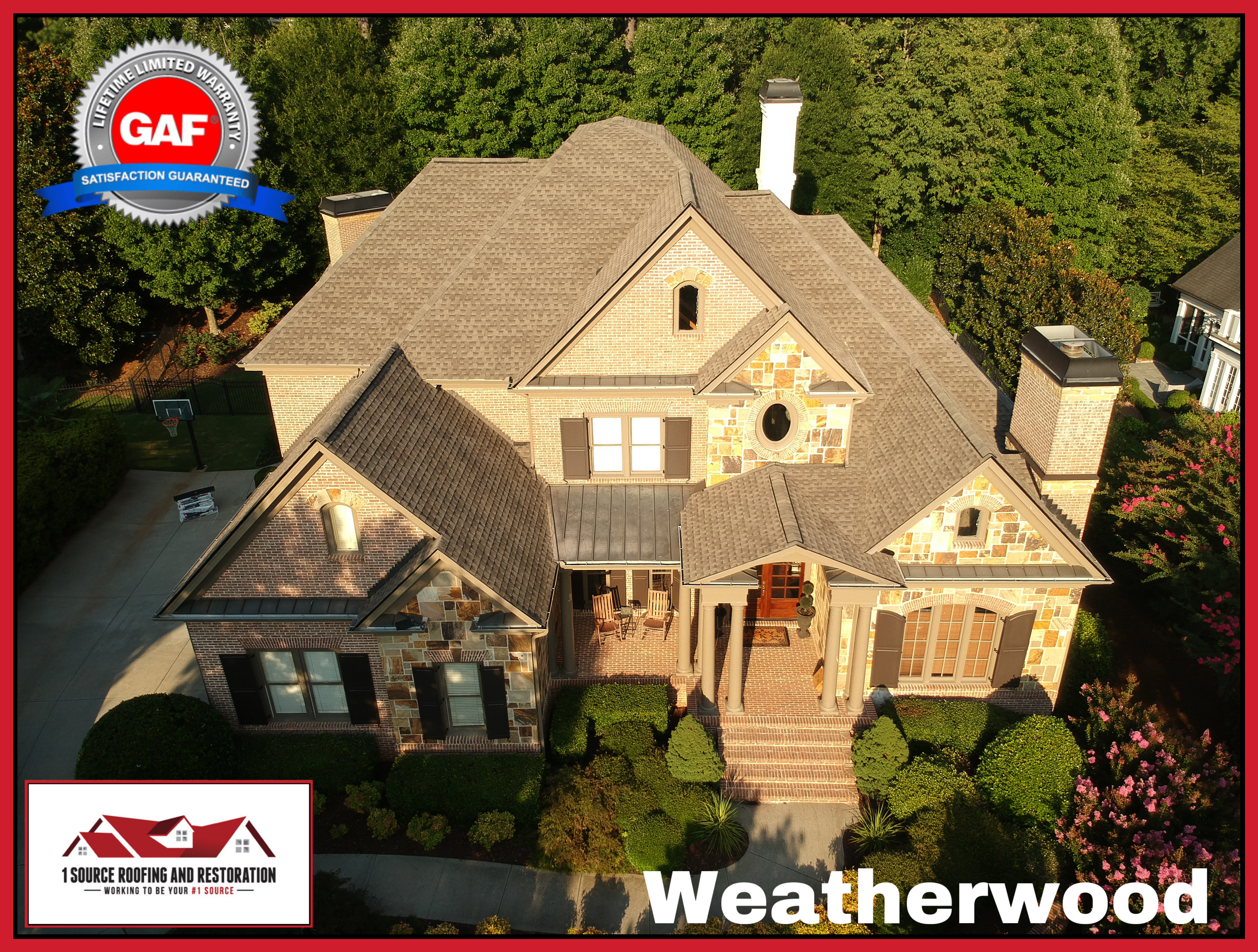
For homeowners in Buckhead, Johns Creek, and other premium neighborhoods, a code-compliant EPDM installation protects both the structure and the investment. The membrane, seams, flashings, and attachment system must all meet code for the assembly to perform as designed and carry the manufacturer's warranty.
EPDM Rubber Roofing Code -- Frequently Asked Questions
Common questions about Georgia's EPDM membrane standards, seam methods, and flat roof requirements.
What code section governs EPDM rubber roofing in Georgia?
IRC Section R905.12 governs thermoset single-ply roofing in Georgia, which includes EPDM (ethylene propylene diene monomer) membranes. This section covers minimum slope (0.25:12), membrane material standards under ASTM D4637, attachment methods, and seam requirements. Georgia adopts the IRC through the Department of Community Affairs.
What is the minimum EPDM membrane thickness for Georgia roofs?
ASTM D4637 classifies EPDM membranes in 45-mil and 60-mil thicknesses. Georgia code requires compliance with ASTM D4637 but does not mandate a specific thickness beyond the standard's minimums. Most manufacturers recommend 60-mil EPDM for all applications due to its superior puncture resistance and longer service life compared to 45-mil.
Are EPDM seams glued or taped?
EPDM seams use either liquid adhesive (contact cement or splice adhesive) or factory-applied seam tape. Adhesive seams require a primer, bonding adhesive, and roller pressure to create a watertight bond. Tape seams use a butyl-based adhesive strip that bonds the overlapping membrane edges. Both methods meet code when executed according to the manufacturer's specifications.
Can EPDM rubber roofing go on a residential home in Georgia?
Yes. EPDM is code-compliant for residential flat and low-slope sections in Georgia, including garage roofs, flat additions, covered patios, and pool houses. The installation must meet IRC R905.12 requirements for slope, membrane standard, attachment method, and seam integrity. EPDM has served residential flat roofs for over 40 years in the Southeast.
Related Building Code and Technical Guides
These pages cover related code requirements and technical installation standards for Georgia roofing:
- Georgia Residential Roofing Code Guide -- Complete overview of IRC Chapter 9, permits, and inspections
- TPO and PVC Roofing Code -- Thermoplastic single-ply membrane requirements under IRC R905.13
- Built-Up Roofing Code -- BUR ply requirements, ASTM standards, and aggregate surfacing under IRC R905.9
- Spray Foam Roofing Code -- SPF roofing requirements under IRC R905.14
- Wind Speed Requirements for Georgia Roofs -- ASCE 7 wind maps, exposure categories, uplift calculations
- Roof Insulation and Energy Code -- R-value requirements and insulation standards for Georgia
- Roof Flashing Code -- Flashing requirements at transitions, penetrations, and edges
- Reroofing and Tear-Off Requirements -- When tear-off is required vs. recover installation
- Commercial Roofing Services -- 1 Source commercial flat roof installation and repair
Questions about EPDM rubber roofing code requirements for your property? Call 1 Source Roofing at (404) 277-1377 for a free roof inspection and code compliance evaluation.