
Fire Resistance Ratings for Roofing Materials — Class A, B, and C Explained
A technical guide to fire resistance classifications, ASTM E108 testing standards, and Georgia code requirements for residential roofing materials.
Certified by Industry-Leading Manufacturers
What Fire Resistance Ratings Mean for Your Roof
Every roof covering installed on a residential structure in Georgia must carry a fire resistance classification. This is not optional and not negotiable. IRC Section R902.1 states: "Roofing materials applied to the exterior of a building shall be of a fire-retardant classification as required by other sections of this code." The classification system exists because the roof is the largest horizontal surface on any building and the most exposed surface to external fire sources — ember showers from wildfires, fires from neighboring structures, fireworks, and lightning strikes.
Fire resistance ratings are determined through standardized laboratory testing, primarily ASTM E108 (Standard Test Methods for Fire Tests of Roof Coverings) and the equivalent UL 790. These tests expose roof assemblies to controlled fire conditions and measure three specific behaviors: flame spread across the surface, ability of the fire to penetrate through the roof covering to the deck, and whether the roof covering generates burning embers or brands that could ignite other structures or materials downwind.
The testing evaluates the complete roof assembly, not just the surface material. A metal roof panel alone may be non-combustible, but its fire classification depends on the underlayment, roof deck, and any other materials in the assembly. This assembly-based approach means that changing any single component — switching from a fiberglass underlayment to a combustible felt, for example — can change the fire classification of the entire roof system.
Three classification levels exist: Class A, Class B, and Class C. Each represents a different level of fire exposure resistance. A fourth category — unrated — applies to materials that have not been tested or that failed to achieve even Class C performance. Georgia code prohibits unrated roof coverings on residential structures. These classifications affect code compliance, insurance premiums, and the actual safety of the home.
Class A, B, and C — The Three Fire Resistance Tiers
Class A — Effective Against Severe Fire Exposure
Class A is the highest fire resistance classification for roof coverings. To earn a Class A rating under ASTM E108, the roof assembly must withstand a burning brand measuring 12 inches by 12 inches placed on the surface, a gas flame applied at the edge for a specified duration, and a spread-of-flame test with intermittent wind applied at 12 mph. During all three tests, the roof covering must not break open to expose the deck, must not allow sustained flame spread beyond the test area, and must not generate flying brands or embers.
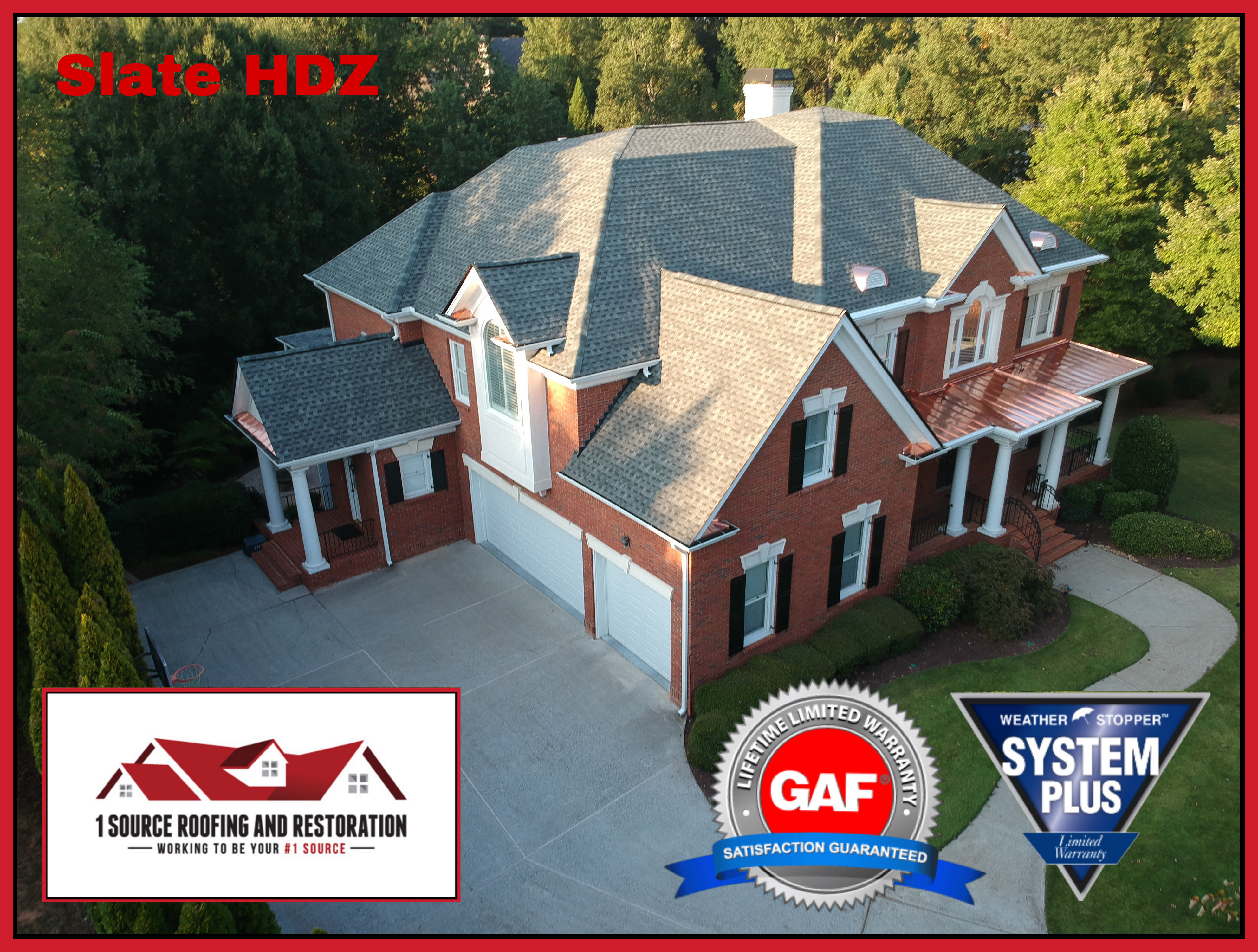
Class A materials include fiberglass-mat asphalt shingles, concrete and clay tile, slate, and metal roofing (when installed over approved assemblies). Fiberglass-mat asphalt shingles — the dominant residential roofing product in Georgia — achieve Class A because the fiberglass mat itself does not burn. The asphalt saturant and ceramic-coated mineral granules on the surface resist flame spread and protect the fiberglass core from direct fire exposure.
Class B — Effective Against Moderate Fire Exposure
Class B testing uses a smaller burning brand (6 inches by 6 inches) and a shorter gas flame application. The performance criteria remain the same — no deck exposure, no sustained flame spread, no flying brands — but the intensity of the fire exposure is reduced. Class B materials can withstand moderate fire exposure but may fail under severe conditions that Class A materials survive.
Pressure-treated wood shakes with fire-retardant treatment can achieve Class B in some assemblies. Certain composite roofing products fall into this category. Class B materials are less common in metro Atlanta residential construction because Class A options (fiberglass asphalt shingles, metal) are widely available at competitive prices.
Class C — Effective Against Light Fire Exposure
Class C is the minimum acceptable fire rating under the IRC. Testing uses a smaller brand (1.5 inches by 1.5 inches) and a brief gas flame application. Materials that achieve Class C can resist light fire exposure — a few falling embers, a brief flame contact — but they will not survive sustained fire exposure from a nearby structure fire or wildfire.
Untreated wood shakes historically carried Class C ratings, though many modern building codes and insurance companies no longer accept them. Some older synthetic roofing products test at Class C. In practice, the price difference between Class C and Class A materials is small enough that there is no financial reason to install Class C roofing on a new project.
Fire Rating Comparison by Material
| Roofing Material | Typical Fire Class | Notes |
|---|---|---|
| Fiberglass asphalt shingles | A | Standard for residential; GAF, CertainTeed, Owens Corning all Class A |
| Standing seam metal | A | Requires approved underlayment for Class A assembly |
| Concrete tile | A | Non-combustible material; inherently Class A |
| Clay tile | A | Non-combustible; common on Mediterranean-style homes |
| Natural slate | A | Stone material; non-combustible |
| Treated wood shakes | B or C | Depends on treatment; fire retardant required for Class B |
| Untreated wood shakes | C or unrated | Many jurisdictions prohibit; insurance issues |
| TPO / EPDM (flat roofs) | A or B | Assembly-dependent; used on commercial and flat residential |
Georgia Code Requirements for Roof Fire Ratings
Georgia adopts the International Residential Code with state-specific amendments through the Georgia Department of Community Affairs (DCA). The Georgia residential roofing code follows IRC Section R902, which requires all roof coverings to carry a fire resistance classification of Class A, B, or C. The code does not mandate Class A for all residential structures as a blanket statewide requirement — but the practical reality is that most asphalt shingles installed in Georgia are Class A by default.
Wildland-Urban Interface (WUI) Areas
The IRC includes provisions for structures located in Wildland-Urban Interface zones — areas where residential development meets undeveloped wildland areas with combustible vegetation. In WUI-designated areas, the code can require Class A roof coverings specifically, along with additional fire-resistant construction measures for exterior walls, vents, and decks.
While metro Atlanta is not typically classified as a high-risk WUI zone, northern suburbs and exurban communities bordering forested areas may fall under local WUI ordinances. Homes in Alpharetta, Johns Creek, and communities along the Chattahoochee corridor sit adjacent to significant tree canopy. Local fire marshals and building departments have the authority to designate WUI zones and impose Class A requirements within them.
Local Amendments
Georgia allows local jurisdictions to adopt amendments that exceed the state minimum code. Gwinnett County, Fulton County, DeKalb County, and Cobb County each have their own building inspection departments with specific interpretive guidelines. While fire rating requirements are generally consistent across these jurisdictions, the documentation and inspection processes differ. Some jurisdictions require the contractor to submit manufacturer specification sheets showing the fire classification before issuing a final roof inspection. Others accept the fire rating based on the product label visible during inspection.
When 1 Source Roofing performs a roof replacement, we ensure the installed materials carry documented Class A fire resistance, regardless of whether the specific jurisdiction requires it. Class A is the standard we hold ourselves to because it provides the highest level of protection, satisfies every possible local requirement, and gives the homeowner the best position for insurance underwriting.
Existing Structures and Re-Roofing
When a roof is replaced on an existing structure, the replacement materials must meet current code requirements for fire classification. A home originally roofed with Class C wood shakes in 1985 cannot be re-roofed with Class C materials if the local jurisdiction now requires Class A. The re-roofing triggers compliance with the current code edition. This requirement drives most of the wood shake-to-asphalt conversions we perform in established neighborhoods across Buckhead and Sandy Springs.
Fire Ratings of Asphalt Shingles — GAF and CertainTeed
Asphalt shingles account for roughly 80 percent of residential roofing in the United States, and virtually all modern asphalt shingles achieve a Class A fire resistance rating. The key is the fiberglass mat. When the roofing industry transitioned from organic felt mats (saturated cellulose fiber) to fiberglass mats in the 1980s, fire performance improved dramatically. Organic-mat shingles carried Class C ratings. Fiberglass-mat shingles carry Class A. The last major manufacturer stopped producing organic-mat shingles in 2008, so any new asphalt shingle installed today uses fiberglass construction.
GAF Timberline HDZ
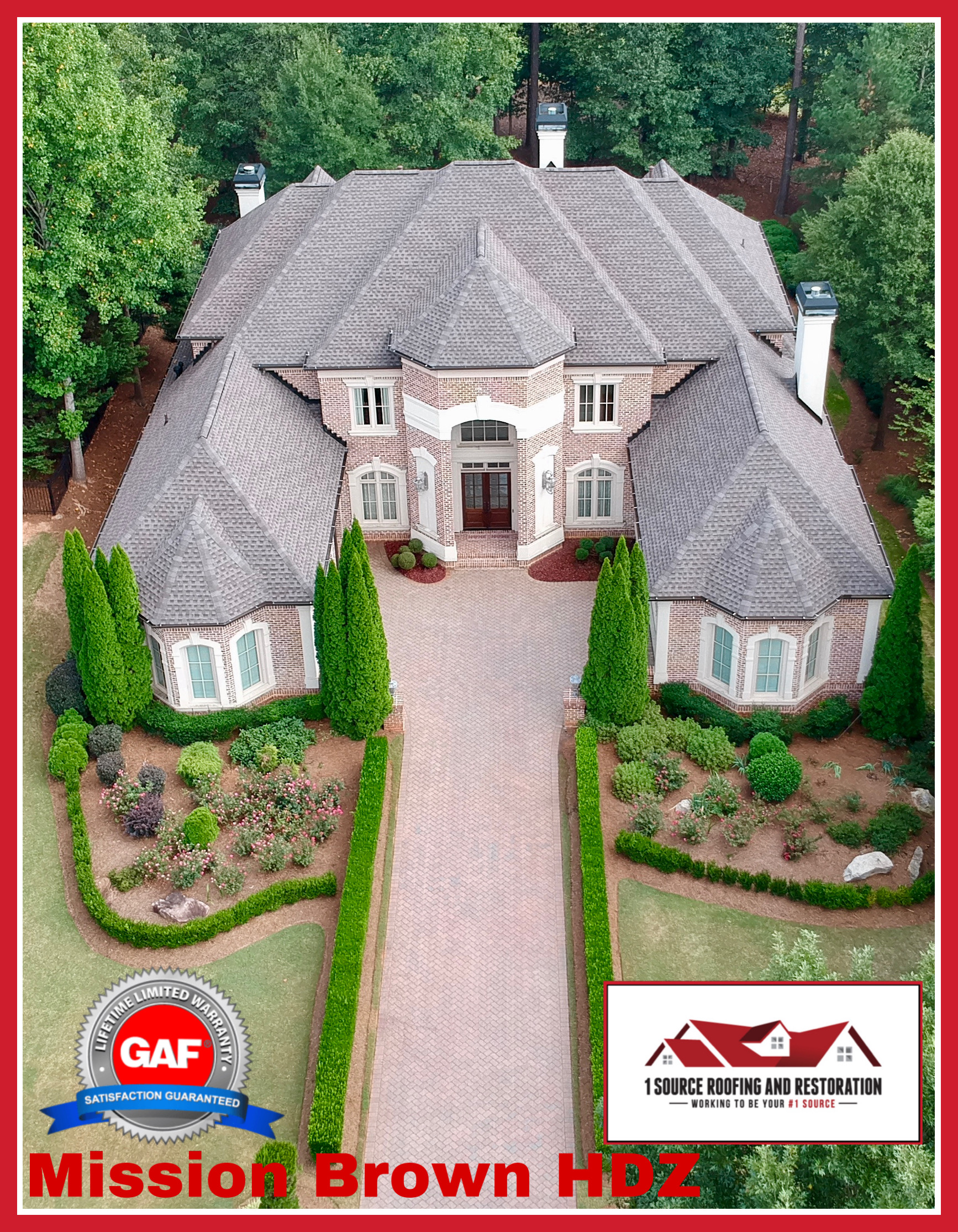
The GAF Timberline HDZ is the best-selling shingle in North America and carries a UL Class A fire resistance rating. GAF achieves this through their proprietary fiberglass mat, asphalt formulation, and ceramic-coated granule surface. The Class A rating applies to the shingle installed over a code-approved roof deck (minimum 15/32" plywood or 7/16" OSB) with approved underlayment. As a GAF Certified contractor, we install Timberline HDZ shingles with the full system components required to maintain the Class A assembly rating and activate GAF's warranty program.
GAF Timberline NS (Natural Shadow)
The Timberline NS line also carries a UL Class A fire rating. The difference between HDZ and NS is aesthetic (shadow lines and granule blend) and the LayerLock technology on HDZ, not fire performance. Both product lines meet the same ASTM E108 and UL 790 fire test requirements.
CertainTeed Landmark
The CertainTeed Landmark series — including Landmark, Landmark Pro, and Landmark Premium — all carry Class A fire resistance ratings per UL 790. CertainTeed's fiberglass mat construction and NexGen polymer-modified asphalt formulation provide fire resistance comparable to GAF products. As a CertainTeed Certified installer, we have access to the full Landmark product line and can provide CertainTeed's warranty documentation that includes fire rating certification.
What Can Void the Class A Rating
The Class A rating applies to the tested assembly, not just the shingle alone. Installing Class A shingles over a combustible substrate not included in the manufacturer's tested assembly can void the classification. Specific scenarios that can compromise the assembly rating include:
- Installing shingles directly over old wood shake roofing without removing the shakes or installing an approved separation layer
- Using a non-approved underlayment that was not part of the tested assembly
- Installing over a roof deck material not specified in the manufacturer's installation instructions (such as non-structural boards or deteriorated decking)
- Exceeding the maximum number of roof layers allowed by code (Georgia allows a maximum of two layers of asphalt shingles in most jurisdictions)
This is why proper roof deck preparation, correct underlayment selection, and following manufacturer installation instructions matter beyond the shingle itself. The fire rating is a system property, not a shingle property.
Fire Ratings Across Roofing Material Types
Metal Roofing
Steel and aluminum roof panels are non-combustible, but that does not automatically guarantee a Class A fire rating for the installed assembly. The fire classification depends on what sits beneath the metal panels. A standing seam metal roof installed over a synthetic underlayment on plywood decking typically achieves Class A. The same metal panels installed directly over combustible purlins without underlayment may test differently. Metal roofing manufacturers publish tested assembly configurations that specify the exact combination of metal panel, underlayment, and substrate required for each fire classification.
For residential applications in the Atlanta area, standing seam and metal shingle products from manufacturers like Decra and Classic Metal Roofing carry Class A ratings in their standard assembly configurations. Metal roofing is gaining popularity in Sandy Springs and Buckhead on contemporary and transitional-style homes, and the Class A fire performance is one of the material's strongest selling points.
Wood Shakes and Shingles
Untreated cedar shakes are the fire performance outlier in residential roofing. Without fire-retardant treatment, cedar shakes test at Class C or fail to achieve any fire rating. The natural oils in cedar, combined with the material's thin cross-section and rough, textured surface, make it highly susceptible to ignition and flame spread. Burning cedar shakes also generate airborne brands (flying embers) that can ignite neighboring structures hundreds of feet away.
Fire-retardant treated (FRT) wood shakes can achieve Class B and, in some formulations with specific underlayment systems, Class A. The treatment involves pressure-impregnating the wood with fire-retardant chemicals. FRT shakes cost considerably more than untreated cedar, and the treatment must be reapplied periodically as it leaches out over time. Many jurisdictions in California, Colorado, and parts of Georgia have banned untreated wood shakes entirely. While metro Atlanta has not imposed a blanket ban, insurance availability for wood shake roofs has become increasingly restricted.
When we replace a wood shake roof in Buckhead or Roswell, homeowners frequently transition to GAF or CertainTeed architectural shingles that mimic the dimensional shadow lines of cedar shakes while providing Class A fire resistance and lower maintenance demands.
Tile and Slate
Concrete tile, clay tile, and natural slate are all non-combustible materials that achieve Class A fire resistance. Concrete and clay tiles are kiln-fired ceramic products — they cannot burn. Slate is a metamorphic stone. These materials provide the highest inherent fire resistance of any residential roofing option and have been used for centuries for their fire performance in densely built urban areas.
The weight of tile and slate (typically 800 to 1,500 pounds per square, compared to 250 to 350 pounds for asphalt shingles) requires a structural evaluation of the roof framing before installation. Not every home can support tile or slate without reinforcement. For homes with adequate structure, these materials combine Class A fire resistance with exceptional longevity (50 to 100+ years for tile, 75 to 200+ years for slate).
Synthetic and Composite Materials
Synthetic roofing products — polymer-based materials designed to mimic the appearance of slate, wood shake, or tile — vary in fire classification. Premium synthetic products from manufacturers like DaVinci Roofscapes achieve Class A ratings. Budget synthetic products may carry Class B or Class C ratings. Always verify the fire classification in the manufacturer's product data sheet. The synthetic roofing market is newer and less standardized than asphalt or metal, so fire ratings vary more widely across products and manufacturers.
The Role of Underlayment in Assembly Fire Ratings
The underlayment beneath the roof covering contributes to the overall assembly fire performance. Fiberglass-reinforced synthetic underlayments are generally non-combustible and contribute positively to the assembly fire rating. Older #15 or #30 organic felt underlayments contain combustible cellulose fibers and may limit the assembly fire classification depending on the roof covering above.
Self-adhered ice and water shield products used at eaves, valleys, and penetration flashings are typically tested as part of the overall assembly. GAF and CertainTeed both publish fire-tested assembly configurations that specify which underlayment products maintain the Class A rating when used with their shingle lines. Using an underlayment that was not part of the tested assembly introduces risk — the assembly may still perform at Class A, but without testing documentation, neither the manufacturer nor the code official can certify it.
How Fire Ratings Affect Homeowner Insurance in Georgia
Insurance underwriting for residential properties in Georgia evaluates the roof covering's fire resistance as one of several rating factors that determine premium cost. The connection is straightforward: a Class A roof is less likely to sustain total loss from fire exposure, and that reduced risk translates into lower premiums for the homeowner.
Premium Impact
The exact premium difference between Class A and Class C roofing varies by insurer, property location, and the overall risk profile of the home. Industry data suggests that homes with Class A roofing can see fire-related premium reductions of 5 to 15 percent compared to identical homes with Class C roofing. On a $3,000 annual premium typical of high-value homes in Buckhead or Alpharetta, that translates to $150 to $450 per year. Over the 25 to 30 year life of a roof, the cumulative premium savings can reach $4,000 to $13,000 — a material consideration when choosing roofing materials.
Some insurers in Georgia will not write or renew policies on homes with wood shake roofs regardless of fire-retardant treatment. Others require an elevated premium or a separate fire rider. If you are considering a roofing material other than Class A-rated asphalt shingles or metal, check with your insurance agent before committing to the material. We have seen homeowners install exotic roofing materials only to discover that their insurer will not cover them, forcing an expensive change or a switch to a specialty insurer at two to three times the standard premium.
Documentation Requirements
After a roof replacement, homeowners should notify their insurance company and provide documentation of the new roof covering's fire classification. This documentation typically includes:
- The manufacturer's product specification sheet listing the fire rating (Class A per UL 790 or ASTM E108)
- The contractor's invoice or completion certificate identifying the specific product installed
- Photos of the installed roof and product labels
- The building permit and final inspection approval (where applicable)
When we complete a roof replacement, we provide homeowners with a documentation package that includes manufacturer spec sheets, our written warranty, and photos of the completed installation. This package gives the homeowner everything needed to update their insurance record and potentially qualify for a premium reduction.
Storm Damage and Fire Rating Continuity
After storm damage, the replacement roofing must meet current code requirements, including fire classification. If an insurance claim covers a partial roof replacement, the replacement materials must match or exceed the fire rating of the original roof covering. An insurance adjuster will verify that the replacement materials are code-compliant, including fire resistance. We work with insurance adjusters throughout the claims process to ensure material specifications meet both code and policy requirements.
Liability Considerations for Contractors
A contractor who installs roofing materials that do not meet the required fire classification exposes the homeowner to risk and faces direct civil liability. If a fire damages a home and the investigation reveals that the roof covering lacked the required fire rating, the homeowner's insurance claim can be denied, and the contractor can face civil liability for the damage. This is one of many reasons we only install products from manufacturers we hold certification with: GAF and CertainTeed. We follow their tested assembly configurations exactly. These certifications represent verified training on proper installation methods that maintain fire ratings and activate manufacturer warranties.
For a broader view of residential roofing code requirements in Georgia, including structural, ventilation, and material standards, see our Georgia residential roofing code guide and roof ventilation code requirements. For the technical standards behind proper installation, explore our technical standards library covering drip edge, flashing, valley installation, and shingle installation methods.
Frequently Asked Questions About Roof Fire Resistance Ratings
What fire rating do asphalt shingles have?
Virtually all modern asphalt shingles carry a Class A fire resistance rating — the highest available classification. This includes fiberglass-mat shingles from GAF (Timberline HDZ, Timberline NS), CertainTeed (Landmark, Landmark Pro), and Owens Corning (Duration, TruDefinition). The fiberglass mat at the core of these shingles is inherently non-combustible, which allows them to achieve Class A when tested per ASTM E108. Older organic-mat asphalt shingles, which are no longer manufactured in the United States, typically carried Class C ratings. If your home still has organic-mat shingles (installed before roughly 2008), a roof replacement will upgrade you to Class A fire performance.
Does Georgia require Class A roofing?
Georgia adopts the IRC, which requires roof coverings to carry a fire classification but does not mandate Class A for all residential structures statewide. The default requirement allows Class A, B, or C rated materials. Local jurisdictions can impose stricter requirements, and areas designated as Wildland-Urban Interface (WUI) zones may require Class A specifically. In practice, most asphalt shingles available in the Georgia market are Class A by default, so the requirement is met without additional effort or cost. We install only Class A materials on every project regardless of the minimum local requirement.
How does roof fire rating affect insurance?
Insurance companies factor roof fire resistance into premium calculations. A Class A rated roof generally qualifies for the lowest fire-related premium tier, and homes with Class C or unrated materials may face higher premiums or difficulty obtaining coverage. The difference can range from 5 to 15 percent of the annual premium. Some Georgia insurers will not write policies on homes with untreated wood shake roofs due to the fire risk. After a roof replacement, we provide manufacturer specification sheets documenting the Class A fire rating so homeowners can update their insurance records and potentially reduce their premiums.
What roofing materials are not fire rated?
Untreated wood shakes and shingles are the most common residential roofing material that lacks a meaningful fire rating or carries only a Class C. Thatch roofing has no fire rating. Some recycled-material or novelty roofing products may not have been submitted for ASTM E108 testing and therefore have no classification. Georgia code requires a fire classification for all roof coverings on residential structures, so unrated materials cannot legally be installed. If a product does not have ASTM E108 or UL 790 test documentation, it does not have a fire rating, and it does not belong on a Georgia roof.