
Why Roofing a Custom Home Is Different from a Standard Replacement
A roof replacement on a production builder home in a 200-unit subdivision is a manageable, repeatable task. The same plan gets executed dozens of times per year. Square footage is predictable, penetrations are minimal, pitch is standardized, and the material palette is narrow. The margin for error, while never acceptable, is at least contained.
A custom home presents an entirely different set of demands — and the contractor who cannot articulate those differences in detail does not belong on your project. Custom homes typically feature multiple roof planes converging at complex angles, dormers with intricate flashing requirements at every valley and step, skylights that require precision counter-flashing and curb integration, and ridge line treatments that must follow custom architectural geometry rather than a standard ridge cap profile. Many homes in Alpharetta and Buckhead carry 15 to 30 or more roof penetrations per 1,000 square feet — plumbing stacks, HVAC supply and return points, exhaust vents, skylights, and chimney chases — each one a potential failure point if flashed by an inexperienced crew.
Beyond geometry, high-end homes often use copper or painted metal for accent details: copper step flashing along dormers, lead-coated copper at chimney saddles, custom copper conductor heads where downspouts meet fascia. These materials require skilled soldering and joinery — trades skills that most shingle crews do not have on staff. If you're seeing signs that your roof needs replacement, the contractor selection process on a custom home warrants the same deliberate attention you gave to selecting your original builder or architect.
Custom homes in Georgia's luxury corridors also frequently fall under HOA or design review board jurisdiction, require material pre-approval before work begins, and carry high-value insurance policies where documentation quality directly affects claim outcomes. None of these factors exist on a standard replacement job — all of them must be actively managed by your contractor on a custom home.
Start with Licensing: Georgia's Requirements and What They Mean
Georgia requires roofing contractors to hold a state-issued license through the Georgia Secretary of State's Licensing Division. This is not a local business license or a county registration — it is a state credential requiring demonstrated knowledge, insurance, and financial responsibility. Every contractor you consider must provide their Georgia license number before any proposal is delivered.
Verifying the license is straightforward: search the contractor's name or license number at sos.ga.gov and confirm that the license is active, not expired, and registered to the business entity presenting it. You are looking for a current, unrestricted status. Some contractors operate with expired licenses and simply hope homeowners do not check — particularly after hail storms when demand spikes and storm chasers move through metro Atlanta neighborhoods.
Beyond the state license, verify that the contractor holds a valid local business license in the county where they primarily operate. For work in Gwinnett, Fulton, Cobb, Forsyth, and Cherokee counties, each jurisdiction has its own business registration requirement. A contractor physically based in the area — with a verifiable office address and local license — is a meaningfully different entity from an out-of-state company that arrived after a storm event and listed a temporary address.
Ask specifically: "Can you provide your Georgia contractor license number, your general liability certificate of insurance, and your workers' compensation certificate — right now, before we schedule a consultation?" A legitimate, well-run operation produces these within minutes. Any hesitation or redirection is your first warning signal.
Insurance Coverage: Why It Matters More on High-Value Homes
A roofing crew working on a $1.5 million custom home in Alpharetta represents an enormous liability exposure. If a crew member falls from a 10:12 pitch roof without workers' compensation coverage, the injured worker's attorneys will look to every available insurance source — including your homeowner's policy. If the crew damages your home's exterior, interior finishes, or landscaping without adequate general liability coverage, you are pursuing an uncollectable claim against a contractor who may not be in business six months from now.
For homes valued at $1.5 million and above, the appropriate minimum general liability coverage for a roofing contractor is $1 million per occurrence, $2 million aggregate. For estate-class homes above $3 million, $2 million per occurrence is the appropriate floor. Workers' compensation coverage must be present with no exceptions — any contractor who claims their workers are independent subcontractors to avoid carrying workers' comp is creating a legal exposure that falls directly on your homeowner's policy if there is an injury on your property.
A surety bond is a third component that speaks to financial responsibility. It guarantees that the contractor will complete the contracted work and that suppliers and subcontractors will be paid — preventing mechanics' liens from attaching to your property. For large custom home projects, request a copy of the surety bond along with the insurance certificates, and verify all three documents are current-dated and issued by rated carriers.
Do not accept screenshots or photocopied certificates. Request that the contractor's insurance agent email certificates directly to you as the certificate holder. This ensures the documents are current and unaltered — a standard practice in commercial contracting that every professionally run residential roofing company should accommodate without complaint.
Manufacturer Certifications: GAF, CertainTeed
Manufacturer certification programs are not marketing labels. They are structured quality programs with factory training requirements, installation audits, and warranty-backing commitments that create real, enforceable consumer protections for homeowners. Understanding what each program delivers — and what you gain as a homeowner — is essential before choosing a contractor for a premium installation.
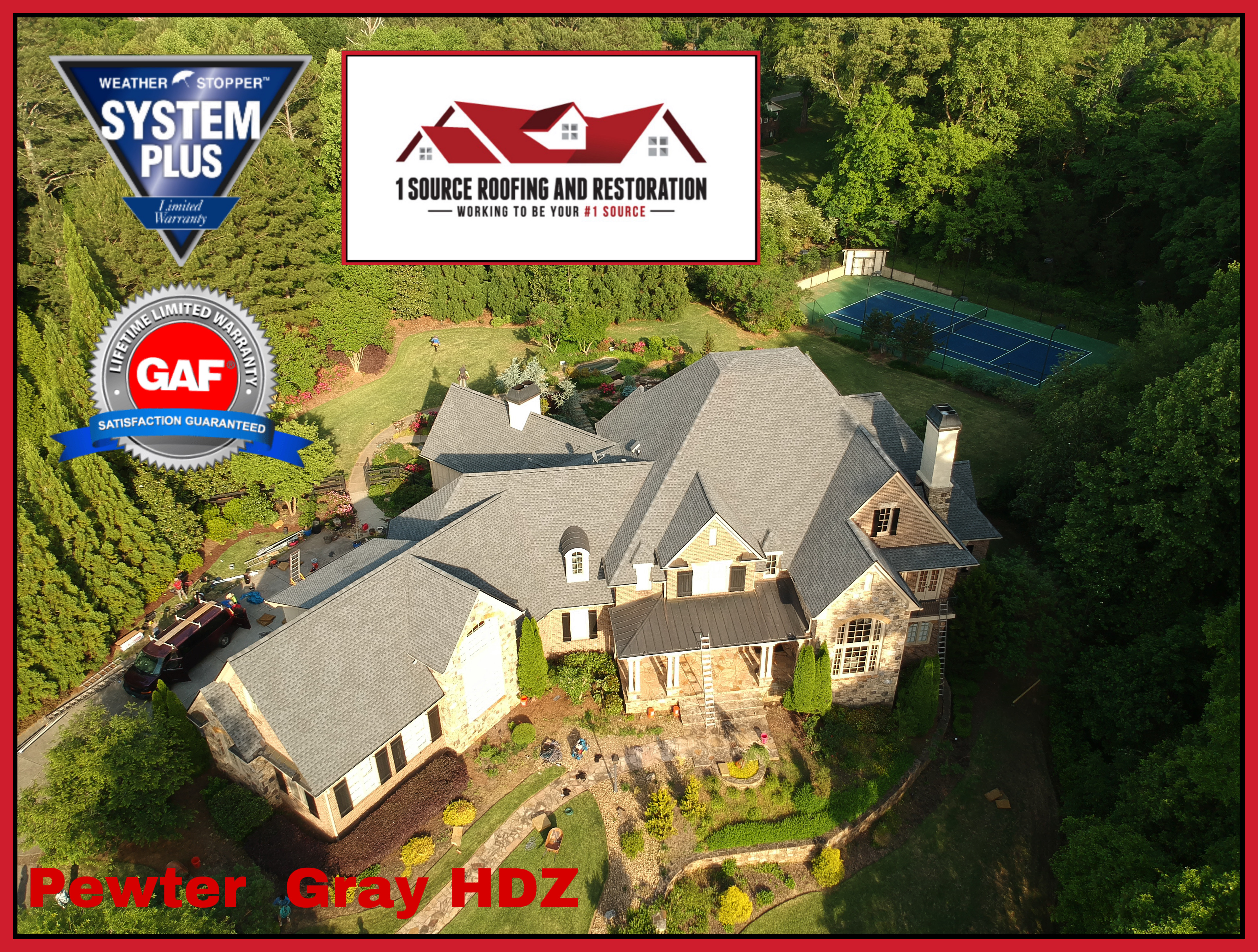
GAF's Certified Contractor program is structured around factory training and ongoing performance monitoring. GAF Certified Contractors can access System Plus and Silver Pledge extended warranties — warranty programs that cover the full roofing system, including underlayment and accessories, not just the shingles. The extended system warranty, which can run 50 years for qualifying installations, is only available when a GAF Certified Contractor performs the work. An uncertified contractor cannot offer this coverage regardless of which product they install.
CertainTeed's ShingleMaster program has two tiers. Standard ShingleMaster status covers trained installation and basic warranty access. SELECT ShingleMaster status — the premium tier — requires additional training, performance documentation, and audit compliance. SELECT ShingleMaster contractors can offer the SureStart Plus warranty, which provides non-prorated coverage for the first 10 years, meaning if a material failure occurs in year eight, the payout is calculated at full replacement value, not a depreciated fraction.
's Preferred Contractor program requires documented installation training, current insurance on file with, and documented customer satisfaction. Preferred Contractors unlock the Platinum Preferred warranty tier, which includes the strongest wind warranty in the lineup — up to 130 mph wind resistance on qualifying installations — as well as workmanship coverage. On custom homes in areas prone to severe wind events, this distinction between a standard limited warranty and a Platinum Preferred warranty represents a material difference in coverage.
Insurance Claims Expertise: A Critical Differentiator
Storm damage claims on custom homes are categorically more complex than standard residential claims. High-value homes frequently have specialty materials — natural slate, copper flashing, custom ridge treatments, exotic wood soffits — that require specialist appraisers who understand replacement costs for materials that are not tracked in standard insurance pricing databases. A contractor who has never attended an adjuster meeting cannot advocate for full scope documentation when the adjuster is using line-item software that undervalues custom work.
The right contractor is present at the adjuster meeting, walking the roof and pointing out every item in scope — not waiting in the driveway for the adjuster to finish. They understand supplement negotiation: the process of adding missed line items after the initial estimate, which is standard practice on complex claims. They know which items adjusters routinely miss on custom homes — cricket construction behind large chimneys, copper or lead-coated step flashing replacement rather than patchwork, full drip edge replacement rather than spot repair, code-required ice barrier in Georgia's northern counties — and they document each item with photographs and measurements before teardown begins.
Understanding how the claims process works in Georgia will help you evaluate whether a contractor is genuinely equipped to represent your interests or simply collecting a signature. The distinction matters enormously on a custom home where the difference between a properly scoped claim and an underdocumented one can represent tens of thousands of dollars in out-of-pocket exposure.
Experience with Premium Materials: Slate, Metal, Synthetic, and Custom Details
Most roofing companies in metro Atlanta install architectural asphalt shingles as the overwhelming majority of their project volume. There is nothing wrong with architectural shingles on the right home — they are a durable, well-engineered product. But if your custom home calls for standing seam metal, natural slate, synthetic slate tile, clay or concrete tile, or complex multi-material assemblies, you need a contractor with documented experience specifically in that material category. General shingle experience does not transfer.
Natural slate installation requires knowledge of slate nail sizing by slate thickness, the correct head lap for Georgia's 50-inch annual rainfall, proper substrate preparation including spaced or solid sheathing decisions, and the weight load calculation to confirm the existing structural system can support 9 to 12 pounds per square foot without modification. Standing seam metal on a large custom home requires thermal expansion gap planning for Georgia's 105 to 115°F summer heat index — floating clip systems rather than fixed clips on long panel runs — and proper sealant selection for joints that will cycle through 120°F+ annual temperature ranges.
For homes requiring DaVinci synthetic slate, correct interlocking geometry and flashing integration are critical — the product performs as specified only when installed to manufacturer tolerance. Understanding which material performs best in Georgia's climate is the foundation of a durable decision, but execution quality ultimately determines whether that material delivers its rated performance. Ask the contractor for project photos specifically showing the material type your home requires — not a portfolio of asphalt shingle work on a home where you need copper valley flashing.
References from Similar Projects: What to Ask and What to Listen For
A reference call is not a formality. On a custom home project, reference conversations are substantive due diligence. Ask every reference the same structured questions and listen for specificity — vague positive answers ("they did a great job") carry far less weight than detailed accounts of how the contractor handled specific situations.
The questions that matter most on custom home projects: Did the crew protect your landscaping, exterior finishes, and hardscaping during tear-off? How did the contractor handle unexpected decking damage discovered after the old roof was removed — did they document it, show you the findings, provide a written change order, and explain the repair scope before proceeding? If your project involved an insurance claim, did the contractor attend the adjuster meeting, and did they successfully supplement missed items? Did the project finish on the timeline communicated at the start, and if there were delays, how were you informed?
Ask specifically for references from homeowners with properties of comparable complexity and value to yours. A contractor who has done excellent work on 2,000-square-foot production homes is a different reference data set than one who has completed a 7,000-square-foot estate with slate, copper, and dormers. The right contractor will readily connect you with homeowners whose projects match yours — if they resist this, the matching projects may not exist.
The Bid Process: What a Thorough Scope of Work Looks Like
Ready to Speak with a Certified Contractor?
Call (404) 277-1377 — we serve custom homes across metro Atlanta with written scopes, documented drone surveys, and three manufacturer certifications.
Call Now — Free InspectionThe quality of a bid document tells you nearly everything you need to know about how a contractor operates. A thorough written scope of work for a custom home roof replacement should specify the material manufacturer and product line by name, the total square footage by measurement (not estimate), the linear feet of each flashing type being replaced, the number of pipe boot replacements, the decking inspection protocol and what triggers a decking repair versus replacement recommendation, haul-away and disposal confirmation, permit pull responsibility by contractor or homeowner, and the payment schedule tied to documented project milestones.
Contrast this with a one-line "re-roof — 40 squares architectural shingle" estimate. That document provides no basis for scope verification, no accountability for flashing work or accessory replacement, no clarity on what happens when decking damage is discovered, and no mechanism for confirming the installation meets the manufacturer's certification requirements. It is essentially a price without a commitment.
Understanding what a roof replacement typically costs in Atlanta helps you evaluate whether the figures in a written scope are aligned with market realities. But the scope document itself — its specificity, clarity, and completeness — is the more reliable signal of contractor professionalism than the price point alone. A contractor who invests the time to produce a thorough written scope before receiving a single dollar is demonstrating, in concrete terms, how they operate on the job.
Red Flags That Disqualify a Contractor Immediately
- No physical business address or verifiable Georgia contractor license number — any hesitation on producing the license number is a disqualifier
- Demands full payment or a large deposit (more than 10–15%) before work begins — legitimate contractors structure payments against documented milestones
- Cannot produce manufacturer certification documentation showing current active status with GAF, CertainTeed, or
- Provides no written scope of work — only a verbal quote or a single-line price without itemized detail
- Suggests skipping the permit or implies a permit is unnecessary — every structural re-roof in Georgia requires a permit, and pulling it is the contractor's responsibility
Each of these red flags represents a category of failure, not merely a preference. A contractor without a verifiable address may have no permanent presence in the region — a significant risk on a project where warranty service and post-installation support are essential on a custom home. Full upfront payment removes all financial leverage from the homeowner and has no legitimate justification for a contractor with established suppliers and credit lines.
The inability to produce manufacturer certification documentation — not just a claim of certification, but the actual current-status documentation — means either the certification does not exist or it has lapsed. Both are disqualifying on a project where the extended warranty is a material benefit you are paying for. Skipping a permit is never acceptable: it creates a title disclosure obligation, may void your homeowner's insurance, and eliminates the independent inspection that protects you if installation quality is later questioned.
HOA and Historic District Compliance: Navigating Approval Processes
Custom homes in Atlanta's luxury corridors — Johns Creek, Milton, Alpharetta's Windward community, Roswell's historic districts, East Cobb's Chattahoochee Hill neighborhoods — often operate under HOA design standards or local historic preservation guidelines that govern material selection, color range, and sometimes installation method. These requirements are not optional, and a contractor who is unfamiliar with the approval process can inadvertently begin work with materials that require retroactive change orders, re-procurement, and schedule disruption.
The correct process: before any material is ordered or deposit is requested, the contractor should review the HOA's architectural guidelines and, if required, submit a material sample or product specification for design review board approval. In communities where approval timelines run 15 to 30 days, this pre-ordering step determines whether your project proceeds on schedule or sits idle while a review board processes paperwork.
For homes in Georgia's registered historic districts, the compliance requirements are more stringent. Roswell's Historic Preservation Commission, for example, requires a Certificate of Appropriateness for exterior material changes on contributing properties — a process that involves a documented application, a HPC staff review, and in some cases a public hearing. A contractor experienced with historic properties knows which substitute materials have been approved in prior HPC decisions (DaVinci Resin Composites synthetic slate, for instance, has been accepted as an appropriate substitute for natural slate in multiple Atlanta-area historic review boards), and can provide the documentation package needed for a successful approval.
Warranty: Understanding Workmanship vs. Manufacturer Coverage
Every roofing installation involves two distinct warranty frameworks, and most homeowners conflate them until a problem emerges. Understanding the difference before you sign a contract is essential — particularly on a custom home where the financial stakes make warranty terms a material decision, not boilerplate.
The workmanship warranty is the contractor's personal guarantee that the installation was performed correctly. It covers failures caused by installation error — improperly nailed shingles that blow off below the product's rated wind resistance, flashing that was not sealed correctly and leaks during the first rain, pipe boots that were sized or set incorrectly. Workmanship warranties are only as reliable as the contractor offering them. A company that folds or changes business names in three years has effectively eliminated your workmanship recourse. Ask specifically: what is the workmanship warranty period, what does it cover, and what company entity is backing it?
The manufacturer warranty covers product defects — shingles that fail at the granule layer before their rated lifespan, premature cracking, color uniformity failures. Standard manufacturer warranties are prorated after year one, meaning a shingle failure in year 15 of a 30-year shingle may yield a replacement value of 50 cents on the dollar after depreciation. Extended system warranties available through certified contractors — GAF's Silver Pledge, CertainTeed's SureStart Plus's Platinum Preferred — provide non-prorated or enhanced coverage that significantly improves your real-dollar outcome if a material failure occurs. These extended warranties are one of the most tangible, financially meaningful benefits of choosing a certified contractor over a non-certified one.
Confirming which specific warranty product is included in your contract — by name, tier, and coverage term — before signing prevents the situation where a homeowner assumes they have the best warranty available and discovers, upon filing a claim, that the contractor only registered for the basic limited warranty.
Why 1Source Is Built for Atlanta's Custom Home Market
1 Source Roofing and Restoration has served metro Atlanta's luxury suburbs for over a decade, building a project portfolio concentrated in the high-end custom home communities where the standards described in this article matter most: Alpharetta, Buckhead, Milton, Roswell, Johns Creek, Dunwoody, and the estate corridors of North Fulton and Cherokee counties. The work we do is not standardized — it is specific to each property, each material type, and each homeowner's project goals.
Our manufacturer credentials are current and documented: we hold active status as a GAF Certified Contractor, CertainTeed ShingleMaster Preferred Contractor. We can provide certification documentation — not just a claim — and we register every qualifying installation for the extended warranty program the homeowner selects. The extended warranty is not an afterthought; it is part of the written scope.
On insurance claims, our protocol is non-negotiable: we attend every adjuster meeting in person, on the roof. We document every scope item with drone photography and measurement records before teardown begins, and we manage the supplement process through final settlement to ensure the approved scope reflects the full cost of a correct installation — not the abbreviated scope an automated pricing system produces for a custom home with 22 penetrations and copper flashing at three dormers.
We are based at 283 Swanson Drive in Lawrenceville — a permanent, verifiable address 30 minutes from the Buckhead corridor, 25 minutes from Alpharetta, and within same-day response range of every metro Atlanta service area we cover. We carry $2 million per-occurrence general liability and workers' compensation without exception. Every project begins with a drone inspection and a written scope of work before a deposit is requested. Every project ends with a documented punch list and a warranty registration confirmation in writing.
If you are selecting a contractor for a custom or luxury home roof replacement, we welcome the comparison. Call (404) 277-1377 to schedule a free inspection and receive a written scope — no obligation, no pressure, and a document detailed enough to use as a benchmark against any other proposal you receive.
Frequently Asked Questions
Georgia requires roofing contractors to hold a state-issued license through the Georgia Secretary of State's Licensing Division. You can verify any contractor's license number at sos.ga.gov. Always ask the contractor to provide their license number before signing anything — a legitimate company will provide it immediately and without hesitation. Cross-check the number online to confirm it is active, not expired, and matches the business name presented.
For custom and luxury homes, look for manufacturer certifications from the top three: GAF Certified Contractor, CertainTeed ShingleMaster Preferred Contractor. These programs require factory training, ongoing audits, and minimum installation standards — and they back their certified contractors with extended warranty programs that non-certified contractors cannot offer. GAF's extended system warranties, for instance, are only available when installation is performed by a GAF Certified Contractor.
Ask directly for references from comparable projects — homes with similar square footage, pitch complexity, premium material types, or HOA oversight. A contractor experienced in custom homes will be familiar with precision flashing at dormers and skylights, copper or painted metal accent details, multiple roof planes and penetrations, custom ridge line treatments, and the documentation requirements for high-value insurance claims. If they cannot provide project-specific references or struggle to speak to these technical details, their experience base likely does not include high-end custom work.
A thorough roofing contract should include: a written scope of work specifying material manufacturer and product line, linear feet of flashing replacement, number of pipe boot replacements, decking inspection protocol, haul-away and disposal confirmation, permit pull responsibility, and project timeline with milestone dates. It should also specify the warranty terms separately for workmanship and manufacturer coverage, payment schedule tied to milestones rather than a lump sum upfront, and the contractor's license number and insurance certificate on the document.
A custom home roof replacement typically takes 3 to 7 business days for most projects, depending on roof size, complexity, pitch, and material type. Homes over 5,000 square feet with steep-pitch multi-plane roofs, custom details, or premium materials like synthetic slate or standing seam metal may require 7 to 14 days. Factors that extend timelines include permit processing, decking repairs discovered after tear-off, material lead times for specialty products, and weather delays. A contractor who quotes a single-day completion on a large custom home is almost certainly cutting corners.
Schedule Your Custom Home Roof Inspection
Drone documentation, written scope of work, and three manufacturer certifications. We attend every adjuster meeting and serve luxury homes across metro Atlanta — Buckhead, Alpharetta, Milton, Johns Creek, and beyond.
View Our Roof Replacement Services Call (404) 277-1377