

Proper Shingle Storage and Lot Number Management
Manufacturer-referenced guide to shingle storage, lot number tracking, and preventing storage-related defects. From 1 Source Roofing, Atlanta's GAF and CertainTeed certified contractor.
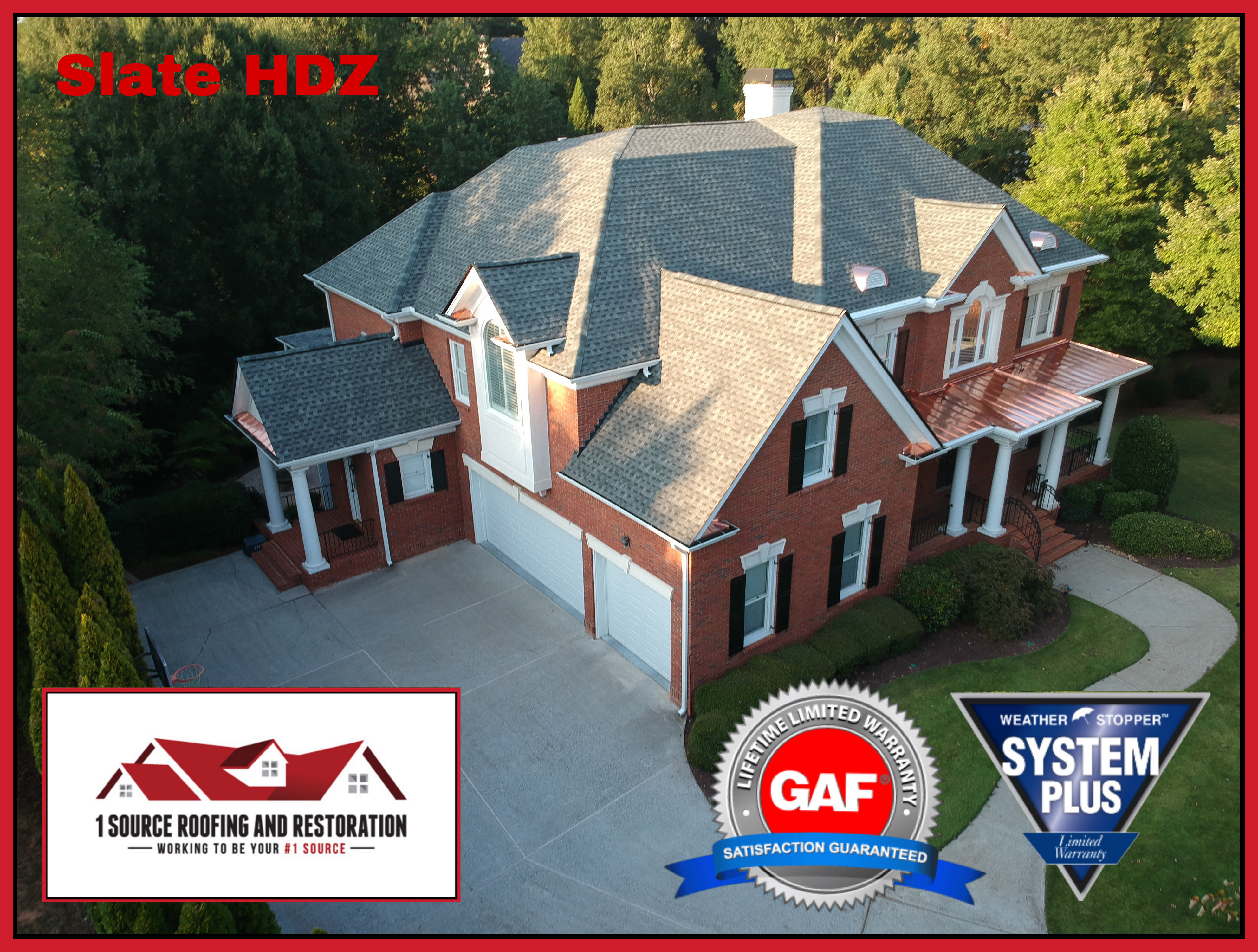
Certified by Industry-Leading Manufacturers
Manufacturer Technical Bulletins
- Proper Shingle Storage (GAF)
- Shingle Lot Numbers Explained (GAF)
Why Proper Shingle Storage Prevents Costly Problems
Asphalt shingles arrive at a job site as a manufactured product with specific tolerances for temperature, moisture, and mechanical stress. They are not lumber or steel — they are composite materials with thermal adhesive compounds, fiberglass reinforcement, and ceramic granule surfaces that respond to environmental conditions in ways that can compromise their performance before a single nail is driven. How shingles are stored between delivery and installation is as consequential to the finished roof as the installation technique itself.
GAF's technical documentation on proper shingle storage addresses this directly: shingles must be stored flat, in a dry location, protected from extreme temperatures and direct sun exposure. These are not advisory suggestions. They are manufacturer requirements that affect both product performance and warranty eligibility. A shingle that was improperly stored may install without any visible defect on day one but develop buckling, cracking, or adhesive failure within the first year — and the root cause will trace back to storage conditions rather than an installation error.
For homeowners investing in a premium roof on a high-value Atlanta home, the difference between a contractor who manages material storage correctly and one who leaves bundles on a hot driveway for two days is the difference between a roof that performs for 30 years and one that develops cosmetic and functional problems in the first season. 1 Source Roofing manages shingle storage on every project with the same attention we give to the installation itself.
The Stakes for High-End Residential Projects
On a 3,000-square-foot luxury home in Buckhead or Alpharetta, a full roof replacement involves 30 to 40 squares of shingle material — roughly 90 to 120 bundles weighing between 2,700 and 3,600 pounds total. Managing this volume of material requires planning. Where will the bundles be staged? How long will they sit before installation? What are the temperature conditions during that period? These are logistical questions that directly affect material quality, and they are questions that experienced contractors answer before the delivery truck arrives.
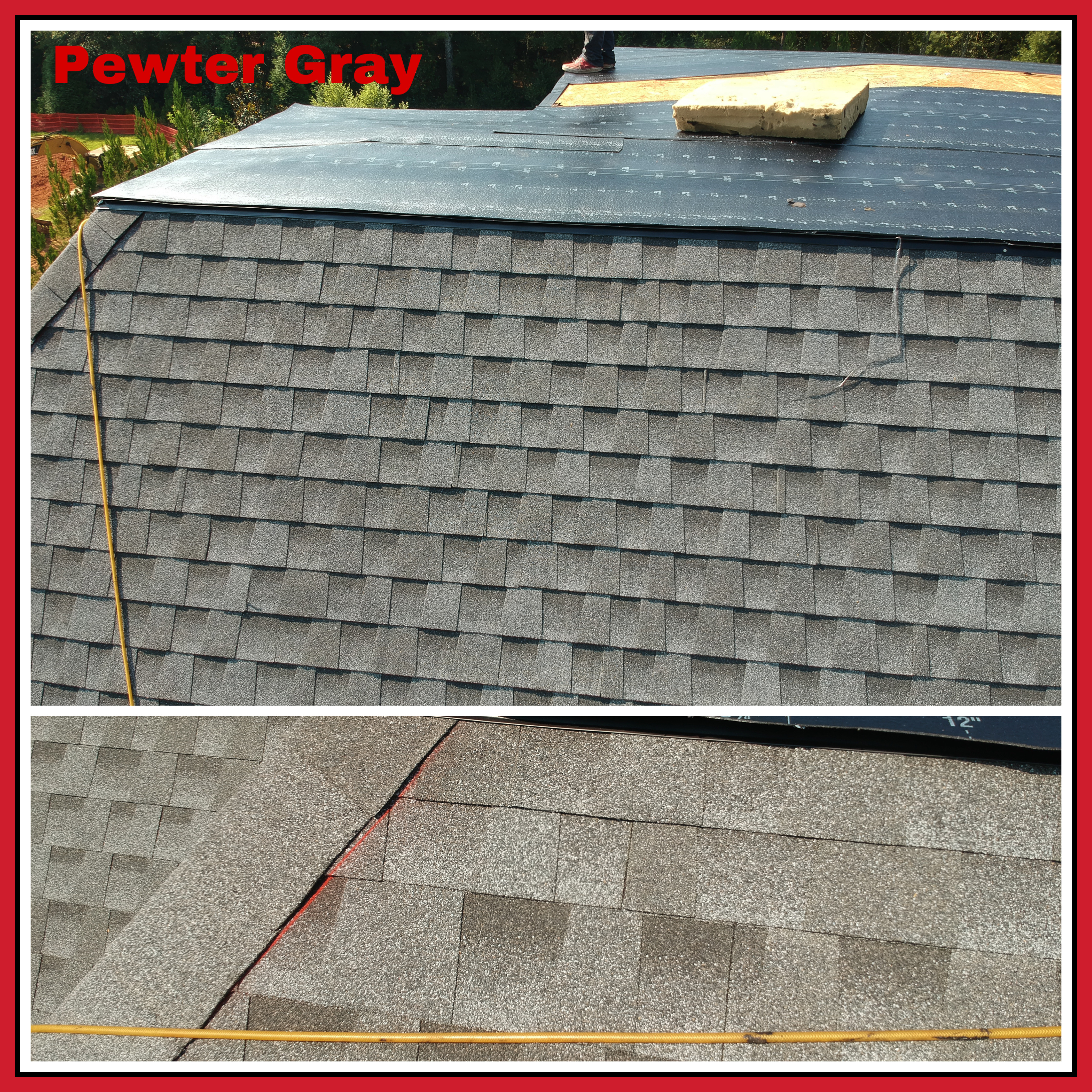
Shingle Storage Best Practices from GAF and CertainTeed
Flat Storage — Never Stand Bundles Upright
Shingle bundles must be stored flat — horizontally, with the weight distributed evenly across the bundle's full surface area. Standing bundles upright concentrates the weight of the bundle on one edge, deforming the shingles along that edge over time. The deformation may be subtle — a slight curve or bow — but it will be visible on the installed roof as a waviness or irregularity in the shingle surface that cannot be corrected after installation.
GAF's proper shingle storage guidelines specifically prohibit standing bundles on end or on edge. The fiberglass mat inside the shingle is designed to resist forces applied across its flat plane, not forces applied at its edge. A bundle stood on edge for even 24 hours in warm weather can develop a set — a permanent curve in the shingles at the bottom of the bundle — that will produce visible distortion on the roof.
Stacking Height Limits
The weight of stacked bundles creates compression on the bundles at the bottom of the stack. Each bundle of architectural shingles weighs approximately 65 to 80 pounds. A stack of 15 bundles — not unusual on a large delivery — puts over 1,000 pounds of compression on the bottom bundle. This compression can deform the shingles, flatten the dimensional profile of architectural shingles, and activate the adhesive strip prematurely if the stack is in a warm location.
Manufacturer guidelines recommend limiting stack height to approximately 4 feet — roughly 12 to 15 bundles, depending on the product. In warm weather, lower stacking limits are advisable because the asphalt compound softens at elevated temperatures, making the shingles more susceptible to compression deformation. 1 Source Roofing stages materials in multiple smaller stacks rather than a single tall stack, distributing the material across the staging area to stay within manufacturer limits.
Temperature Management
Shingle storage temperature must be managed at both extremes. In cold weather, shingles stored below freezing become rigid and brittle. Handling cold shingles roughly — dropping bundles, bending individual shingles, or driving nails through brittle material — can crack the asphalt coating and fracture the fiberglass mat. Allow cold-stored shingles to warm above 40 degrees Fahrenheit before carrying them to the roof and installing. For a full discussion of cold-weather considerations, see our Cold Weather Installation guide.
In hot weather — common in Atlanta from May through September — shingles stored in direct sun can reach internal bundle temperatures exceeding 150 degrees. At these temperatures, the thermal seal strip activates inside the bundle, bonding adjacent shingles together. Separating heat-bonded shingles tears the adhesive strip, damages the granule surface of the shingle below, and can leave adhesive residue on the exposed shingle face. Shingles bonded together in the bundle are effectively ruined.
The solution is straightforward: stage shingles in shade during hot weather. If no shade is available, cover stacks with light-colored tarps to reflect solar radiation. Do not stage bundles on dark asphalt driveways in direct sun — the combination of conducted heat from the pavement and radiated heat from the sun can push bundle temperatures well past the adhesive activation threshold within hours.
Moisture Protection
Shingle bundles must be kept dry. The kraft paper packaging that wraps each bundle is not waterproof — it is a handling wrapper that will fail if saturated. Moisture that penetrates the packaging can be absorbed by the fiberglass mat, the asphalt backing, and the mineral filler on the underside of the shingle. Shingles installed with absorbed moisture will release that moisture as the roof heats in the sun, and the trapped moisture can cause blistering — small raised bubbles on the shingle surface where water vapor has expanded beneath the granule layer.
Store bundles off bare ground using pallets, plywood, or lumber dunnage. If outdoor storage is necessary, cover bundles with weatherproof tarps — not just plastic sheeting that can trap condensation. Ensure the tarps allow airflow to prevent condensation from forming between the tarp and the bundle surface.
Shingle Lot Numbers and Color Consistency
Every bundle of asphalt shingles carries a lot number — a production identifier printed on the packaging that identifies the specific manufacturing run that produced that batch. The lot number is not a quality grade or a product variation code. It is a manufacturing timestamp that tells you when and where that specific batch of shingles was made. And it matters more than most homeowners realize, because shingles from different lot numbers — even in the same color and product line — can look noticeably different on a finished roof.
Why Lot Numbers Affect Color
Asphalt shingle color is produced by the blend of ceramic-coated mineral granules applied to the shingle surface during manufacturing. Each color — "Weathered Wood," "Charcoal," "Barkwood," "Shakewood" — is a specific recipe of granule types, sizes, and colors blended in specific ratios. But the raw granules used in production are themselves natural mineral products with inherent variation. The feldspar, basalt, and other minerals used to produce granules vary slightly from quarry batch to quarry batch in color, reflectance, and texture.
A production run using one batch of raw granules will produce shingles with a specific color character. The next production run, using a different batch of granules from the same quarry, may produce shingles that are nominally the same color but differ subtly in hue, brightness, or granule distribution pattern. The difference may be imperceptible when comparing two individual shingles side by side. But when one lot number is installed on one half of a roof slope and a different lot number is installed on the other half, the lot-line transition can be visible — a subtle but distinct color shift that runs in a horizontal line across the slope.
GAF Shingle Lot Numbers Explained
GAF's documentation on lot numbers acknowledges the reality of lot-to-lot variation and provides specific guidance for contractors. GAF recommends that all shingles for a project be ordered from the same lot whenever possible. When the project requires more material than a single lot can supply, GAF advises blending bundles from multiple lots across the roof surface — pulling alternating bundles from each lot so the variation is distributed evenly rather than concentrated in one visible area.
The lot number is printed on the bundle wrapper in a specific format that includes the manufacturing plant identifier, the production date, and the production sequence. 1 Source Roofing checks lot numbers on delivery before staging materials. If a delivery includes mixed lots, we note the lot breakdown and plan the installation to blend the lots rather than segregating them by roof area.
How 1 Source Manages Lot Consistency
For every residential project, 1 Source Roofing communicates with our material distributors before ordering to confirm lot availability. We request single-lot material for the full project quantity whenever supply allows. When a single lot cannot cover the project — which occurs on large homes or when a color is in high demand — we order from as few lots as possible and instruct our crews to blend the lots during installation.
The blending technique is straightforward: rather than loading all bundles from Lot A onto one slope and all bundles from Lot B onto another slope, crews load bundles alternately — one from Lot A, one from Lot B — so that shingles from both lots are distributed across every slope. This makes any lot-to-lot color variation imperceptible because the variation is randomized across the surface rather than concentrated at a visible transition line.
On luxury homes where color precision is paramount — homes in Buckhead, Sandy Springs, and Alpharetta where the roof is a significant element of the property's curb appeal — lot management is not a minor detail. It is a quality measure that distinguishes a professional installation from one that will leave the homeowner looking at a color line across their roof for the next 30 years.
Expect More From Your Roofing Contractor
1 Source Roofing manages material storage, lot consistency, and installation quality on every project. Inspections are always free.
Schedule Your Free InspectionShingle Buckling: Causes, Prevention, and What to Do
Shingle buckling is a condition where installed shingles develop visible ridges, waves, or raised areas that were not present at the time of installation. The shingles may look flat and properly aligned on day one, then gradually develop distortions over the first weeks or months. Buckling is one of the most common post-installation complaints in residential roofing, and it has multiple potential causes — most of which trace back to conditions before or during installation, not to the shingle product itself.
Moisture-Related Buckling
The most common cause of shingle buckling is moisture in the roof system beneath the shingles. This moisture can originate from several sources. If the roof deck was wet or damp when the underlayment and shingles were installed — from rain during the installation process, morning dew that was not allowed to dry, or moisture that had accumulated in the old roof system and was trapped beneath the new installation — the deck will release that moisture as it heats in the sun. The moisture vapor rises through the shingle, creating pressure that lifts and distorts the shingle surface.
Inadequate attic ventilation compounds moisture-related buckling. A roof without sufficient intake ventilation (at the soffits) and exhaust ventilation (at the ridge) traps moisture-laden air in the attic space. This moisture condenses on the underside of the roof deck, saturating the sheathing from below. The saturated sheathing expands unevenly, creating ridges and waves in the deck surface that telegraph through the shingles above.
CertainTeed's technical bulletin on asphalt shingle buckling identifies inadequate ventilation as the most frequent contributing factor in buckling complaints. The solution is proper attic ventilation balanced between intake and exhaust — a subject that 1 Source Roofing evaluates on every inspection and addresses during every roof replacement.
Storage-Related Buckling
Shingles that absorbed moisture during storage — from rain-soaked packaging, ground contact, or high-humidity storage conditions — carry that moisture onto the roof. Even if the shingle surface appears dry, the fiberglass mat and asphalt backing may have absorbed moisture that will not be apparent until the shingle heats on the roof and the moisture attempts to escape. The escaping moisture creates the same buckling and blistering that deck-moisture causes, but the source is the shingle itself rather than the deck beneath.
Shingles that were deformed during storage — from excessive stacking weight, standing bundles on edge, or bundles that slid off a stack and were bent — can also buckle after installation. A shingle with a permanent set or curve will resist lying flat on the deck surface, and the resulting gap between the shingle and the deck creates a hump that may or may not flatten over time as the shingle warms and the adhesive strip activates.
Underlayment-Related Buckling
Wrinkled or bunched underlayment beneath the shingles creates ridges that the shingle conforms to, producing visible lines on the finished roof surface. This is a straightforward installation defect — the underlayment should be rolled out flat and pulled tight before being fastened, with no wrinkles, folds, or overlapping bumps. But on a hot day, synthetic underlayment can expand and buckle between fastener points, and if shingles are installed over the wrinkled underlayment, the wrinkles are permanently captured beneath the shingle layer.
1 Source Roofing inspects the underlayment surface before beginning shingle installation. Any wrinkles, bumps, or raised seams are addressed before the first course of shingles goes down. This takes a few extra minutes per slope and prevents a problem that would otherwise be visible on the finished roof for its entire service life.
Manufacturer Documentation on Storage and Lot Management
The following manufacturer references inform the storage and lot management practices that 1 Source Roofing follows on every project. These are not proprietary guidelines — they are published technical documents that any homeowner can access to understand the standards their contractor should be meeting.
GAF Proper Shingle Storage
GAF's storage guidelines address temperature limits, stacking height, moisture protection, and the requirement for flat horizontal storage. The document specifies that shingles should be stored in a cool, dry location and that bundles stored in extreme cold should be allowed to warm before installation. It also addresses the risk of adhesive strip activation in high-temperature storage conditions and the resulting damage when bonded shingles are separated.
GAF Shingle Lot Numbers Explained
GAF's lot number documentation explains the lot numbering system, acknowledges the potential for lot-to-lot color variation, and recommends single-lot ordering or systematic lot blending when multiple lots are necessary. The document provides the specific format of GAF lot numbers so that contractors and homeowners can verify lot consistency at the time of delivery.
CertainTeed Asphalt Shingle Buckling
CertainTeed's technical bulletin on shingle buckling is one of the most detailed manufacturer documents on the subject. It identifies and explains each cause of buckling — moisture, ventilation, storage damage, underlayment defects, and deck movement — and provides diagnostic guidance for determining which cause is responsible in a specific case. The bulletin is a valuable reference for homeowners who are experiencing buckling on a recently installed roof, because it establishes the manufacturer's position on causation and responsibility.
For a comprehensive overview of all our technical standards, visit the Roofing Technical Standards hub page.
Frequently Asked Questions About Shingle Storage and Lot Numbers
Answers to the questions homeowners ask most about material handling and color consistency
Why does improper shingle storage cause problems?
Asphalt shingles are temperature-sensitive products. Cold storage makes them brittle and prone to cracking during handling. Excessive heat activates the self-seal adhesive strip inside the bundle, bonding shingles together. Moisture exposure can cause the packaging to fail and the shingle backing to absorb water. Improper stacking can deform shingles under weight. Any of these conditions can produce defects that appear after installation — buckling, cracking, or color variation.
What are shingle lot numbers and why do they matter?
A shingle lot number identifies the specific manufacturing run that produced a batch of shingles. Shingles from the same lot number were produced on the same manufacturing line, at the same time, using the same raw material batch — meaning they will have consistent color and appearance. Shingles from different lot numbers, even in the same color name, can show visible color variation because the granule blend ratios and asphalt coating may differ slightly between production runs.
How should shingles be stored before installation?
Store shingle bundles flat on a clean, dry surface — ideally indoors or in a covered area. Stack no more than 4 feet high to prevent compression deformation. Keep bundles off bare ground using pallets or plywood. Protect from direct sun exposure in summer and allow cold-stored shingles to warm above 40 degrees before installation. Store in original packaging until ready to use.
What causes shingle buckling after installation?
Shingle buckling has several potential causes: improper storage that allowed moisture absorption before installation, inadequate roof deck ventilation that traps moisture beneath the shingles, installing shingles over a wet or damp roof deck, wrinkled or bunched underlayment beneath the shingles, or shingles that were deformed by excessive stacking weight during storage. CertainTeed's technical bulletin on asphalt shingle buckling addresses each of these causes in detail.
How does 1 Source Roofing manage lot number consistency?
1 Source Roofing orders all shingle material for each project from a single lot whenever supply allows. We verify lot numbers on delivery before staging materials, and we communicate with our distributors to confirm lot availability. When a single lot cannot cover the entire project, we blend bundles from different lots across the roof surface to minimize visible lot-line transitions rather than installing one lot on one slope and a different lot on another. Call (404) 277-1377 to discuss your project.
Technical Bulletins from GAF and CertainTeed
The information on this page is backed by official manufacturer technical bulletins. These documents provide the installation specifications, warranty requirements, and best practices that certified contractors like 1 Source Roofing follow on every project.