
Fire & Smoke Damage Roof Repair in Atlanta, GA
Professional assessment, documentation, and restoration after fire or smoke damage to your roof. GAF Certified. Call (404) 277-1377.
Certified by Industry-Leading Manufacturers
A Steady Hand Through a Difficult Process
If you are here because fire or smoke has damaged your home's roof, the most important thing we can tell you is this: a professional assessment is your next step. Before any repair, before any claim, before any contractor begins work — you need a qualified structural evaluation to determine what is safe and what needs immediate attention.
1 Source Roofing provides that assessment for Atlanta homeowners, and we guide you through every step of the restoration process from that point forward. We have navigated fire damage restorations for families across Gwinnett, Fulton, DeKalb, and Cobb counties. We understand the insurance process, the structural evaluation requirements, and the documentation standards that protect your claim. Our role is to be a knowledgeable, steady presence through a process that most homeowners have never faced before.
We work at the pace that is right for your family and your situation. There is no pressure, no urgency tactics, and no shortcuts. Fire damage restoration done correctly takes time — and the quality of the outcome depends on the thoroughness of every step from the first assessment forward.
Safety First — What to Do Before Calling a Contractor
The sequence of steps following a roof fire matters. Taking actions out of order — including calling a contractor before certain clearances are obtained — can create complications with your insurance claim and, more critically, can put you and your family at risk.
Do not enter a fire-damaged structure until the fire marshal has cleared the building as safe for re-entry. This is not a precaution that can be waived. The structural integrity of fire-damaged roofs can be compromised in ways that are not visible from outside — charred rafters, weakened sheathing, melted fasteners, and heat-softened load-bearing connections. What looks like surface damage from street level can conceal far more serious structural compromise above. Fire marshals are trained to assess these conditions; contractors are not substitutes for that clearance.
Your insurer will require a fire marshal report before beginning the claims process. This report documents the cause, origin, and initial assessment of damage — and it is the foundation of your insurance claim. Do not skip or delay this step.
Once the structure is cleared, document everything you can see from safe positions with your phone camera. Photograph the exterior damage, any visible interior exposure, and the surrounding areas. This documentation record, combined with the contractor's comprehensive assessment, strengthens your claim. Do not remove or alter any materials before the insurance adjuster has conducted their inspection — moving debris or beginning cleanup before adjuster inspection can void portions of your claim coverage.
When you are ready to bring in a contractor for assessment, call 1 Source at (404) 277-1377. We coordinate our timeline with your insurance adjuster's schedule and work within the process — not around it.
Understanding Fire and Smoke Damage to Roofing Systems
Fire damage to a roofing system is not a single category — it encompasses several distinct types of damage that require different assessment approaches and restoration methods. Many homeowners, and unfortunately some contractors, focus only on the visible burn zone. A thorough fire damage assessment must extend beyond the char line in every direction.
Direct combustion damage is the most visible: actual burning of roofing materials, sheathing, and decking. When wood structural members ignite, the char depth determines whether a member must be replaced or can be treated and retained. This assessment requires hands-on inspection of affected framing — it cannot be performed reliably from ground level or from photographs alone.
Heat damage affects a significantly larger area than the burn zone. Shingles and underlayment in proximity to the fire source are damaged by radiant and convective heat even without direct flame contact. These failures are among the most commonly missed by inspectors who lack roofing-specific training. Asphalt shingles that appear intact from a distance may have lost their granule adhesion, their waterproofing properties, and their structural integrity. They will fail within months if not replaced as part of the restoration scope.
Smoke damage presents the greatest scope challenge. Smoke is carried by convection and infiltrates insulation, framing cavities, and attic spaces well beyond the burn area. Smoke-affected wood framing must be cleaned and treated — untreated smoke-damaged framing continues to off-gas and can cause odor and air quality issues for years after the visible damage is repaired. Smoke damage that extends beyond the burn zone is frequently a point of dispute in insurance claims; 1 Source documents and photographs the full smoke-affected area as part of every fire damage assessment.
Homeowners who stop their scope assessment at the visible damage area often discover secondary failures months later — failures that were present but undocumented at the time of the claim, and therefore not covered under the insurance settlement. Comprehensive documentation at the time of assessment is the only protection against this outcome.
The Fire Damage Restoration Process
1 Source follows a structured eight-step process for fire damage restoration. Each step has a defined purpose and a defined sequence — steps cannot be skipped or reordered without affecting the outcome. We explain the process to every client at first contact so there are no surprises about what comes next.
- Safety Clearance and Initial Contact Fire marshal clearance must be in hand before any contractor accesses the structure. When you call 1 Source, we confirm the clearance status and coordinate our assessment schedule with your adjuster timeline. We do not push for immediate access — we proceed in the right order.
- Structural Safety Assessment Before any repair work begins, every fire-affected section is evaluated for load-bearing integrity. Damaged rafters, weakened decking, and compromised sheathing are identified and documented. We do not begin roofing work on a structurally compromised deck — doing so would produce a result that is unsafe and non-compliant with Georgia building code.
- Comprehensive Damage Documentation Photos, measurements, and material specifications covering the full affected area — including the smoke-affected zone beyond the visible burn line. This documentation package is the foundation of your insurance claim. It must be thorough because it will be reviewed by your adjuster and, if necessary, by a public adjuster or appraiser.
- Scope Development and Insurance Submission A written scope of work is developed, aligned with your insurer's requirements and current Georgia building code. 1 Source attends the adjuster meeting with this documentation. Our presence at the adjuster meeting helps ensure that smoke-affected areas and heat-damaged zones beyond the direct burn line are included in the approved scope.
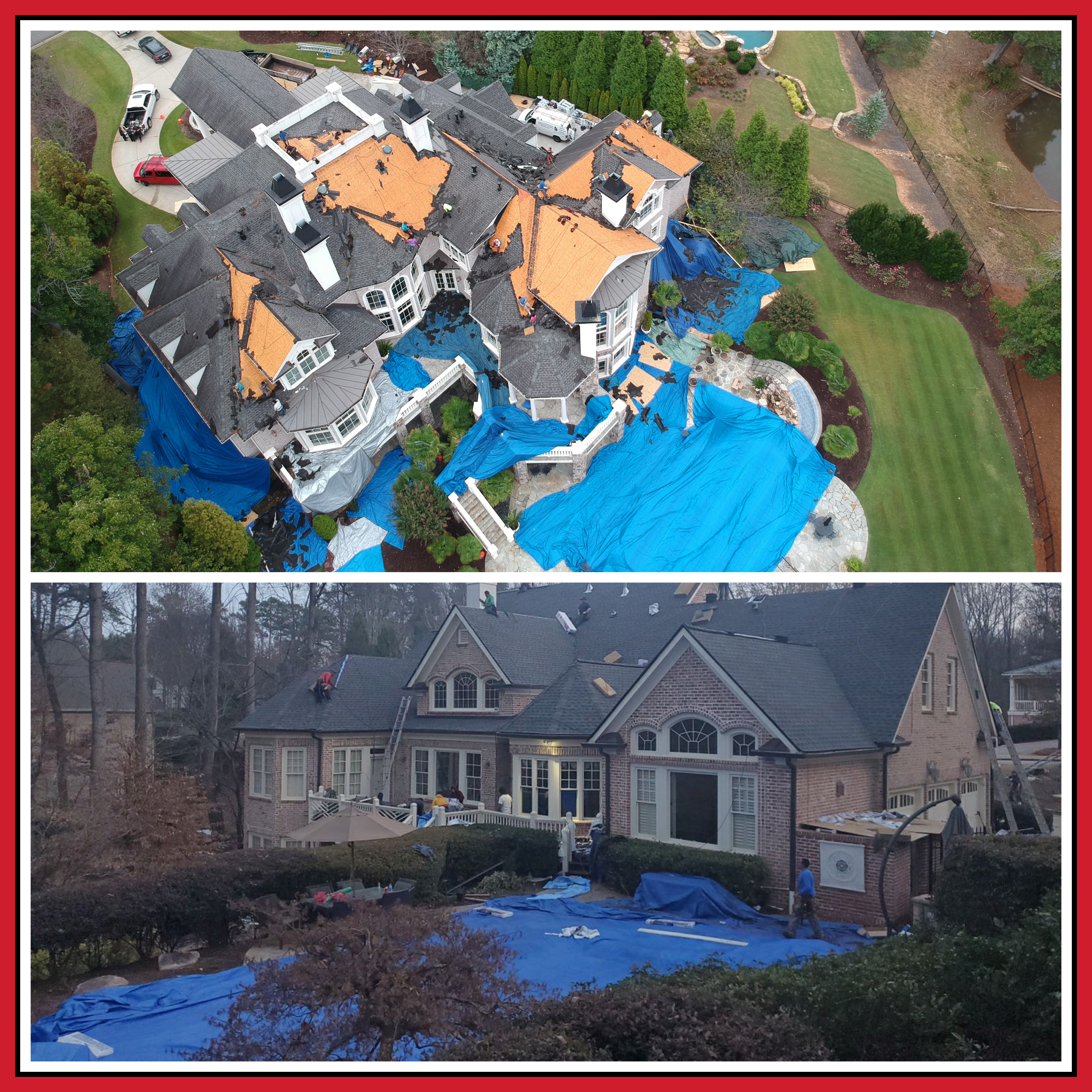
- Temporary Weather Protection Once the assessment is complete and documented, tarping and temporary closures protect the interior from weather events while the insurance claim is processed. The gap between assessment and claim approval — which may span several weeks — must be bridged with adequate temporary protection to prevent water intrusion from compounding the damage.
- Structural Repair Damaged rafters, sheathing, and decking are repaired or replaced to current Georgia building code standards. Structural repairs are permitted and inspected — permits are pulled, work is documented, and the inspection record becomes part of the completed project file. This documentation is important for your home's resale history.
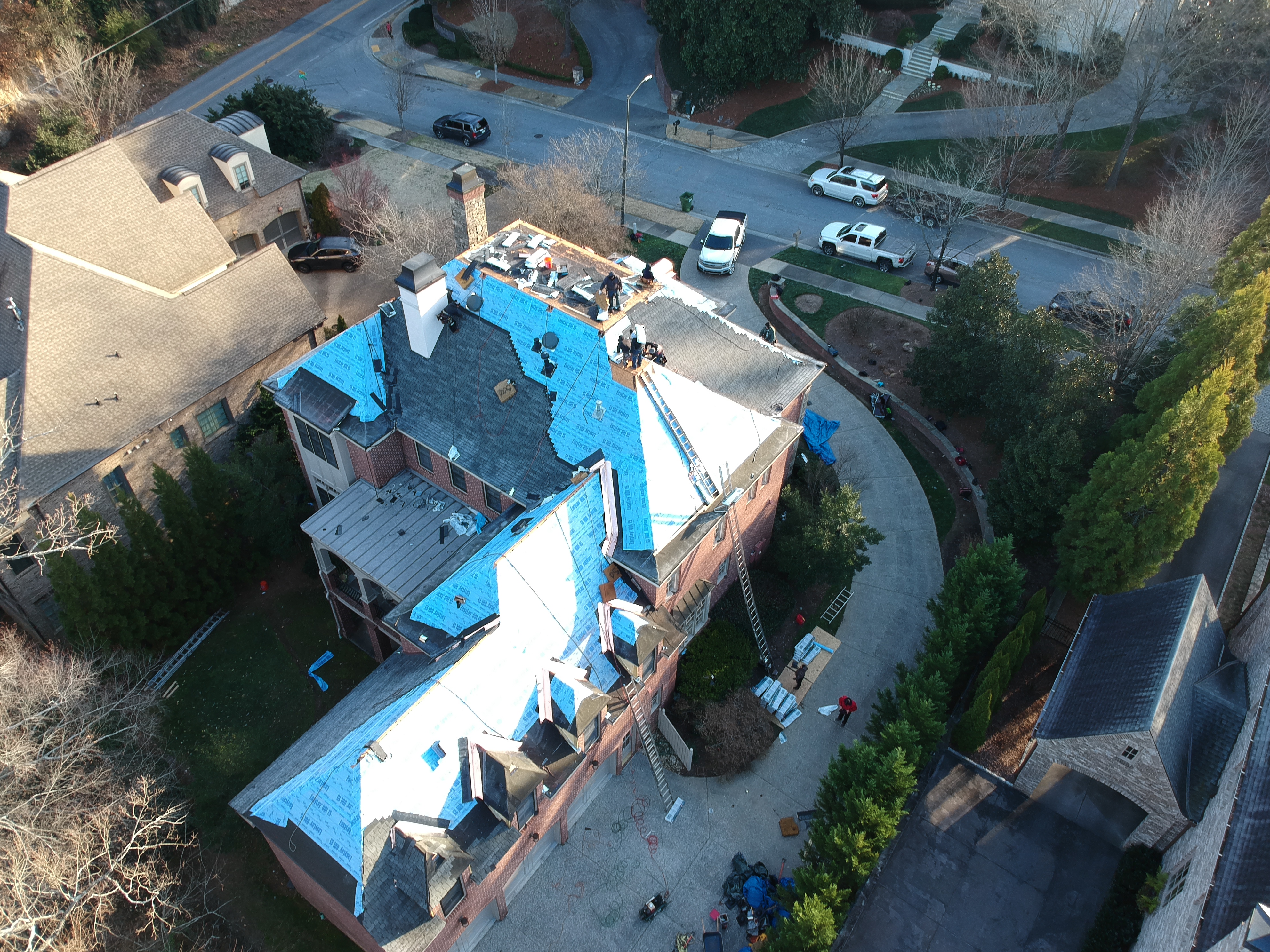
- Roofing System Restoration New underlayment, flashing, shingles, and ridge cap installed per manufacturer specification. As a GAF Certified, CertainTeed Certified Preferred contractor, 1 Source installs restoration materials in full compliance with manufacturer requirements — which is required for warranty validity on the restored sections.
- Smoke Remediation Coordination Smoke treatment of affected attic framing and insulation is a specialized process. 1 Source coordinates with smoke remediation specialists for interior work beyond our roofing scope, ensuring that both the structural restoration and the smoke treatment are completed in the correct sequence without gaps in the overall project.
.JPG)
Ready to Begin the Assessment Process?
1 Source guides Atlanta homeowners through fire damage restoration from first call to completion. We work at your pace and coordinate with your insurance timeline.
Call (404) 277-1377Insurance Claims for Fire Damage
Fire damage claims are among the most complex insurance processes a homeowner will face. Georgia homeowner's policies cover fire damage as a named peril, but the documentation requirements are extensive and scope disputes — particularly around smoke damage that extends beyond the visible burn zone — are common.
The key variables in a fire damage claim are: the cause and origin determination from the fire marshal report, the scope of structural damage versus cosmetic damage, the extent of the smoke-affected area, and whether the restoration is treated as a repair or a full replacement. Each of these variables affects the settlement amount, and each requires clear documentation to support the homeowner's position.
We have navigated this process for Atlanta homeowners repeatedly. The most important thing you can do is ensure your contractor documents the full extent of damage — not just what burned visibly — and attends your adjuster meeting to present that documentation in person. A contractor who sends a written estimate without attending the adjuster meeting leaves the scope dispute to be resolved by the adjuster alone.
1 Source attends every adjuster meeting for fire damage claims. We bring the full documentation package — photos, measurements, and written scope — and we present the case for the complete restoration scope, including smoke-affected areas that adjusters may not independently include.
See our complete guide to the roofing insurance claim process: Insurance Claims Assistance. Fire claims require the most thorough documentation of any claim type, and our insurance claims page walks through the full process step by step.
It is also important to note that fire suppression activities — water from fire hoses and sprinkler systems — can cause significant Water Damage Restoration needs that must be documented alongside the fire damage scope. Fire suppression water infiltrates wall cavities, insulation, and structural framing; failing to document and address that damage as part of the overall restoration scope can result in mold and structural issues that surface months after the roof is repaired.
Materials and Standards for Fire Damage Restoration
Post-fire restoration is held to the same standard as new construction — and in some respects, to a higher one. Georgia building code requires permits for structural roof repairs. Those permits trigger inspections by the local building authority, and work must meet current code requirements, which may exceed the standards to which the original roof was installed.
This code compliance dimension of fire restoration is important for homeowners to understand. If your home was built 20 or 30 years ago, the original roof was installed to the code standards of that era. Post-fire restoration must meet current Georgia building code — which may require upgraded fastening patterns, upgraded underlayment specifications, or ice-and-water shield in locations that were not originally required. These upgrades are typically covered by insurance as part of the restoration scope, but they must be properly documented and included in the scope development.
1 Source's certified status with GAF, CertainTeed ensures that restored sections use manufacturer-approved materials and installation methods — a requirement for warranty validity on the restored sections. When insurance-covered work is performed to manufacturer specification, the repaired sections carry the same warranty protection as new installations, which protects the long-term value of the restoration investment.
- All permits pulled and inspections scheduled per Gwinnett County and Atlanta-area building requirements
- GAF, CertainTeed certified installation on all restored sections
- Current Georgia building code compliance on all structural repairs
- Written documentation package provided to homeowner upon project completion
Fire Damage Restoration Across Metro Atlanta
1 Source Roofing serves homeowners across the greater Atlanta metro area for fire and smoke damage restoration. Our team is based in Lawrenceville and serves communities throughout Gwinnett, Fulton, DeKalb, Cobb, Cherokee, Forsyth, and Hall counties.
We work on all residential property types — from traditional homes to estate properties — and our crew has experience with the full range of roofing systems common in Atlanta's luxury residential neighborhoods, including architectural shingles, metal roofing, slate, and tile.
Services Connected to Fire Damage Restoration
Fire damage rarely occurs in isolation. The restoration process typically involves coordination across several related service categories. 1 Source manages the roofing and structural scope and coordinates with specialists for the work beyond our scope.
What Our Customers Say
Fire damage restoration is a process that tests every aspect of a contractor's capability — technical knowledge, insurance experience, communication, and patience. These are the experiences Atlanta homeowners have shared about working with 1 Source through that process.
"1 Source handled our fire damage claim from inspection through completion. Their documentation was thorough and the adjuster process was much less stressful because they attended with us. They identified the full scope of smoke damage in our attic that we never would have known to include."
"Professional and patient throughout a very difficult process. They identified smoke damage in our attic that the initial adjuster missed. That additional scope was significant — it would have been a serious problem if we had closed the claim without it being addressed."
Frequently Asked Questions About Fire Damage Roof Repair
Answers to the questions Atlanta homeowners ask most when navigating fire and smoke damage restoration
Is it safe to stay in my home after fire damage to the roof?
Only if the fire marshal or building official has cleared the structure for occupancy. Even small roof fires can compromise structural members in ways that are not visible from inside the home. The roof deck, rafters, and nearby load-bearing elements must be assessed by a qualified inspector before the home is considered safe for occupancy. Heat weakens wood framing even when no charring is visible; the affected area extends beyond what burned directly. Do not re-enter any area with visible structural damage, ceiling sag, or floor deflection without professional clearance. 1 Source can conduct a structural assessment once the building is cleared for contractor access — typically the day after the fire marshal clears the structure.
What does fire and smoke damage restoration involve?
Complete restoration involves four phases: structural safety assessment, comprehensive damage documentation, repair of structural elements (rafters, decking, sheathing), and restoration of the roofing system (underlayment, flashing, shingles). Smoke damage often requires additional treatment of attic framing and insulation that the fire did not directly reach — smoke penetrates much further than visible burn lines, and untreated smoke-affected framing continues to off-gas and cause odor issues for years. A complete restoration addresses all four phases, not just the visible burn zone. Projects that scope only the visibly burned area frequently result in secondary failures discovered months later, at which point the insurance claim is closed and coverage is no longer available.
Will my homeowner's insurance cover fire damage roof repair?
Yes — fire damage is a covered peril in virtually all standard homeowner's policies in Georgia. The process involves filing with your insurer, an adjuster inspection, scope development, and settlement before work begins. 1 Source attends adjuster meetings for fire damage claims and documents the full scope — including smoke-affected areas that adjusters may not independently include. The most common source of disputes in fire damage claims is the extent of smoke damage beyond the visible burn zone; having a contractor who can document and present that evidence at the adjuster meeting is the most effective way to ensure the full scope is covered. See our complete guide: Insurance Claims Assistance.
How long does fire damage restoration take?
Timelines depend significantly on the insurance claim process, which is outside the contractor's control. The physical restoration work — once insurance scope is approved — typically takes 1–2 weeks for partial roof repairs and 2–4 weeks for complete replacements involving structural repair. Claims processing adds 4–12 weeks depending on claim complexity, the insurer, and whether there are scope disputes that require additional documentation rounds. 1 Source keeps clients informed throughout and coordinates scheduling with your insurance timeline so physical work can begin promptly after the claim settlement is reached. Temporary weather protection (tarping) is deployed during the waiting period to prevent secondary water damage from extending the overall project scope.