
Roofing Contractor in Dunwoody, GA — Serving Georgetown, Dunwoody Village, and Every Wooded Lot
Dense tree canopy. Homes built in the 1970s through 1990s reaching the end of their roofing life. Storm damage risk that's higher than any other DeKalb suburb. Dunwoody deserves a roofer who understands all three.
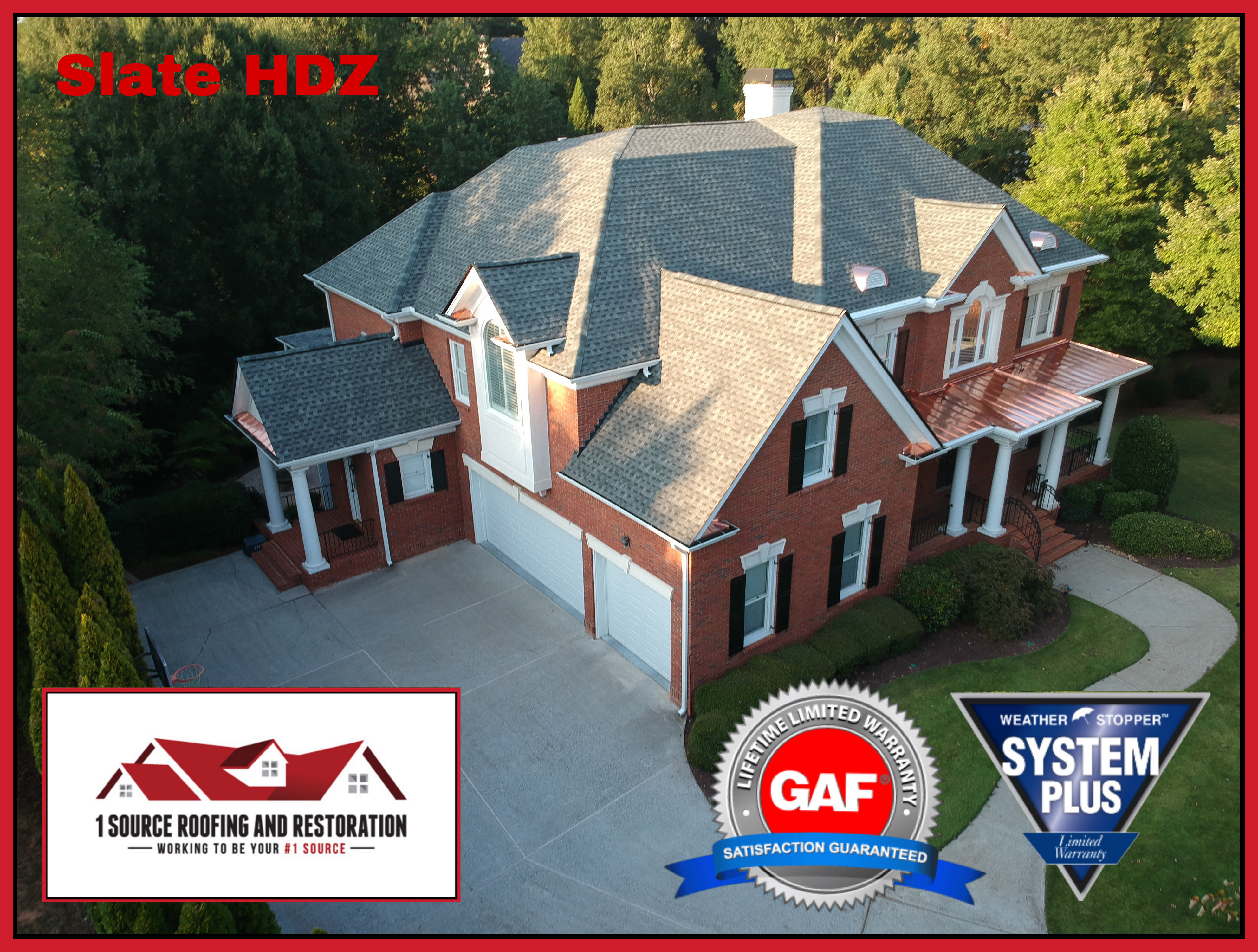
Certified by Industry-Leading Manufacturers
Dunwoody Roofing Services — Full Range for Established Neighborhoods
Dunwoody incorporated in 2008 as one of Georgia's most anticipated new cities — a community with strong civic identity, high homeownership rates, and residents who take their properties seriously. The city's founding narrative as a "city of the future" built around quality-of-life principles is reflected in how Dunwoody homeowners approach major maintenance decisions. This is not a market that cuts corners, and the roofing challenges here are real.
The housing stock is predominantly 1970s through 1990s brick and frame construction on wooded lots averaging 0.3 to 0.5 acres. The mature tree canopy that makes Dunwoody one of the most visually appealing suburbs in the Atlanta metro also makes it one of the highest-risk markets for tree-on-roof damage. Brooks Run Park and the greenway corridors that define Dunwoody's character mean that large hardwood trees — white oaks, sweet gums, tulip poplars — grow within striking distance of residential rooflines throughout the city.
From our base at 283 Swanson Drive in Lawrenceville, we reach Dunwoody in 25-30 minutes via I-285 and GA-400 — faster than most Atlanta-traffic estimates suggest, because we know the route. We maintain emergency response capacity for storm events and carry full tarping equipment on every vehicle.
Our Dunwoody services cover the full range of residential roofing needs, with particular depth in three areas where Dunwoody homeowners most often need help: roof replacement on aging 1970s-1990s homes, storm damage response and insurance documentation, and pre-listing inspections for the active resale market.
- Full roof replacement on 1970s-1990s Dunwoody residential stock
- Emergency tarping and same-day storm damage response
- Insurance scope documentation and adjuster coordination
- Pre-listing roof inspections for home sale preparation
- HOA material pre-approval packages for Georgetown and Dunwoody Village
- Free drone inspection with written condition assessment
- Tree removal coordination following roof-strike events
Dunwoody's Aging Housing Stock — 30-50 Year Old Roofs Throughout
The numbers tell the story clearly. Dunwoody's residential development peaked between 1970 and 1995. A home built in 1980 is now 45 years old. Even if that home received a roof replacement 20 years into its life — which is the typical replacement interval for standard asphalt shingles installed in that era — that replacement roof is now 25 years old, at or past the end of its designed service life.
Standard 3-tab shingles installed in the 1980s and early 1990s had a designed lifespan of 20-25 years under normal conditions. Early architectural shingles, which became common in the late 1980s and early 1990s, were rated at 25-30 years. Many Dunwoody homes have original or once-replaced roofs that are now in the final years of their service life — or past it.
"If your home was built before 1995, your roof has likely passed its designed lifespan — visible exterior damage may not yet be apparent, but underlying deterioration is almost certain."
The complicating factor in Dunwoody is the HOA structure. Georgetown, Dunwoody Village, and many of the established subdivisions have active homeowners associations with material and color approval requirements. Replacing a roof without going through the approval process can result in a violation and required re-replacement at the homeowner's expense. We navigate this process routinely — our HOA submission package includes material samples, color swatches, manufacturer documentation, and a written scope that anticipates the questions most boards ask.
We also see a consistent pattern in Dunwoody of deferred maintenance roofs — homes where owners have been aware of issues but delayed due to cost, HOA process uncertainty, or the hope that the roof would hold through another winter. In our experience, delay rarely saves money. Granule loss accelerates, underlayment degrades, and small leak paths that could have been sealed become structural deck rot that substantially increases replacement cost.
Tree Canopy and Storm Damage — Dunwoody's Highest Risk
Dunwoody has the highest fallen tree risk in the northern suburbs. This is not a casual observation — it follows directly from the combination of factors that define Dunwoody's physical character: dense mature hardwood canopy, residential lot sizes of 0.3-0.5 acres that position large trees close to structures, and the compounding storm damage sequence that roofing professionals see repeatedly in this market.
The compounding sequence works like this: a limb strike — or a full tree fall — creates an initial breach in the roof surface. Wind and rain then drive through the compromised section during the same storm event or subsequent weather. By the time the homeowner recognizes that water is entering the structure, the moisture has often traveled through insulation and reached roof decking. Wet decking begins to degrade within days. What started as a $3,000-5,000 structural repair becomes a $12,000-20,000 replacement if left unaddressed for two to three weeks.
Immediate action matters: A fallen limb is not just a cosmetic problem — it creates a moisture pathway that can cause structural deck rot within weeks if not tarped and repaired immediately. Call (404) 277-1377 for same-day emergency tarping in Dunwoody.
A 2023 wind event produced documented tree-on-roof insurance claims across Georgetown and adjacent Dunwoody subdivisions. The pattern we saw repeatedly was homeowners who waited to call their insurer before taking protective action — a sequence that makes sense emotionally but often produces worse outcomes. The right order is: tarp first, inspect second, file the claim with documentation third. We carry tarping equipment and can be on-site the same day to protect your structure while the insurance process begins.
Beyond active emergencies, Dunwoody's tree canopy creates lower-grade ongoing risks that don't make headlines but accumulate damage over time. Overhanging branches deposit organic debris — leaves, seed pods, bark — that traps moisture against shingle surfaces and accelerates granule loss. Lichen and algae growth is more common in Dunwoody than in more open suburban environments. Moss can begin lifting shingle tabs within a few seasons of establishment. Our drone inspections flag these conditions before they become claims.
Tree Strike? Aging Roof? Selling Your Home?
Whatever your Dunwoody roofing situation, we have the experience and response capacity to handle it. Free drone inspection, written assessment, no pressure.
Call (404) 277-1377 — Free InspectionNeighborhoods We Serve in Dunwoody
Dunwoody's neighborhoods each have their own character, HOA structure, and roofing profile. We know the differences and come prepared for each area's specific requirements.
Georgetown
Large traditional homes on wooded lots with an active HOA and strict material standards. Georgetown sees some of the highest tree-canopy density in Dunwoody — large white oaks and tulip poplars on 0.4-0.5 acre lots. HOA pre-approval required for all roofing replacements. We prepare the full submission package and have worked with the Georgetown board on multiple projects.
Dunwoody Village
The historic core of Dunwoody, with craftsman and traditional homes dating to the 1960s and 1970s. Some of the oldest residential stock in the city. Original or once-replaced roofs are common. The neighborhood's mix of architectural styles requires material flexibility — we match replacement systems to the character of the original structure.
Perimeter Center Adjacent
Established residential neighborhoods bordering the major commercial corridor. Homes in this area are predominantly 1980s construction and benefit from easy access for our crews. Some transition-zone properties face elevated storm exposure from the open commercial areas to the south.
Roberts Drive Corridor
Established 1970s-1980s homes along one of Dunwoody's primary residential arteries. A high-density zone for aging roof replacement — many properties in this corridor are on original roofs or first replacements from the early 2000s. Pre-sale inspections are particularly active here due to strong buyer demand.
Brook Run Area
Neighborhoods adjacent to Brook Run Park and the trail greenway. The park's mature tree canopy extends into neighboring residential lots, creating elevated fallen-limb risk during severe weather events. We prioritize emergency response in this area given the volume of storm-related calls we receive here after significant weather.
Country Club of the South Border
Residential neighborhoods at Dunwoody's northern boundary, adjacent to the Country Club of the South. Homes here tend to be newer and larger than the broader Dunwoody stock. HOA requirements vary by subdivision. Premium architectural shingle systems are the common replacement choice in this area.
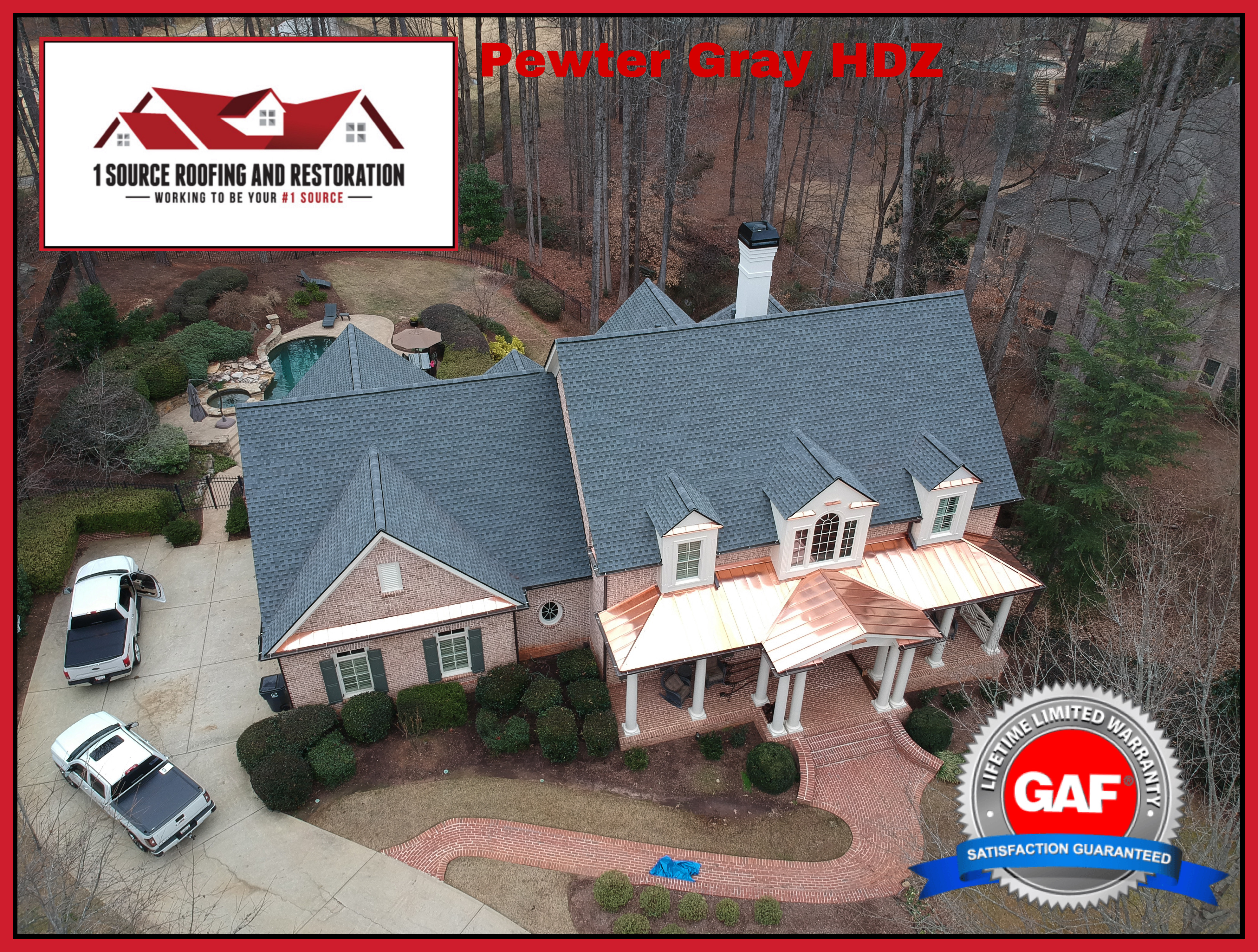
A Recent Project in Georgetown
Wind Event Response — Same-Day Tarp, Full Replacement, Insurance Coordination
After a summer wind event, we responded to a Georgetown homeowner whose roof had been struck by a mature white oak limb. The limb had penetrated the shingle surface and cracked two decking boards in a 6-foot section near the ridge. We tarped the damage the same evening — within four hours of the initial call — preventing what would have been significant water ingress during the overnight rain that followed.
We completed a full insurance scope inspection the following morning, documenting not just the active damage but the underlying condition of the rest of the roof. The original shingles, installed in 1998, had significant granule loss and brittle tab edges consistent with a roof at the end of its service life. We built the insurance scope to reflect both the storm damage and the pre-existing deterioration that the storm had accelerated.
The insurer approved a full roof replacement rather than a patch repair, based on our documentation. We replaced the full roof within the week, including addressing deck damage that had been hidden beneath the old shingles — two additional sections with moisture-compromised OSB that would not have been visible without removing the old materials.
Project duration: 2 days after tarp. Insurance approval received before any work began. Zero out-of-pocket costs to the homeowner beyond their deductible.
Our Services for Dunwoody Homeowners
Roof Replacement
Full replacement on Dunwoody's 1970s-1990s residential stock. HOA pre-approval packages included. GAF Certified systems with manufacturer warranty. Drone documentation before and after.
View Roof ReplacementStorm Damage Restoration
Same-day emergency tarping, full insurance scope documentation, adjuster coordination. Dunwoody's tree canopy risk requires fast response — we prioritize active storm-damage calls in this market.
View Storm Damage RestorationTree Removal Coordination
When a tree or major limb has struck your roof, we coordinate the full response: tarp first, tree removal second, scope and replacement third. We work with licensed tree services and ensure the sequence protects your insurance claim documentation.
View Tree Removal ServicesPre-Sale Roof Inspections for Dunwoody Home Sales
Dunwoody has a distinctive real estate dynamic that makes pre-listing roof inspections more important here than in most Atlanta suburbs. The city's long-time resident demographic — many homeowners who have lived in their Dunwoody homes for 20, 25, or 30 years — is actively transitioning. Empty-nesters are downsizing. Families who moved in during the 1980s and 1990s are selling as their children leave for college. The result is a consistent stream of 1970s-1990s homes entering the market with roofs that are at or near end of life.
Buyers in Dunwoody are sophisticated. The neighborhoods are well-known, the price points are significant, and buyers routinely commission thorough home inspections. A buyer's inspector who finds granule loss, lifted tabs, or soft spots in the decking has an immediate basis for price negotiation — or a request for seller repair before closing. Either outcome is worse for the seller than having discovered and addressed the issue before listing.
"A pre-listing roof inspection from 1Source gives Dunwoody sellers the documentation to price their home with confidence, or address any issues before they become buyer bargaining chips."
Our pre-listing inspection process is designed to give sellers actionable information, not just a condition report. Here is what it includes:
- Drone Inspection with Photography Full drone survey of all roof planes, valleys, flashings, ridge caps, and penetrations. High-resolution photos document current condition across every section of the roof.
- Written Condition Assessment A plain-language report that describes what we found, what it means for the roof's remaining service life, and what a buyer's inspector is likely to flag. No roofing jargon — documentation designed to be shared with realtors and buyers.
- Repair vs. Replace Analysis An honest recommendation: if the roof can be extended with targeted repairs, we say so and price it. If replacement is the better path, we explain why and provide a full replacement quote. Sellers deserve straight talk, not upsells.
- Repair or Replacement Execution If the seller chooses to address issues before listing, we execute the work on a schedule that fits the listing timeline. We can typically complete a Dunwoody roof replacement within 5-7 business days of contract execution.
- Disclosure Documentation Sellers who address roof issues before listing receive a complete documentation package — inspection report, scope of work, warranty information, and contractor credentials — that can be provided to buyers as part of the disclosure process. This documentation actively supports the asking price rather than undermining it.
The pre-sale inspection is free. The repair or replacement work is priced competitively — sellers who are addressing the roof before listing are not in a distressed situation, and we price accordingly. For Dunwoody homeowners who are 6-12 months away from a planned sale, a roof inspection now is one of the best advance investments in the listing process.
Frequently Asked Questions — Dunwoody Roofing
Answers to the questions Dunwoody homeowners ask us most often.
My Dunwoody home was built in the 1980s — should I be worried about my roof?
Yes — homes built in the 1970s-1980s in Dunwoody are now 40-50 years old. Even roofs that were replaced 20-25 years ago are at or past their designed lifespan. We recommend a free drone inspection to assess actual condition. Many Dunwoody homeowners in this age range discover their roofs are further deteriorated than they appear from street level.
A tree limb hit my Dunwoody roof during a storm — what should I do?
Call us immediately. Tree-on-roof situations create active moisture pathways that can cause deck rot and interior water damage within days. We provide same-day emergency tarping for Dunwoody homes, followed by a full insurance scope inspection. Do not wait to file an insurance claim — storm damage claims have time limits and delay can complicate coverage.
Can you handle HOA material approvals in Dunwoody neighborhoods?
Yes. We work with HOA boards in Georgetown, Dunwoody Village, and other Dunwoody communities on material pre-approvals. We prepare a full submission package with shingle samples, color specifications, and manufacturer documentation. Many Dunwoody HOAs have strict color and material requirements, and our experience navigating this process protects homeowners from violations.
I'm selling my Dunwoody home — should I get a roof inspection before listing?
Yes. Pre-listing roof inspections are increasingly important in Dunwoody, where homes in the 1970s-1990s range frequently have deferred maintenance that buyers will discover during their own inspection. A 1Source pre-listing inspection gives you documentation to support your asking price or identify issues to address before they become buyer negotiating points.
Also Serving These Neighboring Communities
We serve the full I-285 perimeter corridor and north metro Atlanta. If you're in a neighboring community, we work there too.