
Best Roofing Materials for Georgia's Climate — Heat, Humidity, and Storm Performance
Georgia throws everything at your roof — triple-digit heat indexes, 50+ inches of rain, severe thunderstorms, and relentless UV exposure. Here's how every major roofing material holds up in our climate zone, and which one makes sense for your home.
Certified by Industry-Leading Manufacturers
Georgia's Climate and What It Demands from Roofing Materials
Metro Atlanta sits in IECC Climate Zone 3A — classified as mixed-humid. That classification sounds mild, but the reality on your roof is anything but. Understanding exactly what Georgia's climate does to roofing materials explains why some products last decades here while others fail prematurely.
Heat and UV Exposure
Atlanta averages 217 sunny or partly sunny days per year. Summer temperatures routinely exceed 95°F, and the heat index pushes well past 105°F during July and August. On a dark-colored roof, surface temperatures can reach 160°F to 170°F on peak summer days. That sustained heat does two things to roofing materials: it accelerates the evaporation of volatile oils in asphalt shingles (the oils that keep shingles flexible), and it causes thermal expansion and contraction that stresses fasteners, sealant strips, and flashing joints. Over a 20-year period, Georgia roofs absorb far more cumulative UV radiation than roofs in northern states, which is why manufacturer warranties sometimes specify different expected lifespans by climate zone.
Rainfall and Humidity
Georgia receives 50 to 55 inches of rain annually — more than Seattle, though delivered in fewer, heavier events rather than steady drizzle. That volume of water tests every aspect of a roofing system: shingle integrity, flashing waterproofing, valley drainage, and gutter capacity. Between rain events, Georgia's high humidity (averaging 70 to 80 percent in summer) creates conditions that promote algae growth, moss colonization, and accelerated organic decay. Any roofing material installed in Georgia must resist moisture from both direct rainfall and ambient humidity.
Severe Storms
Metro Atlanta sits in a corridor that receives 55 to 65 thunderstorm days per year. These storms bring straight-line winds exceeding 60 mph, occasional hail (sometimes golf-ball-sized), and the periodic tornado. The Georgia building code wind speed requirements reflect this reality — most of metro Atlanta falls within a 115 to 120 mph design wind speed zone, meaning roofing materials must be rated and installed to withstand those peak gusts. Hail impact resistance is equally relevant: a standard asphalt shingle carries a Class 1 or Class 2 impact rating, while impact-resistant shingles carry a Class 3 or Class 4 rating. That distinction can mean the difference between surviving a hailstorm and filing an insurance claim.
Temperature Cycling
Georgia's climate isn't just hot — it cycles. Winter lows drop into the 20s and 30s, while summer highs push past 95°F. That 60 to 70 degree temperature swing happens annually, and smaller daily swings of 30 to 40 degrees are routine during spring and fall. Each cycle expands and contracts roofing materials, working fasteners loose, cracking brittle sealants, and stressing adhesive bonds between laminated shingle layers. Materials that perform well in Georgia must be flexible enough to handle this cycling without cracking or delaminating.
Asphalt Shingles in Georgia — The Dominant Choice and Why
More than 90 percent of residential roofs in metro Atlanta are covered with asphalt shingles. That dominance isn't accidental — asphalt shingles hit the sweet spot of cost, availability, aesthetic variety, and performance that Georgia homeowners need. But not all asphalt shingles are equal, and the differences matter in our climate.
Three-Tab vs. Architectural vs. Designer
Three-tab shingles are the flat, single-layer product that dominated residential roofing for decades. They're the cheapest option, but they're also the thinnest, the least wind-resistant (typically rated to 60 mph), and the shortest-lived (15 to 20 years in Georgia). Most metro Atlanta HOAs now prohibit three-tab shingles on new installations, and insurance companies increasingly charge higher premiums for homes with three-tab roofs because of their lower storm resistance.
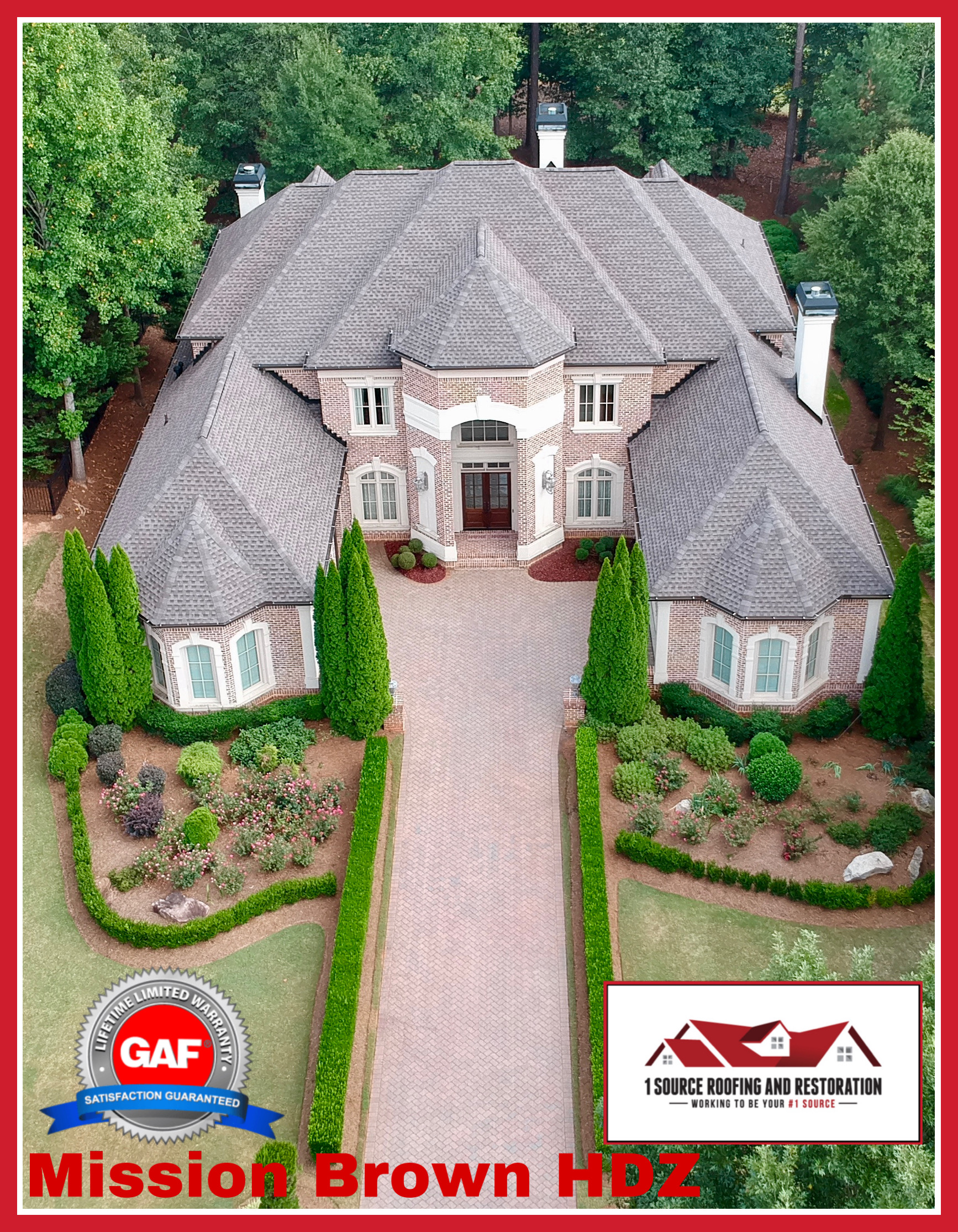
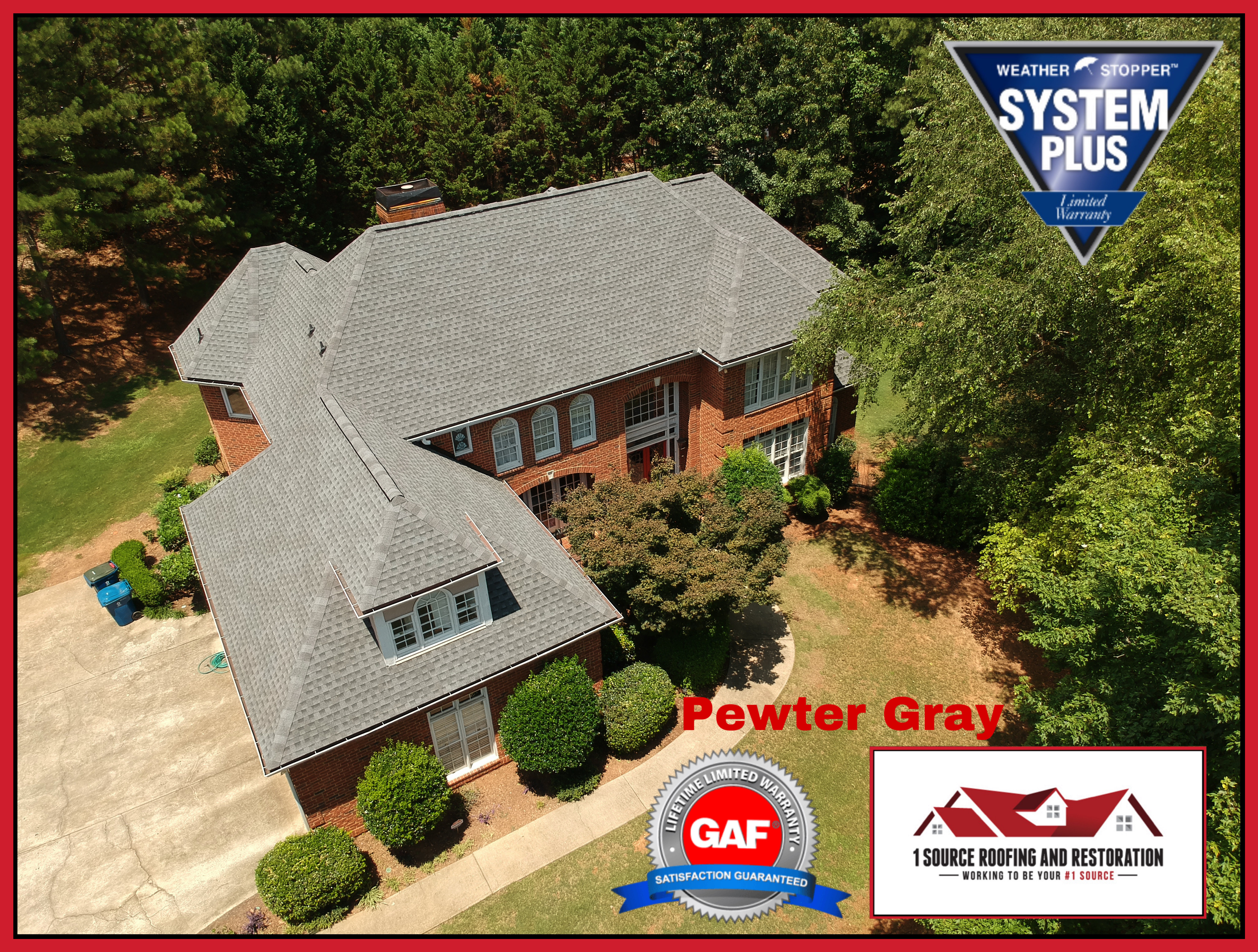
Architectural (dimensional) shingles are the current standard. These are laminated, multi-layer products that create a textured, dimensional appearance on the roof. They're thicker, heavier, and more wind-resistant than three-tab (typically rated to 110-130 mph). In Georgia, expect 25 to 30 years from a quality architectural shingle installed with proper ventilation. The GAF Timberline HDZ and CertainTeed Landmark are the workhorses in this category — both carry excellent algae resistance warranties and strong wind ratings.
Designer (premium) shingles sit at the top of the asphalt line. Products like the GAF Timberline Ultra HDZ, GAF Grand Canyon, and CertainTeed Presidential Shake offer enhanced thickness, superior wind ratings (up to 130-150 mph), and dramatically improved aesthetics that mimic wood shake or natural slate. In Georgia's climate, these products typically last 30 to 40 years. The cost premium over standard architectural shingles runs 20 to 40 percent, but the extended lifespan often makes the lifecycle cost competitive.
SBS-Modified vs. Standard Asphalt
This is a distinction that matters enormously in Georgia but gets overlooked by many homeowners. SBS (styrene-butadiene-styrene) modified asphalt shingles contain a rubberized polymer that keeps the shingle flexible across a wider temperature range. In Georgia's heat, standard asphalt becomes brittle faster because the volatile oils evaporate more quickly. SBS-modified products resist this degradation, maintain their flexibility longer, and absorb impacts (hail, falling debris) better because they flex rather than crack. The GAF Timberline HDZ uses SBS-modified asphalt in its construction — one reason it has become the best-selling shingle in North America.
Algae Resistance
Those dark streaks you see on older Georgia roofs aren't dirt — they're Gloeocapsa magma, a cyanobacterium that thrives in humid, warm climates. Algae doesn't damage shingles structurally, but it destroys curb appeal and can reduce property value. Every major shingle manufacturer now offers algae-resistant products treated with copper or zinc granules that inhibit algae growth. In Georgia, algae-resistant shingles are not optional — they're a requirement. Both GAF and CertainTeed include algae resistance warranties (typically 10 to 15 years) on their standard product lines. Learn more about our GAF Certified installation standards.
Wind and Impact Ratings
Georgia's residential roofing code requires shingles to meet specific wind resistance standards based on your location's design wind speed. For most of metro Atlanta, that means shingles must be rated and installed to withstand sustained winds of 115 to 120 mph. Standard architectural shingles meet this requirement when installed with the manufacturer's recommended nailing pattern (typically six nails per shingle in high-wind zones instead of four). Impact resistance is rated on a 1 to 4 scale, with Class 4 representing the highest resistance. If your home is in a hail-prone area or you want to reduce your insurance premium, ask about Class 4 impact-resistant shingles — many Georgia insurers offer 10 to 28 percent premium discounts for Class 4 roofs.
Metal Roofing in Georgia — Growing Popularity and Performance
Metal roofing accounts for roughly 15 percent of new residential roof installations in Georgia and that percentage is climbing year over year. The material's performance characteristics align well with every challenge Georgia's climate presents.
Standing Seam vs. Exposed Fastener Panels
Standing seam metal roofing uses concealed fasteners and raised interlocking seams that run vertically from ridge to eave. The concealed fastener design eliminates the single most common failure point in metal roofing — exposed screws that loosen, rust, or lose their rubber washers over time. In Georgia's heat, the thermal expansion and contraction of metal panels is significant, and standing seam systems accommodate this movement through floating clip attachment points. The result is a roof that moves with temperature changes without stressing the fasteners or the substrate.
Exposed fastener panels (sometimes called screw-down panels) cost 30 to 50 percent less than standing seam but require periodic maintenance. The rubber washers on exposed screws degrade in Georgia's UV environment and need replacement every 10 to 15 years. For residential applications, standing seam is the stronger choice for longevity. Exposed fastener systems are better suited for agricultural buildings, workshops, and secondary structures where aesthetics and 50-year longevity are less of a priority.
Heat Reflection and Energy Performance
Metal roofing reflects 25 to 70 percent of solar radiation depending on the color and coating. A light-colored metal roof with an Energy Star-rated finish can reduce cooling costs by 10 to 25 percent compared to a dark asphalt shingle roof. In Georgia, where air conditioning drives a large share of summer utility bills, that reduction is meaningful. Metal roofing qualifies as a cool roofing option under Georgia's energy code, and certain metal products may qualify for federal energy tax credits.
The physics are straightforward: a dark asphalt roof absorbs heat and transfers it into the attic space, which radiates into the living space below. A reflective metal roof bounces that solar energy away before it enters the building envelope. Combined with proper attic insulation and ventilation, metal roofing can reduce peak attic temperatures by 30 to 40 degrees compared to standard asphalt.
Wind and Storm Resistance
Standing seam metal roofing carries wind ratings of 140 to 180 mph — well above Georgia's code requirements and far above any asphalt shingle product. Metal panels don't have adhesive tabs that can fail in high winds, and they don't have granules that can be stripped by hail. In moderate hailstorms, metal roofs may dent but they don't lose their waterproofing integrity the way cracked or bruised shingles do. For homeowners in storm-prone areas of metro Atlanta, metal roofing offers genuine peace of mind during severe weather events.
Lifespan and Cost
A quality standing seam metal roof installed in Georgia will last 40 to 70 years with minimal maintenance. Compare that to 25 to 30 years for architectural asphalt shingles. The upfront cost is higher — roughly $12 to $18 per square foot installed for standing seam versus $5 to $9 for architectural shingles — but the lifecycle math often favors metal. If you plan to stay in your home for 20+ years, you'll likely need to replace an asphalt roof once during that period. A metal roof installed today may never need replacement in your lifetime.
Insurance premiums also factor into the calculation. Many Georgia insurers offer premium reductions for metal roofing due to its superior fire, wind, and impact resistance. Those annual savings compound over the life of the roof.
Which Roofing Material Is Right for Your Georgia Home?
Material selection depends on your budget, your home's architecture, HOA requirements, and long-term plans. 1 Source Roofing provides free consultations that include material recommendations tailored to your specific situation and a detailed cost comparison.
Call (404) 277-1377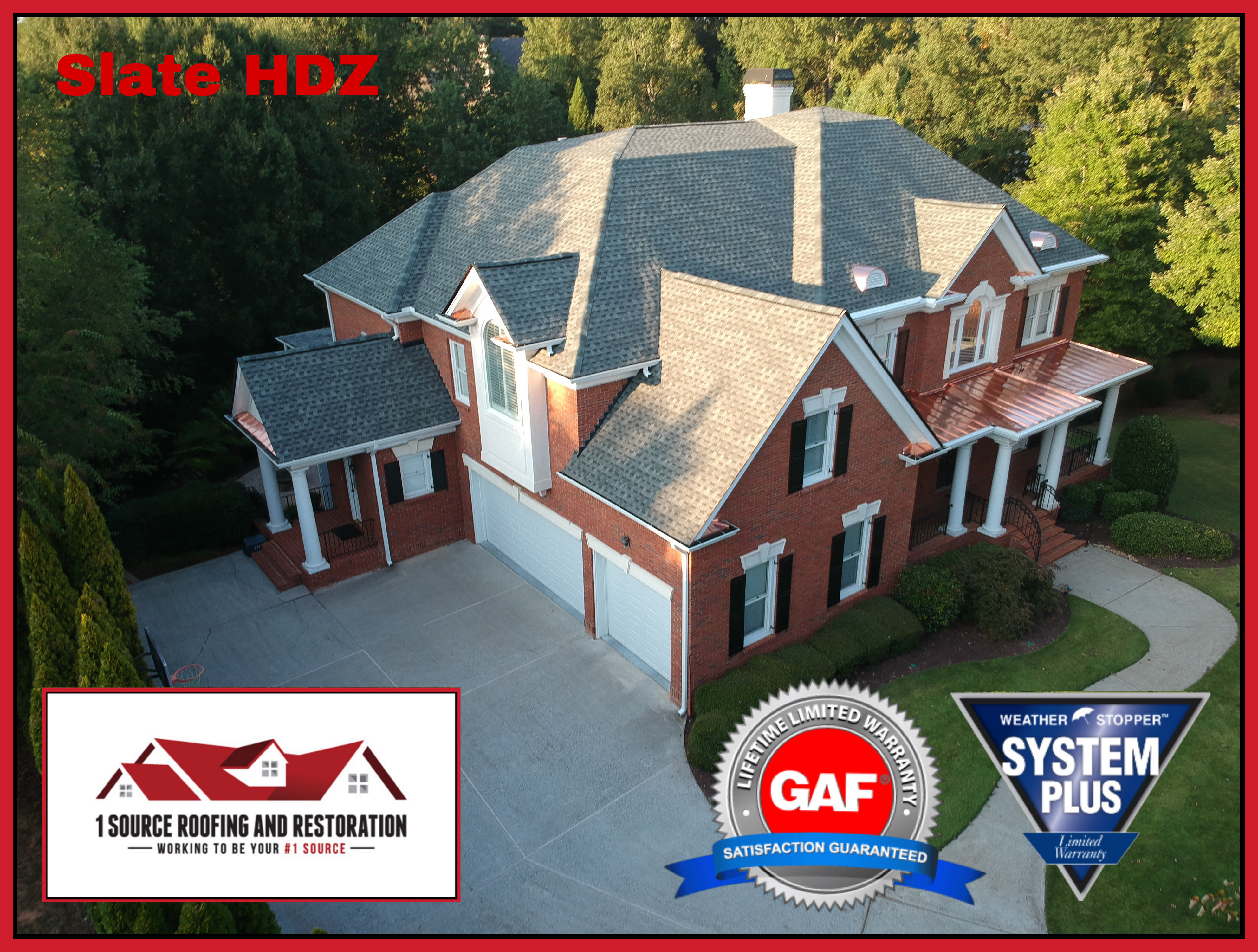
Tile and Slate Roofing — Premium Options for Georgia Estates
Walk through the established neighborhoods of Buckhead, the estate sections of Johns Creek, or the historic districts of Roswell, and you'll spot tile and slate roofs on some of the most distinctive homes. These materials occupy the premium end of the roofing spectrum — and they perform exceptionally well in Georgia's climate when installed correctly.
Clay Tile
Clay tile has been used in hot, humid climates for thousands of years, and the physics haven't changed. Clay's natural thermal mass absorbs heat slowly and releases it slowly, which moderates temperature swings in the attic space. In Georgia's intense summer heat, a clay tile roof keeps the attic cooler during peak afternoon hours compared to asphalt. The material is naturally fireproof, rot-proof, and impervious to insect damage. Georgia's humidity doesn't affect clay tile at all.
The trade-off is weight. Clay tiles weigh 9 to 12 pounds per square foot, compared to 2 to 4 pounds for asphalt shingles. Most residential roof structures in Georgia were designed for asphalt shingle loads, which means a clay tile installation often requires structural reinforcement — additional rafters, collar ties, or even re-engineering of the roof framing. This adds $5,000 to $15,000 or more to the project cost depending on the home's size and existing structure. For detailed structural considerations, see our guide on roof geometry and load distribution.
Lifespan: 75 to 100+ years in Georgia's climate. Cost: $15 to $30 per square foot installed, including any structural modifications.
Concrete Tile
Concrete tile offers a similar aesthetic to clay at roughly 60 to 70 percent of the cost. Modern concrete tiles can be molded and colored to replicate clay barrel tile, flat tile, or shake profiles. In Georgia's climate, concrete tile performs well against heat, rain, and wind (rated to 125+ mph in most configurations). The material is fireproof and highly durable.
However, concrete tile has limitations that clay tile doesn't share. Concrete is porous, which means Georgia's humidity can cause efflorescence (white mineral deposits) and support moss or algae growth on north-facing slopes. Color fade is also more noticeable on concrete than clay over a 20-year period, as the color is applied to the surface rather than being integral to the material. Lifespan: 50 to 75 years. Cost: $10 to $20 per square foot installed.
Natural Slate
Natural slate is the longest-lasting roofing material available. A properly installed slate roof will outlast the building it sits on — lifespans of 100 to 200 years are documented. Slate is quarried stone, impervious to heat, humidity, UV, rain, and virtually every weathering force Georgia can produce. The material is fireproof, doesn't support algae or moss growth on its smooth surface, and develops a beautiful patina with age.
The challenges are weight (15 to 20 pounds per square foot), cost ($25 to $50+ per square foot installed), and the requirement for specialized installation expertise. Slate installation is a craft — the tiles must be individually sized, drilled, and hung on copper or stainless steel fasteners. A poorly installed slate roof will fail at the fasteners long before the stone shows any wear. Finding contractors who install slate correctly in Georgia is difficult, as the material represents a tiny fraction of the market. For homeowners with estate-level properties and a generational perspective on their investment, slate remains the definitive choice.
Synthetic Roofing Materials — Newer Alternatives for Georgia Homes
The past decade has produced a generation of synthetic roofing products designed to replicate the appearance of slate, cedar shake, and tile at a fraction of the weight and cost. These materials are worth evaluating, but they come with caveats that Georgia homeowners should understand.
Synthetic Slate
Products like DaVinci Roofscapes and Brava Roof Tile manufacture synthetic slate from recycled polymers and rubber. These tiles weigh 75 to 80 percent less than natural slate, which eliminates the structural reinforcement requirement. They're molded from actual slate patterns and, from ground level, are difficult to distinguish from the real thing. Wind ratings exceed 110 mph, and impact resistance is typically Class 4.
In Georgia's climate, the primary concern with synthetic slate is UV stability. Early-generation synthetic products experienced color fading and surface degradation within 10 to 15 years of Georgia sun exposure. Current formulations include improved UV stabilizers, but these products haven't been on Georgia roofs long enough to confirm 50-year performance claims. If you're considering synthetic slate, verify that the product carries a fade warranty that covers Georgia's UV exposure levels. Lifespan claims range from 50 to 75 years, though proven real-world performance in the Southeast is closer to 20 to 25 years (the length of time these products have been widely available).
Synthetic Cedar Shake
Polymer-based shake products replicate the rustic appearance of cedar without the fire risk, rot susceptibility, or insect vulnerability that makes real cedar shake problematic in Georgia. Real cedar shake in Georgia's humidity rots from the inside out within 15 to 20 years unless treated aggressively with preservatives, and it carries a severe fire risk in dry conditions. Synthetic shake eliminates both problems while delivering a similar aesthetic.
The cost falls between asphalt shingles and natural slate — typically $8 to $15 per square foot installed. Weight is comparable to heavy asphalt shingles, so structural modifications are rarely needed. For homeowners who want a cedar shake look on a home in Alpharetta or Sandy Springs, synthetic shake offers that aesthetic without the maintenance headaches that real wood creates in our climate.
Composite Shingles
Composite shingles blend asphalt with synthetic polymers and recycled content to create products that claim to outperform standard asphalt. Some manufacturers position composites as a step between standard architectural shingles and premium designer products. Performance characteristics include enhanced impact resistance, improved wind ratings, and longer warranty periods.
The honest assessment: in Georgia's market, the line between "premium asphalt" and "composite" is blurry. A product like GAF Timberline Ultra HDZ or CertainTeed Landmark PRO delivers performance that meets or exceeds most composite claims at a price point that homeowners understand. Before paying a premium for a composite product, compare its specs head-to-head against the premium offerings from established manufacturers. The brand recognition of GAF and CertainTeed also matters for resale value — future buyers and their inspectors know what a Timberline roof is. They may not recognize a niche composite brand.
How to Choose the Right Roofing Material for Your Atlanta Home
Every material discussed above can work on a Georgia home. The right choice depends on five factors specific to your situation.
Material Performance Comparison for Georgia
| Material | Lifespan in GA | Cost (per sq ft) | Wind Rating | Heat Performance | Weight |
|---|---|---|---|---|---|
| 3-Tab Asphalt | 15-20 yrs | $3-$5 | 60-70 mph | Poor | 2-2.5 lbs/sqft |
| Architectural Asphalt | 25-30 yrs | $5-$9 | 110-130 mph | Moderate | 3-4 lbs/sqft |
| Designer Asphalt | 30-40 yrs | $7-$12 | 130-150 mph | Moderate-Good | 4-5 lbs/sqft |
| Standing Seam Metal | 40-70 yrs | $12-$18 | 140-180 mph | Excellent | 1-2 lbs/sqft |
| Clay Tile | 75-100+ yrs | $15-$30 | 125+ mph | Excellent | 9-12 lbs/sqft |
| Natural Slate | 100-200 yrs | $25-$50+ | 110+ mph | Good | 15-20 lbs/sqft |
| Synthetic Slate/Shake | 30-50 yrs* | $8-$15 | 110+ mph | Good | 2-4 lbs/sqft |
*Synthetic product lifespans are manufacturer claims; proven real-world performance in Georgia is 20-25 years.
Decision Factor 1: Budget and Lifecycle Cost
If your budget is under $15,000 for a typical Georgia home (2,000 to 2,500 sq ft of roof area), architectural asphalt shingles are your best option — and they're a good one. A quality GAF or CertainTeed architectural shingle installed correctly will protect your home for 25 to 30 years in our climate. If your budget is $20,000 to $35,000 and you plan to stay in the home long-term, metal roofing deserves serious consideration for its energy savings and extended lifespan. Above $35,000, tile and slate enter the conversation for homes where the architecture supports those materials.
Decision Factor 2: Architectural Style
Your home's architecture should guide your material choice. A Mediterranean or Spanish Colonial home looks natural under clay tile. A craftsman or farmhouse style pairs well with architectural shingles or standing seam metal. A Georgian Colonial or brick estate works with slate or premium architectural shingles. Mismatching material and architectural style hurts curb appeal regardless of how well the product performs. During your consultation with 1 Source Roofing, we assess your home's architectural style and recommend materials that complement it.
Decision Factor 3: HOA Requirements
Your HOA may narrow your choices significantly. Most metro Atlanta HOAs restrict roofing to asphalt shingles in approved colors. Before you fall in love with a standing seam metal roof, confirm that your HOA permits it. We work with homeowners in Alpharetta, Buckhead, Sandy Springs, Johns Creek, Roswell, and Marietta HOA communities regularly and can help you identify which materials your specific community allows.
Decision Factor 4: Storm Exposure
If your home sits on an exposed hilltop, lacks mature tree coverage, or has experienced repeated storm damage claims, invest in higher wind and impact ratings. A Class 4 impact-resistant shingle or a standing seam metal roof may cost more upfront but can save thousands in avoided insurance claims and premium reductions over the roof's life. Talk to your insurance agent about premium discounts before selecting your material — the discount may offset a significant portion of the upgrade cost. For more on storm damage and roofing, see our restoration guide.
Decision Factor 5: Energy Goals
If reducing your energy footprint matters to you, prioritize materials with high solar reflectance. Metal roofing with a cool-roof coating leads this category. Lighter-colored asphalt shingles with reflective granules (like GAF's Timberline CS Cool Series) offer moderate improvement. Clay tile's thermal mass provides passive temperature regulation. Any of these options, combined with proper attic insulation and ventilation, can meaningfully reduce your cooling costs. Review the Georgia energy efficiency standards for cool roofing to understand how current code requirements affect your options.
Let the Material Serve the Situation
There is no single "best" roofing material for Georgia. There's only the best material for your home, your budget, your neighborhood, and your goals. At 1 Source Roofing, we install asphalt shingles from GAF and CertainTeed every day because that's what the vast majority of Georgia homeowners need. We also install metal roofing for clients who want maximum longevity and energy performance. During your free roof replacement consultation, we walk through each option with actual product samples, real cost numbers, and honest guidance about what makes sense for your specific situation.
Call (404) 277-1377 to schedule your consultation. We'll bring the samples to you.
Frequently Asked Questions About Roofing Materials in Georgia
What is the best roofing material for Georgia heat?
For pure heat performance, metal roofing reflects the most solar radiation and keeps attic temperatures significantly lower than asphalt. However, asphalt shingles with cool roof technology — like GAF Timberline CS shingles — offer strong heat reflection at a lower cost. The best choice depends on your budget, your HOA restrictions, and whether energy savings over 20+ years justify the higher upfront cost of metal. For most Georgia homeowners, high-quality architectural asphalt shingles with proper attic ventilation provide the best balance of heat performance and value.
How long do asphalt shingles last in Georgia?
Standard three-tab asphalt shingles typically last 15 to 20 years in Georgia's climate. Architectural (dimensional) shingles from GAF or CertainTeed last 25 to 30 years with proper installation and ventilation. Premium designer shingles can reach 30 to 40 years. Georgia's combination of UV exposure, heat cycling, humidity, and severe storms shortens shingle life compared to milder climates. The single biggest factor in shingle longevity is proper attic ventilation — an under-ventilated attic can cut shingle life by 5 to 10 years.
Is metal roofing worth the cost in Atlanta?
Metal roofing costs 2 to 3 times more than asphalt shingles upfront, but it lasts 2 to 3 times longer. If you plan to stay in your home for 15+ years, the lifecycle cost of metal is often lower than replacing asphalt shingles twice over the same period. Metal also reduces cooling costs by 10 to 25 percent in Georgia's hot summers. The main barriers are HOA restrictions (many metro Atlanta HOAs prohibit metal roofing) and aesthetics — though modern standing seam and metal shingle products look far better than the corrugated panels most people picture.
What roofing materials do Atlanta HOAs allow?
Most metro Atlanta HOAs restrict roofing to architectural (dimensional) asphalt shingles in approved colors — typically earth tones like charcoal, weathered wood, and slate gray. Some luxury communities require designer-grade shingles and specify approved manufacturers like GAF or CertainTeed. Metal roofing is gaining acceptance but remains prohibited in many established communities. Always request your HOA's current architectural guidelines before selecting materials. Read our full guide on HOA roofing rules in Georgia for details on the approval process.